

Kristin PaterakisThe diversity of dive sites and marine life around the small island of Providencia makes this a world-class destination
I snap one last image as I hear the rain approaching, scrambling to hide my camera under my poncho. Our local guide, Rodolfo Hawkins, is leading us up a remote jungle mountain on a tiny volcanic island in the Western Caribbean, quizzing us on the various flora. Spices I typically only see bottled on grocery store shelves suddenly come to life in the wild. We reach the peak, indulging in the aroma of basil and the taste of mangoes fresh from the tree along the way. I look out, knowing beyond the muggy rain clouds and beneath the Sea of Seven Colors, a hidden gem awaits.
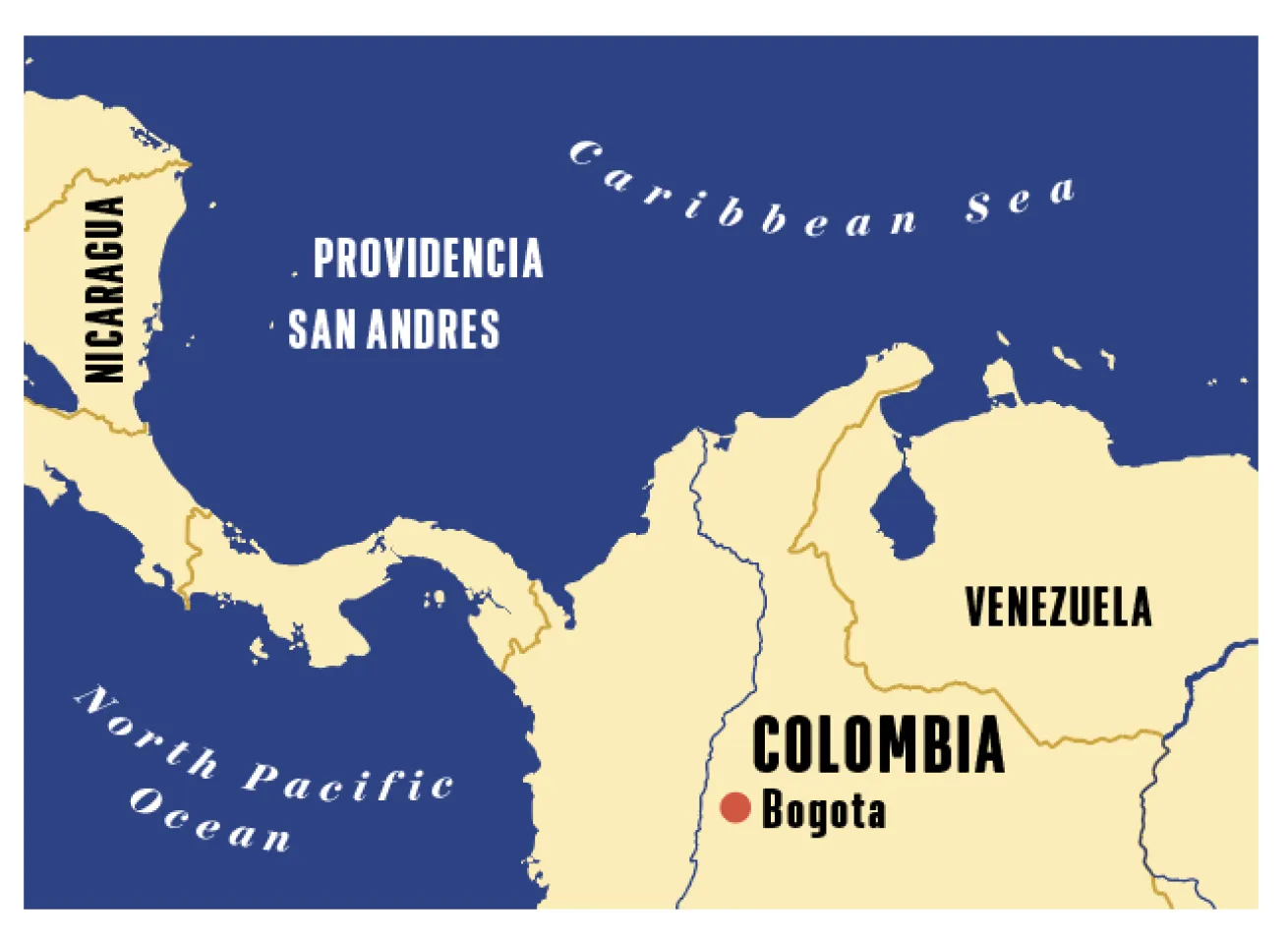
I’m in Providencia, one of three islands in a Colombian archipelago more than 400 miles from the South American mainland. Each encounter this week has humbled me—from the thrilling wall dives among Caribbean reef sharks to the schools of fish dancing across plateaus of endangered pillar coral. On island time, you’re forced to disconnect and immerse yourself in the pristine waters, vibrant ecosystem and rich blend of Afro-Caribbean meets South American culture.
Though bound by cultural roots, the archipelago’s two largest islands—Providencia, with its sharky waters and volcanic landscape, and the limestone reef island San Andres, equally dive-worthy—are unique. This guide will take you through what to do, eat and see above and below.
Related Reading: A Complete Guide to Diving in Colombia
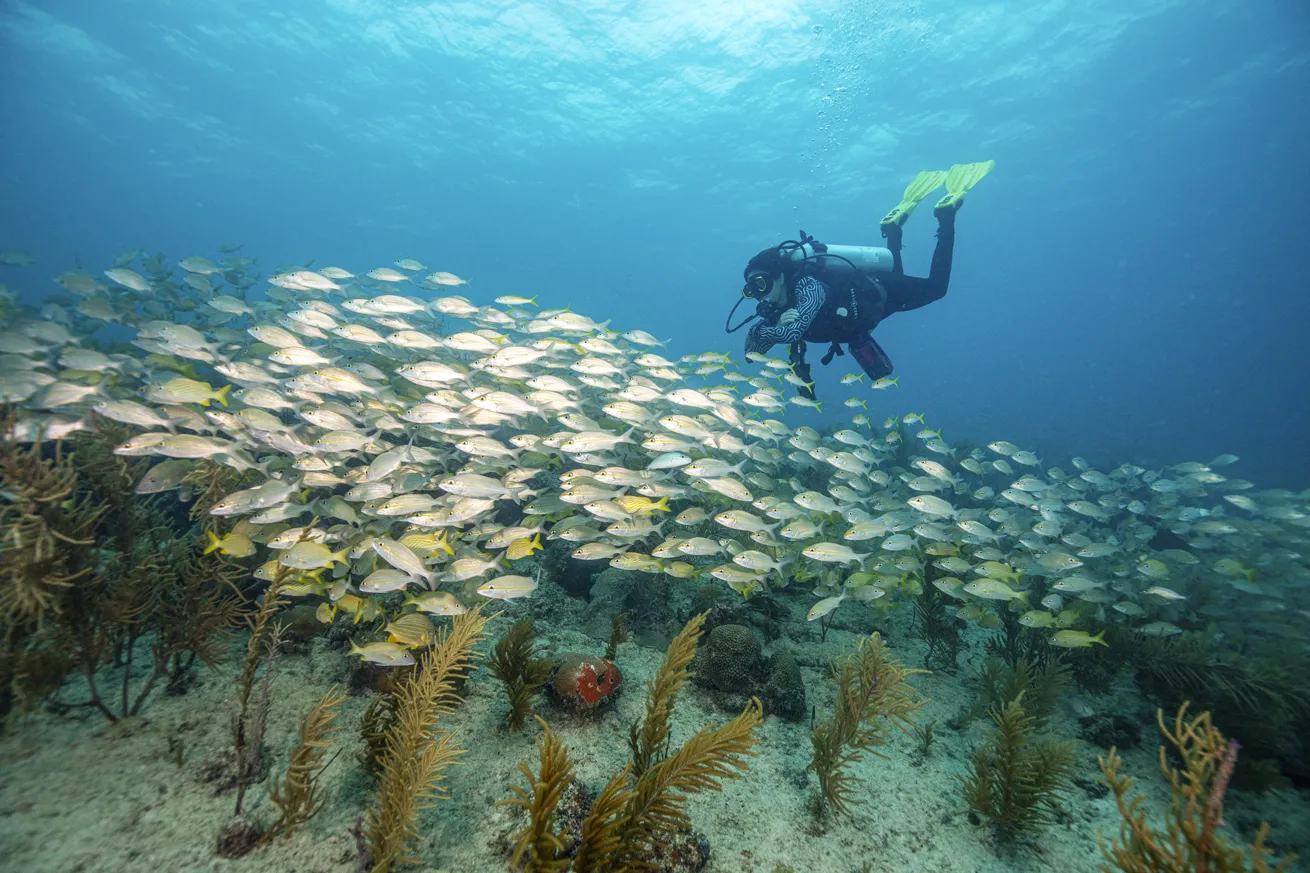
Kristin PaterakisCarolina Vanegas fins above a school of Caesar and yellow grunts at Tete's Place.
Providencia
We wade into the 85-degree water and climb inside the small boat that’ll take us to our first destination. San Andres–born Carolina Vanegas looks out to the Sea of Seven Colors, a nickname for the waters surrounding these Caribbean Islands that are actually located closer to Nicaragua than Colombia, with anticipation to connect us with the place she loves. After years of living abroad, Vanegas founded Paradis de Colors, a travel agency that curates trips rooted in conservation and cultural immersion in the archipelago.
Providencia attracts the minimalist, nature-loving traveler. It’s well-suited to those who embrace inconsistent cell signal, prefer less developed infrastructure and enjoy feeding their sense of adventure.
But you don’t need to be an adventurous or advanced diver to experience the world-class diving of Providencia, which features roughly 10 dive sites within a 15-minute boat ride from shore. Water temperatures remain in the 80s year-round, and visibility is consistently between 80 to 100 feet.
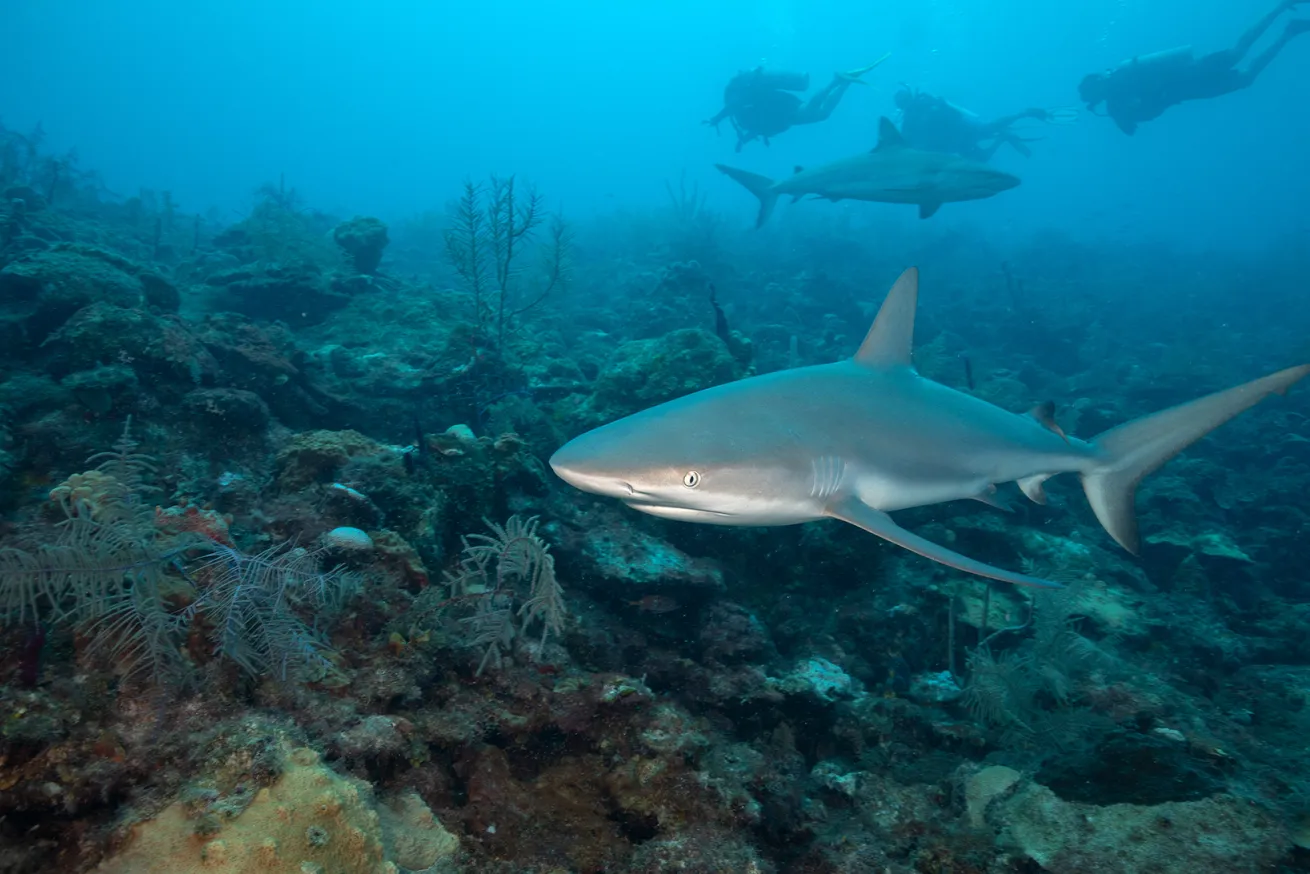
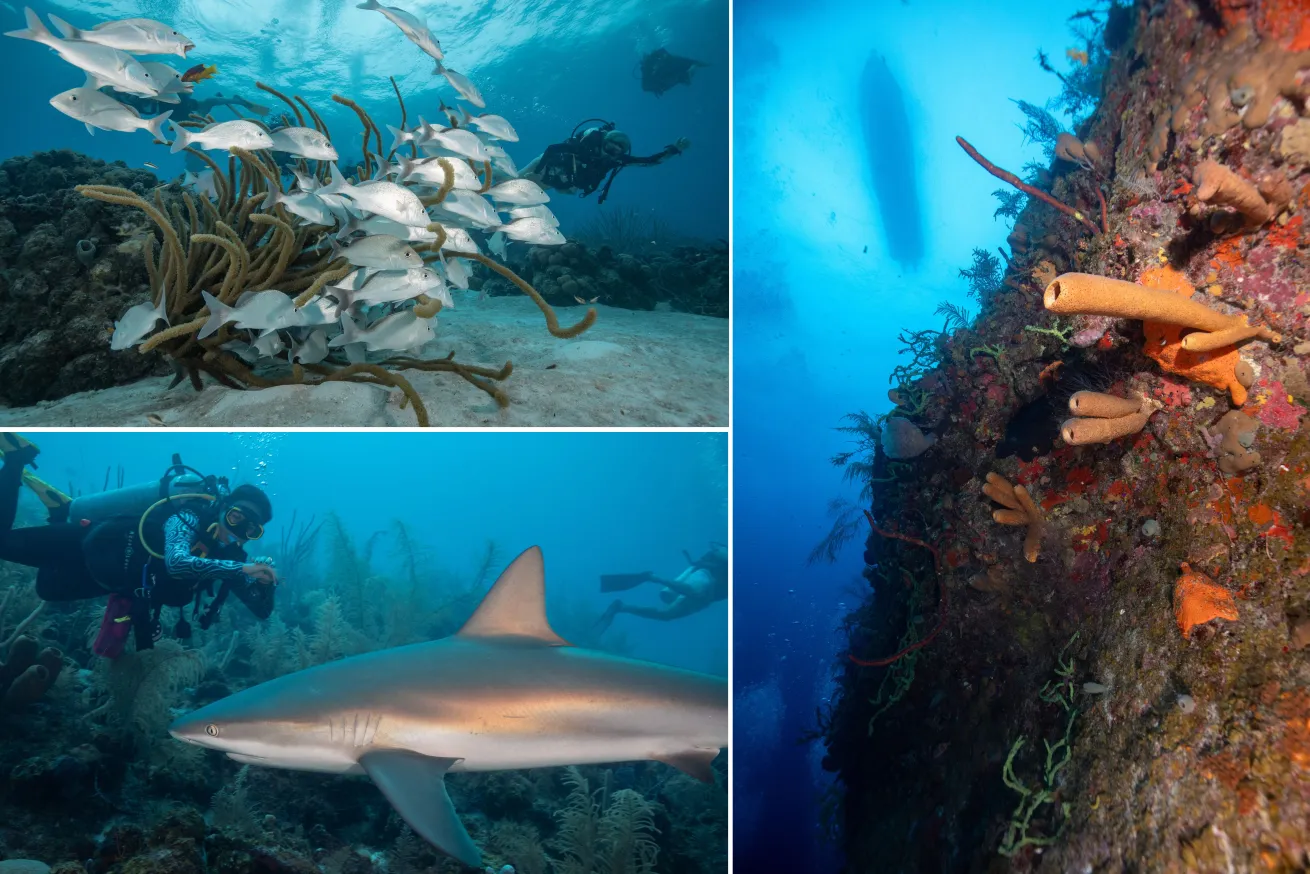
Kristin PaterakisProvidencia is known for its abundance of Caribbean reef sharks.
Our checkout dive at a site called Chromix is complete with three Caribbean reef sharks soaring over a forest of swaying sea fans. Nearby, at Manta’s Place, a stunning shallow site adorned with patch reefs, hosts a plethora of life. Sirius Dive Center divemaster and PADI Ambassa-Diver Karol Yela guides us among the schools of white snapper. The large stony corals provide shelter to species including sea turtles, sergeant majors, butterflyfish, goatfish and parrotfish.
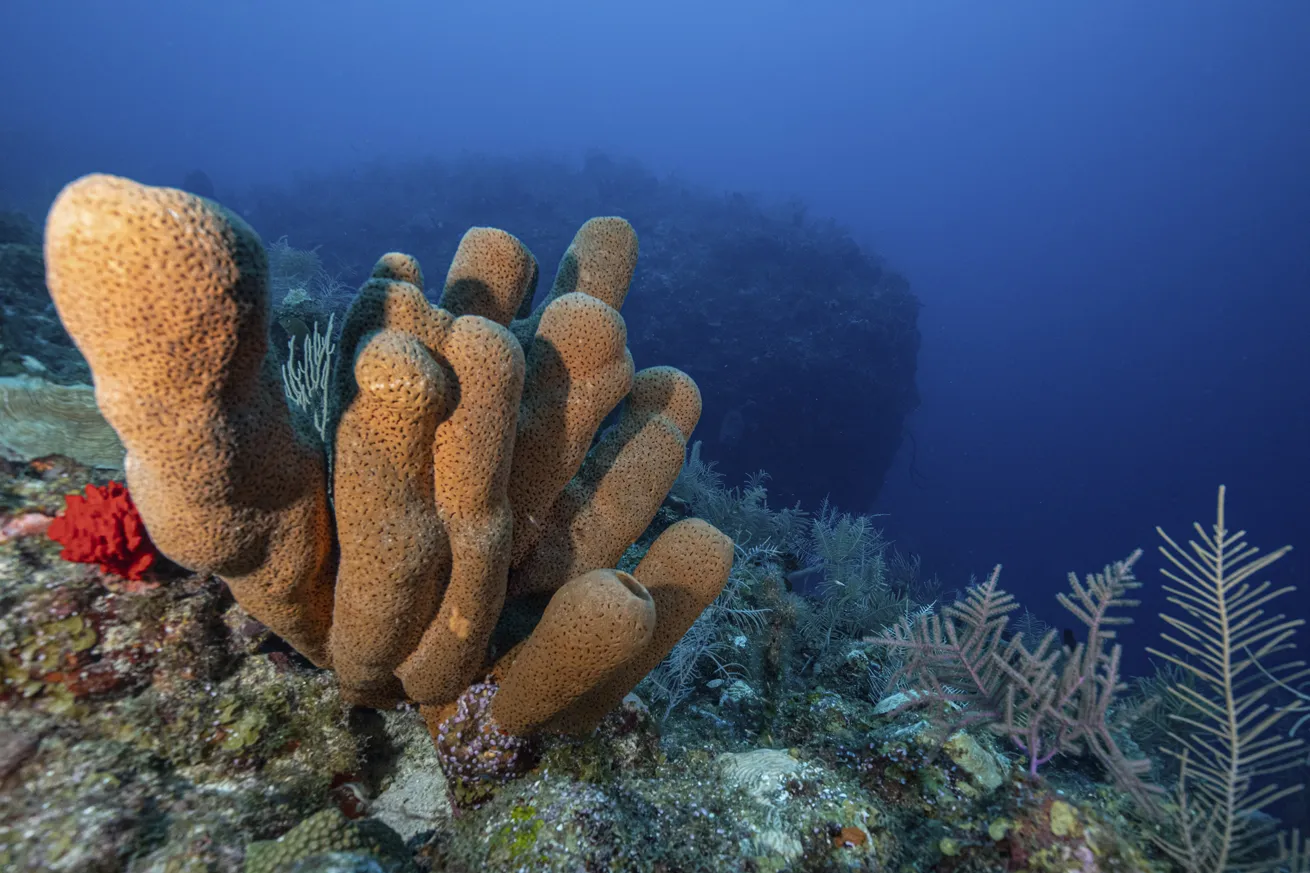
Kristin PaterakisTurtle Rock looms behind colorful sponges.
Providencia continues to amaze us at Piedra de la Tortuga (Turtle Rock), a large rocky structure rising from a 100-foot sandy bottom, so named because the top resembles the head of a turtle. It isn’t until you are up close that you see the real beauty of this geologic formation, covered in sponges, algae and bright-hued corals. I regretfully obey the divemaster—the Sirius staff are among the most attentive and safety-oriented I’ve met—when it’s time to ascend.
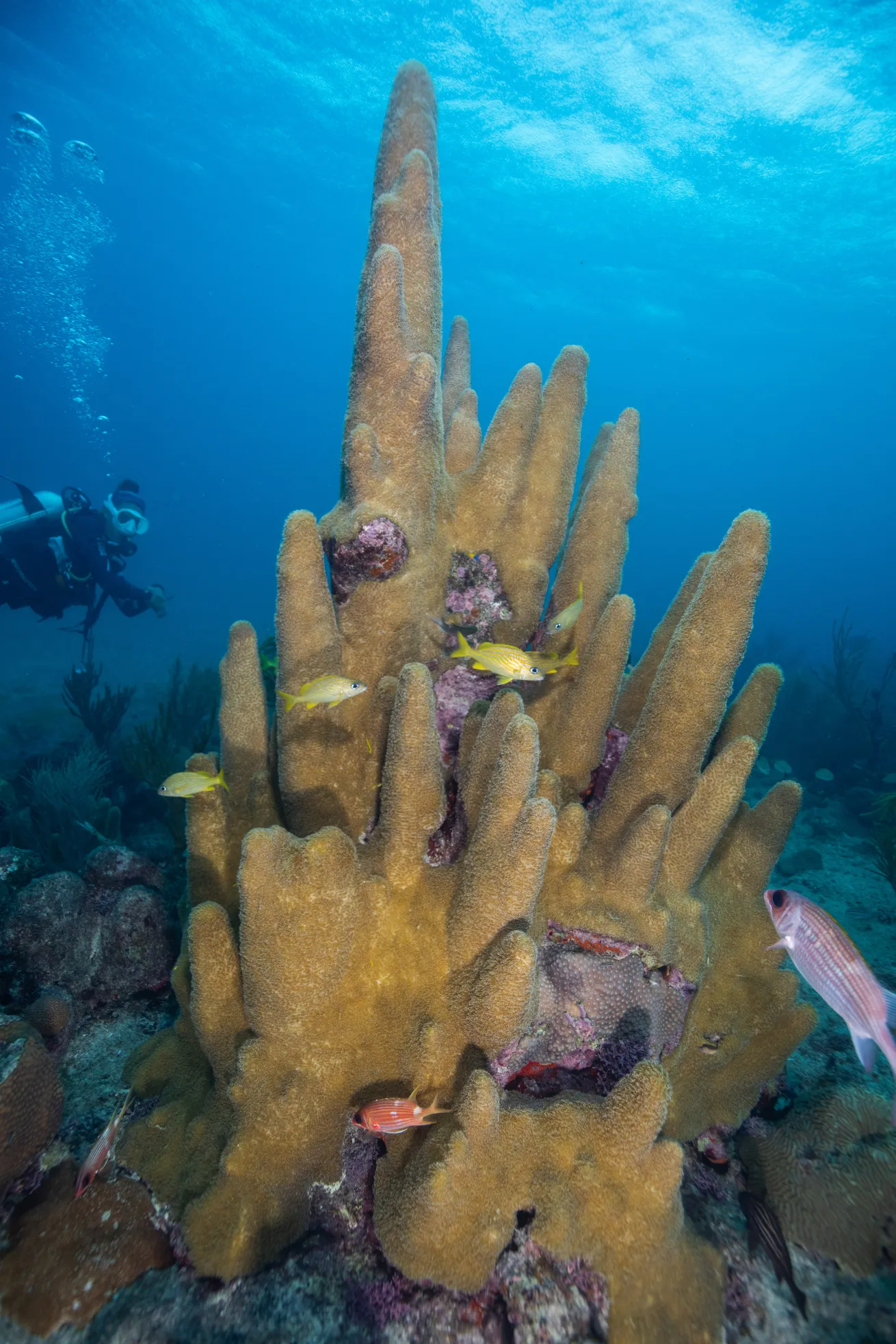
Kristin PaterakisPillar coral thrums with life at Tete’s Place.
I don’t know how the next dive can top Turtle Rock, yet I am left speechless again at what Tete’s Place provides. I glide over castle after castle of endangered pillar coral. This species is now considered functionally extinct in Florida, yet here it is thriving. Among the castles, I find Caesar grunts, peacock flounder, yellow spotted stingrays, spotted morays and squirrelfish. If there’s one reason to visit Providencia, it’s to witness this site.
Colombian photographer and marine biologist Juan Mora tells me the night diving at Tete’s Place is unbelievable. “Ostracods come up to the surface, and the amount of bioluminescence you see here makes it one of the most spectacular night dives I’ve ever done.”
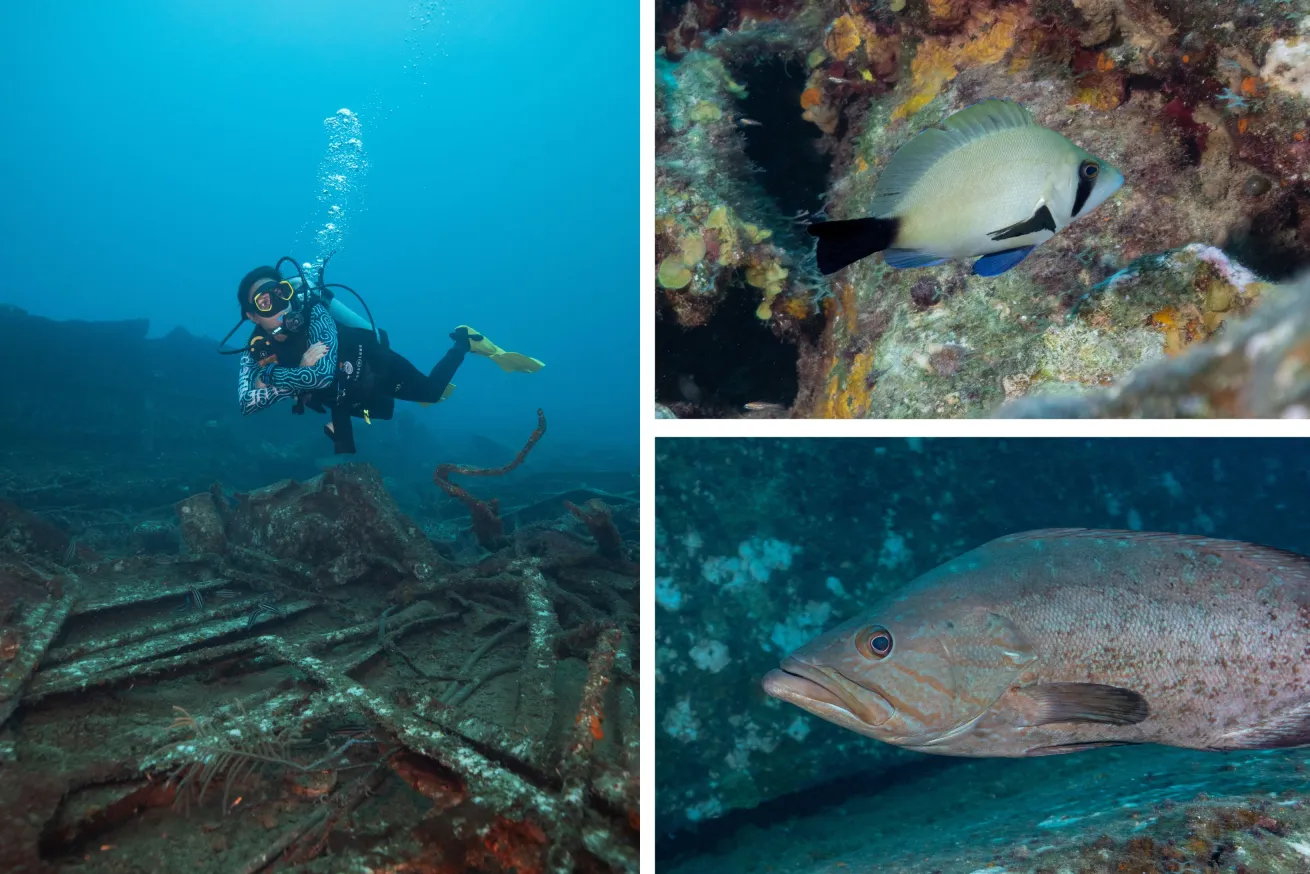
Kristin PaterakisEl Planchón hosts a myriad of wildlife, like the endemic masked hamlet (top right) and grouper.
The last day, we visit El Planchón, a large tanker with a mysterious history linked back to World War II. The upside-down wreck hosts numerous critters. I even sight my first endemic masked hamlet (Hypoplectrus providencianus).
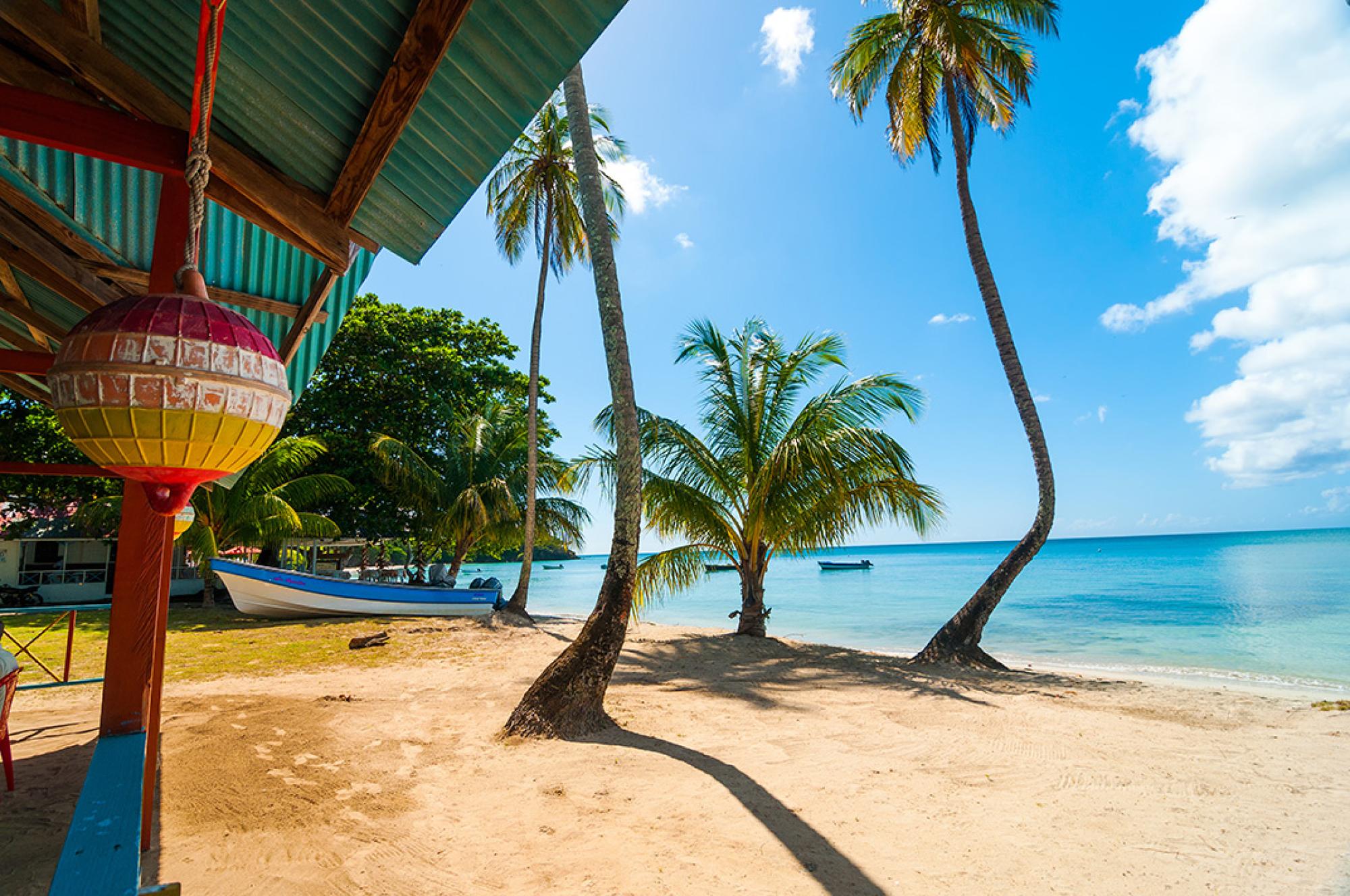
After each day, our group walks along the picturesque beach at Southwest Bay and visits a number of restaurants—our favorite was Chill Spot—relaxes under the palms with fresh lulo or sorrel (hibiscus) juice, hammocks and a volleyball net, and even watches jockeys train their horses.
Yela shares her other favorite dive sites around the island, including Felipe’s Place and Espiral (Spiral), a dive site with a tunnel descending from 90 to 115 feet. Because of the depth and overhead environment , this site is for advanced divers with proper training only.
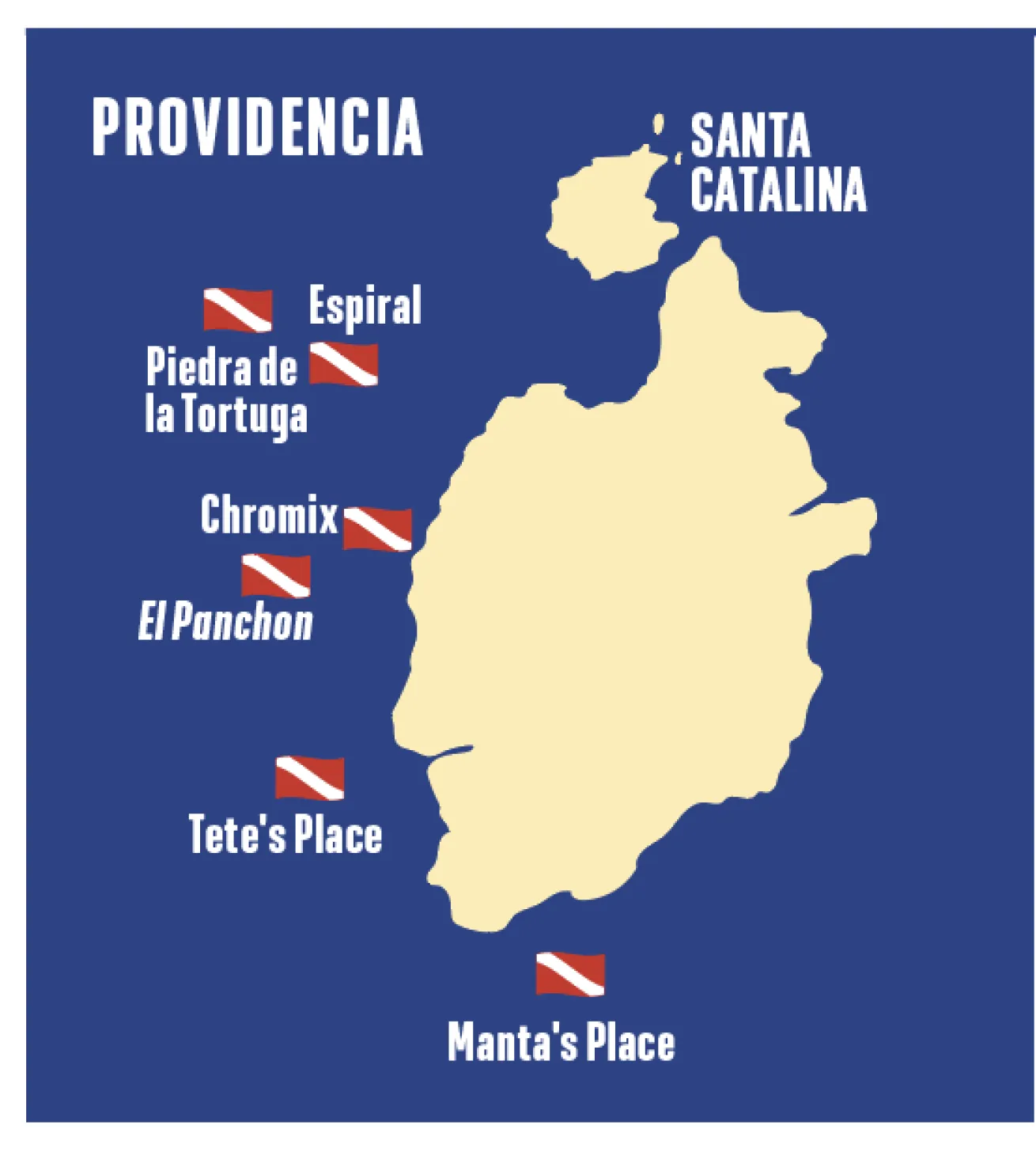
Top 5 Dive Sites in Providencia
1 Tete’s Place
2 Turtle Rock
3 Manta’s Place
4 El Planchón
5 Espiral
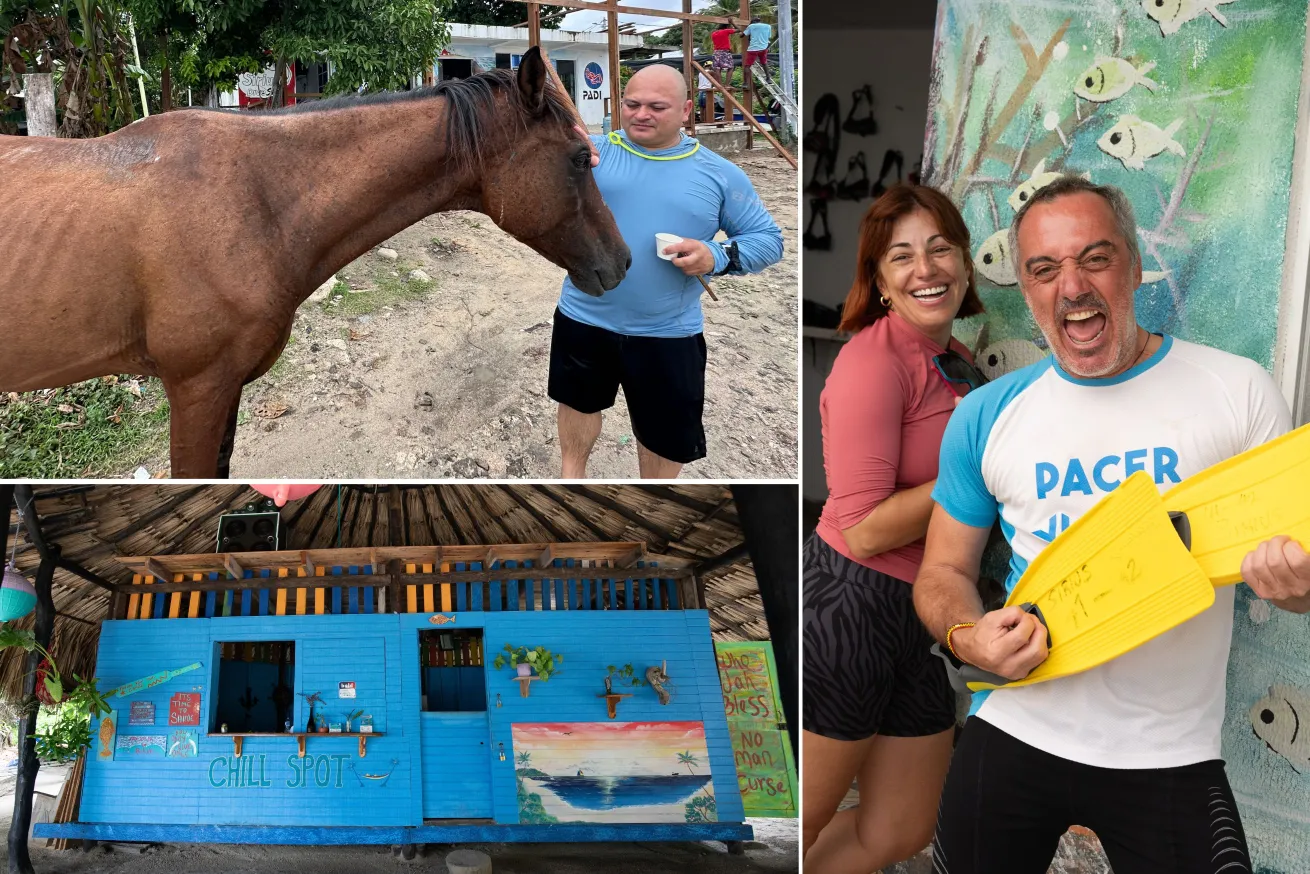
Kristin PaterakisTopside, divers soak up the island’s laid-back reggae vibes and get up close with the horses that roam near Sirius Dive Center.
Need to Know Providencia
How to Get There
The volcanic island of Providencia is only accessible via a 25-minute flight from neighboring San Andres.
Where to Explore
Hike to the Peak for sunrise views of the ocean. Then, tour the island by boat, bird-watching for endemic Providence vireos, magnificent frigatebirds and shearwaters along the way. Stop at Cayo Cangrejo for a short hike and snorkel the clear waters. Circumnavigate the island on a leisurely scooter ride, visiting Manzanillo Beach, and walk across Lovers’ Bridge to Santa Catalina and Morgan’s Head, an outcrop named after the infamous pirate Captain Morgan.
Where to Dine
» Chill Spot
» La Terraza
» Miss Julia’s
» Hamlet
» El Divino Niño
» Donde Martin
Operator
Sirius Dive Center siriusdiveshop.com
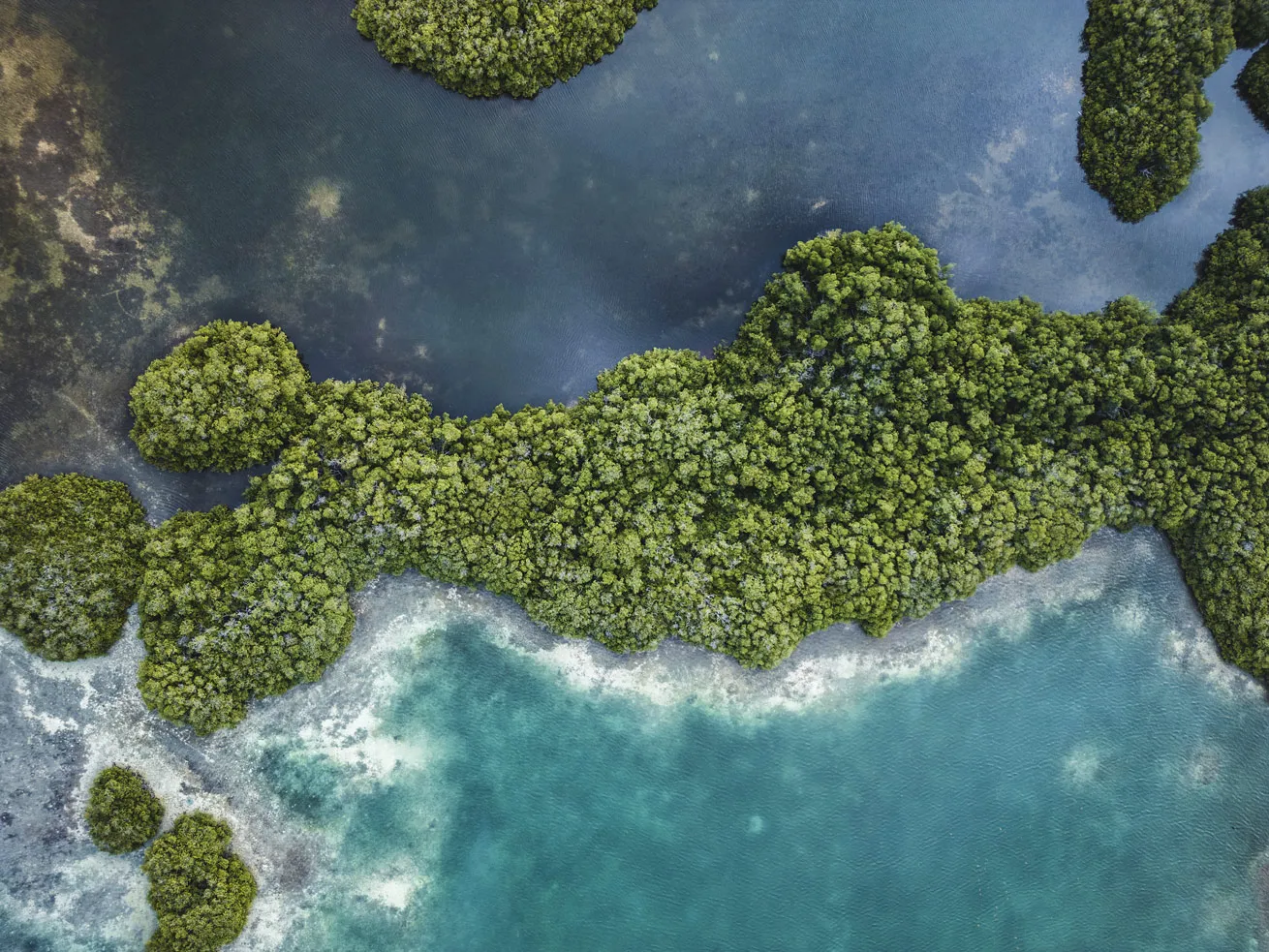
Juan MoraAn aerial view of the mangroves at Old Point Mangle Regional Park
San Andres
While I only had a brief layover in San Andres, travel operator Carolina Vanegas fills me in on why I must return. San Andres is more developed for tourism than the rest of the islands; it has various lodging options, from five-star luxury resorts on the beach to private villas and local posadas. The limestone island formed by coral contrasts with the rest of the volcanic archipelago.
Vanegas tells me the flat, rocky shoreline and “amazing conditions” make this island ideal for divers of all levels, from those learning to dive to those wanting to explore wrecks and walls. I’m shocked when she tells me the visibility is even better than in Providencia. With less particulate in the water, it is a clearer, crisper blue. However, there are not as many sharks as there are in Providencia. Water temperatures remain in the high 80s, and there is very little current. “It feels like an aquarium,” she adds.
“The underwater landscape is like a ladder,” Vanegas says. “At 15 feet, there is a ledge, then another at 30, and then there is a wall starting at 60 feet. And best of all, there are plenty of shore dives.” PADI regional manager Julio Salvatori agrees that shore diving “is a great way to sneak in a quick dive without needing a boat.”
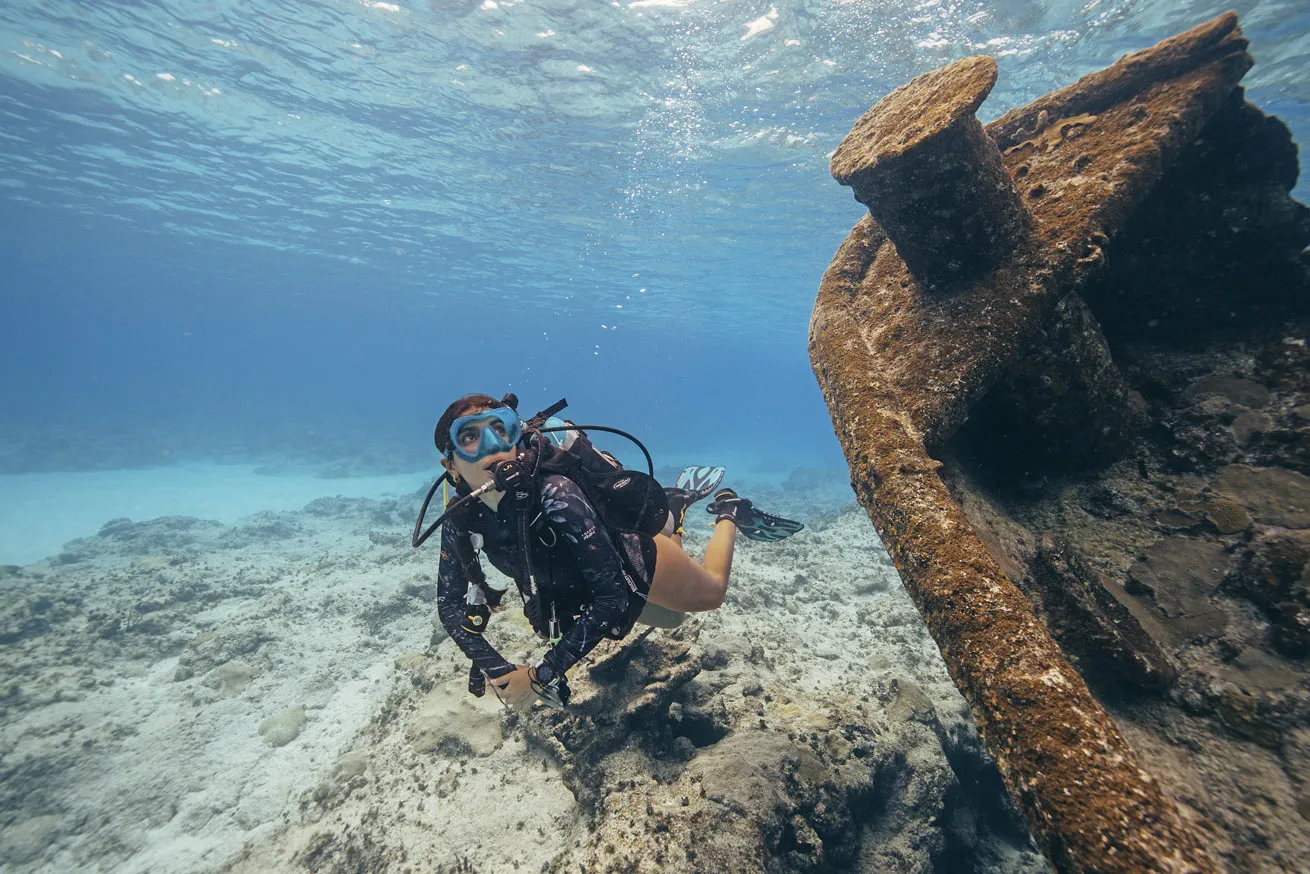
Juan MoraA diver checks out a small wreck near Blue Wall.
While Vanegas prefers the freedom of diving on her own time, not constrained by boat schedules, Salvatori opts for the more adventurous dives that require boat transport. “Imagine descending along a massive vertical wall that just drops into the deep blue abyss,” says Salvatori about his favorite site, Blue Wall. “The coral is healthy, and you’ll often see eagle rays gliding by, schools of jack and the occasional reef shark … it’s peaceful, powerful and humbling all at once.”
Vanegas scrolls through GoPro footage, showing off another beautiful site, El Faro (the Lighthouse), which features a picturesque swim-through. She boasts of the marine life you can see here, such as nurse sharks, octopuses, lobsters, squid and eels. What brings her the most joy, however, is sharing the various conservation initiatives on the island, including underwater cleanups and coral restoration projects. These underwater volunteer opportunities inspired Vanegas to become a PADI Instructor and start her own business connecting others with nature.
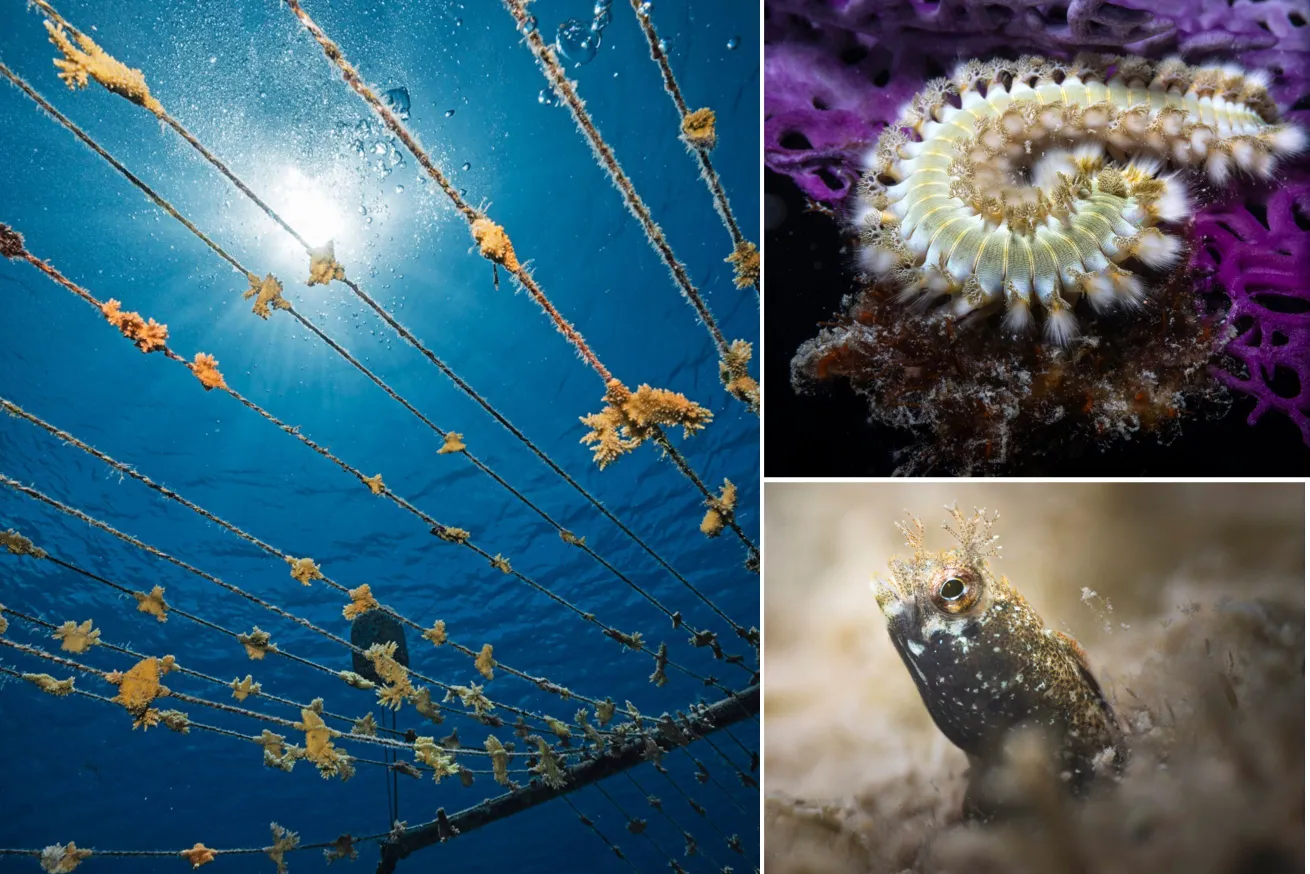
Juan MoraFrom left: A coral nursery at the dive site Nirvana; San Andres is home to critters such as bearded fireworms and the spinyhead blenny.
Photographer Juan Mora recommends checking out the dive site Nirvana, where he enjoys long, shallow dives with his macro setup to find seahorses, mantis shrimp and gobies. For photographers toting a wide-angle lens, he suggests exploring the small wrecks and coral gardens. And make sure to look around—he recently spotted a great hammerhead in the distance, a positive sign for the health of the ecosystem.
With so much praise for this island from experienced divers, I’m already planning my next trip back.
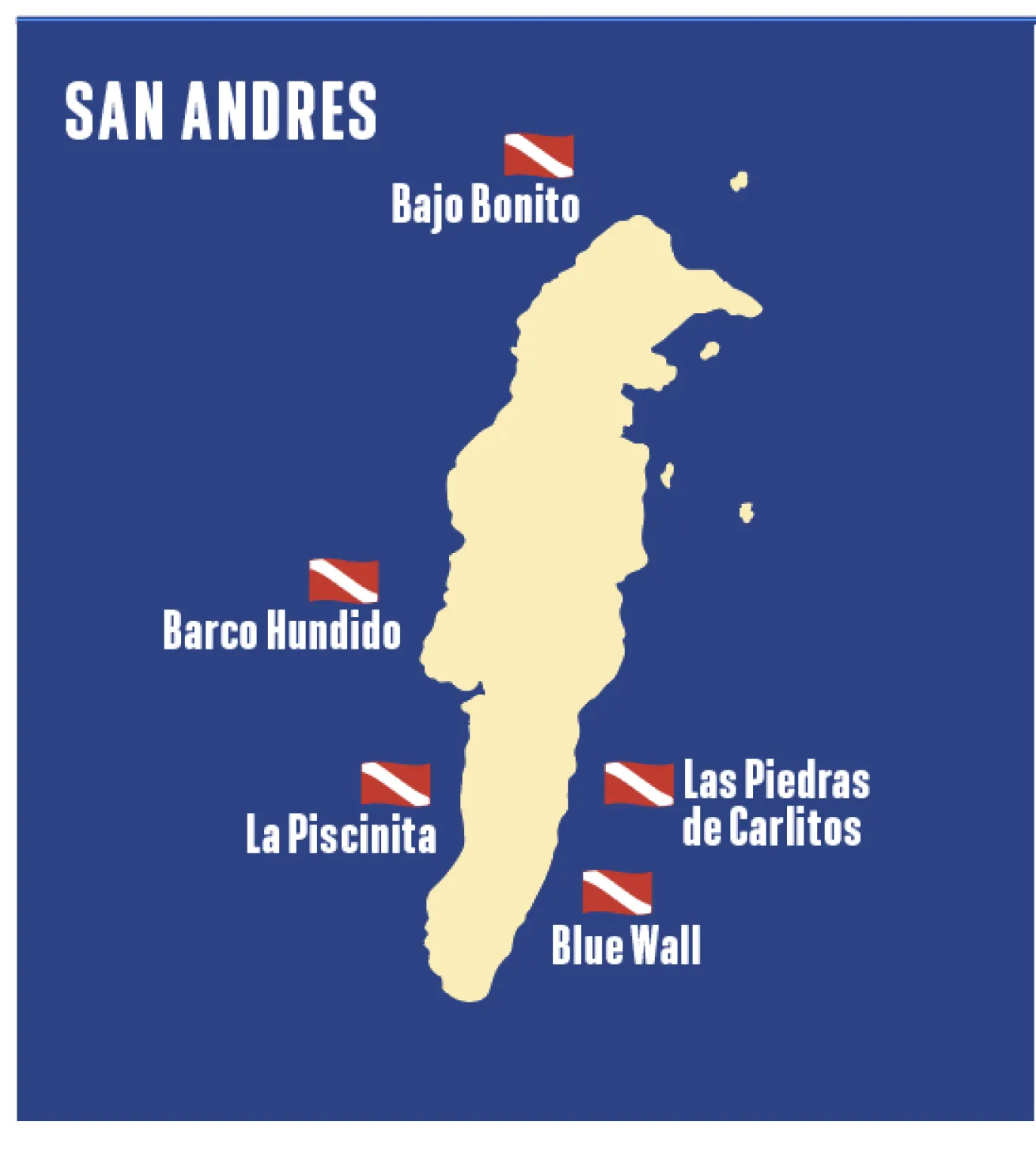
Top 5 Dive Sites in San Andres
1 Blue Wall
2 Blue Diamond
3 El Faro
4 Nirvana
5 Bajo Bonito
Need to Know San Andres
How to Get There
Direct flights are available to San Andres from several major cities. There is a $35 tourist tax upon arrival, but the archipelago is tax-free once you enter.
Where to Explore
Rent a golf cart for the day to tour the island. Salvatori and Vanegas recommend visiting Big Pond Lagoon via horseback, Old Point Mangle Regional Park, Johnny Cay and La Piscinita for snorkeling. Finish the day at Rocky Cay to witness a beautiful sunset.
Where to Dine
» La Regatta
» Capi Beach
» Sea Avenue
» Aqua Beach Club
» Cocoplum Beach Restaurant
Operators
Banda Dive bandadive.com/en
Blue Life Dive Center bluelifedive.com/en
San Andres Divers portofinocaribe.com
Scuba San Andres scubasanandres.com.co
Culture & Conservation
A Culture Like No Other
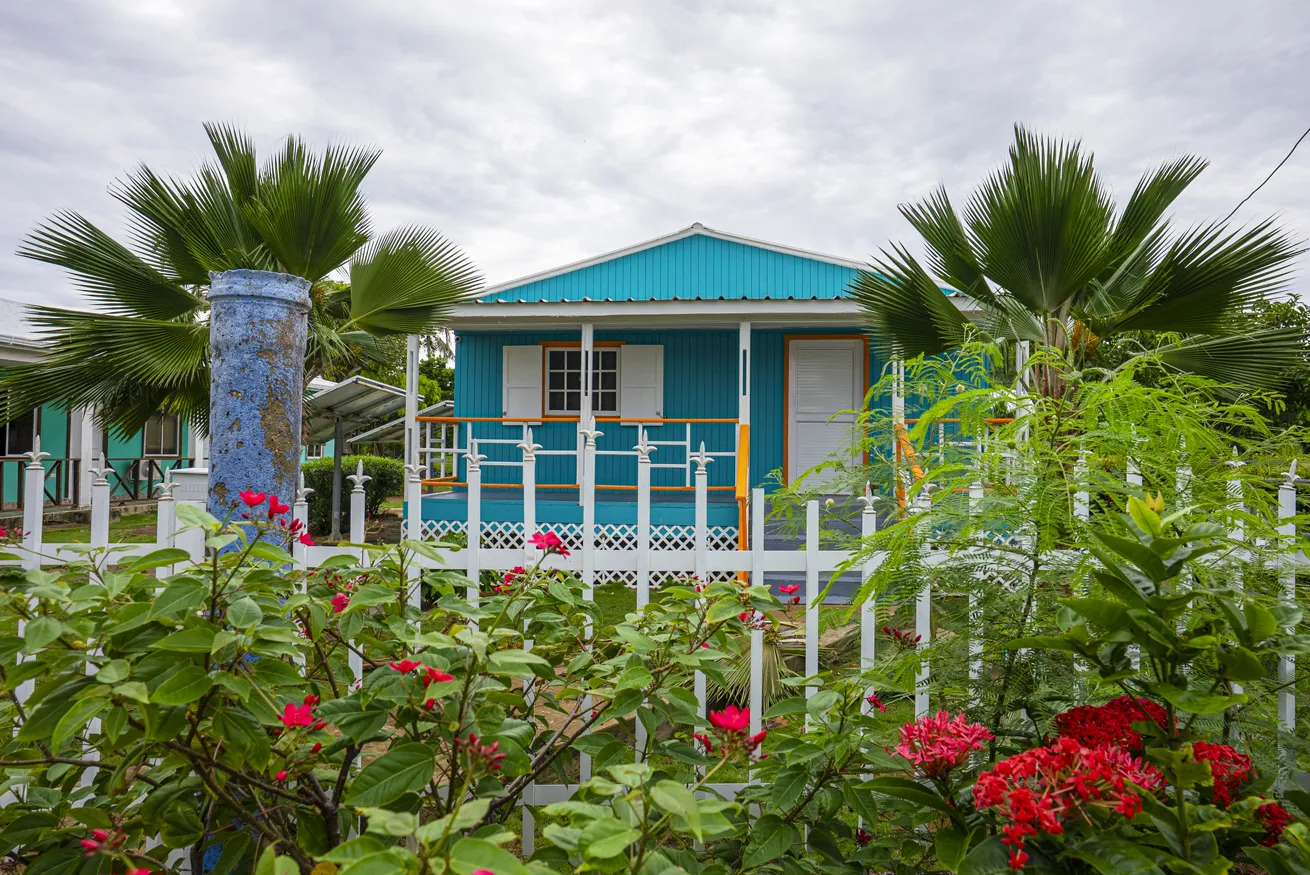
Kristin PaterakisA traditional home on Santa Catalina Island
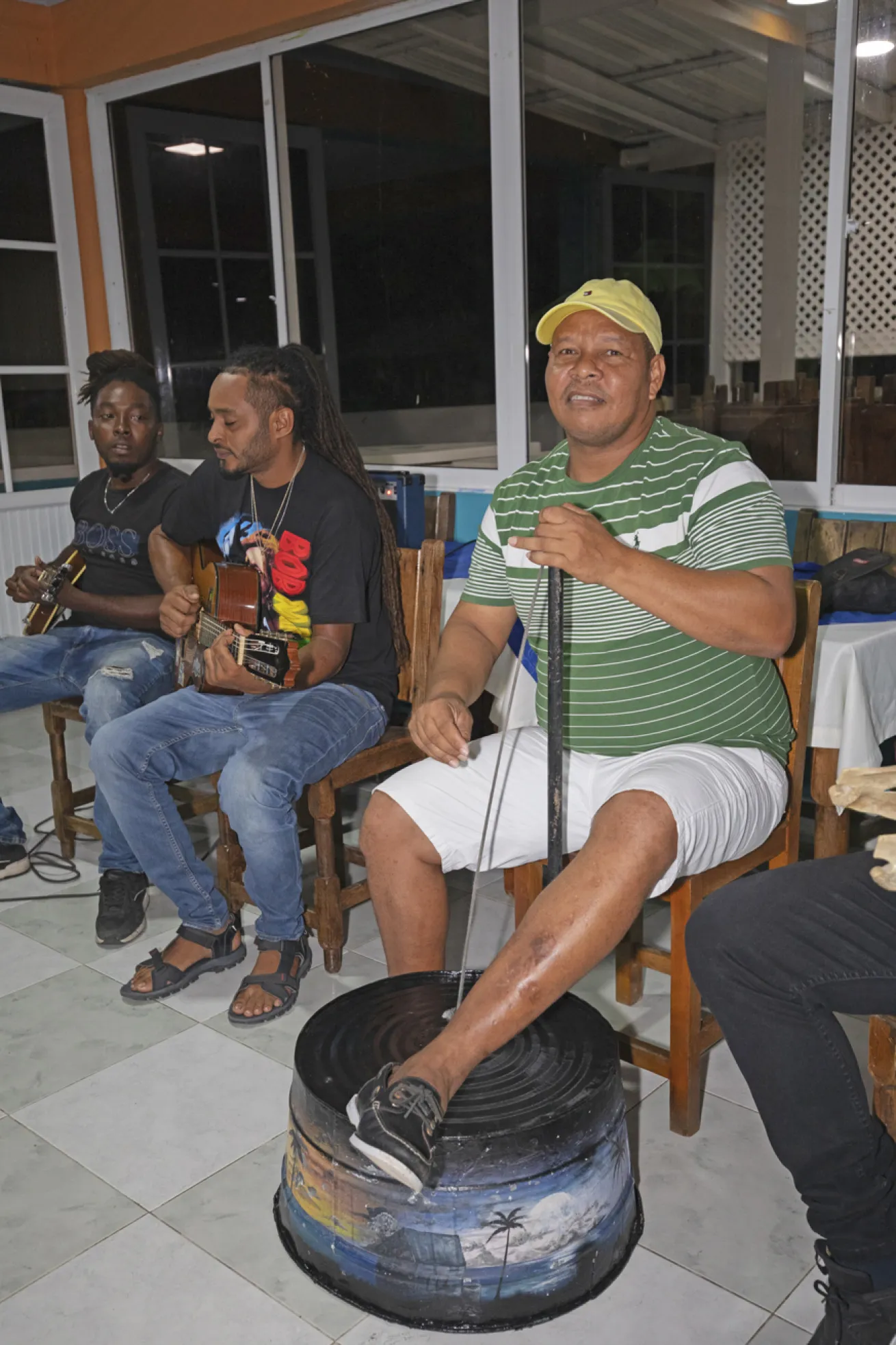
Kristin PaterakisMusicians play a mix of homemade and traditional instruments
“You come for the diving, but you stay for the island culture,” says PADI regional manager Julio Salvatori, adding that the “reggae and creole influences, the colors, the kindness of the people make you fall in love.”
Paradis de Colors works with local businesses, prioritizing a tourism system that recirculates to the local community. This includes the Raizales, an Afro-Caribbean population descending from original settlers, enslaved Africans, Amerindians and British emigrants who speak Creole English.
The island’s distinct architecture features cone-shaped roofs and wooden stilt houses painted in ocean blues and the vibrant colors of tropical flowers.
The cultural heartbeat of the archipelago is in its music, inspired by a unique blend of Caribbean and South American rhythms. Musicians use homemade instruments such as metal washing bins and a female horse’s jawbone as well as traditional instruments such as the mandolin.
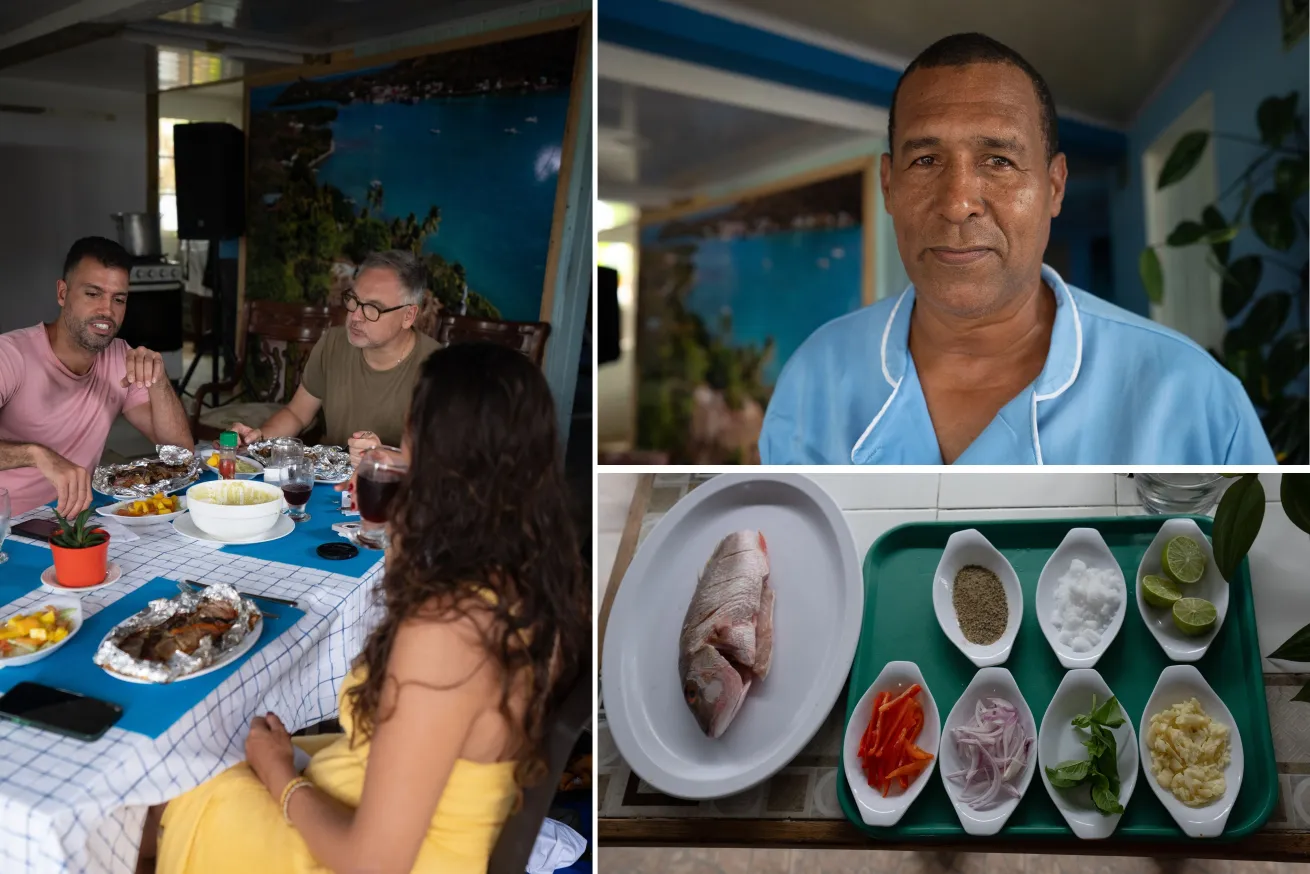
Kristin PaterakisOpportunities to connect with the local community and gastronomy can be arranged, like this cooking lesson of authentic dishes at Posada Bully on Santa Catalina Island.
Community-Based Tourism
While many dive destinations boast luxury hotels that are a destination in and of themselves, vacationing on Providencia provides an opportunity to get an authentic experience among the locals. Whether you stay in one of the simple yet clean and comfortable hotels or rent a room in a posada (a local guesthouse), you will be greeted with friendliness and hospitality. We stayed at Pirata Morgan Hotel, and Vanegas helped organize a cooking lesson of authentic dishes at Posada Bully on Santa Catalina Island. We learn to cook fresh fish and patacones (fried plantains), accompanied by guacamole, rice and a fried lentil patty, similar to falafel, for vegetarians.
We continue to learn about the local culture and land during a trekking excursion with Rodolfo Hawkins, a human encyclopedia of knowledge of every plant on the island and its medicinal use. If you feel sick during your stay, skip the pharmacy and give Rodolfo a call; he will provide a concoction of ground herbs for a healing tea. Learning how the Raizales live off the land helps remind us of our precious resources and the importance of protecting what we have
Related Reading: Rediscovering a Passion for Diving in the Seychelles
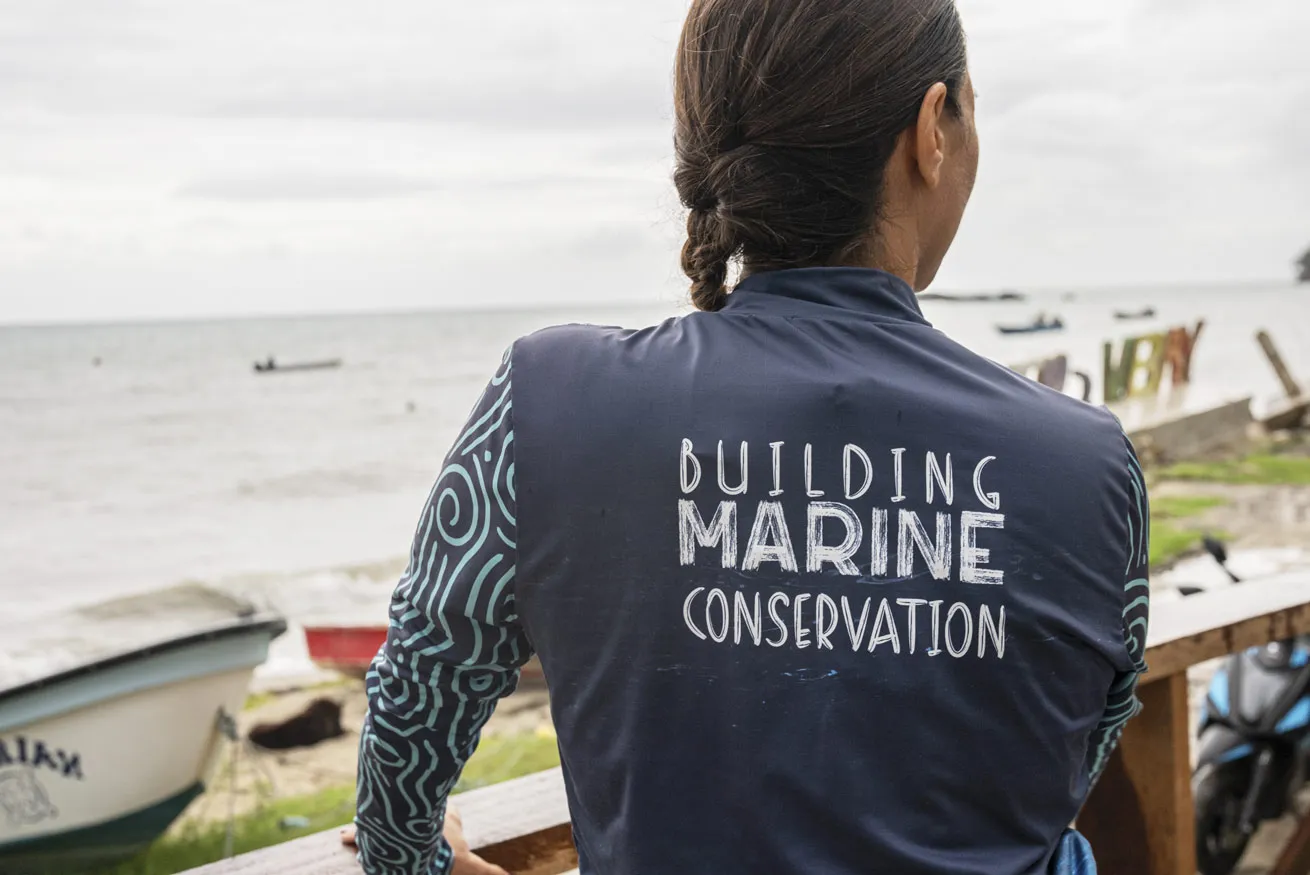
Kristin PaterakisLocals are enmeshed with the conservation efforts on the archipelago.
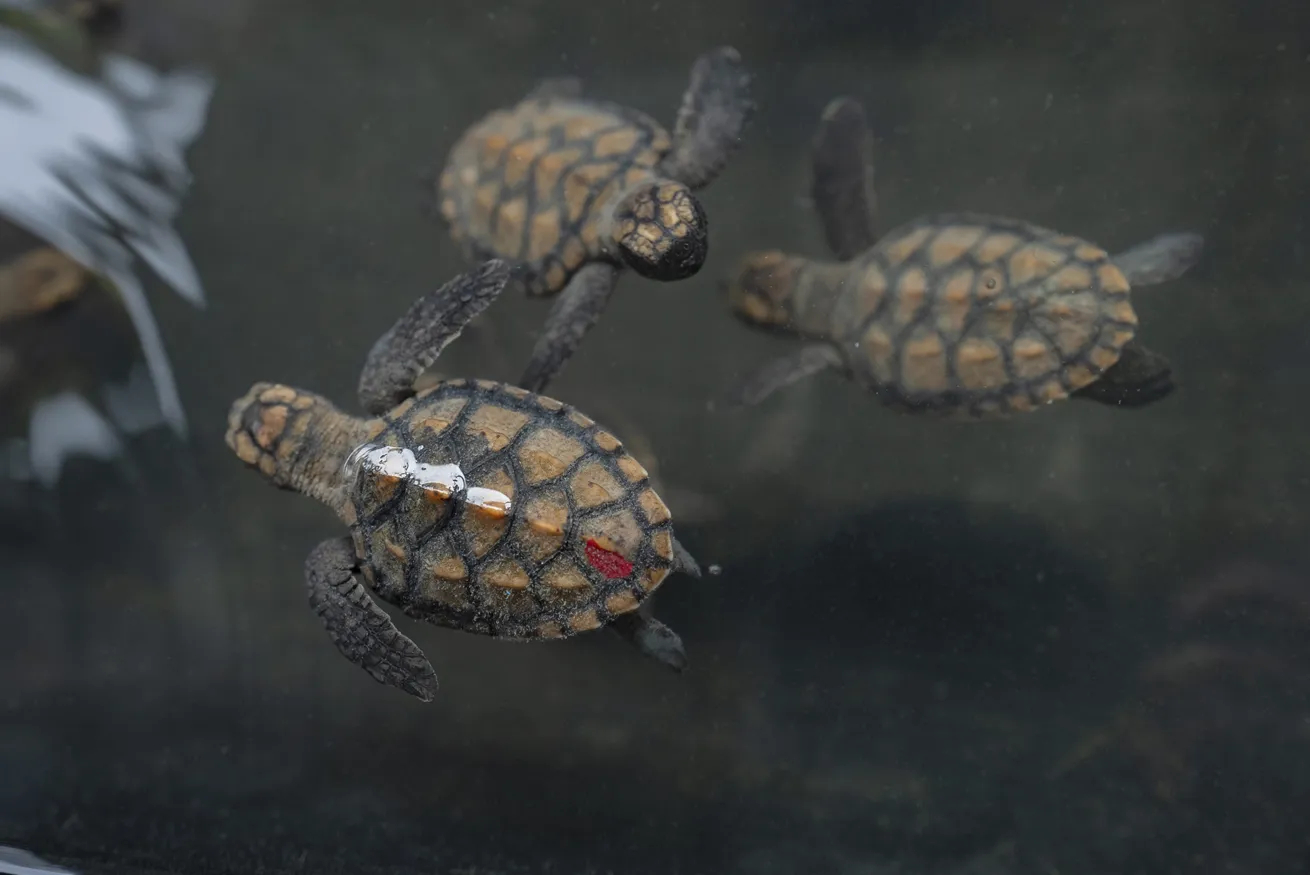
Kristin PaterakisTurtle conservation initiatives are being developed on Providencia
Conservation Efforts
The archipelago and its surrounding waters were designated the Seaflower Biosphere Reserve, recognized by UNESCO for their biodiversity and rich cultural heritage.
The marine protected area spans more than 25,000 square miles and includes vital coral reef, mangrove and seagrass habitats that support various birds, reptiles, fish and invertebrates. It’s a treasure trove of endemic and endangered species worth protecting. Management ranges from controlled commercial use to no-take zones, overseen by the governmental organization Coralina, which leads education, conservation and restoration programs.
Conservation initiatives are more developed on the larger island of San Andres, but projects in Providencia, including coral restoration, mangrove redevelopment and turtle conservation, are being built out. Led by the indigenous Raizal community, the Old Providence McBean Lagoon National Park was established to protect the area from development and overfishing.
Vanegas stresses that the archipelago holds a key role for the entire Caribbean ecosystem. Not only is it important for Colombia, she says, but “it’s important for the Caribbean and for the world, because it’s part of that breathing lung that keeps us alive.”


