

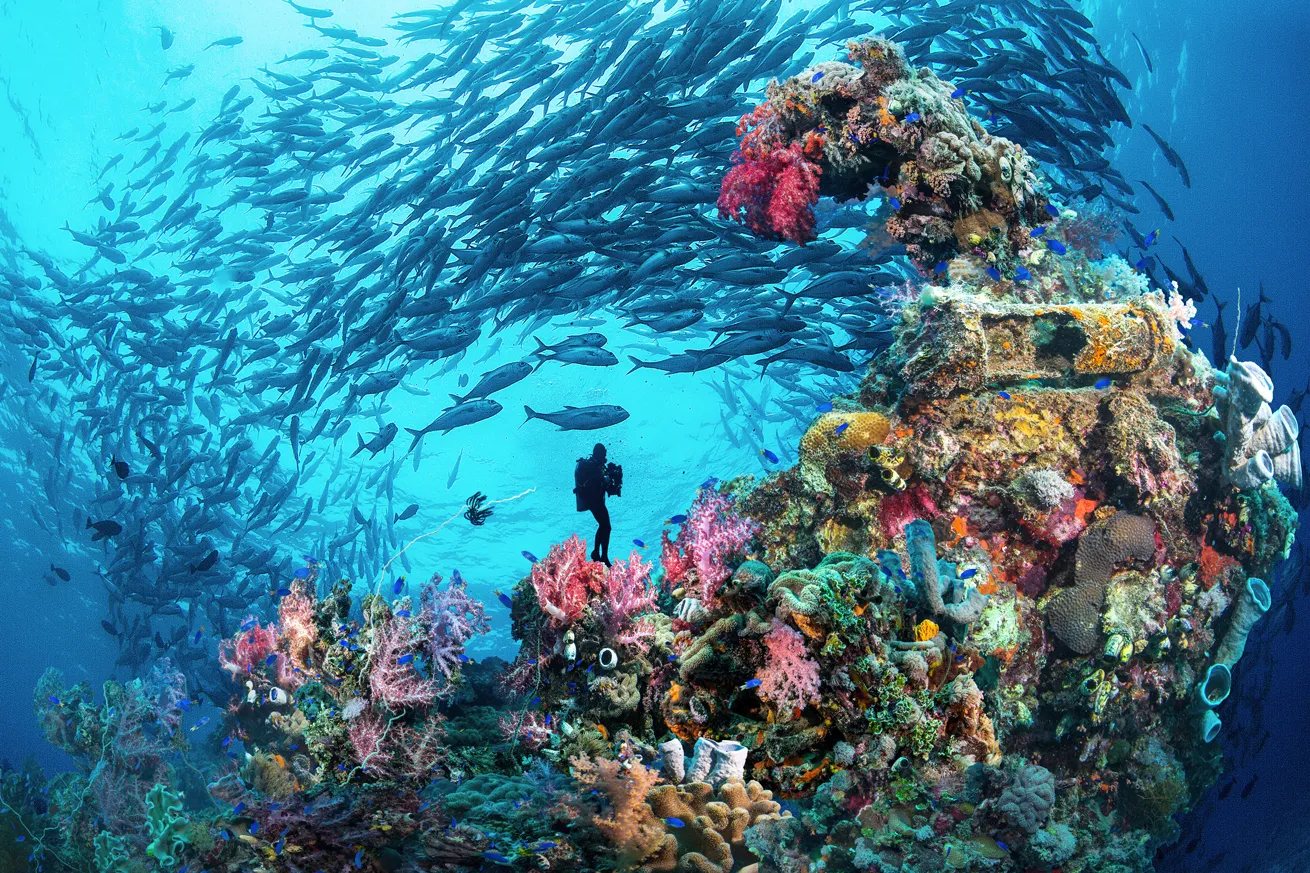
Shutterstock/J.S. LamyA diver is engulfed in a swirl of trevally wreck diving in Chuuk Lagoon.
To witness history, explore inside and encounter big animals drawn to oases in the sand–these are just a few reasons divers feel the pull of wreck diving. Some wrecks serve as reminders of wartime history and loss, and others were purpose-sunk solely for the pleasure of divers.
The destinations chosen this year by the readers of Scuba Diving magazine are a mix of historical and purpose-sunk ships. One destination is perhaps the planet’s largest collection of World War II wrecks available to divers. Another is a Caribbean gem where the wrecks are oases for marine life. The third is a mix of all of the above, serving up a submarine and other WWII wrecks, as well as purpose-sunk vessels now claimed by big schools of sand tiger sharks.
Read on to see which destinations won this year’s top honors and why.
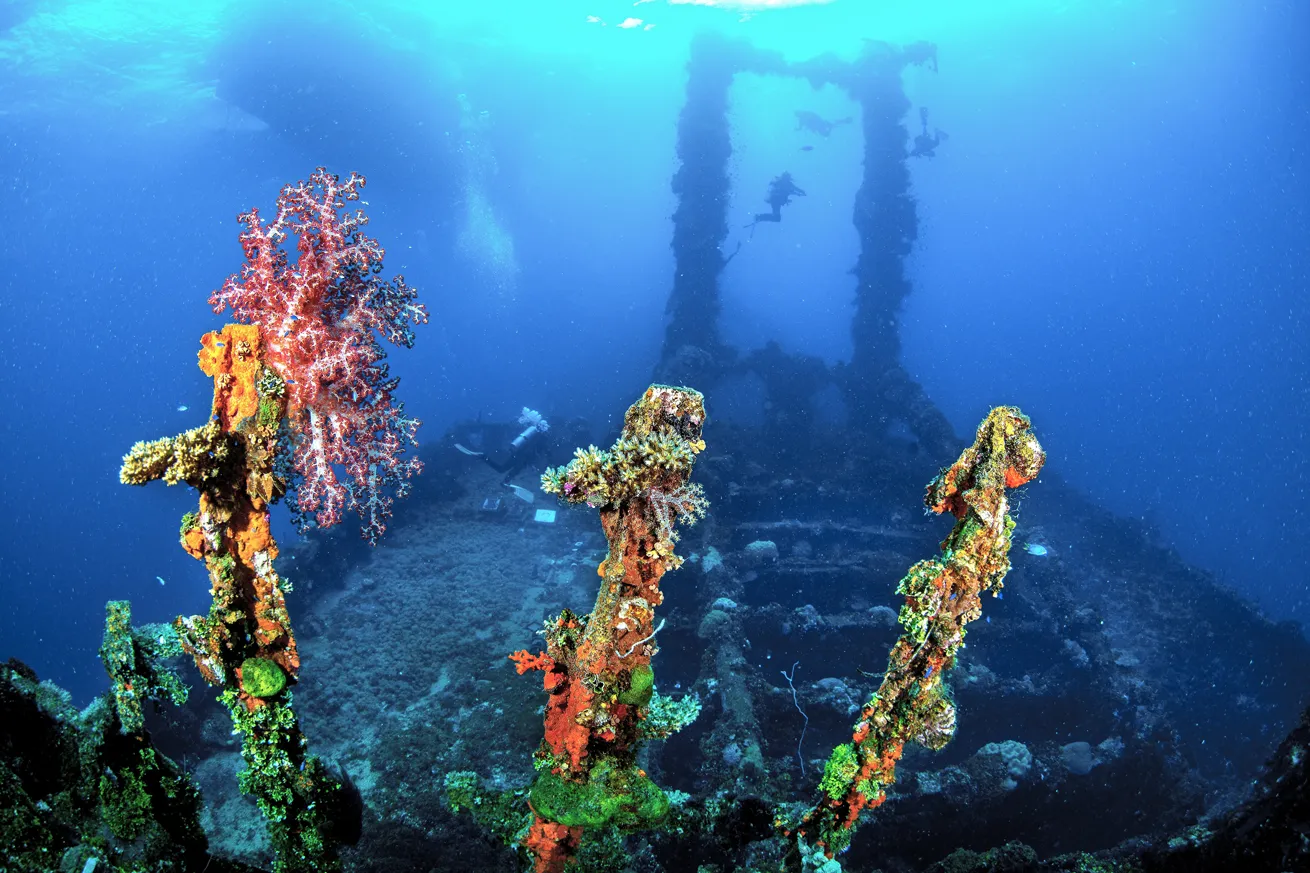
Shutterstock/J.S. LamyThe coral-encrusted wreck of the Fujikawa Maru in Chuuk Lagoon.
Wreck Diving Chuuk Lagoon
Within the 820 square miles of the Chuuk Atoll lie more than 60 World War II wrecks, most of which are within recreational diving limits. This destination, part of Micronesia, brings together tropical, warm-water conditions and relatively intact wrecks that now support more than 80 years of sponge growth. Most liveaboards offer weeklong trips to give guests a chance to see the huge variety within the sunken Japanese fleet, which includes battle ships, cruisers, cargo vessels and even a KD7 submarine.
Related Reading: Underwater Photography Tips for Shooting Shipwrecks
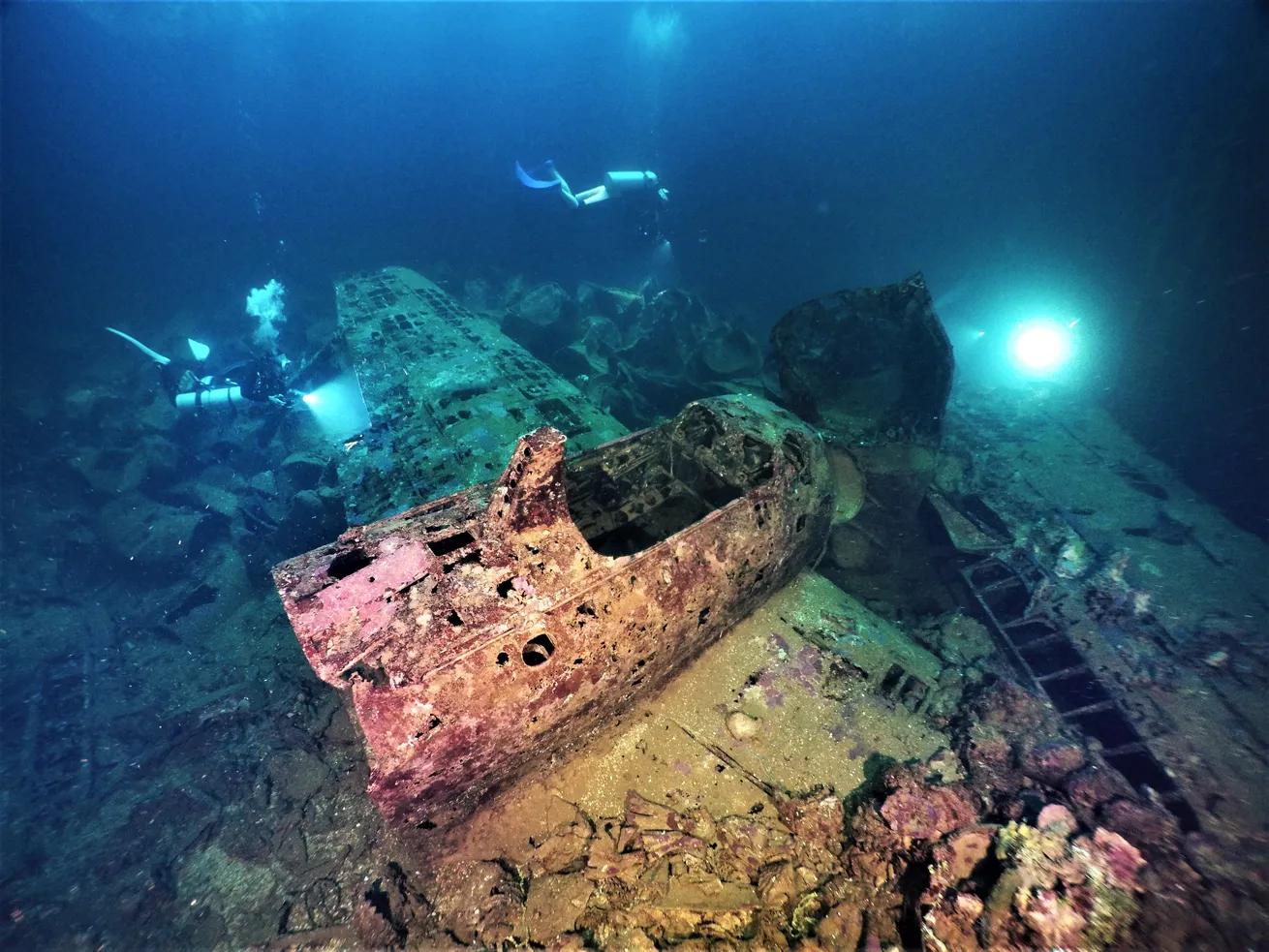
Shutterstock/KKKVintageOne of many downed World War II fighter planes in Chuuk.
Need to Know Diving Chuuk Lagoon
When to Go Prime season is January to April, with drier weather, calmer seas and less swell. One longtime Chuuk traveler shared that he prefers to book travel that coincides with February 17 and 18—the dates of Operation Hailstone in 1944—to honor the date and to potentially experience the same sea conditions present during the historic battle.
Don’t Miss Fujikawa Maru lies between 60 and 120 feet, offering light penetration, a mostly intact engine room and boiler, and ample opportunities to spot frogfish, nudibranchs and other critters nestled among its abundant sponge growth.
Creature Spotlight The coconut octopus can be found among the sand and debris around Chuuk’s wrecks. They’re masters of camouflage, hiding themselves inside ocean debris—such as coconuts. Discarded shells may signal that one lives nearby.
Gear Chuuk Lagoon is remote and isolated. Your liveaboard has spare parts and gear, but it can’t hurt to bring an extra fin strap, mask strap and spare batteries for strobes and dive lights.
Special Certification/Requirements The majority of wrecks in Chuuk Lagoon are available to open water divers. That said, Odyssey Adventures’ liveaboard offers support for technical diving, including double aluminum 80s, oxygen for decompression and decompression tanks.
Insider Tip If you’re arriving a day before your liveaboard departs and need something to do, ask your hotel to recommend a guide to lead you on a hike up Mount Tonnachau, a culturally important landmark for locals.
How to Book Odyssey offers seven-night liveaboard trips with five daily dives targeting all the best Truk Lagoon wrecks.
Contact trukodyssey.com
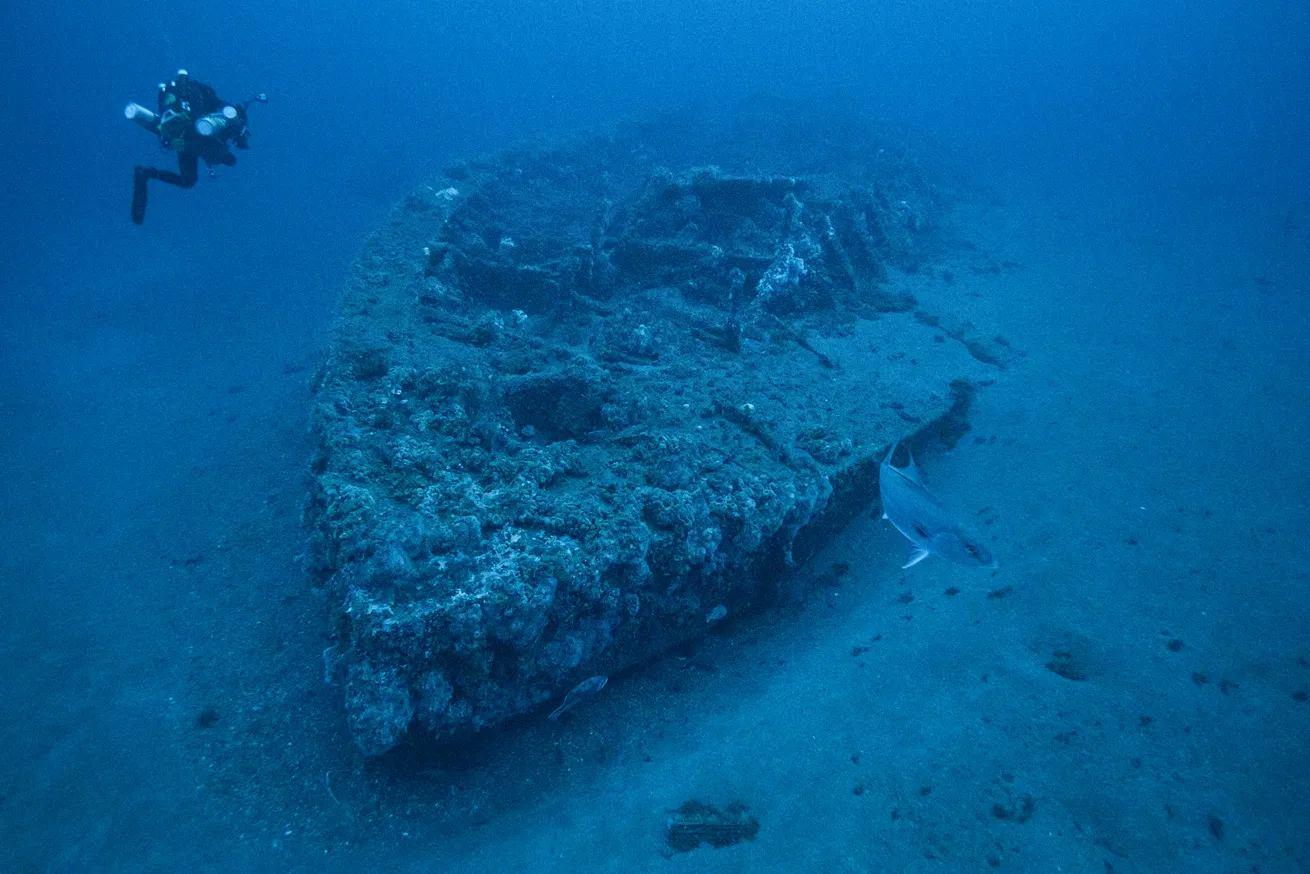
Shutterstock/Lego 19861111The USS Monitor is just one of North Carolina’s many wrecks.
Wreck Diving North Carolina
The navigational hazards posed by fog, shifting sands and converging currents have long made the coast of North Carolina a ship graveyard, but it was World War II that made places like Morehead City, Beaufort and Cape Hatteras diving hotspots.
The waters off Morehead City alone hold 19 options, including the U-352 German submarine, perhaps the most historically significant wreck, listed on the National Register of Historic Places. A close second is the SS Papoose, torpedoed by the German U-124 in 1942 and sent to its resting site, where it sits upside down and serves as an oasis for sand tiger sharks that gather by the dozens.
Related Reading: Ash to Artifact: Saint-Pierre’s Underwater Ghost Town
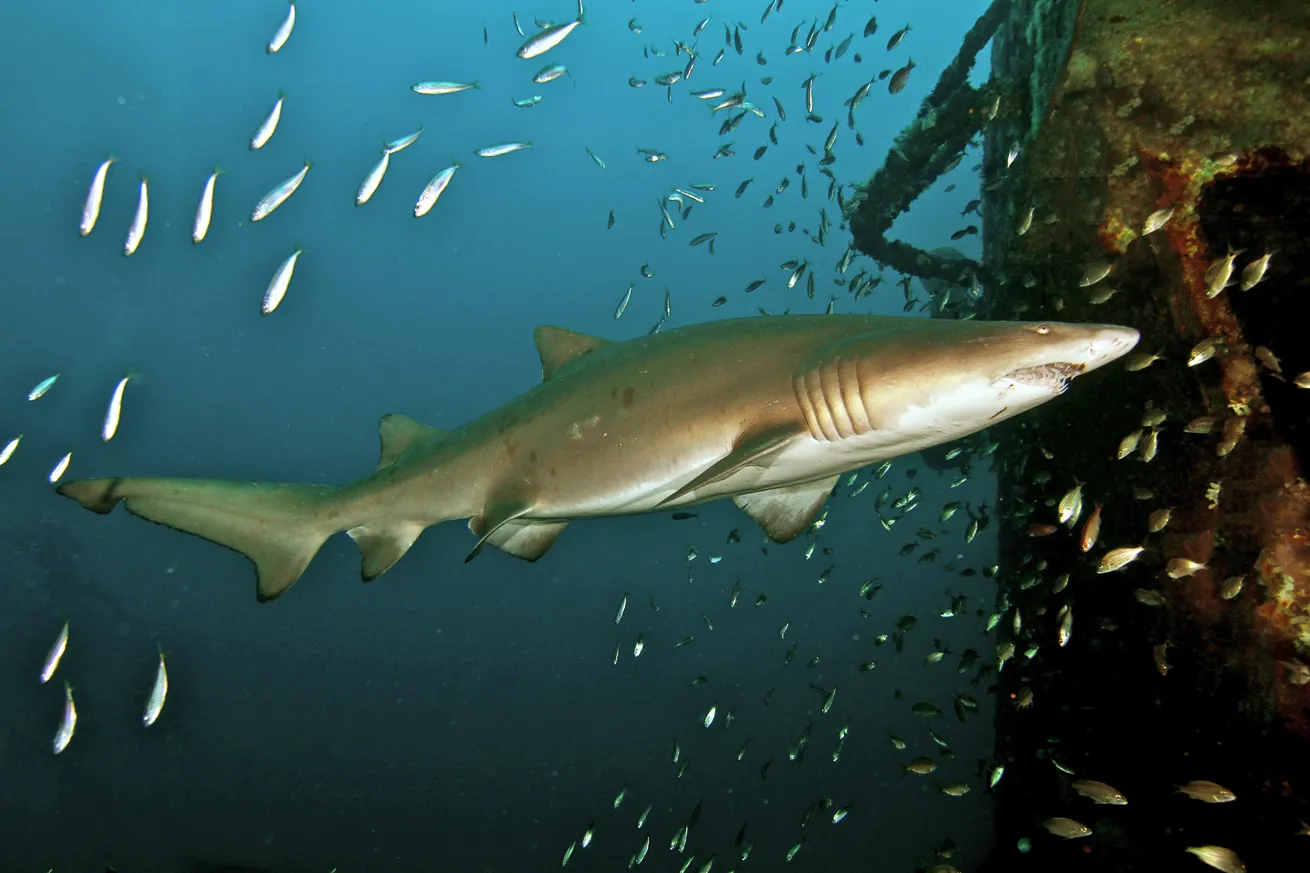
Shutterstock/Michael RothschildSand tiger sharks can be found patrolling wrecks.
Need to Know Diving North Carolina Wrecks
When to Go June through September offers the warmest water, best visibility and best odds of seeing large numbers of sand tiger sharks. Most dive centers, including Olympus Diving, operate daily charters April through October.
Don’t Miss U-352 is one of three German World War II U-boats off North Carolina. This one is intact, close to shore, easily accessible and offers favorable conditions. Most of all, its dramatic demise is well documented: USCGC Icarus deployed depth charges whose shock waves damaged the U-boat, forcing it to surface.
Creature Spotlight The sand tigers are the big, obvious draw, but these wrecks provide habitat for nudibranchs too. Ancula evelinae was discovered off Beaufort, 4 miles north of Morehead City, and stands out for its translucent white coloring and striking yellow or orange stripes on its back.
Gear Bring gloves. “Shipwrecks have sharp surfaces, and it’s a good idea to protect your hands if you need to touch a wreck,” says Bobby Purifoy, owner of Olympus Diving.
Special Certification/Requirements Olympus offers a specialty course that focuses on the history of the U-352, plus another that digs into the details of the USS Schurz armed cruiser, which began its service for Germany before being captured by the U.S.
Insider Tip Divers looking to save money and who don’t mind hostel-style accommodations can stay at Olympus Diving’s Dive Lodge. The lodge offers Wi-Fi, a clean communal living area and 32 bunks spread across five rooms.
How to Book Olympus Diving in Morehead City offers daily boat charters during peak season, May through September.
Contact olympusdiving.com
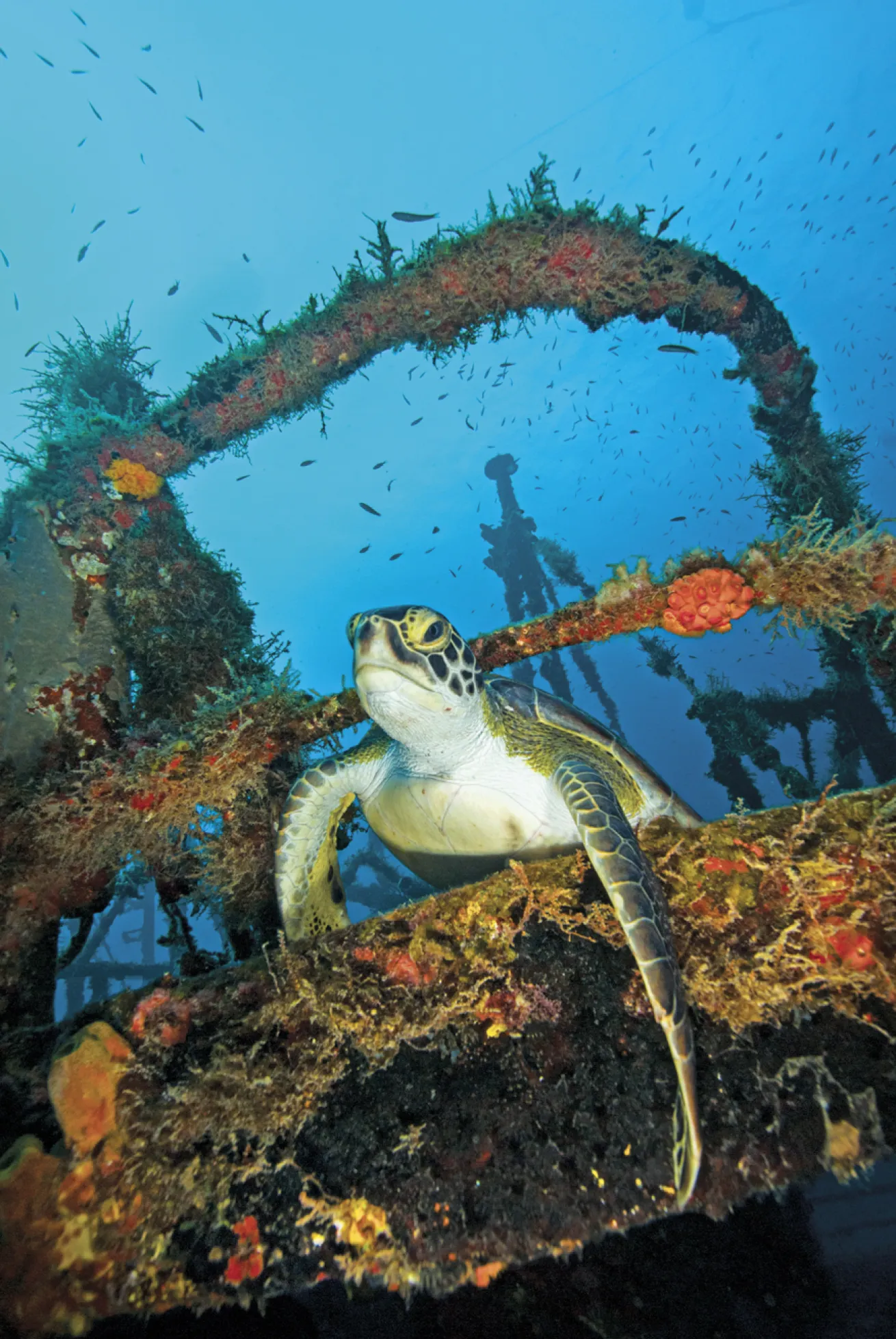
Mike HarterinkA hawksbill sea turtle makes its way along the Charlie Brown wreck.
Wreck Diving Statia
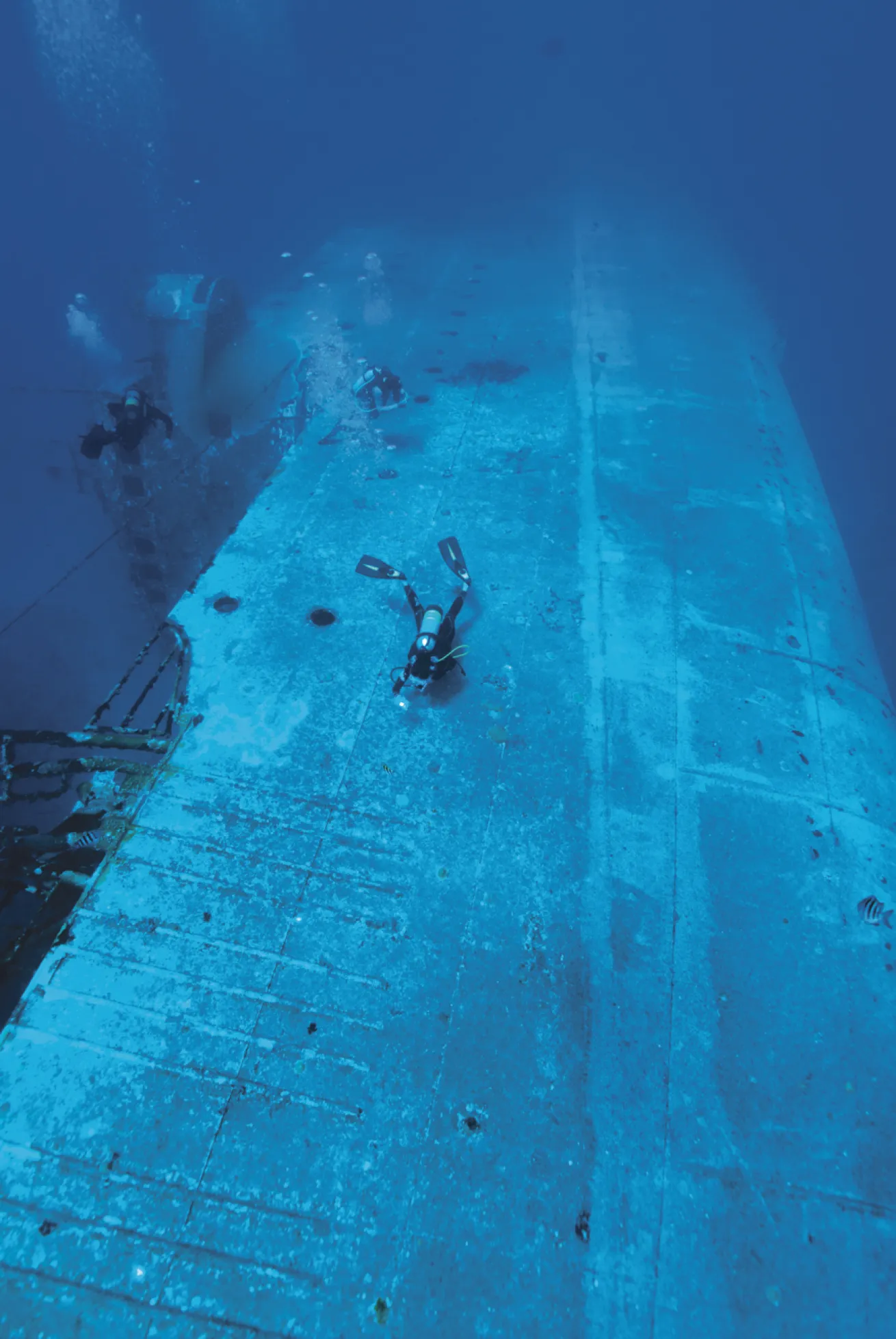
St. Eustatius is charmingly small—just 8 square miles. Despite its small size, it’s one of the biggest wreck-diving destinations in the Caribbean, offering more than 15 wrecks. Anchoring the island’s reputation is the 320-foot Charlie Brown, a cable-laying ship made safe for divers and purpose-sunk in 2003. It sits more than half a mile from the southwest coast where there’s typically enough current to attract schools of horse-eye jacks and blue runners.
Related Reading: Going Green at Golden Rock Resort
Mike Harterink
Need to Know Diving Statia
When to Go January through June is the dry season, which generally brings less rain, flatter sea conditions, less swell and visibility of 60 to 100 feet.
Don’t Miss The Chien Tong is Statia’s second-biggest wreck, at 170 feet long. It sits at depths between 55 and 80 feet. Some divers prefer it to the Charlie Brown for its abundant macro life; plus, its relatively modest size makes it easier to photograph.
Creature Spotlight Black grouper are commonly seen at the Charlie Brown. Stay horizontal and keep a distance of at least 3 feet to avoid spooking this fish. Observe their unique coloring, which can change to help them blend in with their environment. Grouper are also unique for their ability to inhale prey thanks to snap movements of their jaw.
Gear Diving in deeper waters can cool your core. If you plan night dives—which are not to miss on Statia—add a neoprene hood to help keep your temperature regulated all day.
Special Certification/Requirements Having the PADI Advanced Open Water Diver certification gives divers an opportunity to see deeper wrecks, including the Charlie Brown. If you don’t already have your advanced cert, earn it in Statia and practice navigation over sands that are a hotbed of biodiverse macro life.
Insider Tip Get the download on this island’s rich—and troubled—past with a free history tour offered by St. Eustatius Historical Foundation Museum in Oranjestad.
How to Book Scubaqua, a PADI Five Star Dive Center on island, offers daily guided boat trips, instruction, night diving and privately guided dives.
Contact scubaqua.com


