

Shutterstock/Naeemphotographer2
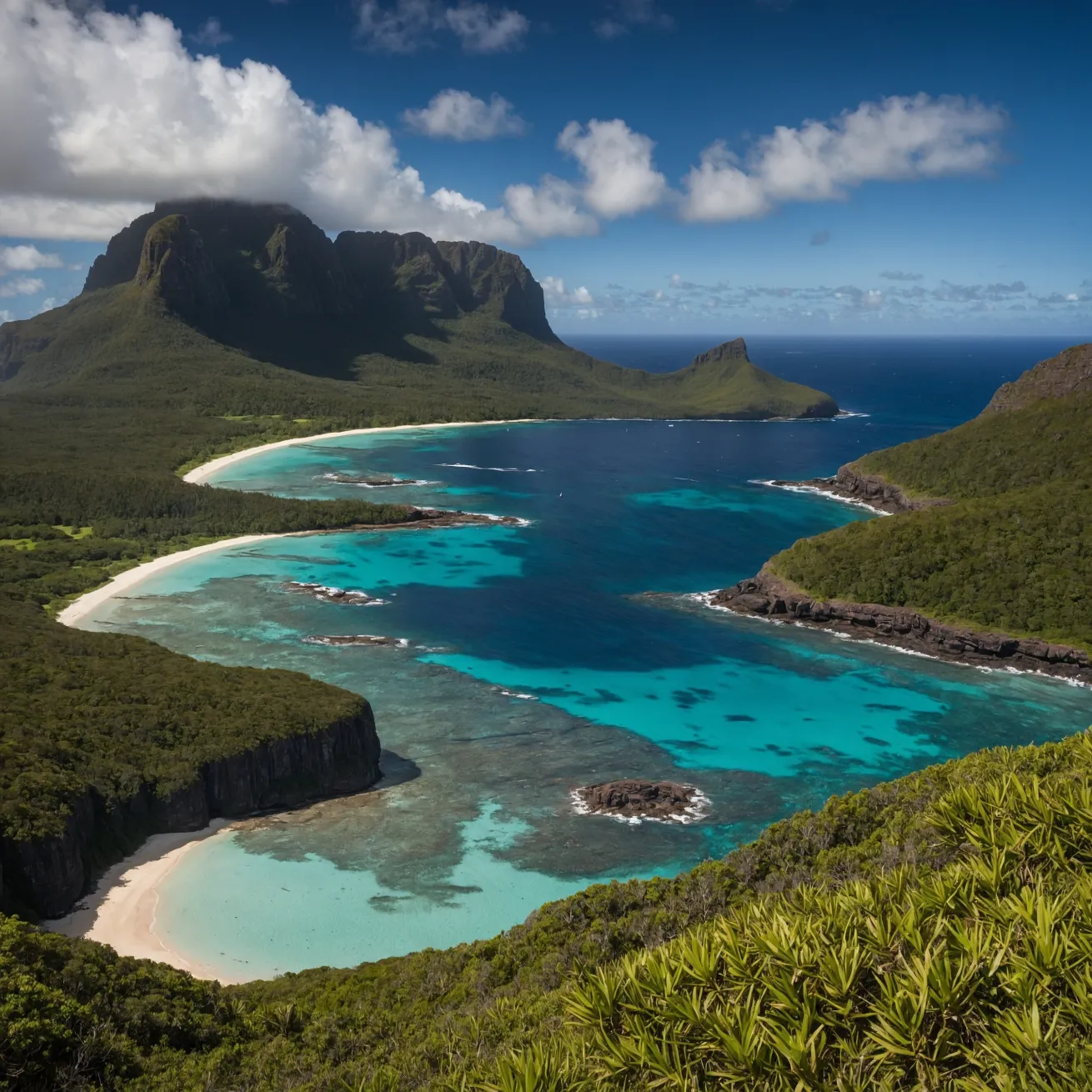
This beguiling beauty is located just over 400 miles northeast of Sydney. It has the world’s southernmost tropical coral reef, two 2,460-plus-foot mountains (each with a cloud forest), and the world’s tallest sea stack, the diveable Ball’s Pyramid, a basalt fang that looks like a Bond villain’s lair. This relatively small island is the remnant of a large shield volcano, home to endemic species and a resident population of roughly 400 people, many of whom are fourth, fifth and sixth generation islanders.
No more than 400 visitors are allowed on the island at any given time. There are few locks (the honor system is strong here) and even fewer cars—most people cycle the eight miles of roads, past trees with fluffy white tern chicks perched precariously on branches, in a fuzzed-out, perpetual state of static cling.
This isolated UNESCO World Heritage site is a place of weird and wonderful things: 241 species of indigenous plants, nearly 50 percent of which are found nowhere else on Earth; more than 500 fish species, including the endemic Doubleheader Wrasse; 207 species of birds, including the threatened Lord Howe Island Woodhen; and around 1,600 species of insects, including the world’s rarest—the Lord Howe Island Phasmid—a cigar-sized creature that was believed to be extinct in 1935, only to be rediscovered in 2001. (Guess where they found it? The Bond lair of Ball’s Pyramid.)
If you come here—to snorkel and dive, hike and walk, and spend time with friends and family—you’ll wonder why you haven’t visited sooner, and you’ll never want to leave.
Related Reading: A Photographer's Guide to Southern Australia's Best Diving
Courtesy Antonia Cooper
Wild About Water
With its abundance of golden, uncrowded beaches curving around green and sapphire lagoons, Lord Howe attracts water-babies. It’s an ideal spot for kayakers, snorkelers and divers. There are no rivers draining into the bays and no nearby commercial fishing, just that marine artery, the East Australian Current, sweeping past Lord Howe Island, which has a marine park extending 12 nautical miles around the island.
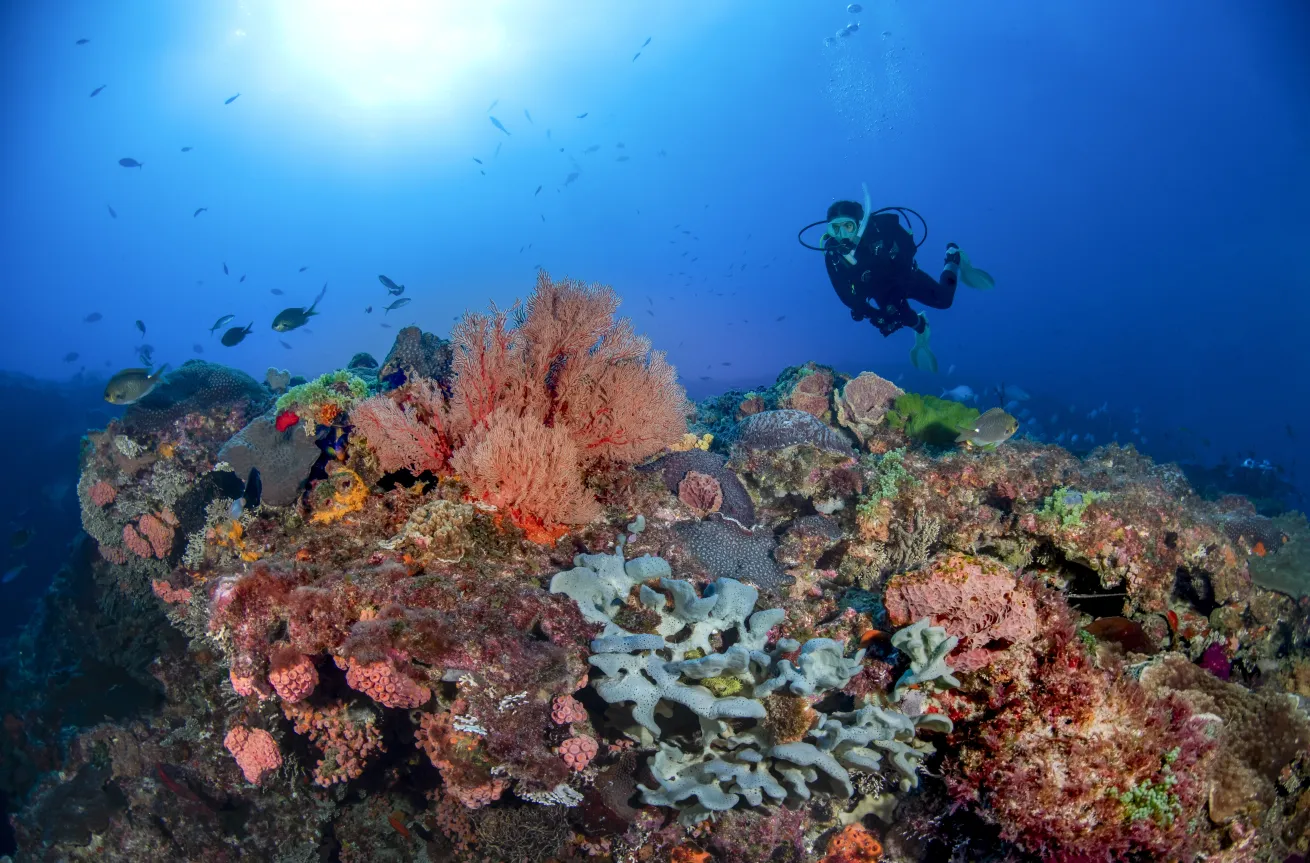
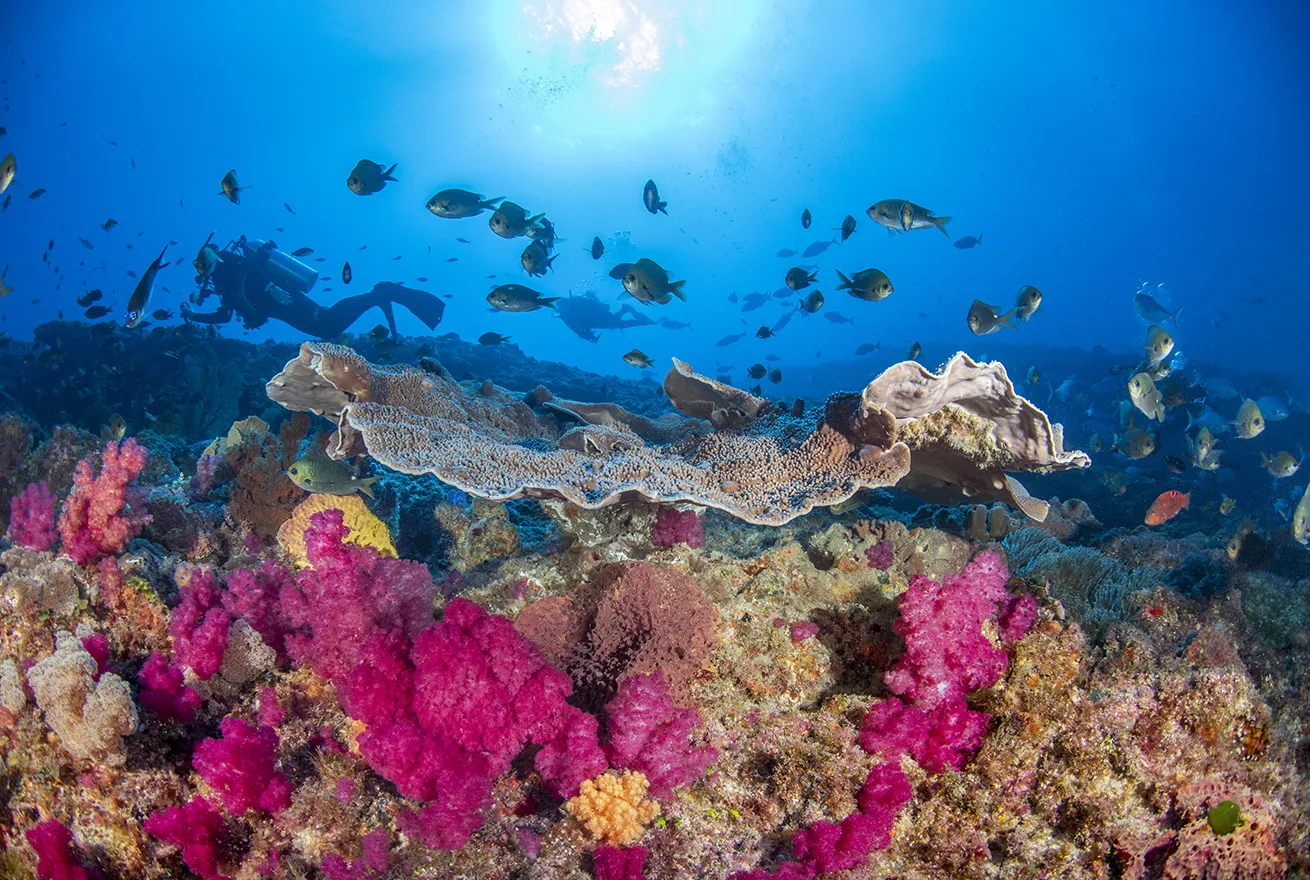
Diving still has an exploratory feel here, probably due to the lack of dive traffic. Small group guided dives are offered three times per day (morning double dives, single afternoon dives and night dives on request), with more than 100 sites to choose from, depending on conditions.
The Admiralty Islands are just 15 minutes by boat, a grouping of small offshore volcanic islands with more than 24 dive sites between them. Fish flit around coral- and algae-covered boulders, and the dives are shallow enough (56 feet) to roll with the surge and glance up to see waves crashing against the rocks. Small, curious Galapagos sharks zip around, darting between the boulders and the open ocean. There are at least 12 species of rays and sharks found in Lord Howe’s marine park, the most common being the Galapagos shark, which congregate here, but are rare elsewhere in Australian waters. (On one dive, we counted more than 20 Galapagos sharks cruising around us.)
Related Reading: Diving to Protect the Galapagos
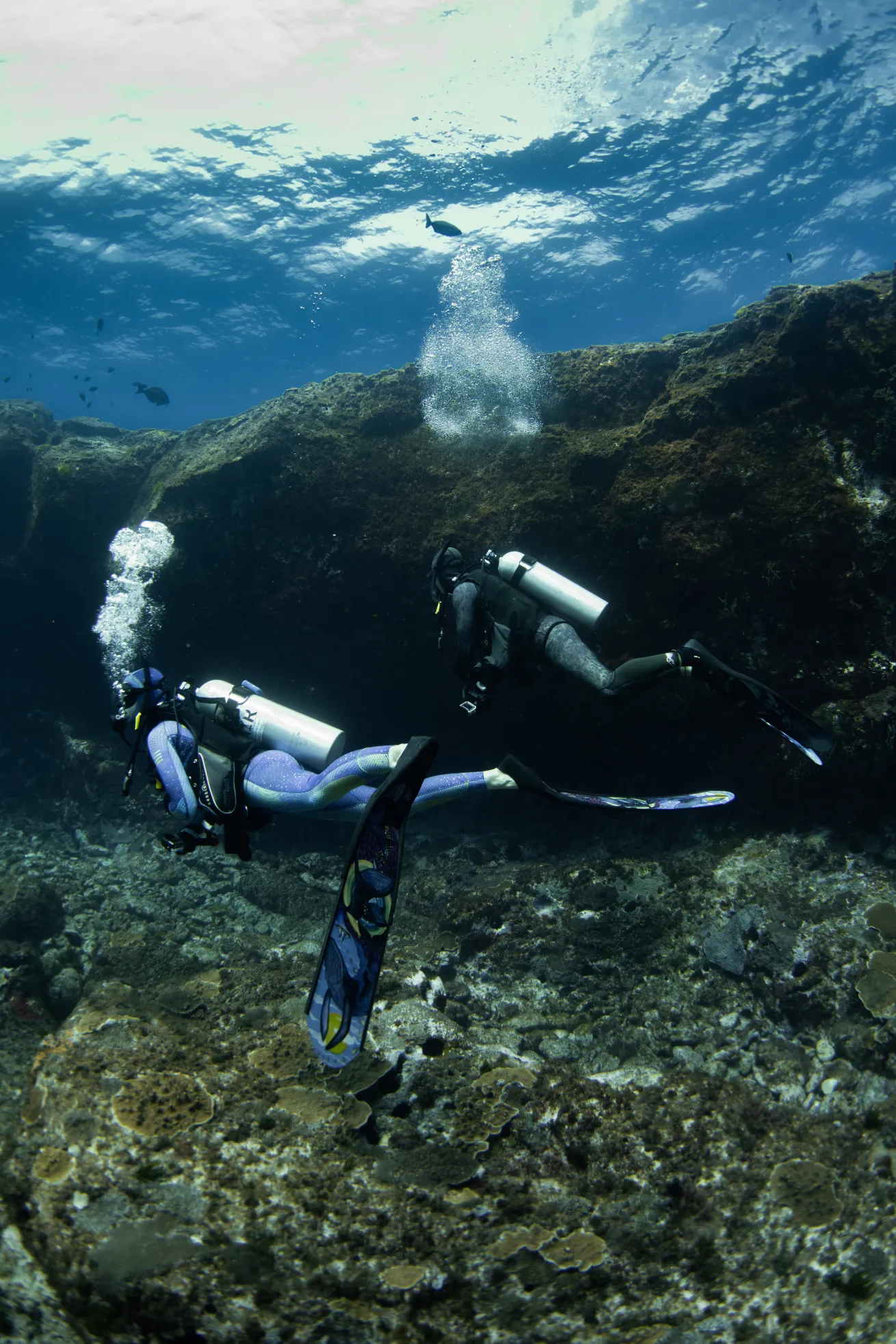
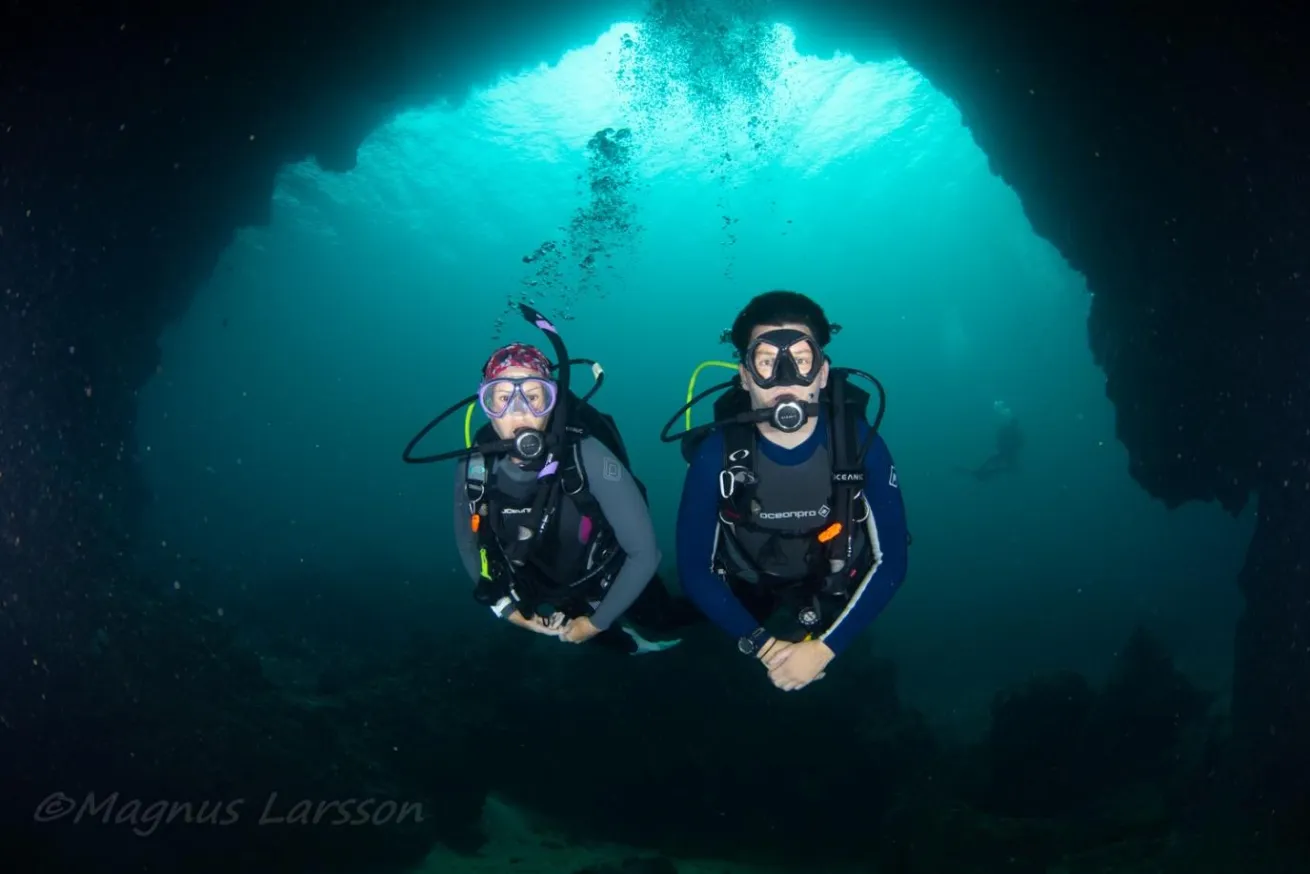
Malabar is a shallow playground for divers, with easy lava-tube swim-throughs and arches to explore. This seems to be a favorite spot for macro, although we also spotted Doubleheader Wrasse, kingfish, Lord Howe moray eels and more Galapagos sharks.
There is a little something for everyone here, from the shallow Lagoon for beginner divers (with its abundance of coral and fish life), to Ball’s Pyramid for more experienced divers (due to current and its open ocean location).
Courtesy Evan FawellBall’s Pyramid is the place to see schools of trevally, pelagics (marlin and sharks), and the world’s rarest angelfish, the Ballina Angelfish.
Divers like to joke that Ball’s is the “pinnacle of dive excellence” in the area. It’s about 1.5-hours by boat and trips cannot be planned in advance. Certain weather requirements and diver numbers need to be in place to dive it.
Ball’s Pyramid is the place to see schools (trevally and kingfish), pelagics (marlin and sharks), and the world’s rarest angelfish, the Ballina Angelfish, a deep-water angel that usually stays below 328 feet, but can be seen here at recreational limits (most dives are around 82 feet).
For snorkelers, Ned’s Beach is one of the best local spots, with kingfish, wrasse and spangled emperors. Hawksbill and green turtles also migrate through the area, feeding on seagrass. Masks, snorkels and fins are stored in a shed on the beach and can be rented by leaving money in the honesty box. (Guided snorkel and glass-bottom boat tours are on offer.)
Dive Lord Howe also offers guided snorkel tours around the island, as well as two unique excursions—snorkeling with Galapagos sharks and a night snorkel to see the reef in all its fluorescent wonder.
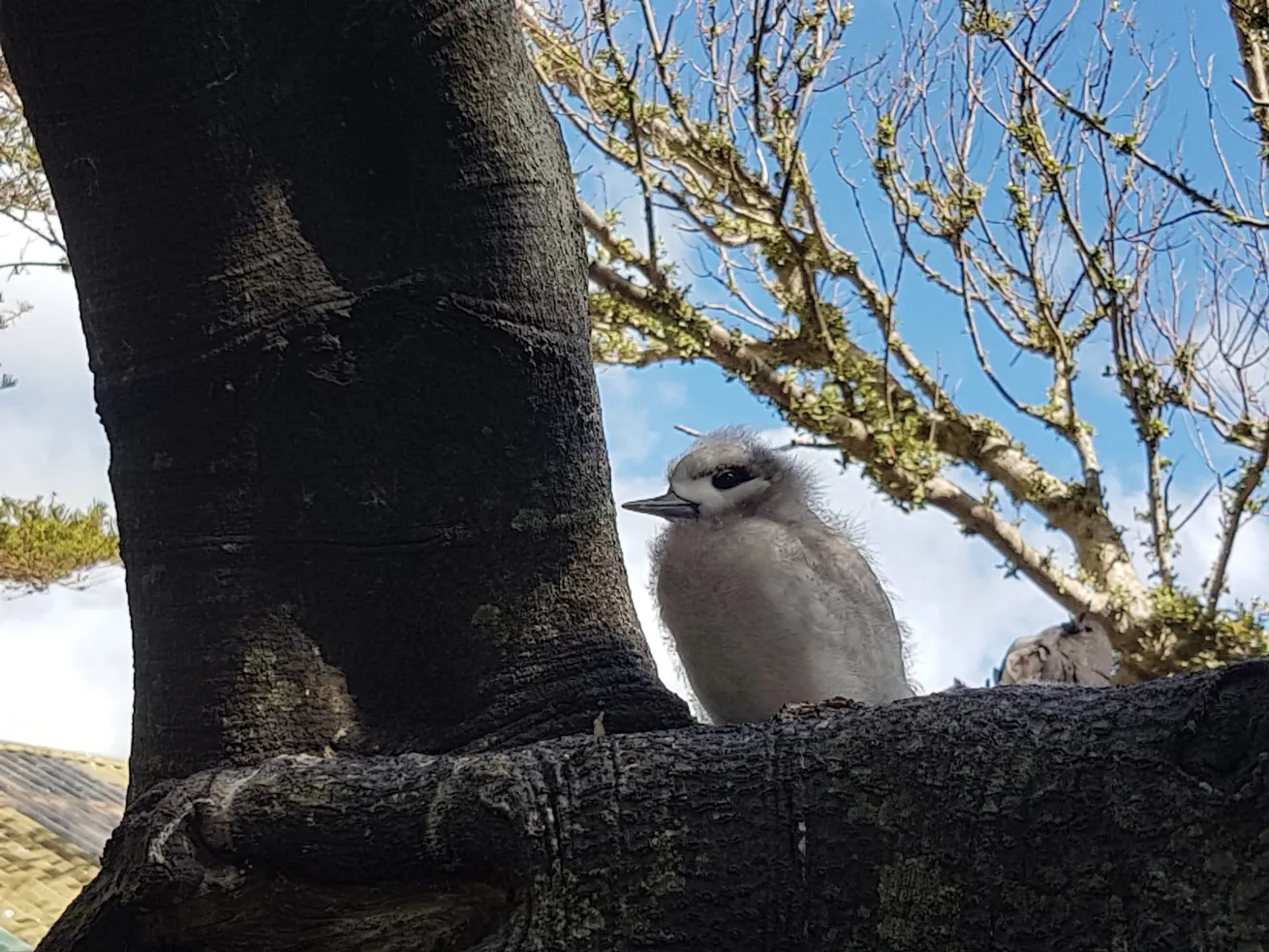
Carrie Miller and Chris TaylorJuvenile white tern (fairy tern).
Venture Into the Clouds
Lord Howe Island gives off the feeling that there’s always something more to explore, whether you’re underwater or on land. More than 85 percent of the island is still covered in native forest, and 70 percent is protected in park reserves. Bird-watching is a hugely popular activity here, with more than 130 species of land and sea birds either visiting the island or calling it home. (The endemic Lord Howe Island Woodhen can be spotted year-round; this bird is one of the island’s many conservation success stories, with numbers rebounding from 30 in the 1970s to around 1,500 today.)
Hiking is also a popular pastime, with ribbons of trails winding through forests and along coastlines and sea cliffs. (There are tracks and loops for all levels; just ask the islanders for advice.)
For the fit and adventurous, don’t miss a guided hike up Mount Gower with Lord Howe Environmental Tours. This strenuous eight- to 10-hour trek (8.7 miles round-trip) is one of Australia’s best day-walks, leading up to the 2,871-foot cloud forest on Mount Gower’s summit, the highest peak on the island. The track snakes along an exposed cliff face (ropes are there for safety and helmets are worn on this section to protect from rockfall), and other steep sections have fixed ropes to help hikers pull themselves up.
The payoff? Along the route, you’ll traverse through lush forest, with views of most of the island unfolding below you. At the summit, a 67-acre plateau contains a mythical cloud forest clad in ferns, mosses, and flowering plants, 86 percent of which are found nowhere else on Earth.
(Tip: Book in advance: there are limited spaces on hikes, which are held only on certain days. Speak to the tour office if you have any questions about the hike; they can provide a comprehensive briefing.)
Related Reading: Unique Diving in an Unusual Place—Niue is Like Nowhere Else
Courtesy Antonia Cooper
Need to Know Diving Lord Howe Island, Australia
When to Go: Southern Hemisphere summers (November to February) are booked out well in advance, with temps around 77 degrees Fahrenheit; winters are mild (63 degrees F) and a pleasant time to visit. Lord Howe is diveable year-round, with September through May being best. Dive Lord Howe closes June through August.
Dive Conditions: Visibility ranges from 30 to 130+ feet, and is generally better during the summer months. Water temperatures are around 64 degrees F in winter and 79 degrees F in summer. (A 5mm wetsuit is suitable year-round.) Depths range from 20 feet to 131+ feet. Suitable for divers of all levels.
Operators: Dive Lord Howe (established 1978) is an award-winning, 5-star PADI Dive Resort. They are the only dive operator on the island, and their team is friendly and passionate about ocean conservation. Dive Lord Howe operates two vessels and offers guided diving, snorkeling experiences, and dive training. Pre-book dive packages prior to arrival.
Travel Tips: The easiest way to get to Lord Howe Island is via Sydney with SmartLynx Australia, which operates daily two-hour flights. There are strict weight limits: one 15.4-pound (7 kg) carry-on and one 30.8-pound (14 kg) checked bag per person. You are allowed a second checked bag, but there’s no guarantee it will make the flight. (Divers should pack computers and masks and rent other equipment on-island due to weight restrictions. The shop has quality gear, including 5mm wetsuits.)
A flashlight is useful (the island is dark at night); so is a daypack and reusable water bottle.
Make a Difference: Islands hold around 5 percent of the world’s land area, but 28 percent of its biodiversity, including 40 percent of the world’s threatened species. They are home to some of the world’s greatest conservation success stories, yet more than half of all extinctions have occurred on islands. In 1918, black rats escaped a grounded ship and laid siege to Lord Howe Island, swiftly causing the extinction of at least 13 invertebrates, five land birds and two plants, bringing the Lord Howe Island Woodhen and the Lord Howe Island Phasmid to the brink of extinction.
Lord Howe Island fought back. It was the largest populated island to undertake a full-scale eradication, a five-year, $15 million program that got rid of more than 300,000 mice and rats. The species bounce-back is staggering.
Dead as a dodo. We’ve all heard the phrase because the dodo was a cautionary tale of human-induced extinction. It wasn’t too long ago that extinction was unthinkable. Now, we’re getting acclimatized to it, which is dangerous. Species (animals, insects, and plants) are going extinct 1,000 times faster than ever before, and numbers are plummeting. In the last 100 years, we’ve lost 90 percent of the ocean’s large fish. In the last 50 years, we’ve lost 60 percent of wildlife populations. We can’t let ourselves shrug it off. We have to fight back.
Carrie Miller and Chris Taylor
To create their unique National Geographic book, A Diver’s Guide to the World: Remarkable Dive Travel Destinations Above and Beneath the Surface, dive travel experts Carrie Miller and Chris Taylor traveled to 50 inspirational locations around the world, spending more than 250 hours underwater. Carrie is also the author of 100 Dives of a Lifetime: The World's Ultimate Underwater Destinations. @beneaththesurfacemedia; @carriemiller_writer.


