

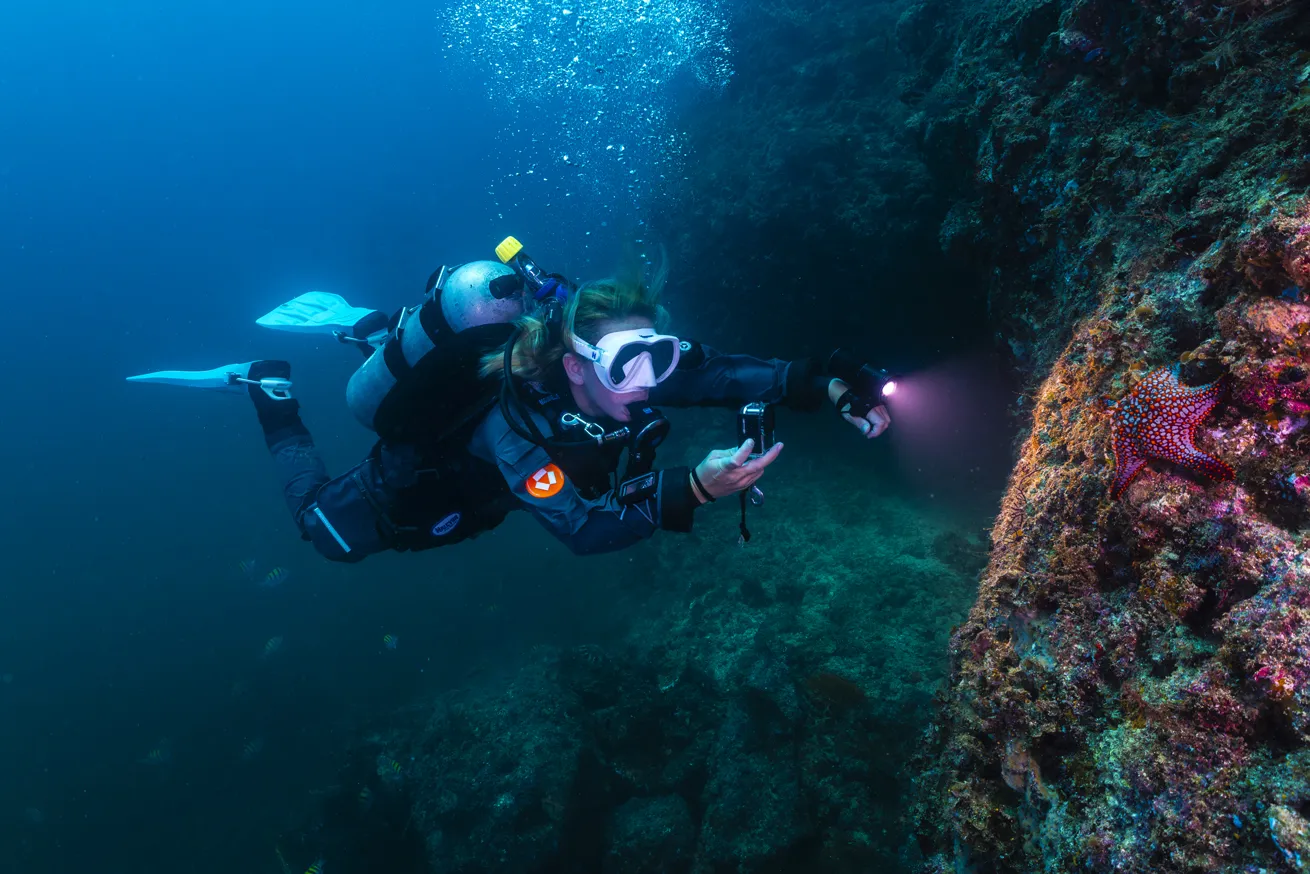
Candice LandauEllie Hudson films a sea star in her new Avatar drysuit.
It’s our last day of diving in Loreto, and my dive buddies and I are hoping for something extra special, something that will stop time in its tracks and allow us to live in the moment.
We were told July wasn’t the ideal time to visit—visibility can drop, and the water cools—but we’ve hardly noticed. In fact, this final day of diving turns out to be the most memorable.
At Punta Eleonora, near Carmen Island, Ellie and I fall behind the dive group, mesmerized by a sea lion so large I almost mistake it for a walrus. The bull isn’t aggressive, just curious, popping up and down as if scouting for a sun-drenched exit. Though the sea lion gets the brunt of our attention, we also stop to photograph an eel and a ray that have decided braving the shallows is worth the risk.
Related Reading: A New Way to Dive the Galapagos Islands
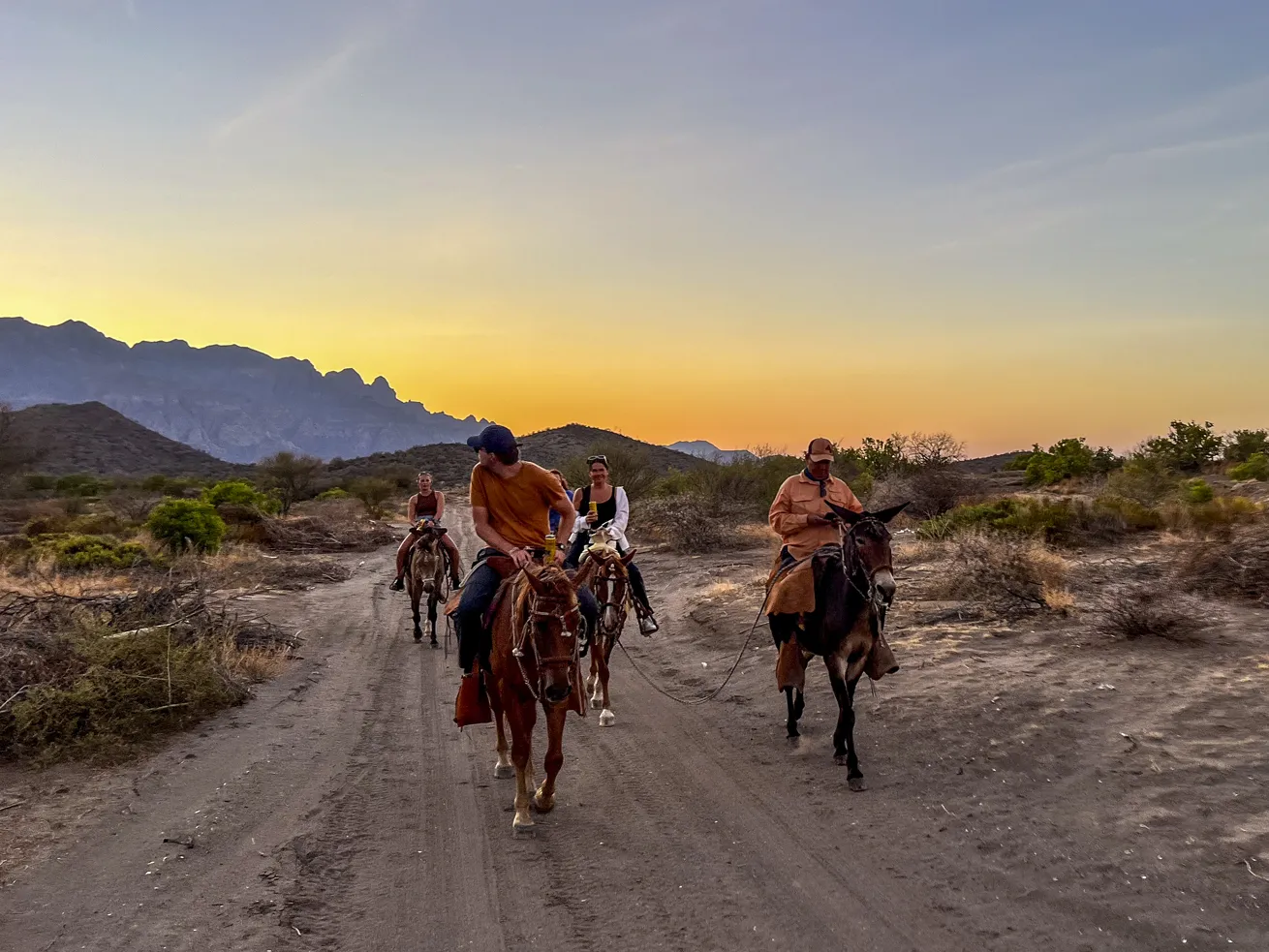
Candice LandauA beach ride on horseback.
When we do finally catch up to our guide Juve, we are in an underwater alcove, its walls alive with color. Fish dart in every direction, so many that I swap my large camera for my GoPro because a still shot won’t do this aquarium justice.
Looking up, I see the jagged, sunbaked cliffs of Baja rising abruptly from the sea—a sharp contrast of barren brown against striking blue. They remind me of the mountains I admired in Egypt: vast, ancient and seemingly lifeless. But that’s an illusion. These crags shelter a remarkable array of desert-adapted life, and overhead, birds I last saw in the Galápagos—blue-footed boobies, frigatebirds, cormorants—circle the shore, thriving on this rich intersection of land and sea.
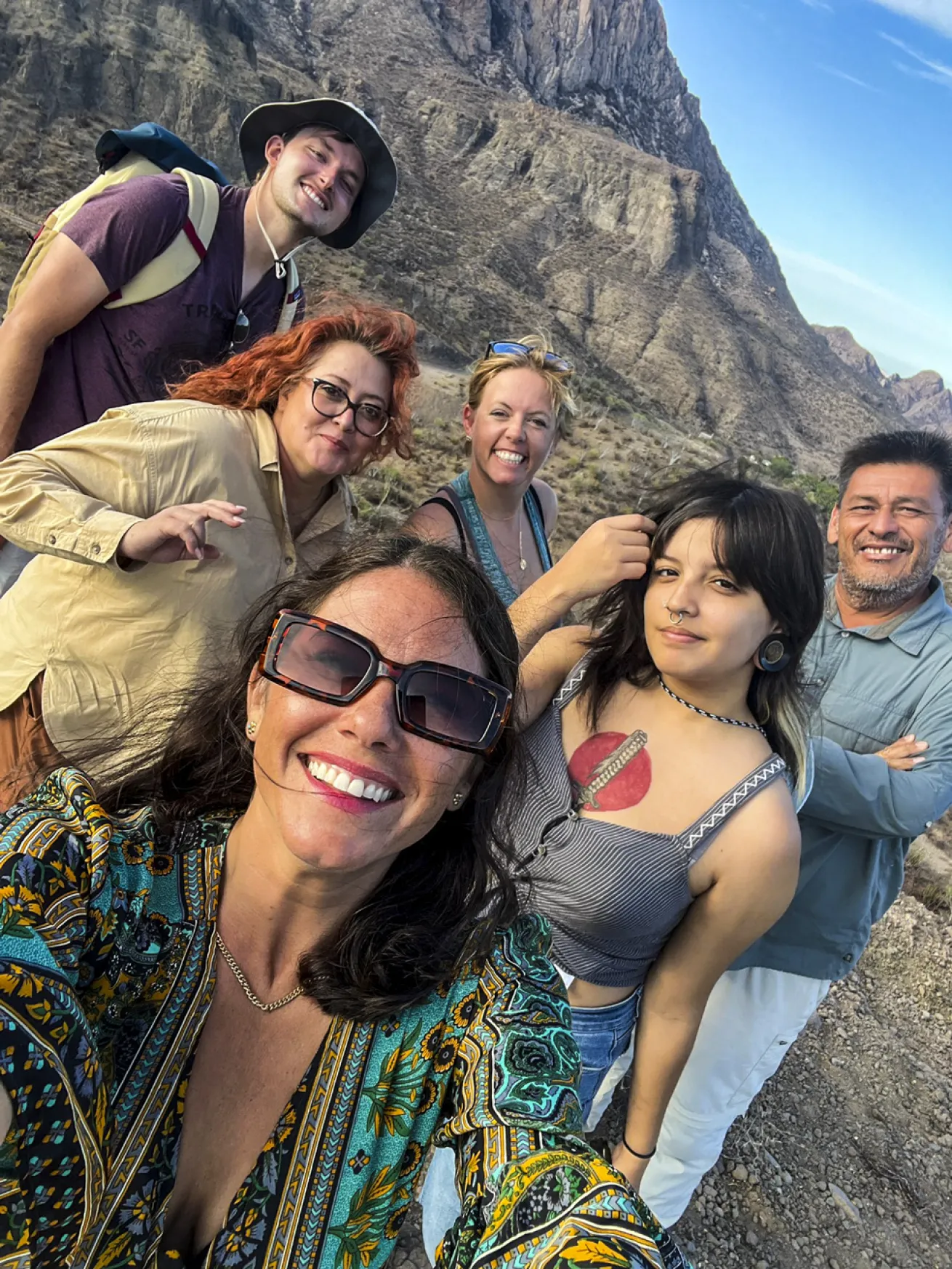
Alexis JabbourAlexis Jabbour captures one of the group’s many mountain vista stops outside Loreto.
A Town Steeped in History
When most divers think “Baja,” they picture La Paz, with its whale sharks, or Cabo San Lucas, with its mega resorts. But Loreto, just four and a half hours north of La Paz, is the original capital of Baja California and the oldest permanent settlement on the peninsula. Here, history is rich though the pace is quiet, the vibe relaxed. For me, it’s the kind of place that feels like a true discovery—one I could see myself returning to, maybe even settling into for a season of diving and hiking.
One afternoon, my buddies and I trade wetsuits for saddles. I’ve roped them all into the romantic notion of a beach ride along the base of the Sierra de la Giganta, the rugged mountain range backing Loreto. Our guide Ivette connects us with a local outfitter she knows and trusts—someone who takes care of his animals. Soon, we’re astride. My ride is a speckled gray mare with an energetic bounce and a desire to take the lead. We weave through dry grasslands, cactus stands and, finally, onto the beach, where her ears prick up and she breaks into a trot, dodging driftwood and dried pufferfish with the skill of a slalom racer. I can’t stop laughing. The sun dips low, gilding the landscape, and Ivette rides up beside me, smiling—she can see I have fallen totally in love with this land of contrast—dry yet full of life; remote yet welcoming.
Later, back in town, we wander Loreto’s sun-dappled courtyards. Pots spill over with pink hibiscus flowers, and red flame trees cast color against Spanish terra cotta roof tiles. Restaurant walls gleam white and clean. We listen to Ivette tell the stories behind the historic murals at city hall, which depict the region’s Indigenous roots, Jesuit missions and seafaring history. Every evening brings local flavors: hearty dinners at Mi Loreto, casual taco feasts at Baja Haay or fresh seafood at Orlando’s Restaurant.
Related Reading: Trending Dive Spots: Magdalena Bay, Mexico
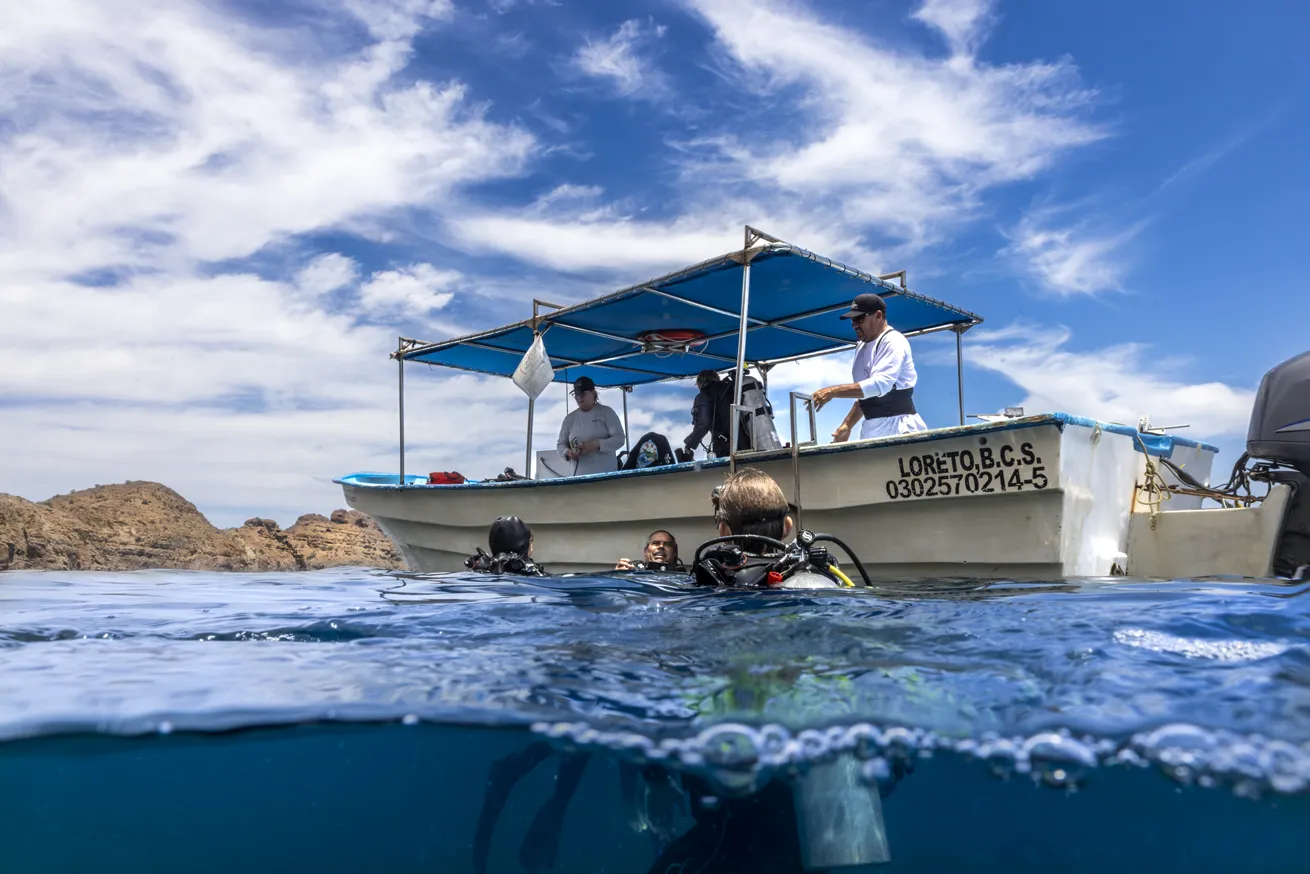
Candice LandauDive guide Juve chats with Alexis and Theo on the surface.
Diving Loreto’s Rich Seascapes
At Coronado Island, dramatic lava formations create caverns, ledges, and steep walls covered with sea fans and corals. At Carmen Island, we explore shallow pinnacles, drifting through clouds of krill so thick I wonder how near the whales are. Danzante Island’s north side stuns us with giant boulders and a mix of rocky slopes and sandy bottoms bustling with angelfish, butterflyfish and puffers.
On our first dive day, we pull into a turquoise bay near Punta Lobos, where white light ripples on the sandy bottom. Our guide Yago, co-owner of Blue Nation Baja, surprises us with a fresh plant-based lunch: pasta salad packed with crisp lettuce, tomatoes, corn and a zingy dressing. It’s the kind of thoughtful, low-impact meal that makes sense when you’re diving in a marine park—sustainable, cruelty-free and delicious.
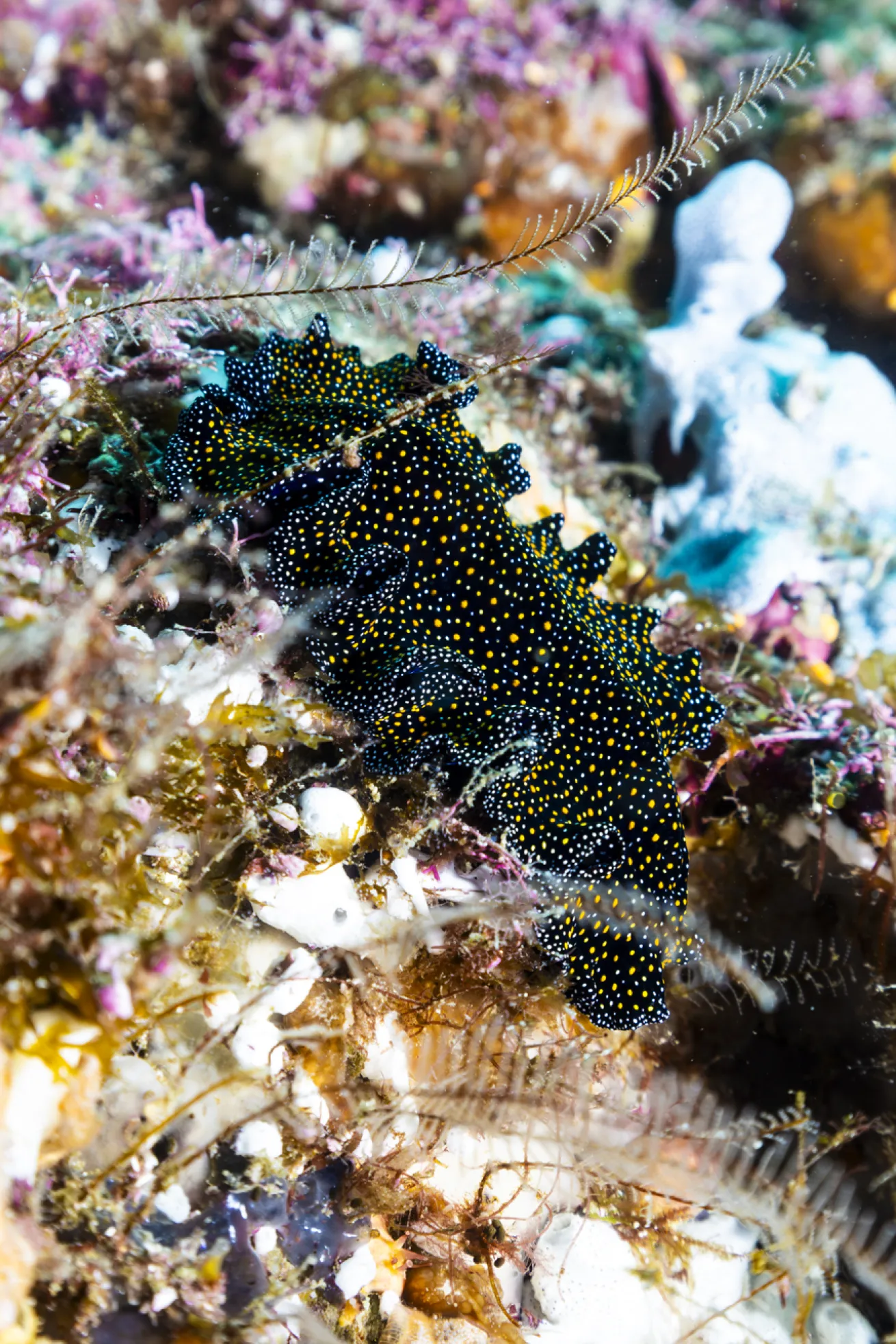
Candice LandauA brightly colored nudibranch is easy to spot and photograph on a rocky wall.
A trained geologist, Ivette shares stories about the islands’ volcanic origins and the prehistoric cave art tucked into the mountains. Sadly, we won’t have time to see it on this trip. On shore, Ellie, Alexis and I comb through the sand, marveling at old ray vertebrae—fossil-like remnants of a time before local fishing bans protected these waters. We line them on the edge of the boat and snap dozens of pictures. Of course, we take none of it—what’s the point when it will sit at home on a shelf or in a drawer gathering dust?
Into the Desert Hills
One day, we drive into the mountains to visit Misión San Francisco Javier de Viggé-Biaundó, an 18th-century Jesuit mission renowned for its beautifully preserved stonework. Founded in 1699 and completed by 1758, it feels like a mirage itself, an oasis of greenery, ancient olive trees and citrus groves surrounded by desert.
Of course, the long drive to get here is part of the adventure: narrow roads hugging cliffs, flowering cacti clinging to the steep hillsides, and sudden glimpses into ravines where hidden water makes life possible. In the tiny village below the mission, we stroll the cobblestone streets, snack on ice cream and fly my drone over the mission’s cinematic arches and courtyards. A local woman—someone Ivette knows—bids us follow her and invites us to gather and sample fallen mangoes from a tree so heavy with fruit it could feed a village.
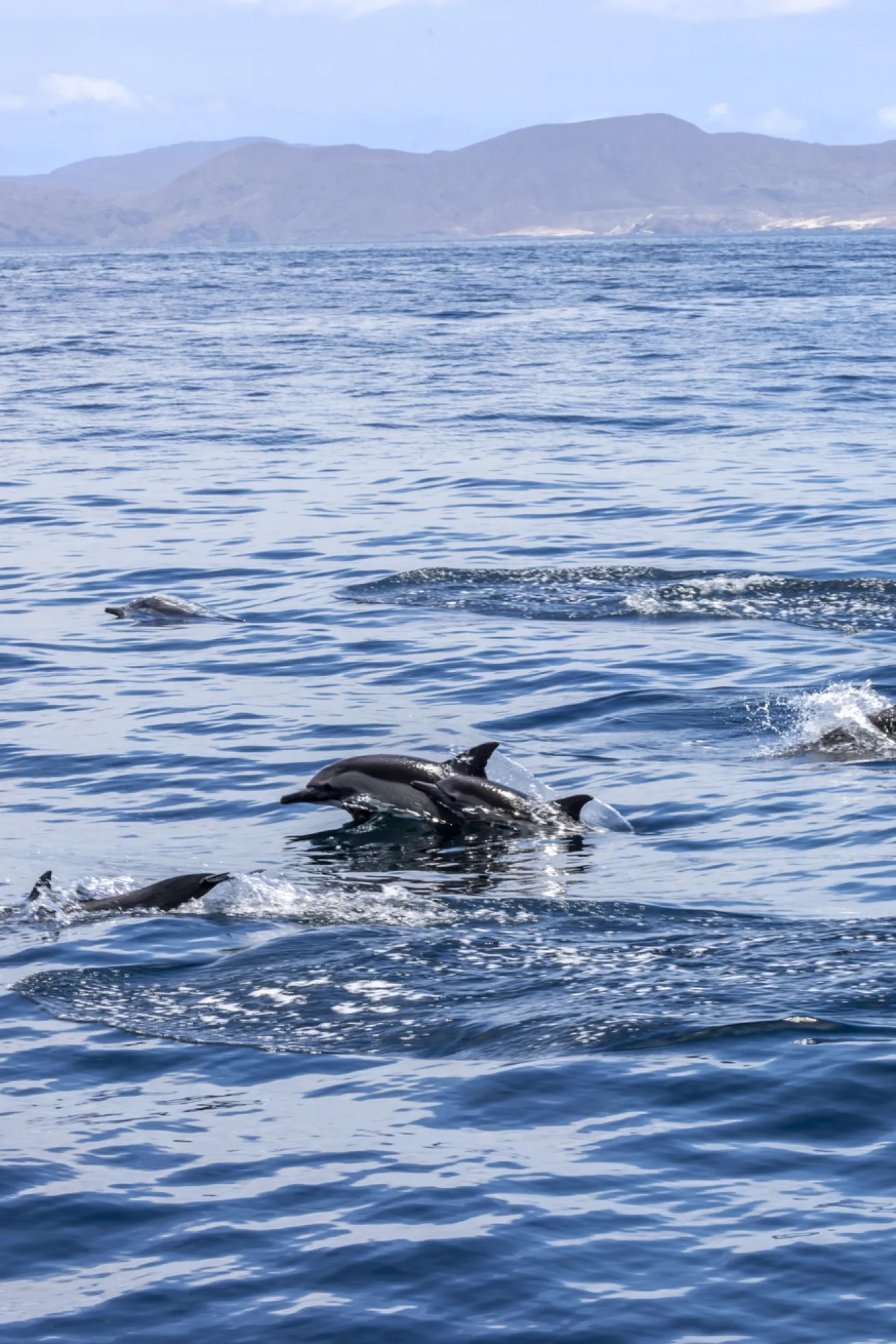
Candice LandauDolphins play in one of Loreto’s many bays.
A Final Taste of Wonder
We cap our Loreto adventure aboard Bel Gato, a sleek catamaran run by ABT Sailing. The crew takes us north through the Loreto Bay National Park, and Ivette tells us this is one of Mexico’s oldest marine reserves, established in 1996 to protect hundreds of species of marine life.
It’s bliss to have built in this luxurious downtime, and we find ourselves relaxing with cocktails in hand as we sail past rocky islets where frigatebirds wheel overhead. Suddenly dolphins are everywhere, leaping out of the water on all sides of us. They’ve found a school of fish—sardines perhaps—and their joy is boundless. Between them and the mobulas that every so often leap out and then fall back with a sudden thwack, I feel intimately connected to the land and the ocean.
Related Reading: Finding a Deeper Connection While Diving
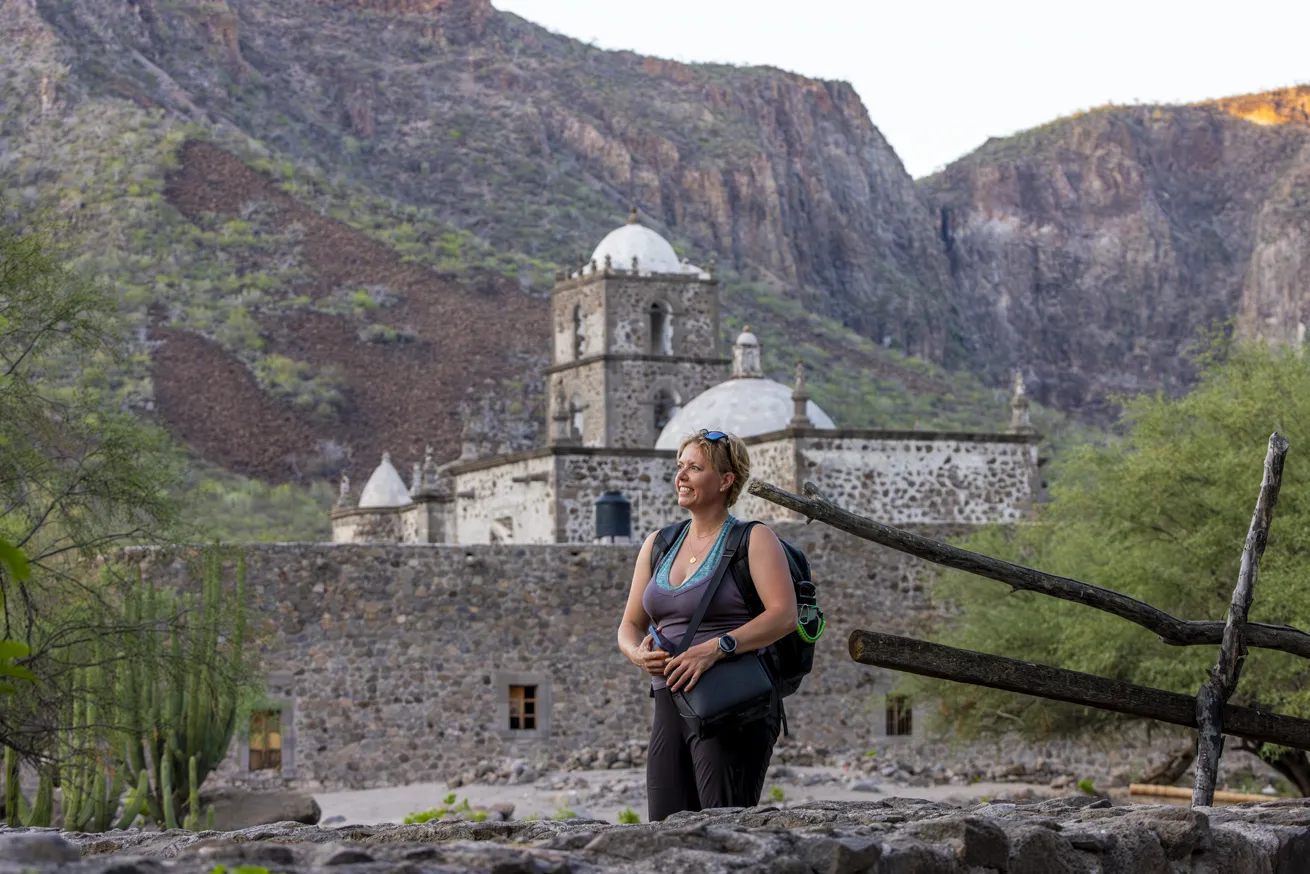
Theo LeeThe author outside a historic mission.
Loreto may be Baja’s quieter destination, but it’s a hidden gem I know I’ll return to. For divers, sailors, hikers and travelers seeking something real, a place where nature, history and culture intertwine, this is it.
Because in the end, isn’t that why we travel? To remind ourselves that in the world’s quiet corners, wonder still waits for us—patient, wild and ready to incite a paradigm shift, if you are open to it.
Need to Know Diving Loreto
Where We Stayed
Hotel Oasis, a beachfront hotel at the quiet southern end of Loreto’s walkable malecón.
Dive Operators
Blue Nation Baja (bluenationbaja.com); Dolphin Dive Baja (dolphindivebaja.com); Sea and Land Tours (toursloreto.com)
When to Dive
Peak season, with the warmest waters and best visibility (often 80 to 100 feet) is September to November. July to August sees cooler waters (70 to 76 degrees at depth), thermoclines around 40 feet and slightly reduced visibility, but plenty of marine life; a 5 mm wetsuit is recommended. December to February is cooler topside but excellent for whale-watching, including blue whales and humpbacks.


