

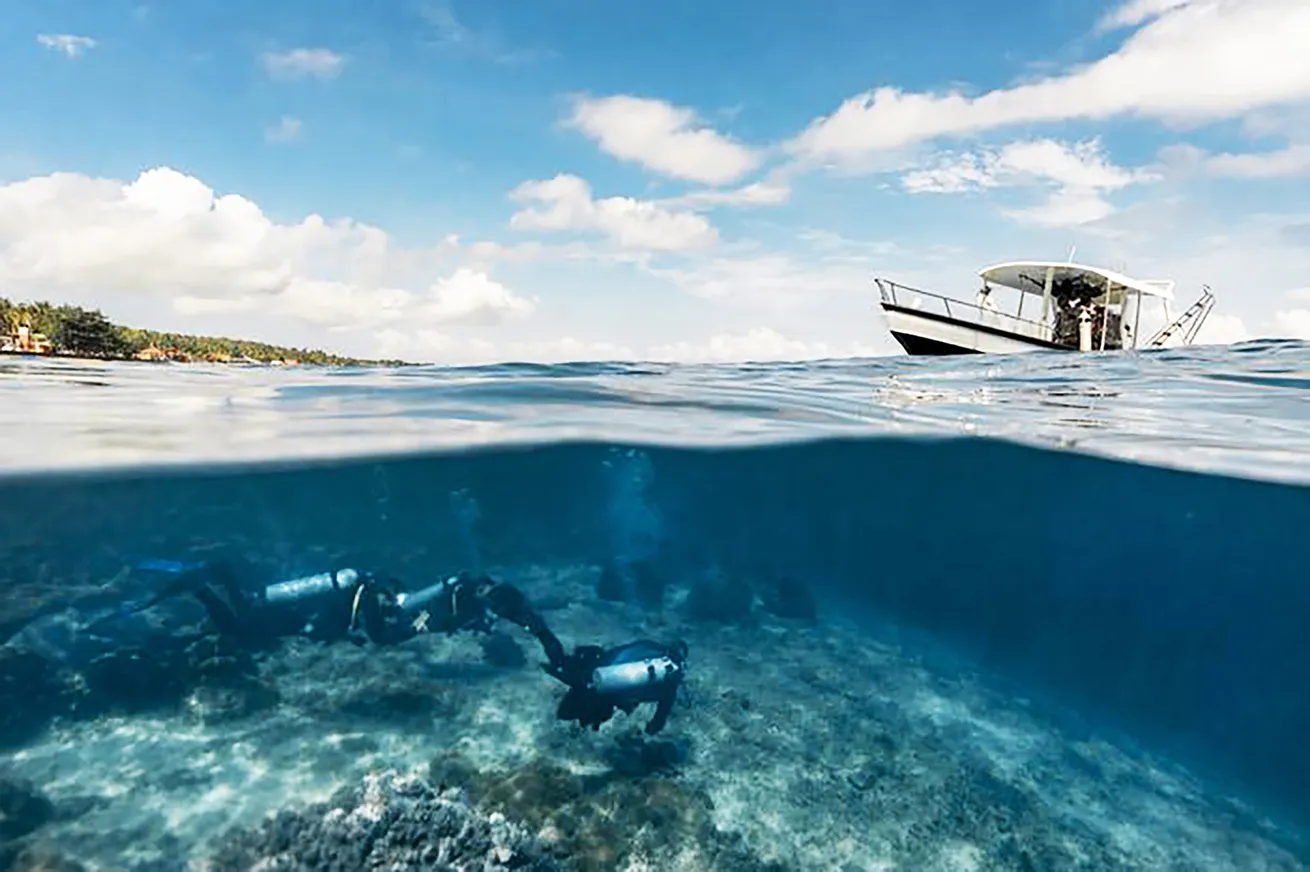
Courtesy Dr. Bing LinObserved divers concentrate on a reef around Nusa Penida, Indonesia. Divers in the study underestimated their reef contacts by nearly fivefold.
New research has revealed many scuba divers may be damaging coral reefs without realizing.
Scientists from the University of Sydney reviewed more than 300 hours of dive footage and noted nearly 5,000 reef contacts from over 400 divers. Almost half of these (41 percent) caused visible damage by breaking corals or smothering them with sediment.
“One diver made over 150 contacts on a single dive, amounting to almost 60 percent of their entire dive time spent in direct contact with the reef,” says Dr. Bing Lin, a conservation scientist at the University of Sydney.
Related Reading: Diving to Protect Cozumel's Splendid Toadfish

The findings are published in the journal Conservation Letters.
Both novice and experienced divers caused damage, and many didn’t realize they’d touched the reef.
“A big part of the solution lies in divers first acknowledging that they’re a part of the problem,” Lin says.
But this isn’t about stopping people from diving, he says. “In many ways, divers are among the strongest advocates for coral reef conservation because they experience these ecosystems firsthand and form emotional connections to them.”
Better buoyancy and self-awareness training, along with reinforcements from dive professionals during briefings and in the water, can help divers prevent negative impacts. And with reefs already facing threats such as mass bleaching and disease, preventing fin damage is vital.
“Poorly managed underwater tourism,” Lin says, “is almost certainly an overlooked local driver of reef damage that can amplify the litany of other pressures reefs are already facing.”


