

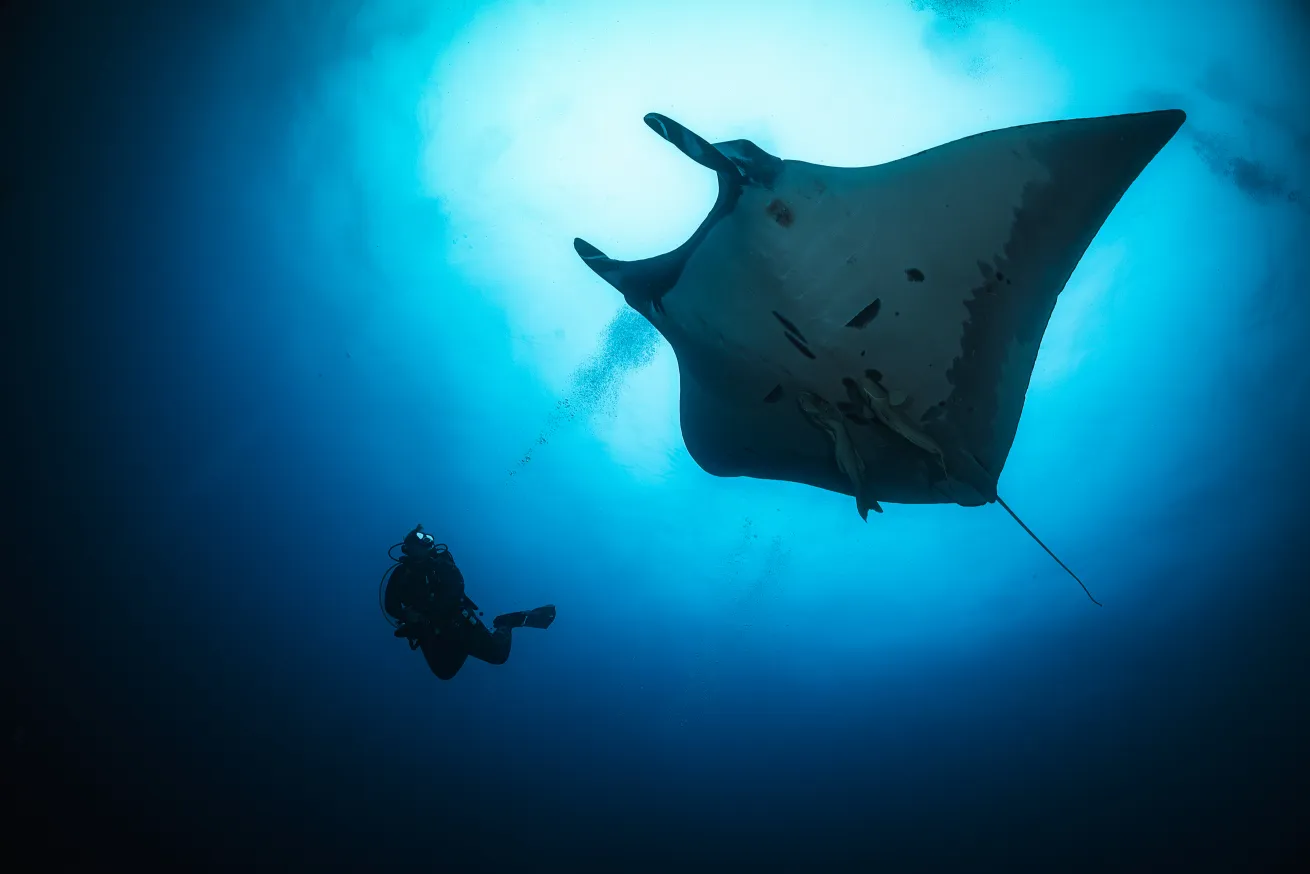
Jay ClueA manta curiously checks out Kai in Isla Socorro
Measuring over 20 feet wide and weighing more than 5,000 pounds, the giant oceanic manta ray (Mobula birostris) truly is the gentle giant of our oceans. Despite their impressive size, these incredible creatures are among the most elegant and graceful animals you can encounter.
Mantas have held a special place in my heart ever since my first trip to Mexico’s renowned Revillagigedo Archipelago almost 10 years ago with Dr. Robert Rubin from the Pacific Manta Research Group. I’ve visited routinely since then, and even after a decade, I find myself eagerly counting down the days until I can return to those enchanting islands each year to capture more unforgettable moments with the mantas.
They’re truly extraordinary creatures in numerous ways. Boasting the largest brain of any fish, sophisticated social behaviors, and the rare ability to recognize themselves in mirrors—an elite trait shared with great apes and dolphins—mantas are remarkable. And spending time in the water with them feels downright magical.
Over the years, I’ve discovered countless tricks for capturing great shots of mantas, and I teach workshops each year in Socorro to help photographers bring home epic photos. Here are a few of my favorite tips to help you take frame-worthy photos of manta rays.
Related Reading: New Study: Male Mantas Practice Courtship Without Females
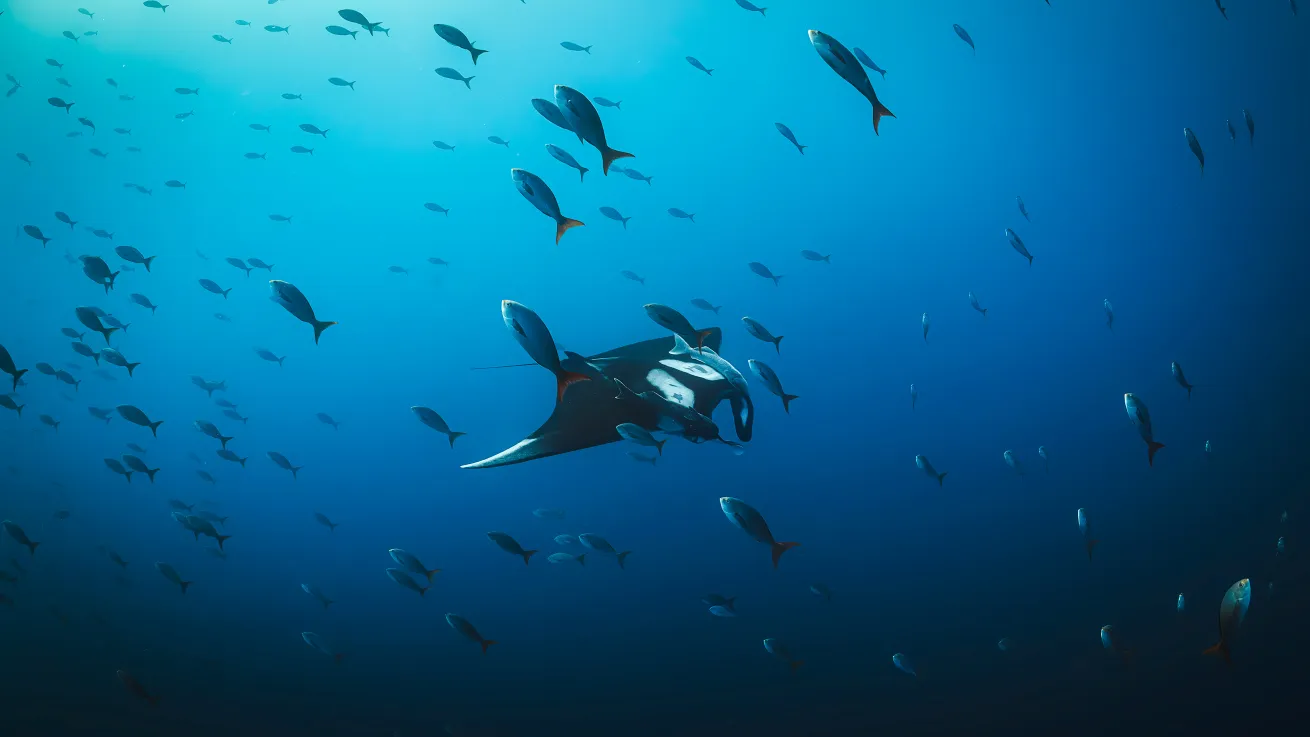
Jay ClueA manta ray glides through a school of creole wrasse at El Boiler in the Revillagigedo.
Tip 1: Mantas Will Reward You for Good Behavior
Let’s begin with behavior. If you’ve been following our Ask A Pro Photographer series, you’ll know I strongly believe that behavior is key in wildlife photography, whether that is the diver's behavior or your subject's behavior. Mantas are no exception. They can be easily scared off by an overly aggressive photographer swimming directly at them or chasing them. However, if you give them space and have a little patience, they’ll reward you with some of the most breathtaking close-up encounters.
First and foremost, this means that, just like any other animal, we do not chase them or rush toward them to get a shot. Instead, observe their behavior and how they move through the dive site. You’ll notice they tend to follow a similar pattern around divers or cleaning stations, which means you can easily set yourself up in a good position along their path. This lets them come directly to you.
Oceanic manta rays often seem to be more curious of relaxed divers who hover calmly in trim rather than those moving around a lot or darting unpredictably. I always share this tip with my guests on Dive Ninja’s Socorro trips. In 10 years, I’ve not had a single trip where a guest didn’t come back to me after a magical manta encounter, amazed by how well it works and how they experienced some of the most unforgettable moments with these incredible creatures.
Related Reading: World's Best Destinations for Underwater Photography
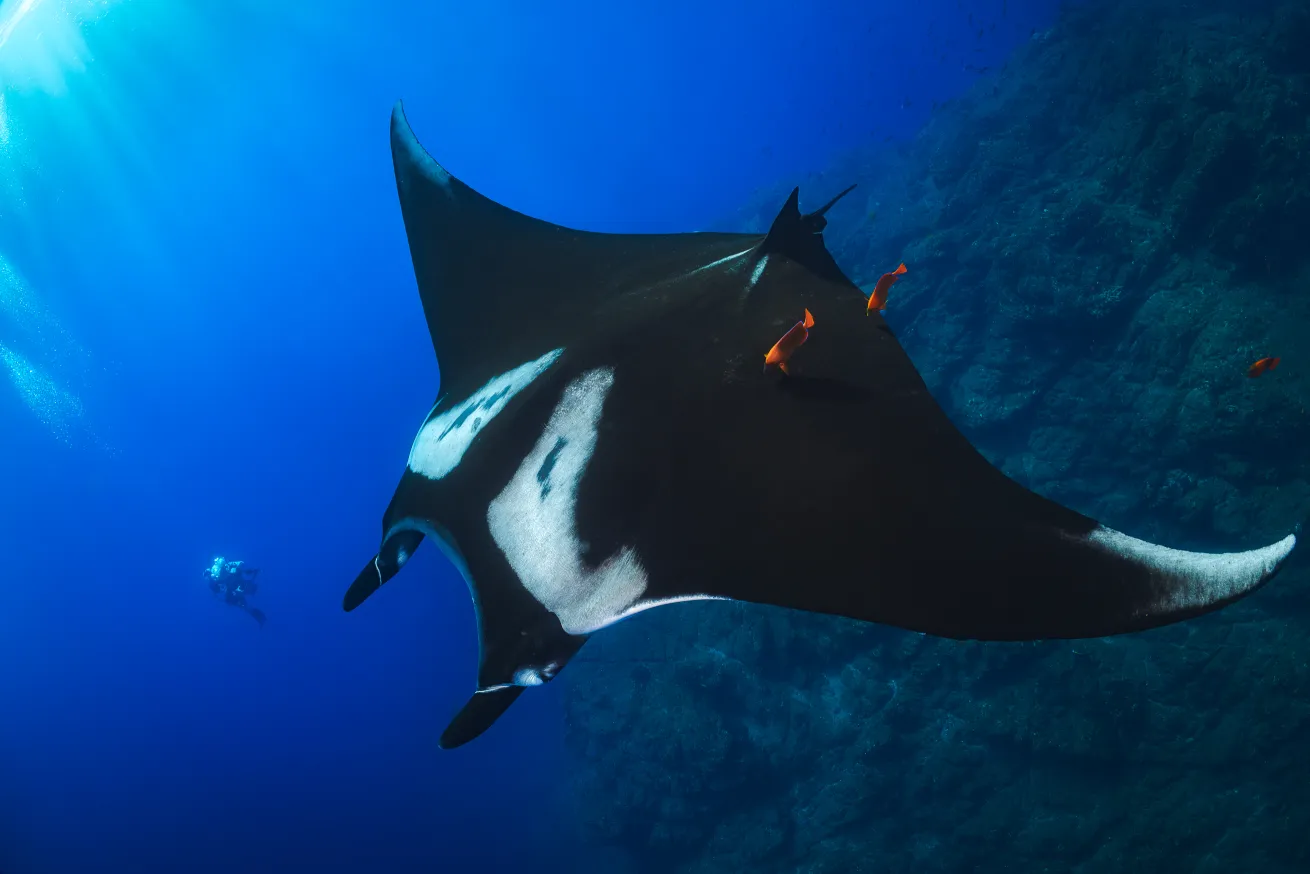
Jay ClueBright orange Clarion Angelfish can add a splash of color to the black wings of the manta.
Tip 2: Give Them Some Extra Space
These enormous animals need plenty of space to move comfortably through their environment. It’s important not to block their path or the entrances and exits to cleaning stations. Keeping the dive group close together can help. Or, if your group is more spread out, ensure there's enough distance between you and your buddies for the manta to pass easily through.
Interestingly, Revillagigedo manta rays often make close passes directly over divers. Some believe they enjoy the sensation of bubbles rolling over their bodies or use these moments as makeshift cleaning stations.
If a manta heads straight at you, exhale slowly to descend out of its way. As they glide overhead, you'll have an incredible opportunity for a belly shot, which you can consider submitting to organizations like Pacific Manta Research Group or Manta Trust to aid their manta identification projects (and maybe even get to name a manta!).
I’ve noticed that with some of the manta rays in Revillagigedo, once they see you calmly move aside, they keep returning for these close, almost Jacuzzi-like encounters, as if you're now their personal manta spa.
Related Reading: The Fight Against Illegal Manta Ray Trade

Jay ClueSince mantas tend to move slowly it gives you room to time your shot to highlight the beautiful curves of their wings.
Bonus Tips
Speaking of manta bellies, when shooting the underside of chevron morphs (the more common white mantas with black markings), pay attention to the power settings on your strobes or video lights. Although they don’t look shiny, those bright white bellies can reflect a lot of light. You might also want to quickly dial down your exposure, as you’ll likely be pointing up toward the brighter surface waters.
Black morph mantas (the all-black mantas with only a few white markings underneath), on the other hand, seem to almost absorb light and can appear as a gliding silhouette.
Mantas move slowly and methodically through the water, which gives you room to time your shots and capture the beautiful curves of their wings. This also allows you to reposition yourself and capture them from a different angle, or as they pass by another diver.
I love capturing photos of mantas with divers. For one, it adds scale to the image, showing how truly gigantic they are compared to a human. But it can also give you the opportunity to capture the emotion of the moment—that sense of awe as your dive buddy is in pure heaven, dancing with a majestic, gentle giant.
Lastly, and most importantly, remember to enjoy the experience. It’s not always just about capturing the photo. There’s something incredibly special about an oceanic manta ray locking eyes with you during a close pass. I always say it makes me feel that they are attempting to communicate with us but can’t seem to find the words. It’s almost indescribable and offers a feeling unlike any other encounter with marine wildlife.
Until next time, I can’t wait to see your manta shots! Remember to tag me on Instagram at @jayclue and let me know if these tips helped you out and what you’d like to learn about next.
Ask a Pro Photographer is a column where Jay Clue answers your questions about underwater photography, cinematography and conservation storytelling. If you have a question you’d like answered in a future Ask a Pro Photographer column send Jay a message on Instagram or through his website.
Jay Clue
Jay Clue is an accomplished commercial photographer, educator and conservationist who uses captivating photography combined with passionate storytelling to inspire people around the world to cherish and preserve the natural beauty of our planet. His photography has been utilized by a multitude of brands and media outlets, including National Geographic, Discovery Channel, Sony Alpha, PADI, and many more. When not working on commercial projects, he shares his passion for photography and conservation by teaching workshops and leading unforgettable experiences with wildlife around the world. Follow him at @jayclue on Facebook and Instagram, where he’s always happy to answer questions and chat about photography.