

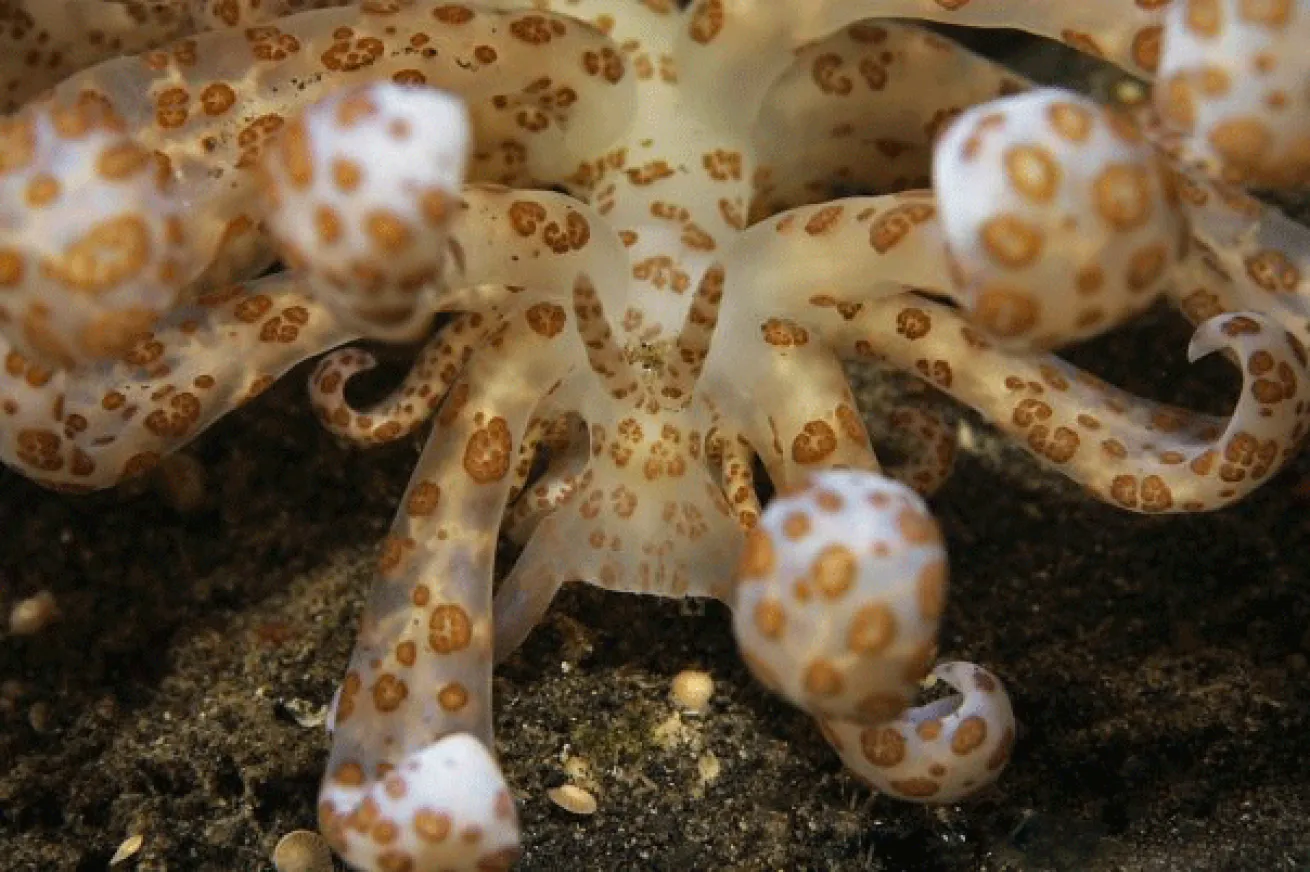
The solar powered nudibranch, Phyllodesmium longicirrum, consumes zooxanthellae algae from the octocorals they live on without harming the algae. The living algae survive in symbiosis within the nudibranch and photosynthesise simple sugar from sunlight as a food source.
The brown patches of algae on the cerata of this large nudi can be thought of as solar panels. Take note of the digestive tracks attached to the underside of each algae patch — this is the power plant where the energy conversion from sunlight energy to chemical energy occurs.
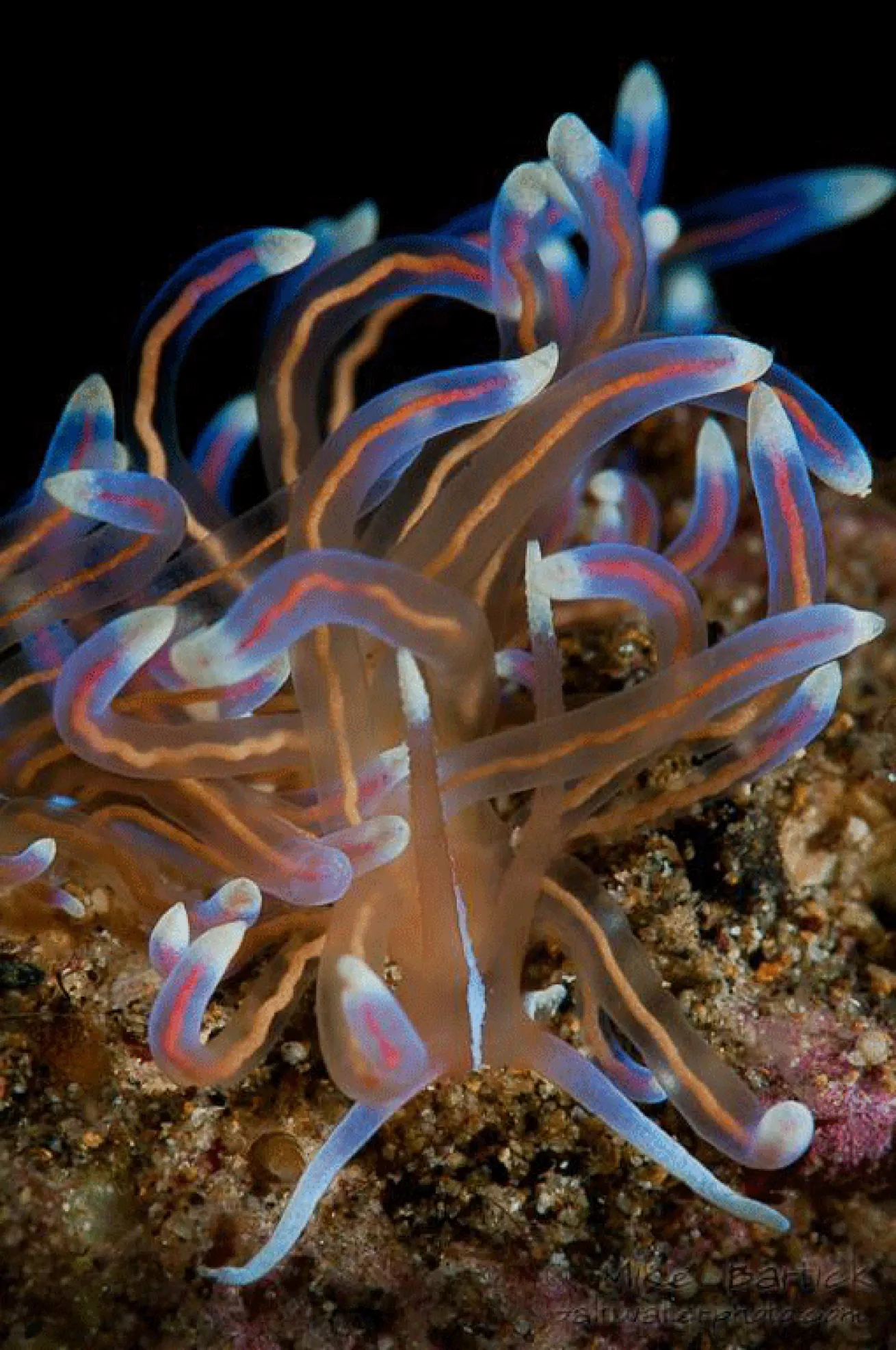
Phyllodesmium sp. is a more translucent pink and purple rather than the alabaster white of its cousin. Not all solar powered nudibranchs’ algae panels are as visible as the longicirrum, but they accomplish the same energy conversion.
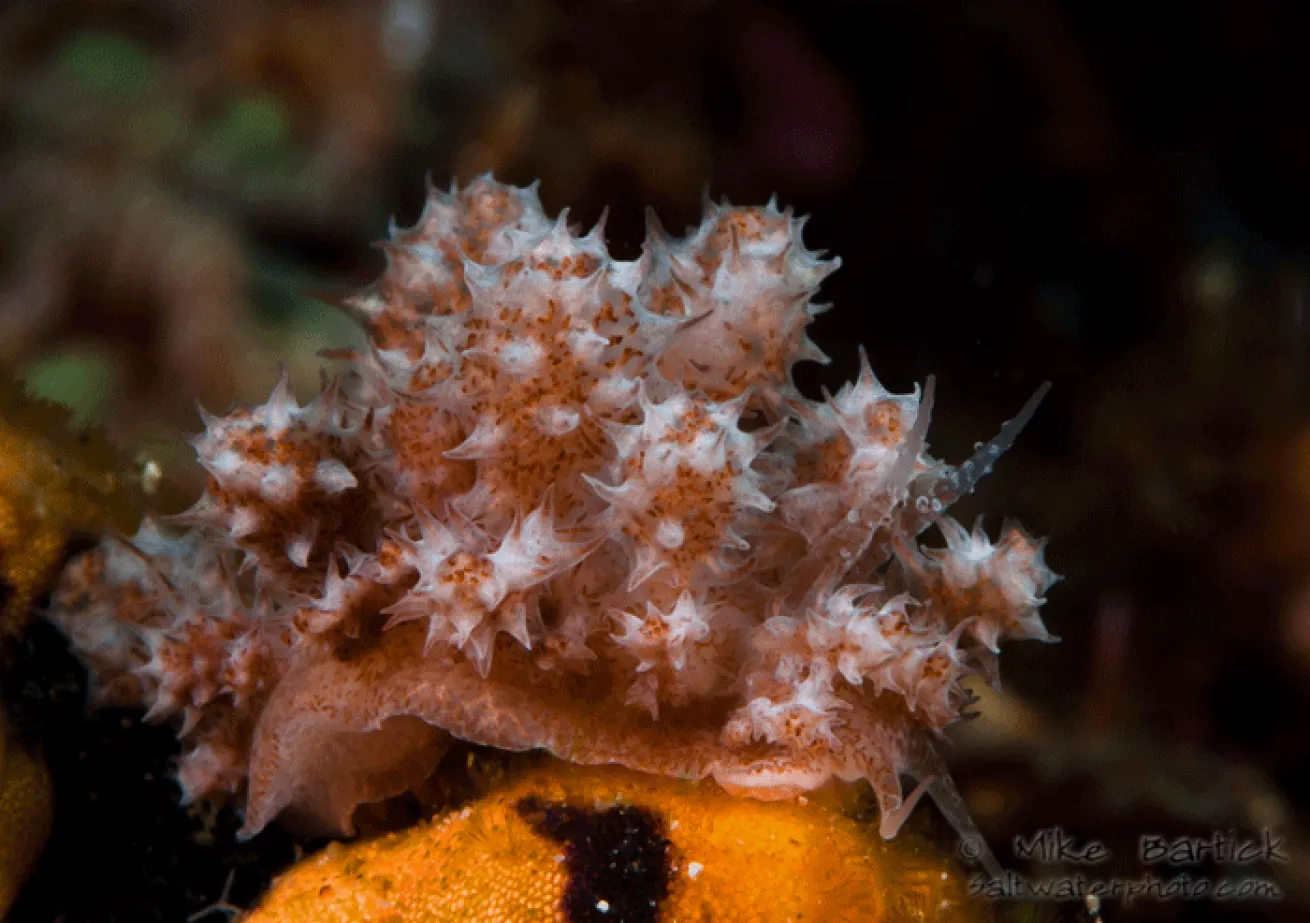
Phyllodesmium koerhleri is a great example of a nudibranch that mimics the coral it is associated with. Despite their size these large, aeolid nudibranchs are easily overlooked by the untrained eye. Notice again the brown patches of algae within the tissue of this nudibranch.
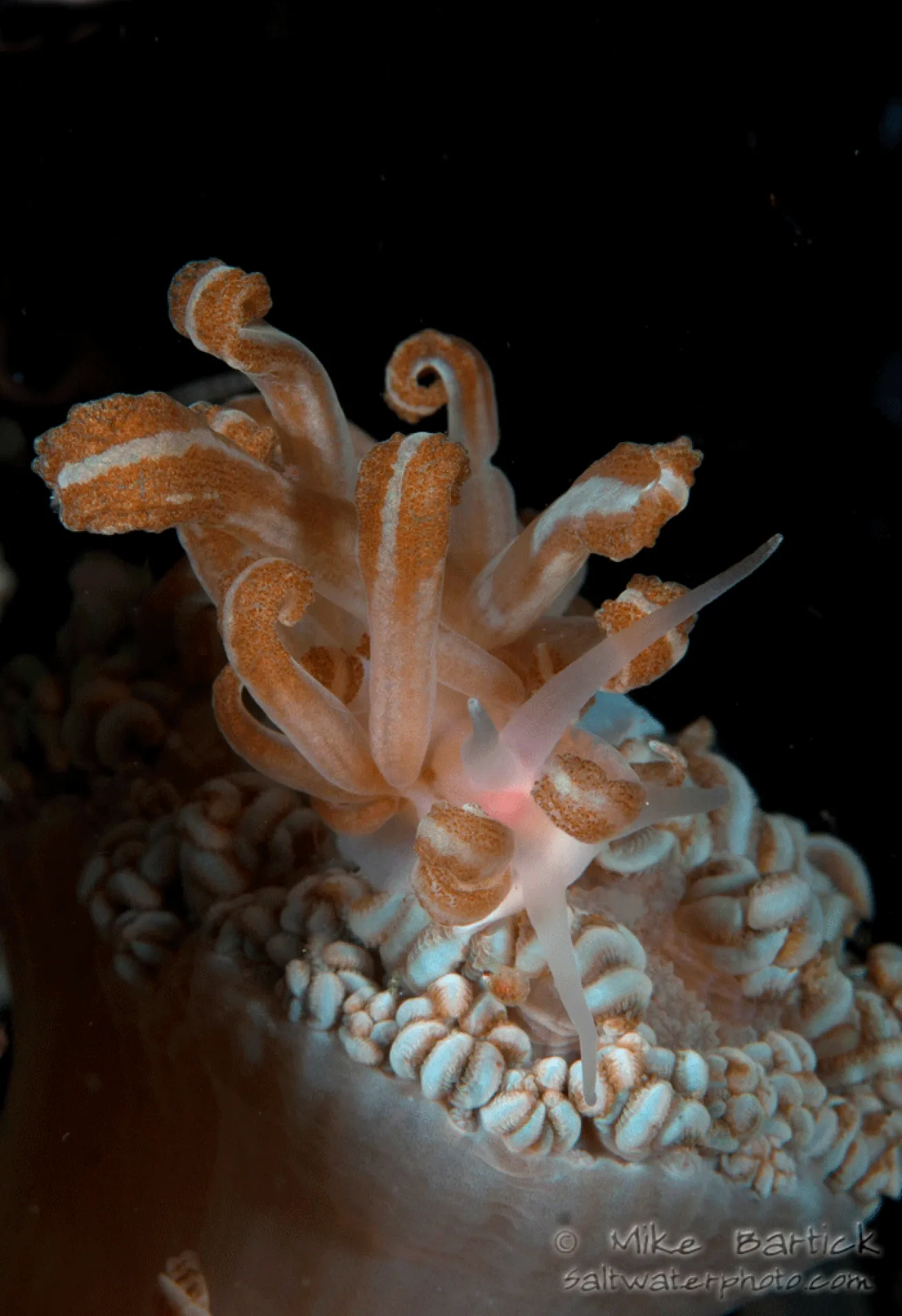
The flat paddle-shaped cerata of Phyllodesmium jakobsenae, an aeolid, help it to maximise its exposure to sunlight. The wide cerata also resembles the tentacles of the xenia coral that it lives and feeds on. The_ jakobsenae_ are commonly mistaken as a soft coral and often overlooked.
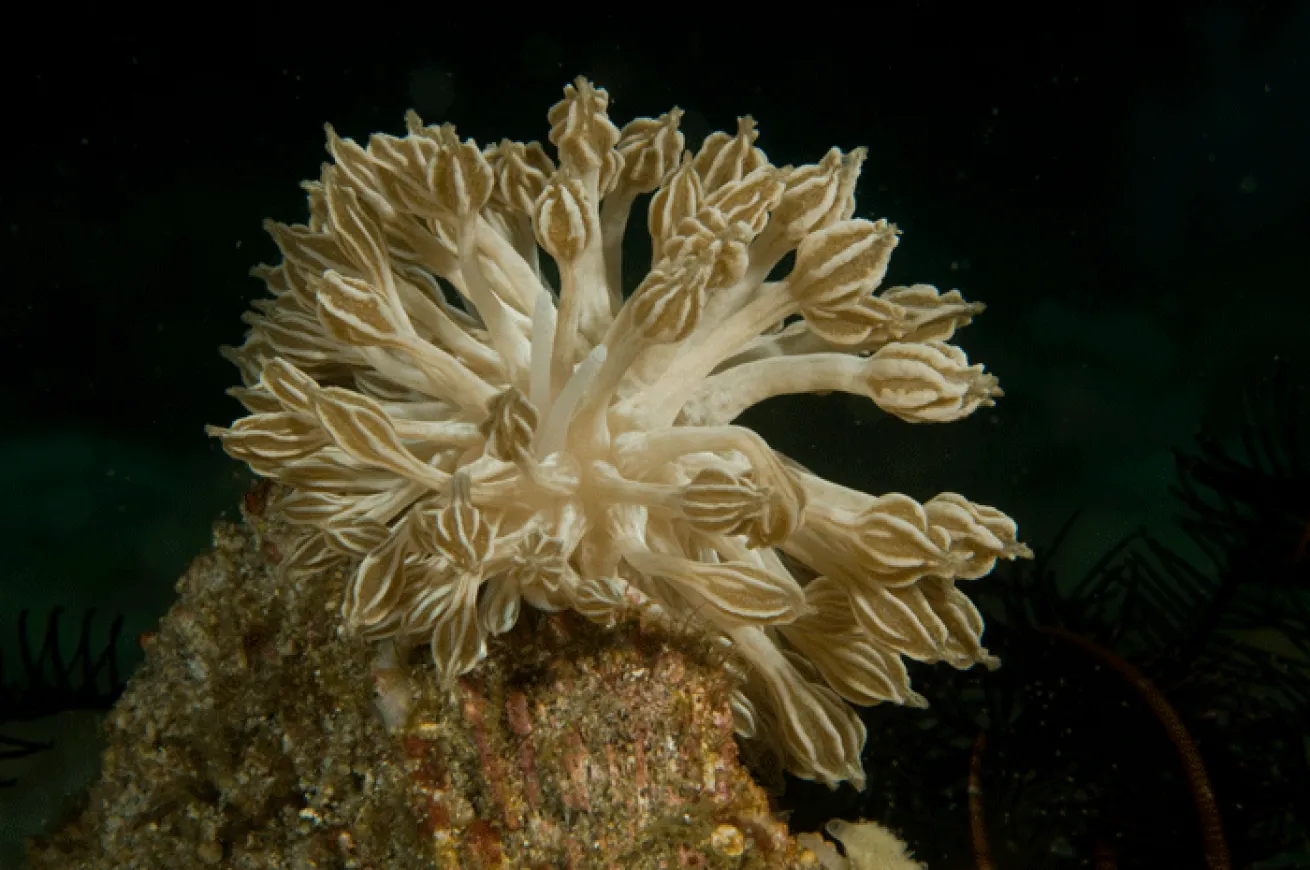
This lovely specimen, Phyllodesmium rudmani, was named after Bill Rudman, a leading nudibranch specialist from Australia who discovered it. The unique club-tipped cerata closely resemble the xenia coral they are also found living in. The rudmani was the first soft coral mimic I learned how to find. Hovering above the patches of pulsating xenia coral searching for a sign of the rudmani to no avail, my guide Peri would swim right up and point them out even as I was staring at them.
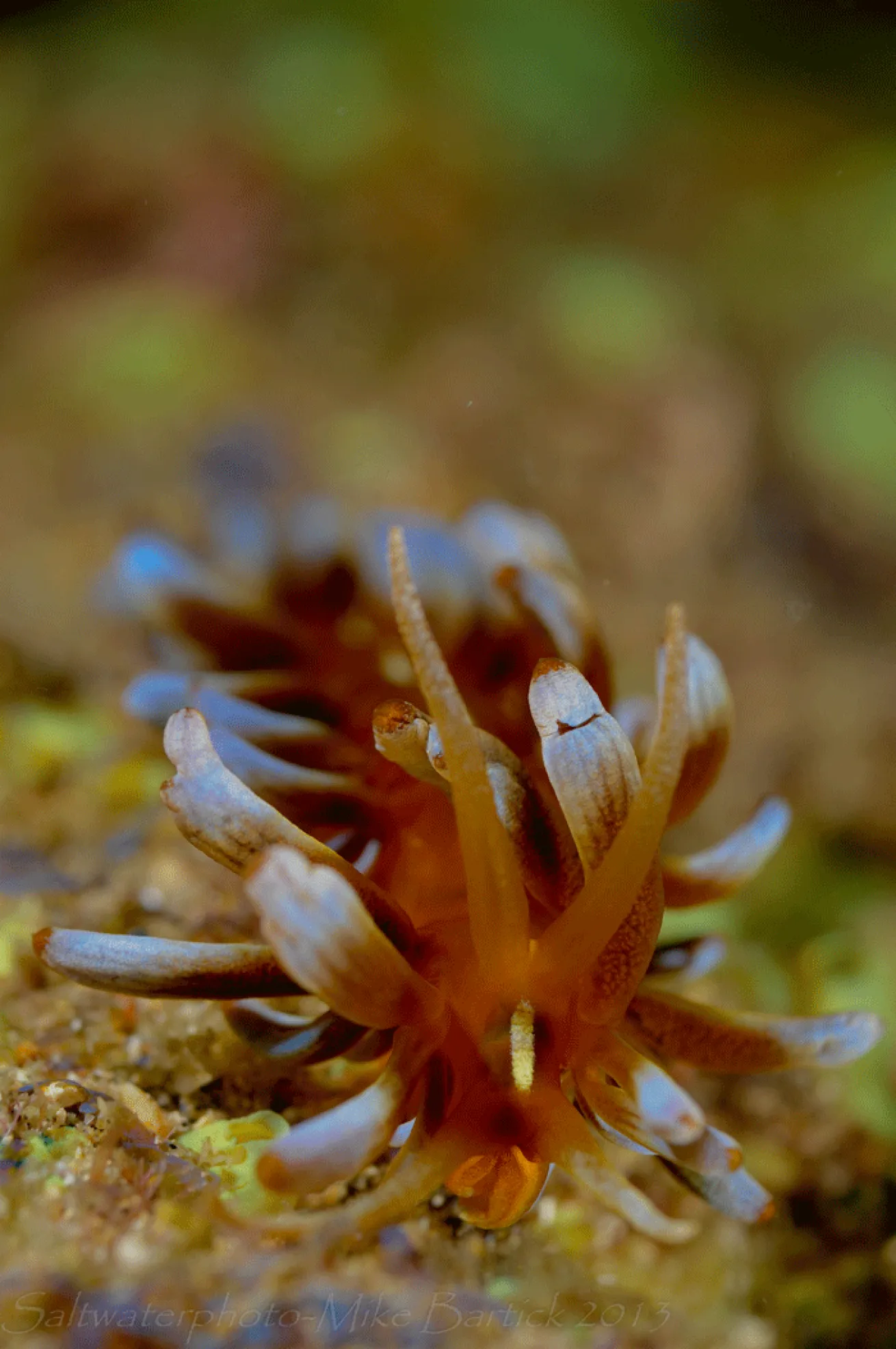
Mother Nature didn’t pull any punches with Phyllodesmium kabiranum, which are very colourful and quite large. The bronze-reddish coloured notum with white-tipped cerata and striped head help to create contrast and some very lovely images.

Phyllodesmium crypticum is a classic aeolid in shape and displays much of the same traits as the other solar powered nudis. Large, flat cerata are filled with the visible algae to produce the simple energy that man just can’t seem to recreate. The symbiotic zooxanthellae are clearly visible as darkened nodules on the cerata.
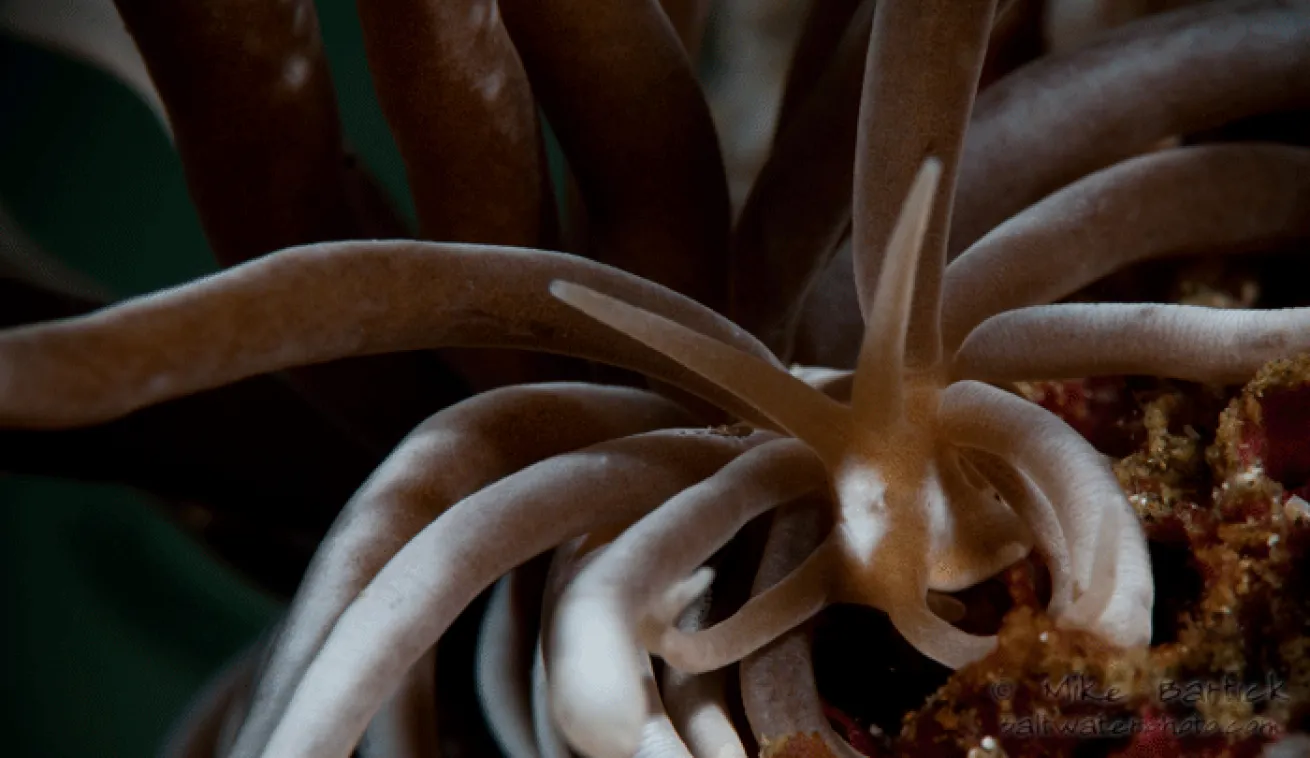
The Phyllodesmium magnum is perhaps the largest of all of the solar powered nudibranchs. A tight photo reveals the oral tentacles used to feel their way across the substrate. This commonly named “Great” nudi is one of the largest ones we have found to date, measuring at least 15 centimetres from front to back with elaborate and flowing cerata.
__
Man struggles to harness the power of the sun attempting to capture the smallest amounts of its infinite energy. We erect elaborate solar panels to collect the sunlight, then take even more elaborate measures to convert that energy into something that’s a bit more user friendly, like electricity. And while the technology of how to efficiently produce and use the energy from the sun is in its infantile stages for man, Mother Nature has been using the power of the sunlight all along.
In elementary school we learned the basics of ecology of how plants and other organisms use a process to harness the power of the sun. Photosynthesis converts light energy into chemical energy to fuel Earth’s organic life forms and their simple activities. (To call the leaves of a plant solar panels might be pushing it a little, but basically that’s the idea.)
Now imagine an animal surviving in much of the same manner, photosynthesising simple sugars for carbohydrate energy from sunlight. Only in nature does fact outweigh fiction in elegant simplicity and the beauty of the Phyllodesmium nudibranchs brings true meaning to form and function.
Mother Nature is a capable lady, her engineering genius and artistic panache work flawlessly together. The solar powered nudibranchs are not only amazing from a photographic standpoint but from a scientific angle as well, so on your next trip to the Indo-Pacific be sure to let your guide know what you’re looking for and be sure to put these nudibranchs at the top of your list.
Mike Bartick was born and raised in Southern California, not far from the ocean in Huntington Beach. After finding his first nudibranch on an Open Water checkout dive, he was immediately hooked on diving. Bartick, who splits his time between the Indo-Pacific and the Eastern Pacific as a freelance photographer, photojournalist and field guide, shoots with a Nikon D300 and D300s, Sea and Sea housings, and YS-D1 and YS 250 pro strobes. To see more of his work, visit saltwaterphoto.com.


