

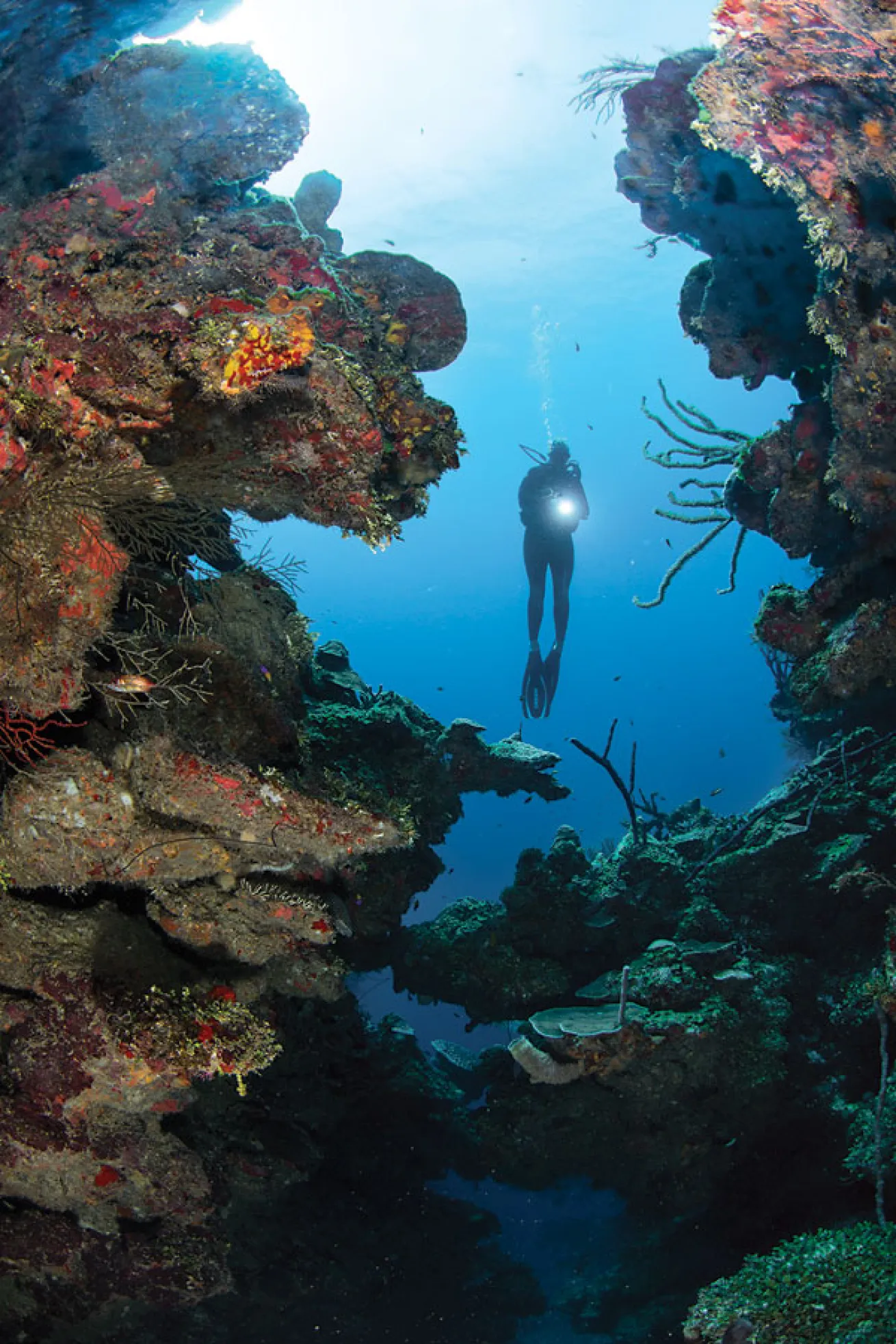
Lia BarrettDive Site: Calvin's Crack
One of Roatan’s most popular dive sites, Calvin’s Crack is a lovely fissure in the reef that leads divers out to the wall.
Devon StephensRoatan Sunset
The sun sets on a beautiful ocean view on the island of Roatan.
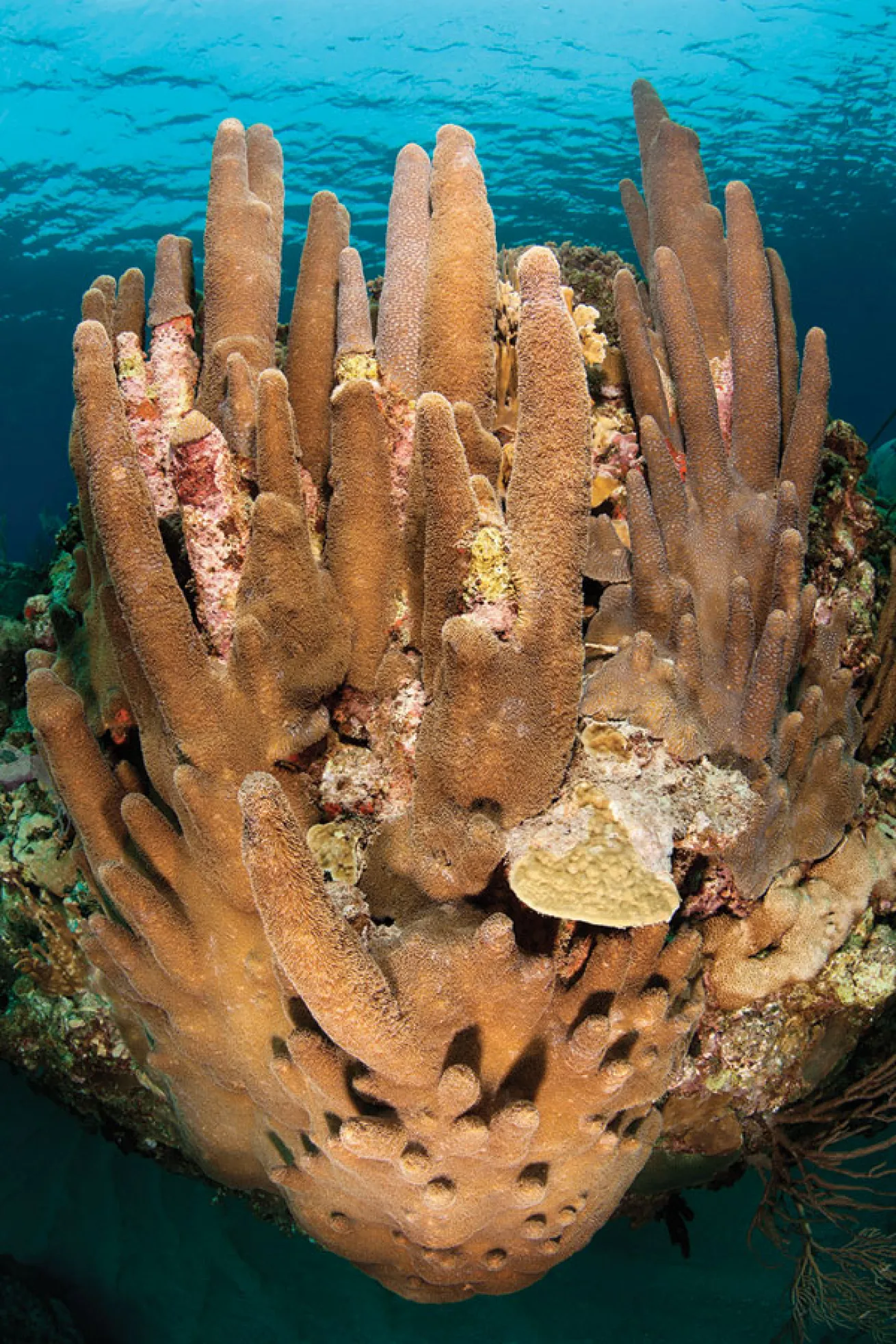
Michael Stubblefield/ThinkstockRoatan: Pillar Coral
Colonies of beautiful pillar coral are found on Roatan's reefs.
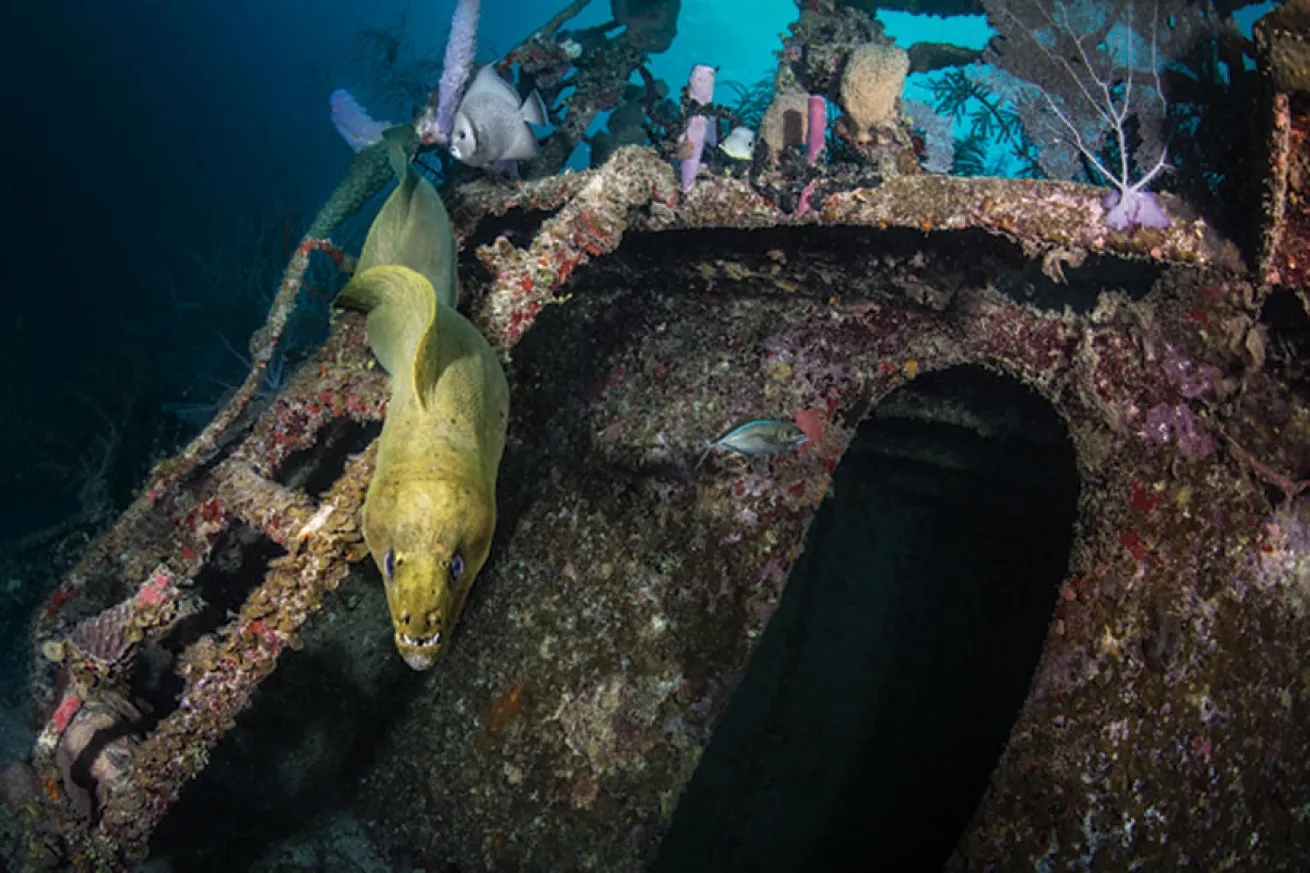
Erin QuigleyRoatan: Green Moray Eel
A resident green moray eel on the Prince Albert, which is located in Coco View Resort's "Front Yard."
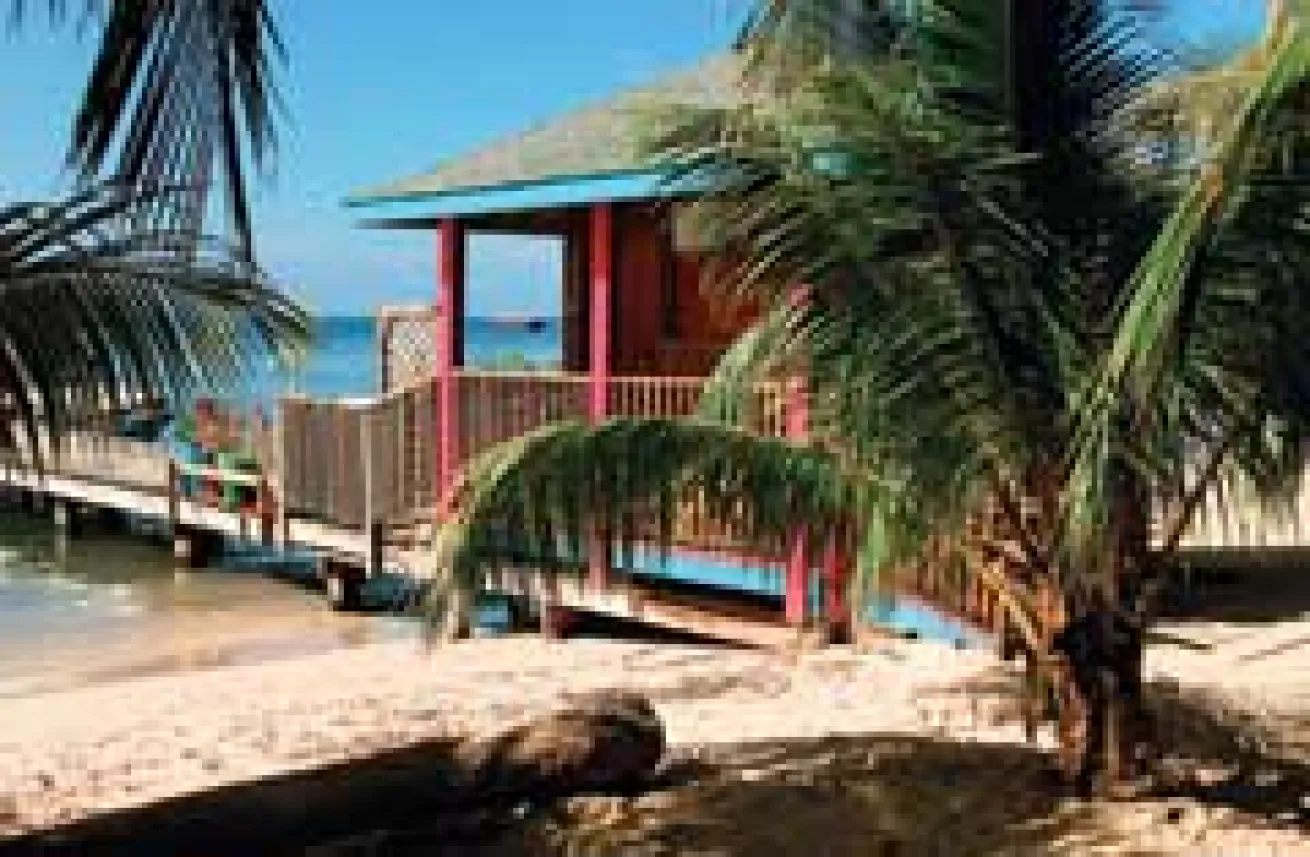
ShutterstockRoatan: Beach House
On Roatan colors appear topside too.
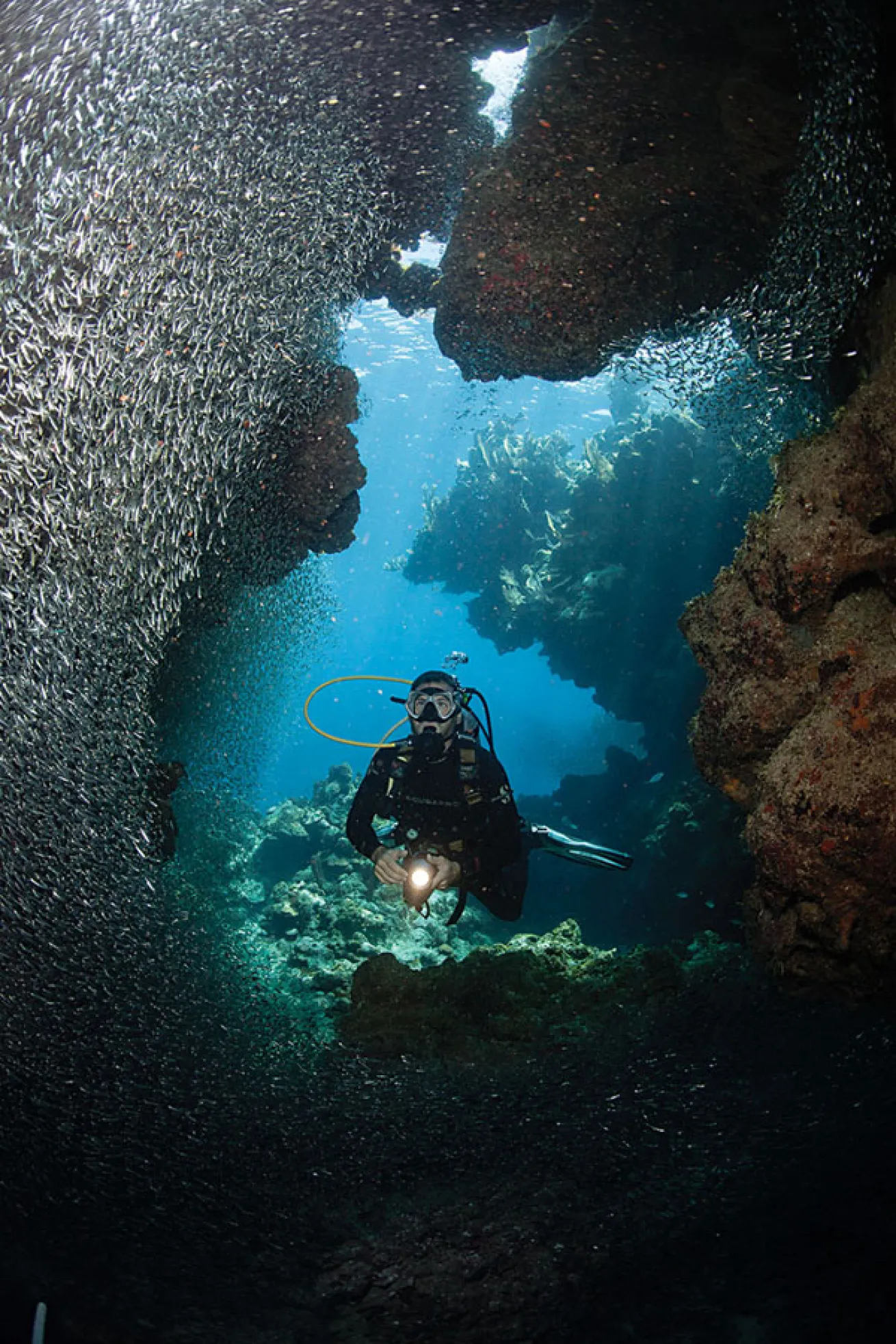
Lia BarrettRoatan: Blue Channel Dive Site
Silversides pack Blue Channel, which is also popular with snorkelers. Divers will love the canyons and swim-throughs at this site located near Anthony's Key Resort.
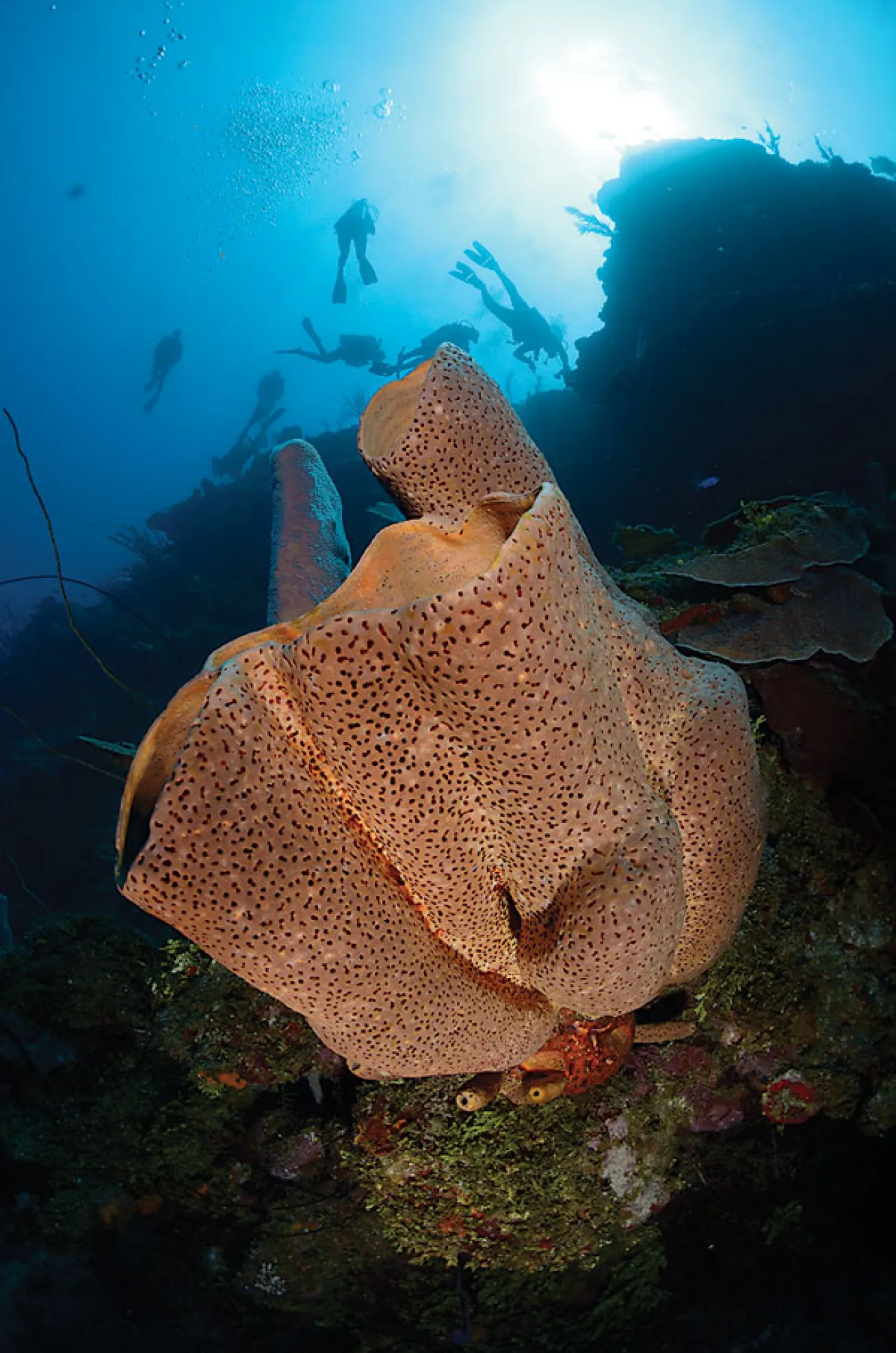
Tanya G. BurnettRoatan: Colorful Sponge
A colorful sponge at Herbie’s Fantasy dive site in Roatan.
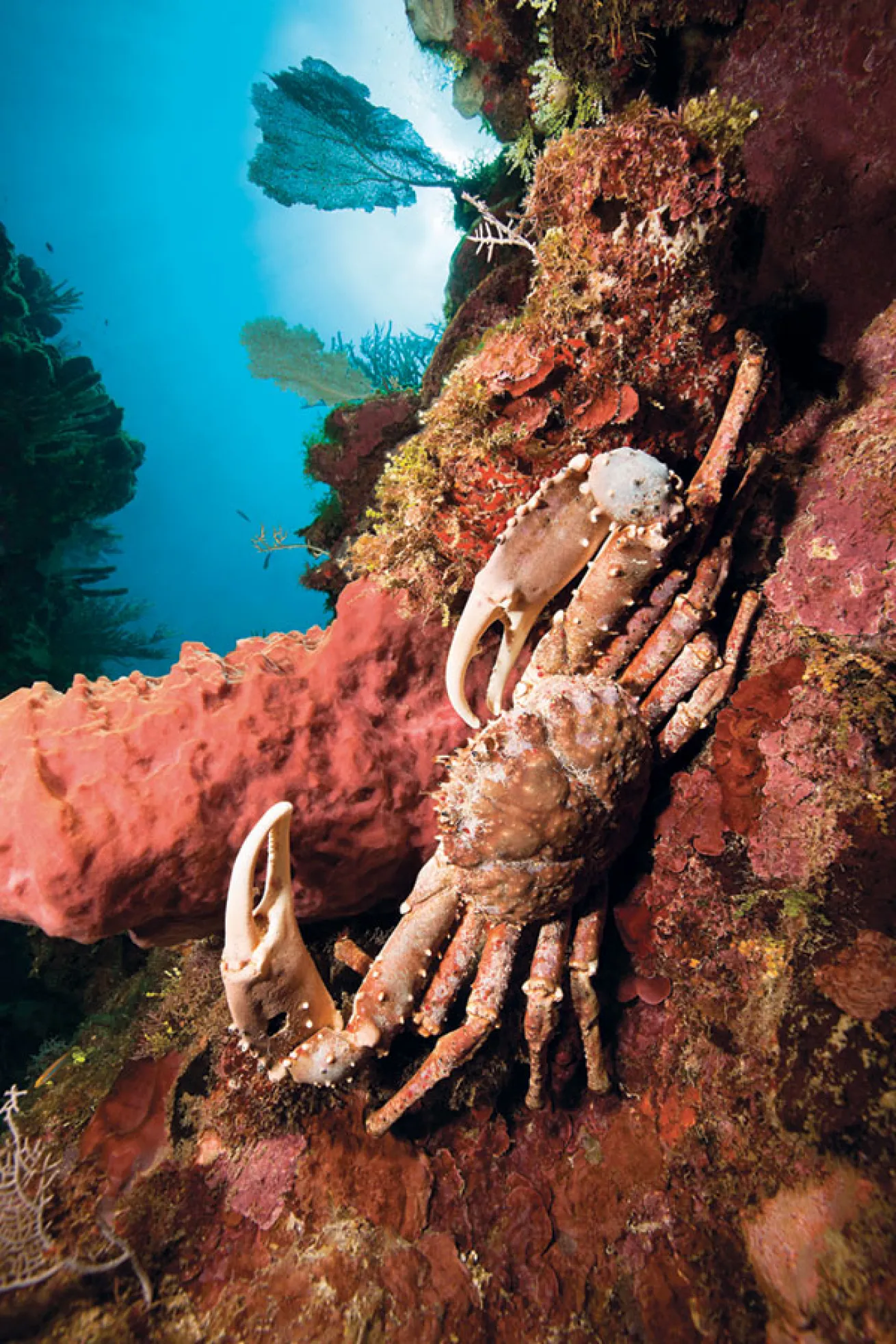
Michael Stubblefield/ThinkstockRoatan: Crab on Reef
A channel-clinging crab holds on to the reef.
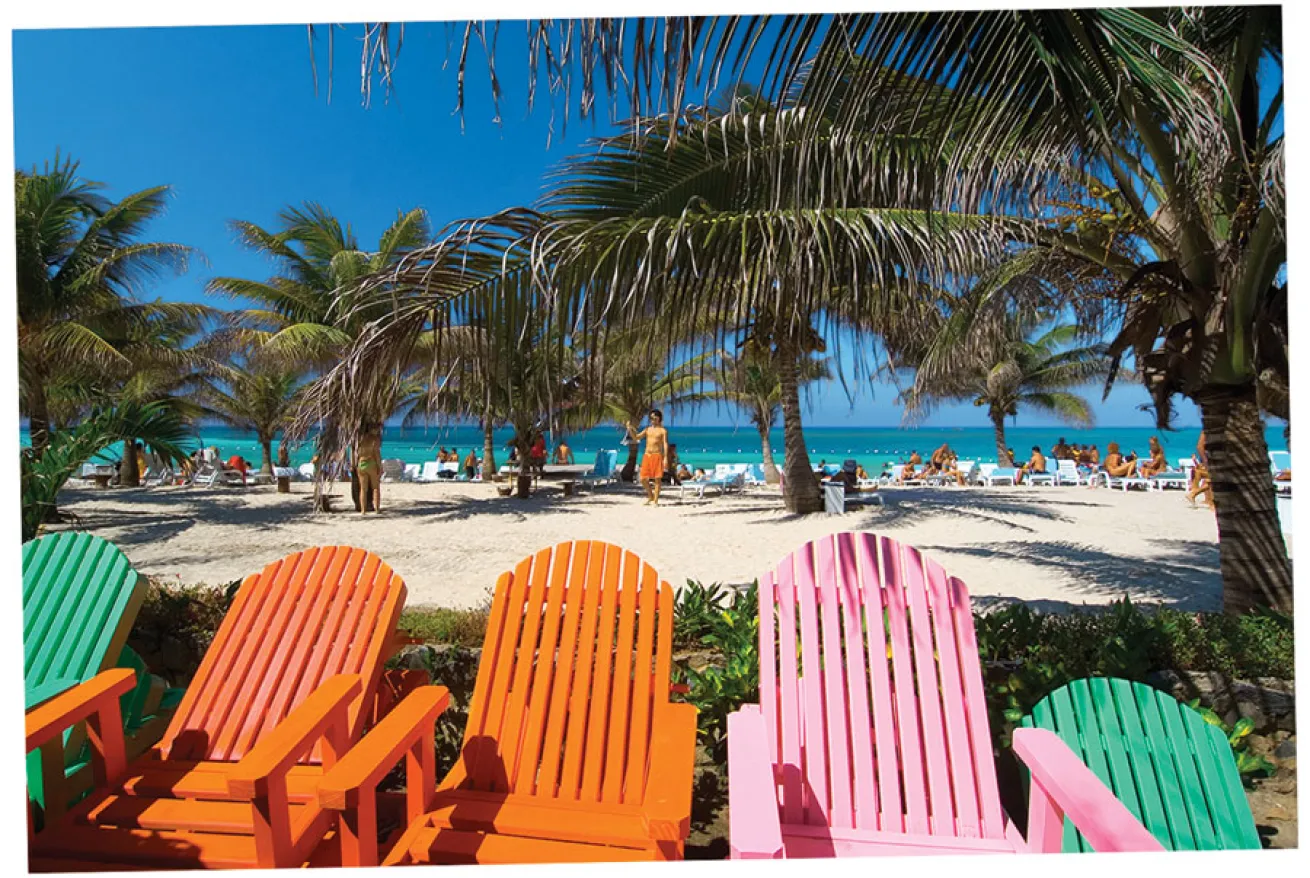
Richard BroadwellRoatan: West Bay Beach
The perfect surface interval at West Bay Beach.
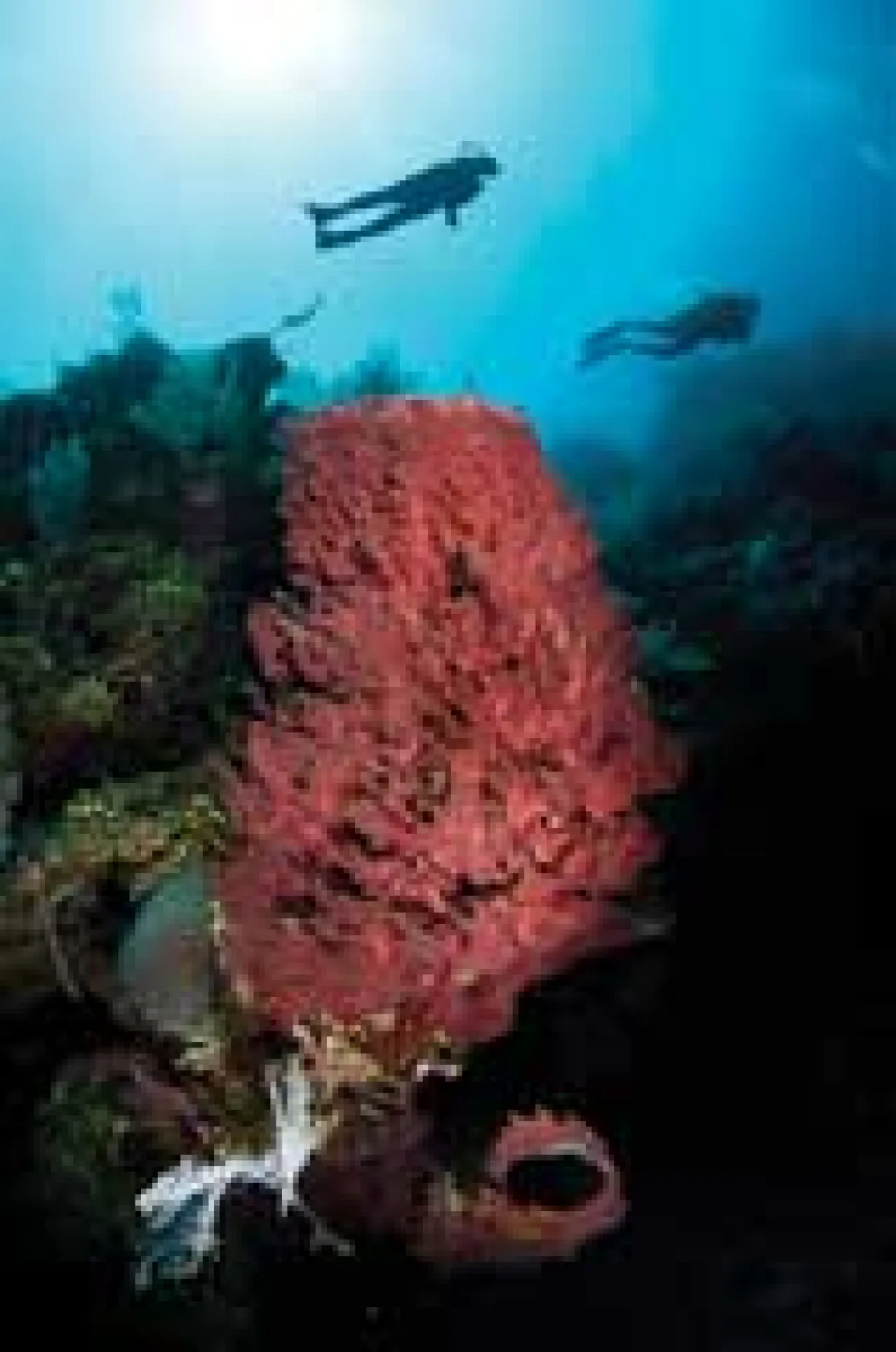
Tanya G. BurnettRoatan: Sponges
Sponges and reef fish abound on dive sites like John’s Spot and Mr. Bud wall.
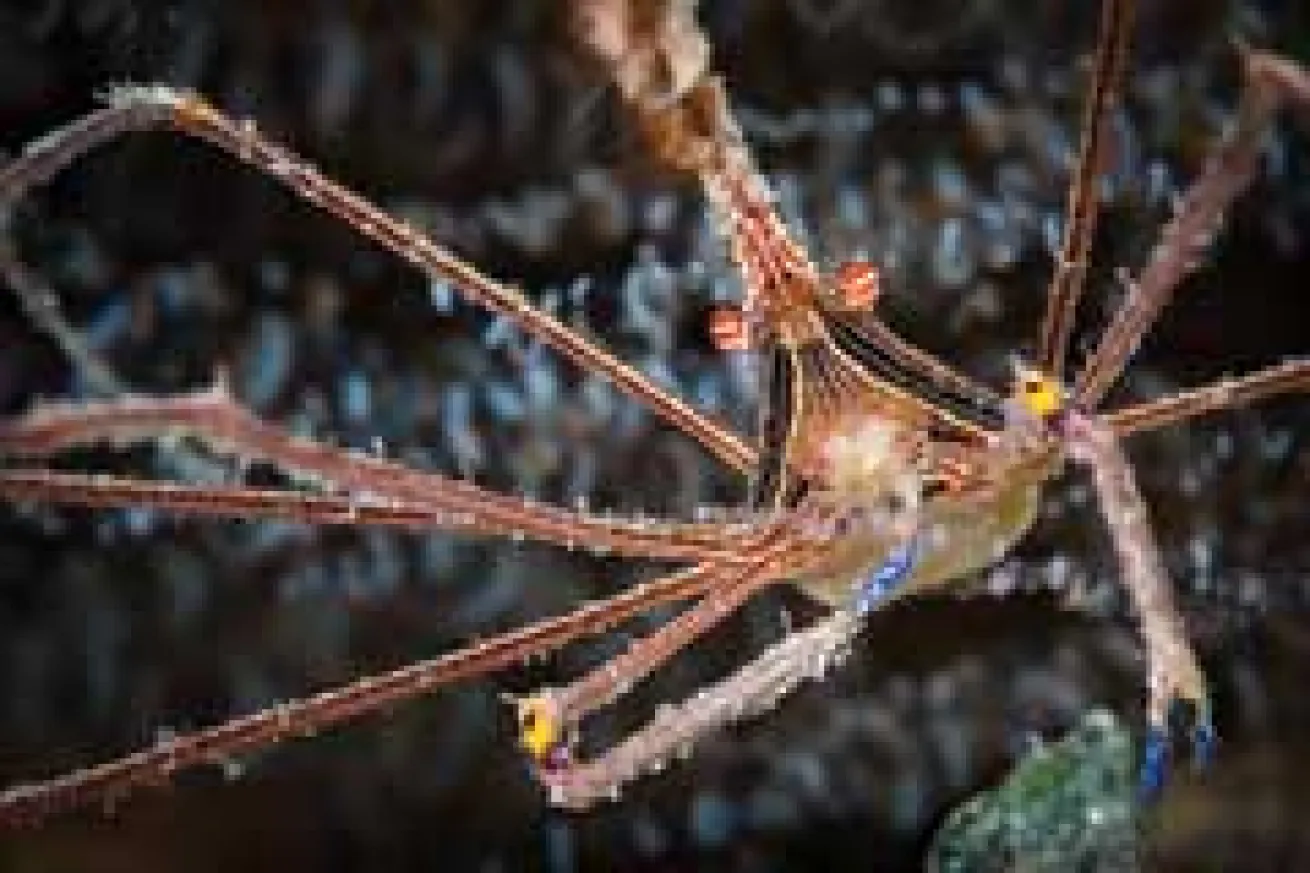
Erin QuigleyRoatan: Yellowline Arrow Crab
A yellowline arrow crab on CoCo View’s House Reef.
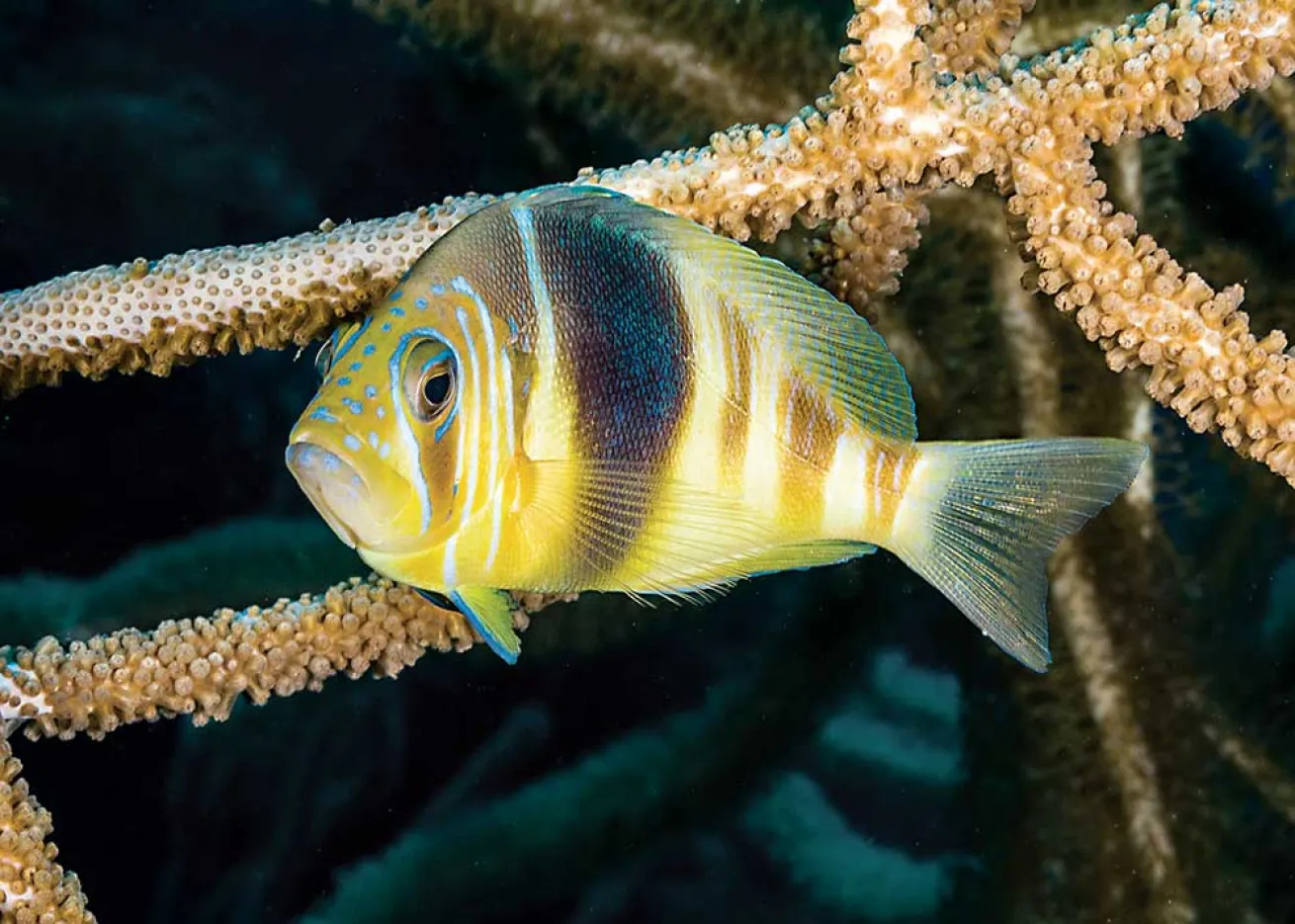
Bruce ShaferRoatan: Reef Fish
Reef fish abound on dive sites like John’s Spot and Mr. Bud wall.
Tanya G. BurnettRoatan: Sundowner’s Beach Bar
Sundowner’s Beach Bar, West End.
A good joke is not enough.
The vibrating bag is the first stroke of luck. As the porter from Anthony’s Key Resort lifts duffle bags, I scan my van mates. Surely someone else is stifling a giggle. But no.
So far, not a good start. I’d planned this five-day trip to the Honduran island of Roatan as an exercise in learning to become part of a dive group — any dive group. For 10 years, I’ve traveled solo to destinations catering mostly to groups: Bonaire, Cozumel, St. Thomas. Always the same: I’m the only table for one. Given that this is a sport where alone time is frowned on — and, in the case of solo diving, controversial — I want to see what will happen when I try to integrate for more than a day.
“Yeah, yeah — it’s just my toothbrush.” The guy admitting this has a Long Island accent, and he’s laughing. He’s seated next to a wife or girlfriend. I smile at her.
“Buddy, you couldn’t live without it for a week?” A voice from the back row booms.
Everyone laughs. The couples compare airfare, signaling that they didn’t travel together. Not a dive group.
If nobody’s laughing, poke fun at yourself.
At check-in, I try again. Anthony’s Key Resort perches on a jungle-shrouded hilltop, with wooden cabanas spilling along the shore and across a small bay on a private island. Before we get keys, there’s paperwork. Back home, in a rare moment of preparedness, I had printed the forms and remembered to pack them. I call myself out for being a nerd, and the guy next to me, Scott, shares that he is too.
After we’re handed keys, Scott, Adam — who asks to tag-along—and I pad down the hillside stairs to the dive shop. Denny Webster, AKR’s dive shop manager, says that not only is it too late to borrow a tank but we have to make a checkout dip first. We settle for kayaking to Bailey’s Key, just across the channel. For adventure in less than 10 feet, it’s not bad.
Sunset is happy hour. I’m counting on the booze to render these people looser. I’m desperate to mingle, but I’m struggling for connection. I haven’t been diving with any of them, so I can’t rely on a line like, “So how ’bout that turtle?” I fear this is going to be Bonaire — where I end up solo — all over again.
When Adam and Scott appear, I’m relieved. At least I won’t eat my grilled snapper in silence.
The roster is negotiable.
I’ve talked my way into VIP parties. I’ve crashed a couple of weddings — even a prom. (Don’t ask.) So why not a dive boat? Anthony’s Key runs a fleet of 12 boats: 11 for divers and one for snorkelers.
Right now, I’m operating under the assumption that scuba groups are like private dinner parties. They jointly book a table — er, trip — to avoid mingling with strangers. But what makes a good dinner party — or dive — are the wild cards. Moi indeed.
The chalkboard listing each boat’s assigned divers gives away less information than a restaurant reservation book. Gear locker numbers stand in for names. The only way to find out which party is going to be the most raucous is to ask.
“You want what now?” Denny, big enough to be a bouncer, looks at me as if I have Roatan confused for Las Vegas.
I rephrase the request. I say that I simply want to meet friendly, outgoing sorts. You know, characters.
“Ah, you mean like Radley.” With that, Denny tells me that the group from Manhattan, Kansas, has been coming to Anthony’s Key for years. Radley, their leader, is something of a personality. Plus, their boat is mostly men — nine gents to one lady — and they don’t have the numbers to fill it. Bingo.
When the group starts trickling aboard, I make nice.
“I hear you want to dive with us. Now why is that?” asks Radley, reaching for my hand. His heartland drawl and chin-length gray hair both say easygoing.
“I asked the dive shop if I could join the boat with the handsomest guests. Now, am I on the wrong vessel?”
Big fish, big bonding.
Dive one finds us at the wreck of the Aguila. The 230-foot former cargo ship is hosting 20 or so dog snapper and a dozen tiger grouper, and I first take notice when a 4- footer shoots straight under me. With a flick of its tail, the grouper juts 6 inches from my mask. It startles the heck out of me, but I’m intrigued. The rest of the school stays clustered under the boat, while six snapper dart between divers. I stay still, watching for another approach, but now the fish stays a couple of yards from me.
A paddling friend once told me never to stare directly at a bird: Two eyes close together advertise a predator. To keep from spooking a heron, my friend turns his head, so the bird spies only one eye at a time. No longer on edge, it goes back to its business.
It works. I get to spend the next 1,300 psi amused by these dive-bombing fish and my buddies’ reactions.
The bigger the group, the bigger the dive.
The next few days are a blur that reminds me of freshman year in college: Everything the group does, the group does together — all 16 of us.
The last night I spend with the Kansas crew just happens to be a night dive, two sleeps after the new moon. My dive buddy, Bruce, a sweet kid, is here with his older brother, Matt, a dive instructor, and his dad, Gary, a substitute teacher. The Cerezo family lives in Southern California, met Radley on a past dive trip, liked the cut of his jib, and have been fixtures on his trips ever since.
Tonight we all hang back a bit as others get their bearings. Less than a minute after divemaster Marvin starts kicking in the opposite direction, I look down. A channel-clinging crab, fat around as a pie, is vertical on a sea fan. I take this as a sign that we should explore more of this site, a bit of prime real estate named Overheat.
Even just the one channel-clinging crab would have been plenty to add interest to the dive. Yet in the next 15 minutes, the count is six — enough to throw a dinner party if all of Roatan weren’t a no-take marine park.
Soon Marvin signals that it’s time to circle up. On the dive boat, he’d told us we should all turn our lights out to see the biolume.
As expected, the sparkles are great, but it’s what’s beyond that makes me question my lucidity. Orbs of white hover in all directions, like a stadium full of concert goers readying for an encore. It starts with beads appearing one at a time and stringing themselves on an invisible necklace. They’re a special bioluminescence called — no surprise here — string of pearls. I watch in delight. The phenomenon grows wilder each minute, the lights dancing as if on timers.
Don’t say your room number aloud.
We’re all still on a high when we reconvene at the open-air dining hall. Tony comes over, Cuba Libre in hand. He’s chatting with Jim, an insurance salesman, trying to settle a bar tab from the other night, when he’d told the barkeep to put them all on his tab — but he meant his own whiskeys, not those of the whole group.
Jim chuckles, and agrees to sort out the bill in the morning, but the joke has become fodder for the table.
“Tony, I hope you don’t mind. You’re in room 27? I used your name when I signed up for the dolphin experience.” No sooner do the words escape Bruce’s mouth than his brother falls in suit.
“Oh, and I used your name for zip lining.” “And zip lining with dolphins.”
“How does that work?” “You carry ’em under your arm.” Luckily, Tony’s been laughing all along — these kids know him well enough to tease. “It’s all good. I’ve been by the spa. Signed you up for a leg wax.” It’s then that I look around and appreciate the scene— not just that I’m not dining alone where tables for 16 and 20 are the norm, but the hillside view of the island below and the lights reflected in the channel. There’s a scattering of stars. With folks to share this with, it’s starting to feel somehow more real.
Divers define watering hole differently.
The next afternoon, I take a seat near where I assume the foot traffic will be: the bar. I’ve just transferred to CoCo View Resort, midway along Roatan’s opposite coast. I figured surely the people would be here — after all, the popcorn machine is full with a fresh batch.
Yet the only folks I see are clad in neoprene, plodding from the beach out to the house reef. Dang. I hadn’t factored in the popularity of shore diving. I’m pondering the odds that there will be more people entering the water by the time I suit up when I find I’m not alone.
“You’re new here, aren’t you?” A popcorn-taker. A lanky, red-bearded gentleman sits at my table. And just like that, I meet a group from Denver.
Good company makes for better seafaring.
“I thought you said it was going to be rough.” The peanut gallery is in full effect as we tie up at Calvin’s Crack the next morning. We’ve spent the 30-minute boat ride to this wall dive bracing as we bore down on 3- and 4-foot waves. Before we set off, divemaster Kirk had conducted a vote to see if we’d rather the waves or a calmer, more-protected site. The Denver group quickly picked the rockier path. The profile starts with a 12-foot-wide chasm that carries divers from the reef at 30 feet out past the wall at 70 feet. I’m enjoying the nearly vertical slope, kicking lazy strokes up and over lettuce corals at 50 feet, when suddenly a damselfish charges into my mask. Instantly, I’m laughing so hard that the mask floods. Before I can clear it, the bugger does it again. Five times it tells me that I’m not welcome. As I take the hint, Kirk gestures toward the sand.
There in a perfect half-moon of a hollow is a toadfish, fat around as a travel pillow. On its lower jaw is a row of teeth: white, the size of cake sprinkles. It’s not striped like the Cozumel variety, but mottled and mud-colored. Given that we see only its fat, wide mug, I half-think it’s a puppet.
Just before I reach my safety stop, Kirk points again. His find: an orange seahorse tucked around a sea rod.
Old friends: the best reason not to make new ones.
It’s just the sort of dive that’s best relived over happy hour. A bunch of us wade from the bar to the beach to the dive platform marking the start of the house reef. The steady parade of divers has matted a wide swath through the sea grass. The depth is such that we can sink back and, without much effort, keep our Salva Vida beers from going under.
As the friends rib each other — one for failing to locate the wreck of the Prince Albert, just yards from a marker buoy, and another for making up her own nitrox tables that allow uninterrupted time at deep depths — I realize this is what a dive group looks like. Any group of divers will begin to poke lightly at each other by day four. But when you already know everyone, and have dirt dating back years, the jokes are richer and come faster.
It’s the reason Allison, who months ago moved to San Louis Obispo, California, and found a dive shop there, still travels with her Denver gang.
“I really should get to know them. I’m sure they’re very nice people,” she says of her California dive shop.
Not missing a beat, one of the other women in the Denver group shakes her head. “Nahhhhh.”
Want to learn more about Roatan? Visit our DIVERS GUIDE TO ROATAN.


