

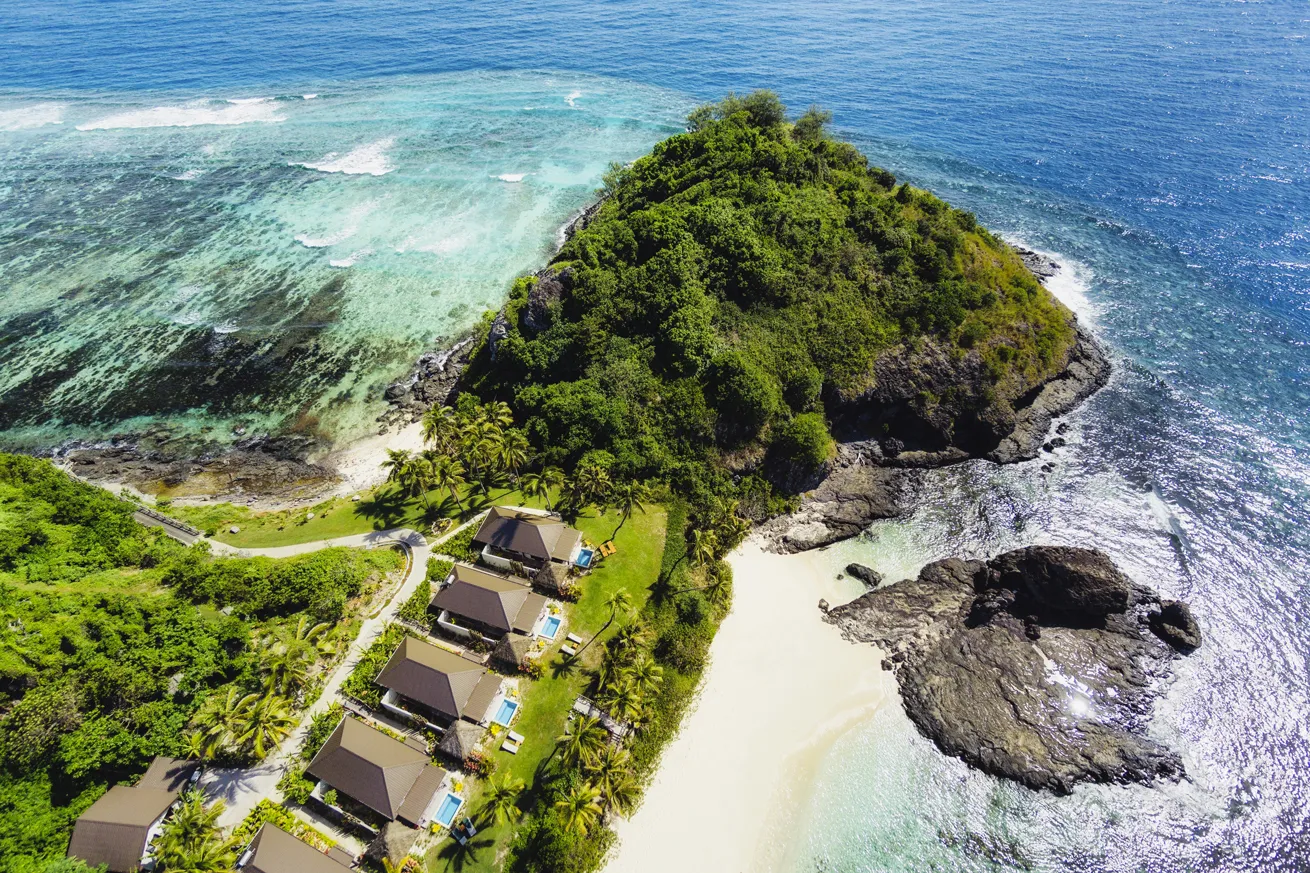
Courtesy Matamanoa Island ResortThere isn’t a bad view to be found from the oceanfront pool villas.
Forty-seven rooms. That’s it. On an island where you can walk the perimeter in 20 minutes, Matamanoa Island Resort has perfected the art of getting out of your way.
The numbers tell part of the story. Ten oceanfront villas are tucked along a private beach, each with its own plunge pool, outdoor shower and steps that lead to the sea. These villas are a study in understated elegance—cool stone floors, timber accents and bed linens sourced from a renowned New Zealand brand. There are 24 beachfront bures (traditional Fijian-style homes) adorned with tapa ceilings and expansive interiors that open onto private decks with plunge pools. And mere steps from the beach are 13 cozy garden-view rooms perfect for those who prefer to keep things simple. Every detail, from the handcrafted woodwork to the Fiji Nama bath amenities, speaks to a deep respect for place.
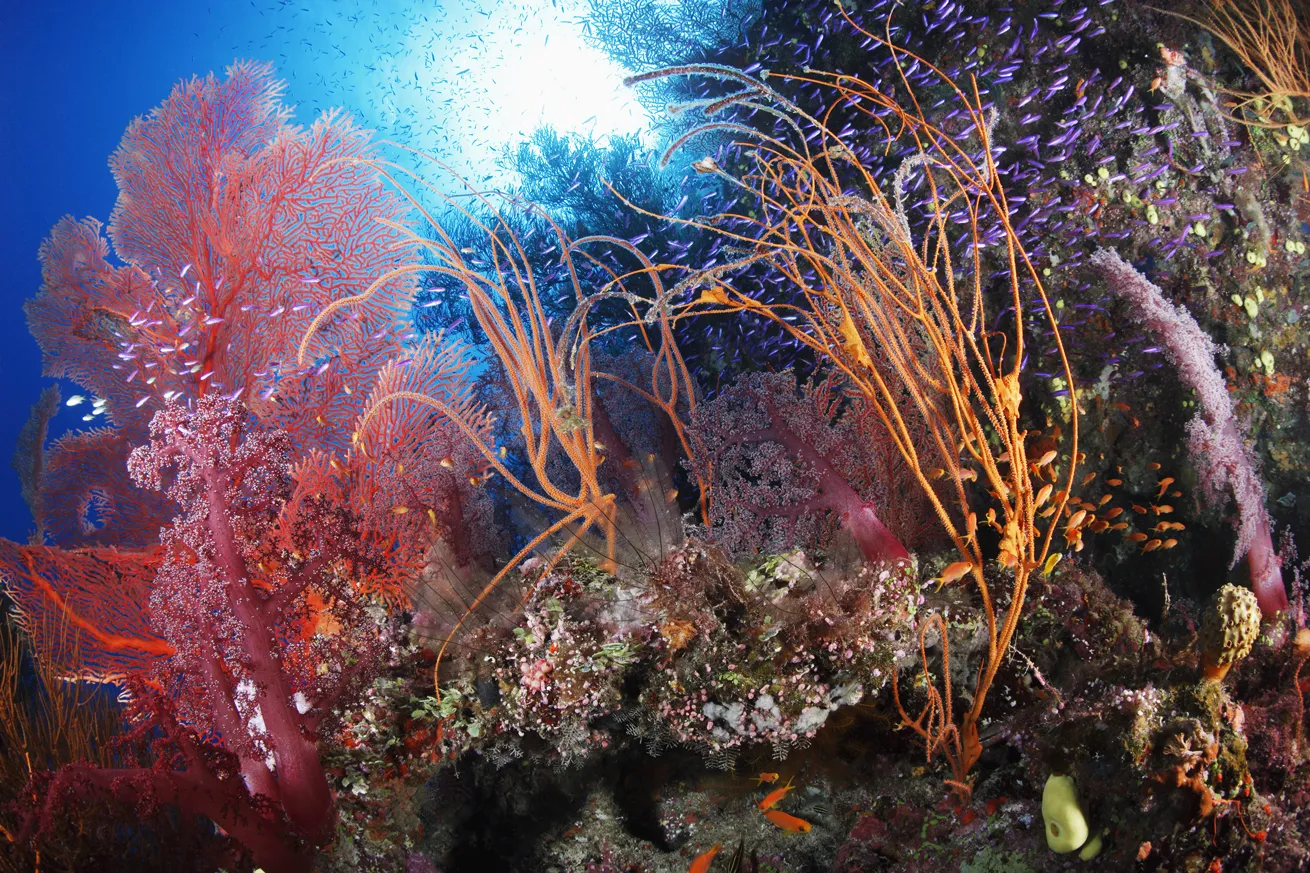
Courtesy Matamanoa Island ResortAn explosion of color greets underwater explorers at prime Fiji dive sites.
From Alps to Atolls
The vision? Heinrich Steinocker, an Austrian ski instructor’s fever dream that somehow worked. Back in 1984, he swapped schnapps for kava and built something that still feels right—no marble lobbies, no infinity pools stretching toward manufactured horizons.
Luxury at Matamanoa is really about the details, like the staff learning your name before you’ve unpacked and gathering each evening to sing hello to arrivals and goodbye to departures. Honeymooners find hand-carved wooden plaques on their doors. It sounds contrived until it happens to you, and then you’re texting home about crying over a song.
Related Reading: Manta Resort's Reef-Recovery Initiatives
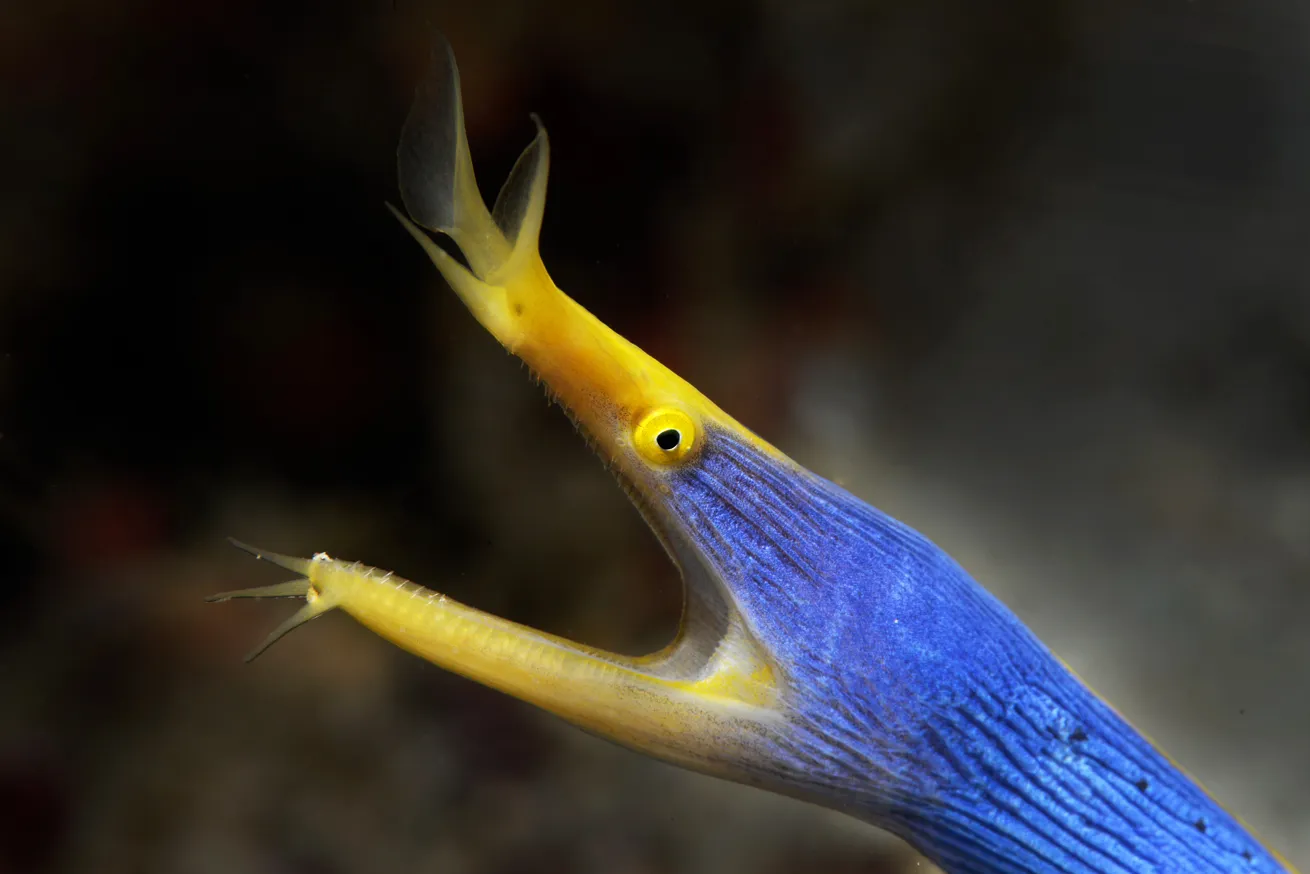
Brandon ColeA grinning ribbon eel
The House of Reefs
The diving around Matamanoa reads like a greatest hits collection of Pacific coral formations. Two minutes from your villa, Bird Rock Wall is an encrusted vertical playground where every ledge and crevice hosts something. The house reef at Sunset and Lover’s Bay operates as a marine sanctuary, its hard corals providing both nursery habitat and night diving theater when flashlight beams catch sleeping parrotfish and hunting eels. Gotham City earns its name from the batfish that patrol the soft coral gardens, their silver bodies flashing against rainbow walls of sea fans. But Supermarket remains the headline act. This shark encounter site has probably graced more dive magazine covers than most Caribbean destinations, its cleaning stations drawing gray reef sharks, whitetips and the occasional bull shark. Most sites sit within a 10-minute boat ride, meaning more time to dive and less diesel fumes.
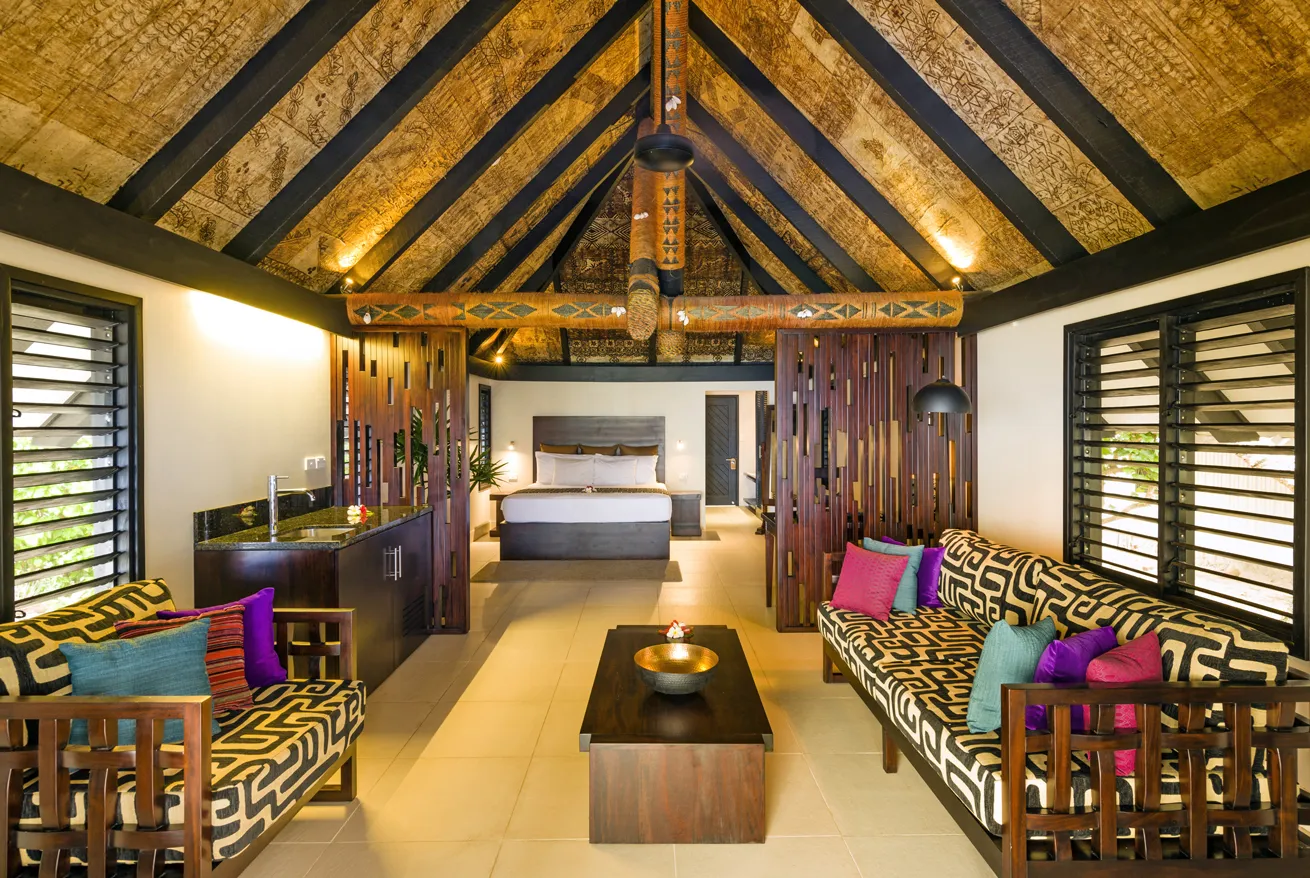
Brandon ColeBeachfront bures are spacious with private plunge pools.
Beyond the reef, Matamanoa keeps you moving without trying too hard. The kayaks launch directly from the beach—no reservations, no lectures about paddle technique—letting you drift over coral gardens where the water stays gin-clear to 20 feet. Feeling competitive? The volleyball court sees serious action between guests and the activities team, who play with the casual intensity of people who’ve been perfecting their serves for years. Tennis happens on a single court that catches the trade winds, while the guided mountain hike leads to viewpoints that frame the entire Mamanuca chain.
The cultural immersion runs deeper than your typical resort entertainment. The night brings fire dances performed by staff whose families have lived these traditions for generations. This is the type of place where you don’t want to miss the kava ceremonies or the cooking lessons, during which you’ll learn to prepare kokoda (Fijian ceviche) using techniques passed down through village kitchens. Day trips reveal communities where life moves to rhythms unchanged by decades of development.
The spa weaves into this cultural fabric through its signature nama treatments—therapies built around sea grapes harvested from Yasawa Island waters, where the seaweed grows wild.
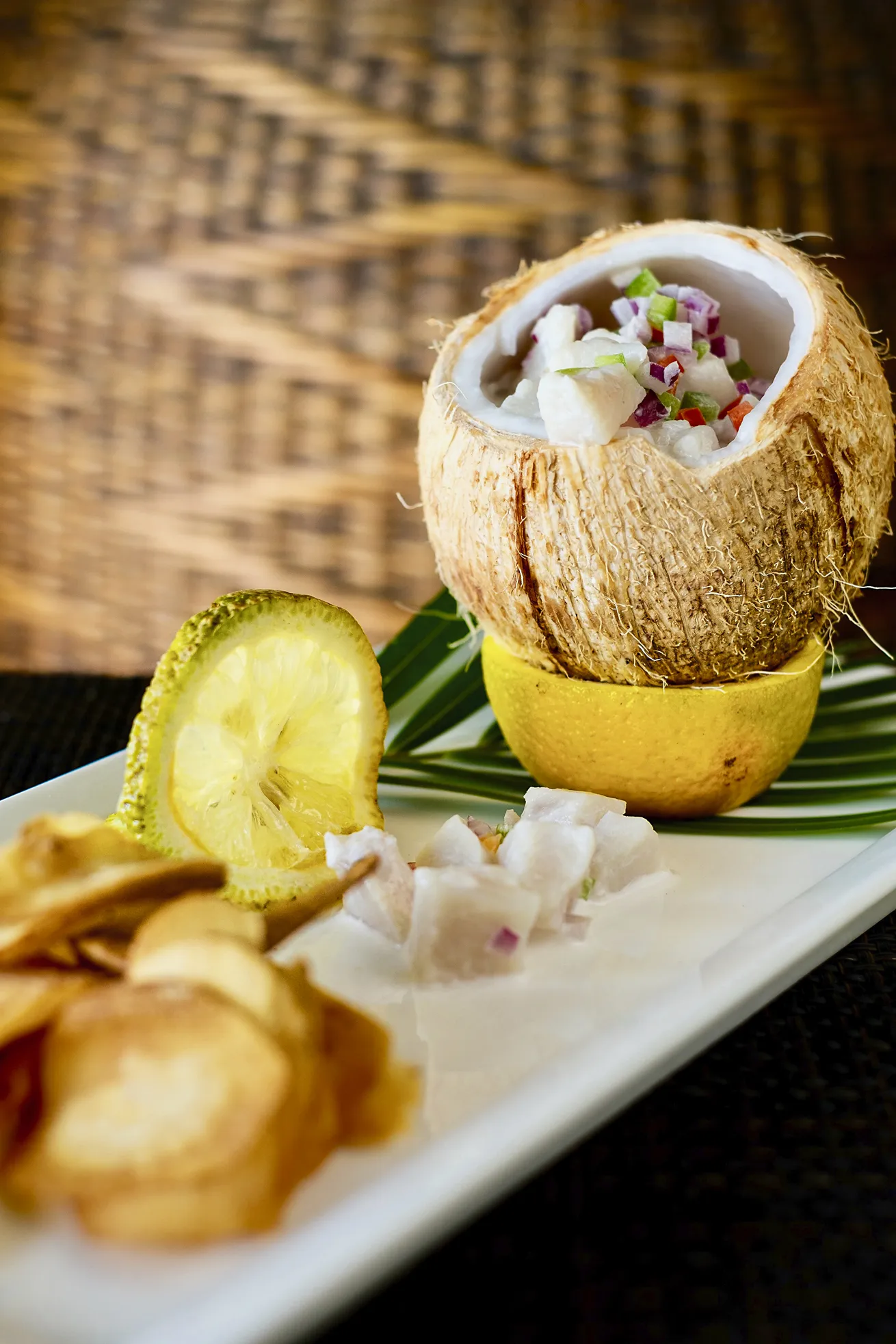
Gerald NowakKokoda is a Fijian style of ceviche that “cooks” local fish in lime juice. Coconut milk is used to balance the acidity of the citrus.
From Sea to Table
Dinner changes nightly but centers on what the boats brought in. The kokoda arrives in half coconut shells, raw fish swimming in lime juice and coconut cream that tastes like the ocean distilled. Lobster gets grilled over coconut husks. The curry selection runs deep—Fijian-Indian fusion that reflects the islands’ colonial complexity without getting academic about it.
For private dinners, the staff will set up a table on the beach with solar lanterns. The waves provide the soundtrack, and sand gets in between your toes.
But this isn’t luxury as theater. No one’s trying to impress you with thread counts or Champagne at check-in. The New Zealand family that’s run the place since 1996 understands that real luxury means having nowhere else you need to be, nothing else you need to prove.
Related Reading: Spain's Most Enchanting Dive Destination
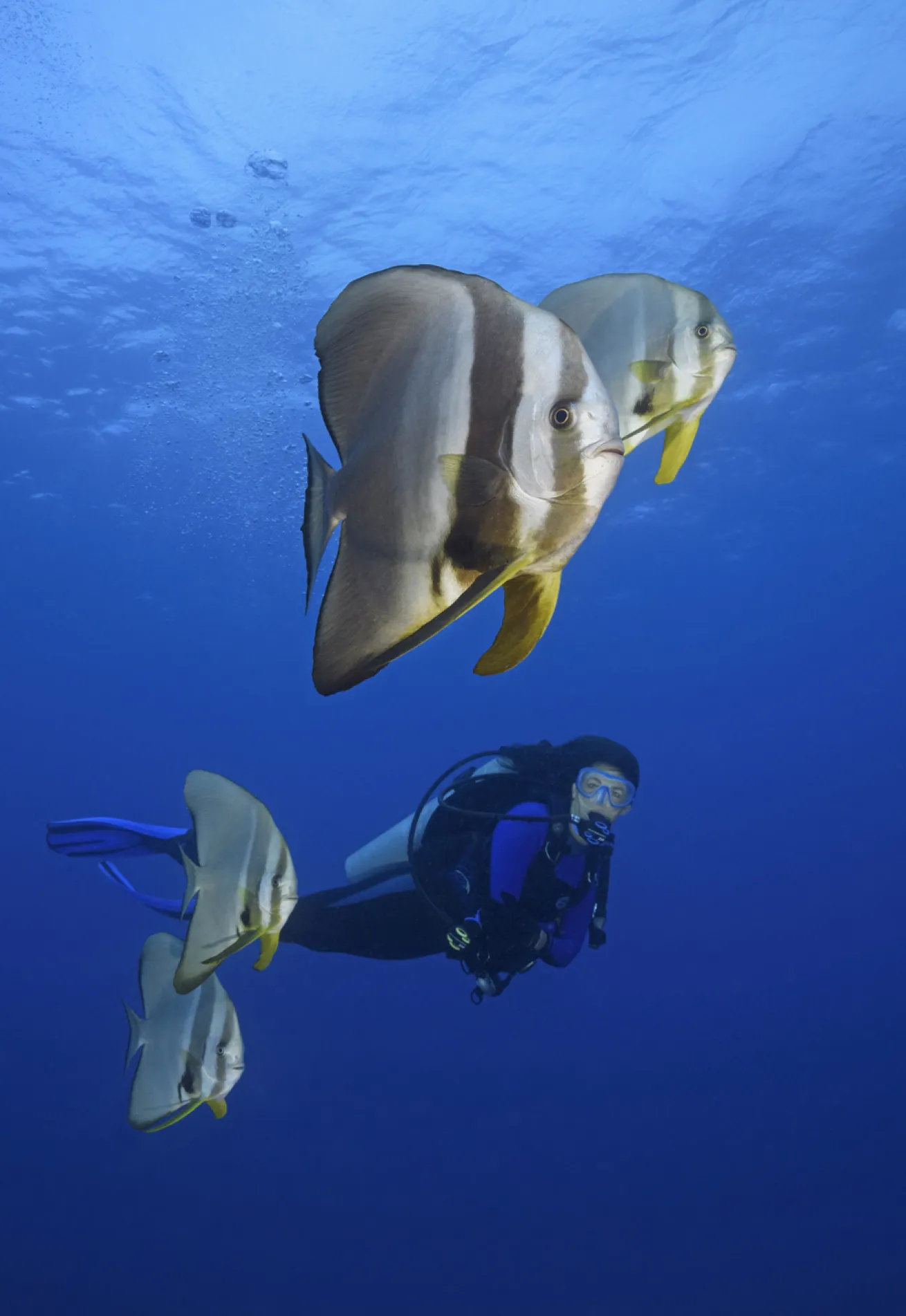
Matamanoa Island ResortA quartet of teira batfish swims alongside a diver. Look for juveniles among floating debris; adults are inclined to be near seaweed.
The island sings—literally, every evening, but also in the way salt air moves through casuarina trees, how the reef fish announce themselves with splashes at dawn, how the staff’s “bula” greetings carry genuine warmth.
You could island-hop to Monuriki, where Tom Hanks filmed his volleyball confessions in Cast Away, or visit mainland villages where Sunday church services welcome visitors with voices that shake the bamboo walls. But most guests stay put, discovering a small island that contains exactly enough adventure.
Matamanoa has been singing the same song for four decades. And with every guest arrival, its harmony gets richer.
Need to Know Diving Fiji's Matamanoa Resort
The Rooms
The 47 guestrooms range from villas with plunge pools to garden rooms steps from the beach.
Luxe Standout
It doesn’t get more luxe than staying at the sole resort on a tiny island. The nama spa treatment with indigenous sea grapes is unique and a must-do.
When to Visit
May through October delivers the sweet spot—sunny days, minimal rain and prime conditions for diving. This coincides with manta ray season and is when you’ll find peak underwater visibility. Mid-October to mid-November offers the best balance of settled weather, reasonable prices and fewer crowds.
Getting There
The journey from Nadi International Airport takes three hours by high-speed catamaran or speedboat (fixed schedule or private).
Contact


