

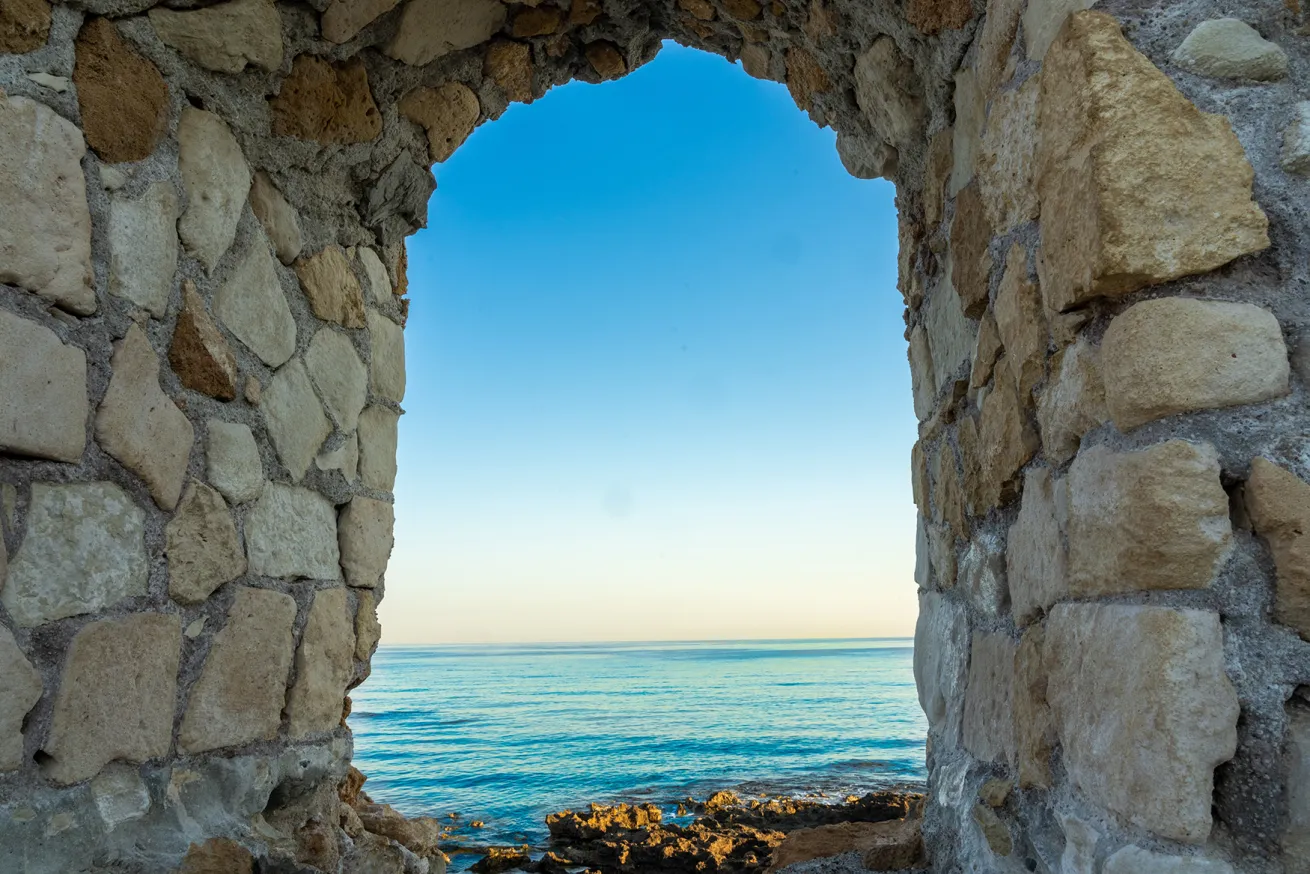
Shutterstock/Brian Scantlebury
Before 2006, scuba in Greece was almost totally banned, with 95 percent of the country’s waters declared off-limits. Because it took until 2020 for the laws surrounding the country’s historic shipwrecks to finally relax, it’s understandable that Greece might not be on your diving bucket list.
Allow me to change that.
Greece has 8,498 miles of coastline, surrounded by the Aegean, Ionian and Mediterranean seas. The real stars of the show are the shipwrecks of the Fourni Archipelago, caves of Crete and the volcanic seascapes—the lower you descend, the more you’ll feel like you’re flying over craters on the moon. Since each region offers a different flavor of drama (also a Greek invention), plan 10-14 days of exploration to take it all in.
Compared to other European locations, Greece is still relatively affordable. Housing options range from simple guest houses (about $35 per night), to five-star hotels, clocking in at roughly $500 per night. In-country flights between islands tend to be fairly budget-friendly ( $40-$150 one way), and a time-saving alternative to ferries. Just be sure to budget in the cost of checking a bag if you’re carrying dive gear. With the water temperatures in the high 60s to 70s, depending on where you visit, you’ll want to pack a 5mm wet suit.
Ready to take the plunge? Read on to learn more about diving in Greece.
Related Reading: Greece’s Best-Kept Secret for Scuba Diving
Basic Facts: Scuba in Diving Greece
Language: Greek. English is widely spoken.
Currency: Euro. Credit cards are largely accepted, but it’s wise to have some cash available for tipping, bathrooms and rural shops.
Main Airport: There are numerous direct routes from the US to Athens International Airport. (Eleftherios Venizelos). Flying within the EU gives you the option to head straight to the islands with flights to Thessaloniki International Airport, or Crete via Heraklion International Airport N. Kazantzakis.
Look But Don’t Touch: While diving in Greece, like any location, it’s imperative you maintain best practices underwater and look but never touch.. Keep in mind that ethos also extends to Greece's abundant underwater ruins. Removing any treasures you might encounter, or even taking a broken shard of pottery can result in stiff fines and potential jail time.
Signature topside activity: Eating. Sure, you were going to do that anyway, but in Greece, food is fresh, seasonal and served in portions so big, it feels like a personal challenge. Follow your nose to taverns off the main drag for a most memorable meal. If it’s around 9 at night, and it’s filled with locals—you’re in the right place. Not a late eater or just starving after a dive? Find a local bakery or deli and grab spanakopita (spinach and feta pie) and tiropita (cheese pie), dolmades (stuffed grape leaves) or tzatziki dip with pita. Goat’s milk ice cream is a favorite and recommended at any time of day.
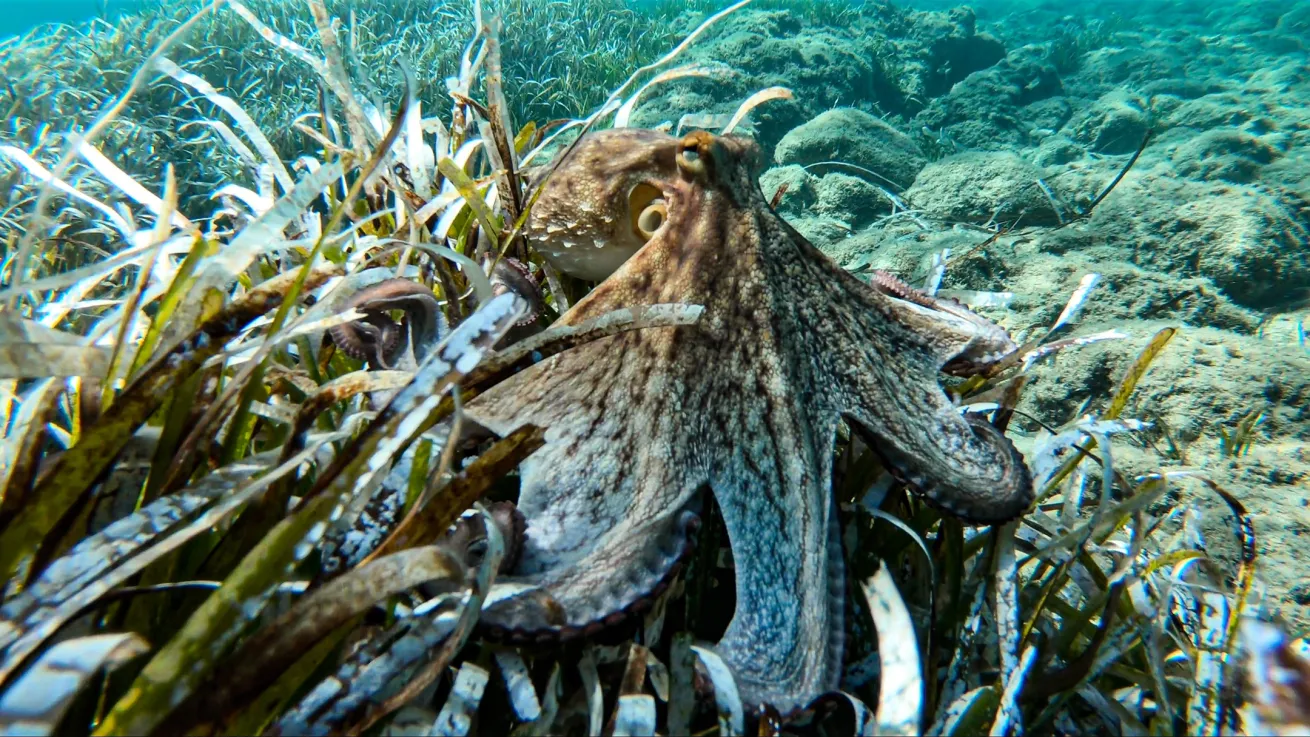
Shutterstock/Pablo JoanidopoulosCommon octopus camouflaging on algae underwater in Greece.
What You’ll See Diving in Greece
The real star of the show is the rugged underwater topography that octopus, moray eel, sea turtles and grouper call home. Invasive lionfish offer a splash of color, and—depending on the season—the common dolphin, seals, and loggerhead turtles have been known to make an appearance.
Related Reading: Diving in Greece: Three Unexpected Islands to Visit
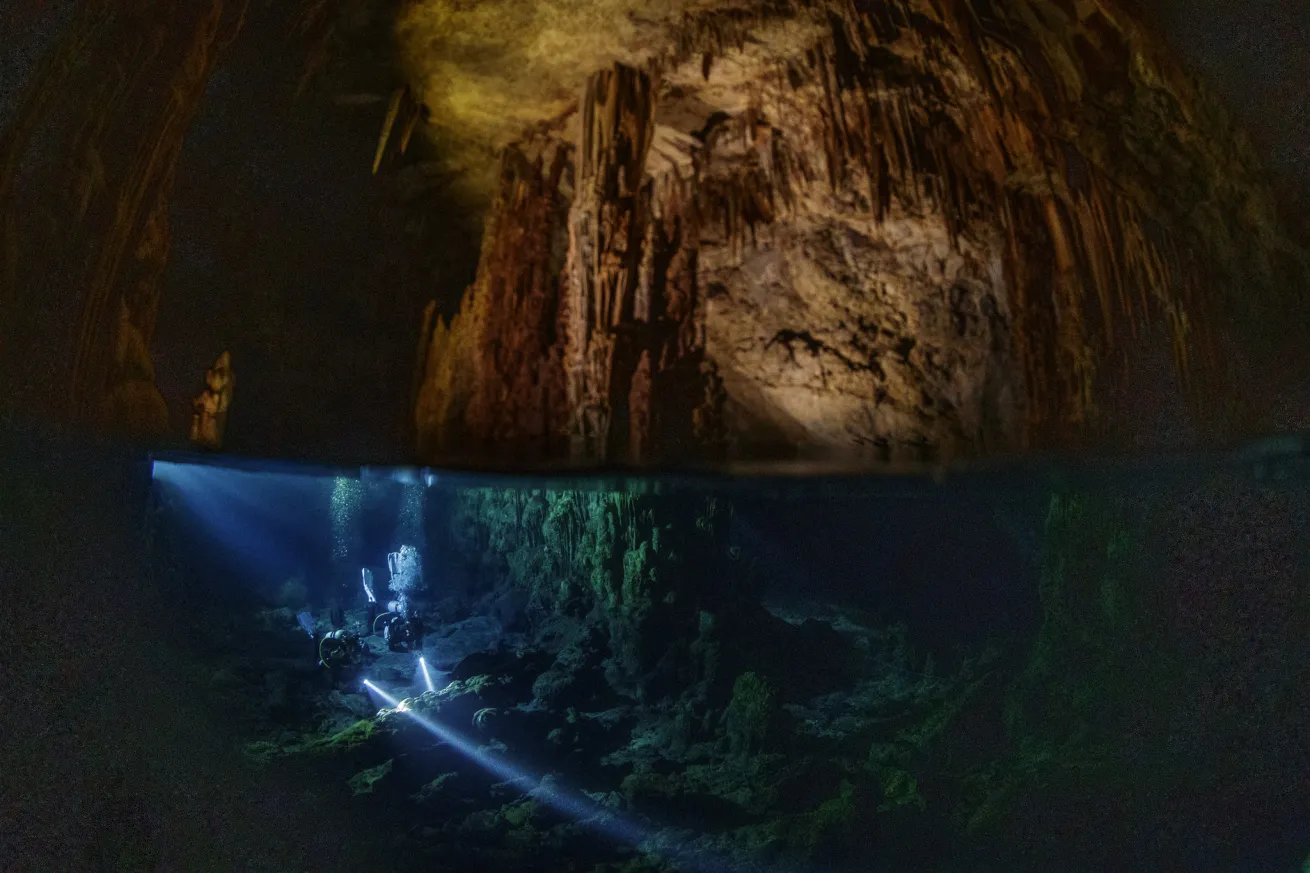
Tobias FriedrichElephant Cave, Chania, Crete.
Diving in Crete
Crete is best known for its wrecks, accessible caves for all skill sets, and a dive season that extends well into the cooler months. Head to Chania, Crete’s second largest city, located on the island’s northwest coast. Blue Adventures Diving Center, situated on Marathi Beach, is the perfect place to start your adventures with caves and other dive sites just a short boat ride away. Don’t miss Elephant Cave, a spectacular cavern with a constellation of multi-hued stalactites and a clutch of elephant bones scattered just below your feet. Stay at the nearby Zeus Village Resort (rates generally hover between $129 and $250)
Plakias, located on the south coast of Crete on the Libyan Sea, offers a different flavor of experience, largely thanks in part to the cooler water temperatures. Visit Skinaria Cave, a naturally-lit cave where tiny shrimp congregate (yes, you read that right!), for one of the most dramatic cave experiences.
Curious about the local flora and fauna? Dive2gether offers citizen science trips to Souda Beach, where divers turned citizen scientists can help calculate the density of the local sea grass, giving researchers notice of any change to the vital ecosystem. Since food is a vital part of post-dive care (and let’s be honest, Greece as a whole), join the dive team every Monday night for their community dinner amongst the olive trees in the backyard of their dive center. Stay at the nearby Hotel Alianthos for easy access after diving.
Related Reading: 2026 Scuba Diving Travel Calendar
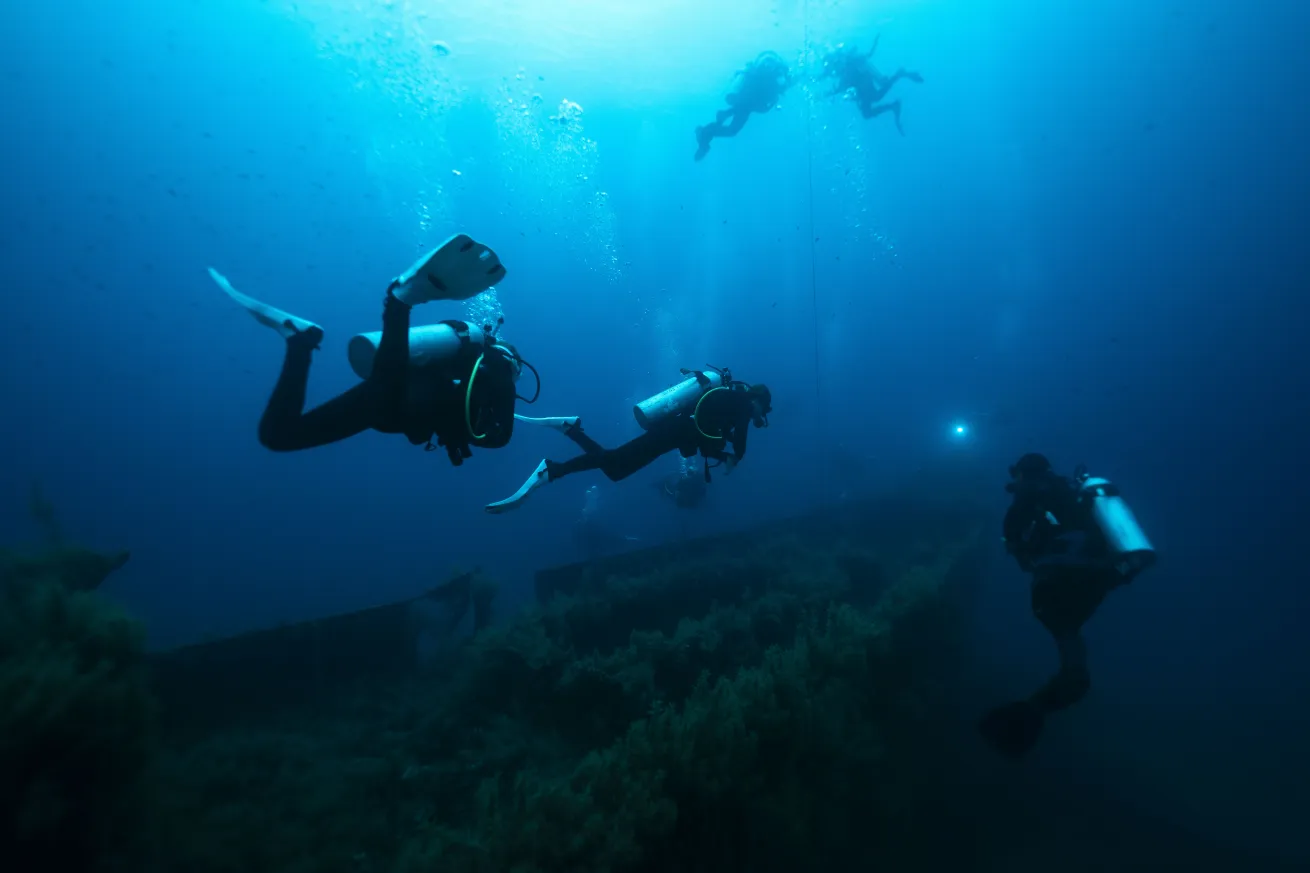
Brandee Anthony MediaThe Mitilini wreck in Halkidiki, Thessaloniki.
Diving in Thessaloniki
The underwater world of Thessaloniki is created by granite, which means you’ll notice more dominant underwater structures. You can spot these at Kalogria Rock, a sheltered beach dive with dramatic rocky drops. (Be sure to say hi to the army of friendly cats who regularly patrol the coastline.)
The area is also more nutrient-rich than other locations across the country, which makes it the perfect place to spot soft corals, sponges and nudibranch. Join up with SeaWorld Dive Center in Halkidiki to explore the local flora residing on Mitilini, a 130-foot-long (40 meters) German cargo ship that sank in 1961 while carrying barrels of wine and olive oil, which now serves as a home to an entire colony of soft sponges. The dive center is connected to the Sani Resort, Greece’s first carbon-neutral hotel complex, so simplify your post-dive trek by spending the night.
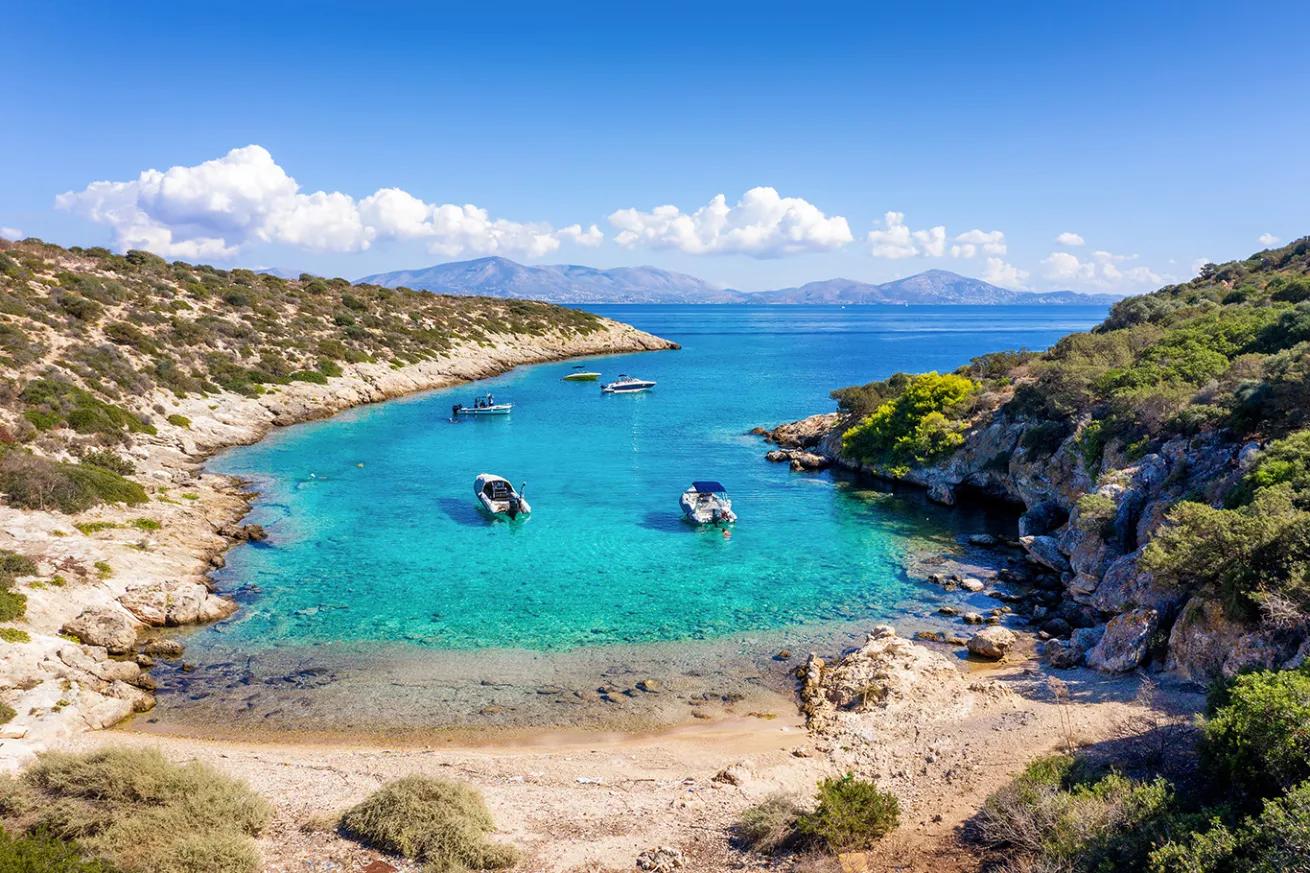
Shutterstock/Sven HanscheFleves Island is just off the coast of Athens.
Diving Near Athens
The Attica Coastline is a 45–60-minute drive from downtown Athens, which makes diving the perfect add-on to more traditional sightseeing trips. Allow the family-run Seahorse Dive Center to be your guides, as you explore the shallow water, high-reward areas around the walls of Fleves Island and the Panagis Wreck, a former cargo ship that is now teeming with sponges, anemones, and spirographs. Stay at the Dolce Attica Riviera for quick rides to and from the airport.
Celebrate post-dive by tipping a hat to the gods. Athens is home to the Papagiannakos Winery—stopping in for a sampling would be what Dionysus would have wanted. And be sure to visit the Temple of Poseidon, a tribute to the God of the Sea, located on Cape Sounion. After all the time you’ve spent in the water, it would simply be rude not to.


