

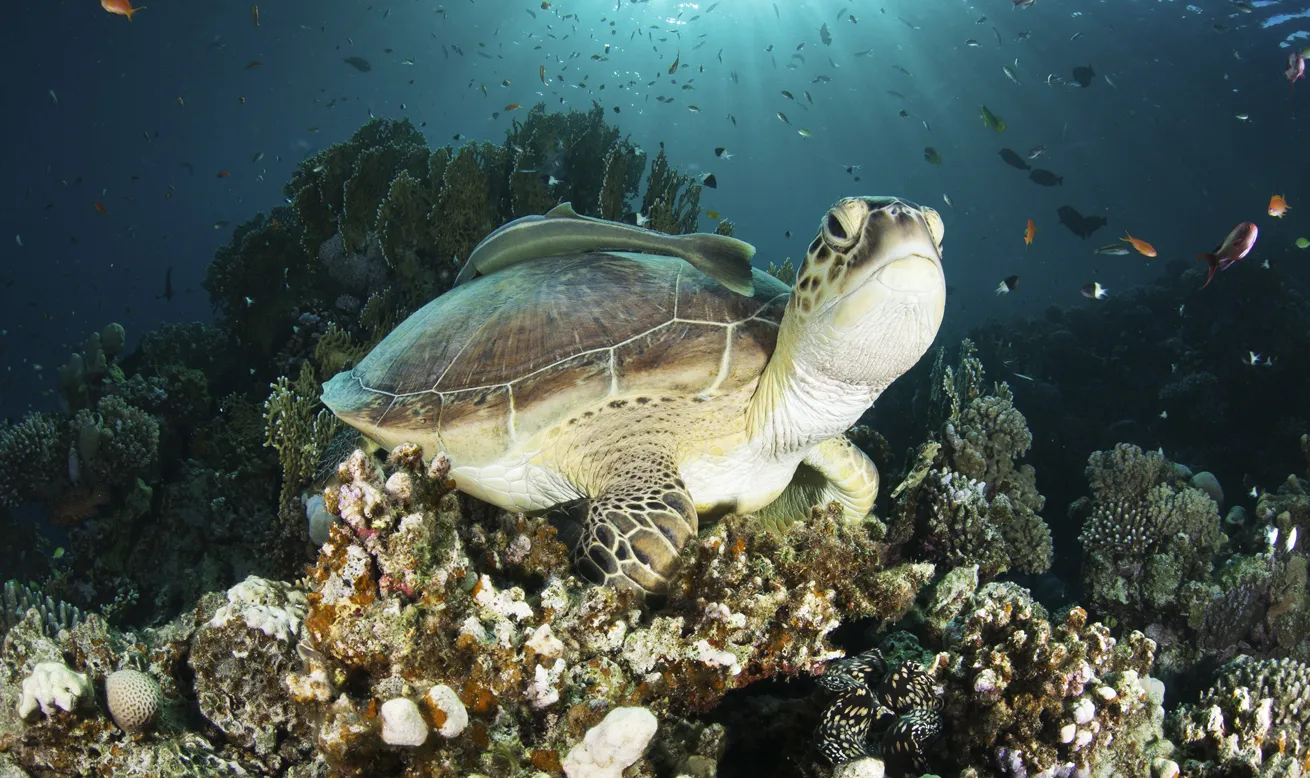
Courtesy Red Sea Diving Safari/Ahmed HelalA green sea turtle poses for the camera.
In the 1980s, the area 150 miles south of Hurghada, Egypt, was a military zone of red desert mountains bordering a largely unexplored sea. With the government’s special permission, former police officer turned ocean advocate Hossam Helmy spent 12 years camping along the coast. Living out of a 4-by-4-foot tent, he explored pristine reefs and mapped the region’s best dive sites.
From Desert Camp to Dive Destination
Recognizing an opportunity, Helmy eventually invited paying guests to join his explorations, and in 1990, Red Sea Diving Safari was born. With a team of just five, Helmy led groups of up to 10 guests through the remote desert terrain to his favorite destinations.
They moved camp every three days, pitching a tent for shelter at night, their days spent diving and nights stargazing. They brought their own food, and there was no electricity—only a diesel engine for the tank compressor.
While jump-starting the region’s untapped tourism potential and creating jobs for local Bedouin and fishermen was a goal, it was important for him to do so without damaging the environment.
Related Reading: Regenerative Travel—A Trend or the Future of Diving?
More than 30 years later, Red Sea Diving Safari, now a PADI Five Star and Eco Center, is doing just that from its three permanent locations: Marsa Shagra, Marsa Nakari and Wadi Lahami—each with its own reef, experiences and vibe.
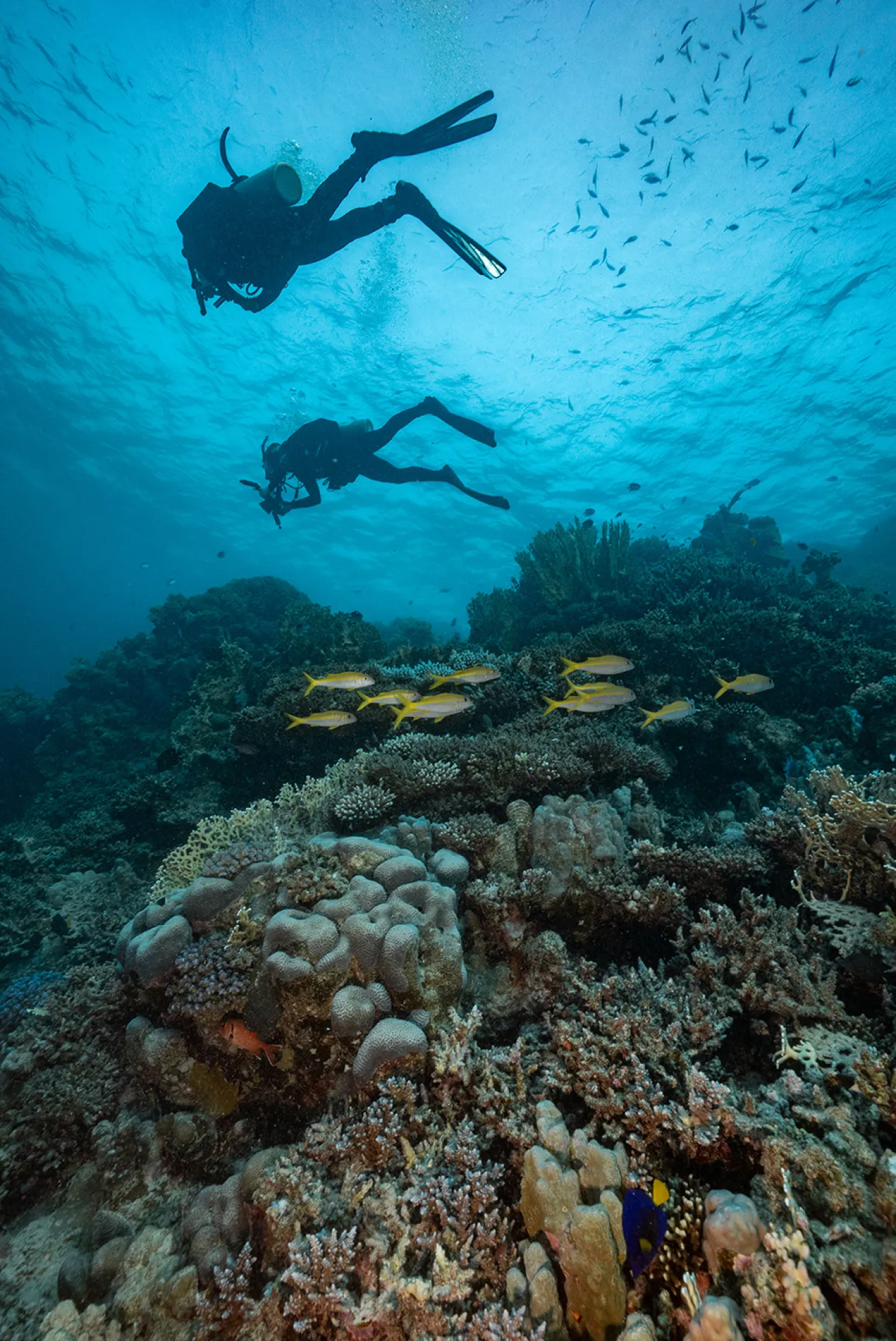
All three locations offer unlimited dives on the house reef, where divers can encounter sea turtles, octopuses, blue spotted rays, varieties of reef sharks, more than 100 nudibranch species and the occasional dolphin, just kicks away from land.
Additional excursions can be arranged to sites like the dazzling caverns at Dolphin House or the famed Elphinstone Reef for a chance to see oceanic whitetips, manta rays, whale sharks and hammerheads.
While the operation has grown and evolved since its rugged start, its conservation ethos remains unchanged.
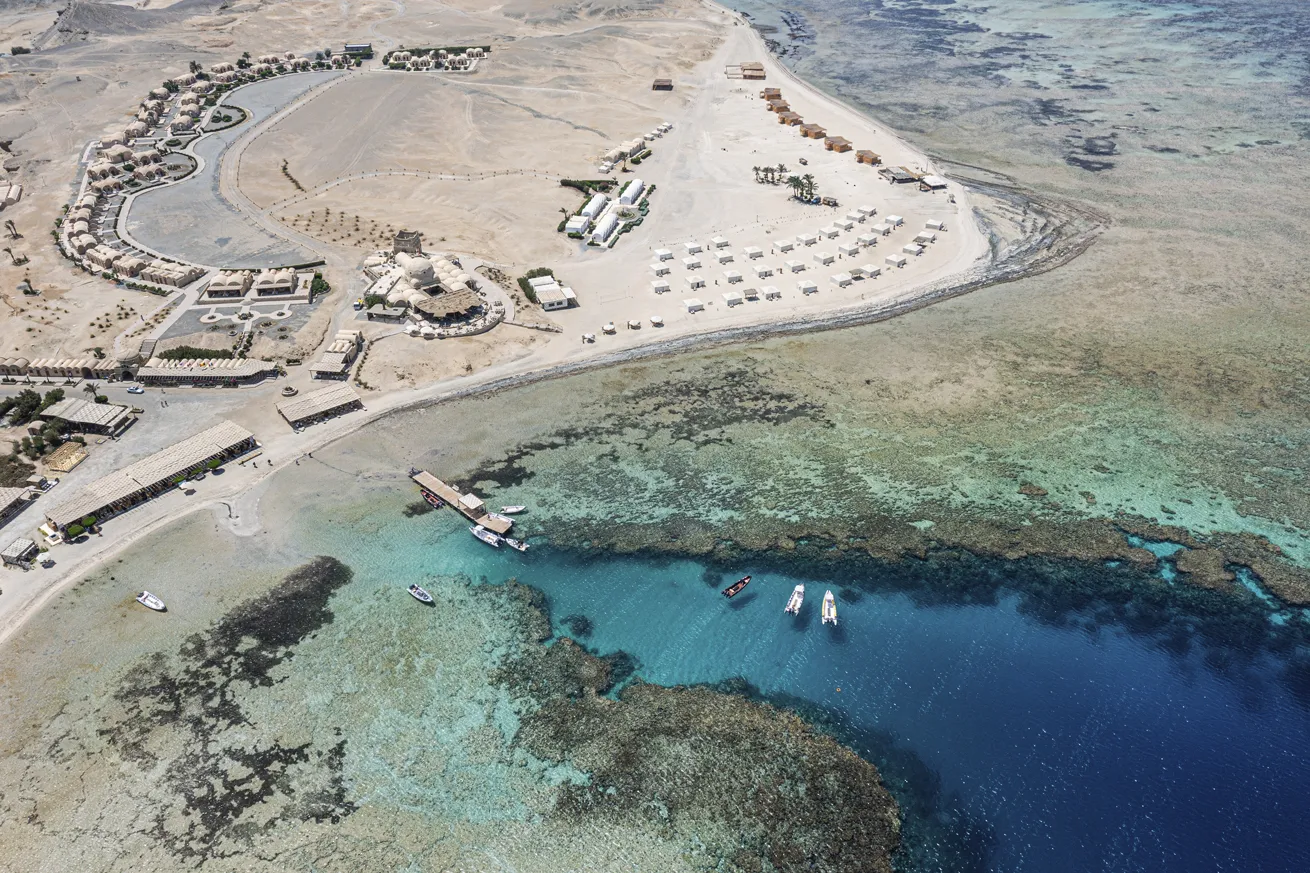
Courtesy Red Sea Diving SafariMarsa Shagra has easy access to Elphinstone Reef, where whale sharks may be seen.
Where Sustainability Meets Decadence
Each of Red Sea Diving Safari’s villages exudes a small resort vibe, and that’s by design. Helmy is a pioneer in eco resorts and an advocate of sustainability over profit. When designing the resort, he fought government rules that required resorts to provide eight rooms per acre. Through research, experts determined that the carrying capacity of Marsa Shagra’s house reef is just 200 divers. Helmy insisted on a model with only half of what was required. “We keep that soft impact model at the forefront of our business today and will remain that way,” says Sarah O’Gorman, the property’s marketing director.
While guests can indulge in a dome-roofed chalet with air conditioning and an en-suite bathroom, many choose the sustainable tents. Most popular are the 16-by-16-foot Royal Tents, which offer modern comforts, including electricity and a mini fridge, with access to a shared bathroom. Or upgrade to a Superior Tent, which has more space, a private en suite and an unobstructed view of the sea.
Red Sea Diving Safari is always improving its facilities to accommodate guests’ tastes—from the simple backpacker to the luxe jet-setter—but they aren’t looking to grow in quantity, only quality.
Recognizing the energy and resources required to transport food and water from the Nile and beyond, RSDS continues to move closer to a self-sustaining system. Solar energy powers the entire resort, and clean water is made using their own reverse-osmosis desalination plant. A 1.5-hectare (and growing) farm produces the fresh, local ingredients used to prepare guest meals. Currently, almost 50 percent of the vegetables being served are homegrown, with a planned increase to 70 percent by 2030.
Meet the Turtles—and Help Protect Them
Red Sea Diving Safari is also active in various marine conservation projects. “It has always been part of the RSDS vision to support conservation and protection of our reefs. It is important to us to contribute to scientific data, raise awareness of local issues, and to educate our guests,” says O’Gorman.
Guests can take advantage of a variety of citizen science opportunities—from coral monitoring to debris cleanups—and RSDS collaborates with various nonprofits on research and education initiatives, both at the resort and in the local community.
One such nonprofit is TurtleWatch Egypt 2.0. “TurtleWatch Egypt began in 2011 as the first initiative to involve divers and snorkelers in sea-turtle monitoring in the Egyptian Red Sea,” says Micol Montagna, president of TurtleWatch Egypt.
“The Red Sea is a hotspot for marine life, yet sea turtles remained understudied,” says Montagna. It’s unlikely for guests to immerse themselves in the house reefs and not encounter green and hawksbill sea turtles so, “We saw an opportunity to involve the diving community to generate real, usable data while educating people on how to engage responsibly.”
Related Reading: Why Endangered Marine Species Are Worth More Alive
“Without understanding them, we cannot protect them,” adds O’Gorman.
Divers and snorkelers are encouraged to report sightings using TurtleWatch’s online portal, where anyone can submit images, videos and other data about a turtle’s activity—whether it was feeding, resting or simply passing through.
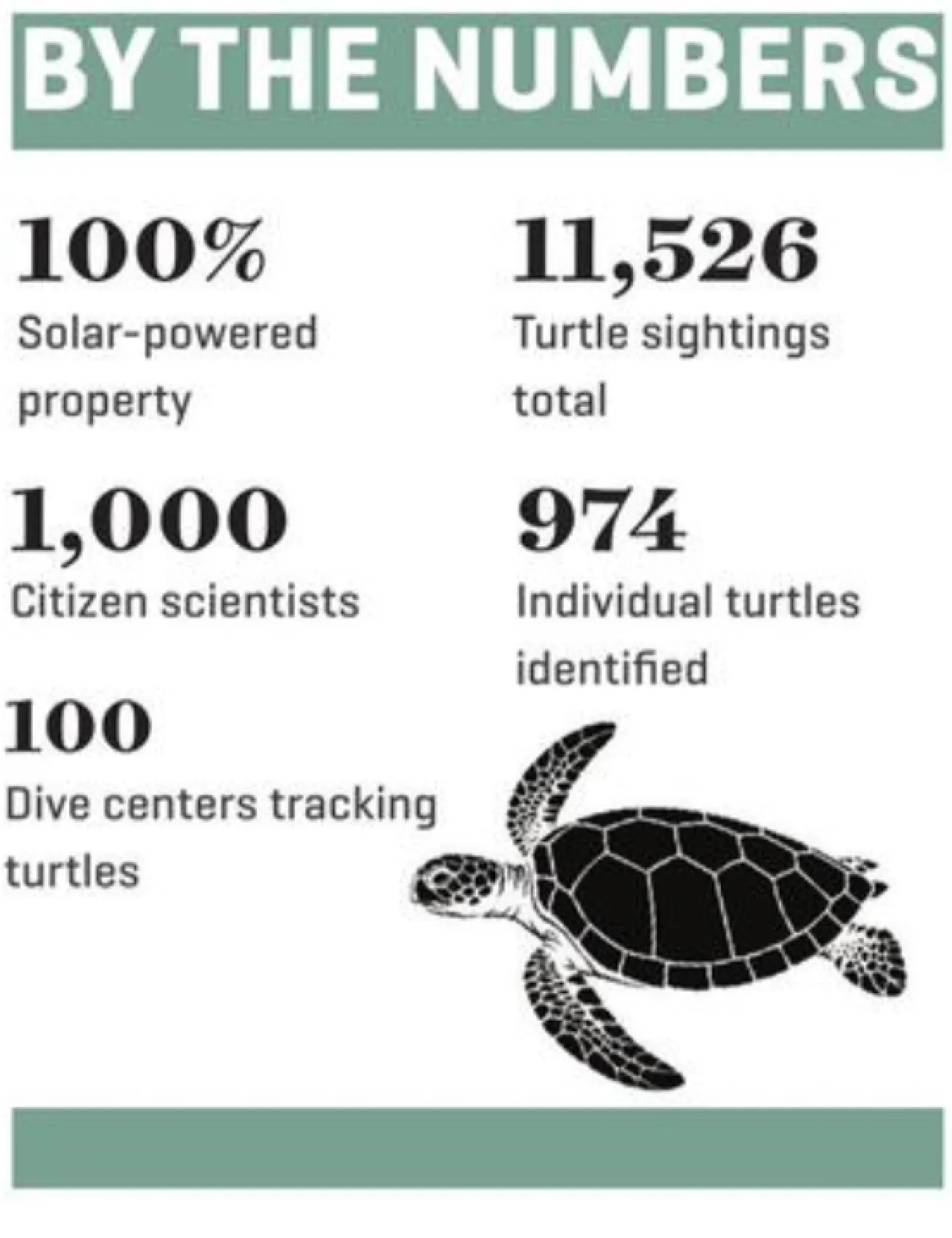
“We ask for photos or videos of the turtle’s left and right facial profiles, as these help us identify individuals,” says Montagna. “The images and data help us build a full picture of the turtle population, detect injuries or unusual behavior, and maintain a long-term dataset.”
The priority is always to respect the animals’ welfare. Guests should observe from a respectful distance and never chase or block a turtle’s path. And if a turtle is new to the database, the photographer gets to name it.
Since it started, TurtleWatch has found that sea turtles face several stressors in the Red Sea, including depletion of food sources, habitat destruction, injuries from boat traffic, egg-poaching and harassment from tourists (which disrupts their feeding, sleeping and breeding).
O’Gorman says guests find it simple, yet meaningful, to contribute their data. It also helps them to feel more connected. To learn more, guests can participate in the Turtle Watch PADI Distinctive Specialty.


