

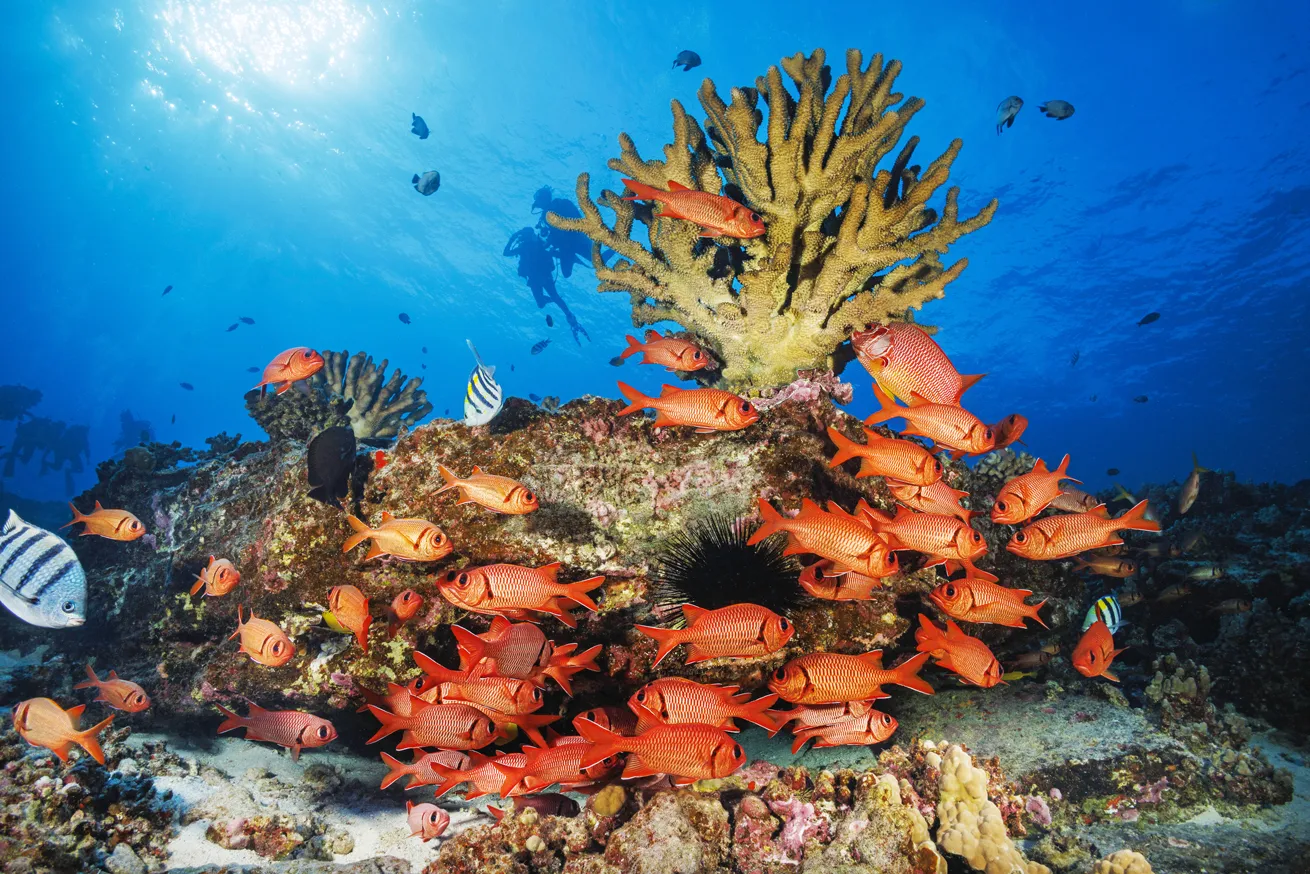
David FleethamA school of shoulderbar soldierfish on the reef
For divers, Oahu just might have it all. The third-largest Hawaiian island is the most populated, with five-star dining, luxury resorts and a smattering of attractions to suit just about any traveler, whether you’re looking to get lost in nature or get in a few rounds of golf.
Underwater, Oahu packs in the action at five wrecks so famous they’re requested by name. Just about every dive site ushers in at least a few green sea turtles. Each wreck stands as a mini oasis amid the sand, delivering a mix of sightings, including whitetip reef and sandbar sharks, frogfish, nudibranchs and, a few times a year, even a manta or passing humpback.
Related Reading: Seeking Adventure-Packed Diving in Hawaii
Top Dive Sites in Oahu
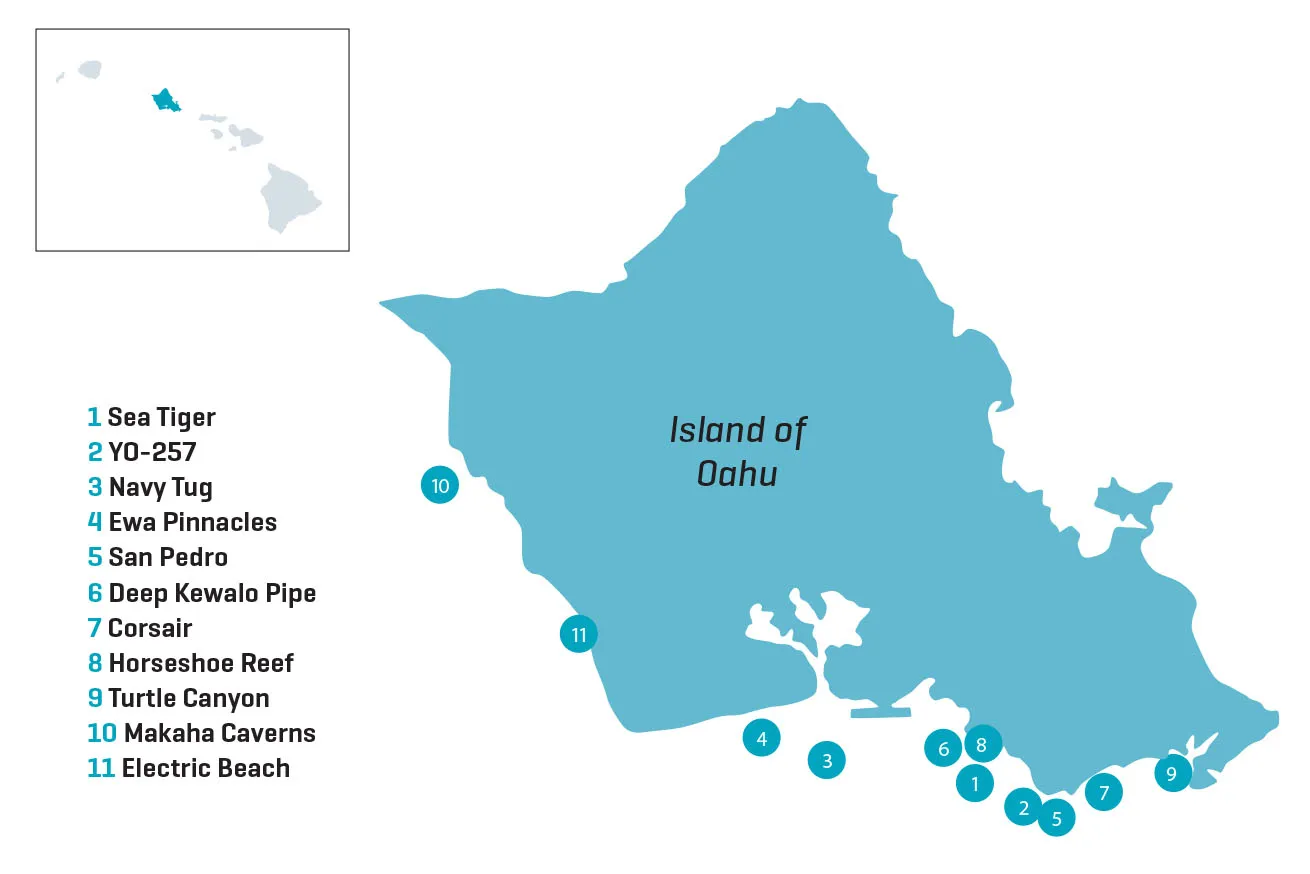
Oahu at A Glance
Conditions With water temperatures averaging in the low 80s in summer and mid- to high 70s in winter, Oahu can be dived comfortably year-round. Visibility typically ranges from 60 to 100-plus feet and is often best in summer.
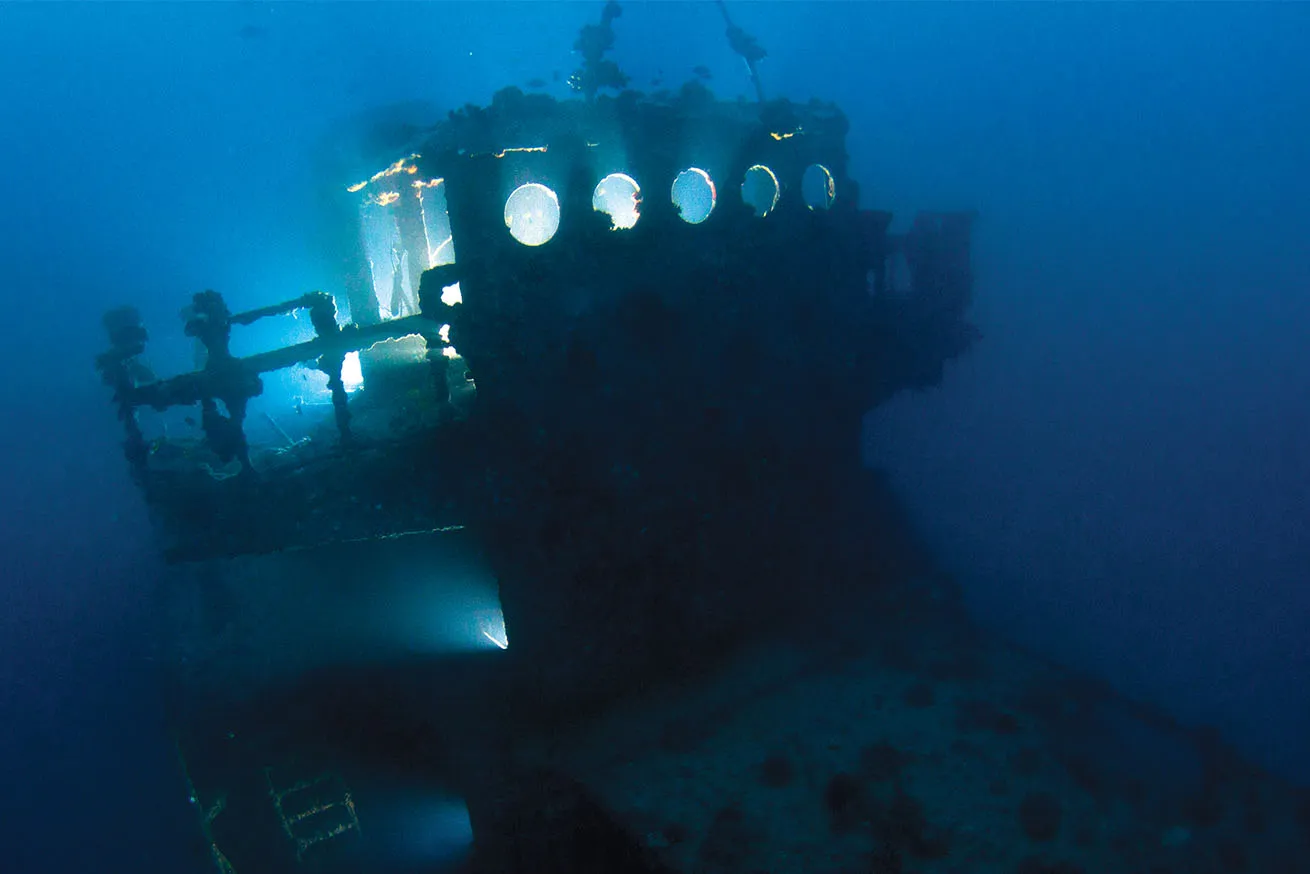
Jeff MilisenA dive light illuminates the bridge of the YO-257.
YO-257 and San Pedro
The currents off this Oahu dive site are just one reason this 175-foot purpose-sunk wreck is so popular. They carry in pelagics, as well as food for all manner of marine life. The steadily moving water also keeps the sponges free of algae, letting them grow profusely, to the delight of the handful of massive green sea turtles found on every dive here—including a few typically lying on the bow.
Before divers get too engrossed with the turtles on the YO, most dive guides, including Marlena Neal, PADI Course Director with Trident Adventures, will hop to the San Pedro wreck 100 feet away.
“Crossing to the San Pedro first allows everyone to have enough air to see both,” Neal says.
The San Pedro, at 125 feet long, is a bit smaller than the YO-257. It was sunk by the Atlantis Submarines company to give its passengers another highlight on the tour, and it wasn’t perfectly balanced when it went down. “Because it is canted to starboard, the portside creates a cave-like area that our whitetip reef sharks like to rest in after a night of eating,” Neal says.
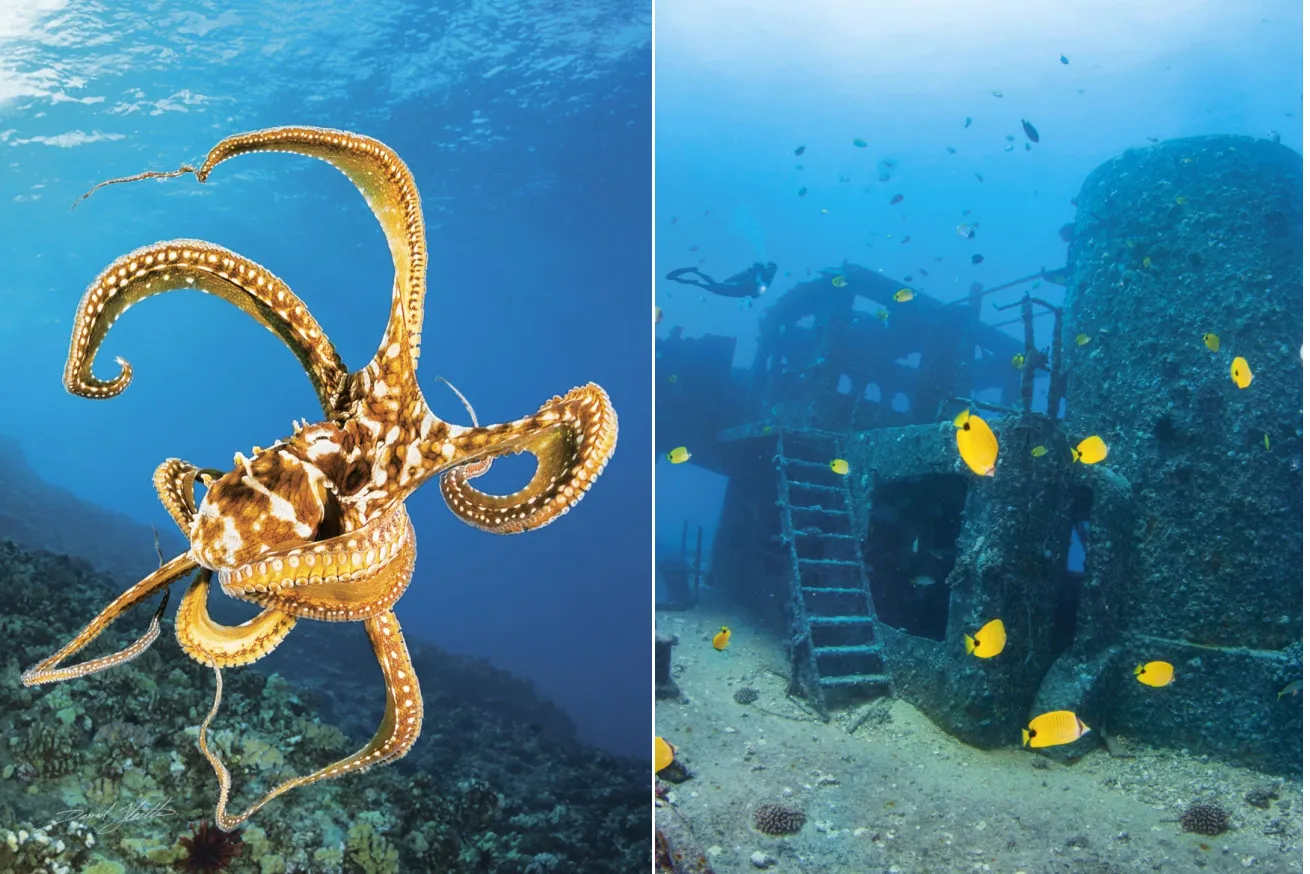
David FleethamFrom Left: A day octopus. Reef fish flit about on the wreck of the YO-257, a former Navy fuel transport vessel
Neal takes time to search the bow, as it’s where she commonly sees day octopuses, sometimes even guarding an egg sac. After a pass around the ship, it’s time to head back to the YO-257—and the intervening patch of sand comes with a unique experience.
The submersibles company still gives tours, and their vessels often pass overhead as it’s time for dive groups to swim back to the YO-257.
It’s something to be mindful of for safety reasons, and also entertainment. “I always brief my divers to look both ways before you cross the street!” Neal says. The sub guests usually wave, and divers wave right back.
This channel is also a good spot to watch for rays. “We often see eagle rays racing through the middle and race-tracking around the wrecks,” Neal says.
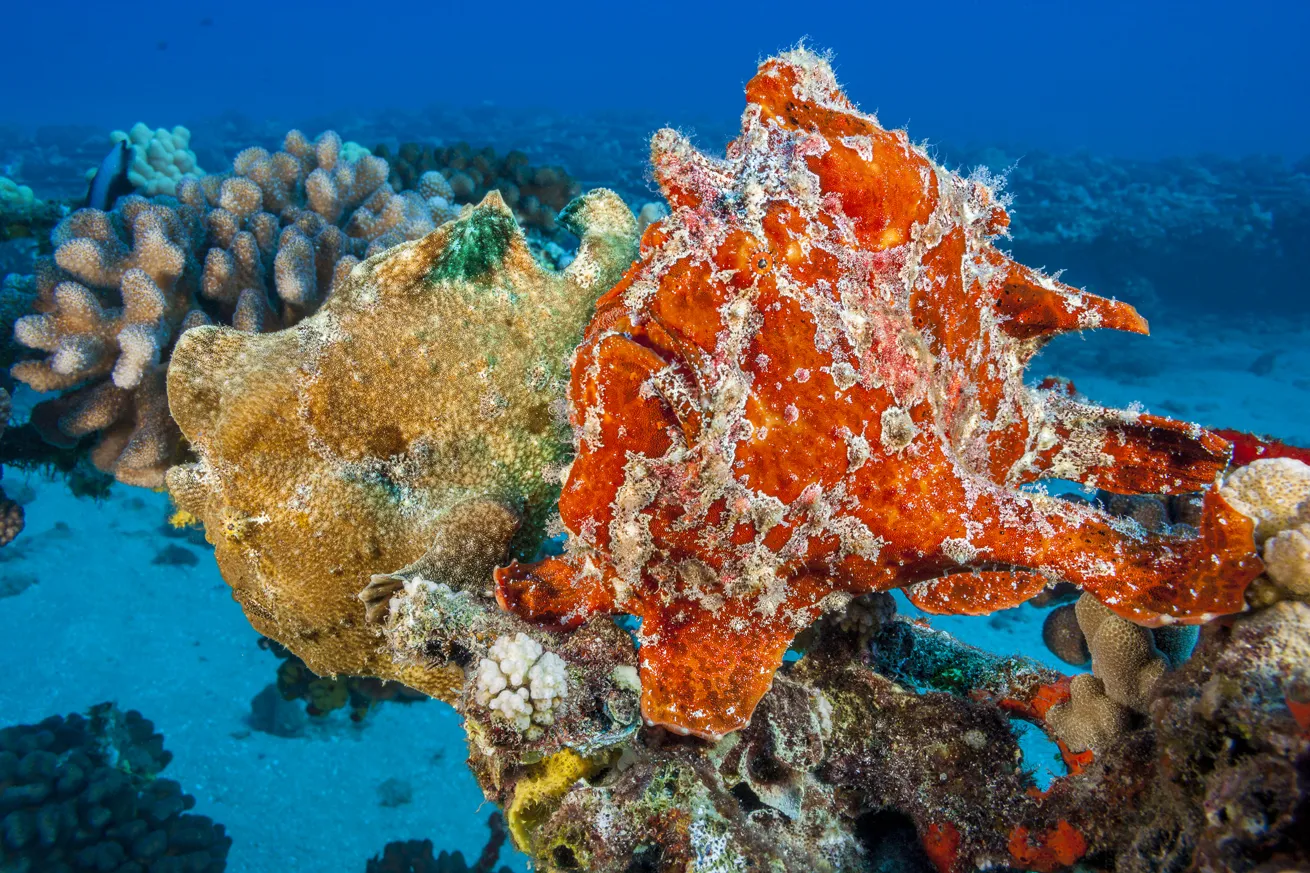
David FleethamA pair of Commerson’s frogfish.
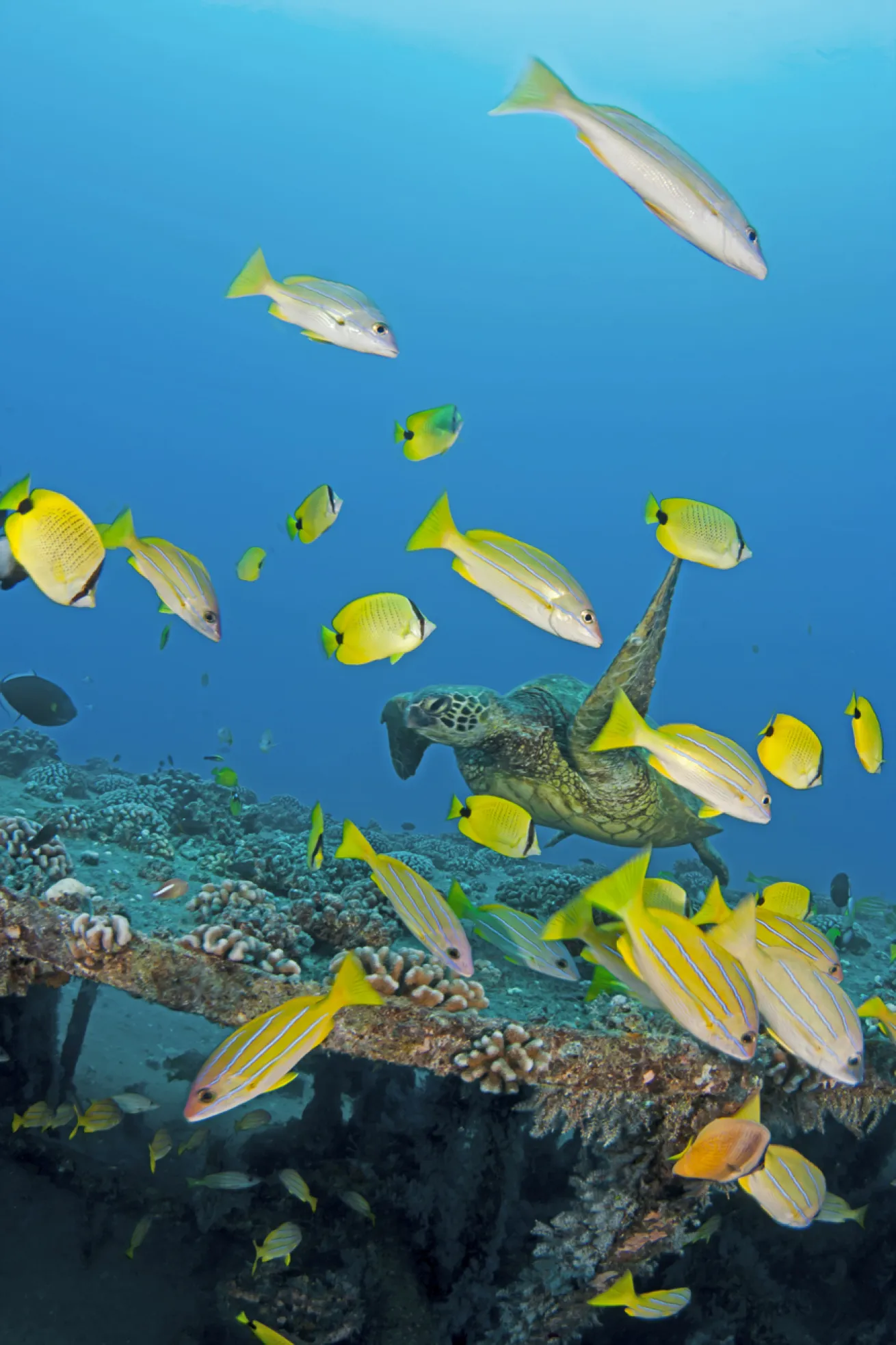
David FleethamA green sea turtle and schooling reef fish buzz around the YO-257 wreck near Oahu.
Additionally, the sand is a habitat for morays and more day octopuses.
The ship itself is covered in sponges and coral, creating an environment favored by frogfish, which in Hawaii and other Pacific locales can swell to the size of volleyballs. Guides like Neal often find brown ones blending in among the encrusting corals.
After a dive on the YO and San Pedro, the second dive is a reef dive at Kewalo Pipe, home to eight or nine moorings that provide a lot of options to explore. The area is known for fields of lobe and cauliflower corals, beautiful all on their own but all the more enjoyable as the backdrop for several turtle cleaning stations.
More to Explore
The path to Makapu’u Point Lighthouse is paved and easy. The trail faces east, and in the morning, “the sunrise views are phenomenal,” says Neal. Another top choice is the Waimea Valley Trail, leading to a waterfall with a large, swimmable pool manned by lifeguards. Free life jackets are also provided to make this a safe, relaxing experience for all ages.
Where to Eat
After you’ve done the tourist thing at Duke’s Waikiki seafood restaurant, try Shabushabu for hot pot—just be prepared for a long wait. For a fast and affordable bite, get the poke bowl at Foodland Supermarket. “You can’t go wrong with spicy ahi with unagi sauce,” says Neal.
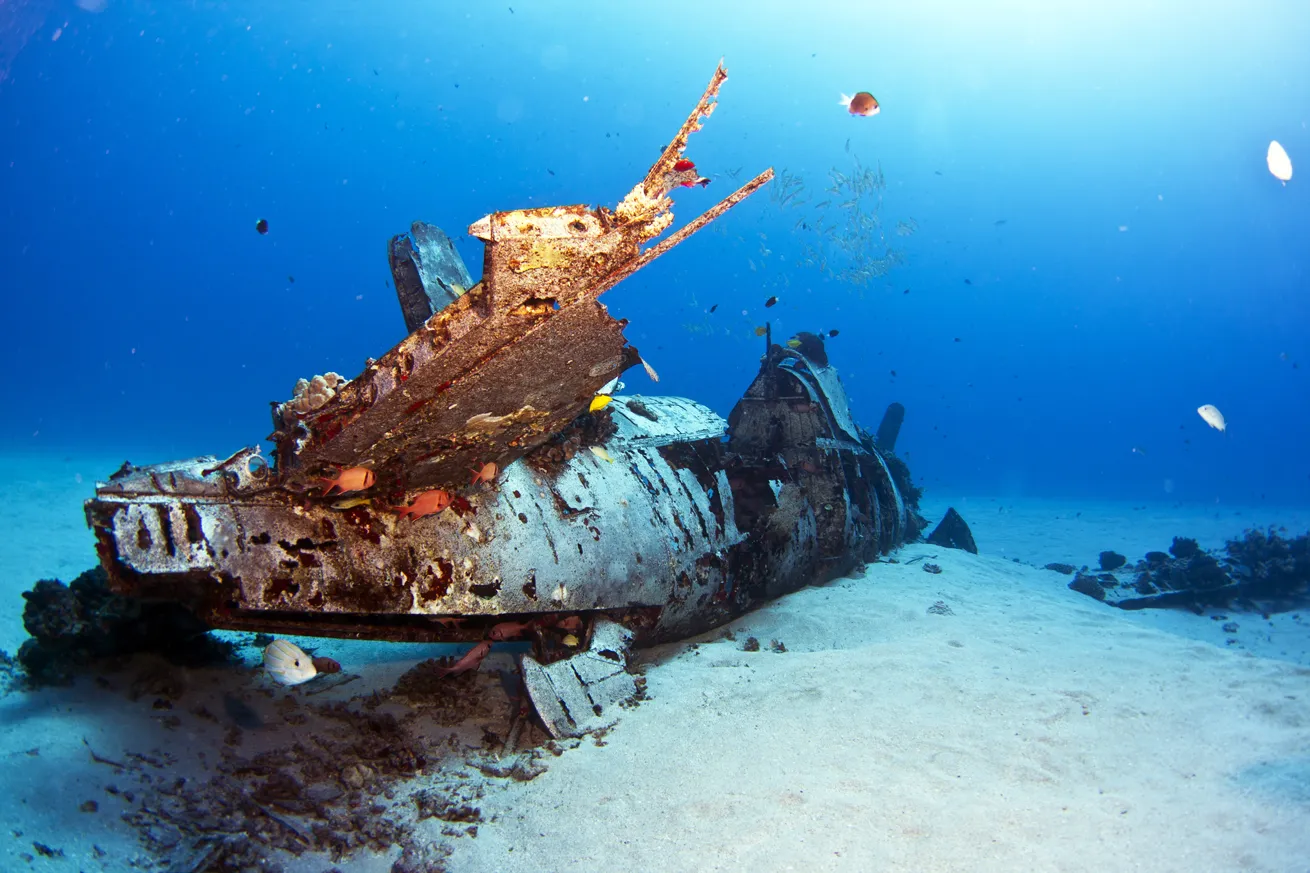
Jeff MilisenThe sunken World War II fighter is largely intact and encrusted with corals.
Corsair
The World War II–era Vought F4U Corsair fighter plane is not the only true wreck on Oahu, but it is the most famous—and one of the deepest, at 107 feet.
When diving this site with Aaron’s Dive Center, it’s an early morning start time. Divers meet at the Maunalua Bay Boat Ramp, a 20-minute drive from Honolulu out toward the eastern tip of the island.
The plane crash-landed and came to rest on a field of white sand. All around the wreck are garden eels, waving in the current. Patches of sponge make their way across the sand, allowing the occasional leaf scorpionfish to blend in among the orange and pink.
Despite its dramatic end, much of the plane is intact, including the prop, cockpit and tail. Sections of the aluminum body have peeled away, revealing the plane’s inner features. It’s upside-down, so you’re swimming over the belly. The landing gear remains deployed.
The plane is the only significant structure among the sand, and it attracts life of all sizes. Swirls of convict, yellow and Achilles tang crowd the perimeter. Yellowstripe snapper flow overtop, pushed by the current. Squirrelfish tuck up into the fuselage, best appreciated with a light to reveal their glimmering, brick-red bodies.
Then there are the creatures that take patience to find, such as the resident day octopus. “Every time I dive there, he is there,” says Francesca Pampurini, PADI Master Scuba Diver Trainer and the lead instructor at Aaron’s.
Given the depth, divers have a max of 20 minutes on the plane before it’s time to ascend via the mooring line—and that ascent is anything but downtime.
“Anything can swim by—eagle rays, sharks, whales,” Pampurini says.
The time in the blue isn’t just about what you’ll see but what you might hear. This is one of the best spots to listen to the humpback whales that come to Oahu from December to April to breed.
Their mating calls sound like an orchestra warming up. The whinny of a violin. The low howl of an oboe mixed with grumbles and growls. The sounds are deceptive. Given how loud the calls are, it’d be easy to assume a whale might cruise by at any moment, but they could be as far as 5 to 20 miles away.
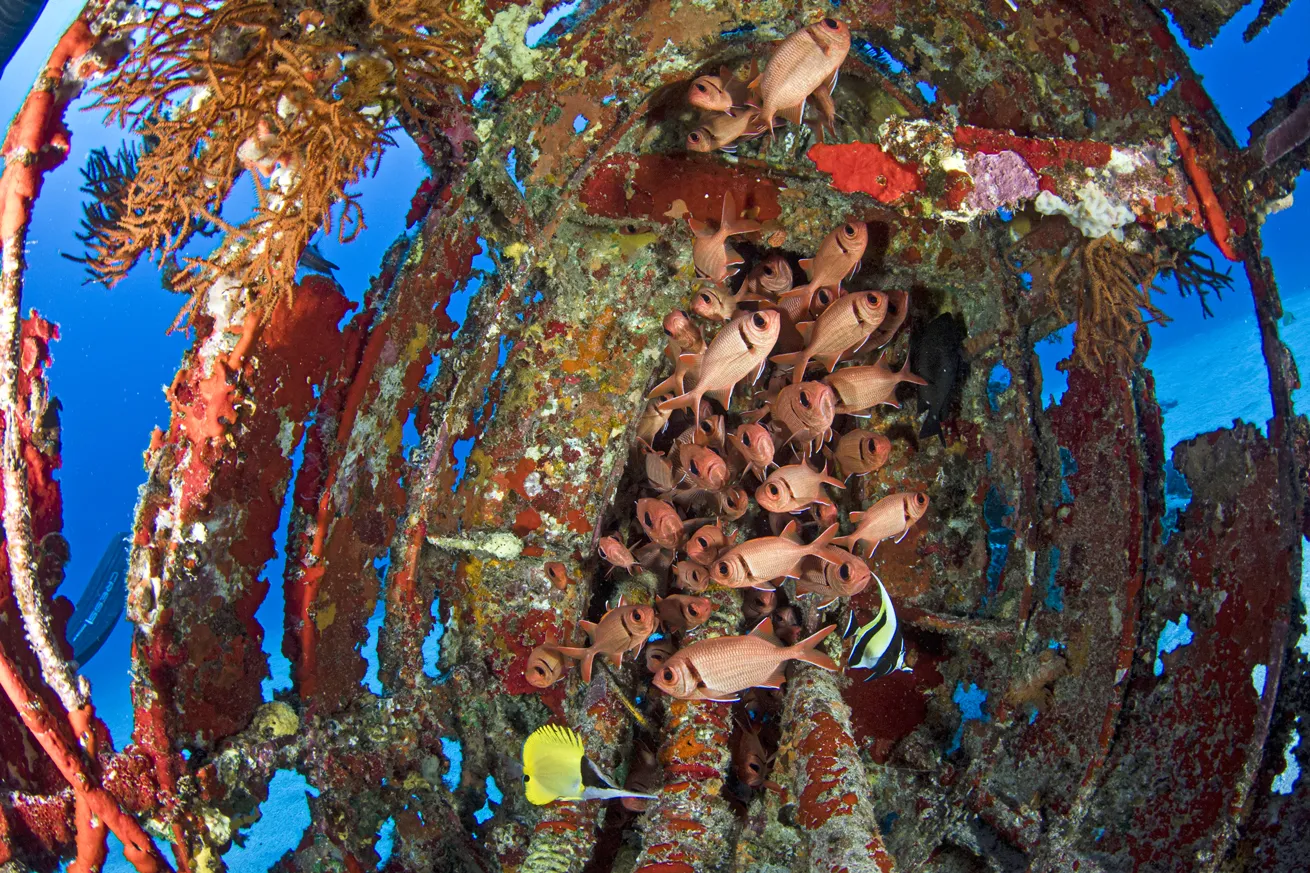
Jeff MilisenSchooling soldier-fish and other reef fish find refuge in a hollowed-out cavity in the Corsair wreck’s fuselage.
After the Corsair, Aaron’s Dive Center heads to a nearby reef dive, such as Koko Crater or Turtle Canyon. Both hold the promise of turtles galore, but one stands out as the favorite of dive guides.
“Turtle Canyon is the one I go to when I want to have fun for myself,” Pampurini says. The site is a shallow bowl, covered in corals. The ledges give protection to all sizes of turtles, including juveniles. Squadrons of eagle rays fly overhead.
But the most unusual find is something small, and perhaps not recognized as a highlight if not explained. The site is home to flame angelfish, a species that’s electric red-orange with slashes of black on its body, and its tail lined with the brightest cobalt. “It isn’t super, super rare, but I find it at only three dive sites,” she says. “I’m constantly telling people, ‘No, no, no, you don’t understand—you will only see it here, so take the time to look at the color!’”
The fish is stunning, no doubt, and it’s a tiny reminder why the Hawaiian islands are so special, offering so much beauty found nowhere else on the planet.
More to Explore
The 4,000-acre private Kualoa Ranch offers ATVs, horseback riding and tours of the locations featured in Jurassic Park. Kailua Beach is a wide, stunning beach where you can enjoy the waves, take a long walk and grab a bite at Kalapawai Market.
Where to Eat
Lanikai Brewing Company in Kailua is known for its pizzas. The Hibachi is a popular spot selling take-away meals, such as poke, Kalbi ribs and shoyu salmon, that you can take to eat on the beach. On Thursdays, the Kailua Farmers Market has vendors dishing up local eats, including rice with Spam, aka musubi.
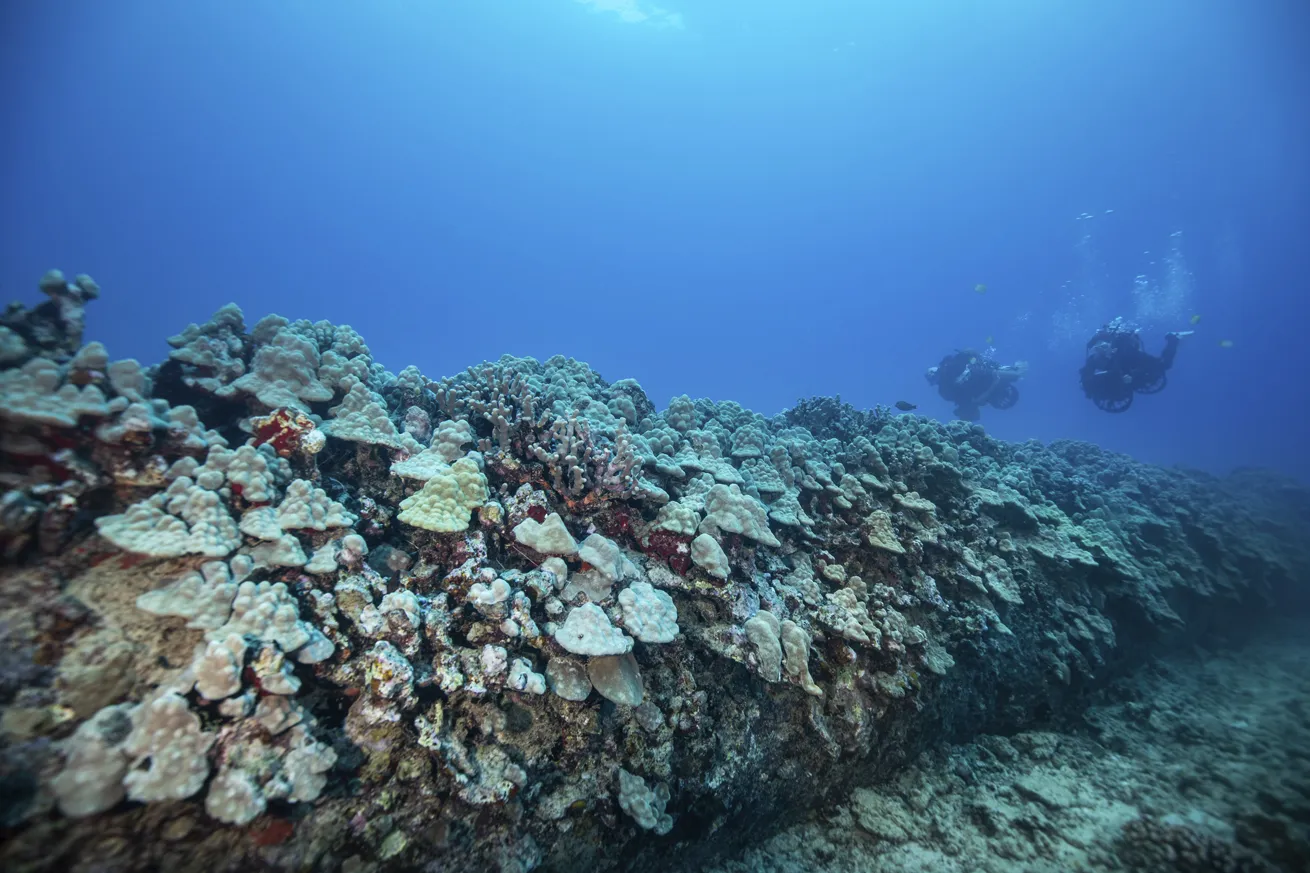
Kristin PaterakisAbundant corals and a day octopus on the reef at Kewalo Pipe.
Kewalo Pipe
Oahu’s south shore reef stands out not just for its scale, but for how reliably it delivers. Both Horseshoe Reef, spanning roughly half a mile, and the series of reef ledges, ridges and channels that make up Deep Kewalo Pipe, serve up almost sure-thing green sea turtle encounters at the longstanding cleaning stations.
Dives at Kewalo Pipe start at the now inactive drainage pipe running from the shore to the reefs at 60 feet. Sharks often nestle inside, and turtles wedge themselves under it. “You think something is wrong with them,” says Derrick Macalino, PADI Course Director with Aloha Scuba. “But sometimes they overpack their breath and wedge themselves under the pipe because they’re so buoyant.”
Turtles are found all over the reef, but the highlights are the turtle cleaning stations, where at any given moment, six to 10 gather to let the kole tang, brown with their signature yellow-ringed eye, graze on the buffets growing on their backs.
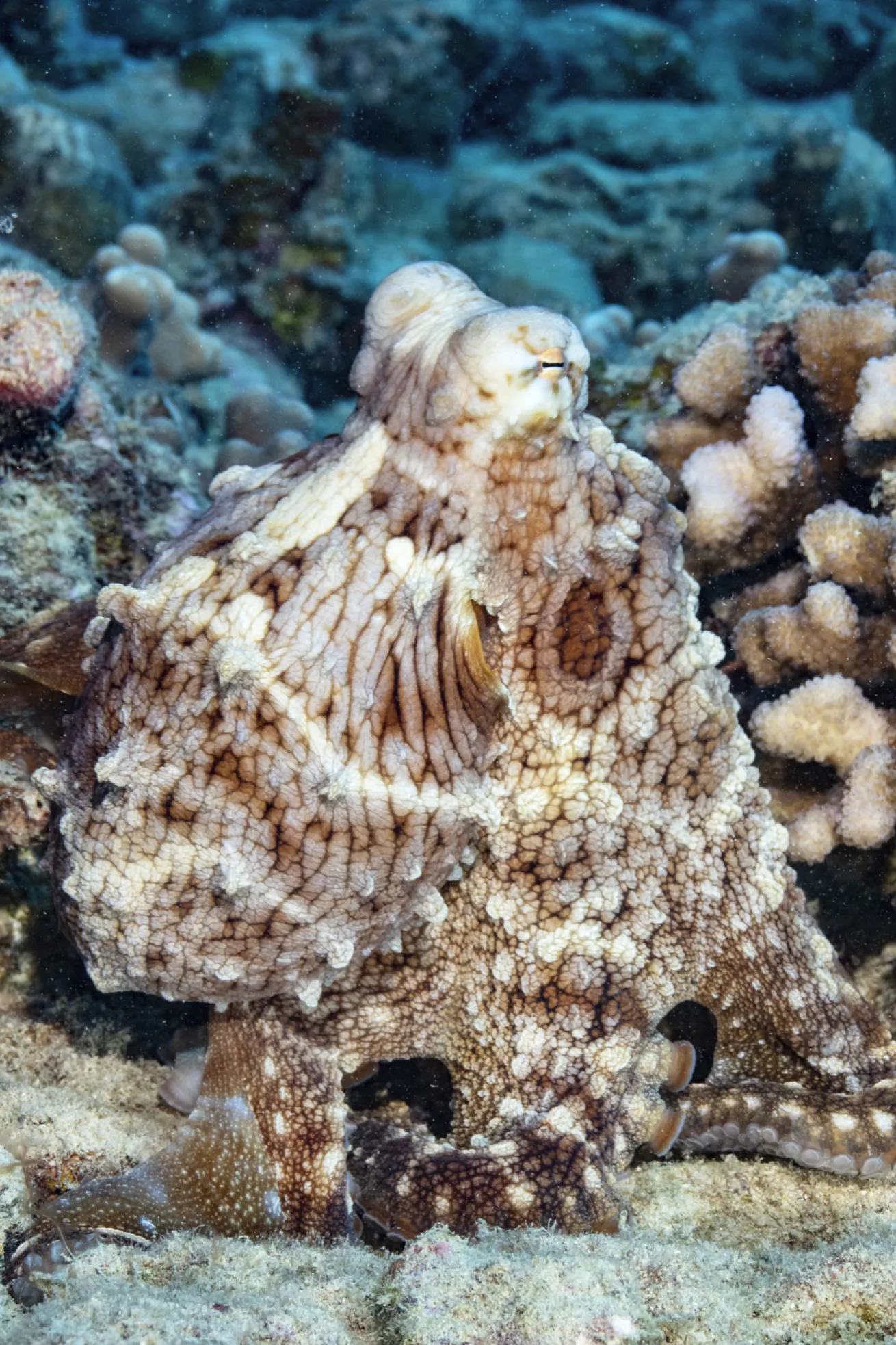
Jeff MilisenKewalo pipe is a great destination for spotting octopuses, frogfish, turtles and more.
The turtles have grown so accustomed to divers that, at times, they even mate in their presence. “Sometimes they rise up together to breathe,” Macalino says.
Beyond the turtles, the nooks and crannies of the reefs shelter several otherworldly finds. Look closely for dragon morays, a must-see for their cartoonish coloring. They’re orange with white dots and splotches, with two horns rising from their snouts. They can be seen during the day, but the odds are better at dawn and dusk—and this site is a great pick for a night dive.
The diversity of corals brings with it a healthy mix of Hawaii’s fish. Alongside Hawaii’s own species of parrotfish, the bullet-head parrotfish, visitors will see convict tangs—white with thin black stripes—and striped surgeonfish. Bigeye trevally and eagle rays are also known to pass through.
Both Horseshoe Reef and Deep Kewalo Pipe deliver parades of fish and marine life encounters. More recently, Kewalo Pipe has the added attraction of an underwater sculpture park. In between the corals is a series of model ships and statues, including a small aircraft carrier. “I don’t know who put them there,” Macalino says. “We just found them there one day, and even now, it remains a mystery.”
More to Explore
If you’re going to spring for a luau experience, Mauka Warriors Luau in the town of Kapolei is worth the expense. Start with dinner, then enjoy three hours of performances, including hula dancing, Hawaiian haka dancing and fire dancing. This show offers pickups so you can skip the 40-minute drive from Waikiki.
Where to Eat
Little Joe’s Steakhouse is pricey but delivers an impressive surf-and-turf dinner. For breakfast before the dive charter, stop by Liliha Bakery for pastries—just allow time to peruse the 100-item menu that includes chocolate cream puffs, guava-filled cupcakes and poi mochi donuts.
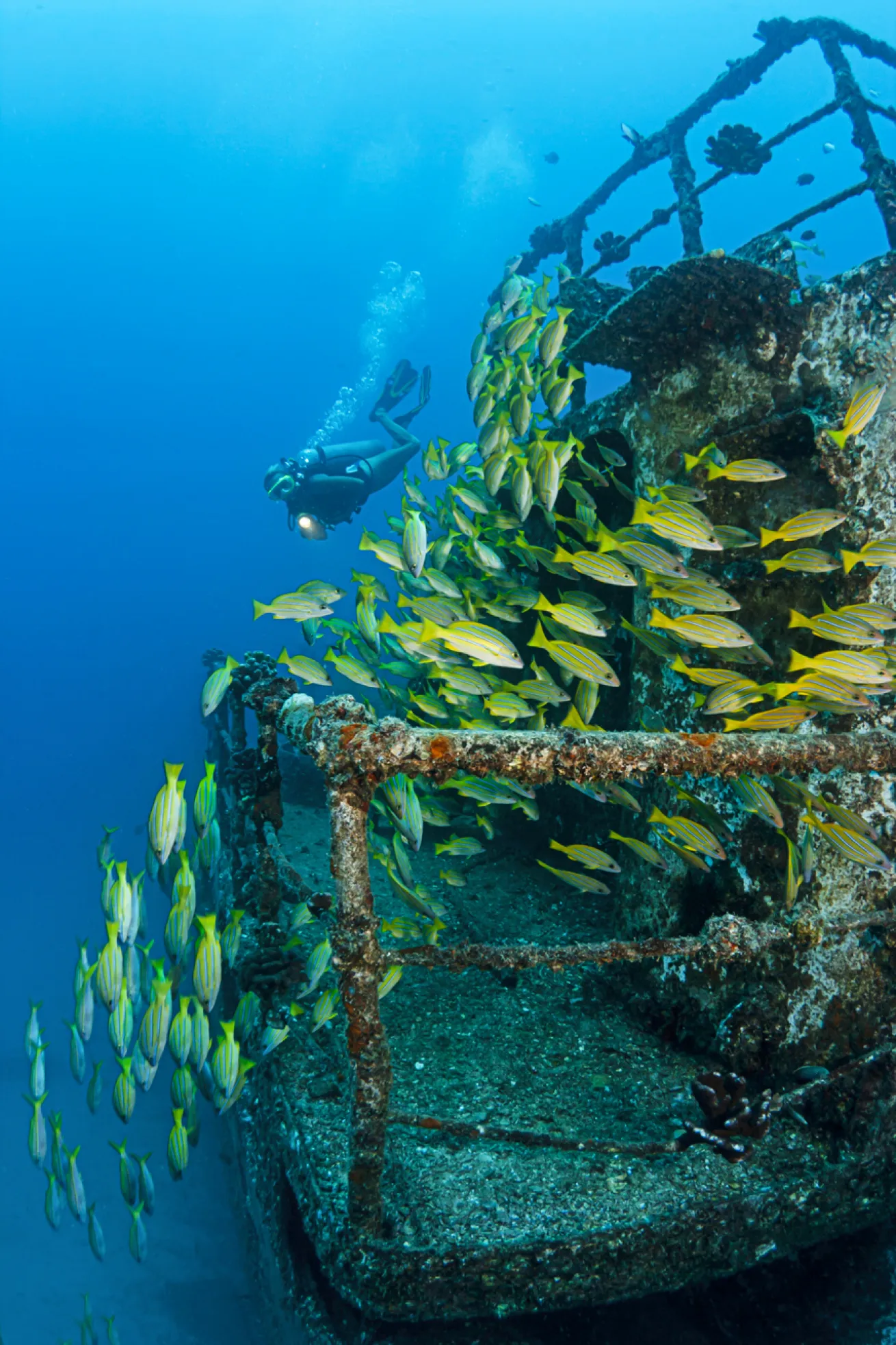
David FleethamA diver watches a school of bluestripe snapper on the Sea Tiger
Sea Tiger
The plan was never to sink the Sea Tiger, a 140-foot former Chinese cargo ship. It had been involved in smuggling, leading U.S. authorities to seize the ship. Before it could be processed, it sank to 120 feet. Amazingly, with no planning whatsoever, it lies upright. Thanks to how the ship was built, corrosion and damage that occurred during sinking, the Sea Tiger now has open and missing doors and cargo hatches.
The result is a light-filled wreck that’s easy to navigate and provides ample shelter for green sea turtles that grow to massive sizes. They’re one of the first things divers notice when dropping to the bow, their preferred perch. It’s common to see a pair of older turtles jockeying for space in their own slow, lumbering way.
“The bigger they are, the more they make a fuss and fight one another, as much as turtles can fight each other,” says Colton Gilmore, a PADI Master Scuba Diver Trainer with Dive Oahu, one of the island’s biggest scuba operators.
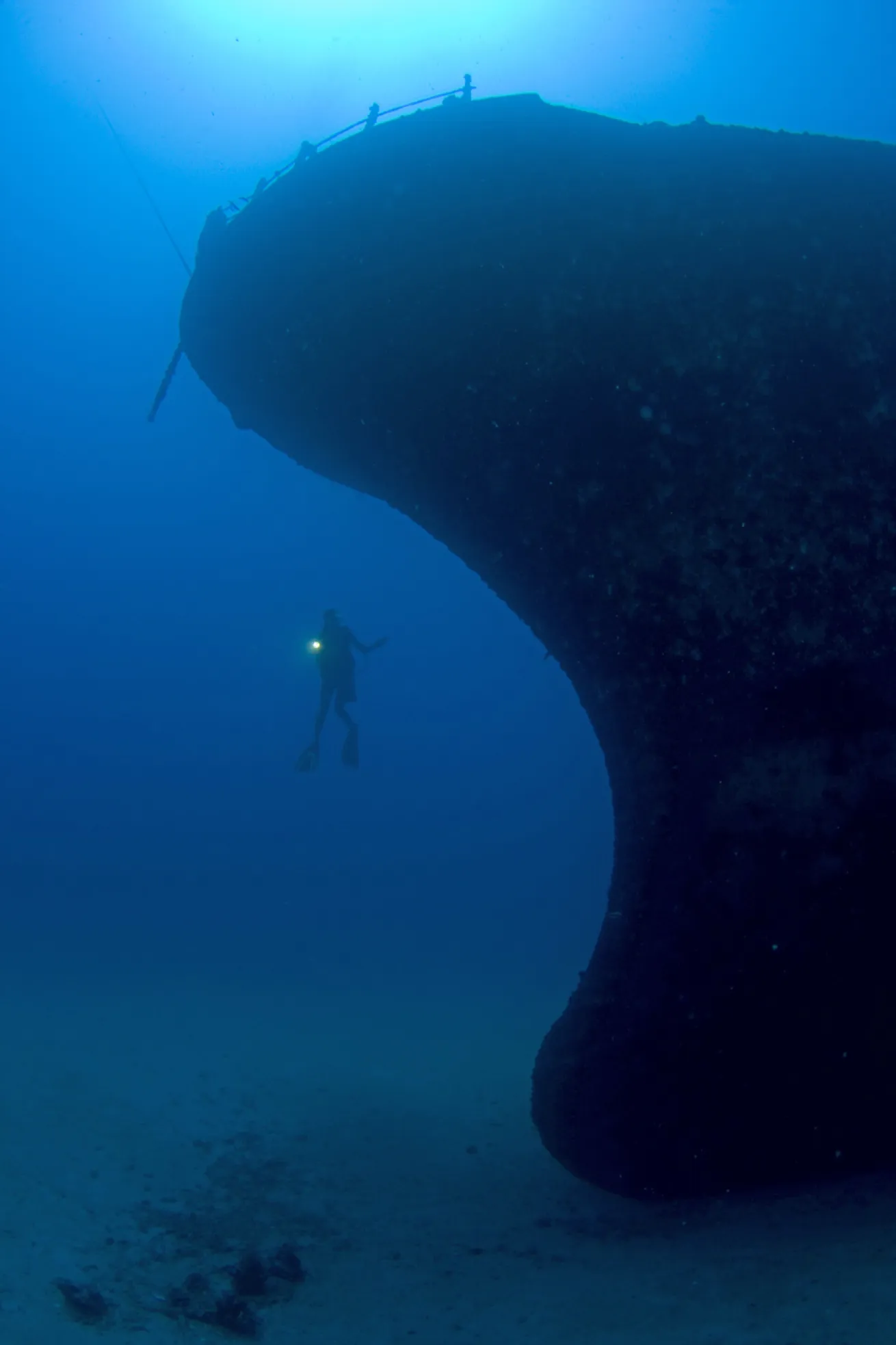
David FleethamA diver poses beside the wreck’s bow.
But it’s not just turtles that flock to this ship.
“It has all the stuff you’d want on a great dive,” says Brian Benton, owner of Dive Oahu.
All manner of life of every size can be sighted here.
Whitetip sharks, upward of 6 to 7 feet, sleep on the sand beside the wreck and make their way across the deck. “Every once in a while, you have a sandbar shark come through,” says Gilmore.
Green moray eels curl up in the nooks, and nudibranchs, including blue dragons and scrambled egg nudis, are spotted closer to the helm at 70 feet deep.
At the helm, more light pools in, and the corals reach up higher to meet it. This spot supports more fish life, including yellow tang, Moorish idols and butterflyfish of every variety. Gilmore briefs his charges to watch for the domino damselfish, a Hawaii endemic that’s mostly black. It’s notable not for its coloring but for its behavior.
“The way they interact with each other is an awesome experience,” says Gilmore. “The males are responsible for cleaning coral for the females to nest on. They make chirping noises, trying to attract females and scare away predators.”
From the helm, last looks back at the ship serve as a satisfying finale.
“The stern is a giant wall of life,” says Gilmore.
Sponges blanket the structure. Schools of false Moorish idols drift past in loose formation, weaving through yellow tangs and butterflyfish of every variety. It’s a traffic jam of movement and color that holds attention until it’s time to ascend.
Related Reading: Best Scuba Diving in January
More to Explore
Cirque du Soleil performs 'Auana at the Outrigger Waikiki Beachcomber Hotel. “There are no bad seats,” says Benton about this show, which merges acrobatics with Hawaiian legends and culture. Duke’s Waikiki on Sunday, starting at 4 p.m., hosts a beach party with live Hawaiian, reggae and soft rock music lead by Henry Kapono.
Where to Eat
Don’t miss breakfast at Egghead Cafe at Kapalama Shopping Center. Try the shrimp and bacon omelet, and order the trio of pancakes for the table, sampling three flavors such as s’mores, tiramisu and strawberry shortcake. Nico’s Pier 38 is a must for fresh seafood. Skip the line, says Brian Benton, owner of Dive Oahu, and “go straight to the bar and sit where the bartender will serve you and grab your drinks right away.”
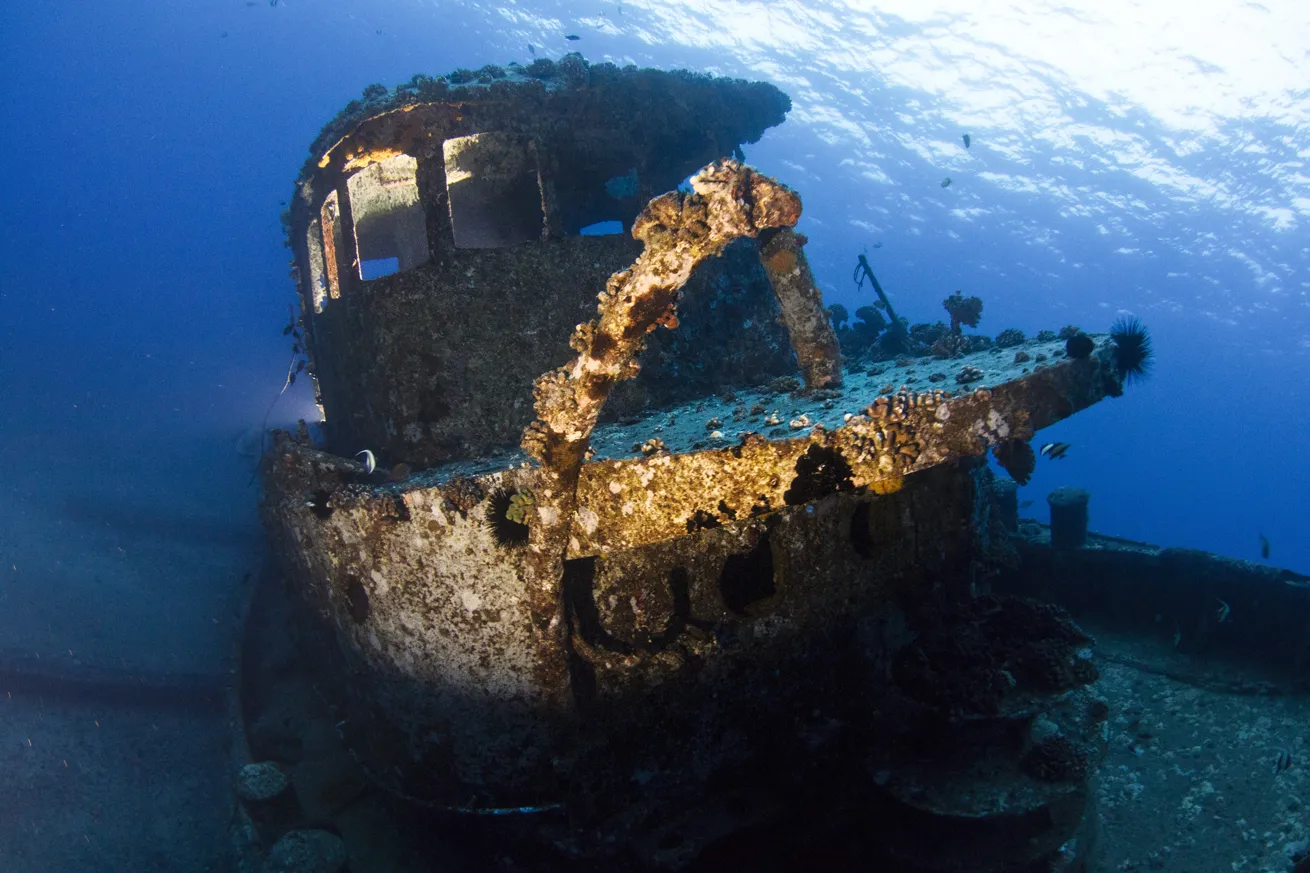
Jeff MilisenThe illuminated wheelhouse of the Nashua, aka Navy tug, wreck.
Navy Tug
The most requested dive site on Oahu is also an active training ground for the Navy. At times, they’re busy running under water drills on the Nashua, aka the Navy tug, and turn away boats from Dive Oahu, the only operator to visit the site regularly.
“In the two and a half years that I’ve been here, I’ve seen it in three different positions,” dive guide Colton Gilmore says of the 109-foot tug just outside Pearl Harbor in 65 feet of water. “Most divers wouldn’t notice, but it has shifted several times in one way or another.”
When Dive Oahu visits, it’s the second dive of the trip, following an exploration of Ewa Pinnacles, a site with a max depth of 100 feet. There, heaps of pyramid butterflyfish flit between coral heads. Ledge after ledge shelters green sea turtles, whitetip reef sharks and wide-eyed puffer fish. Dive guides with a keen eye often find oversize frogfish in shades of brown, pink or white.
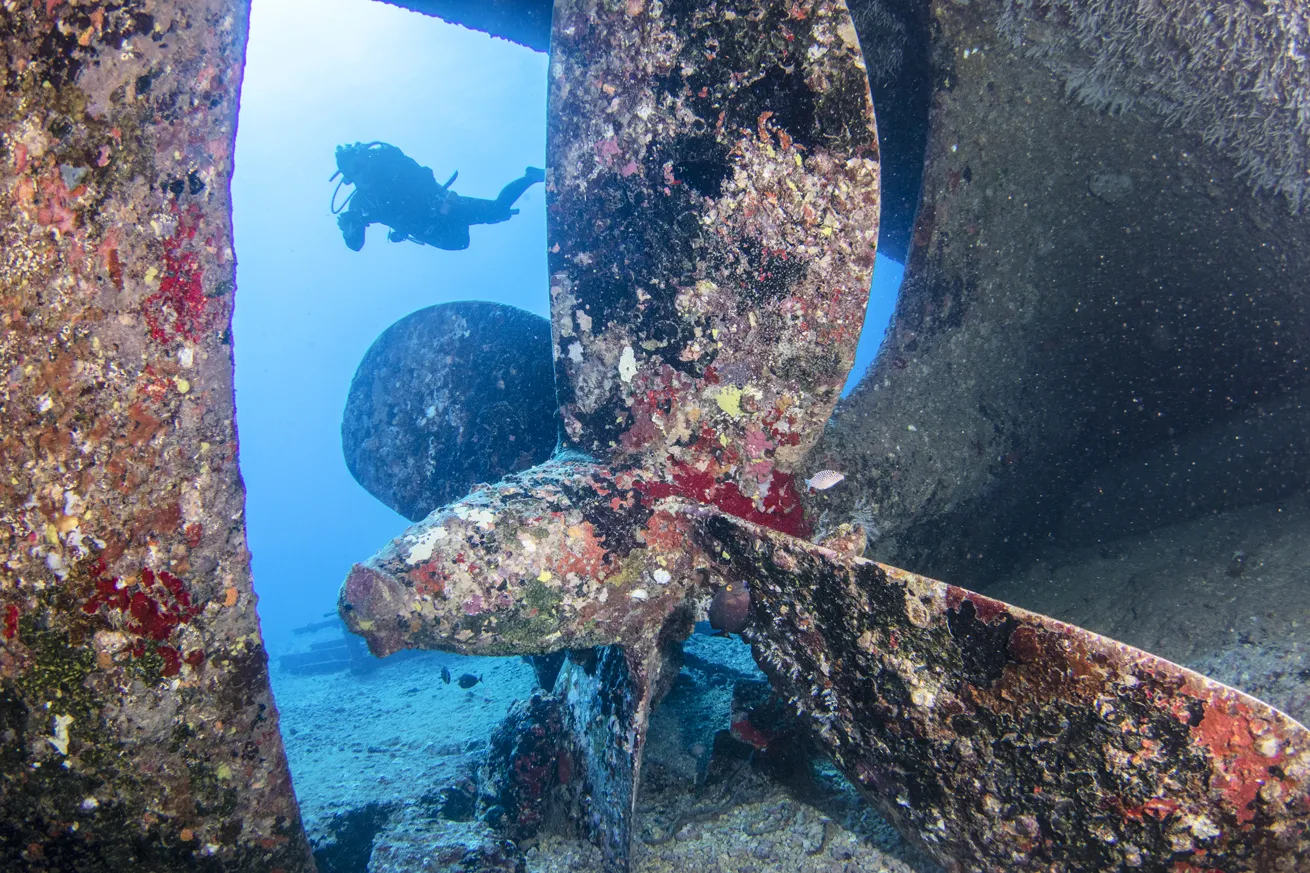
Jeff MilisenThe tug’s intact propeller.
After the pinnacles, it’s tug time. This ship is popular because it’s upright and intact. It often enjoys visibility of 100 feet or more, allowing guests to see the entire vessel at once. It’s also Oahu’s shallowest wreck at 65 feet deep, making it accessible to more divers and allowing for more generous bottom times.
The ship attracts big animals cruising by. Eagle rays make frequent sightings, and whitetip reef sharks settle inside the tug. “You sometimes see bigger sharks get curious about the noise from divers,” Gilmore says. “We often see sandbar sharks cruising along.”
The chain systems on the sand are a favorite spot for leaf scorpionfish and frogfish. Gilmore often finds juvenile frogfish, colored red or whitish blue.
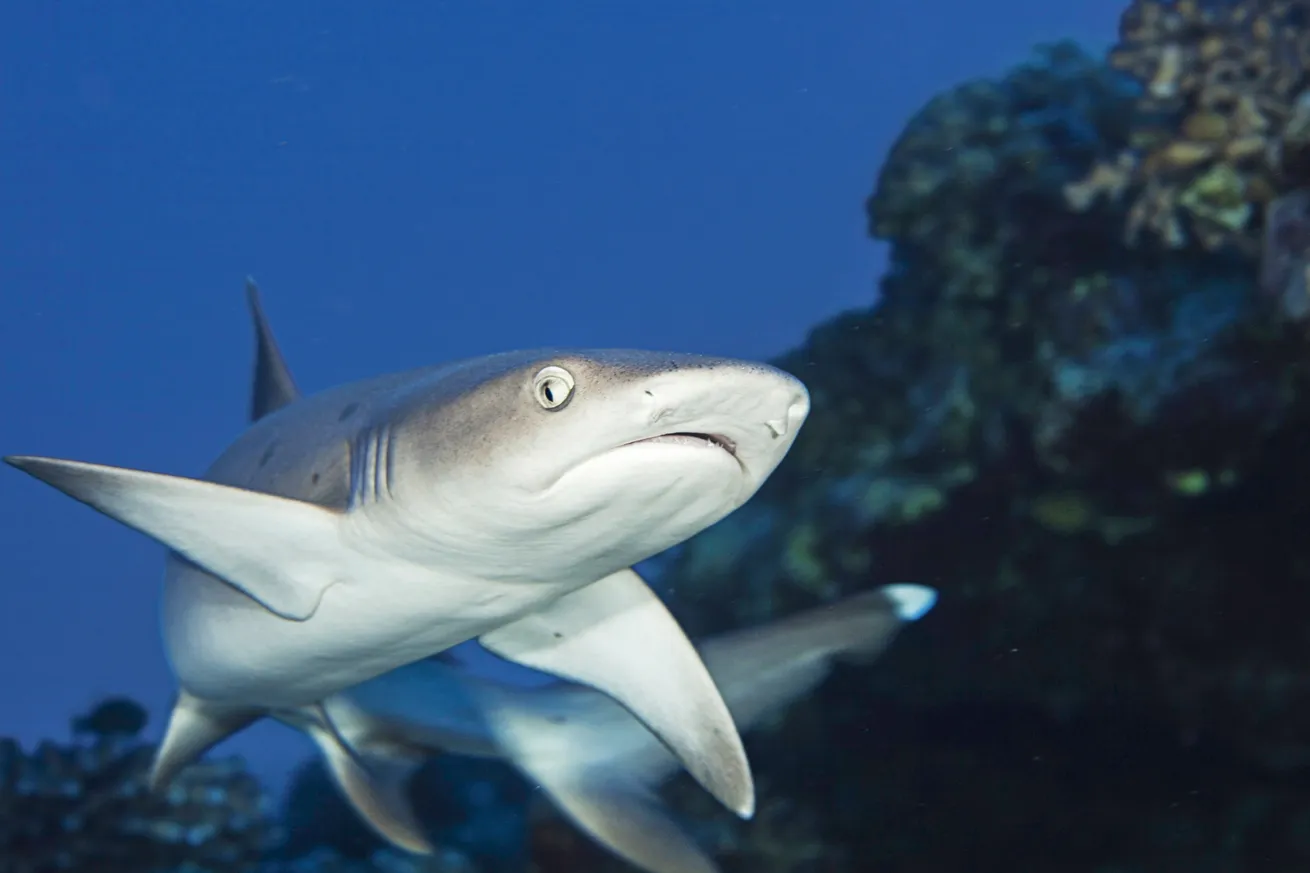
David FleethamA whitetip reef shark.
This ship was sunk in 2012, and it is already covered in encrusting and lobe corals. Hiding among them are scrambled egg nudibranchs and octopuses.
Perhaps most dazzling are the schools of fish that flow above and around the ship. The clouds of bluestripe snapper, mackerel scad, trevally, amberjacks and rainbow runners color the water a mix of yellow, blue and silver.
The site always has pufferfish, and sometimes they swell to big numbers.
“I’ve seen a massive school of puffer-fish, like hundreds of torpedoes in the water,” Gilmore says. “Then there was this giant school of eagle rays swimming and dancing through them.”
The Nashua delivers that rare mix of reliability and surprise—one moment a parade of schooling fish, the next a once-in-a-lifetime encounter drifting through the blue. It’s the kind of site that keeps divers coming back, knowing the next descent might outdo the last.
More to Explore
The Kaka'ako district showcases local street art talent. Jams World shares a route for a self-guided tour, or opt for an organized group experience, such as the tour offered by Halia Private Tours. Join Yoga Love Mana for sunset yoga at the oceanside Ala Moana Beach Park.
Where to Eat
For a quick bite after the dive, stop by Miguel’s Cocina for the fish tacos or macadamia nut pesto. Stay for the outdoor seating and the colorful drink menu that includes a purple corn fruit punch with lime. If you want dining with a view, try 53 by the Sea, right on the water. Vegetarians will appreciate Kapa Hale, dishing up miso cabbage, tempura eggplant and a shiitake risotto.
Recommended Operators in Oahu
● Trident Adventures
● Dive Oahu
● Aloha Scuba Diving Company
● Waikiki Dive Center
● Reef Pirates Diving
● Aaron’s Dive Shop


