

Want to take a scuba diving trip in January, but not sure where to go? We’ve rounded up the best places to dive in the first month of the year.
From calming Caribbean escapes to unique critter encounters, here are five destinations perfect for a January scuba trip.
Looking for other months? See our full 2026 Scuba Travel Calendar.

Brandon ColeFlorida manatees gather in freshwater springs during winter months.
Central Florida: Manatee Meetup
Dive Highlights: Big Animals, Aggregations, Photo Opps
During winter, up to 1,000 manatees huddle for warmth in freshwater springs along Florida's Crystal River. The gin-clear springs maintain a temperature of 72 degrees year-round, providing refuge from cold river and ocean water.
Although you can’t scuba dive with manatees (they get scared by the bubbles), you can snorkel with the herd of sea cows by booking a guided eco-tour with a local operator. To beat the crowds and ensure unobstructed photos, rent a kayak or paddleboard and cruise the river in the early morning. —Melissa Smith
Operator: Fun 2 Dive
Related Reading: A Spotlight on Manatees — The Original Mermaids
Pacific Northwest: Flight of the Underwater Bumblebee
Dive Highlights: Macro Life, Shore Diving, Cold Water
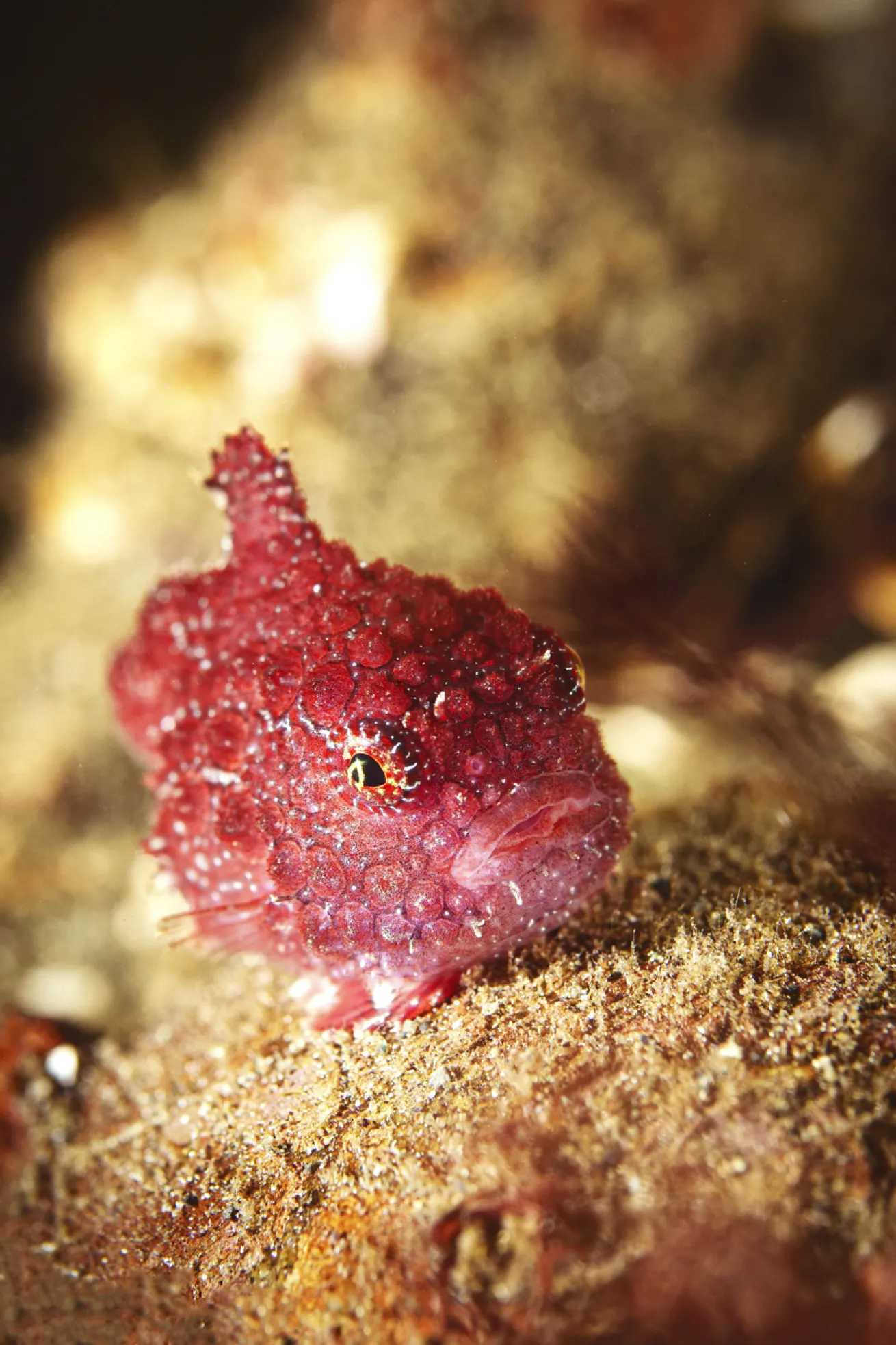
Kolin HansenJanuary is the prime time to spot Pacific spiny lumpsuckers off the Pacific Northwest coast.
It’s a pingpong ball… it’s a bumblebee… it’s a lumpie! Pacific spiny lumpsuckers are one of the Pacific Northwest’s most beloved winter critters, and January is prime time to spot them. These blueberry-size oddballs look like something a kid dreamed up: round little bodies, big pouty lips, wide eyes and a belly suction disc that lets them park on kelp fronds, dock pilings and eelgrass blades. They don’t have scales; instead, their skin is armored with bony plates that help protect them from predators.
You’ll find them most reliably from October through March in 5 to 40 feet of water, though they can and do live much deeper. Adults reach a maximum size of 3 inches toward the end of the season. To increase your chances, focus on easy-access shore dives and protected coves in areas such as the Puget Sound in Seattle and British Columbia’s Barkley Sound. Move slowly, get close to pilings and vegetation, and look for tiny, perfectly still “pingpong balls” stuck to rocks, kelp and eelgrass. If you’re lucky, you might even catch one swimming in a clumsy bumblebee-like zigzag. Cold, clear winter conditions plus the chance to meet a tiny, suction-cup-footed oddball make the Pacific Northwest a surprisingly irresistible January getaway. —Candice Landau
Operators: Rendezvous Dive Adventures (British Columbia); Underwater Sports (Seattle)
Related Reading: Adventure Diving in Washington's San Juan Islands
Hawaii: Oahu’s Underwater Time Capsules
Dive Highlights: Big Animals, Wrecks, Boat Dives

David FleethamA diver encounters a school of blue striped snapper on the wreck of the Sea Tiger off Waikiki, Oahu, Hawaii.
Of all the Hawaiian islands, Oahu earns top ratings for wreck junkies. Over a dozen divable sites await just a short boat ride away; you could spend days underwater and still miss a few.
Popular sites like the Navy ship YO-257 and the neighboring San Pedro wreck, the former trading ship Sea Tiger, and the World War II–era Corsair plane rest at 70 to 120 feet, where currents keep things spicy and advanced divers can sharpen their skills at deeper depths. With most wrecks close to shore, charters out of Honolulu often hit more than one in a day.
Over time, these sunken relics have transformed into artificial reefs teeming with rainbow-hued reef fish, sleepy green turtles and colorful encrusting corals that cling to the metal. And if you swing by in January, you might just share the blue with migrating humpback whales—Hawaii’s most beloved aquatic stars. —Ariella Simke
Operators: Dive Oahu; Trident Adventures; Aloha Scuba
Related Reading: 7 Best Wrecks to Dive in Oahu, Hawaii
Barbados: Metal in the Blue
Dive Highlights: Big Animals, Wrecks, Boat Dives

Tobias FriedrichThe Bajan Queen was sunk May 19, 2002, and now rests a mere few feet below the water's surface in Carlisle Bay, Barbados.
January in Barbados is the height of dry season, bringing the choicest ocean conditions thanks to light or nonexistent winds.
Calm seas bring stellar visibility, making it easy to see the star attractions—namely a must-see list of wrecks, including the famous Stavronikita, a purpose-sunk 365-foot Greek freighter sitting in sand off the island’s west coast at 130 feet. With its masts at just 20 feet, this artificial reef is accessible to beginners. It offers a breadth of experiences, including penetration, making it a thrill for technical divers as well.
Carlisle Bay Marine Park near Bridgetown contains six additional wrecks where one dip can serve up two ships, as well as a handful of green and hawksbill turtles, especially active this time of year. —Brooke Morton
Operator: Barbados Blue Watersports
Related Reading: Night Diving the Wrecks of Barbados
Little Cayman: Gathering of Grouper
Dive Highlights: Lunar Timing, Boat Dives, Aggregations
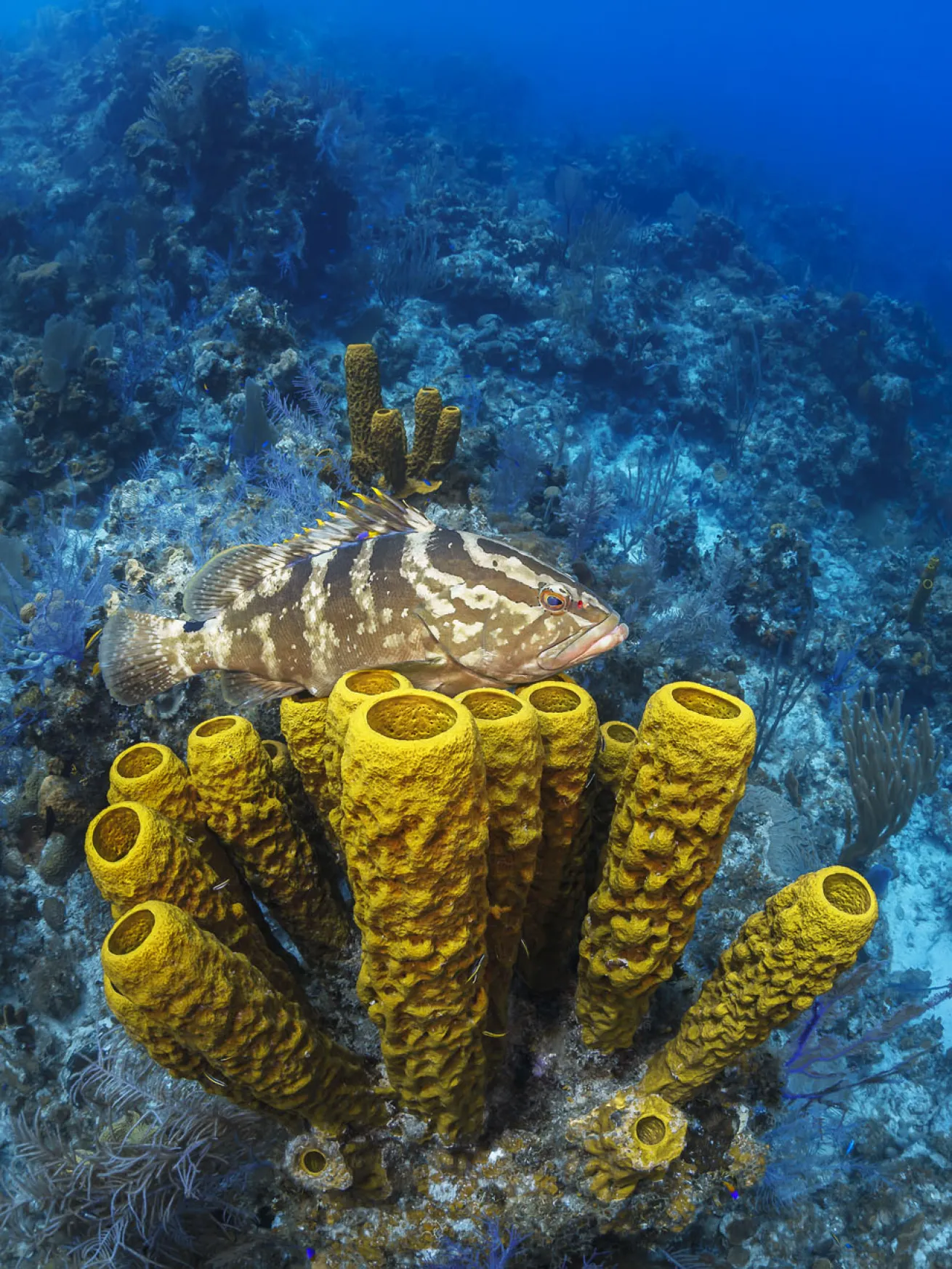
Jennifer PennerNassau grouper spawn a few days after the first full moon following the winter solstice.
The first full moon after the winter solstice signals mating season on Little Cayman for Nassau grouper, the friendly, golden retriever–like species that seems to love interacting with divers.
This spawning event occurs three to eight days after that full moon. During that time, the grouper come together in schools of 15 to 20, swimming along the walls of Bloody Bay Marine Park toward the aggregation site.
Divers can witness these packs of fish and observe their changes in coloration—with the topside darkening and the underbelly appearing lighter than normal. These small differences, as well as other information about this phenomenon, are highlighted during talks given at the Southern Cross Club dive resort during spawning season. —Brooke Morton
Operator: Southern Cross Club
Related Reading: A Scuba Diver's Guide to Cayman Islands
Where to Dive Next Month
The Pacific Northwest, Hawaii, Barbados, Florida and Little Cayman are all spectacular choices for scuba diving in January. What about the rest of the year? Plan your next adventure:


