


Kristin PaterakisTest divers evaluated computers at Devil's Den in Williston, Florida.
Owning your own dive computer means you can stay safe and dive with confidence—no more crunching tables or fumbling with an unfamiliar rental computer at every new destination. Today's best dive computers also double as dive logs, and many newer models are smartwatches capable of tracking health statistics, sending messages, and even making contactless payments.
Whether you're shopping for a beginner-friendly dive computer or a high-tech air-integrated dive computer with advanced features, we've tested and reviewed the latest models to help you make the right purchase.
For this year's dive computer test, we've organized our picks into two categories: air-integrated and non-air-integrated. While divers of all certification levels often choose a non-integrated computer as their primary or backup, others prefer the convenience of an air-integrated dive computer.
The ScubaLab dive computer test is divided into two phases: an objective evaluation conducted at the University of Southern California's Catalina Hyperbaric Chamber, and real-world test dives completed by our team at Devil's Den in Williston, Florida.
Head-to-Head Testing
How We Test
Our test evaluated two aspects of a computer’s performance: how easy it is to operate and understand before, during and after a dive, and an objective measure of its decompression algorithm relative to other computers in the test.
Test-Dive Protocol
Test divers evaluated computers in nine performance categories. Dives were conducted at Devil's Den in Williston, Florida. Equipped with underwater slates, divers scored computers in several performance categories. The scoring is as follows: 1 = poor, 2 = fair, 3 = good, 4 = very good and 5 = excellent.
Divers made written comments to record their observations while using each computer. After diving each computer, they ranked their favorites.
Test Performance Categories Were:
Intuitiveness and ease of operation, including configuring settings and alarms
General ergonomics, such as size and shape, comfort and effectiveness of buttons, straps
Ease of reading screen at the surface, including in sun
Ease of reading screen underwater, including performance of backlight
Overall quality of dive display, including data selection and presentation, with a focus on how clearly it presents critical dive info
Usefulness and ease of accessing alternate dive-screen data
Safety-stop performance, including alerts and timer
Ease of accessing and usefulness of surface interval data, including no-fly time
Onboard log data, including ease of access
Objective Test Protocol
To gauge the relative conservatism or liberalism of the computers’ algorithms, they were set to their most liberal settings and subjected together to a series of four dive simulations in the University of Southern California Catalina Hyperbaric Chamber. Meant to simulate a day of diving, the multistage profiles were: 100 feet/55 minutes; a one-hour surface interval; 70 feet/45 minutes; a two-hour surface interval; 80 feet/45 minutes; a one-hour surface interval; and 60 feet/40 minutes.
To see the full chamber-test NDL readings for each computer here.
Special thanks to Catalina Hyperbaric Chamber director Karl E. Huggins and operators Larry Harris, John Katriz and Mike Kennedy.
Air-Integrated Computers
An air-integrated dive computer connects wirelessly to a transmitter mounted on your scuba regulator's first stage, providing real-time tank pressure monitoring directly on your wrist. Rather than manually checking a pressure gauge, you get a consolidated view of your depth, dive time, decompression data and remaining air all in one place. The computer continuously tracks your gas consumption rate and delivers automatic alerts, including when your air supply runs low.
While air-integrated models often carry a higher price tag than standard dive computers, they offer a meaningful safety and convenience upgrade. Transmitters and computers can be purchased together as a bundle or separately, making it easier to upgrade an existing setup. Here are the highlights from the new computers we tested this year.

Garmin
Descent X50i
MSRP $1,499 CONTACT garmin.com
This wrist-mounted dive command center provides access to all of Garmin’s dive functionality—including trimix and rebreather modes—with a large format display and simplified four-button operation. The menus have a tile-like layout, which makes for easy access when utilizing touchscreen controls topside. The richly colored 3-inch display earned excellent and very good scores for reading, even in direct sun.
The dive display ensures vital decompression info is always visible on the left side of the screen. The other two-thirds of real estate are home to customizable secondary data fields—including a mini compass window—and data pages. When paired with a T2 transmitter and other compatible SubWave products, the computer can be used to track other divers, send and receive preset messages underwater, and navigate back to Garmin’s new S1 surface communication buoy.
It also has a built-in LED flashlight. Alerts are clear and use attention-grabbing vibrations. Dive logs are rich with data including a scrollable dive profile. Taking top scores across the board, the X50i was a favorite of test divers and is our Testers Choice for air-integrated computers.
DOWNLOAD Bluetooth
BATTERY Built-in rechargeable
MODES Scuba, CCR, gauge
GASES 12; 5-100% O2; 0-95% HE
FIRMWARE VERSION 3.18
ALGORITHM NDLS More liberal
SCORES Intuitive Operation: 4 Dive Display: 4
Related Reading: Best New Dive Gear August 2025
"Beautiful display with great info."
Mares
Quad Ci
MSRP $669.95
CONTACT mares.com
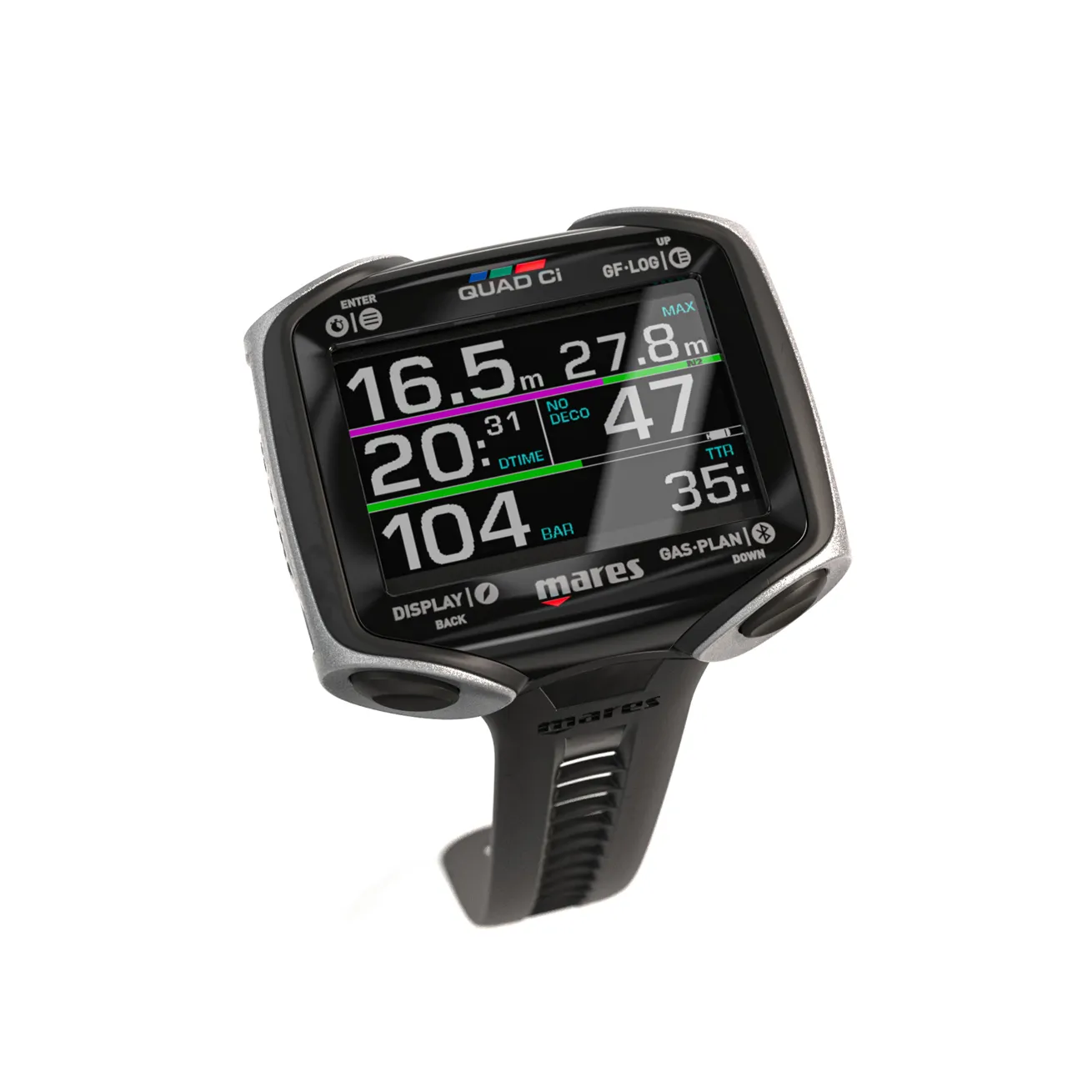
This computer features a big high-resolution eight-color MIP display. It scored very highly for ease of reading at the surface and at depth. The user-activated backlight can be toggled on and off or set for a six-second duration. Navigation uses four buttons situated at each corner of the computer and a combination of short and long presses.
Menu navigation is consistent and easy to learn but can feel a little clunky. Shortcuts from the predive screen provide quick access to gas mix info and a multi-layered conservative factor, where divers can adjust decompression calculations based on the diver’s physical fitness, dive intensity and other factors. Test divers loved the dive display, which defaults to an “E-Z” view mode that shows depth, dive time and NDL in huge characters for maximum readability.
Swapping to “Full” mode mid-dive adds two cyclable data fields. Left-hand buttons provide access to the compass and stopwatch. Logs are detailed and include a static dive profile. The Quad Ci’s simple operation, standout display and mix of features make it a suitable option for divers of any experience level.
DOWNLOAD Bluetooth
BATTERY Built-in rechargeable
MODES Scuba, gauge
GASES 5; 21-99% O2; 0-95% HE
FIRMWARE VERSION 01.01.01
ALGORITHM NDLS Somewhat conservative
SCORES Intuitive Operation: 3 Dive Display: 4
"Easy to use underwater."
Mares
Sirius
MSRP $659.95
CONTACT mares.com
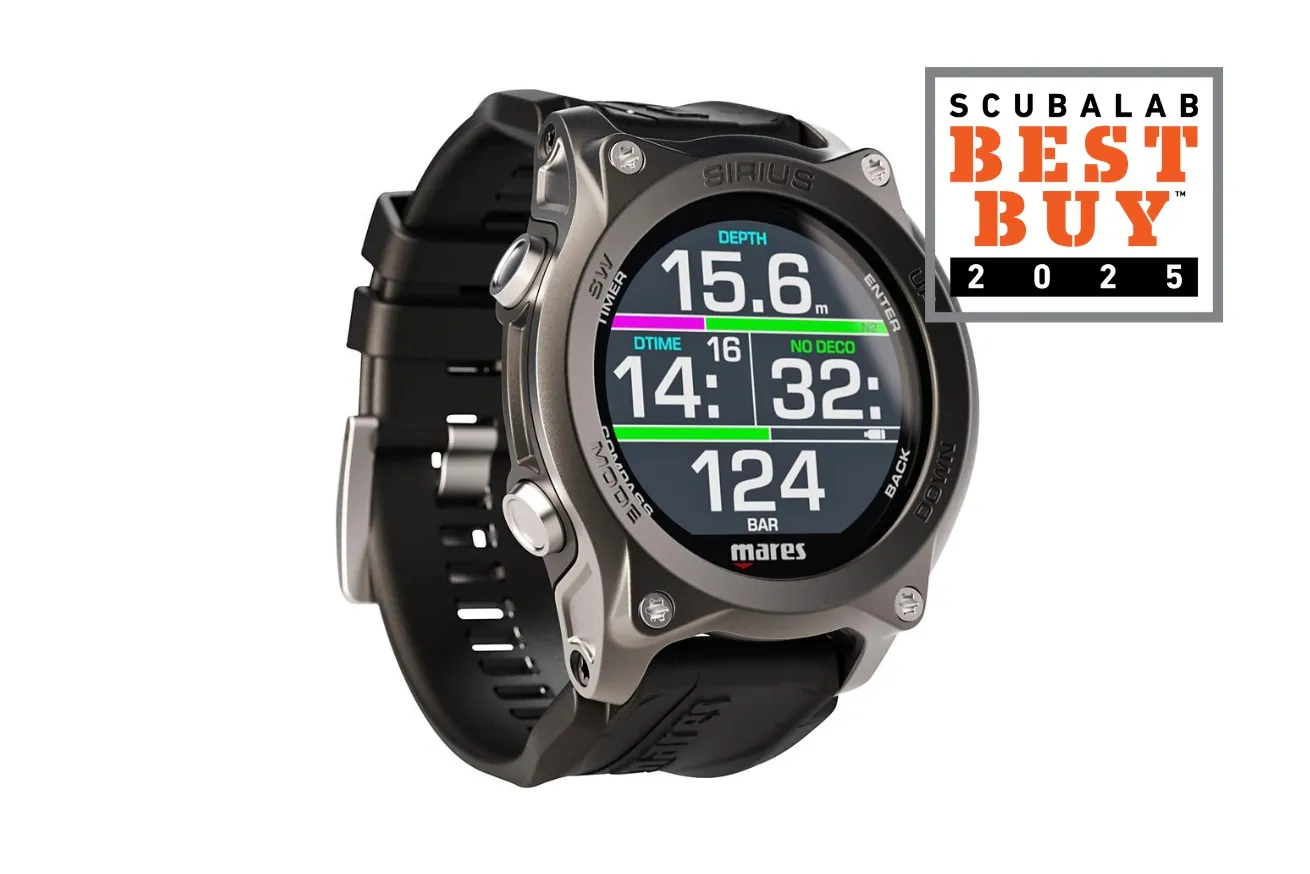
This computer is similar to the Quad Ci in terms of its basic navigation, menu structure, features and graphics but has the look and feel of a high-end wristwatch. It has the heft one would expect of a premium dive instrument. Its responsive buttons are large and protrude a bit from the case, making them accessible while wearing gloves.
Like the Quad Ci, the computer’s E-Z dive display clearly highlights depth, dive time and NDL, but scored slightly lower due to the reduced size of the screen. Test divers felt it was easy to cycle alternate data and access secondary menus. Quick-release straps can be swapped out easily and quickly to accommodate bulkier exposure gear.
The computer includes a wireless inductive charging base. Boasting solid overall performance, advanced dive functionality and premium ergonomics, the Sirius is our Best Buy for air-integrated computers.
DOWNLOAD Bluetooth
BATTERY Built-in rechargeable with inductive charging
MODES Scuba, gauge
GASES 5; 21-99% O2; 0-95% HE
FIRMWARE VERSION 01.06.18
ALGORITHM NDLS Generally more conservative
SCORES Intuitive Operation: 3 Dive Display: 3
"Very nice display for dive info. Great ergonomics."
Ratio
IDive Deep
MSRP $649.95
CONTACT ratio-computers.com
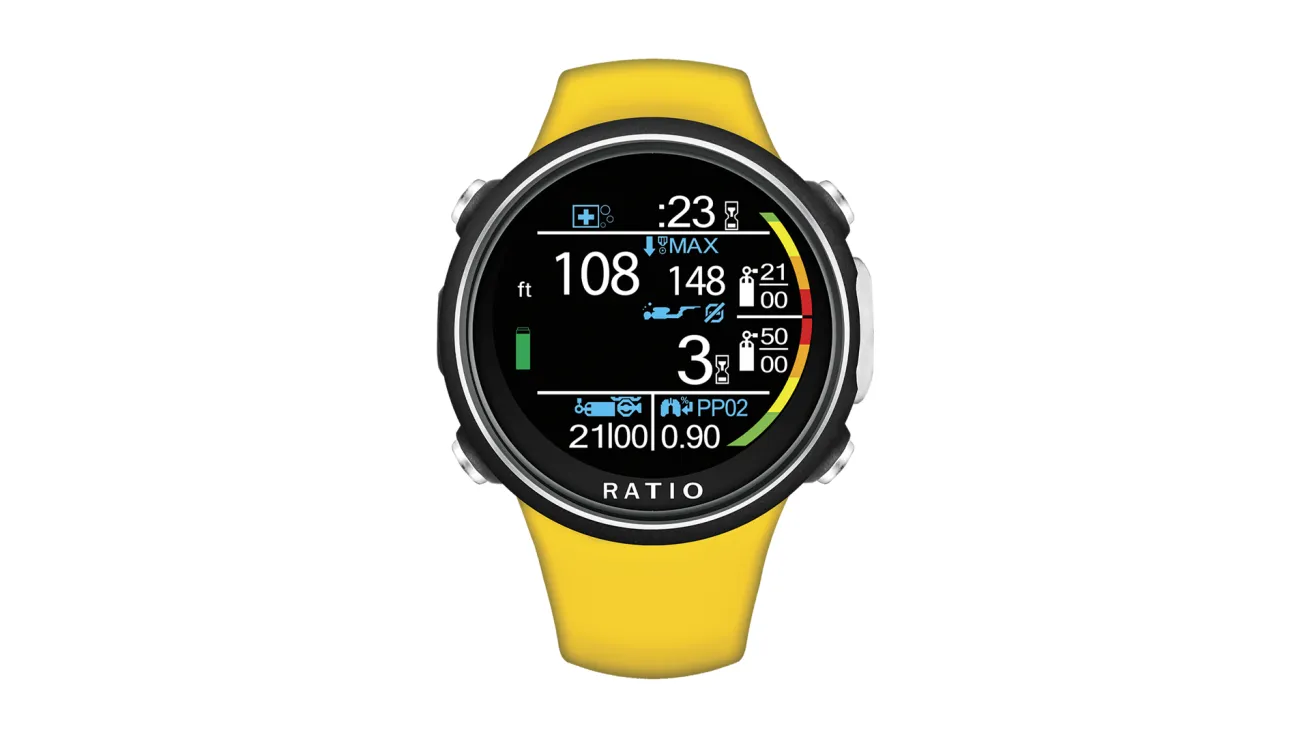
This computer’s customizable display allows users to specify the colors of different data points and alarms. It has a small, ergonomic watch-like size that is comfortable to wear during long days of diving, although its strap may not fit bulkier exposure gear without an extension. The four-button operation is super responsive and accessible, even with gloves. Users with a firm grasp of the operation and menus can quickly adjust and confirm settings with lightning speed. However, it will take a thorough read of the manual and some practice to reach this level of proficiency as the menus make use of icons and abbreviations that may not be readily identifiable to a new user.
The computer earned good scores for legibility in all conditions. The dive display scored similarly, but divers noted that the small screen felt busy with multiple graphical elements. Scrolling through alternate data will cycle several secondary data fields before providing screens showcasing a live dive profile and tissue loading graph. The compass and gas settings have their own dedicated buttons.
DOWNLOAD Bluetooth
BATTERY Built-in rechargeable
MODES Scuba, freedive, gauge
GASES 3; 18-99% O2; 0-50%HE
FIRMWARE VERSION 4.1.34.29/016
ALGORITHM NDLS More conservative
SCORES Intuitive Operation: 2 Dive Display: 3
Related Reading: 2025 Scuba Diving Gear Guide

Ratio
IX3M 2 Tech+
MSRP $1,129.95
CONTACT ratio-computers.com
Not for the faint of heart—or more accurately, wrist—this beefy air-integrated computer features a large color display and advanced dive features. The spacious screen has customizable color options and four brightness settings to ensure optimal visibility. It scored very good for legibility in all conditions. The computer’s menus are logically organized, and the four-button layout includes handy on-screen prompts for easy navigation.
Test divers liked the dive display’s clean, uncluttered layout, which tied for the top score in its category. Data is presented with large characters and labels for quick comprehension at a glance. The center of the screen is reserved for safety/deco stop instructions. A compass and all dive settings are accessible underwater.
Logs are easy to access and feature a graphic dive profile and GPS coordinates. The computer includes vibrating alerts, surface navigation to 20 user-set GPS points and compatibility with Ratio’s plug-in gas analyzer. The Tech+ version includes CCR support.
DOWNLOAD Bluetooth
BATTERY Built-in rechargeable
MODES Scuba, CCR, freedive, gauge
GASES 10; 5-99% O2; 0-95% HE
FIRMWARE VERSION 5.2.6.2/016
ALGORITHM NDLS Slightly conservative
SCORES Intuitive Operation: 3 Dive Display: 4
Non-Air-Integrated
A non-air-integrated dive computer tracks your essential dive data, including depth, time and decompression status. They do not connect to a tank transmitter and therefore cannot display your tank pressure. Divers using these computers rely on a separate submersible pressure gauge (SPG) to monitor their air supply, which means keeping an eye on two pieces of equipment rather than one. The tradeoff, however, is cost: non-air-integrated computers are typically more affordable, making them a popular choice for new divers or those who prefer a straightforward, budget-friendly setup.
Here are the highlights from the new computers we tested this year.
Atmos
Mission 3
MSRP $499
CONTACT atmos.app
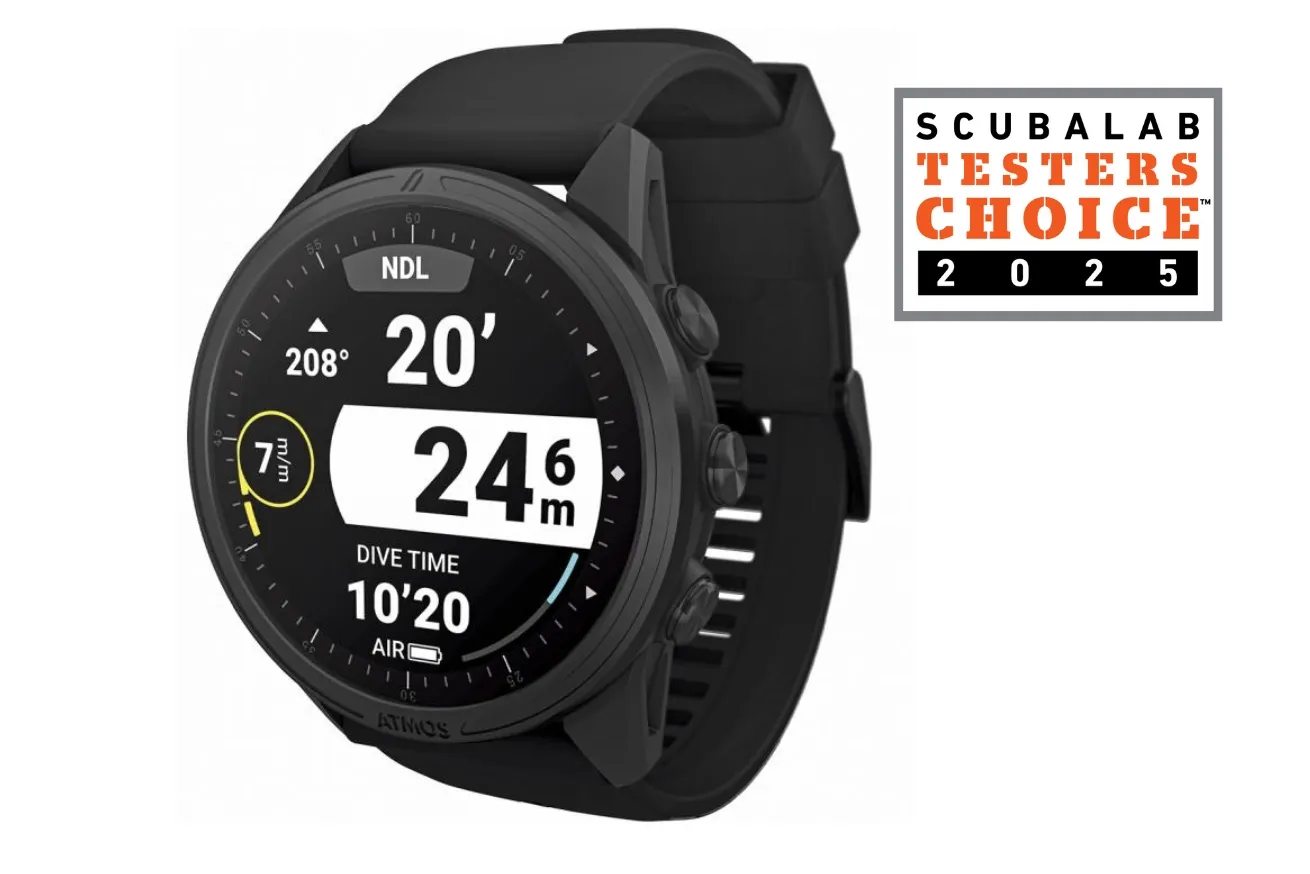
Testers loved this computer’s comfortable watchlike design, stunning display, simple operation and advanced smartwatch capabilities. The 1.4-inch AMOLED screen earned excellent scores for reading thanks to large, rounded characters and a button to quickly cycle between brightness settings. Alarms include bold colors and adjustable audible and vibration alerts. The five-button operation is very intuitive and remains accessible while wearing gloves.
The main dive display is data-rich and well organized. Secondary screens include a digital compass that simultaneously shows the current heading and its reciprocal, a no-pause stopwatch, and user-defined data fields. Testers loved the unmissable, unmistakable safety stop with clear instructions and a to-the-second countdown. Users are asked to enter their ending tank pressure at the end of the dive, which is saved in the logbook along with a calculated breathing rate. Logs are easy to access and include a dive profile graphic bookmarked with alerts and stops.
The computer has simple GPS navigation to preloaded and user-defined dive spots, basic fitness tracking, and can display phone notifications, tide data and weather. A favorite of test divers, the Mission 3 is our Testers Choice.
DOWNLOAD Bluetooth
BATTERY Sealed rechargeable
MODES Scuba, freedive, gauge
GASES 2; 21-50% O2
FIRMWARE VERSION 1.107
ALGORITHM NDLS More liberal
SCORES Intuitive Operation: 4 Dive Display: 4
"A gorgeous little computer"
Cressi
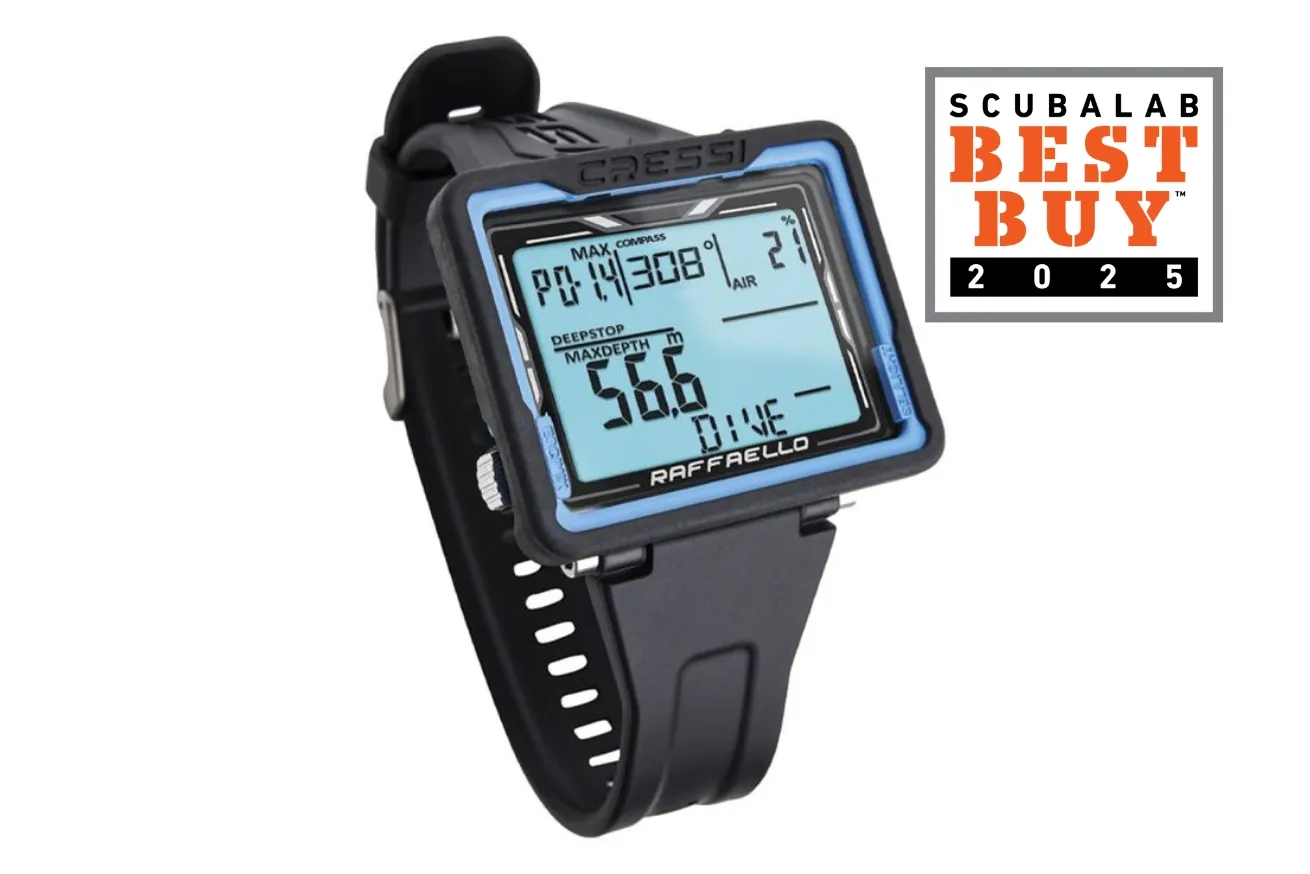
Raffaello
MSRP $375.95
CONTACT cressiusa.com
This computer’s large rectangular design is meant to maximize readability. The available on-screen real estate provides ample room for data to breathe and extra-large characters for depth and NDL. The segmented layout showcases all the essential data at a glance, with a few additional data fields on the secondary display.
The high-contrast LCD display ensures great visibility in direct sun and has a user-activated backlight for low-light reading. It scored very good for readability above and below the water, but test divers wished the backlight had a longer activation time. Alerts are accompanied by an audible tone. This computer includes a rudimentary digital compass that can be set to show cardinal directions or degrees and can even orient the user to a marked heading. The computer is a bit wide, but otherwise its low-profile design and light weight make it surprisingly comfortable during long dives.
The two-button operation is straightforward and consistent but may require a few reads of the manual to fully comprehend the menus’ various pages and abbreviations. The buttons are large and responsive, but their positioning underneath opposing sides of the bezel may be challenging for divers with smaller hands or thick gloves. Offering solid performance and all the essentials in a user-friendly package, the Raffaello is our Best Buy for non-air-integrated computers.
DOWNLOAD Optional Bluetooth interface
BATTERY User-replaceable CR2450
MODES Scuba, freedive, gauge
GASES 3; 21-99% O2
FIRMWARE VERSION 300
ALGORITHM NDLS Generally the most conservative of our test
SCORES Intuitive Operation: 3 Dive Display: 3
Related Reading: 8 Must-Have Items to Pack for a Liveaboard Trip
"Simple. Has everything you need and nothing you don’t"
Garmin
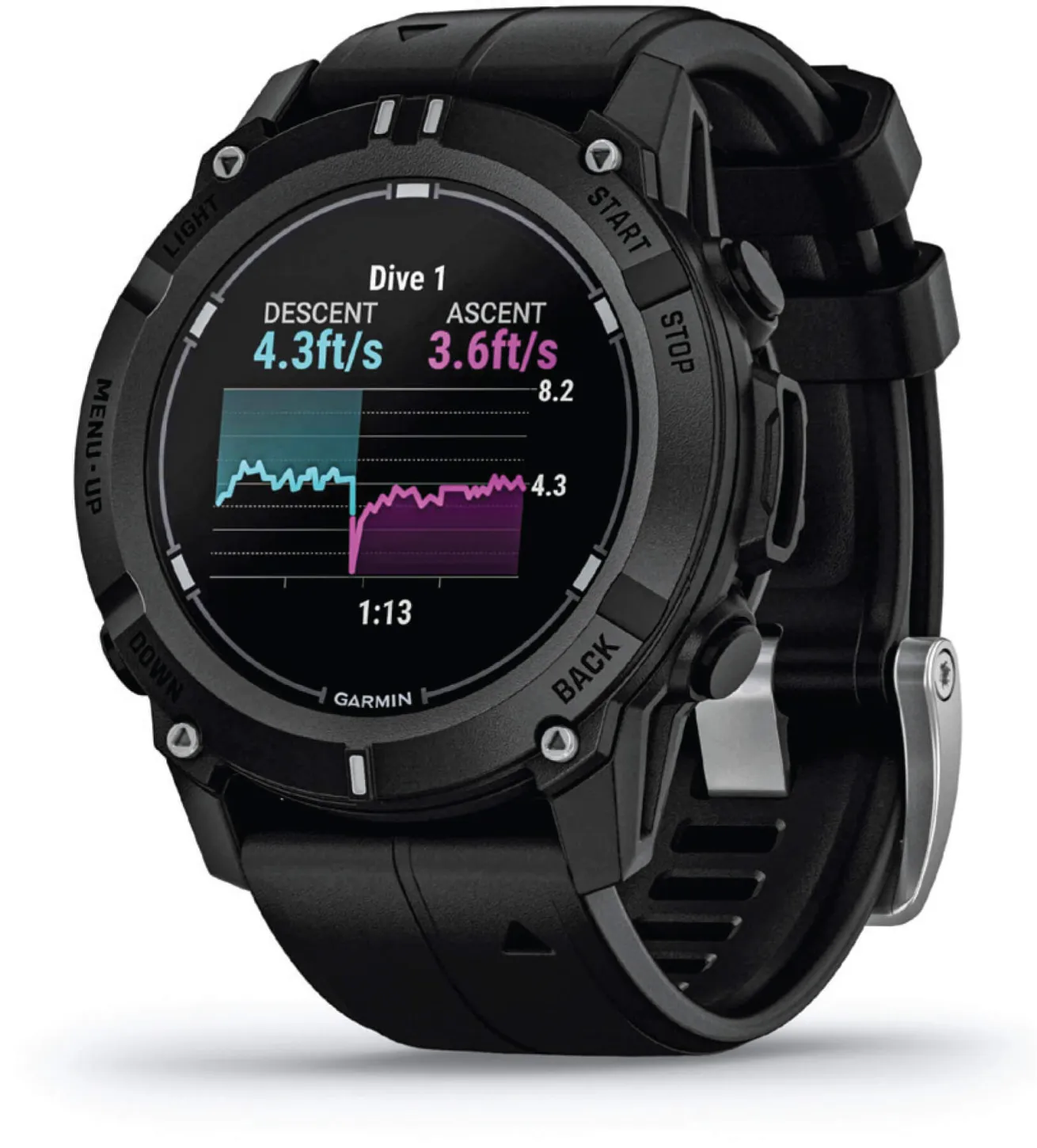
Descent G2
MSRP $699
CONTACT garmin.com
The G2 might be the smallest dive computer we’ve ever seen and is suitably sized for everyday wear as a normal smartwatch/fitness tracker. It contains myriad functions for topside use (smartphone notifications, digital wallet, fitness tracking, GPS mapping, etc.), which can be a bit overwhelming for an unfamiliar user, but its dive functions are straightforward. It also has touchscreen controls topside, for added simplicity.
The dive display is packed with data—including a handy ascent/descent graphic and a full-featured digital compass—but doesn’t feel cluttered. Haptic feedback and bold colors accompany alerts. The “crystal-clear” display, as one test diver described it, scored excellent for ease of reading in sun and at depth. A “large numbers” mode puts further emphasis on depth and NDL for divers who might struggle to read the tiny display.
The computer supports advanced dive disciplines such as rebreather and trimix diving. The surface interval screen and logs are easy to access and include plenty of stats and graphical data displays. This computer scored very good across the board and was a favorite of multiple test divers.
DOWNLOAD Bluetooth
BATTERY Built-in rechargeable
MODES Scuba, CCR, freedive, gauge
GASES 12; 5-100% O2; 0-95% HE
FIRMWARE VERSION 19.25
ALGORITHM NDLS More liberal
SCORES Intuitive Operation: 4 Dive Display: 5
"Overall excellent and visually pleasing computer"
Sherwood
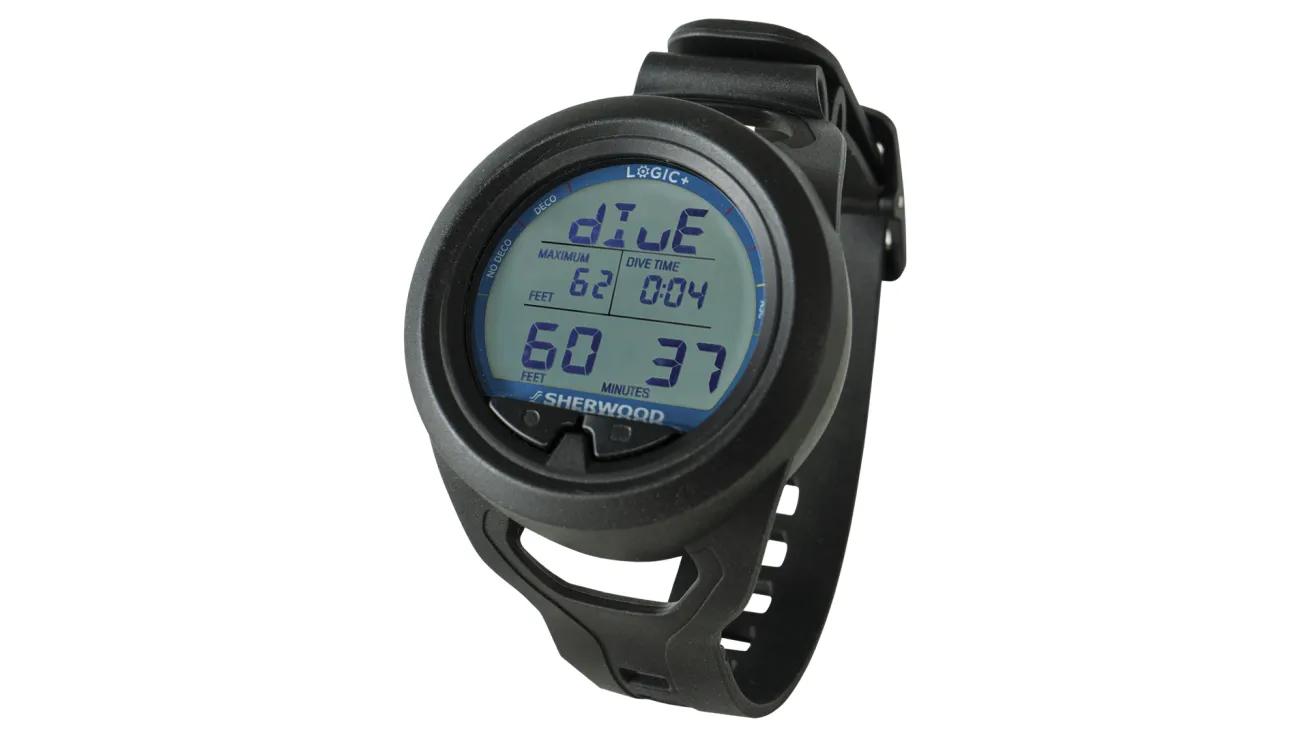
Logic+
MSRP $349.95
CONTACT sherwoodscuba.com
This no-frills nitrox-compatible puck computer covers all the essentials for the average recreational diver. The circular LCD display is very easy to read in the sun and has a bright, high-contrast user-activated 10-second backlight for visibility in dark environments. The segmented dive display is broken into three rows and is clearly labeled for easy scanning of critical data. Data is limited to the essentials, but test divers liked how the edges of the display use graphics to visualize tissue loading and ascent rate. They also appreciated that the safety stop counts down to the second.
The computer’s two-button operation is exceptionally responsive. One button cycles through menus and settings while the other confirms selections. Button functions alternate as you navigate into submenus. There is no backtracking, which can lead to some missed prompts early on, but savvy users can fly through the menus and adjust settings very quickly. Dive logs are simple, but users can upload logs via Wireless Sync to the free Dive Story Pro app for additional info, including a scrollable dive profile graphic.
DOWNLOAD Wireless Sync
BATTERY User-replaceable CR2450
MODES Scuba, gauge
GASES 1; 21-99% O2
FIRMWARE VERSION 1025
ALGORITHM NDLS More liberal
SCORES Intuitive Operation: 3 Dive Display: 3
Tusa
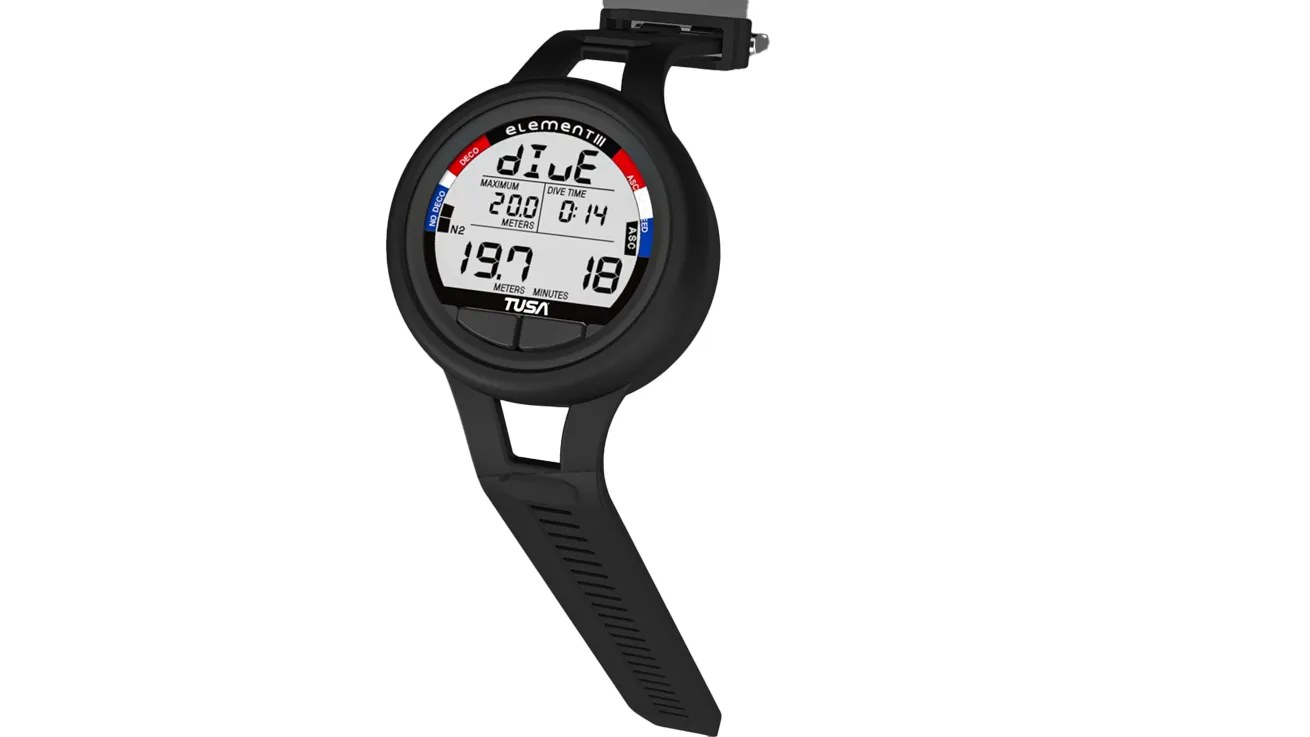
Element III
MSRP $346
CONTACT tusa.com
The Tusa Element III is a straightforward, reliable recreational computer. The puck-like design is compact and comfortable on the wrist and has plenty of strap length to accommodate bulkier exposure gear. The two-button operation takes some practice but is simple and quick to operate once mastered. The highly visible LCD display features a user-activated backlight. Test divers scored it very good for reading above and below the water.
The clean, segmented dive display contains the essentials but little else. Dive logs are similarly populated. Test divers appreciated that the safety stop counts down to the second. The Element has two user-selectable levels of conservatism. Set to its most liberal setting, its NDL calculations were generally just a bit more conservative than the average. The computer is nitrox compatible. It also has a unique setting that allows divers to adjust the pitch and frequency of the audible alerts to better differentiate their alarms from nearby divers.
DOWNLOAD Not available
BATTERY User-replaceable CR2450
MODES Scuba, gauge
GASES 1; 21-99% O2
FIRMWARE VERSION 1026
ALGORITHM NDLS Slightly conservative
SCORES Intuitive Operation: 3 Dive Display: 3


