

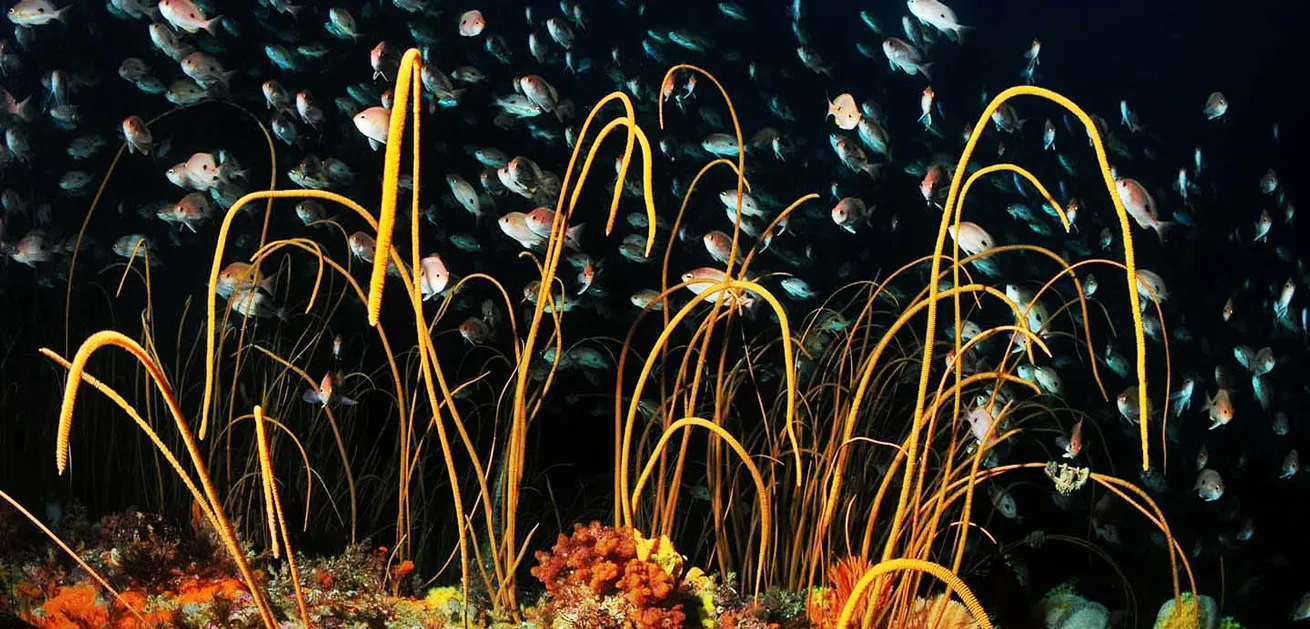
Courtesy Nuarro LodgeA shoal of butterfly perch congregates along Tasmania’s colorful seabed
Tasmania’s east coast is as dramatic beneath the waves as it is above. Rugged cliffs are etched by the Southern Ocean. Beneath the sea’s surface, sponge gardens rival tropical reefs in color, weedy seadragons drift among the seagrass and playful New Zealand fur seals act as dive companions. Just a couple of decades ago, giant kelp forests carpeted these waters. Today, only around 5 percent remains. For divers seeking rare marine life, caves and canyons, and a chance to help one of the ocean’s most fragile ecosystems, Eaglehawk is a PADI Five Star Dive Center to consider.
Co-owners Karen Gowlett-Holmes and Mick Baron bring a century of combined experience in diving and marine research. Gowlett-Holmes, a former marine invertebrate collections manager at the South Australian Museum, has had 13 marine invertebrate species named in her honor and was inducted into the Women Divers Hall of Fame in 2021. Baron, a Tasmanian local, spent 17 years as a fisheries observer before co-founding Eaglehawk Dive Centre in 1991. Together, they’ve turned their passion for the sea into a sustainability-focused dive operation.
“The diving here is world-class for temperate waters, offering an incredible variety of marine life and experiences,” says Gowlett-Holmes. Divers typically head out on a two-tank boat dive,exploring dramatic canyons. Sponge gardens cling to the walls and pinnacles, seen at roughly 65 feet and becoming even more vivid at depth. Tec divers often come to dive among the sponge gardens at 330 feet, searching for rare critters.
Related Reading: Fantastic Fathers of the Sea
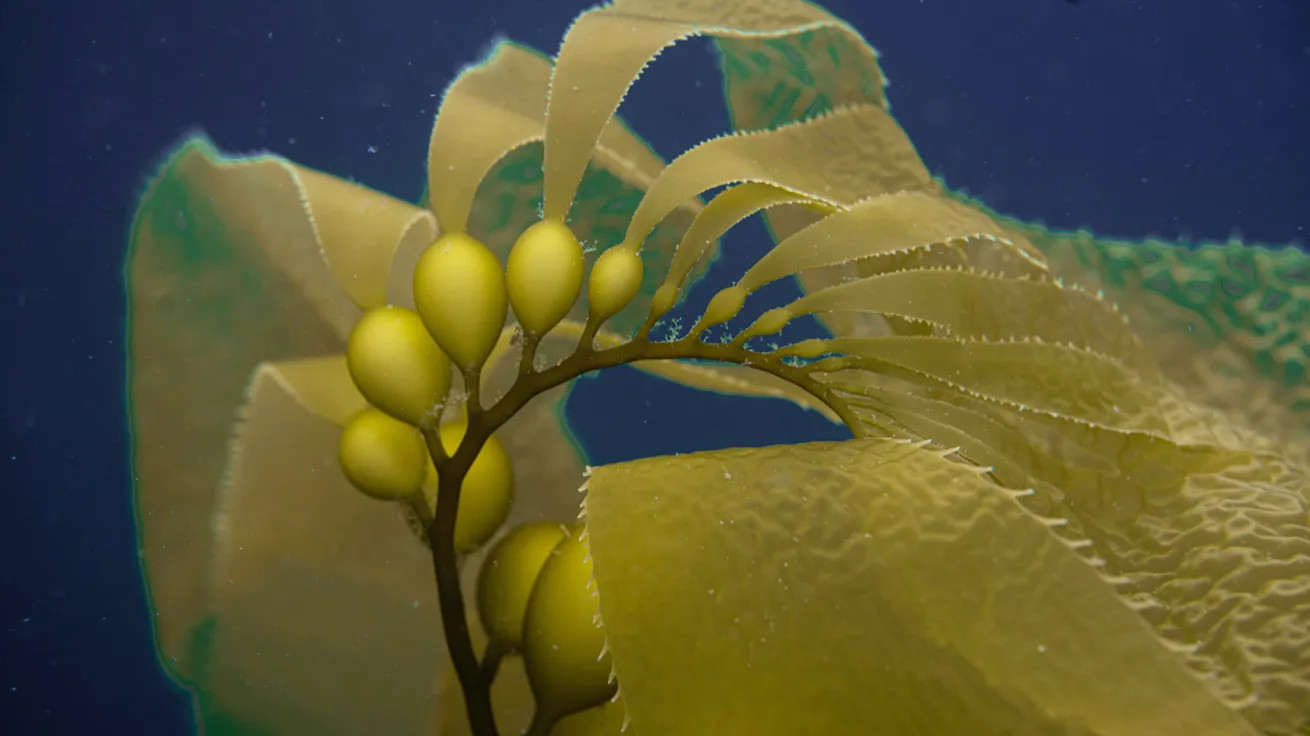
Courtesy Nuarro LodgeOnce abundant, kelp populations are dwindling here.
While many conservation programs are geared toward novice or recreational divers, tec divers can put their specialized skills to use at Eaglehawk. Gowlett-Holmes says, “Tec divers have discovered that we’ve got a species of handfish, a group of fish only found in Tasmanian waters. We lost our shallower water handfish here with the temperature increases, but they found a deeper water species living on some reefs.” Tec divers assist the University of Tasmania by photographing specimens and collecting DNA and eDNA (genetic material left behind) samples for identification.
All divers, including beginners, might have a chance to spot the weedy sea-dragon—endemic to southern Australia. Divers with a keen eye should look for the purple or pink eggs carried on the underside of the male seadragon’s tail. When the seadragon has its clutch of eggs, it typically stays in the same area, allowing divers to study its behavior over the course of their trip. Any images or videos captured by divers can be submitted to SeadragonSearch, a citizen science database that collates the data to help researchers understand these creatures.
“We’ve been able to track some individuals for up to 15 years in the same location, giving us valuable insight into their longevity and population structure. What’s exciting is that divers can contribute directly by taking a photo and uploading it to the database while still on the dive boat. Over the years, many of the same seadragons have been reported, and every now and then, new individuals appear,” says Gowlett-Holmes.
Related Reading: In Search of Far-Flung Green Diving
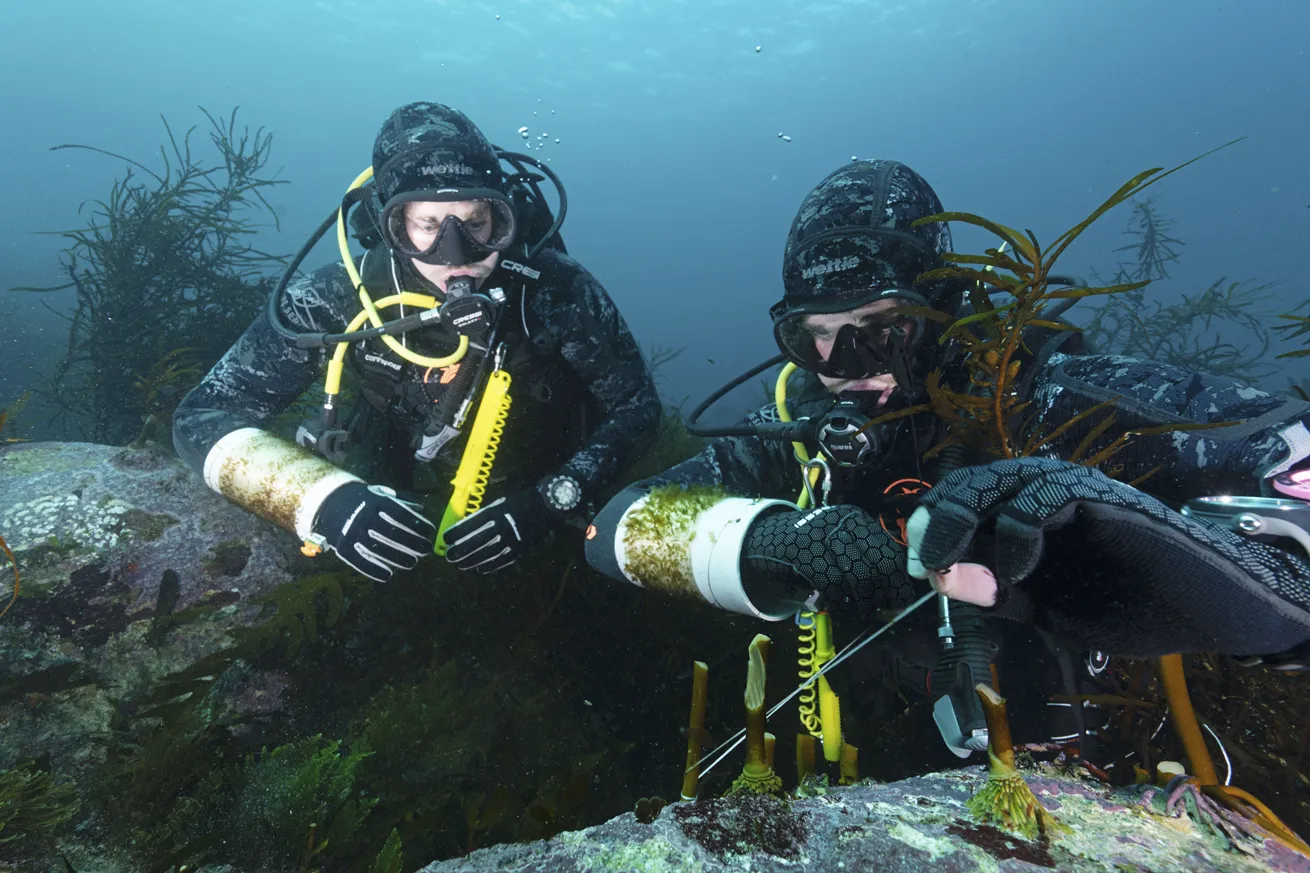
Courtesy Nuarro LodgeA duo of divers seeds one of 800plus kelp patches in the waters surrounding Eaglehawk Dive Centre
For those after a more interactive encounter, curious New Zealand fur seals approach divers to play with their bubbles. “They’ll often swim out to the boat, eager for divers to join them in the water. Since it’s also a breeding colony, you’ll often see young pups around,” Gowlett-Holmes says. Seals are present year-round, but they’re especially playful during Tasmania’s summer months.
Eaglehawk Dive Centre also assists in biodiversity surveys. It’s one of the few places where divers can see many different species of pycnogonids—sea spiders—in large numbers.
Beneath the thrill of exploration is a more sobering reality. Unfortunately, climate change has disproportionately impacted the marine ecosystem off Tasmania, causing a 20 percent increase in the minimum winter water temperature since the mid-1990s. This increase has devastated the region’s kelp forests.
In an interview with Print Radio Tasmania, Baron describes the changes seen off the coast of Eaglehawk Dive Centre within the past 30 years, with the past decade being the most impactful. “In 1991, there was kelp everywhere,” Baron says. “It was a natural nursery. In some places … you couldn’t drive a boat, drop a net, drop a pot in the middle of it.” The forests were havens for marine life where predators—human or animal—couldn’t reach them. In 2000, Baron noticed large parts of the kelp forests dying off, but it was the four months spanning December 2015 to March 2016 when one of the largest kelp forests disappeared. “There wasn’t a plant left,” says Baron.
Related Reading: Dive Travel Guide: 38 Places to Dive
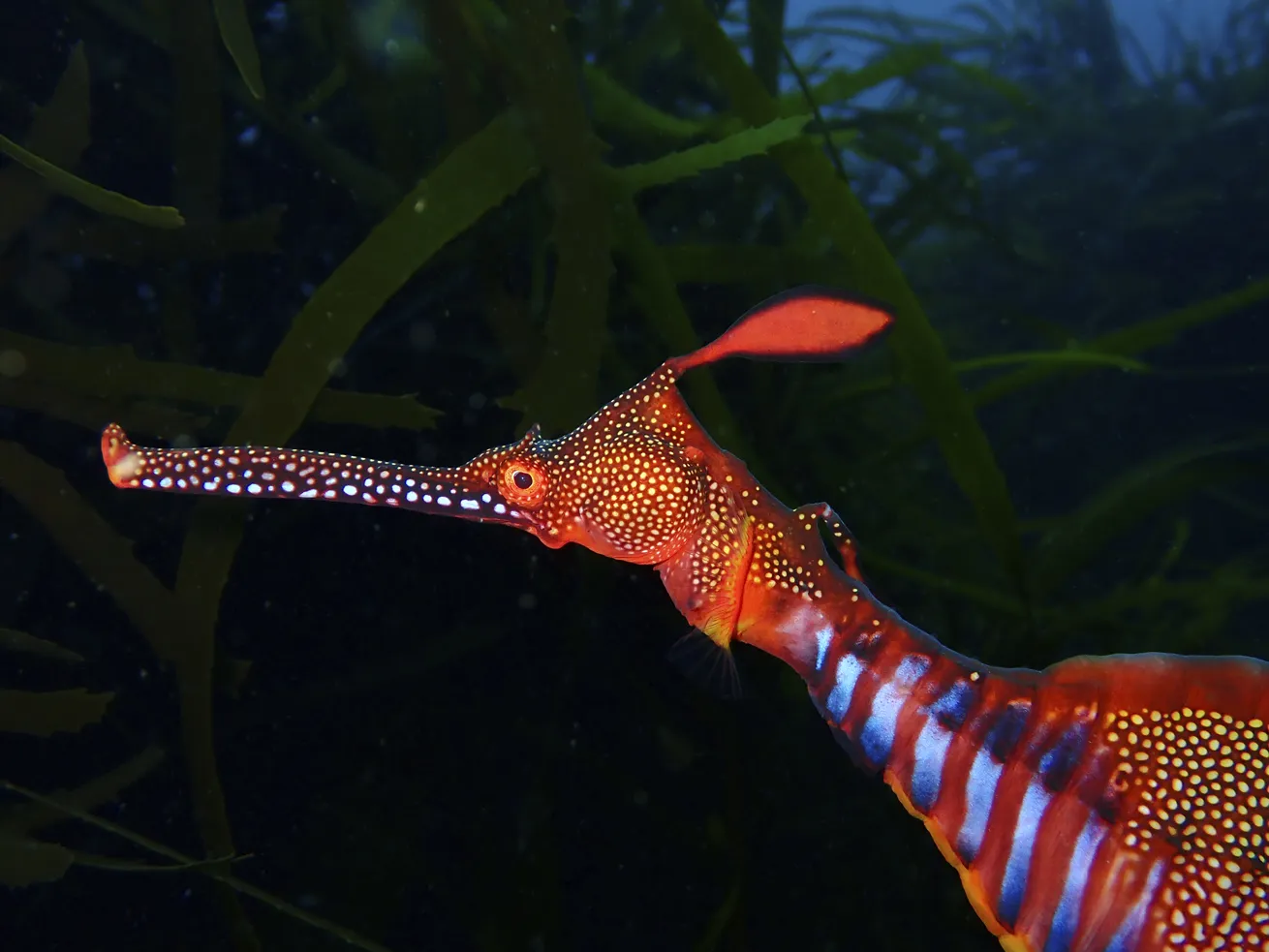
Courtesy Nuarro LodgeA bright-hued leafy seadragon in all its technicolor glory.
An invasion of long-spined sea urchins, which have climbed in numbers due to overfishing, has had an added impact. They feed on giant kelp and, in the absence of predators like rock lobsters (which shelter in kelp forests), create urchin barrens where little life remains.
After this loss, Eaglehawk Dive Centre joined the Tasmanian Giant Kelp Restoration Project, led by the University of Tasmania’s Institute for Marine and Antarctic Studies. It’s a multifaceted project in which commercial fishers harvest urchins and repopulate urchin-dense areas with predatory rock lobsters. Kelp is seeded in areas with hope for regrowth.
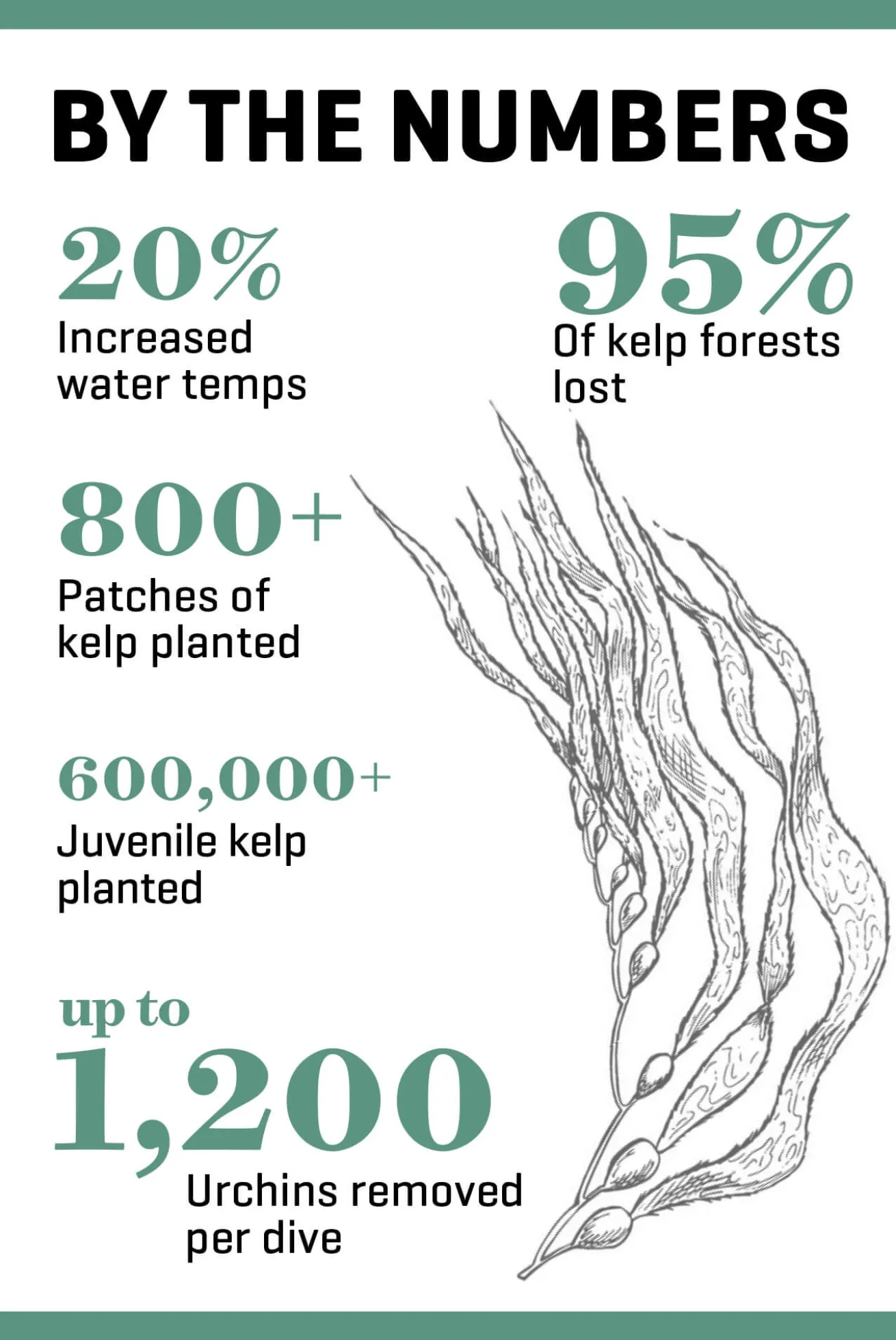
Recreational divers have a role in the project too. Eaglehawk Dive Centre is the only operator to offer the PADI Giant Kelp Restoration Specialty course, developed by lead instructor Pauline Nuttens. This gives divers a hands-on approach to the reforestation of giant kelp, including planting and maintaining the forest areas. Divers can also participate in culling long-spined sea urchins.
With its blend of rare species, deep-water technical challenges and hands-on conservation opportunities, Eaglehawk Dive Centre offers more than scenic diving. It’s what marine stewardship looks like when guided by science, experience and optimism. When the kelp forests died off, many marine scientists thought they couldn’t recover—and they still might not. But that won’t stop those at Eaglehawk Dive Centre from trying.


