


Every year, ScubaLab puts the latest scuba regulators through rigorous head-to-head testing to identify the best new scuba regulators on the market.
For 2026, we've split the regulator review into two categories, regulators under $700 and those over $700, making it easier to find the right performance and value for your budget. In each category, our expert testers award both a Testers Choice and Best Buy winner.
The ScubaLab scuba regulator test consists of two phases. First, each regulator undergoes objective performance testing at Dive Lab in Panama City Beach, Florida, where breathing performance is measured under controlled laboratory conditions.
Next, our team of experienced divers conducts comprehensive in-water evaluations during test dives at John's Oasis at Devil's Den in Williston, Florida. Here, test divers assess comfort, ease of breathing and clearing, purge stiffness, resistance to free-flow, ergonomics and overall diving performance.
Click here to check out the best regulators of 2025.
Best New Scuba Regulators Under $700
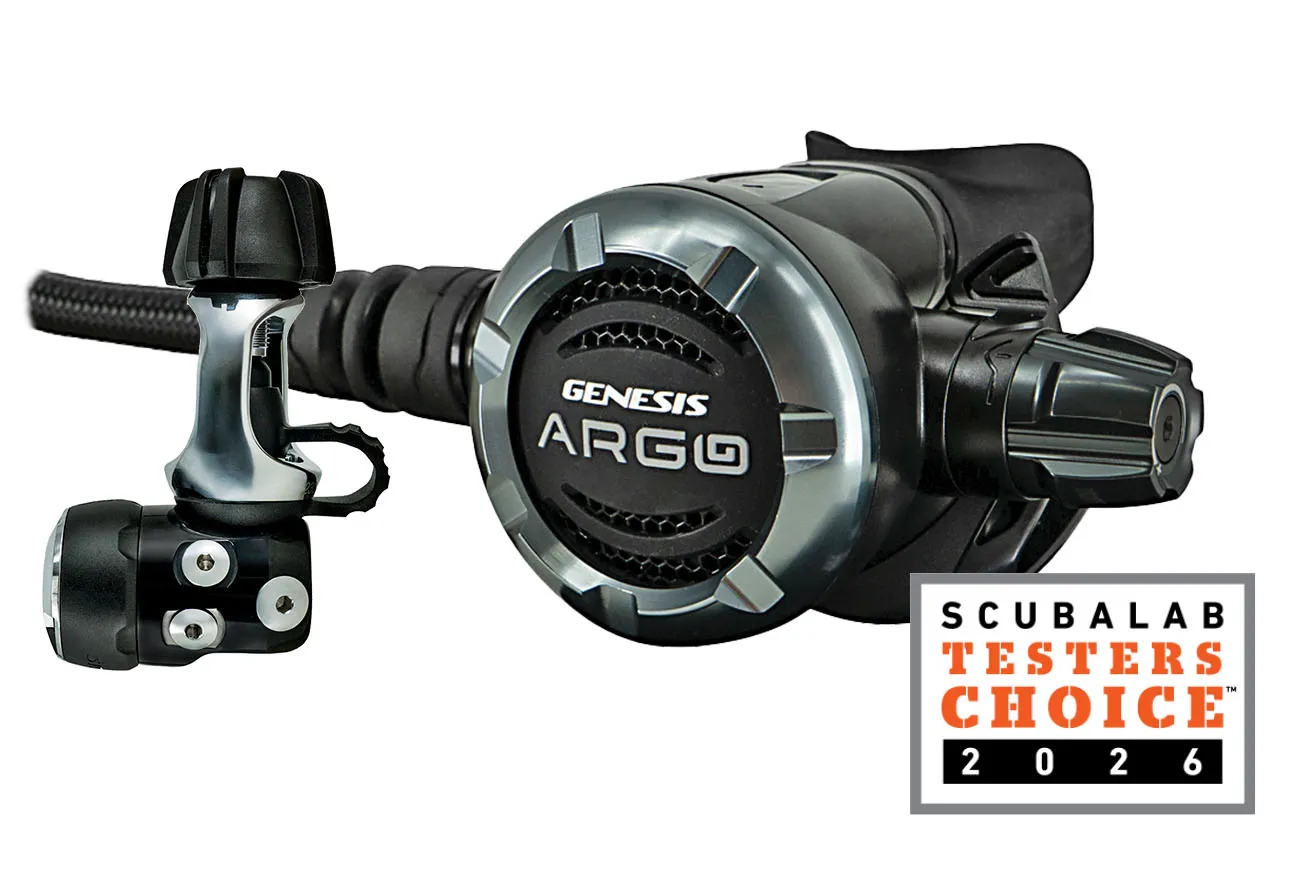
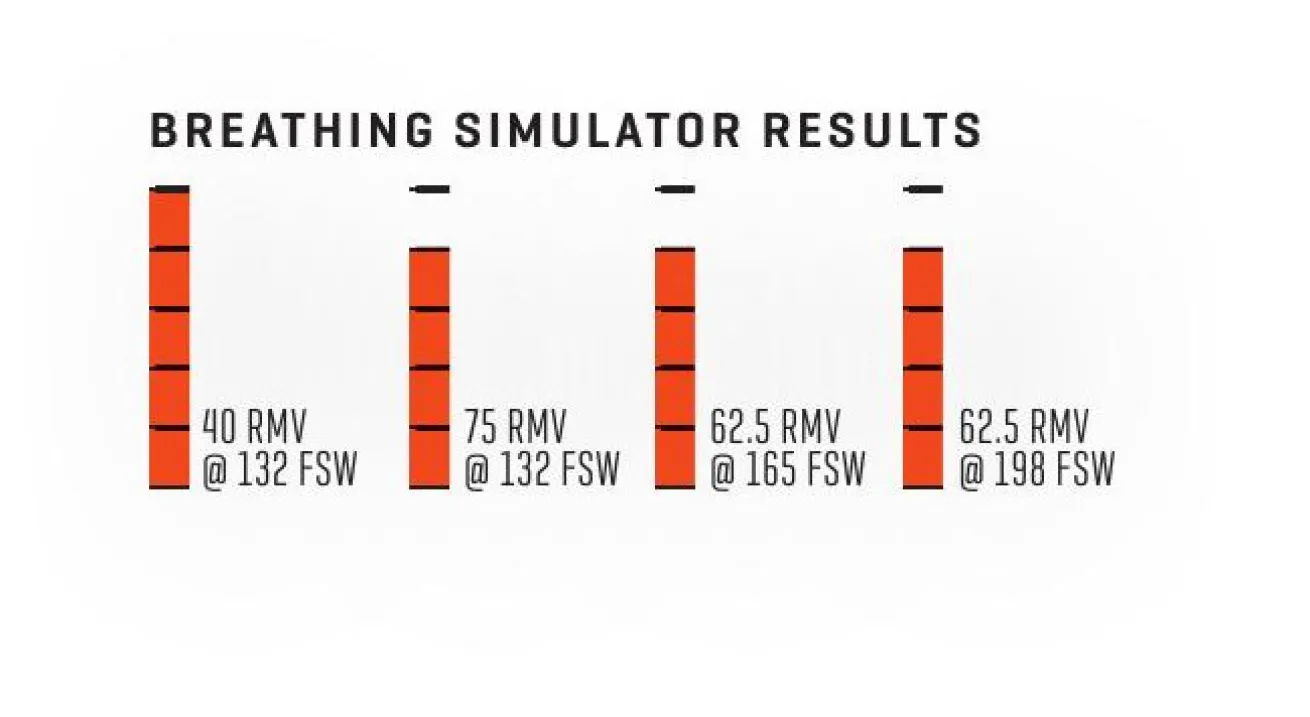
This breathing system combines a compact, environmentally sealed balanced diaphragm first stage with a lightweight, pneumatically balanced second stage. It impressed testers with super easy, dry breathing in all positions. The test divers’ experience was consistent with the reg’s simulator scores, which showed excellent and very good work of breathing across our gamut of depths and work rates.
The second stage features an integrated swivel, which helped the regulator earn a good score for comfort. Otherwise, test divers scored it very good across the board and were fans of the reg’s powerful purge and ergonomic, effective breathing adjustment. This regulator combines a feature-rich design with reliable, low-effort gas delivery and was a favorite of test divers.
The Argo is our Testers Choice for regulators under $700.
“Really fantastic reg.”
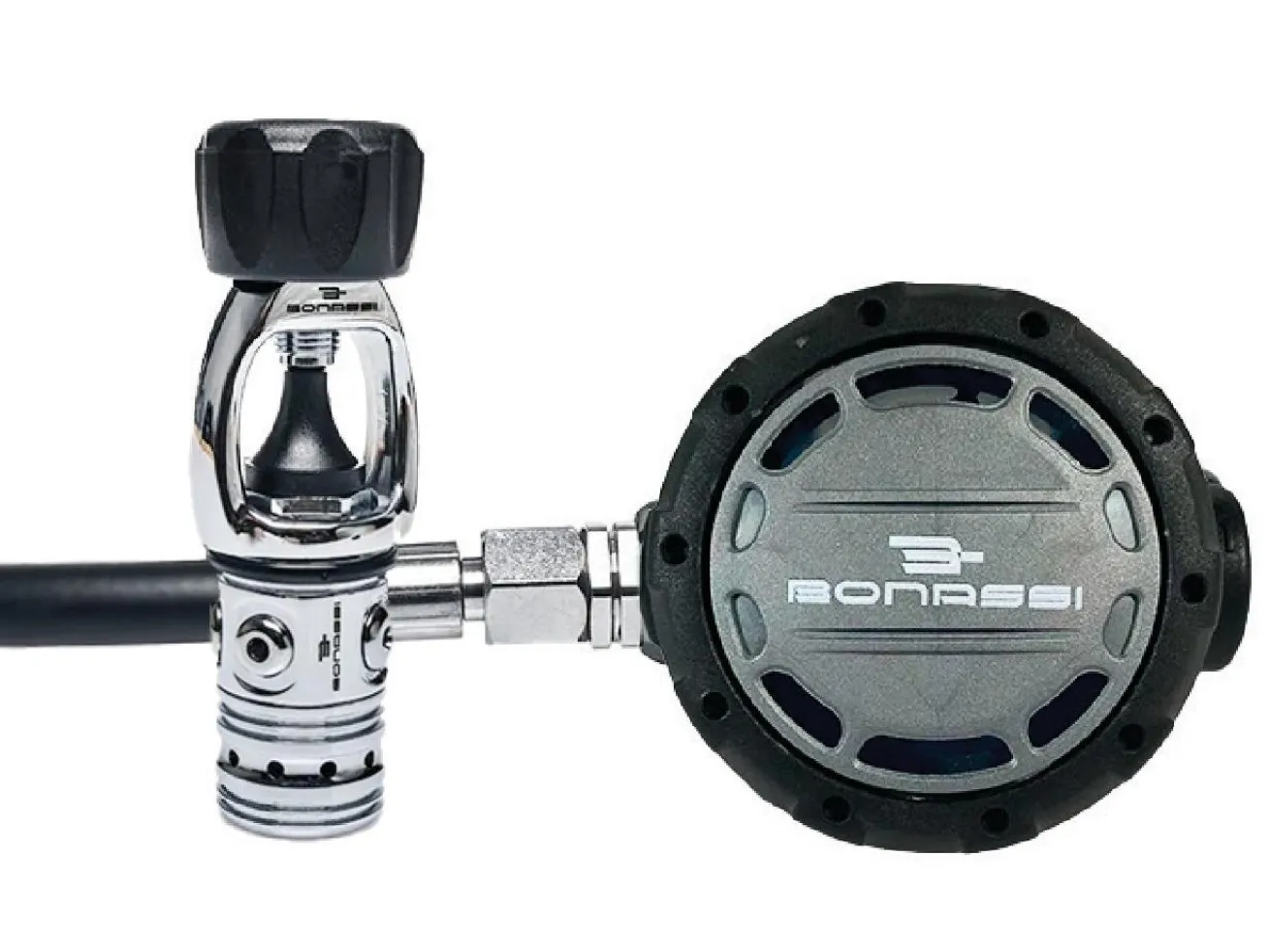
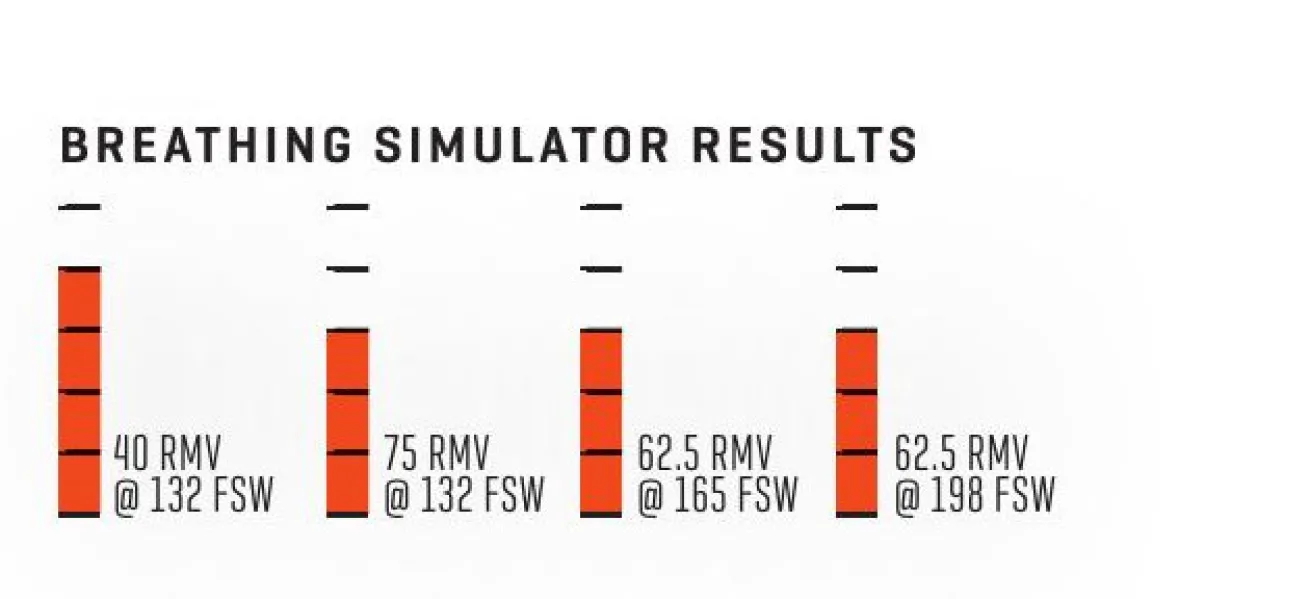
This simple, compact regulator doesn’t feature a lot of bells and whistles but offers average breathing performance at a fraction of the cost, making it an attractive option for beginners. The nonbalanced first stage provides a single HP and four LP ports in a radial layout. The Eolo earned very good scores overall, especially for its soft purge cover and resistance to free-flow.
On the simulator, it had some of the highest work of breathing but still earned excellent and very good scores at lower breathing rates and good scores at more challenging rates. The regulator was a favorite of multiple test divers.
“Easy, lightweight breathing.”
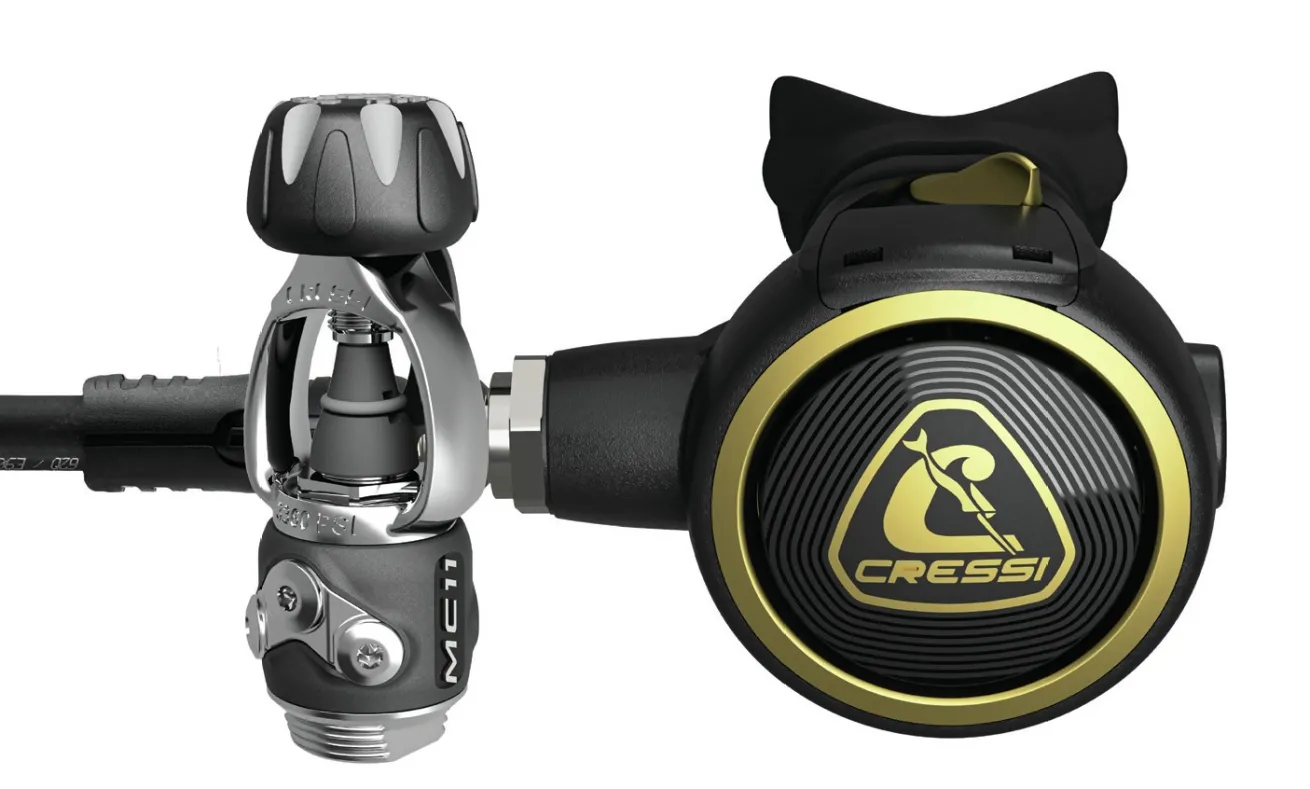
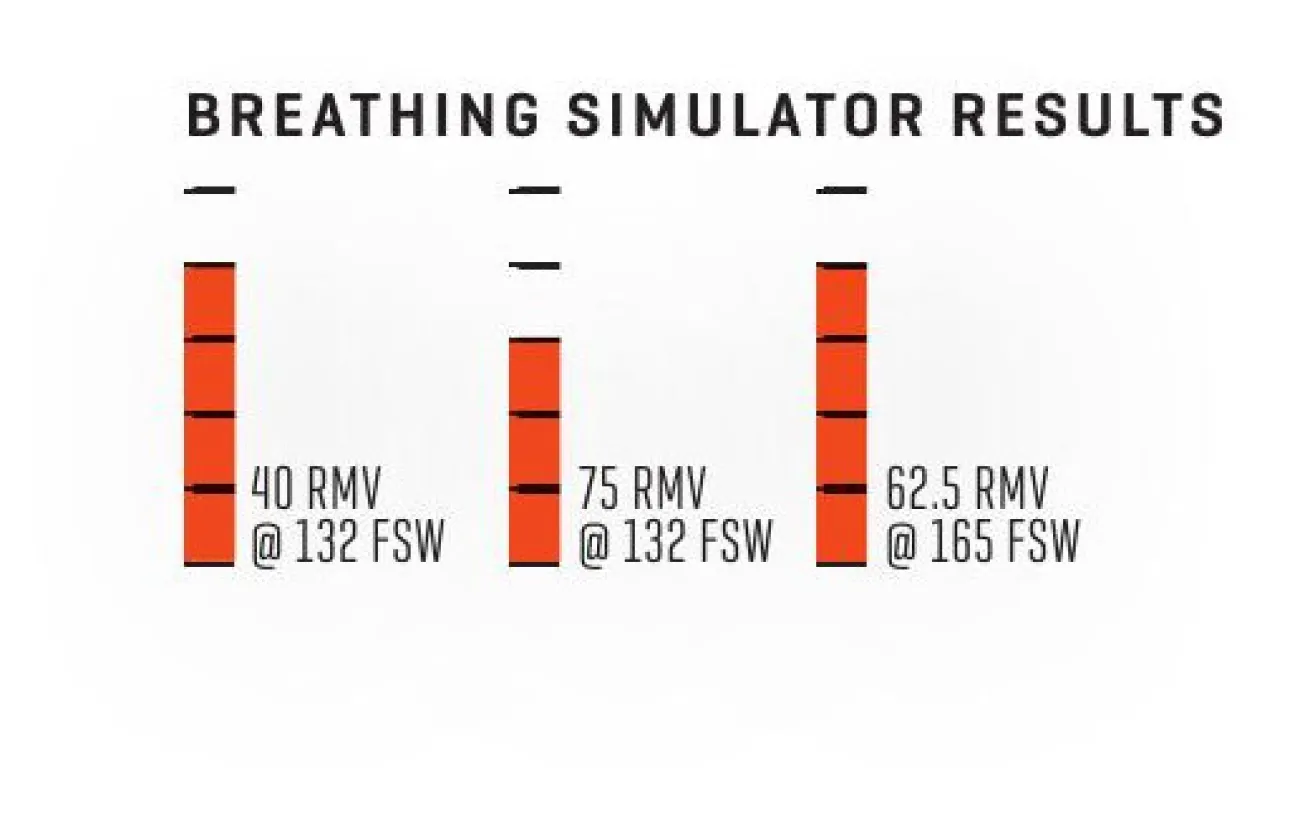
This warm-water reg combines a compact diaphragm first stage with an equally small, lightweight second stage. Its diminutive dimensions enhance comfort during long days of diving. It scored very good for free-flow resistance thanks to a simple-to-use Venturi, stiffer purge and pressure-reducing openings along the cover.
On the simulator, it earned excellent and very good scores at lower breathing rates. Testers reported easy, smooth and dry breathing. Overall, the reg is a good option for tropical divers looking for a compact, comfortable, travel-ready system.
“Very dry in all positions.”
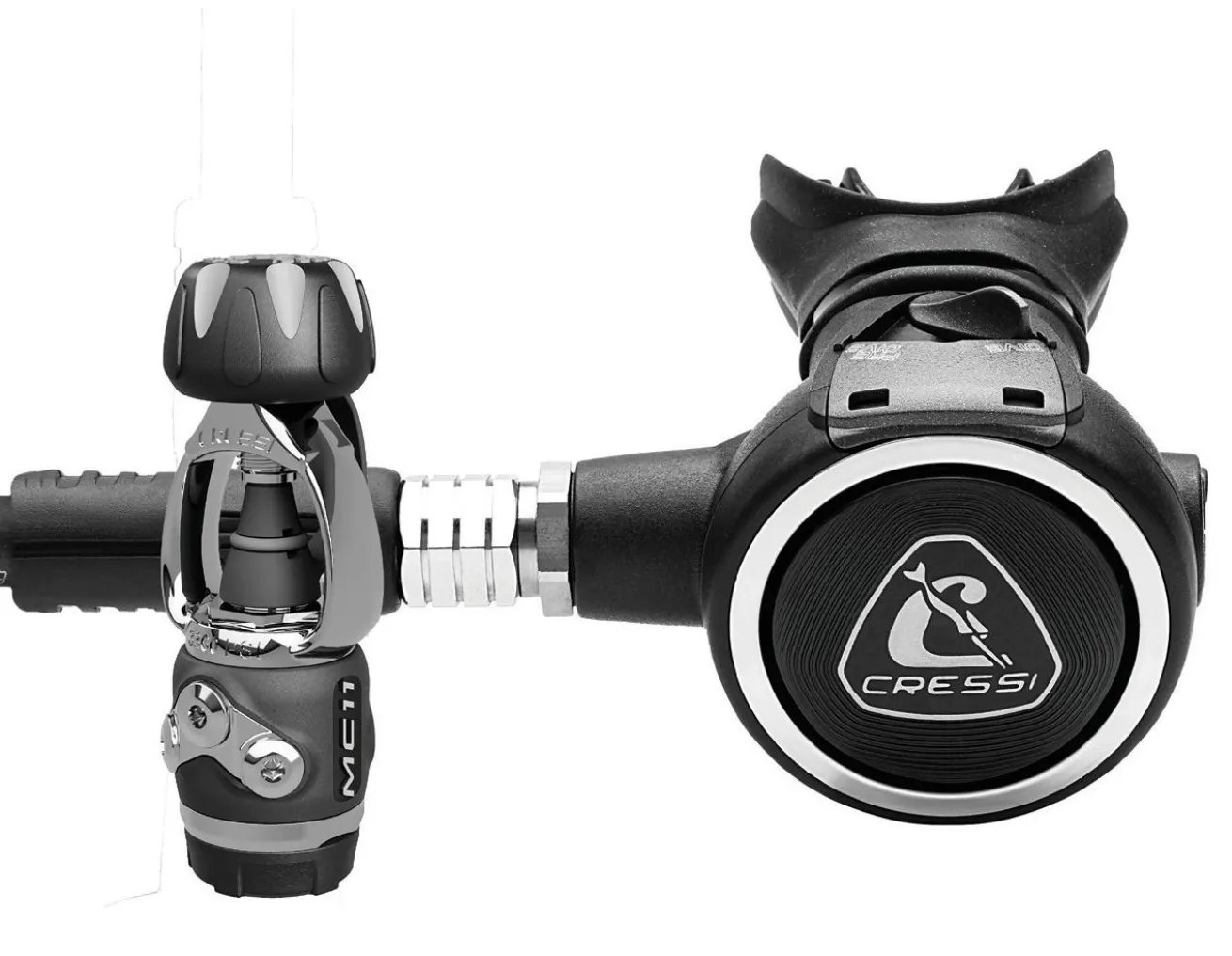
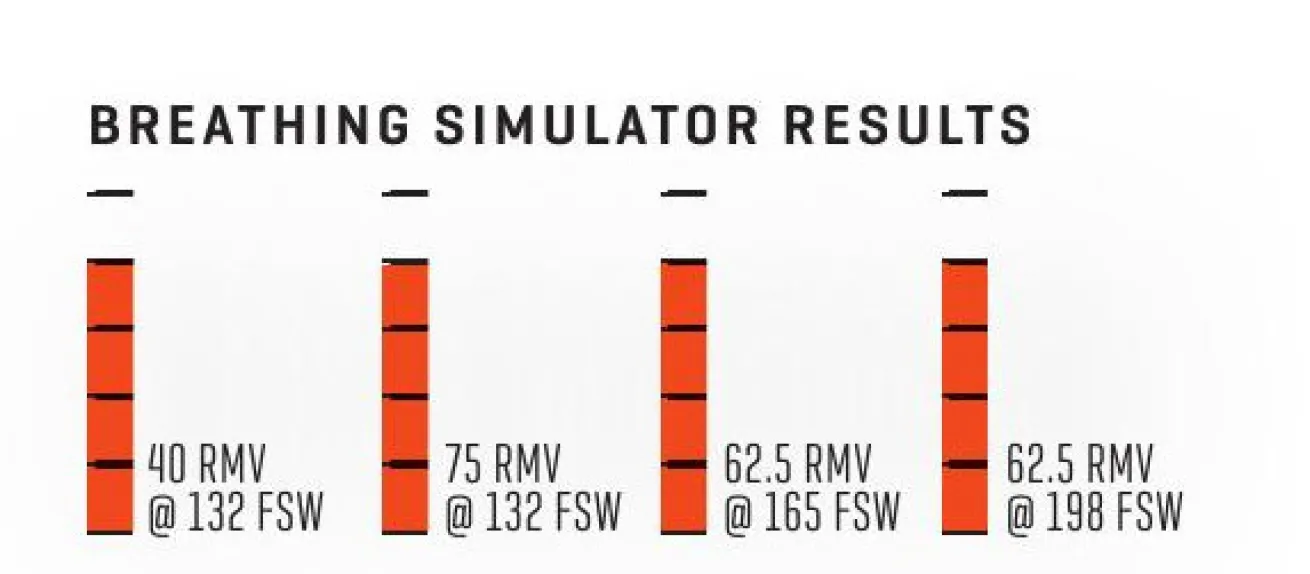
This cold-water counterpart to the MC11/Zen features an environmentally sealed hyperbalanced first stage to ensure consistent performance with depth and defend against freezing. The Zen Pro first stage is constructed out of a special thermoconductive polymer to further protect against ice. The regs look very much alike and shared similar in-water scores from test divers.
On the simulator, this reg showed improved performance compared to its counterpart, with lower work of breathing overall, and it provided good work of breathing even at our most extreme scenarios.
Related Reading: How Can I Improve My Air Consumption?
“Very lightweight.”
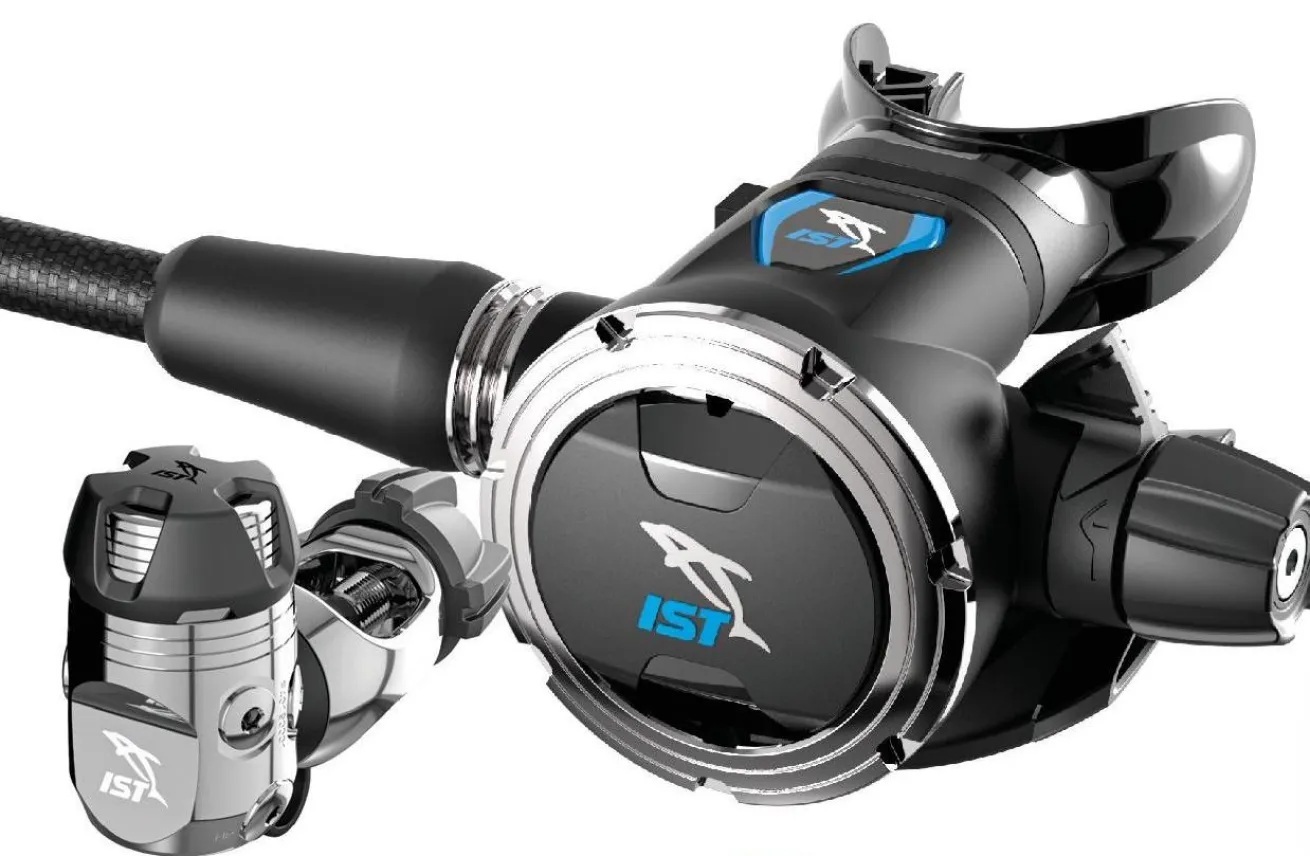
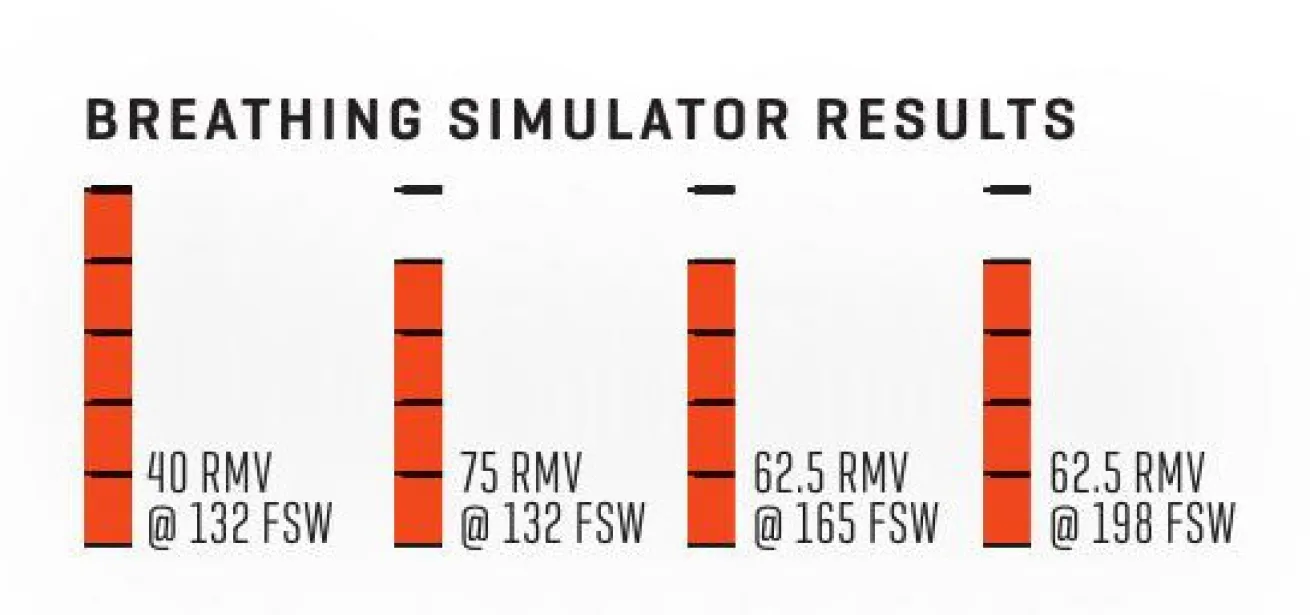
The R-2000 features an environmentally sealed first stage paired with an integrated second-stage heat sink for improved cold-water performance. It earned very good scores from test divers for ease of breathing and excellent scores for dryness.
On the simulator, it performed right around the average, earning excellent and very good scores across all but our most extreme work rates. Test divers lauded its ergonomic, responsive controls and scored it highly for its effective breathing adjustment and supple purge.
“Smooth, quiet and responsive.”
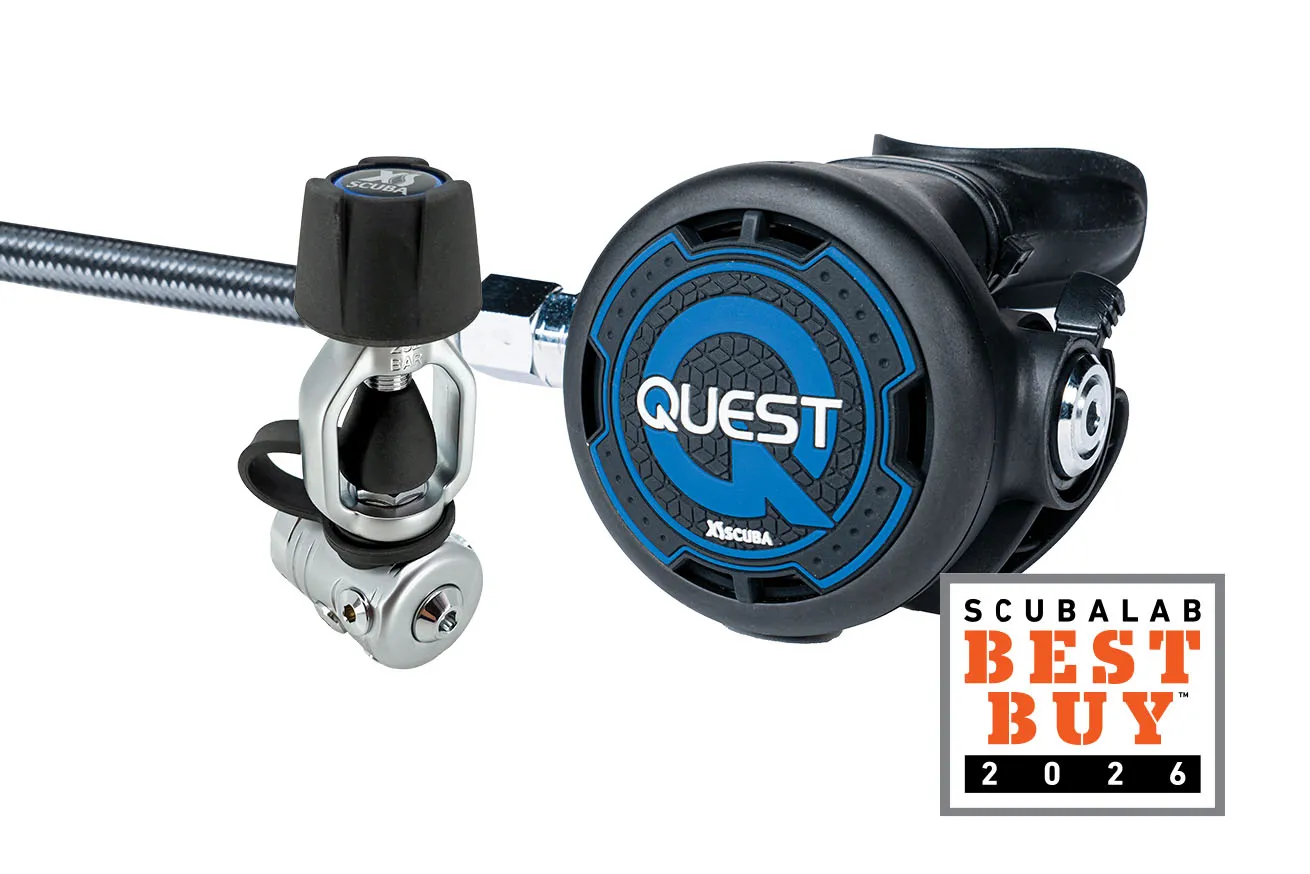
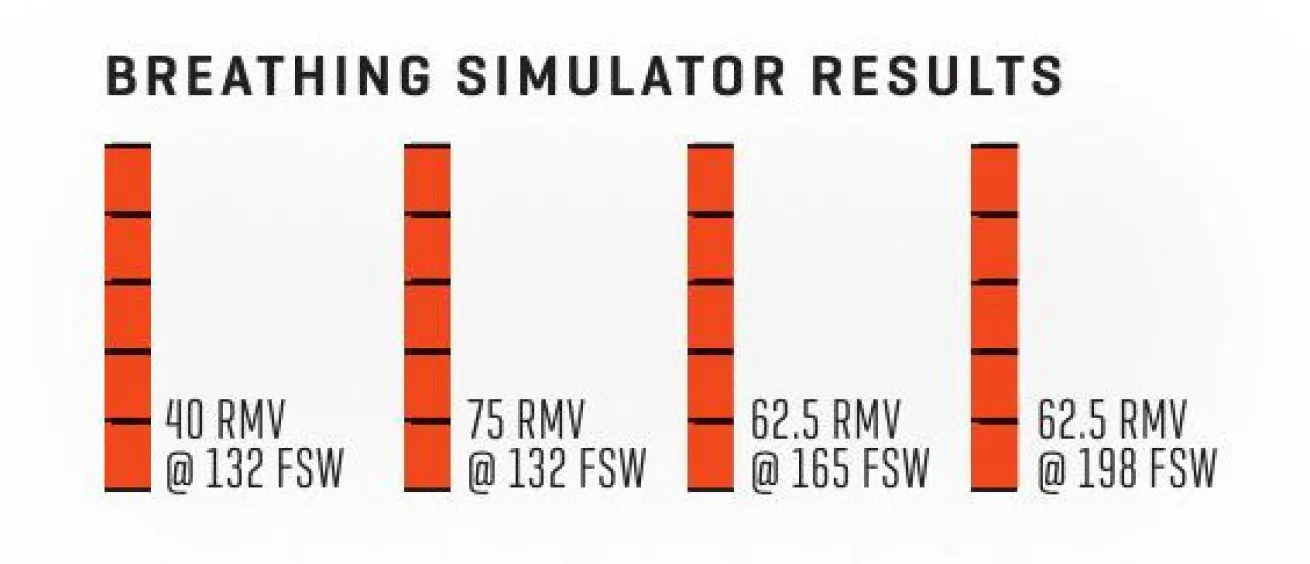
Test divers scored this reg very good across the board. On the simulator it showed very strong performance across our range of breathing rates and depths. It had some of the lowest-effort breathing of not just its category but the whole test, with excellent scores in all but the most extreme work rate. Test divers scored the regulator very good for comfort. They especially loved its mouthpiece, which features a palate bridge.
Offering outstanding breathing performance at a competitive price, the Quest is our Best Buy for regulators under $700.
“Easy, smooth breathing.”
Best New Scuba Regulators Over $700
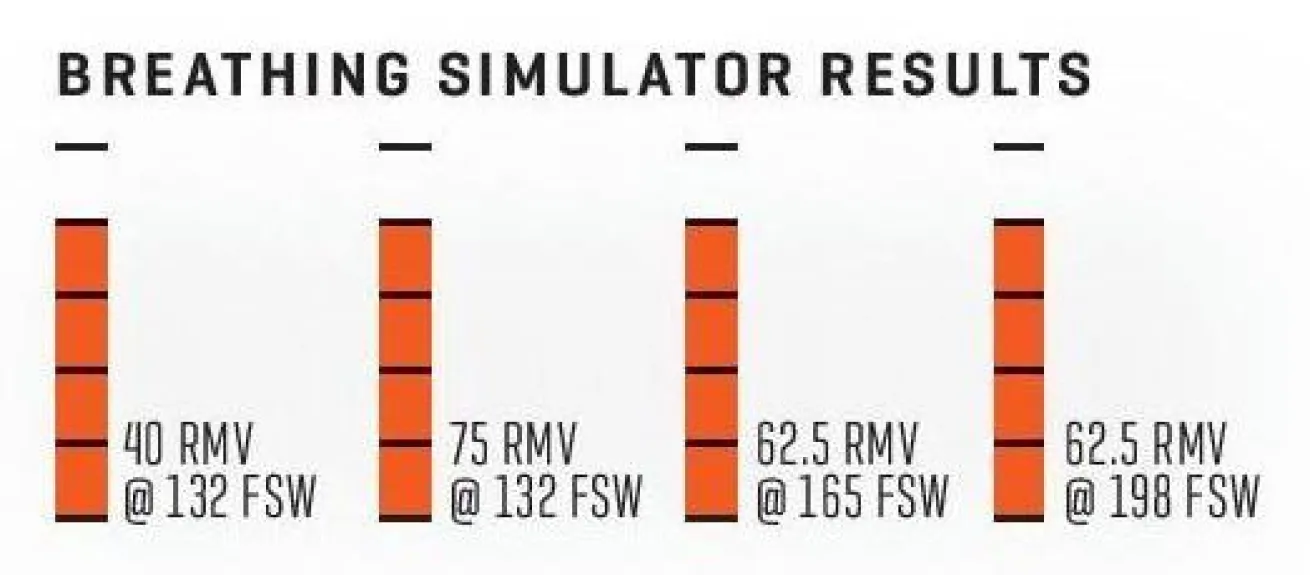
On the simulator, this reg’s work of breathing was slightly higher than average at lower breathing rates and slightly lower than average when breathing hard. It earned excellent and very good simulator scores across the board, even at our most extreme scenarios.
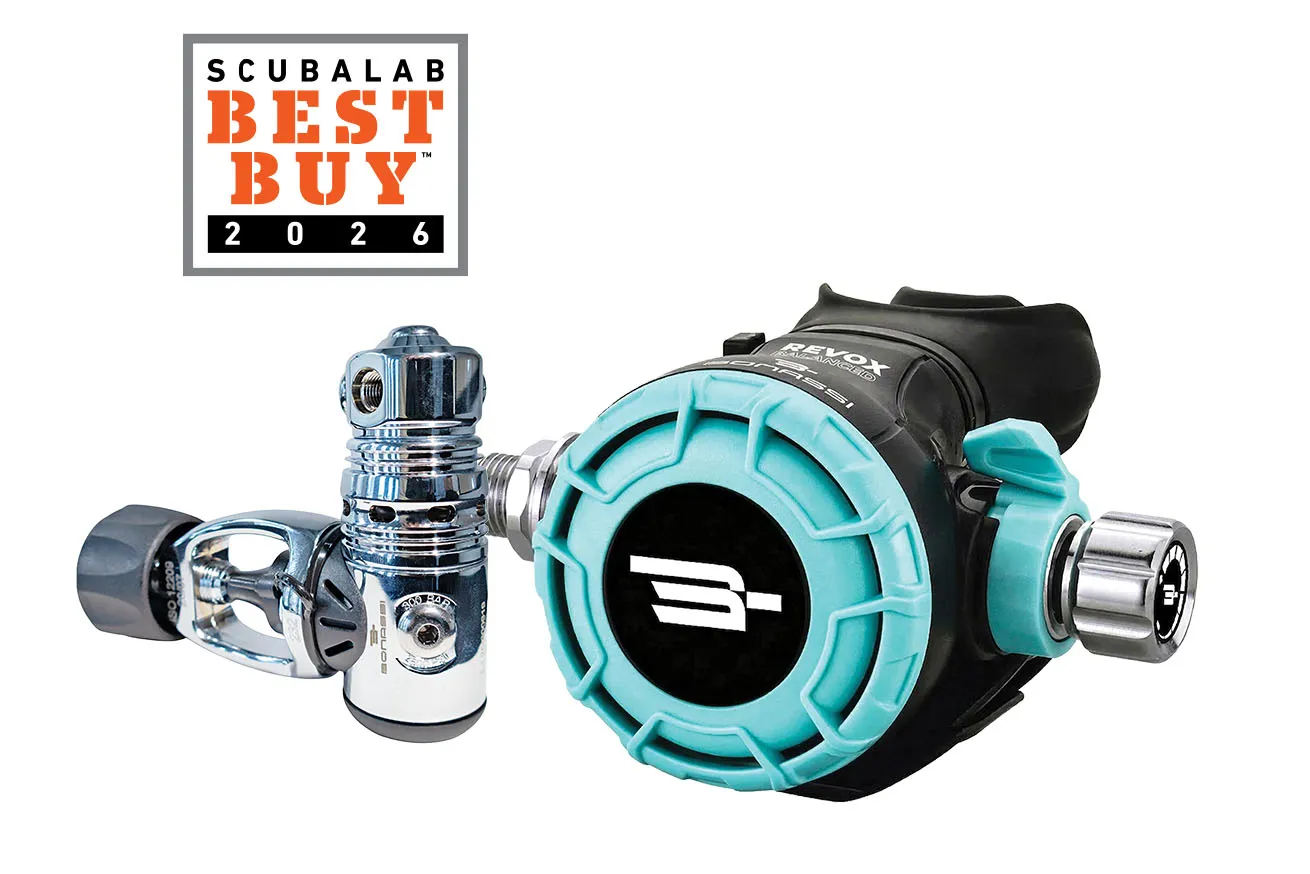
Divers scored it highly overall and especially liked its very dry, easy breathing and its effective, ergonomic controls. The first stage has five LP ports on a swivel turret; the second stage includes four easy-to-swap color kits. The Revox is the most affordable reg in its category, but you wouldn’t know it by its performance.
The Bonassi AB110/Revox is our Best Buy for regulators over $700.
“Nicely breathing regulator.”
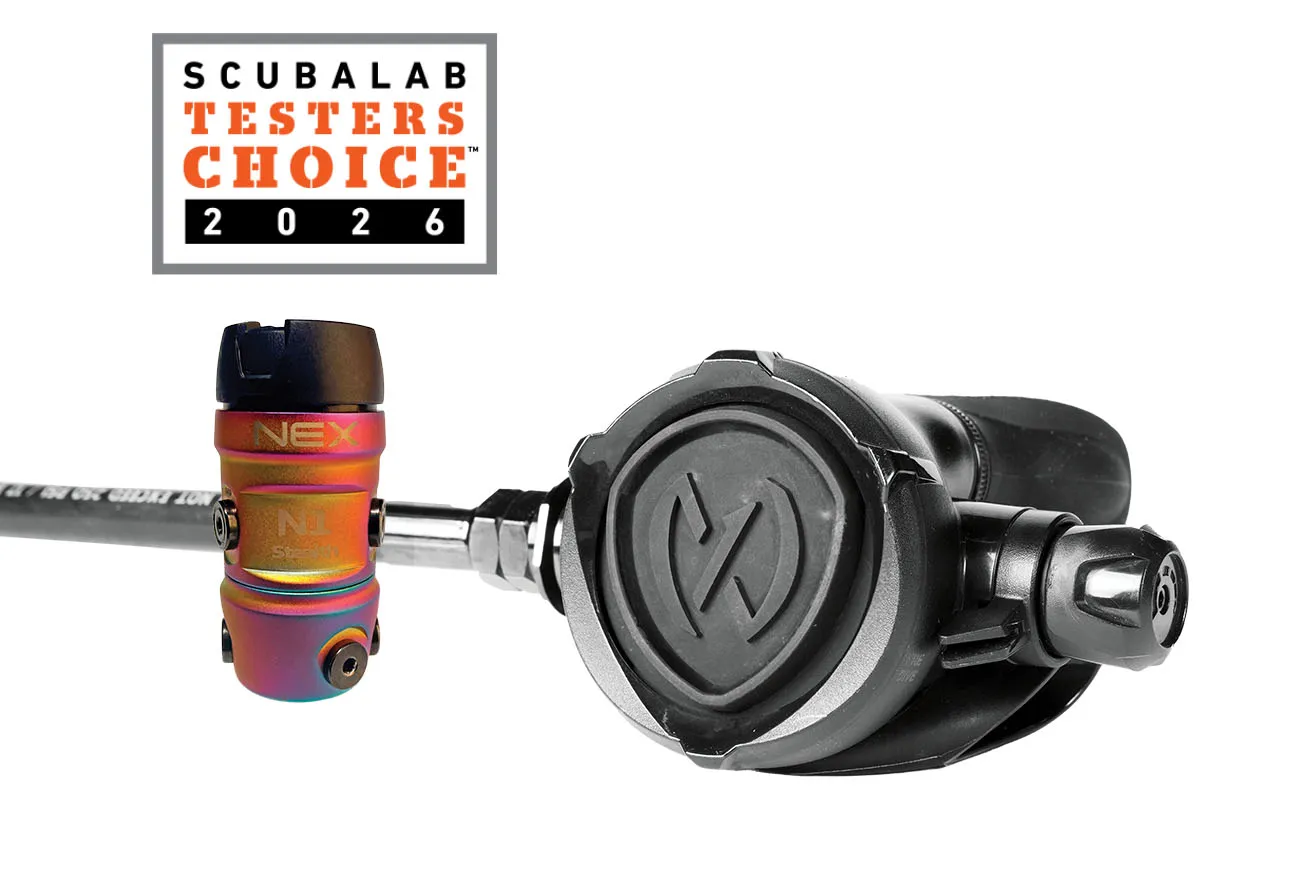
Nex N1 Stealth With 2-Inch Balanced Adjustable Second Stage
MSRP $980 (as tested)
Contact nexdive.com
“I loved it from the first breath,” one diver said about this reg, and others agreed. It was overwhelmingly picked as a favorite and lauded for its dry, easy breathing. The environmentally sealed N1 first stage has a low-pressure swivel turret and is available in multiple bold finishes.
The compact second stage scored excellent for its featherweight comfort and impressed with ergonomic, responsive controls. The reg struggled at our most extreme work rate but otherwise scored excellent and very good scores.
Blending performance and comfort—and color—the N1 Stealth is our Testers Choice for regs over $700.
“Phenomenal breathing.”
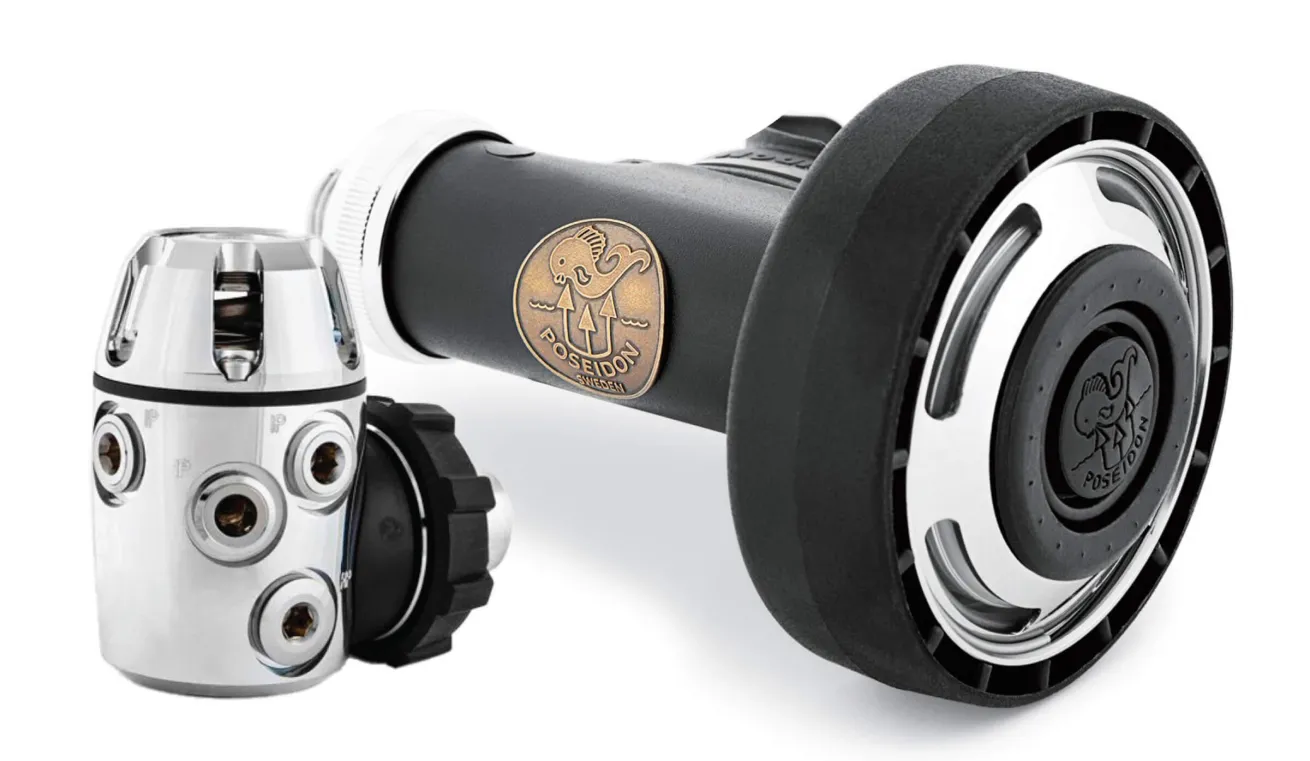
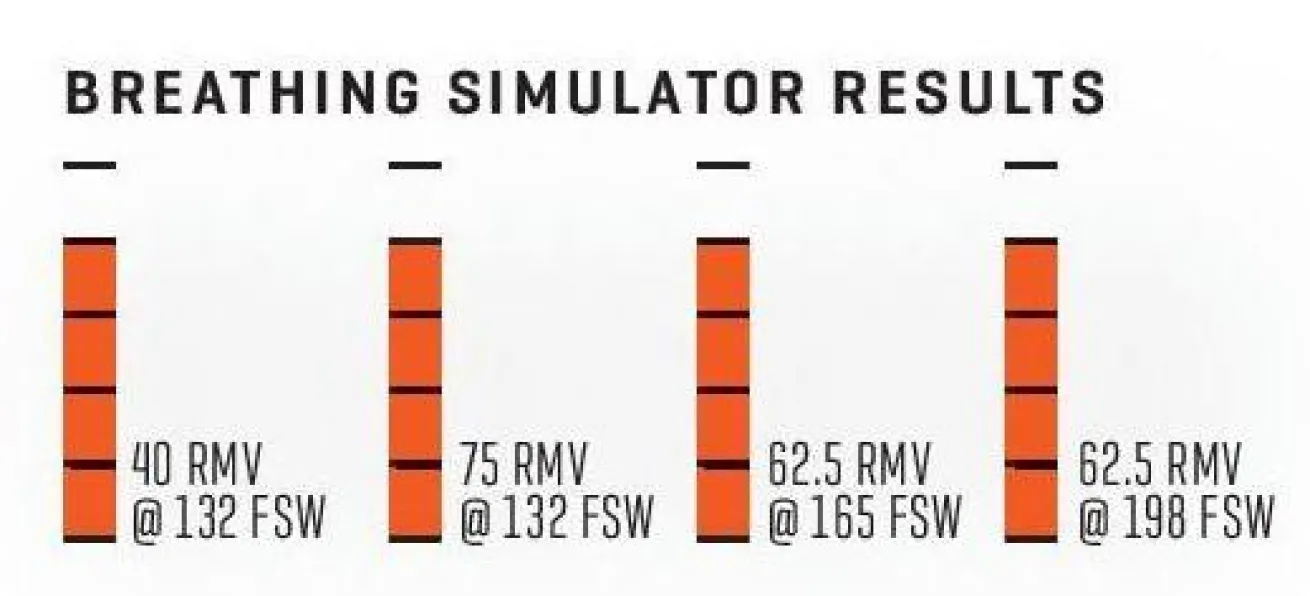
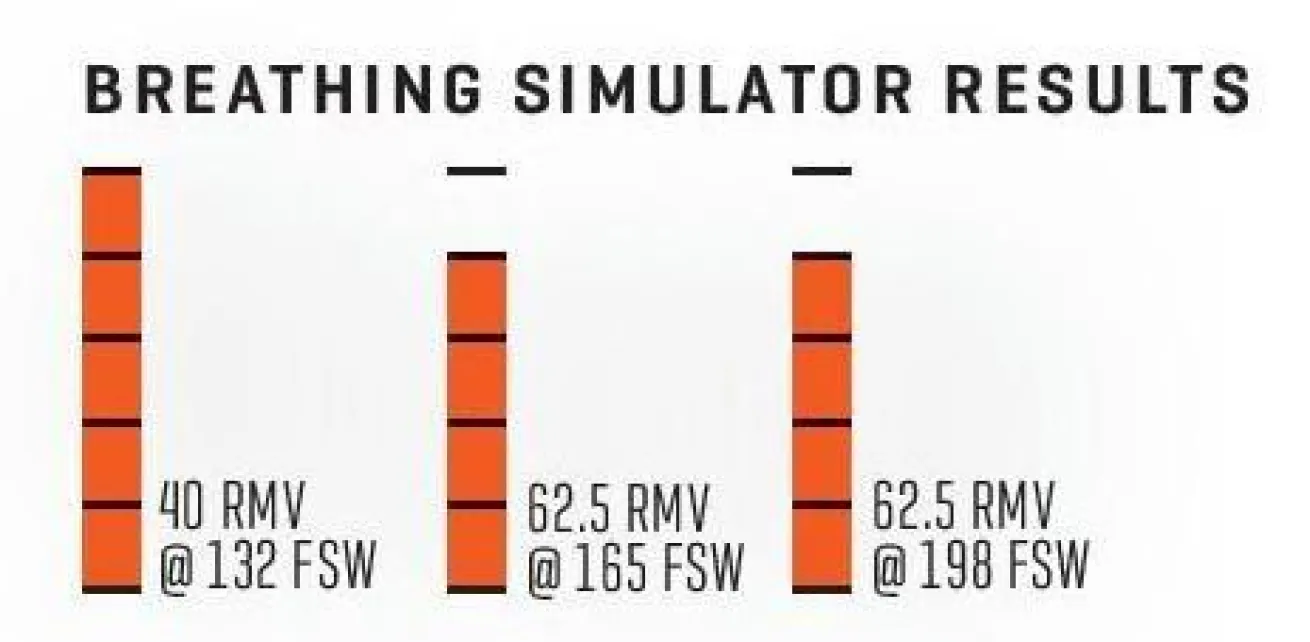
This finely tuned reg doesn’t feature a Venturi or breathing adjustment and is designed to provide reliable gas delivery in the coldest waters. Testers scored it very good for ease of breathing and good for dryness. On the simulator, it had above average performance at low work rates and earned excellent and very good scores everywhere but our most extreme breathing rates.
The side-mounted purge scored well but can take some getting used to. Our sample featured a metal second stage, which impacted its score for comfort. A lighter polymer version is also available.
Related Reading: Scuba Gas 101
“Great breather!”
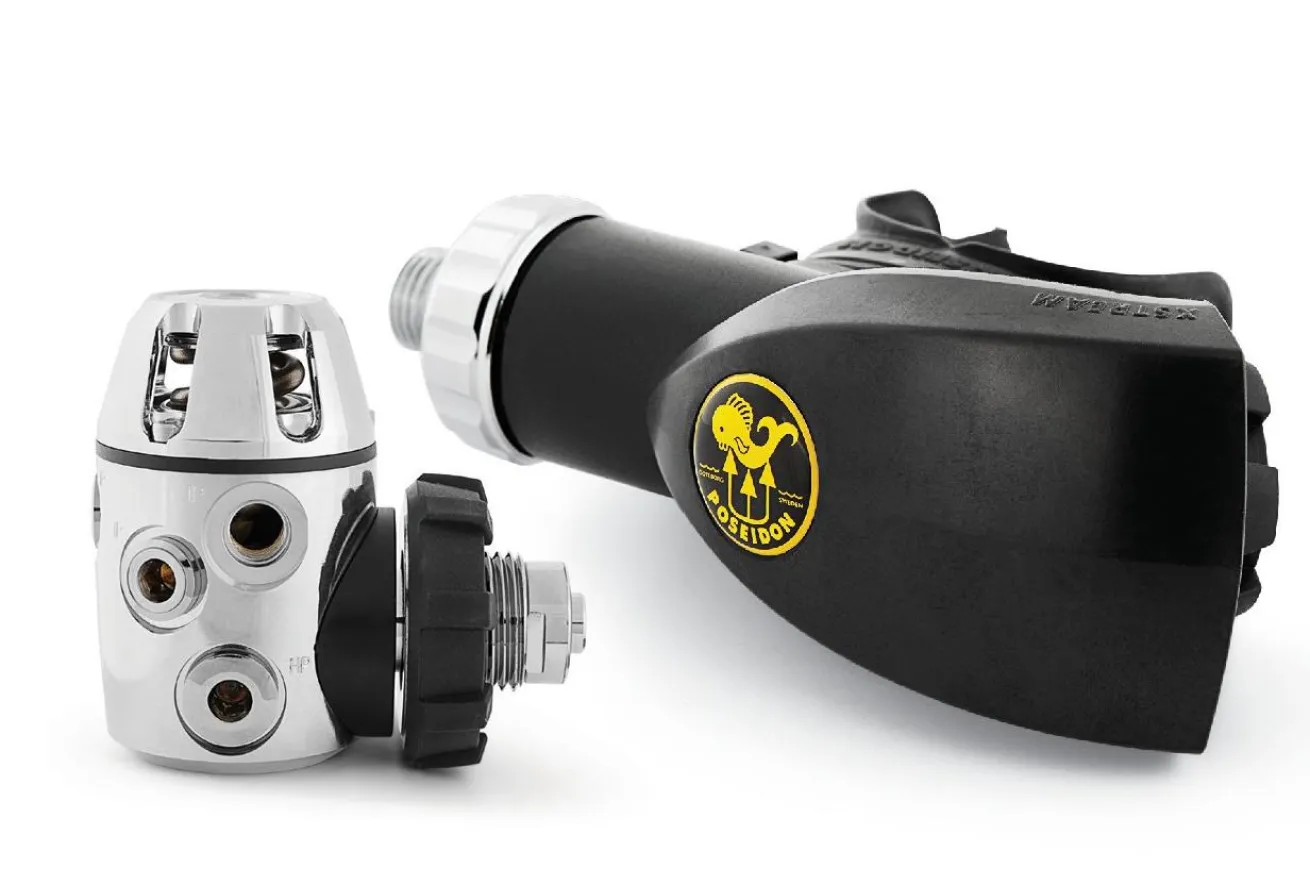
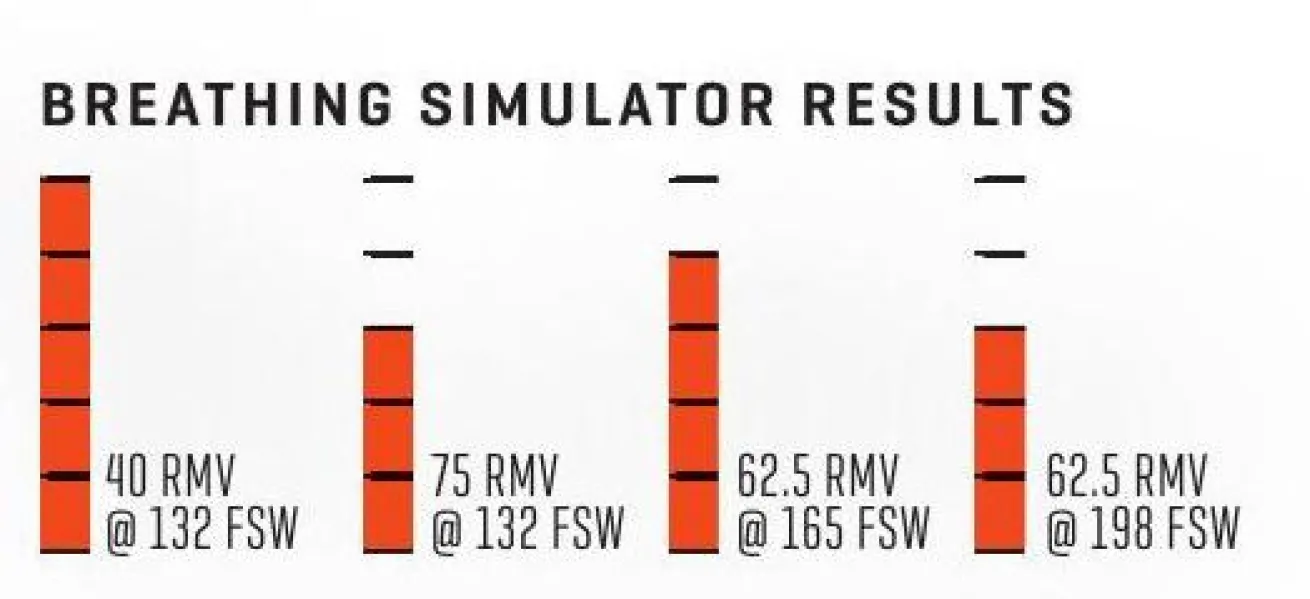
This regulator features a fixed-angle adapter on the second stage so that the hose can route neatly under the arm, enabling a more streamlined, tec-inspired profile while also reducing jaw fatigue. The powerful blasting purge is located on the side, simi-lar to the Cyklon, but is a little harder to find for the unfamiliar.
Also like its sibling, it doesn’t require an external user adjustment or Venturi control. It scored very good for ease and dryness of breathing. Earning excellent and very good scores on the simulator, this regulator showed even better work of breathing than its counterpart at lower work rates.
“Looks techy and cool.”
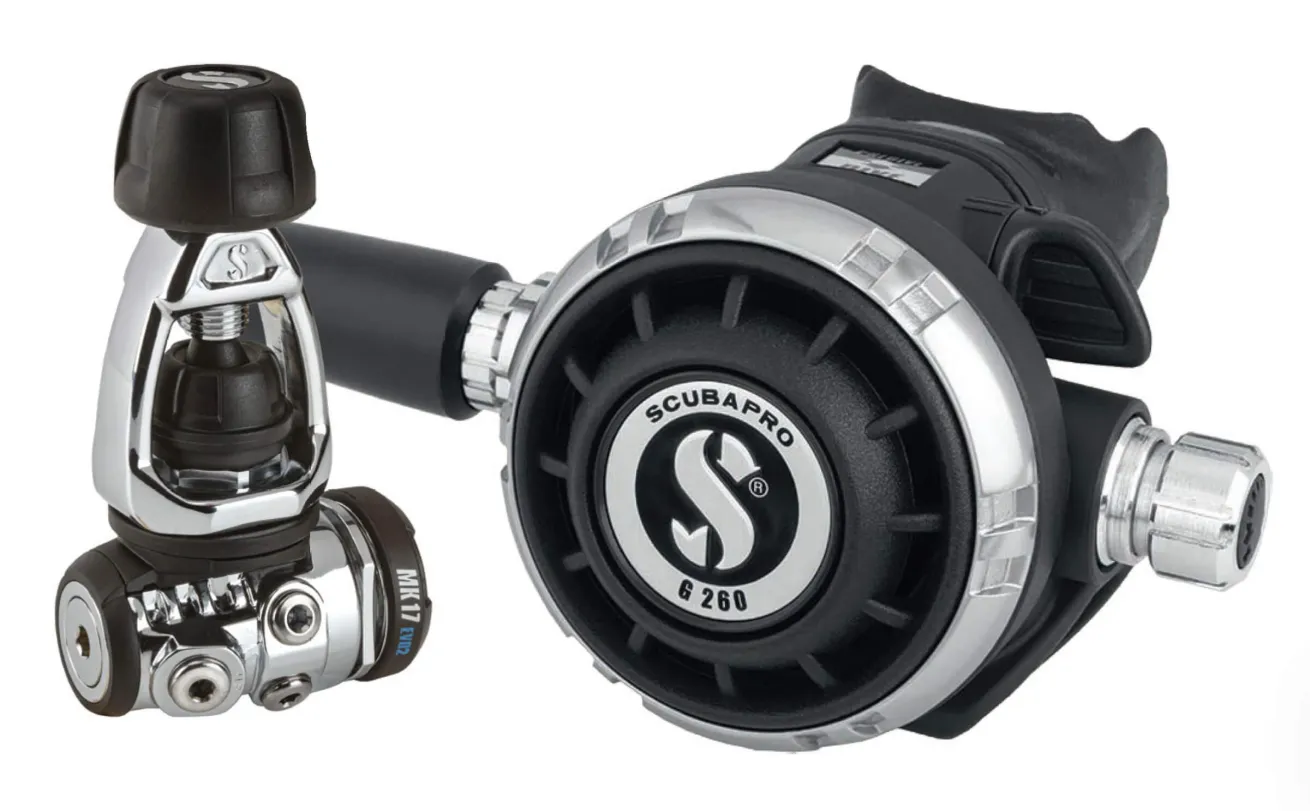
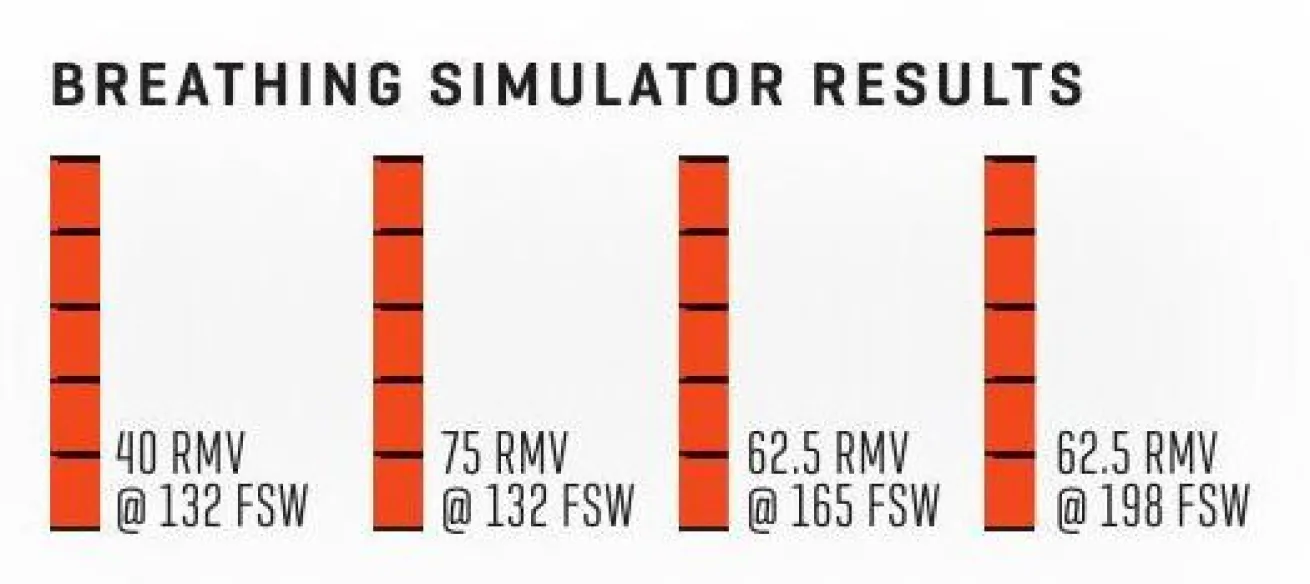
This underwater workhorse showed the lowest work of breathing of the test at moderate and heavy work rates and earned excellent simulator scores across all but our most challenging scenario. Test divers scored it highly for its effortless, bone-dry breathing. It scored very good across the board, except for its mouthpiece, and divers praised its powerful, responsive purge.
The G260 second stage is on the larger side, especially when compared to the reg’s compact environmentally sealed first stage. Overall, this reg provides outstanding performance suitable for even the most extreme dive conditions.
“Smooth, easy breathing.”
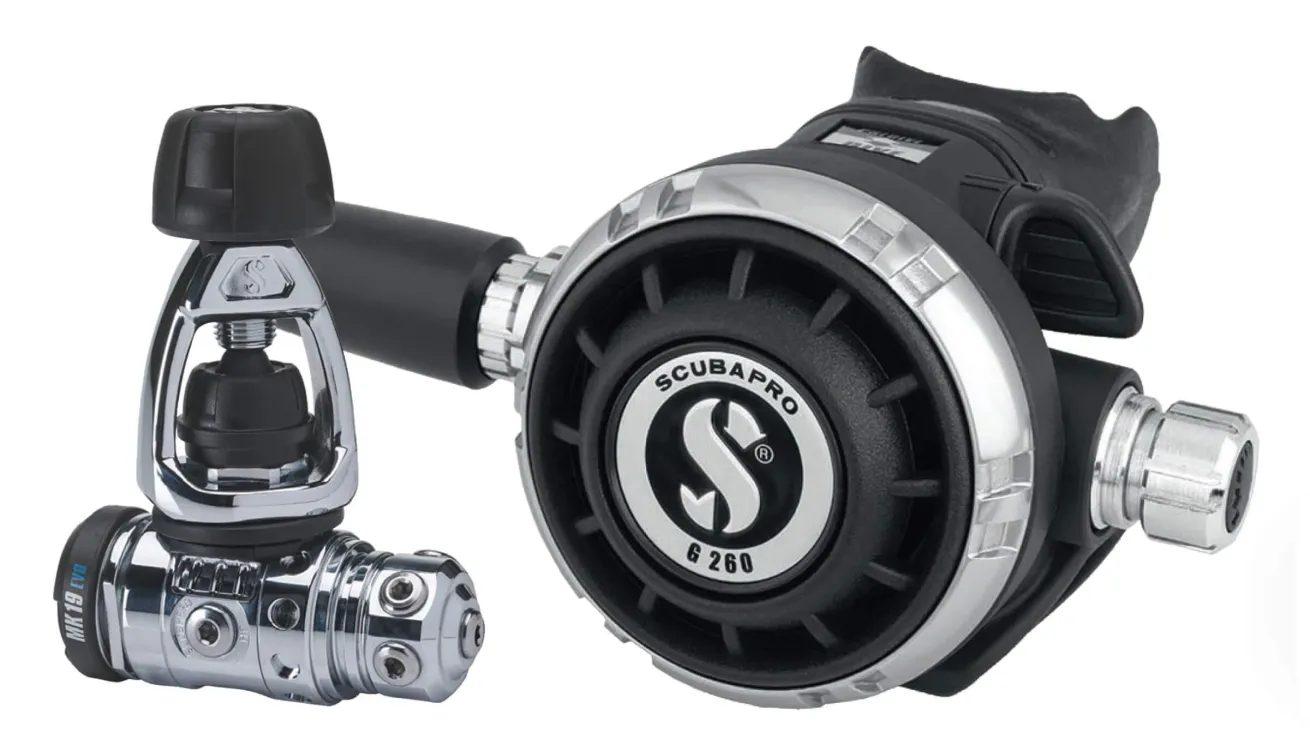
Described as an “amazing breather” by test divers, this premium reg offers smooth, dry, easy breathing that is consistent with depth. Test divers ranked it among the top contenders for ease and dryness of breathing, and its excellent simulator scores were beat only by its Scubapro sibling.
The two regs share a beefy G260 second stage, leading to similar ergo scores. The MK19 Evo first stage offers reliable performance suited for extreme conditions and includes 5 LP ports on a swivel for ultimate adaptability. This reg was a favorite of multiple test divers.
“Muscle car of regulators.”
How We Test
Objective testing was conducted on an ANSTI wet breathing simulator that measures effort (work of breathing) required to move air through a reg as it is subjected to a series of depths and breathing rates. Testing was done at Dive Lab in Panama City Beach, Florida.
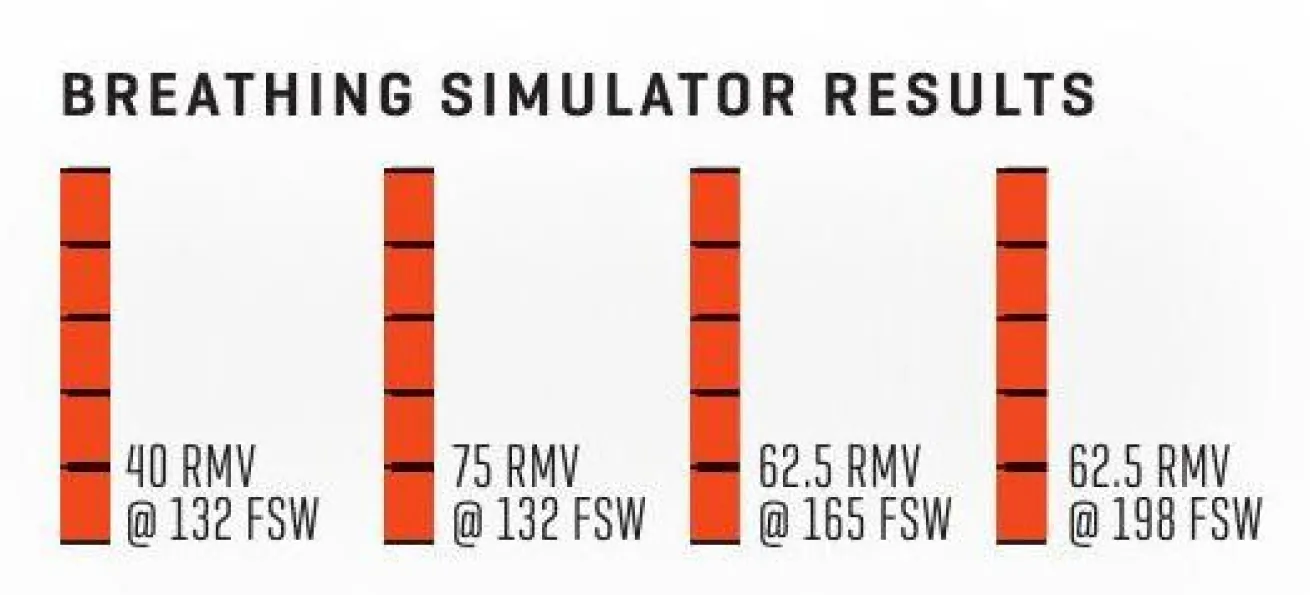
The simulator pressurizes the chamber to depths of 132 feet of seawater, 165 fsw and 198 fsw. Each “breath” of the machine moves a specified amount of air, called the tidal volume, through the reg. We do this at 2 liters/20 breaths a minute, 2.5 L/25 bpm and 3 L/25 bpm. Multiplying the tidal volume by the breathing rate gives you the respiratory minute volume (RMV).
The simulator monitors how much effort is required to “breathe” in and out, measuring the work of breathing in joules per liter (j/L). As depth and breathing rate increase (and with them the density of the gas being moved), the work gets harder.
If a reg doesn’t exceed the parameters on our standard tests—the toughest of which a human would be hard-pressed to keep up for more than a few minutes—we push it to more extreme conditions. Regs aren’t tested for a pass/fail grade but to objectively gauge their performance in carefully controlled conditions. You can see how each reg performed on the simulator in the charts accompanying the reviews.
Why Test at These Depths and Breathing Volumes?
40 RMV at 132 fsw: This is basically the maximum recreational depth at a somewhat aggressive breathing rate
62.5 RMV at 165 fsw: This rate represents the European conformance standard EN250. This depth and breathing rate is commonly used by manufacturers when determining a reg’s performance. This is the U.S. Navy’s Class A test depth and breathing rate.
75 RMV at 132 fsw or deeper: This simulates the potential demand at maximum recreational depth for a diver at an extremely heavy work rate.
Ergonomic Testing
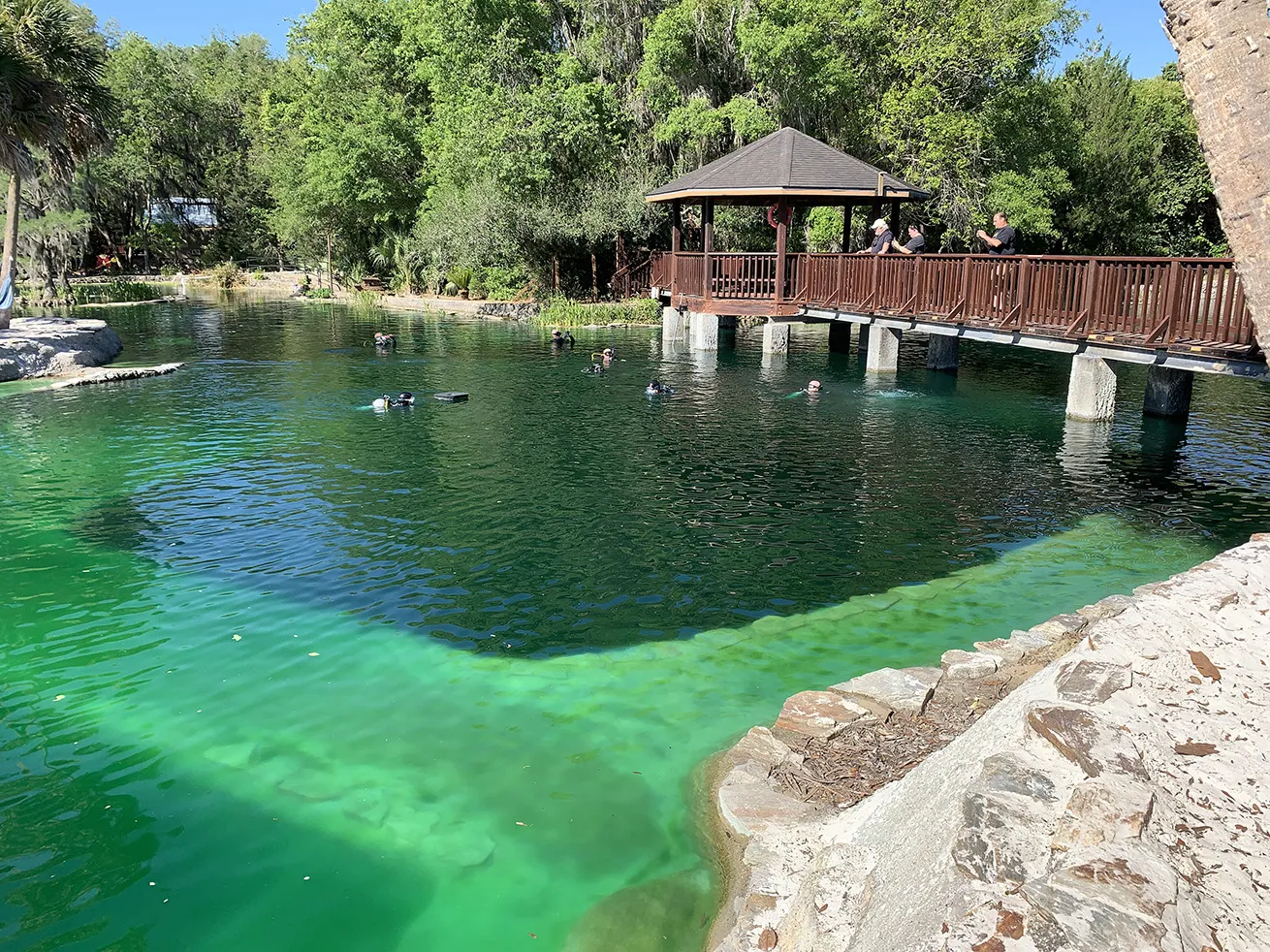
Ergonomic testing was conducted at Devil’s Den Prehistoric Spring in Williston, Florida by a team of test divers who evaluated each reg in the following categories, assigning a score from 5 (excellent) to 1 (poor) and recording observations about performance.
- Ease of breathing: How well does the reg deliver air in standard swimming position? Face-up? Head-down?
- Bubble interference: How well does the reg deflect bubbles from your field of view?
- Ease of clearing: How difficult is it to clear the reg by exhalation or via the purge?
- Purge stiffness: Is it soft and progressive or forceful and abrupt?
- Resistance to free-flow: Is the Venturi control easy to use and effective at blocking free-flows?
- Breathing adjustment: Is the adjustment easy to find and use? Is it effective?
- Comfort of the second stage: Considering its size, shape and weight.
- Noise: Does the reg operate without excessive noise?


