

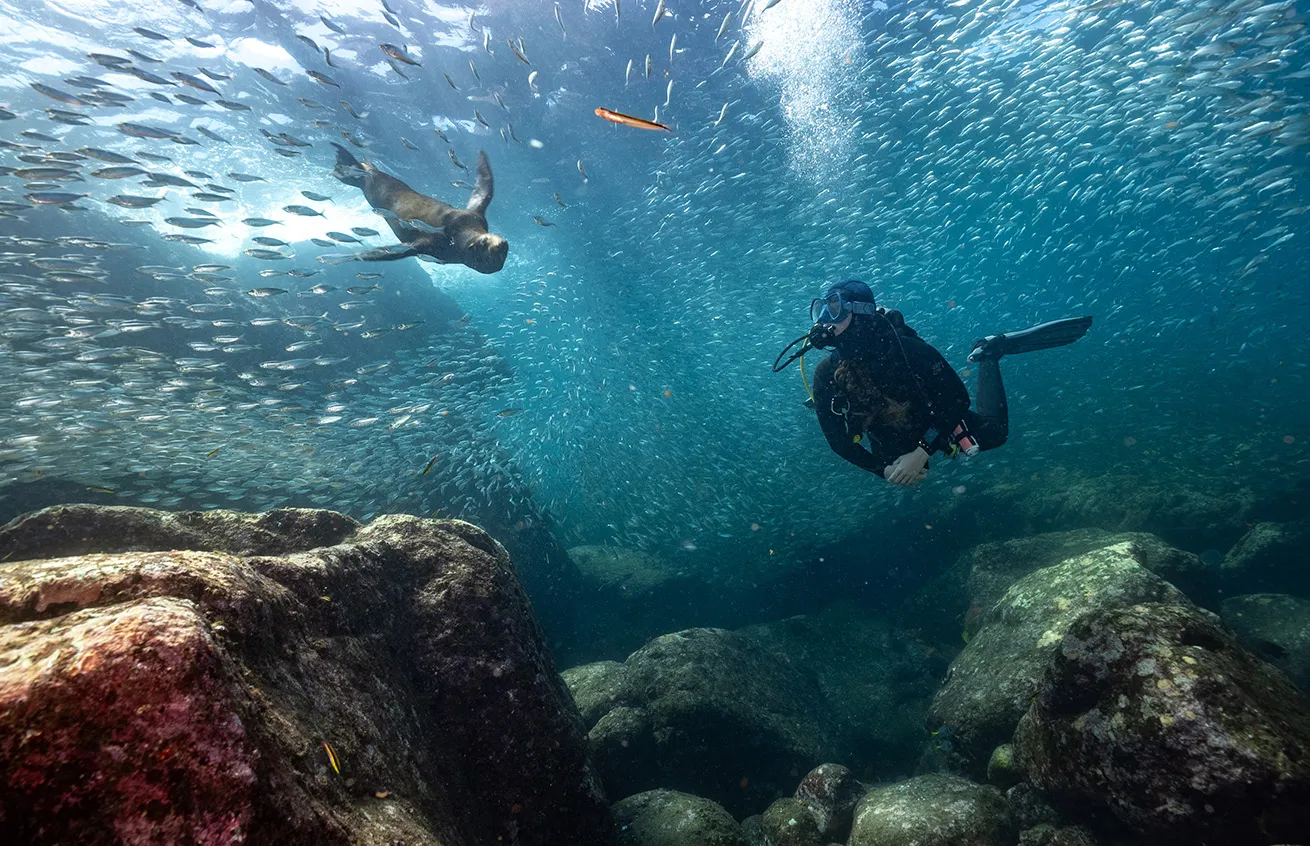
Kristin PaterakisA friendly sea lion greets a diver wearing Fourth Element's newest westuit made of natural rubber, the Xenos ARC.
The thing I remember most about my first time walking into a dive shop is being greeted by the strong smell of neoprene. It’s an aroma I learned to love—signifying I was about to don my second skin and enter the aquatic world. Today, sustainability-forward manufacturers are reinventing the rubber.
Fourth Element’s new neoprene-alternative Xenos Advanced Rubber Composite (ARC) is made from sustainably sourced material and builds on the manufacturer’s original Xenos wetsuit, retaining what divers loved: multidive durability, easy donning and doffing, and quick drying. The new model is more eco-friendly and comfortable, comes in thicknesses up to 7 mm, and is competitively priced.
Related Reading: Best New Dive Gear July 2026
Why Neoprene-Free?
Companies have been striving to produce a high-performing alternative to petroleum-based neoprene since the 1980s, driven by environmental concerns. Limestone-based neoprene is one material that has taken off in the market as an eco-friendlier alternative, but limestone is a nonrenewable resource and has a high energy cost for production, according to wetsuit manufacturer Sheico.
Ocena, a natural rubber–based product developed by Sheico and used in the newest Fourth Element suit, is created from latex derived from rubber trees. The material is sourced from 82 percent bio-based, USDA-certified materials and harvested from FSC-certified, responsibly managed forests.
In addition to the sustainably sourced base materials, the product further reduces its environmental footprint by using recycled polyester linings, recovered carbon black derived from waste tires and oyster shell powder used as a bio-calcium filler. It also uses water-based lamination glue, which can reduce chemical emissions, and incorporates neoprene recycling processes.
Related Reading: Fourth Element Scout Earns ScubaLab Testers Choice 2025
Comfort, Fit and Durability
The suit’s compression-resistant material ensures maximum insulation at depth, and a snug glideskin neck seal keeps water intrusion to a minimum. The availability of multiple thicknesses provides suitable thermal protection for a range of diving conditions. I especially liked that the 7 mm suit uses a double wrist seal system that smoothly integrates with gloves for colder water temps. The silky-smooth rubber is easy to don and doff, flexible, and less irritating to the skin, especially for those with an allergy or sensitivity to neoprene. The wrist and cutaway ankle seals also made donning and doffing easy.
I found the suit to be durable, even against friendly nipping sea lions while diving in the Sea of Cortez.
Related Reading: 2026 Scuba Diving Gear Guide
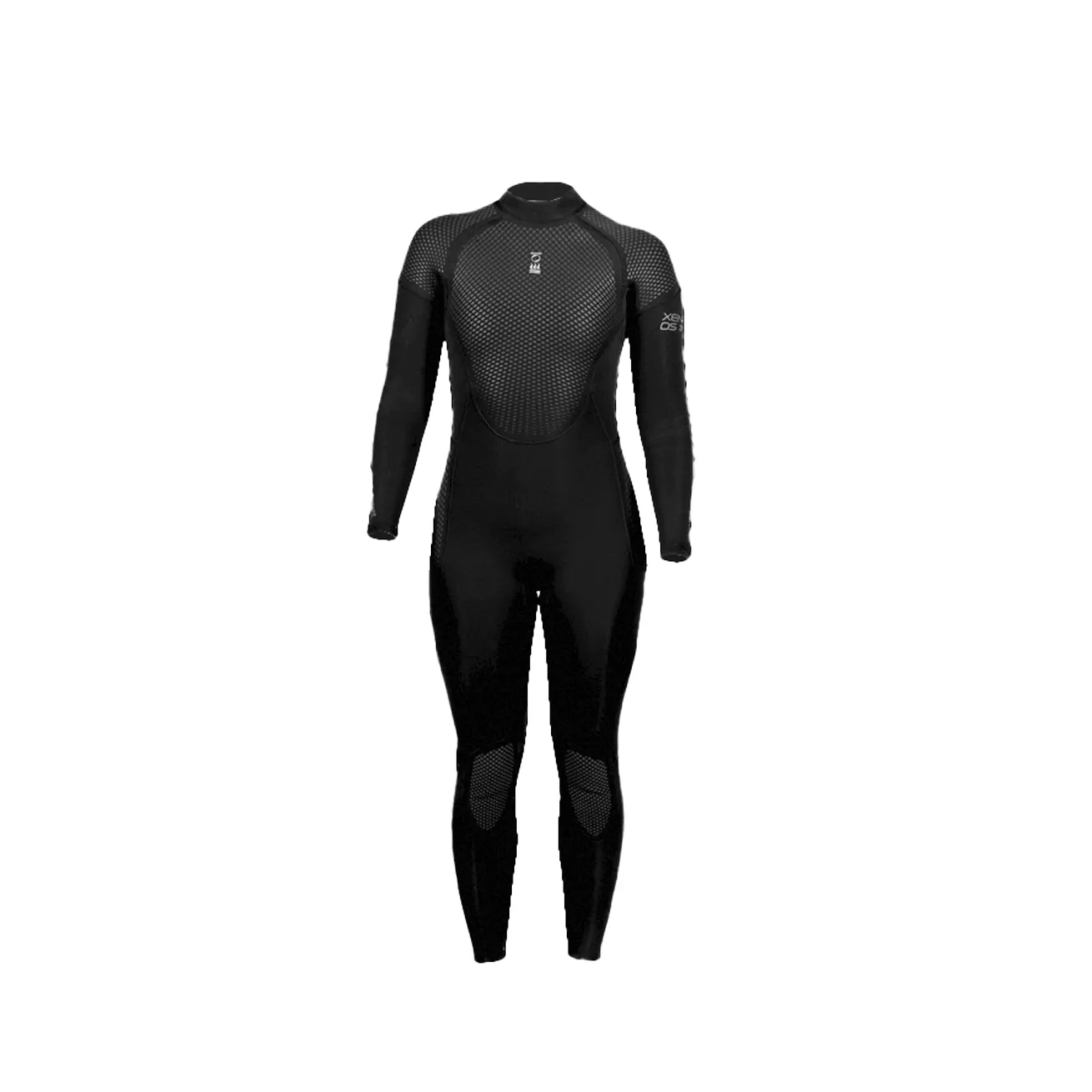
Fourth Element Xenos ARC
MSRP $570 (3 mm); $615 (5 mm); $675 (7 mm)
Sizes Men’s XS–XXXL; women’s XXS–XXL (short and tall options available for some sizes)
Material Made with Ocena, a composite of natural rubber and recycled car tires that resists long-term compression.
Website fourthelement.com
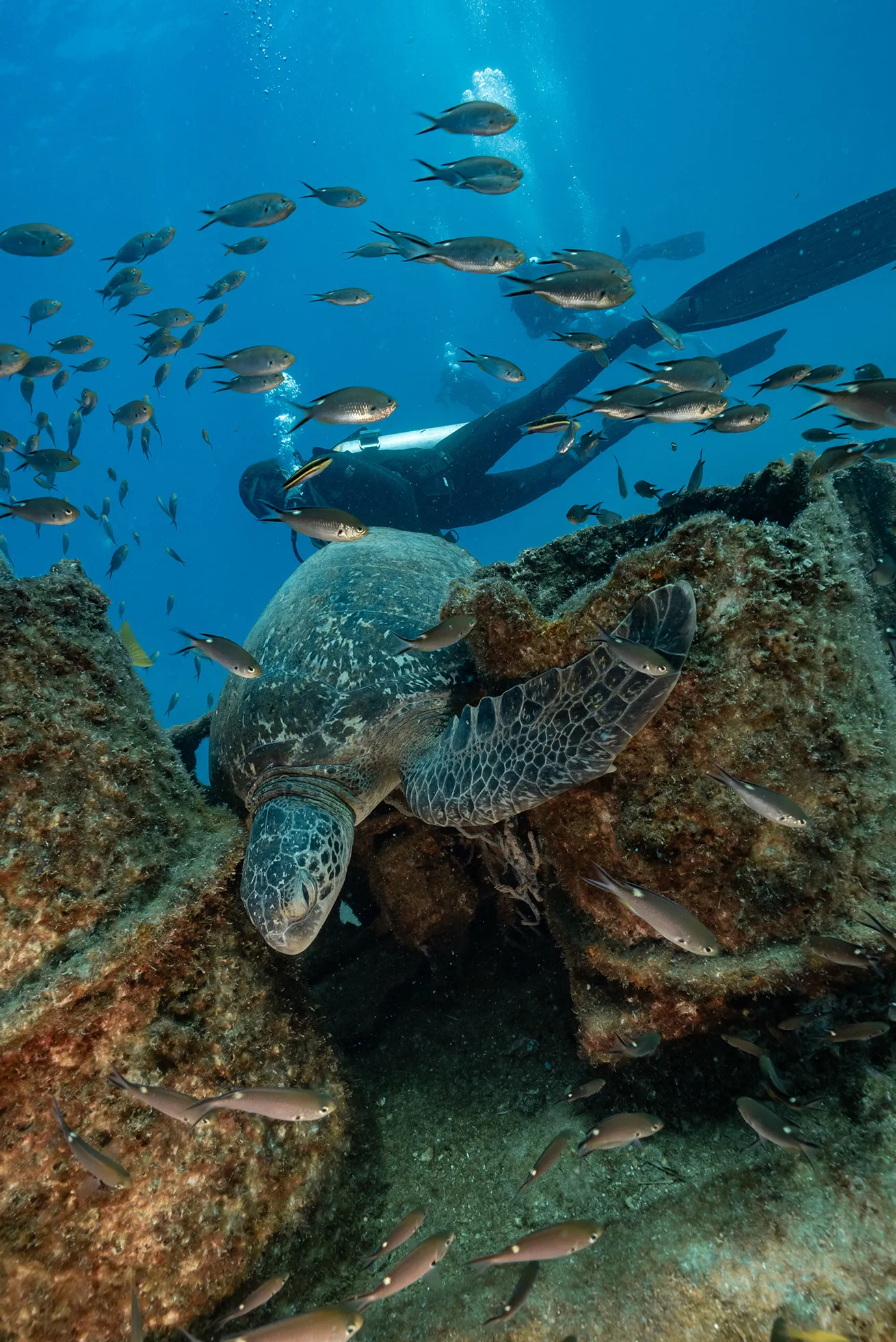
LA PAZ PROVING GROUND I traveled to La Paz, Mexico, for Fourth Element’s Xenos ARC launch event. I had the fortune to test the suit among the famous sea lions of Los Islotes, mantas of La Reina and sea turtles swimming among the Fang Ming wreck—showcasing the breathtaking beauty of the Sea of Cortez and the local conservation measures in place to protect the natural environment.
The trip also included a traditional cooking class, a tour of the historic El Triunfo mining town, and a mountain e-bike excursion exploring Baja California Sur’s topside wonders and desert sustainability initiatives.


