

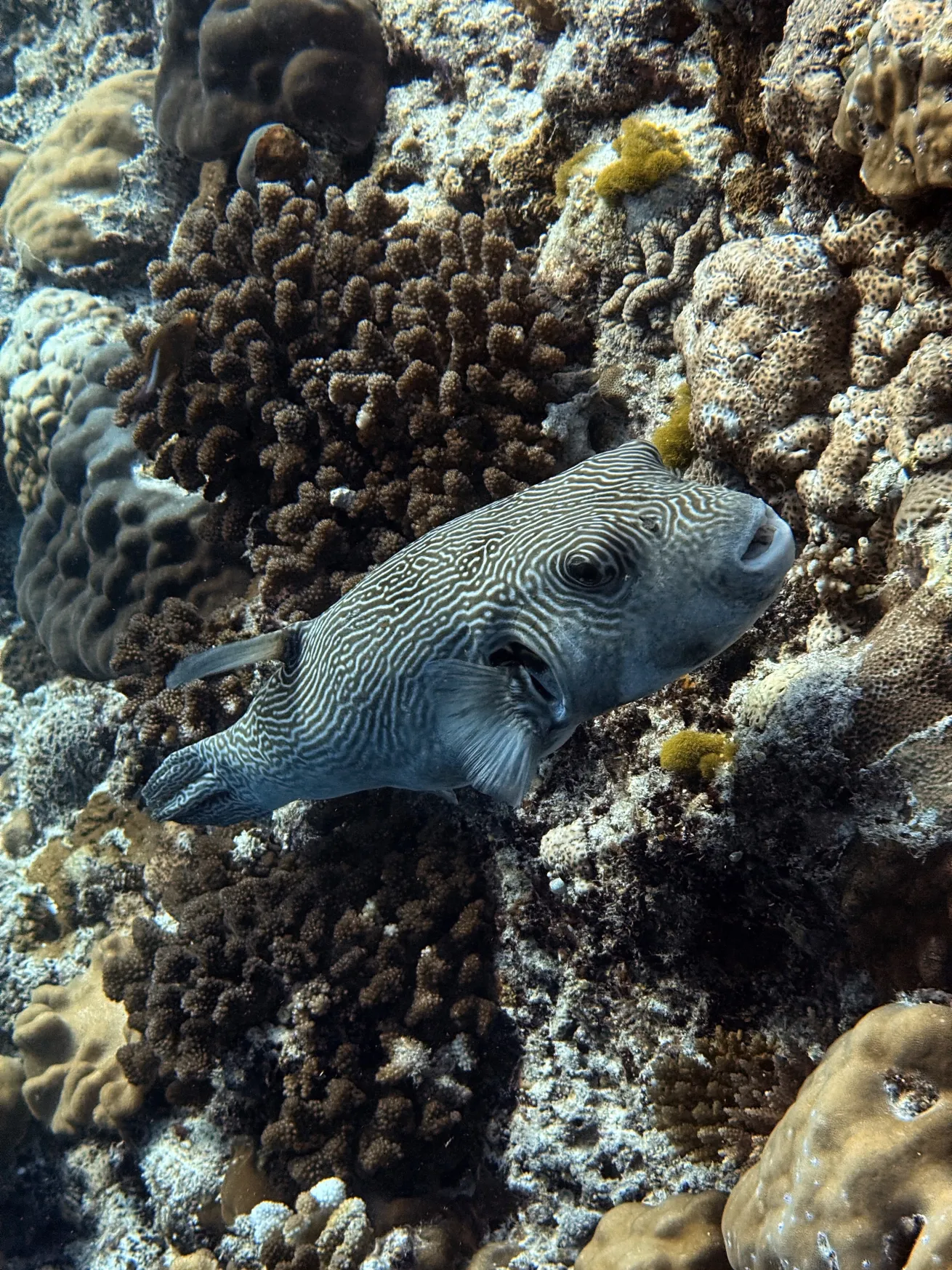
Joshua Pramis
When I travel, I walk a fine line between being fully immersed in each moment and wanting to capture everything in a photo or video. Taking as many (or as few) photos as I wanted was as easy as keeping my iPhone handy. Plus, with everything on my phone, it’s easy to throw online to share with friends, family and strangers on the internet.
Then I learned to dive.
Things get a little trickier underwater. I don’t need one of those big, fancy professional setups you’ve almost definitely seen if you’ve ever been on a dive trip. My needs are simpler.
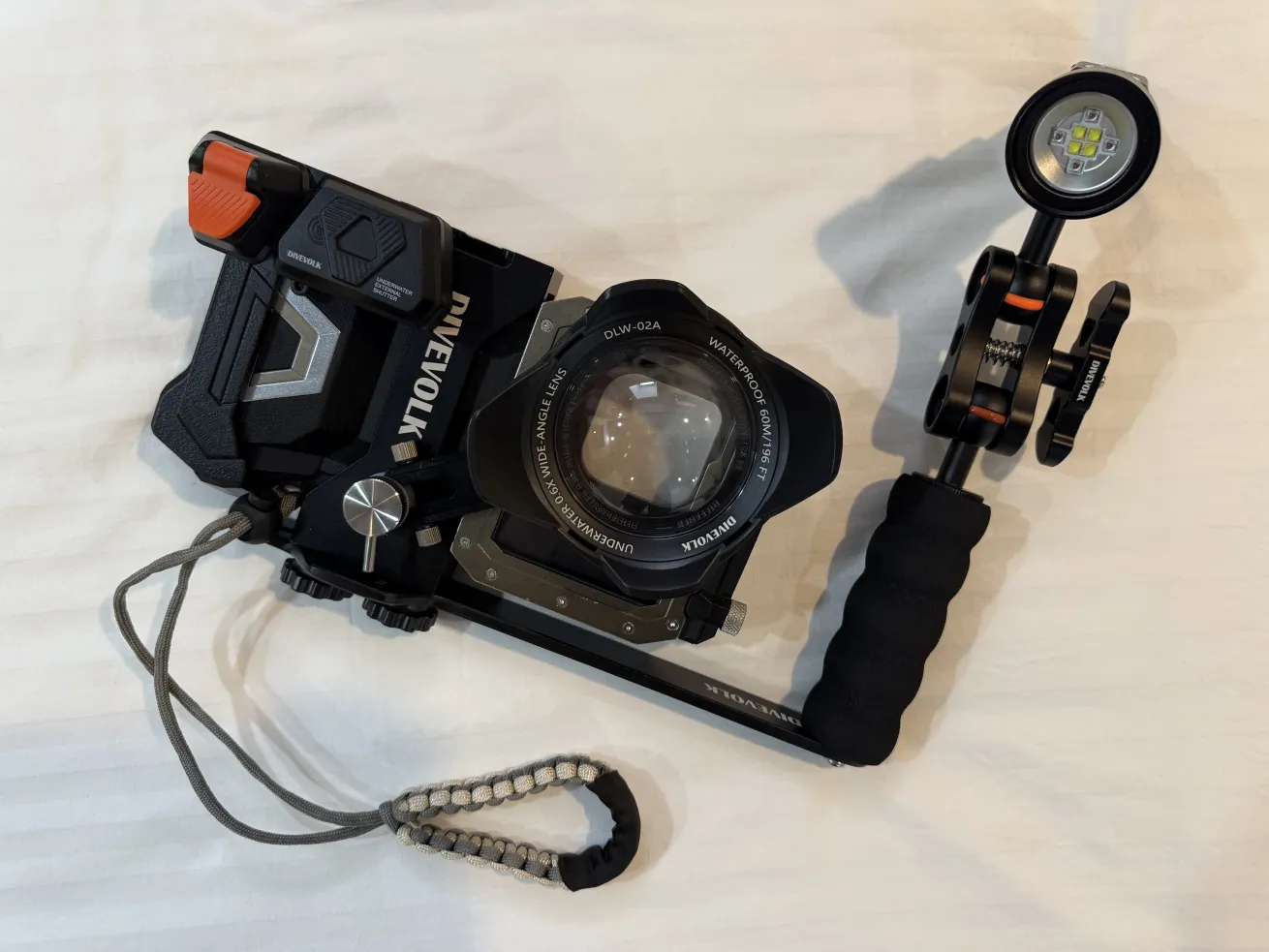
Last year, I was lucky enough to get my hands on a Divevolk SeaTouch 4 Max Plus ahead of a liveaboard trip (perk of the job), and I fell in love—so much that I bought my own as soon as I got home.
Joshua Pramis
What Makes Divevolk Housing Unique
The housing is unlike others on the market in that there isn’t an accompanying app (prone to freezing) or external buttons (temperamental) to rely on. You keep full use of your phone’s touchscreen , giving you excellent, uninterrupted control. It’s a game-changer: improving my ability to take underwater photos by simplifying things, though I am still very much an amateur (self-awareness is important).
The housing itself is all that’s required to hit the ground (water) running. There is no hand pump to vacuum seal it (praise be). A 3D-printed insert—customized to your phone’s model—securely holds the device in place behind a flexible, double-layer membrane. Slide the phone in, seal the housing and that’s it—you’re ready to shoot.
Full touchscreen functionality lets you take photos underwater as easily as on land, so the learning curve is more of a straight line—especially important for newer divers who want to minimize their task load. Note: Divevolk advises against swiping, as it can eventually cause wear to the membrane, so make sure both the Assistive Touch and Raise to Wake functionalities are enabled before you dive.
Related Reading: How to Shoot Underwater Photos With Blue-Water Backgrounds
DiveVolk Accessories to Enhance Your Underwater Imagery
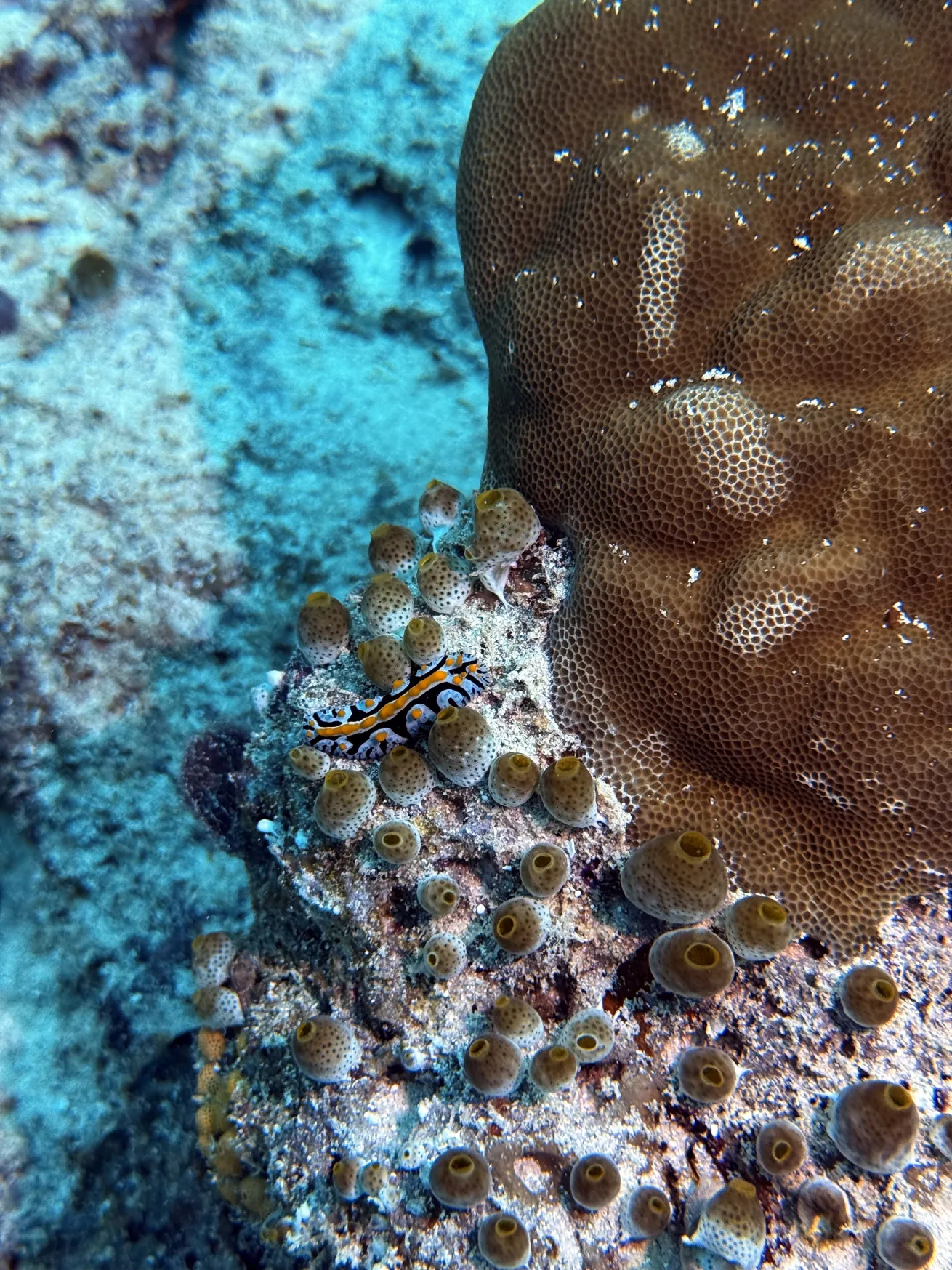
Divevolk also offers a range of accessories to add additional functionality and further elevate your photos. They were kind enough to provide me with a selection perfect for amateur photogs like me, just in time for a dive trip to the Maldives.
Their accessories let me cosplay as a professional photographer—and quite convincingly. Here are some of my favorites.
Lighting and Trays
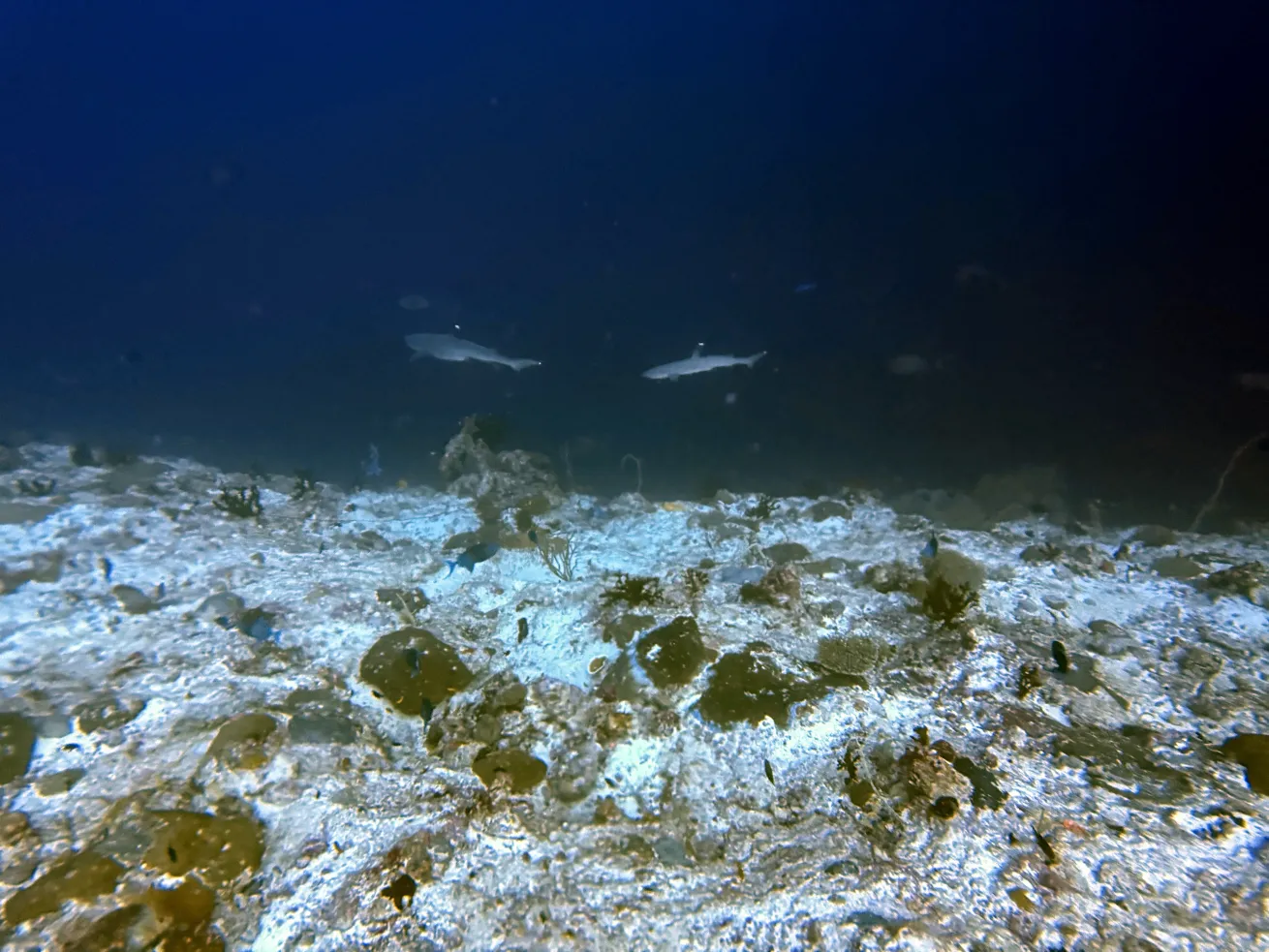
Amateur or pro, light diminishes the deeper you dive, with red light disappearing first. Your options are to accept grainy, low-light, monochromatic photos or invest in some gear. If you’re not careful, you can easily spend a fortune on lighting. The budget-friendly SL20 delivers 2000 lumens of light and was enough for my purposes —enhancing the color and clarity of closer-up subjects. (Don’t expect it to illuminate, say, a shark patrolling a ways off; it’s not meant for that.)
The light turns on easily underwater and can quickly switch to a softer red-light mode designed to minimize animal disturbance .
You’ll need either a Single Handle Tray or Dual Handle Tray to securely mount the light—unless you’re planning to double up on lighting, save yourself a few dollars and buy the single. Bonus: The tray also helps you keep your phone more stable for crisper shots.
It’s also good to note: December is just outside Monsoon season in the Maldives, meaning there was a fair amount of particulate in the water; be warned that, when this happens, lights can enhance this backscatter effect and/or trigger your phone to autofocus on debris rather than your subject. With a little practice, you’ll learn how to reposition your lights to minimize this when possible.
Related Reading: Hermit-Crabbing Your Underwater Camera Setup
Joshua Pramis
Wide-Angle and Macro Lenses
There’s a lot of sea to see, and while my iPhone can capture a pretty wide field of view, it’s limited—and I’m not all about the fisheye effect it adds when you zoom all the way out. The Wide-Angle Conversion Lens X0.6 is the solution.
Admittedly, I tend to focus less on landscape shots, so I didn’t use this too frequently, but it’s impressive how much more you can capture with it. To install this (or any of Divevolk’s other lenses and filters), you’ll also need the Expansion Clamp. With it, installing lenses and filters is as easy as them twisting on and off—and yes, you can add and remove them while underwater.
If you want to get a little closer to your subjects, grab the affordable Underwater +8 Close-up Lens. Currents are ever-present in the Maldives , which isn’t exactly conducive to amateur macro photography, so I’m eagerly saving this one for a slow, meandering dive where I have more opportunity to linger.
You won’t really see either lens’s full potential until you’re underwater, so when prepping your lens pre-dive, focus on ensuring that it’s installed properly (e.g. not blocking your phone’s shutter).
Miscellaneous Accessories
Divers are always on the go, so you’d be remiss not to pick up a Travel Case to keep your housing safe while you’re in transit. It comes with a zippered compartment for a few additional small accessories. I kept lenses and a hex wrench (for installing the various components) in mine.
Full touchscreen is what Divevolk is known for, but for a little more control and more of a “real camera” feel, Divevolk recently released an Underwater External Shutter. It pairs with your phone via Bluetooth and clips to the housing right where you’d want your shutter to be. To conserve battery life, the device powers down after a few minutes of disuse, but holding it down for a few seconds powers it back up.
Of course, everyone loves an underwater selfie. Divevolk’s Dual Lock Selfie Stick is no-frills, easy to install and gives you an extra 19 inches of reach. It bolts securely to either handle option, but between unpredictable currents and additional training I was undergoing on this trip, I felt it best to leave it in my cabin to avoid pushing my task load too much. That being said, watch out for the selfie overload on my next trip—you’ve been warned.
And if you know you’ll be on a slower dive, one where you can linger, the Underwater Flexible Tripod lets you stabilize your camera, so your close-up shot is sharp. Be careful when setting down underwater to avoid damaging or injuring anything.
The beauty of Divevolk’s tools is in their simplicity. Each gadget took just a few moments to figure out—in fact, I quickly learned how most of them worked in my cabin after I landed. But they’re as effective as they are simple, and they can help you trick your friends into thinking you’ve gone pro.


