

Lazaro Ruda
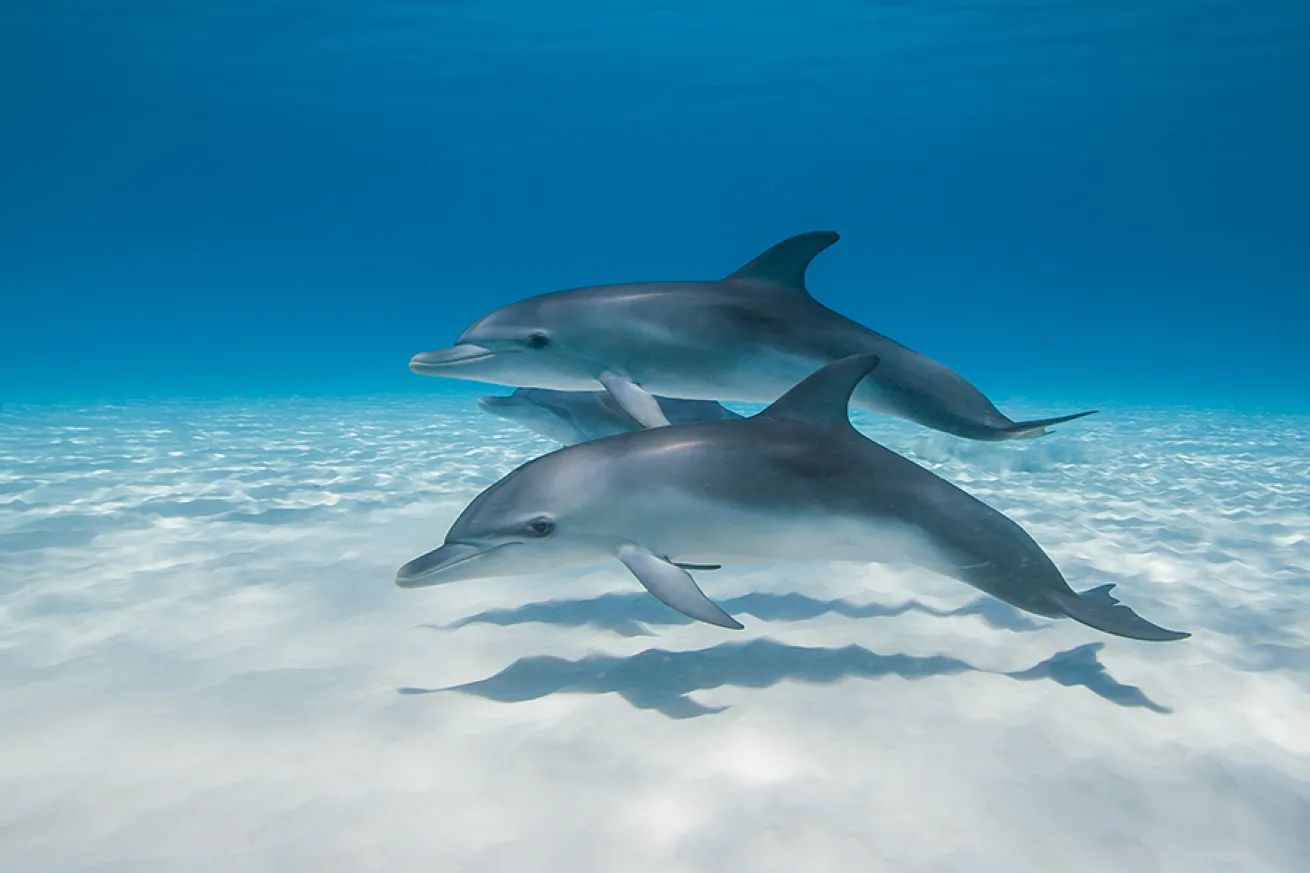
Scientists might be getting a step closer to unlocking the meaning behind bottlenose dolphins’ squeaking, trilling and clicking. Researchers say that the highly intelligent marine mammals call out the specific names of loved ones when they become separated.
Other than humans, dolphins are the only animals known to do this, according to a new study. Earlier research found that bottlenose dolphins have their own whistles: high-pitched, “here I am” warbles that announce their presence.
“Bottlenose dolphins are one of the very few species that use vocal learning to develop their own unique vocal signature early in life, with each bottlenose dolphin producing a signature whistle that encodes its individual identity,” says Stephanie King of the University of St. Andrews Sea Mammal Research Unit.
Previously, scientists showed that dolphins are able to mimic sounds, such as computer-generated ones. King’s team wondered if dolphins could copy these signature whistles; their analysis of whistles recorded from hundreds of wild bottlenose dolphins confirms that they can indeed “name” one another.
“Our study shows that signature whistle copying occurs only between pairs of animals that share strong social bonds such as mothers and their calves or adult males who form long-term alliances with one another,” says King. “We also show that dolphins introduce slight changes into copies, avoiding confusion for listeners. These copies were produced when the animals were separated from one another.” The researchers say that when a dolphin copies another dolphin’s signature whistle, it is indicating it wants to reunite with that specific individual.
King and her colleagues conducted their study over a three-year period, but also collected acoustic data from 1984 to 2009 from wild bottlenose dolphins around Sarasota Bay, Florida. The team is currently studying dolphins off the east coast of Scotland.


