

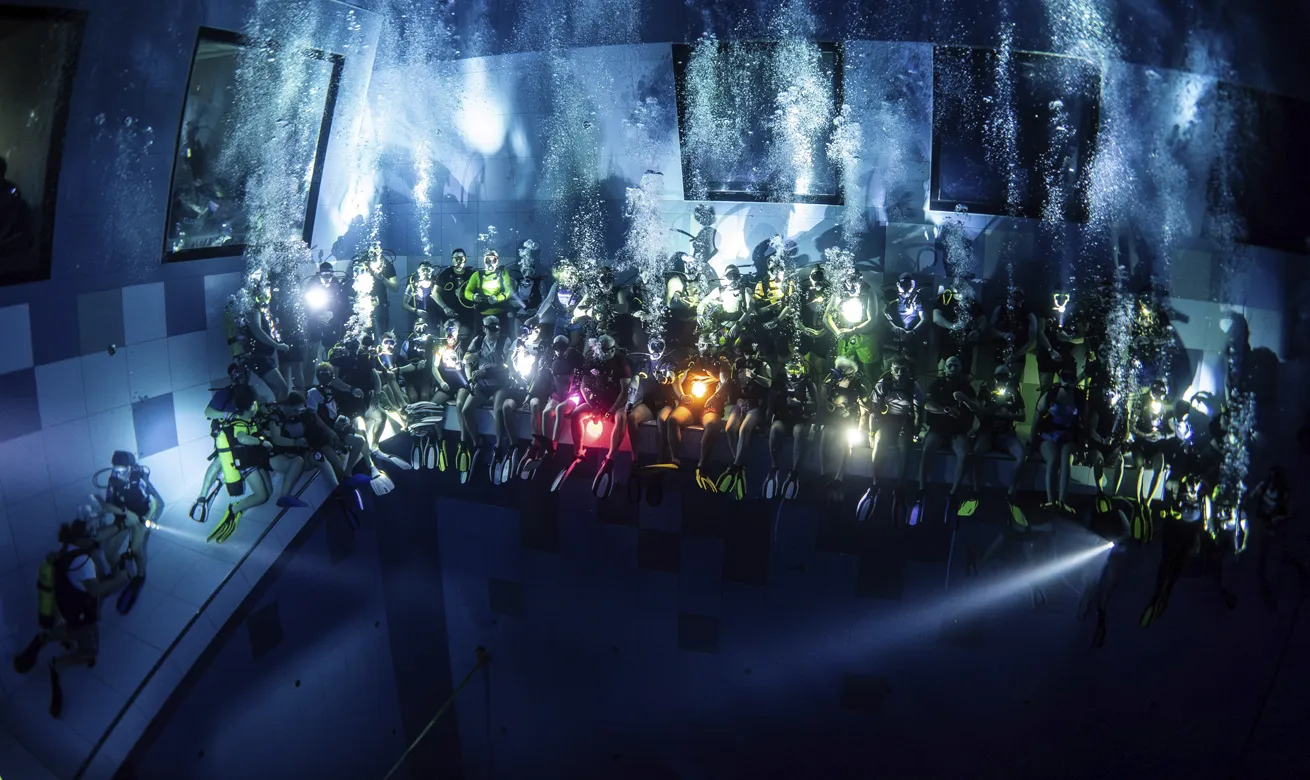
Courtesy Diversnight TeamDeepSpot, an indoor dive center in Poland, turns out the lights for a night-dive experience.
There is something about a night dive that captivates adventurous divers, beckoning them into the depths after hours like a siren’s song. “Night dives reveal a completely different world beneath the surface. Many marine creatures are more active after dark, and it’s an incredible experience to be surrounded by darkness, relying on your own and others’ torches to explore the underwater environment.”
Ludvig F. Aarstad, PADI Advanced Open Water Diver, Enriched Air (Nitrox) Diver and Rescue Diver, handles the operations for the annual Diversnight global event. Founded by Tone Dahl in Norway, the event began in 2005 as a special way to bring the dive community together across the country to explore their local dive spots at night—and then bond over cake afterward.
Related Reading: How to Conquer Your Fear of Night Diving
Over 300 divers participated across 40 different locations in Norway for that first coordinated night dive, and in 2024, over 1,400 divers participated around the world. “The community has become more engaged in hosting events and promoting the idea behind it,” Aarstad says of the tradition’s expanded reach.
Today, the event includes participating dive clubs, shops and liveaboards as far-flung as Greenland, the Great Barrier Reef, South Africa and Nova Scotia. Divers submerge at 8:25 p.m. local time, everywhere from harbors to indoor pools, expanding their skills and recording highlights and photos to share on the event’s Facebook page.
We spoke to a few dive groups as they prepared for this year’s Divers night, its 20th anniversary, on Saturday, November 1.
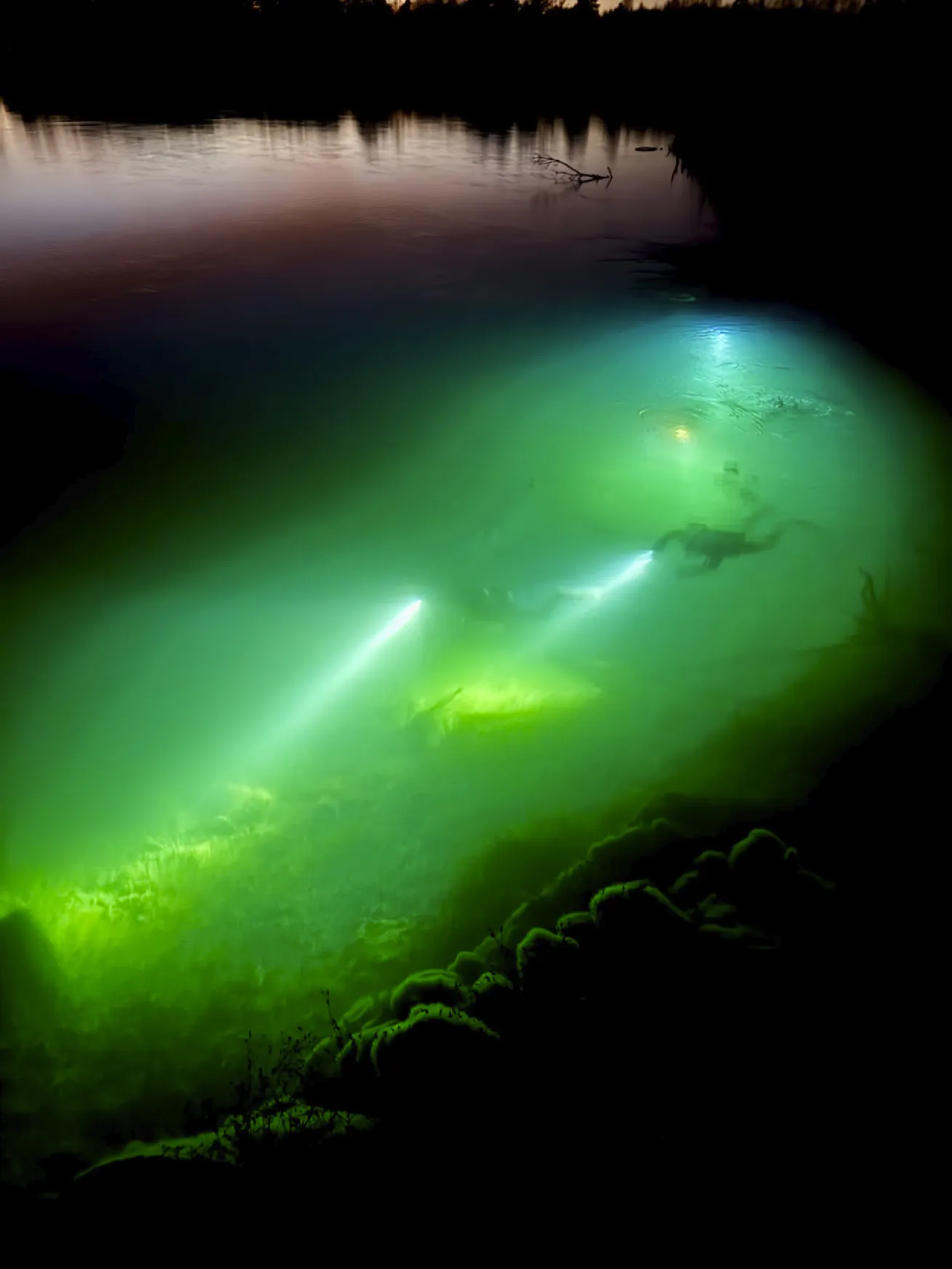
Courtesy Diversnight TeamDivers explore Wapienniki Sulejow in Poland.
Monika Pedersen and Janne Lausten help organize the Diversnight Lillebælt event in Fredericia, Denmark, at Ammoniakhavnen under the Lillebæltbridge. Lausten, who completed her Open Water Diver certification in 2014, says the atmosphere has drawn her back to the event year after year.
Their group had the second-highest number of participants in the 2024 event (78), coming in behind the False Bay Underwater Club in South Africa (152). Lillebælt, or Little Belt, is a strait connecting the Baltic Sea and Kattegat strait. Here, divers prepare to encounter temperatures from the high 40s to low 50s and visibility from 5 to 15 feet.
“We proudly held the title for the most divers in the water in 2019, 2020, 2021 and 2022—and we're going for the top spot again in 2025,” says Pedersen. “Before 2019, several smaller diving events took place around the Little Belt. That all changed when we decided to unite the community with one major gathering. To make the event as exciting and engaging as possible, we invite dive centers to participate and showcase the latest gear and equipment. It’s the perfect opportunity to explore, try out new tech and connect with industry experts.”
For Jakub Cieślak, PADI Instructor and owner of Polish dive group Nurklub, Europe’s deepest diving pool makes for an ideal location to participate in Diversnight. The Deepspot indoor dive center opened in 2020 near Warsaw, Poland. The max depth of the closest artificial lake is around just 13 feet, with low viz, Cieślak says, so Deepspot’s nearly 150 feet of depth and clear visibility attract more divers.
Related Reading: 23 Underwater Cameras, Lights and Accessories for Divers
Courtesy Daniel Tiger Dahlstrom
“Before Deepspot, we could count on gathering around 10 to 15 divers for the event,” explains Cieślak. “Now, the numbers are really nice; more people want to take part in Diversnight in these conditions.”
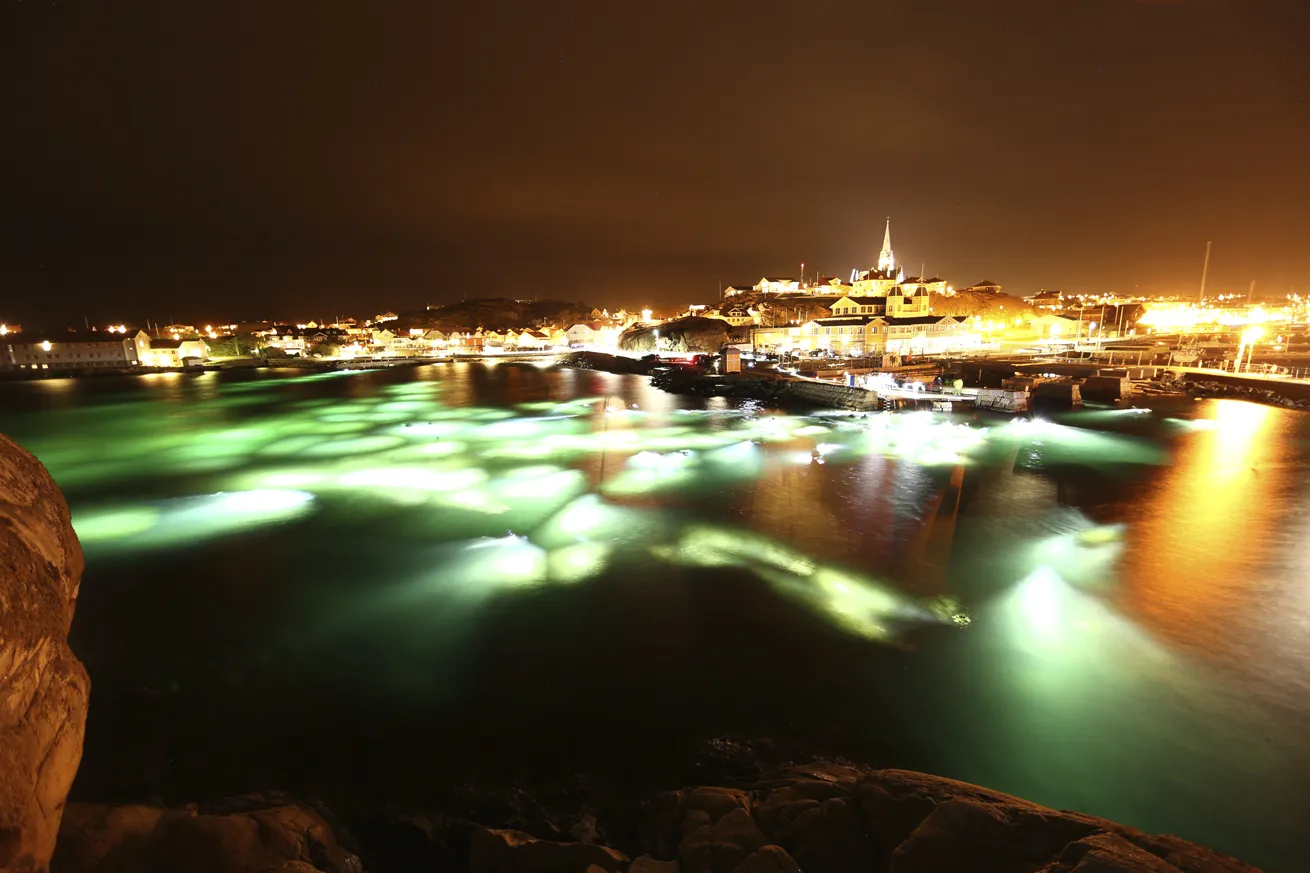
“We start the evening with a gathering, coffee, cake and lecture,” says Daniel Tiger Dahlström, PADI Master Instructor with Dive Team Lysekil in Sweden. “The speaker talks about something new every year. It could be a specific animal you can see during a night dive or something ocean-related. Then we dive together! The diving in Lysekil for Diversnight is done at the dive site called Släggö—Swedish for something like ‘sledgehammer island.’ We light up the pier with candles if there is no wind, torches if it’s windy. It is very social, and a lot of nondiving folks from the town usually come down to the waterline to watch us jump in.
“Diversnight is a beacon of light and happiness in the dark November night.”
Related Reading: Strange Encounters of an Alaskan Night Dive
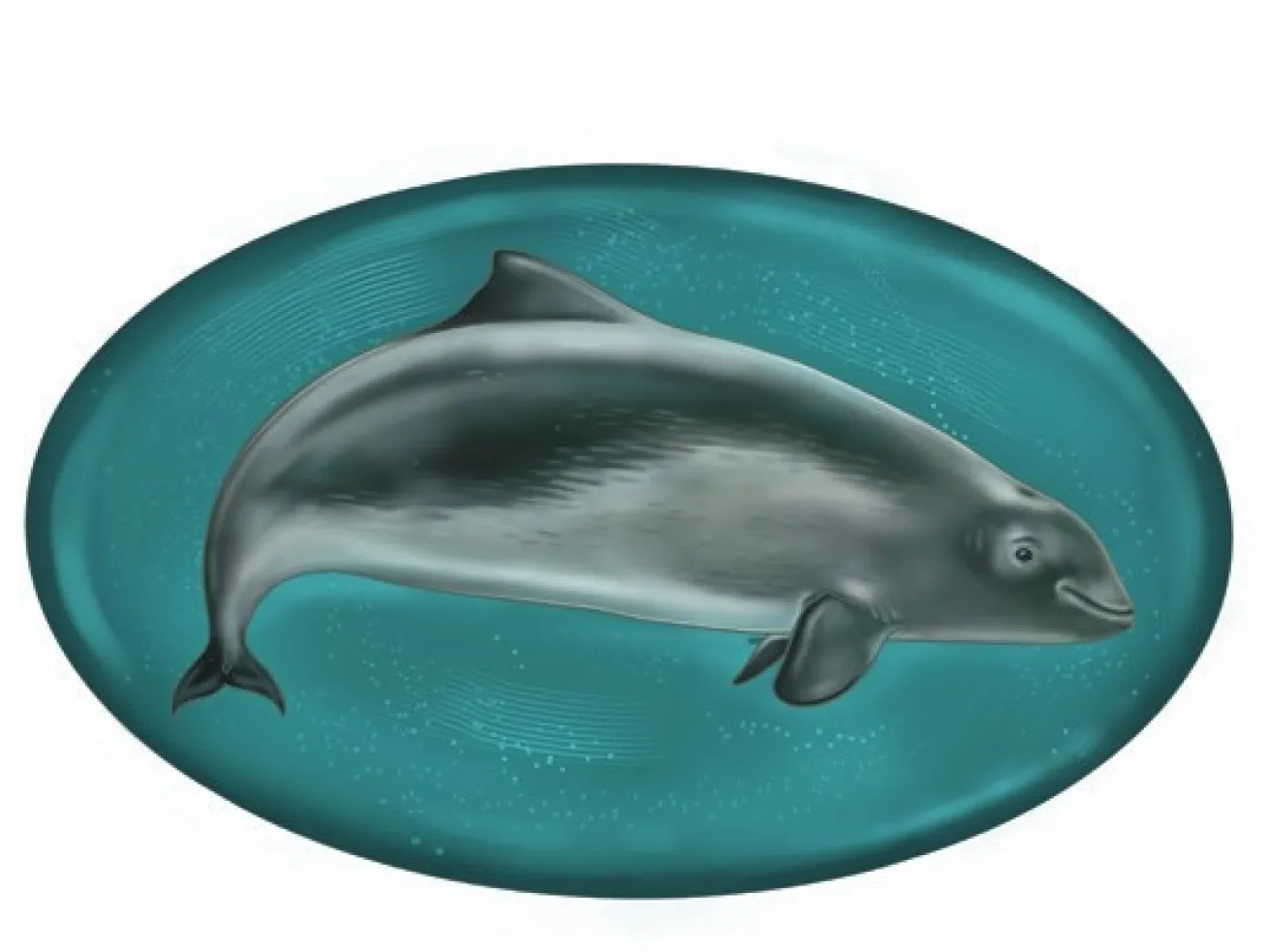
Illustration by Cassidy Vincent
Site Spotlight: Harbor Porpoise
The harbor porpoise (Phocoena phocoena) thrives in the cold coastal waters of Northern Europe, including Lillebælt in Denmark. It’s one of the smallest cetaceans worldwide, with both males and females reaching about 6 feet in length in adulthood.
Harbor porpoises eat small fish, like herring and sand eels, that swim close to the ocean floor. They’ve even been known to feed on octopuses and squid on occasion.
Researchers count them among the more resilient marine species in this part of the world: The population in Northern Europe has been documented in the hundreds of thousands, despite threats from noise pollution, fishing and climate change.
Diversnight Need to Know
Certification
Take the PADI Night Diver course to learn the ins and outs of diving after the sun sets, including navigating in the dark and communicating with dive lights.
Learn More About Diversnight
Additional Resources
• facebook.com/DiversNightLillebaelt
Nordic PADI Shop
Dive Team Lysekil, Sweden


