

Chameleons are cool, but the real masters of camouflage live in our oceans. Marine animals like frogfish and pipefish, shrimp and crabs hide in plain sight, if you just know where to look. Whether it's to escape predators or to become a better predator, these amazing creatures have mastered the art of camouflage.
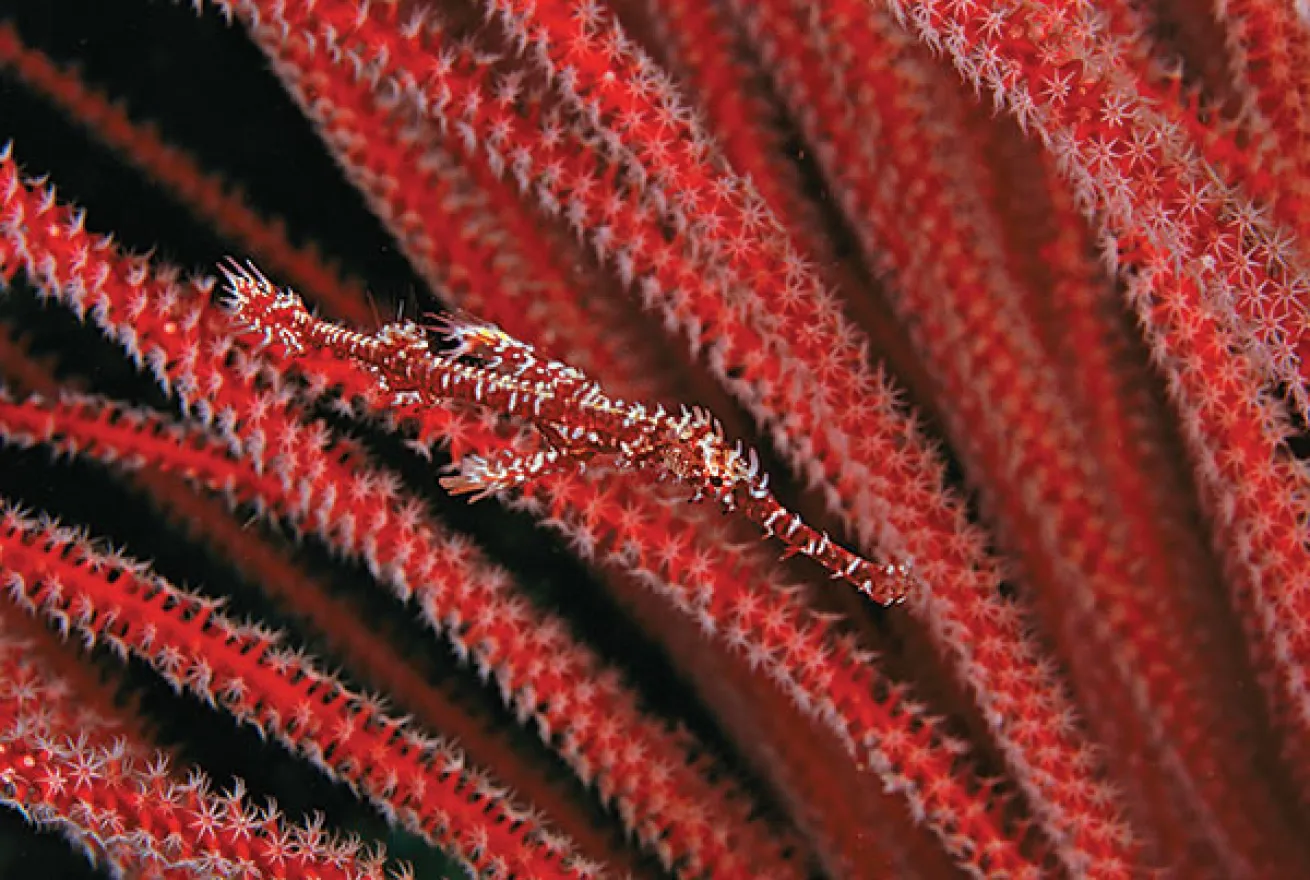
Tim LamanHarlequin (or ornate) ghost pipefish sport a wide variety of bright colors and patterns that blend in so well with their habitats — in this case, a clump of whip coral — that they are nearly impossible to spot. Though elongated, this relative of the seahorse is usually pinky size, and spends a lot of time floating upside down, mouth pointed downward and virtually motionless.
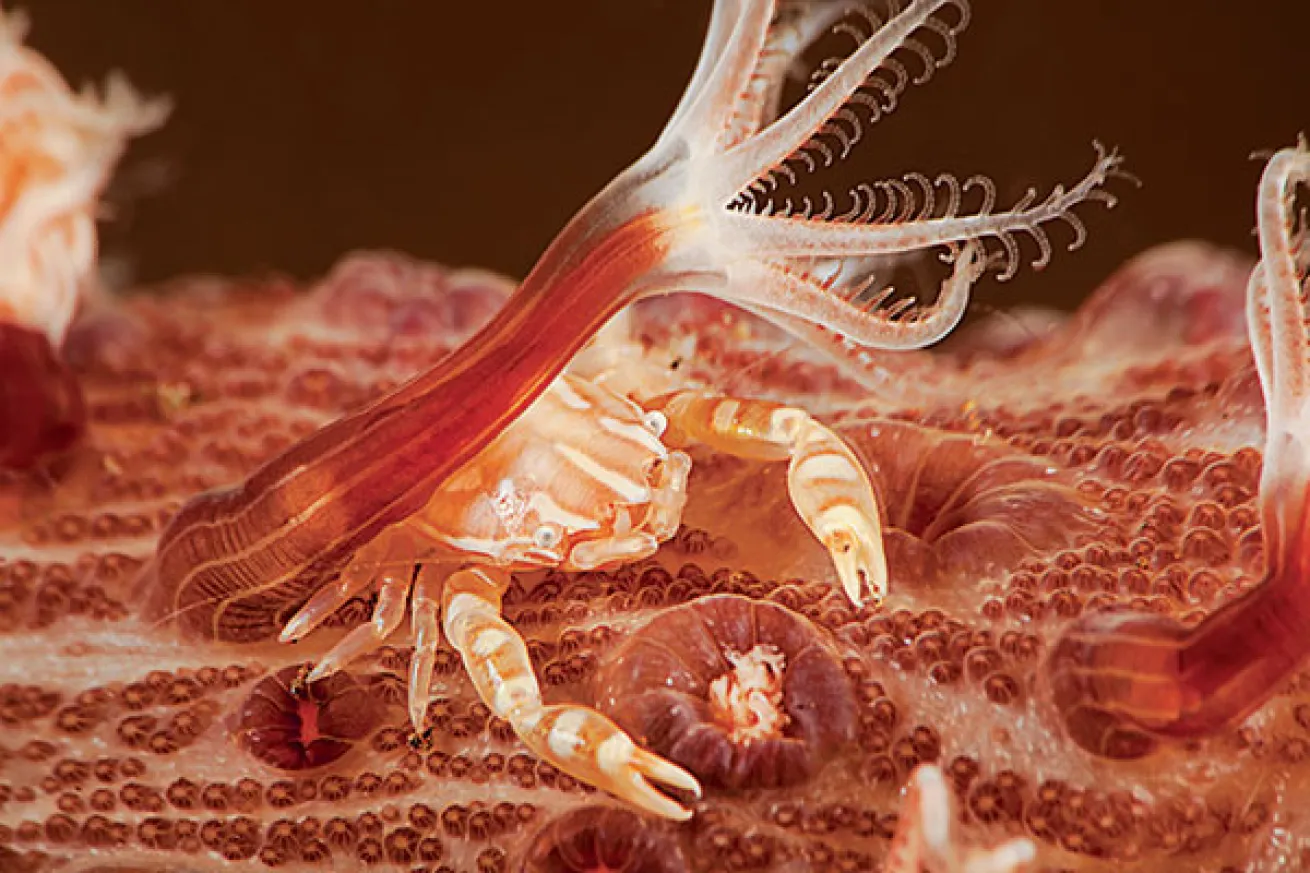
David FleethamDedronephthya soft corals are gorgeous as detailed macro subjects, but look closer still for little finds like squat lobsters or beautiful porcelain crabs (pictured) that hide in the folds.
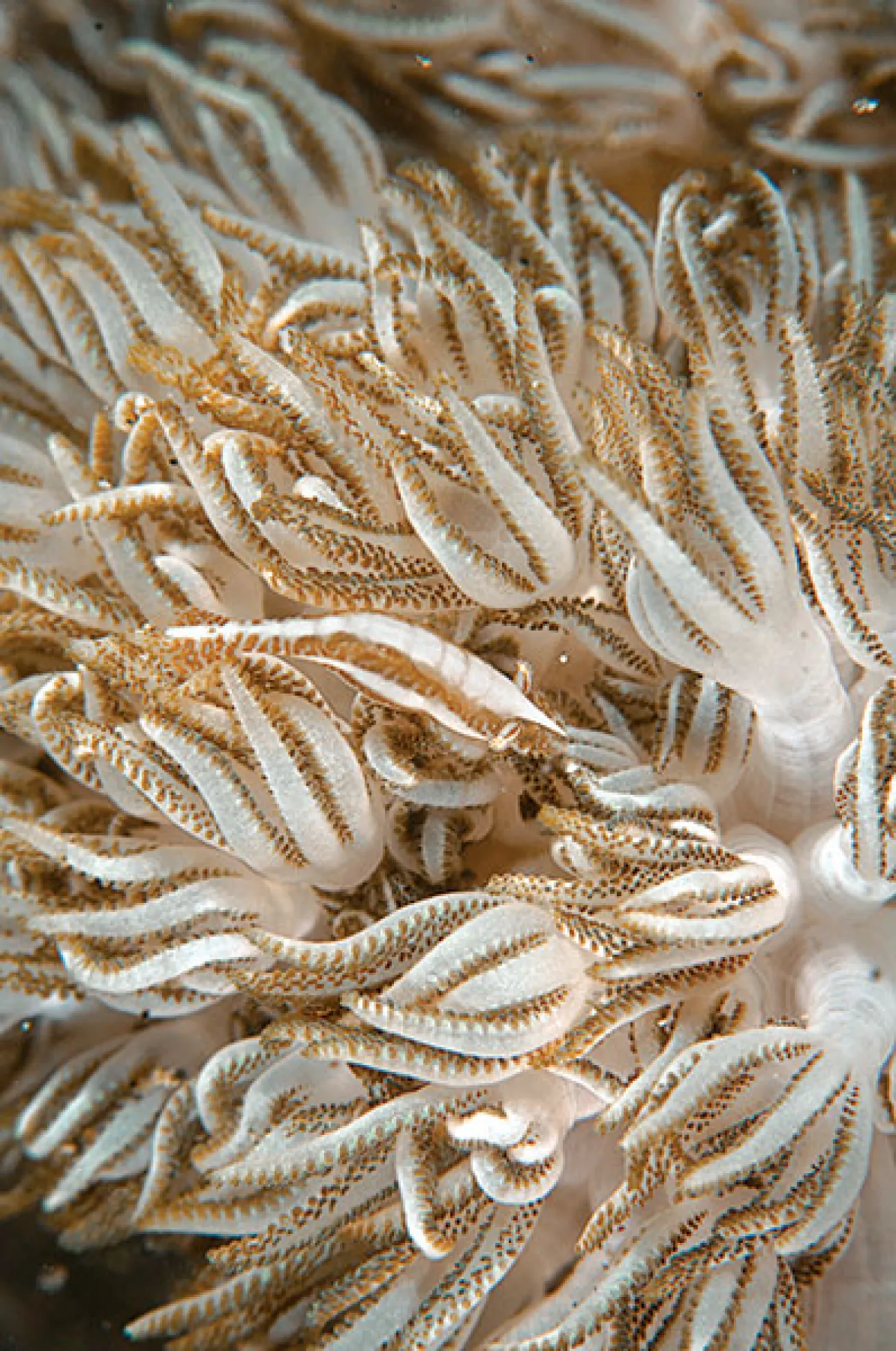
Christian LoaderEach “flower” on the Xenia coral is a living polyp, elegantly opening and closing its petals. The Xenia shrimp mimics the coral’s colors, and bounces from petal to petal virtually unseen
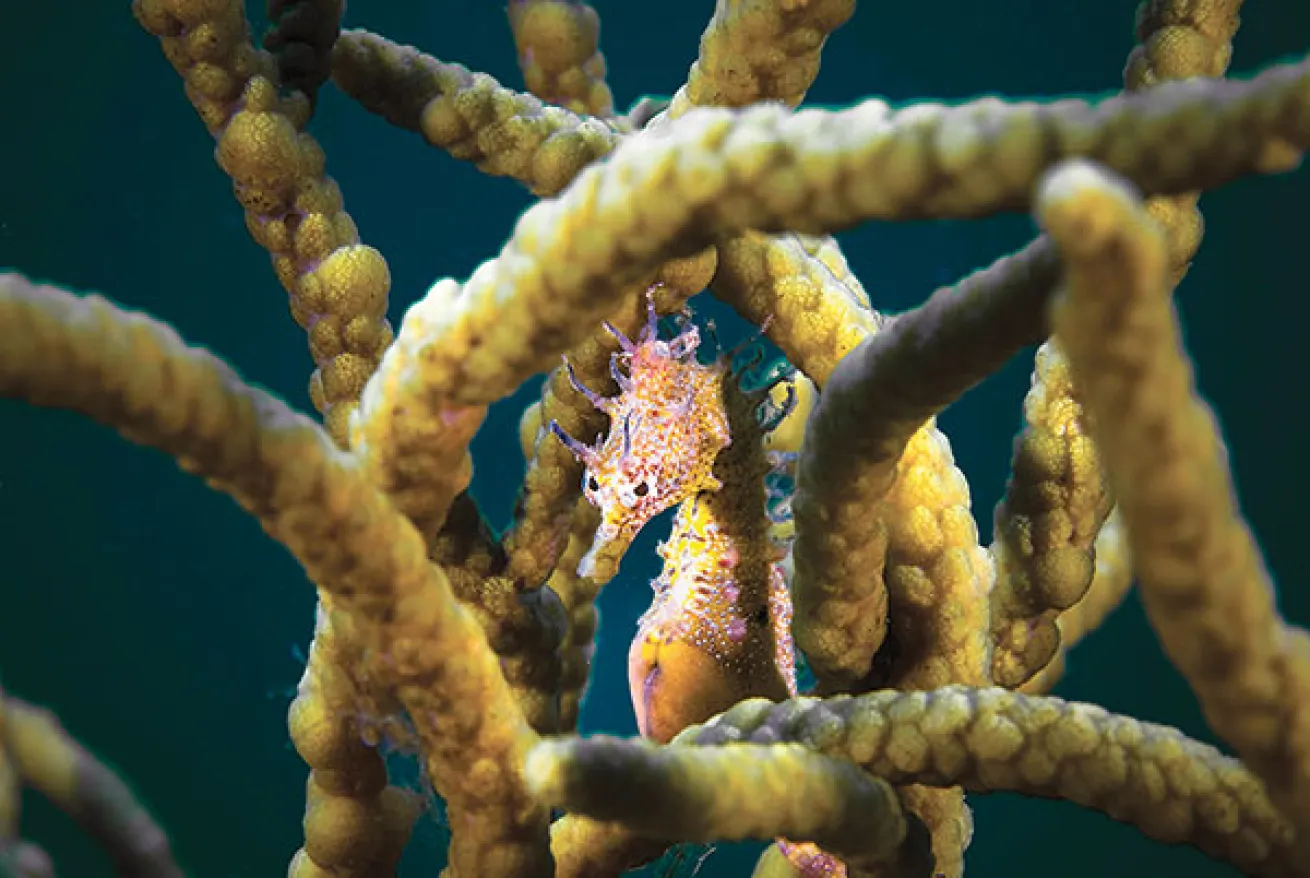
Darren JewFleshy tendrils on the head and back of the shorthead seahorse make it difficult to find in the tangle of Scaberia agardhii algal patches and sponge gardens. In summer, juveniles are found in packs, clinging to floating bits of weed on outgoing tides.
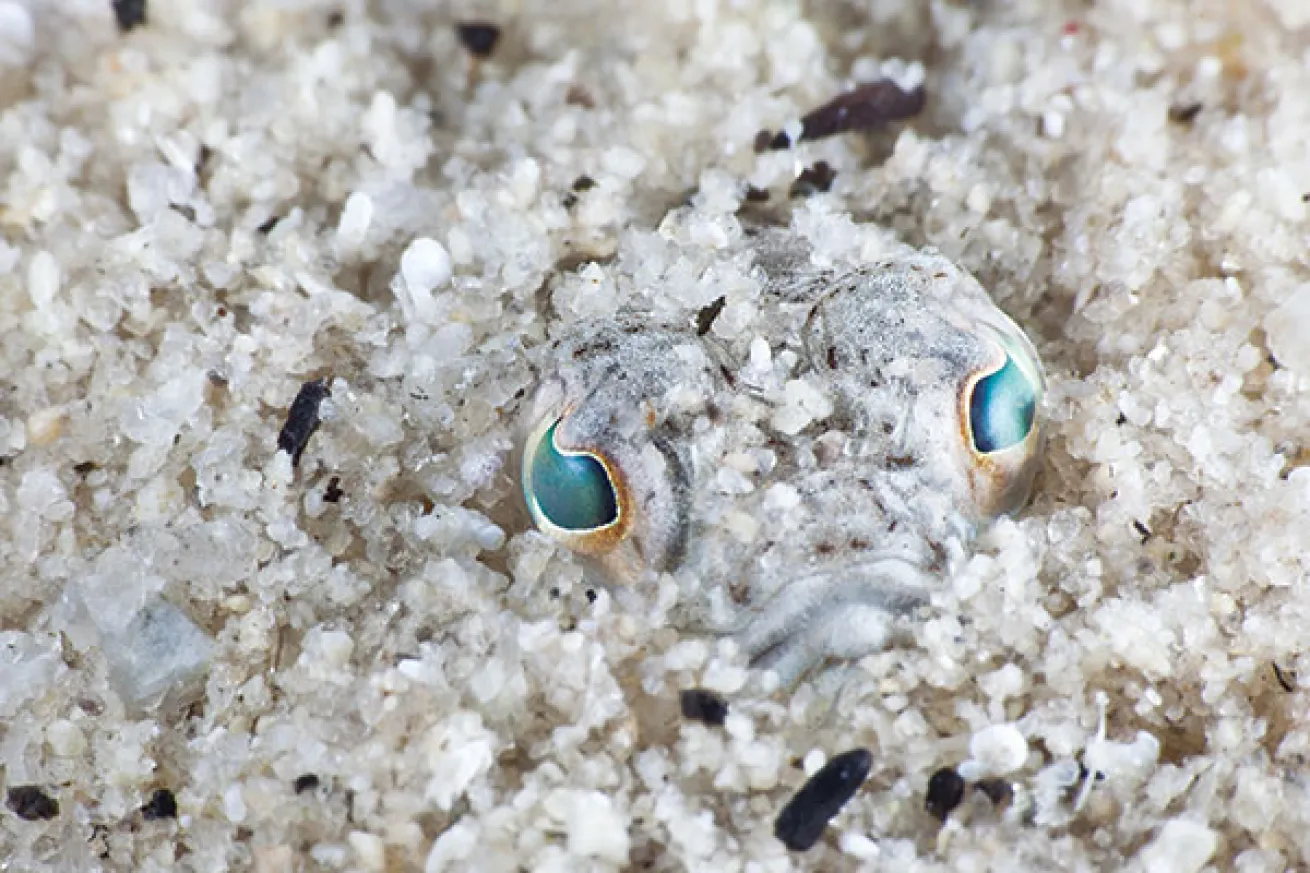
Nicholas SamarasOne of the few venomous fish in the Mediterranean Sea, the lesser weever is typically found in sandy seabeds, buried beneath the sand with only its eyes visible, lying in wait for its prey. Its venom glands are located on the dorsal fin.


