

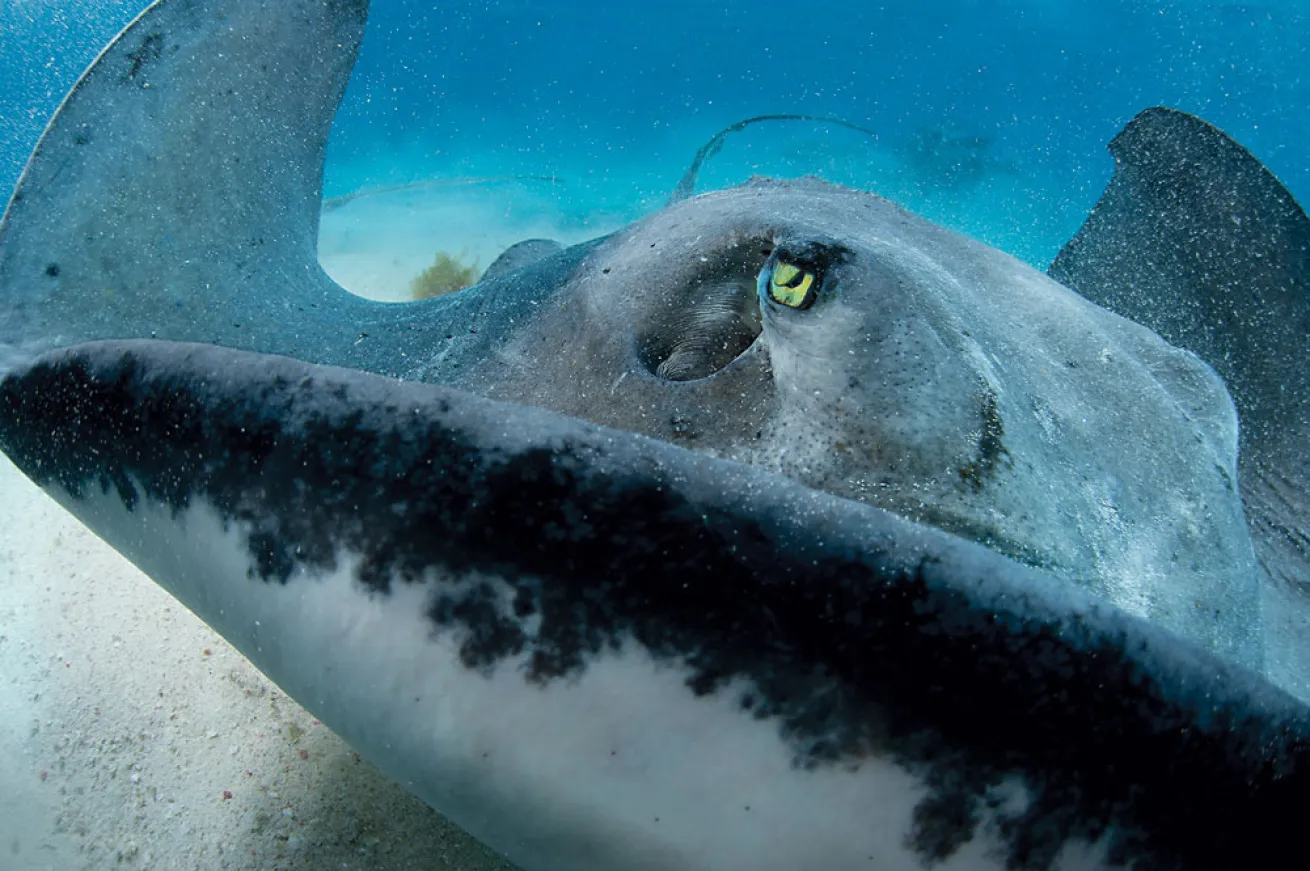
Alex MustardEnlarged pectoral fins, extending from the back of their skulls, form the flattened bodies of stingrays.
Television star Steve Irwin was killed by a 200-pound Australian bull ray in 2006 when its venomous tail barb penetrated the Crocodile Hunter’s heart.
Stingrays are not generally aggressive; most wounds are inflicted to the lower leg when an animal is accidently stepped on.
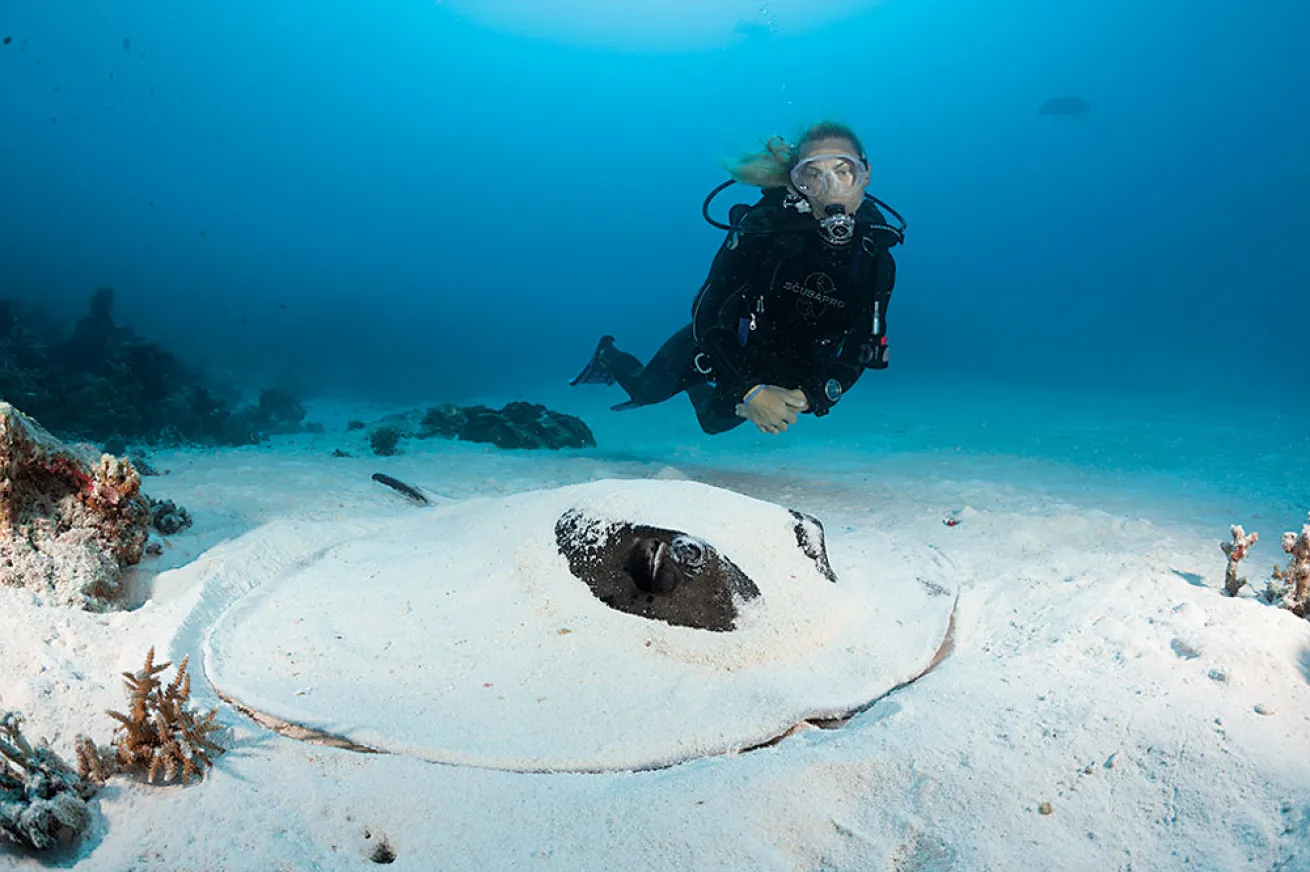
Reinhard DirscherlStingrays commonly bury themselves beneath the sand, with only their eyes exposed.
Besides locating food, electroreceptors — located on the underside of the body — guide males to buried mates.
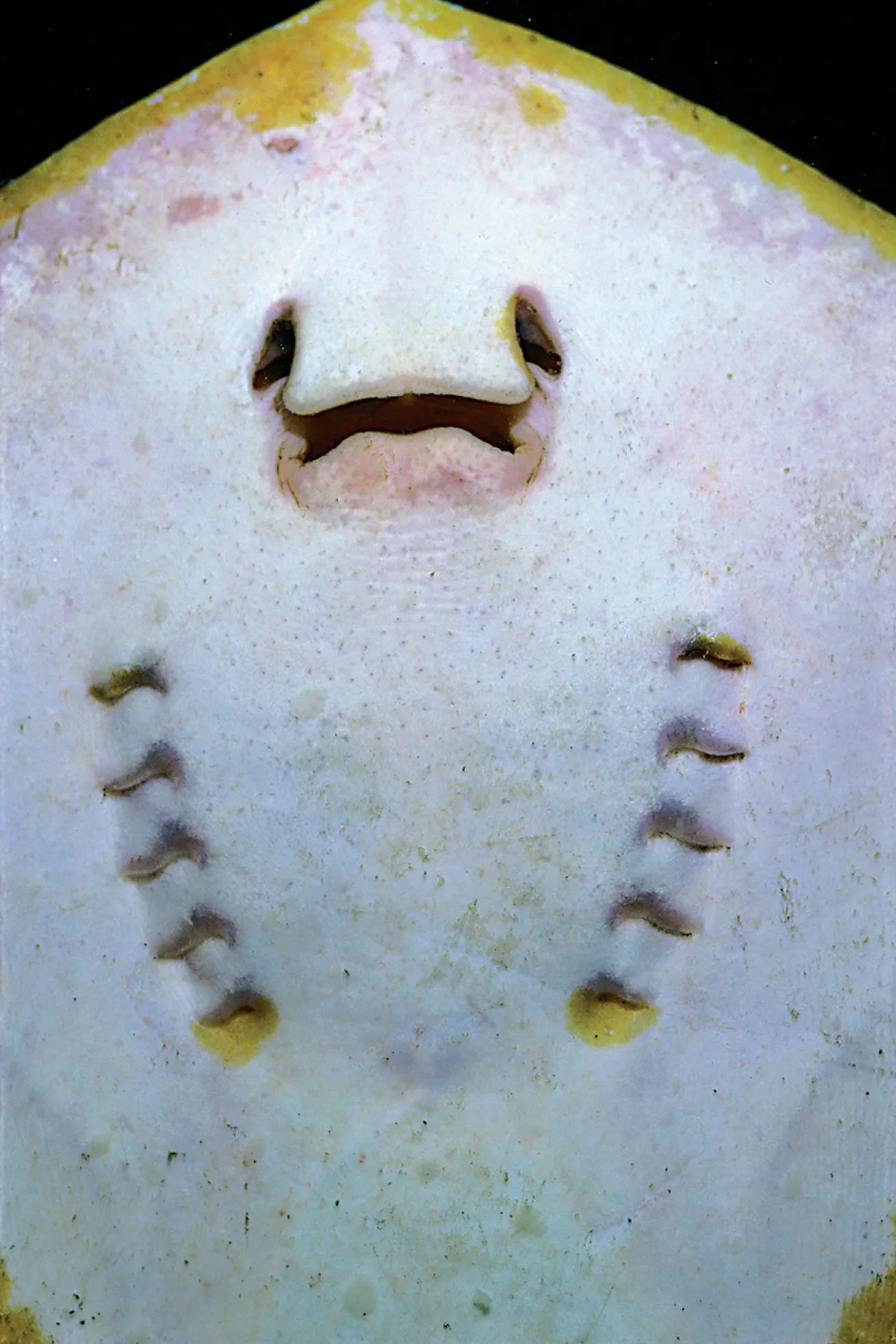
Shinji Kusano/Nature Production/Minded PicturesGill slits for breathing are located beneath the body. A small opening behind the eyes, known as the spiracle, allows the animal to take in water while at rest.
Stingrays are a frequent prey of hammerhead sharks.
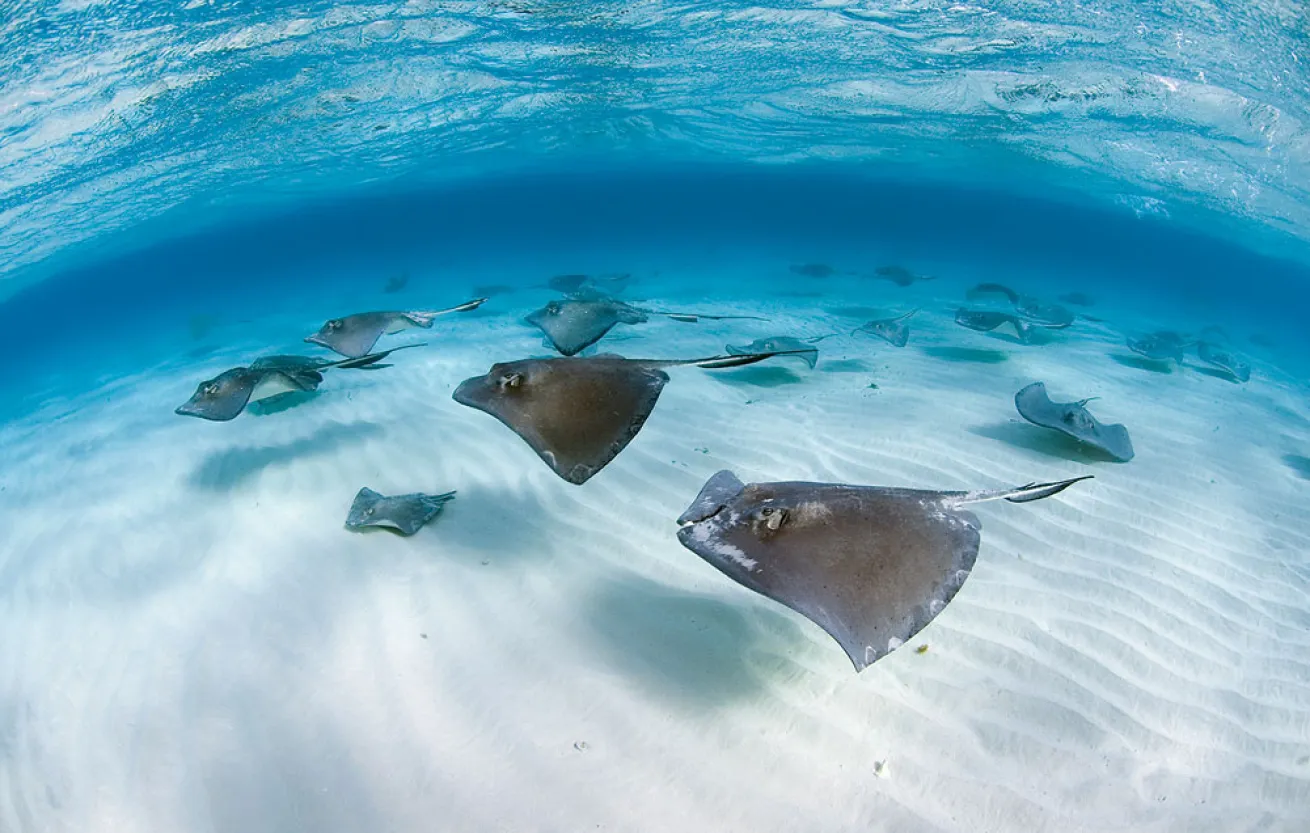
Alex MustardA large gathering of stingrays is known as a fever.
Stingrays vary from palm size to more than 6 feet across.
Early hunters living along the California and Australia coasts used stingray barbs as arrow and spear points.
The flyers of the ocean impress divers worldwide as the creatures gracefully glide underwater with wings spreadout. Although they may not look like a shark with having a flattened body and taking cover beneath the sand, they are related. However, family reunions aren't welcomed. Hammerhead sharks frequently prey on stingrays.


