

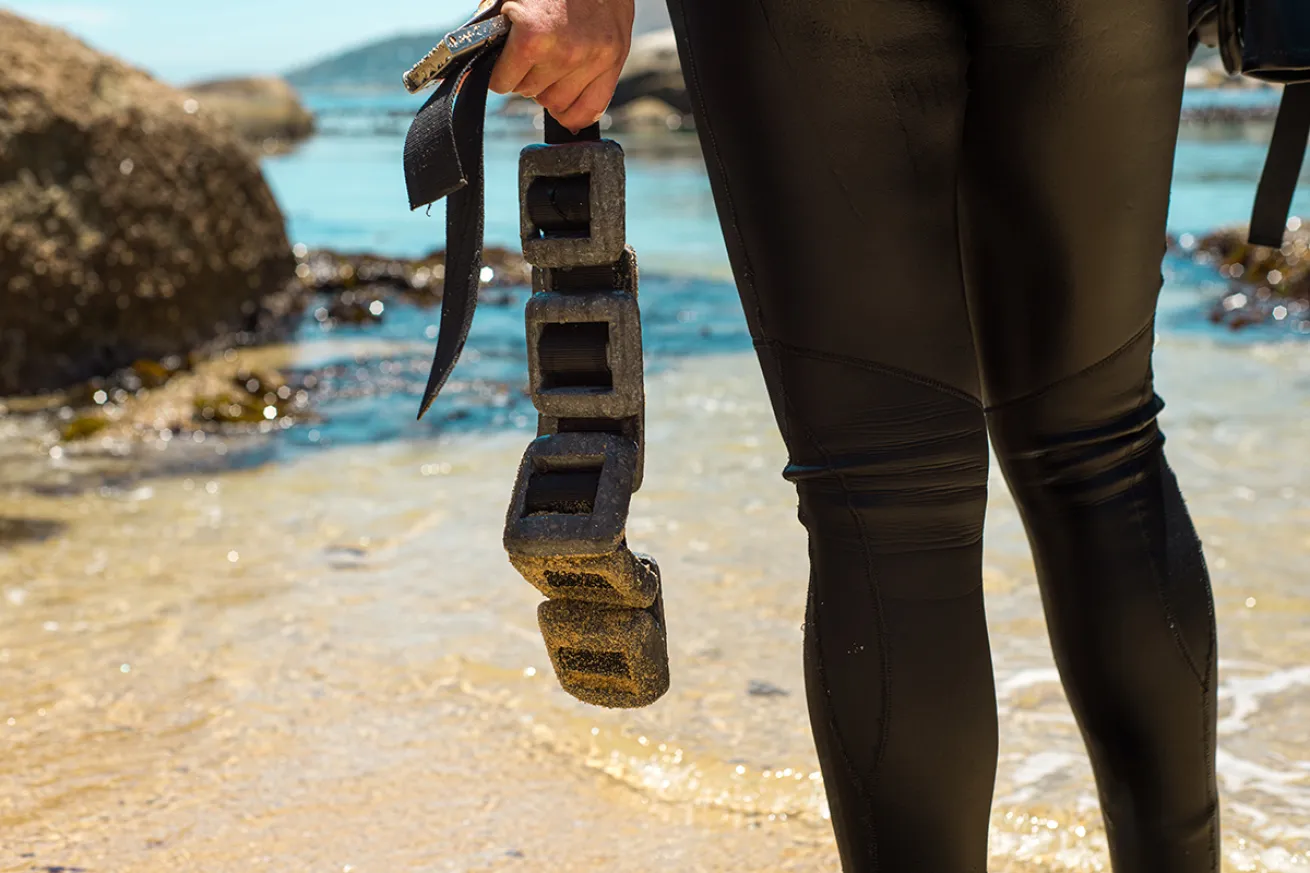
Shutterstock.com/Robert DyerBeing precise with how much weight you carry pays off underwater.
Want to reduce your air consumption? Be able to fin faster and farther with less effort? Look relaxed and in perfect control? Finish the dive with less fatigue?
The secret is to pinpoint buoyancy control, and it all begins with fine-tuning your weighting—that's how much lead you thread on your belt or put into your integrated weight system. When you have exactly as much as you need, you have the smallest amount of air in your BCD needed for neutral buoyancy at a given depth. That means less drag and more efficient finning. It also means there's less BCD volume change with depth change, so you'll make smaller adjustments.
Many divers add weight until they sink and call it good enough. But it’s worth asking yourself: How much weight do I really need?
Understanding Weighting and Diving
Every extra pound requires a pound of buoyancy to balance it. An extra pound of lead means you need an extra pint of air in your BCD, which expands and contracts with depth changes, causing you to constantly fiddle with your air. Five extra pounds of lead, which is common, means a bubble five times as big and requires five times as much extra air going in and out as you change depth. On the other hand, when you've got the proper weight for diving, your BCD only has enough air to offset changes in your exposure suit's buoyancy, and that's way less to adjust as you descend and ascend.
How to Find the Perfect Amount of Weight
It would be great if there were an app that's a scuba weight calculator. While there have been attempts at making a practical dive weight calculator, in the end they're less effective and convenient than the recommended way to find how much weight you need, which is to get in the water. Do this in full scuba gear—exactly what you will wear on the dive—and adjust your weight until you float at eye level with an empty BCD and holding a normal breath. You should sink slowly when you exhale. If you check with a full tank (often necessary), then add 5 pounds to account for the buoyancy increase you'll have at about reserve pressure with a typical cylinder. If you're diving in salt water, do this in salt water, or in fresh for fresh.
Want to perfect your buoyancy? Get started today with PADI's Peak Performance Buoyancy course.
Tips to Calculate Your Scuba Weight
1. You Have to Get Wet
It's no one item that determines your buoyancy, but you plus all your gear together. You can "ballpark" guess how much weight you need with experience, but you can only fine tune it by getting in the water.
2. Pay Attention to Your Tank
Cylinder buoyancy characteristics change your buoyancy a lot. So, recheck your weight when changing to a different size and/or different material (steel vs aluminum) tank. Usually, but not always, going from aluminum to steel requires removing weight.
3. Air is Air
A common misconception is that with X cylinder, you don't need to worry about weight change due to air consumption. This is not true. Once you're properly weighted, consuming 70 cubic feet of air reduces your weight exactly the same whether it you breathed it from a steel or aluminum cylinder.
4. Build Muscle to Drop Weights
Muscle is more dense than fat, so the more you build, the less weight you need to submerge.
5. Recheck
Any change to your kit affects your buoyancy. This is obvious with a big change, like going from a wetsuit to a drysuit, but lots of little changes like a new knife, different computer and upgrading your regulator can add up.
6. Check at Your Safety Stop
With 500 psi at 15 feet, if you vent all the air from your BCD, you should be very close to neutrally buoyant, rising slowly as you inhale, sink slowly as you exhale. If not, adjust your weight afterward -- but if you've followed the other steps, you should be very close and fine adjustments should do it.
7. Log It
Although you might find a scuba diving weight calculator or buoyancy calculator online, in the end they're only going to get you close and you'll still have to get wet to dial it in. A much more useful way is to write down what exposure suit you wore, what equipment you used, how much lead you carried, how much your body weighs, how much weight you needed etc., after each dive. This gives you a good start point for checking your weight each time, and over time you'll have the start point you want for different exposure suits, salt or fresh, aluminum or steel tank and so on.
Keep it up until you get your weighting correct. With experience, you'll discover that the best scuba weight calculator is your log book and brain followed by a buoyancy check. Even if you've got a new BCD or wetsuit, you'll be able to estimate the lead you need within a couple of pounds. You'll be your own dive weight calculator.
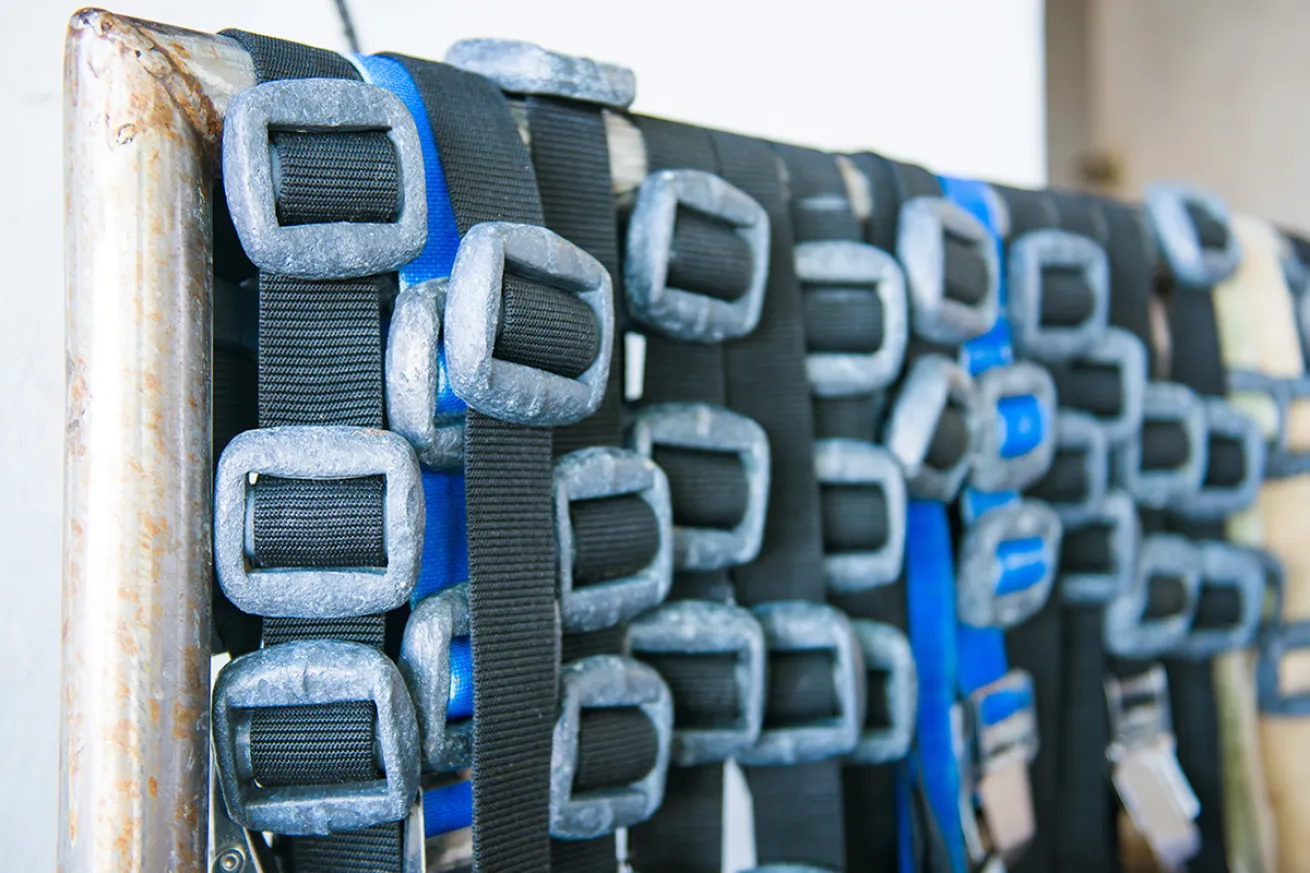
Shutterstock/MosaymayBuoyancy is a foundational dive skill you can't perfect without paying attention to your weights.
8. Breath Control
If your weighting is correct, at a given depth you can control your buoyancy with your lungs alone most of the time (unless you're using a rebreather). With practice, you'll do this without thinking instead of grabbing your low-pressure inflator hose every time you need to make a minor adjustment.
9. Be Patient.
Water is a viscous fluid, more like molasses than air, so buoyancy changes can seem slow or delayed if you're new to diving. When you want to ascend a little, you inhale and it takes a few beats before you start to rise. This is why many divers don't realize how well they can control their buoyancy with breathing. Give it a minute as you breathe in and out (slowly and deeply) to see what adjustment you can achieve naturally.
But, Where Do I Start?
Good question. With experience (and your log) you’ll know the ballpark for starting your weight check, but if you’re a new diver, or there’s a lot of new variables (e.g. first time diving in a full wetsuit in fresh water versus a shorty in seawater), here are some starting suggestions you learn in the PADI Peak Performance Buoyancy course:
Swimsuit/dive skin: .5-2kg/1-4lbs
3mm: 5% of your body weight
5mm: 10% of your body weight
7mm with hood and gloves: 10% of your body weight +1.5-3kg/3-5lbs
Neoprene drysuit: 10% of your body weight +3-5kg/7-10lbs
Shell drysuit light undergarment: 10% of your body weight +1.5-3kg/3-5lbs
Shell drysuit heavy undergarment: 10% of your body weight +3-7kg/7-14lbs
When using these start points, the most important thing to keep in mind is that they are just that and virtually never the right amount of weight. You still need to check in the water because there are so many variables. But, at least you’ve got a reasonable estimate to begin with.
Seek Training
Like most everything in diving, the fastest way to up your proficiency with weighting is by studying it and learning from an instructor. See your PADI Resort or Dive Center about the PADI Peak Performance Buoyancy course to help you master proper weighting, plus trim (where you wear weight), streamlining and keel effect. This will get you there much faster because you have pro guidance.


