

Shutterstock/Dragan Adoroarte
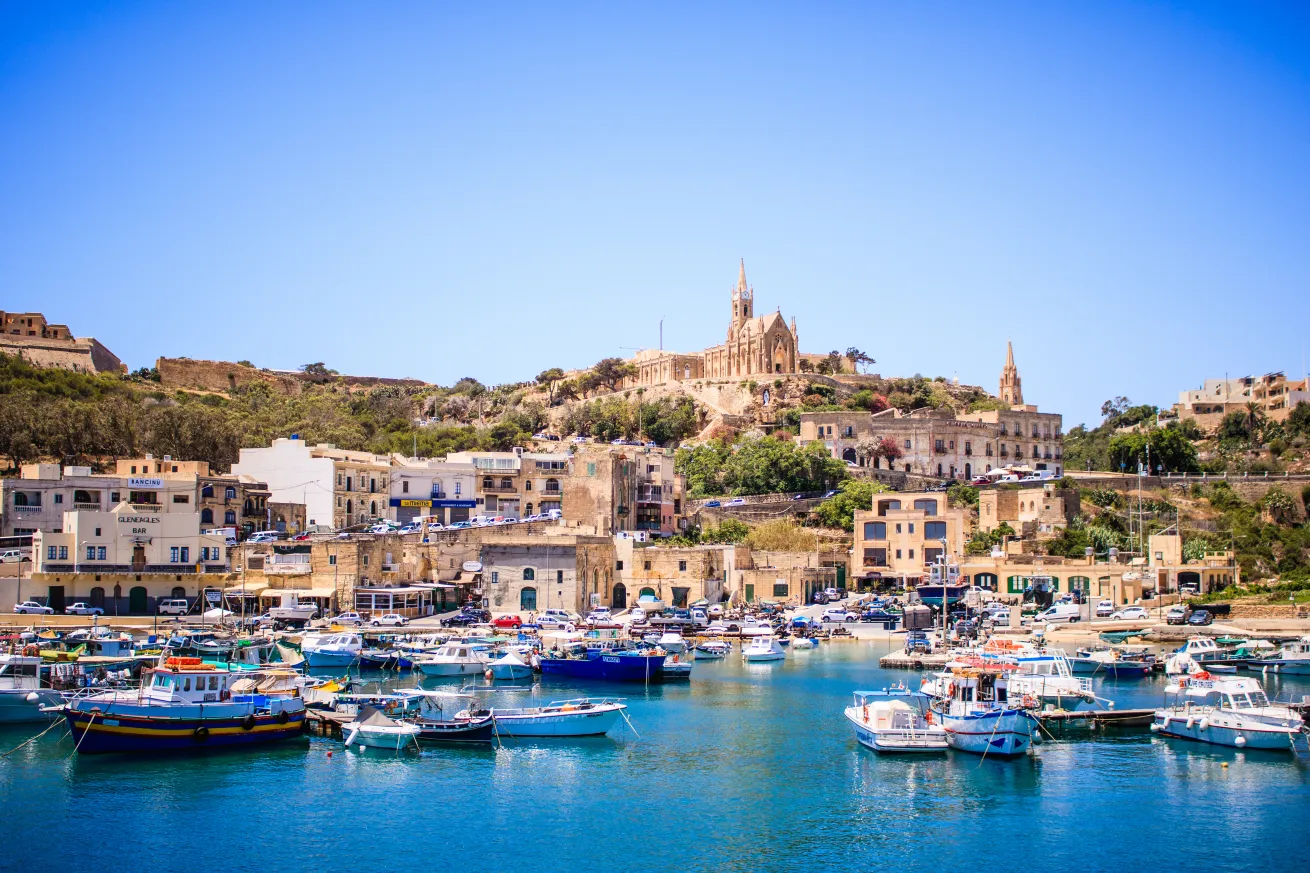
Gozo is like no place you’ve seen before. Flat-topped hills crowned with medieval fortresses and domed basilicas terminate into sheer limestone cliffs, arching over and hollowed out under the aquamarine Mediterranean. This 25.9-square-mile island is the second-largest of the three inhabited islands in the Maltese Archipelago. The exposed, harsh and surprisingly natural landscape (given its close proximity to bustling Malta) feels more Middle-eastern than European.
Gozo is part of the Republic of Malta. Its inheritance is culture, and its location is the crossroads of history, encircled by Italy, Greece, Tunisia and Libya.
Everything is in close proximity on this fiercely independent island, where history and legend rub shoulders. You can tour Xewkija—Gozo’s biggest church with the third largest unsupported dome in the world—in the morning. In the afternoon, sunbathe on red-sanded Ramla Beach, which is overlooked by the ‘love cave’ where the sea-nymph Calypso imprisoned Odysseus in Homer’s The Odyssey.
Gozo is also a place of adventure. Visitors can snorkel or dive the legendary Blue Hole, improve their tec or free diving skills, kayak the coves that cut into Gozo’s dramatic coastline, or try their hands at climbing spectacular rockfaces.
Related Reading: Best Destinations for Shore Diving
Shutterstock/DAAgiusThe M.V. Karwela shipwreck has one of the most photogenic and famous underwater staircases in the world.
A Diversity of Dive Sites
Gozo has surprisingly diverse diving for such a small island. Even though there’s diving for all levels here, technical diving is popular. The underwater topography mirrors the terrestrial, with flared arches, yawning caverns, V-shaped trenches and underwater caves. It’s a work of art, surrounded by jewel-colored seas.
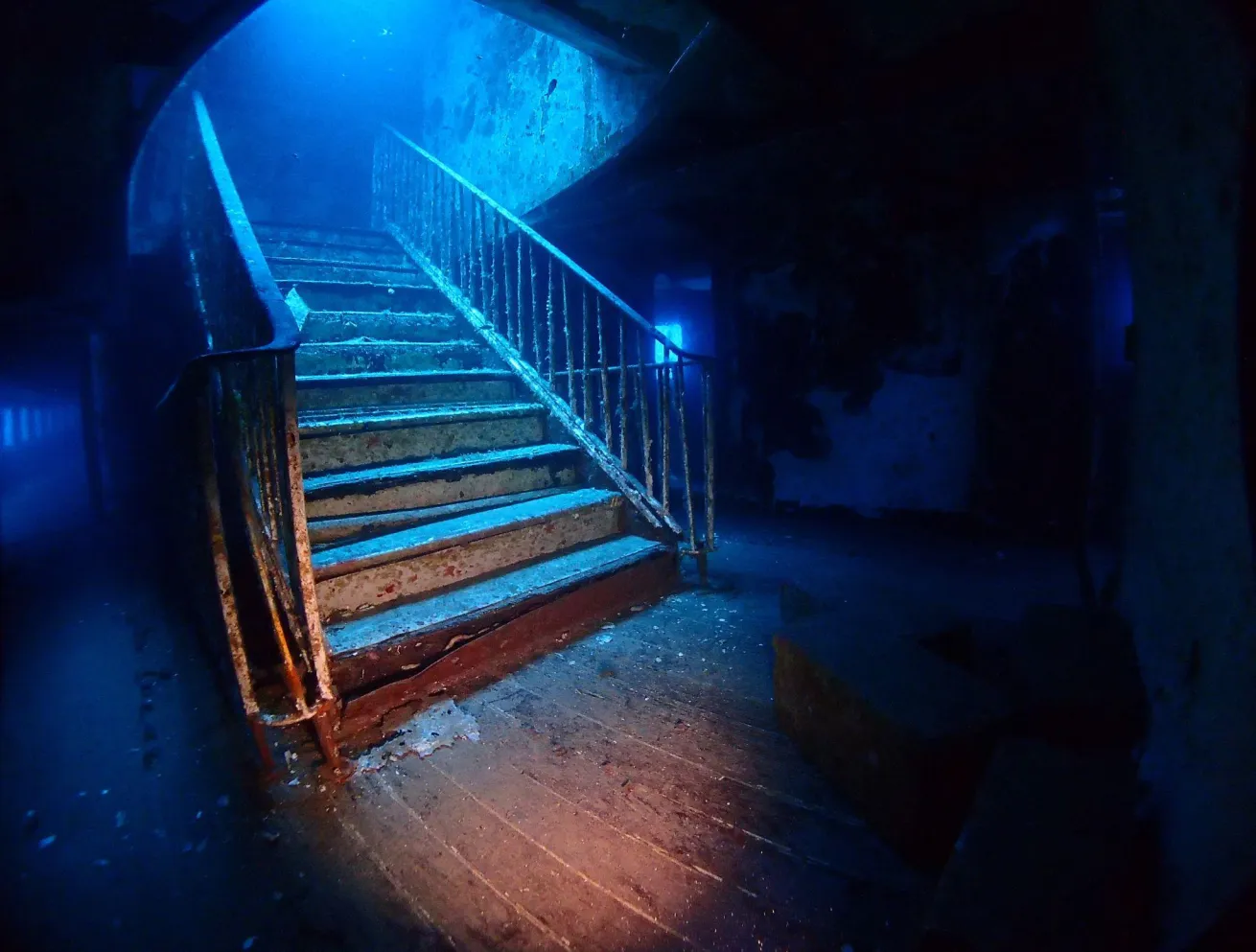
Gozo holds some of the Mediterranean’s best wrecks, including the atmospheric M.V. Karwela, a 164-foot former tourist ferry with perhaps one of the most photogenic and famous underwater staircases in the world. The Karwela is a shore dive, standing upright at a depth of around 131 feet on a sandy bottom. Its three decks are easily penetrable, making for an interesting and cruisy dive.
Tip: Due to its depth, the Karwela is best suited for tec divers or advanced open water divers. Speak to the dive shop before booking this dive.
Chris TaylorThe legendary Blue Hole is a favorite with divers, snorkelers, and swimmers.
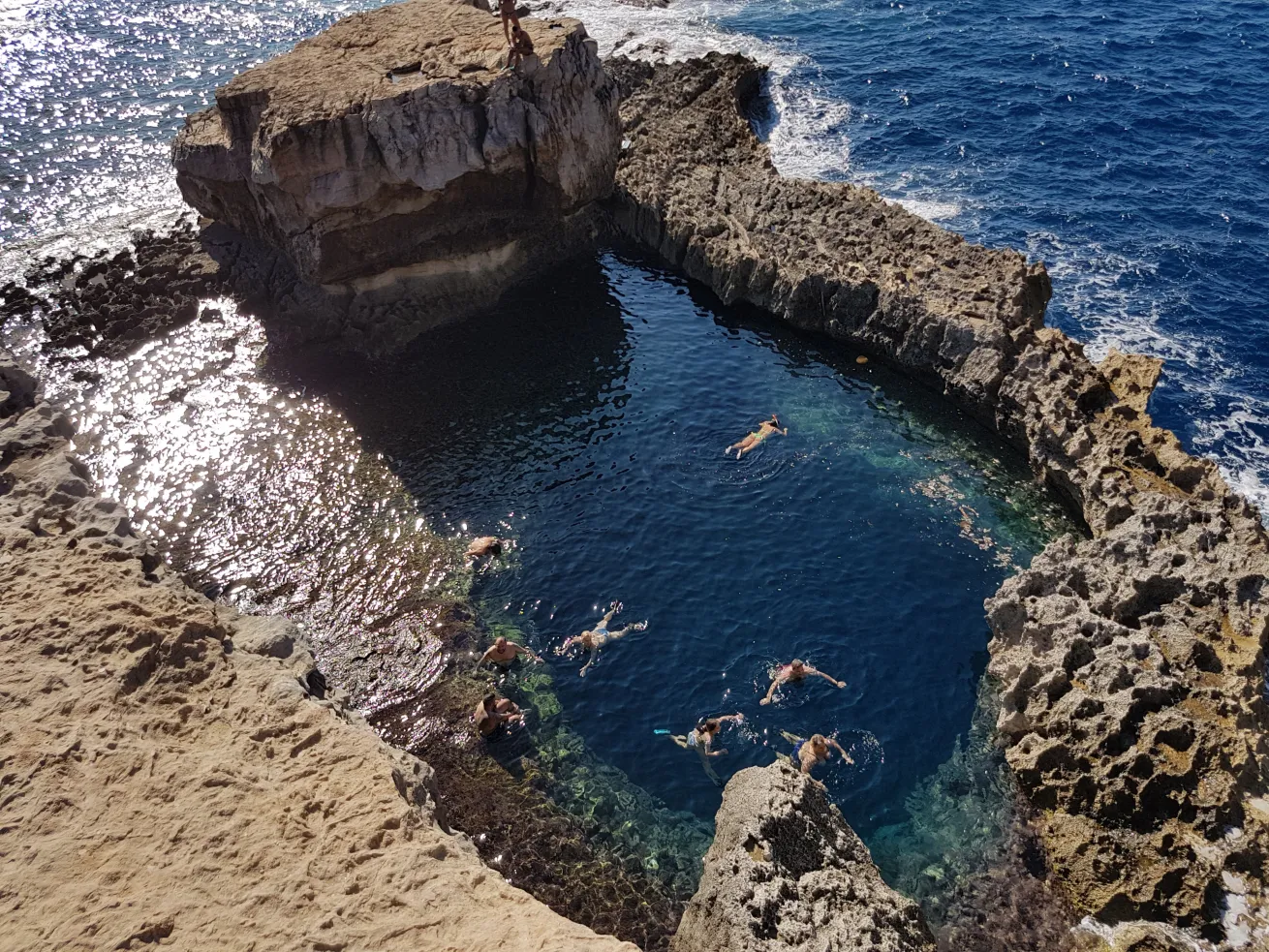
The Blue Hole in Dwejra is legendary, and rightly so: it must be one of the Republic’s most beautiful and precious gems. This natural rock formation resembles an upright tube, carved by wind and waves. Divers descend through a large archway, emerging into a sapphire world of crystal-clear visibility. Boulders and a large cave shelter marine life like groupers, shoals of bream, lobsters and even dentex or the occasional tuna or barracuda.
(Tip: The walk to the Blue Hole is a somewhat difficult one across sharp limestone; there’s nowhere to stash belongings, and no lifeguard on duty; mind the waves. Suitable for Open Water divers with some experience.)
Florian Allgaeuer
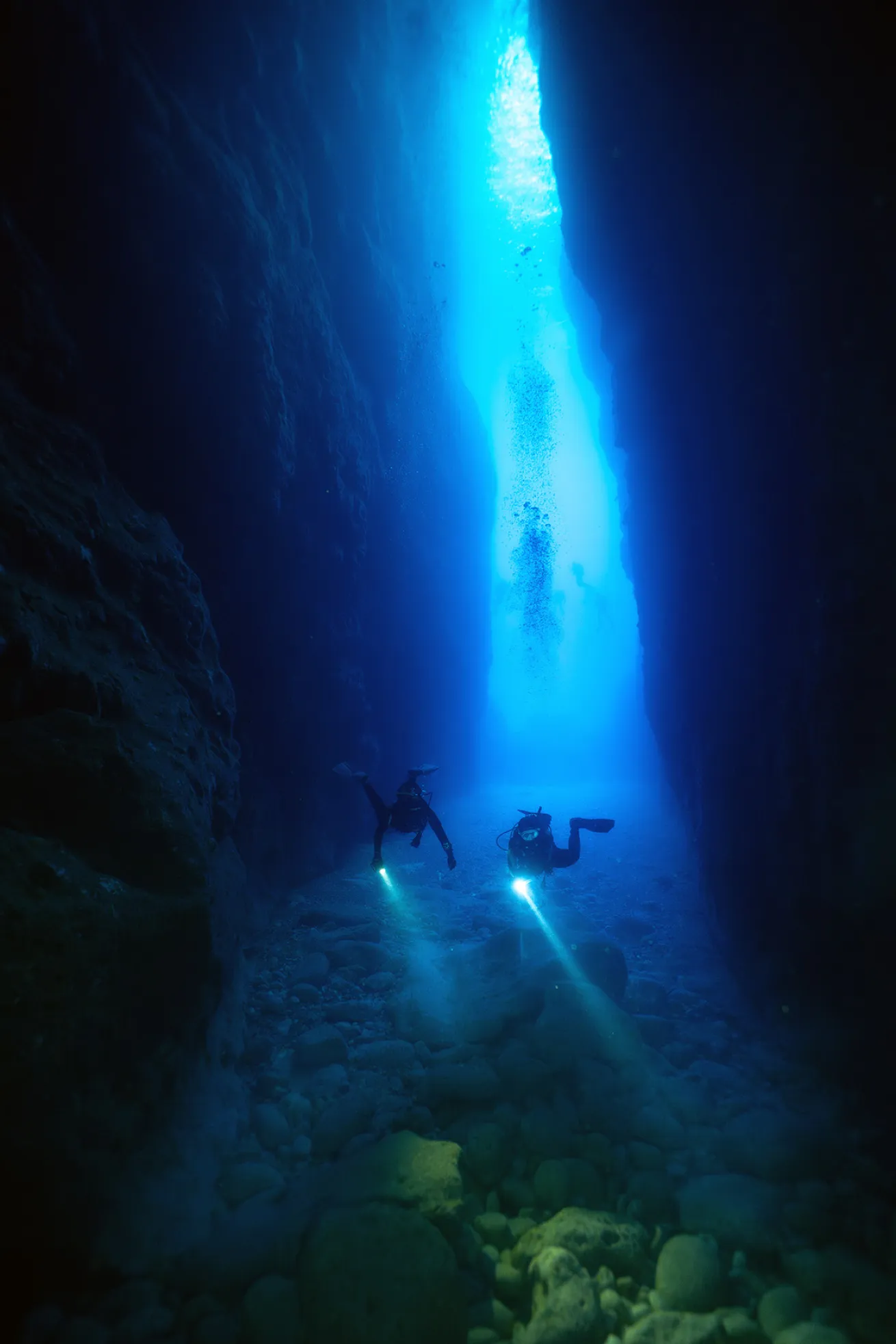
The Inland Sea (adjacent to the Blue Hole) is another breathtaking spot. The ocean spills through a channel, connecting a semicircle inland lagoon with the open ocean via a 263-foot tunnel with deep, vertical, overhanging walls.
The dive begins on the shore of a small fishing village, following the tunnel around 33-foot depth before exiting onto a steep wall. From there, you can travel left or right before returning through the tunnel. There’s good marine life here, including parrotfish, bream, nudibranchs, sea hares, octopus and mesmerizing fried egg jellyfish, which look exactly like their name suggests.
(Tip: Be wary of boat traffic, especially in the tunnel.)
Due to Gozo’s small size, most dive sites are a short drive and shore entry, and they can be interchanged based on weather conditions.
Related Reading: Why Do Octopuses Change Color? How It Works and Why They Do It
Back to School
Along with recreational diving, Gozo offers the opportunity to go back to school and develop or expand your skills, either in tec diving or in freediving, which is what we tried.
There are a few quality freediving schools on Gozo offering a variety of courses, ranging from intro to instructor. Most courses include confined-water sessions paired with “dry training”, which involves breathing exercises (the core to freediving), yoga (stretching and relaxation helps you fill your lungs to capacity), and equalization practice.
One of the most peculiar aspects of learning to freedive is understanding and experiencing diaphragm fluttering, a precursor to wanting to draw a breath. A trick to freediving is both recognizing and shelving that feeling, so you can relax and safely push past it.
We dove with world champion freediver Jesper Stechmann and his skilled team at Innerdive. They also offer guided freediving and snorkel trips around the island, workshops, breathing classes and an immersive seven-day, on-site course, blending theory, pool and ocean sessions, dry-skills and plenty of camaraderie.
Why try freediving if you’re a scuba diver? Along with improving your air consumption, practicing calmness and self-reliance never go amiss, and freediving skills are wholly transferable to scuba diving.
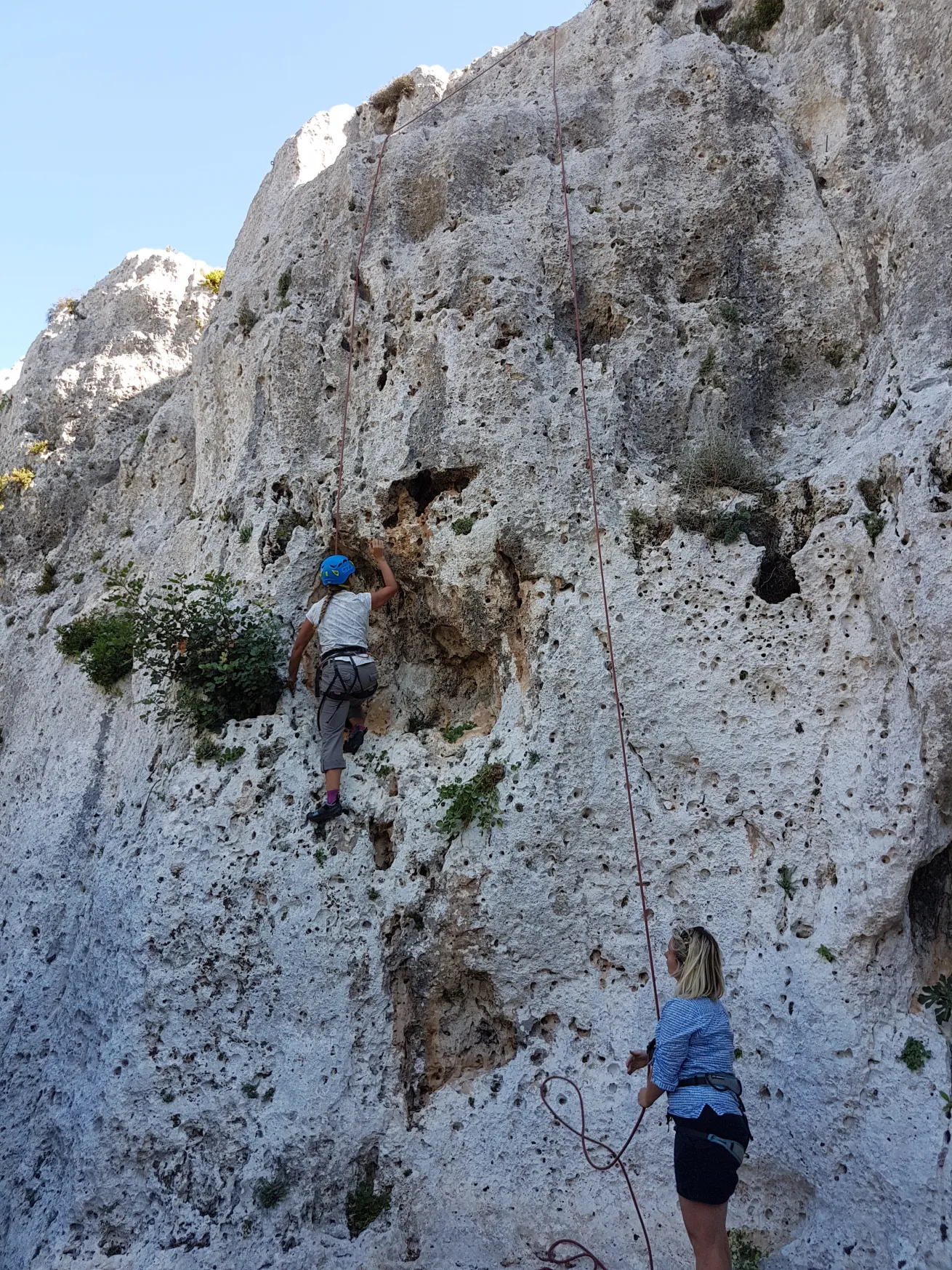
Chris TaylorClimbing and diving both give you a different perspective on the world, and Gozo is a great place to give climbing a try.
Climbing to New Heights
Gozo is another destination that is ideal for divers traveling with non-diving companions. There is so much to do here, from exploring the ancient and formidable Cittadella, to a driving tour of Gozo’s 13 villages (depending on how you count), to enjoying a cold one at Lord Chambray (Gozo’s first craft beer brewery) or the iconic Gleaneagles Bar, overlooking Mgarr Harbour.
Gozo’s landscape makes you want to be a kid again, with rocks to scramble over and coves to swim in. With 26.7-miles of coastline, it’s easy to understand why kayaking is such a popular sport here, but—in the Gozitan spirit—we suggest climbing with Gozo Adventures.
Climbing and diving are both activities that give you a different perspective on the world—you see in vertical, beyond the horizontal. They also require being present and mindful, to be a part of your environment rather than working against it.
(Tip: Gozo is an ideal place for beginners to give climbing a try. For experienced climbers, Gozo is a playground! More than half its coastline is cliff-faces, offering natural holds and uncounted adventures.)
Related Reading: Diving the Devil's Lake in Wisconsin
Need to Know
When to Go: Year-round. Summer is hot and crowded, but with calm seas and excellent visibility. Temperatures cool and crowds thin in October (a good month to visit), and November/December bring rain. April through June is ideal for outdoor activities: warm, with long hours of sunshine. Many places are closed on Sundays.
Dive Conditions: Visibility is usually 65+ feet. Water temperatures are around 57 degrees in winter and 81 degrees in summer. Gozo has a wide range of depths, from 17 feet to 131+ feet. Suitable for divers of all levels; ideal for tech divers and free divers.
Operators: Atlantis Diving Centre is a PADI 5 Star IDC dive center. This family-run operation offers everything from Discover Scuba Diving courses to tec diving courses to dive-and-stay accommodation options. They also offer freediving courses and guided excursions through Apena Freediving. World champion free diver Jesper Stechmann is one of an elite team of instructors teaching absolute beginners through pros at Innerdive’s purpose-built freediving center. Safaris (guided freediving and snorkeling around Gozo) are also offered.
Travel Tips: It’s an hour’s drive from Malta International Airport to the ferry terminal at Cirkewwa Harbour, and then a 25-minute crossing to Mgarr Harbour in Gozo. Gozo is only accessible by ferry: they operate regularly, and you pay for your round-trip ticket on your return journey from Gozo to Malta. Renting a car is a good way to get around. Mayjo Car Rentals is a good establishment offering everything from car rentals to tours to transfers.
Make a Difference: Malta’s marine protected areas are larger than the country itself. However, even if Malta wanted to take a stronger environmental stand, the country sits astride the Mediterranean’s principal shipping routes and commercial fishing areas, a prime example of the need for global (as well as local and country-wide) change. Global experts agree we need to work faster to protect the world’s landscapes and wildlife, the target being 30% of land and sea territories by 2030. Often this goal seems to take the backseat due to more immediate concerns, but what could be more important than protecting our shared life support system?
What can you do? Stay informed, support global (and local) conservation efforts, and vote. Keep the pressure on business leaders and politicians to prioritize protection.
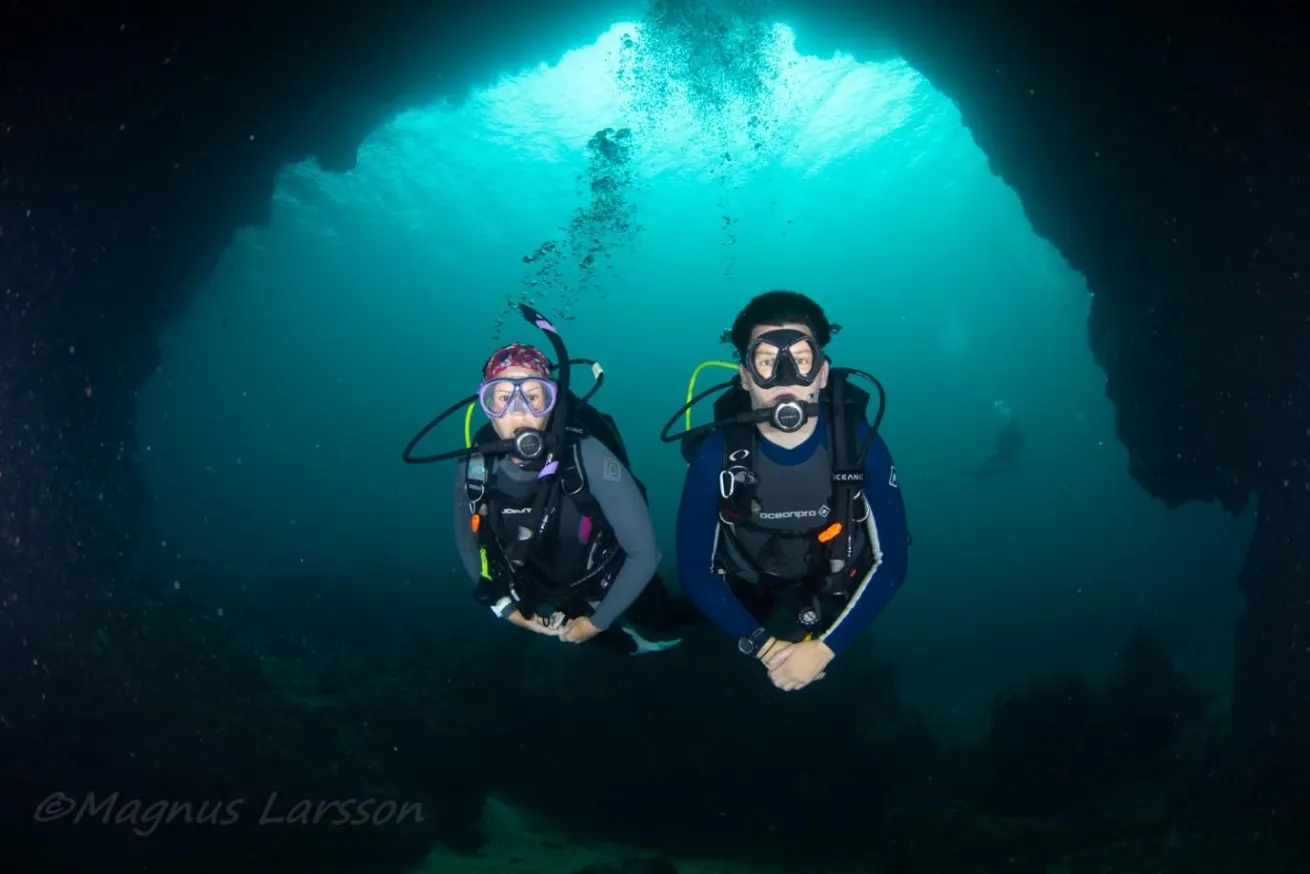
To create their unique National Geographic book, A Diver’s Guide to the World: Remarkable Dive Travel Destinations Above and Beneath the Surface, dive travel experts Carrie Miller and Chris Taylor traveled to 50 inspirational locations around the world, spending more than 250 hours underwater. Carrie is also the author of 100 Dives of a Lifetime: The World's Ultimate Underwater Destinations. @beneaththesurfacemedia; @carriemiller_writer