

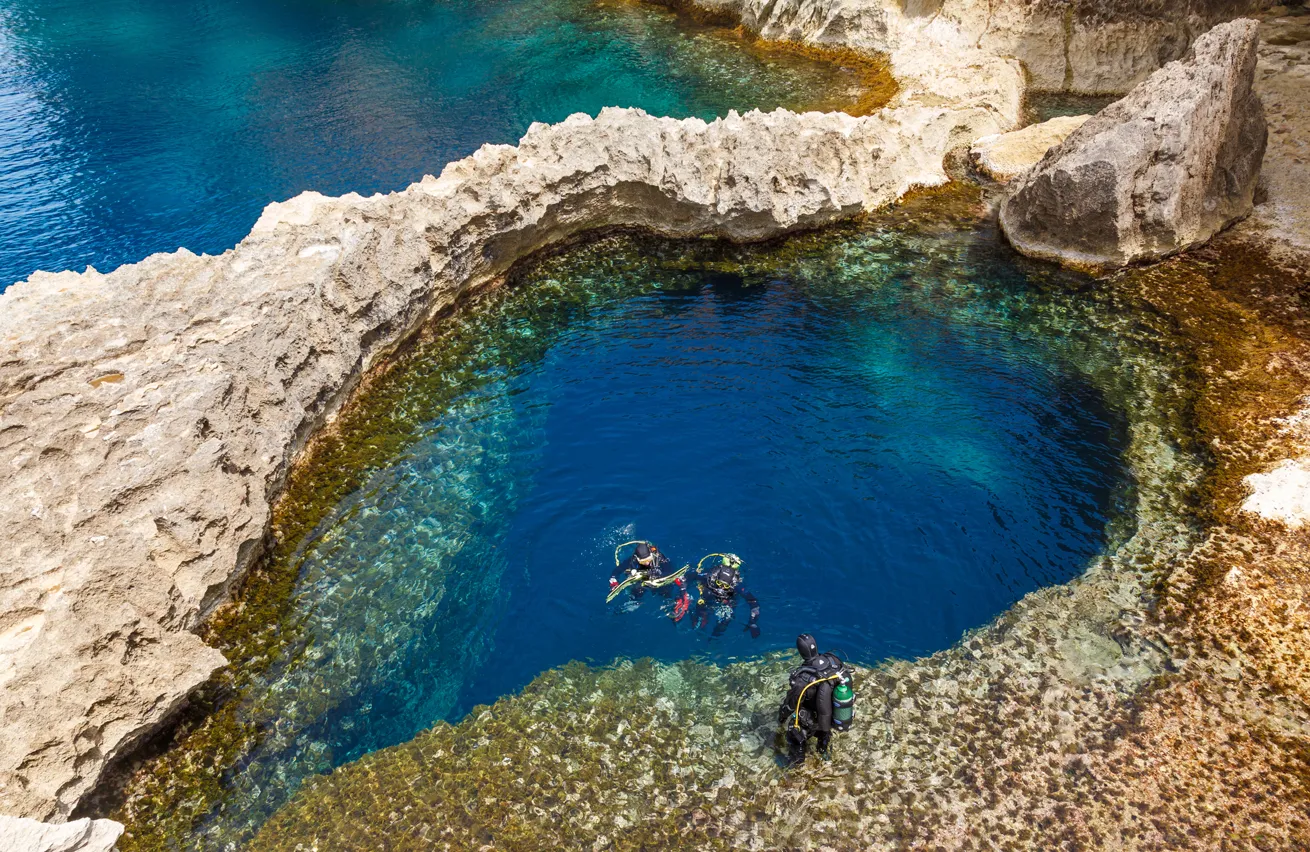
Shutterstock/Mikhail StarodubovA lovely heart-shaped opening marks the entrance of an underwater cave near Azure Window in Gozo, Malta.
Malta
Gozo, the westernmost island of Malta, is heralded among divers not for marine life or corals, but for only-here underwater topography—the majority of which is accessed from shore. Credit erosion and submerged landslides for these unique dive sites: a blue hole, an inland sea, massive limestone arches and caves galore.
Best of all, every coast delivers. The island spans just 26 square miles, making it manageable to easily explore.
One of the most famous, the blue hole, is a shore dive. This site—technically a cave with a collapsed roof—sits at the ocean’s edge, hemmed in by a thin limestone wall. From shore, it’s a short walk through shin-high water to the drop-in spot.
“Everyone is astonished by the cobalt-blue water,” says Brian Azzopardi, owner of Atlantis Gozo Diving Centre and PADI MSDT instructor.
The standard route leads through a wide rock tunnel, past boulders as big as shipping containers, to the open sea. There, the marine life may not serve as the star attraction, but they’re a draw just the same. Balls of sardines flow over the boulders, teasing brown grouper lying in wait.
“Hover over the boulders and you’ll see tuna and jacks chasing the small fish—it’s a brilliant show,” he says.
Related Reading: Best Destinations for Snorkeling
Need to Know Diving Malta
When to Go Find the warmest waters May to October. November to April is drysuit season, when very few tourists visit.
Water Temps From 82 degrees in summer to 59 degrees in winter.
Don’t Miss Gozo is also famous for wreck dives, most of which lie in deep water. However, recreational divers can explore M/V Karwela, a shore dive on Gozo’s south coast. This former passenger ferry’s top deck starts in 90 feet of water. “Everybody wants to get a picture on the staircase,” says Azzopardi. “It’s the most iconic wreck on Gozo.”
Contact Atlantis Gozo Diving Centre (atlantisgozo.com)
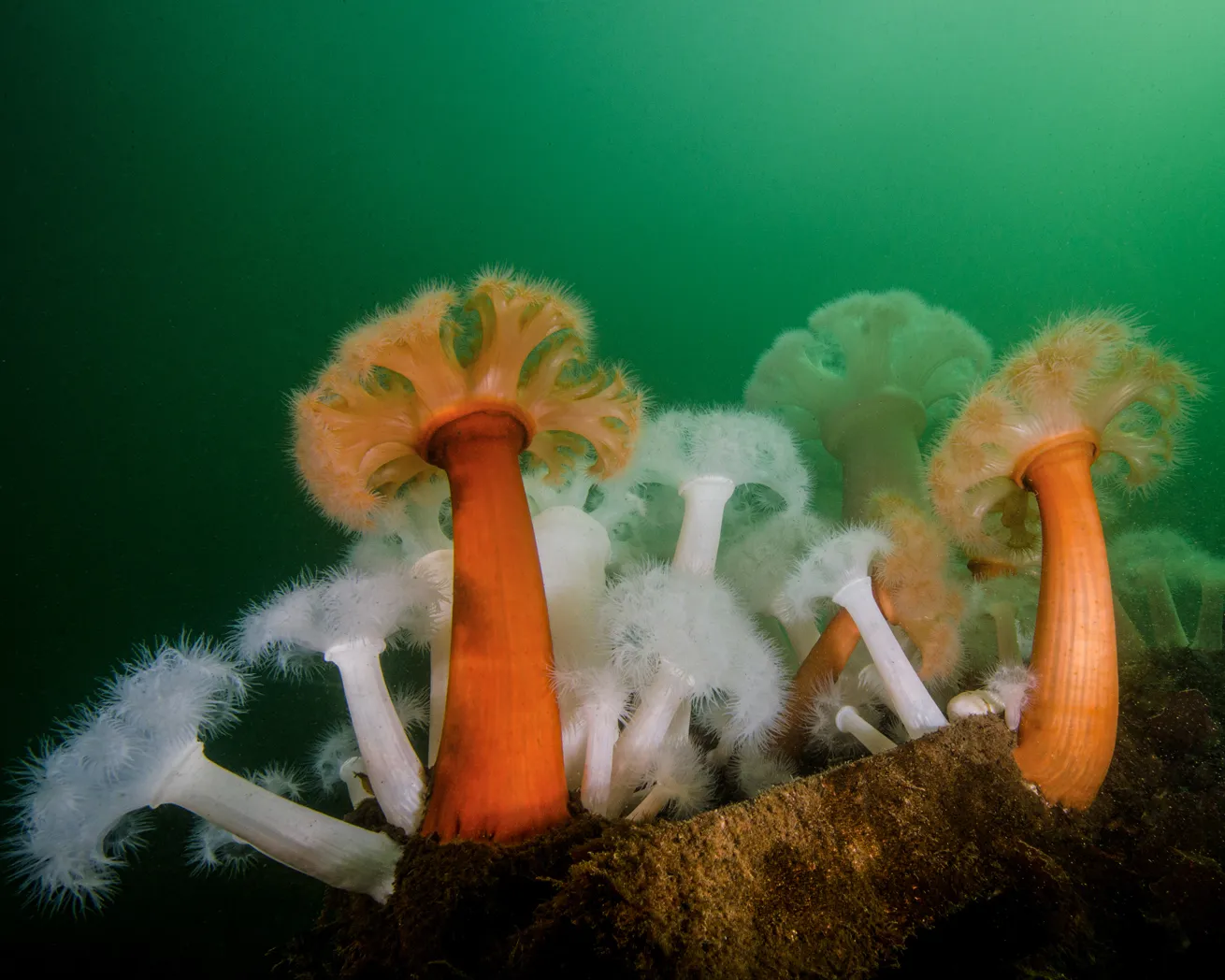
Shutterstock/John PiekosFeathery plumose anemones flourish at a dive site in Washington’s Puget Sound.
Washington State
For shore divers looking for the best of Pacific Northwest diving in Washington state, there’s no easier spot in the Hood Canal area than YSS Reef.
This hidden gem of a site doesn’t make it onto most dive maps, but it’s an easy find just the same. YSS Reef lies just behind YSS Dive, a popular scuba center located waterside on U.S. 101 in the town of Hoodsport.
“For the most part, what you’ve come to see is all right there,” says dive center co-owner Katherine Yackel, referring to the wolf eels, rockfish, anemones and the giant Pacific octopus, or GPO, as she calls it.
The house reef is a nursery for GPOs, giving divers the chance to lay eyes on babies the size of a fist—a special treat. A small field of bottles is of particular interest to the GPOs, which seem to appreciate the additional shelter. Moreover, this species of octopus lays eggs all year round, so it’s possible to see juveniles at any time.
“This past weekend, on every dive someone saw one of the babies, sometimes half out of a bottle, poking its eyes out,” she says. “Divers think it’s the coolest thing ever.”
Nearby are another six shore dives, including Octopus Hole, one of the most popular spots known for ledges and reefs that provide ample habitat for underwater life.
But should you ask Yackle, she’ll tell you the name is a bit misleading. “The funny thing is, it’s wolf eels that I see all the time—I’ve never seen an octopus there,” she says.
Need to Know Diving Washington State
When to Go The cooler months, October to March, offer visibility of 30 to 50 feet. Summer’s algae blooms limit visibility to 20 feet.
Water Temps At depth, 46 to 50 degrees in summer and 44 degrees in winter.
Don’t Miss Sund Rock Conservation Area, a renowned shore diving park just a five-minute drive from YSS Dive, serves up all the best of Pacific Northwest diving, including wolf eels, GPOs, giant plumose anemones and the occasional six-gill shark.
Contact YSS Dive (yssdive.com)
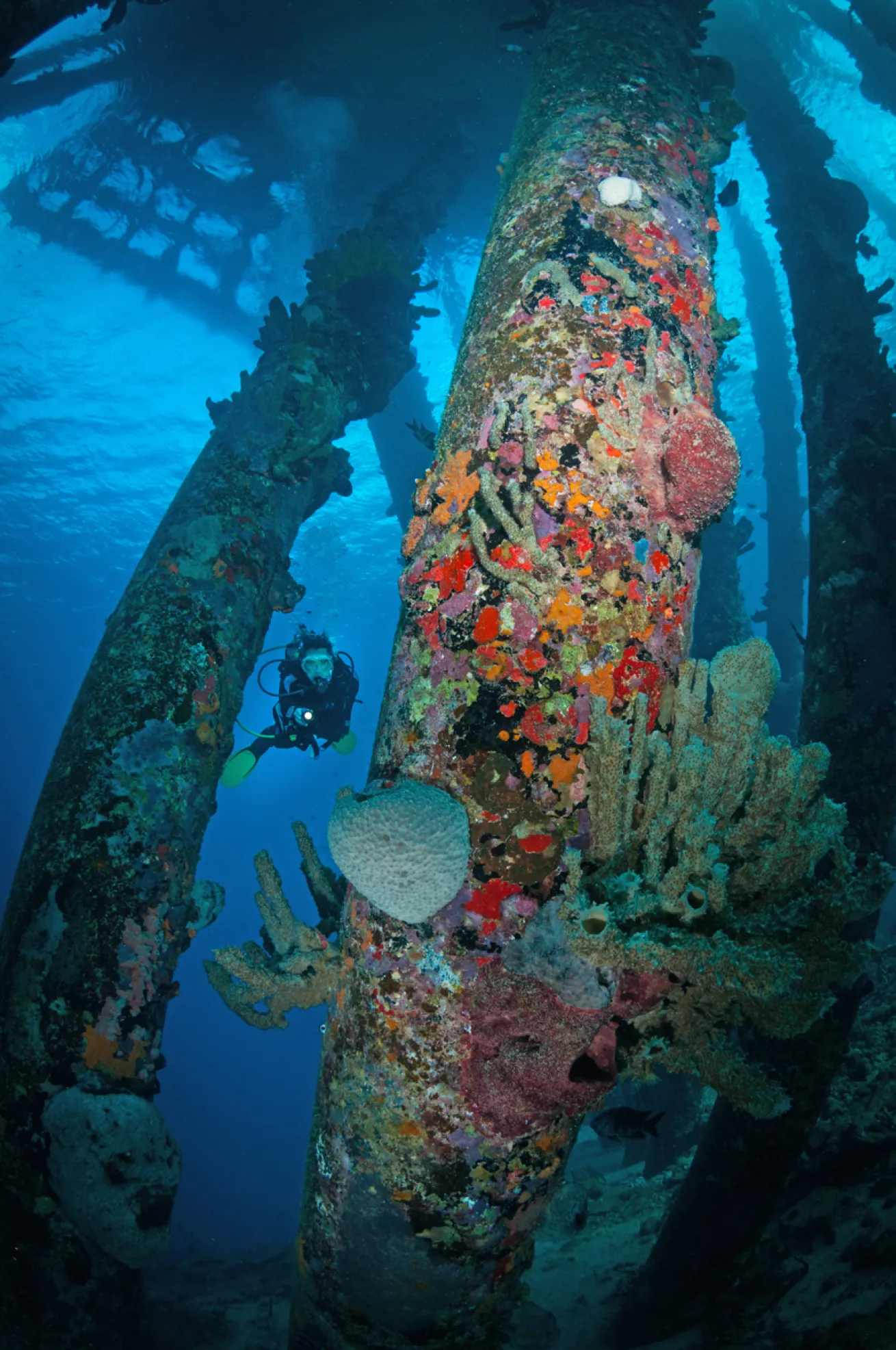
Shutterstock/Timsimages.UKA diver comes in for a closer inspection of the vibrant coral growth on a piling at Bonaire’s Salt Pier dive site.
Bonaire
Bonaire is legendary for shore diving: Nearly every stretch of the leeward coast offers access to coral-packed reefs, making it so that guests need not leave their resort’s front yard to experience some of the best of what this destination offers.
Nearly every resort offers a house reef where the corals and marine life can often be found within the first 20 yards. Van der Valk Plaza Beach and Dive Resort offers one of the easiest experiences, starting with its white-sand beach offering a flat entry and gently sloping bottom. The resort also provides gear carts, so there’s no need to lug tanks and heavy gear.
The house reef, also known as 18th Palm, serves as a relaxing refresher dive and a rewarding night dive. The rocks and reef are home to octopuses, lobsters and more than 30 species of crab, including the ocellate swimming crab.
If diving at night, prepare to be followed. Tarpon aren’t found at every site on Bonaire, but they gather regularly in front of Plaza Resort.
“They follow your light, hunting,” says Denise Korsten, shop manager with Toucan Diving, the in-house scuba operator of Plaza Resort. “Sometimes they come a bit too close for comfort, but generally, it’s a fun thrill.”
Beyond the house reef, Korsten recommends renting a truck and exploring south of the resort.
“The farther south you go, the fewer people dive those sites, so the coral is healthier and you see more turtles,” she says.
At the site Sweet Dreams, dense fields of sea fans and soft corals occupy the shallows. This zone can be fun to linger, watching the surge entice the fans to sway with the swell—giving divers that sleepy feeling that earned the site its moniker.
Related Reading: Best Destinations for Wreck Diving
Need to Know Diving Bonaire
When to Go Dive Bonaire year-round. The best deals can be had May, September and October. Low season is considered mid-April through mid-December.
Water Temps Water ranges from 80 to 86 degrees; August and September are the warmest.
Don’t Miss The Salt Pier is a favorite for a reason. “Big groups of fish feel protected by the piers,” says Korsten. Divers regularly see groups of barracuda as well as bigeye scad, grunts, schoolmaster snapper and bar jacks.
Contact Toucan Diving (toucandiving.com)
Readers Choice Awards 2025
This year we surveyed 8,566 readers on their favorite destinations, resorts, operators and liveaboards, awarding their top picks across a variety of categories. Our Readers Choice travel feature highlights the first-place destinations in each global region and offers a taste of what makes each a reader favorite.
Click here to see all Readers Choice award-winning resorts, operators and liveaboards.


