

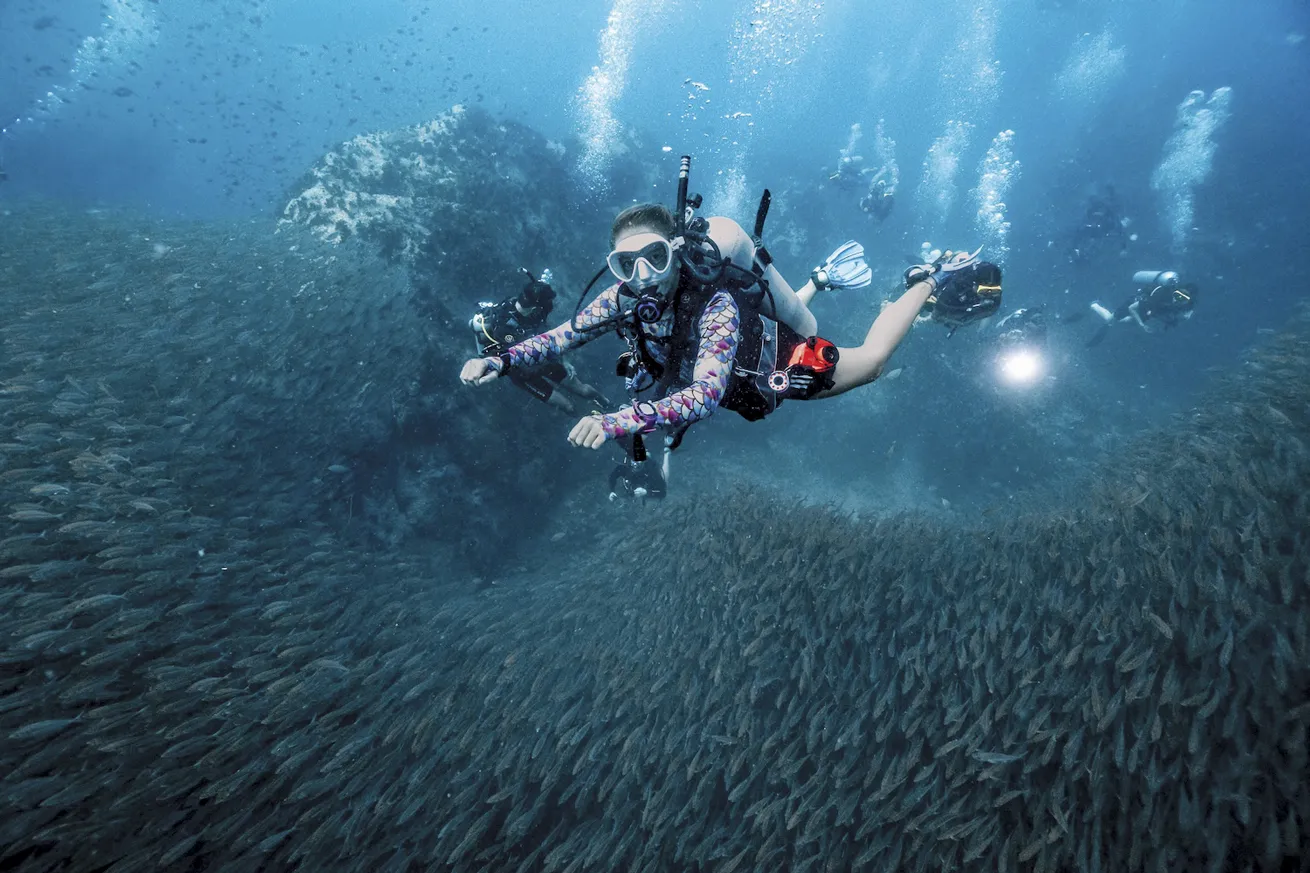
Courtesy Black Turtle DiveKoh Tao’s waters are teeming with life.
Koh Tao has long been synonymous with diving. Since the late 1990s, the 8-square-mile Thai island has certified hundreds of thousands of divers, earning its reputation as one of the world’s most accessible places to dive. But as it’s grown into a dive hub, it has also had to reckon with the environmental pressures that come with success.
Koh Tao: A Changing Island
Co-founders of Black Turtle Dive, Matt Bolton and Nantiya Thongnual, have seen the island change over the decades. Thongnual’s family has been on the island for three generations, and she spent her childhood swimming in the sea.
“I arrived on Koh Tao in 1997,” says Bolton. “By 1999, I knew this was somewhere I wanted to stay and really invest my time.”
Back then, Koh Tao was quiet, lightly developed and largely unknown outside the dive community. By 2007, Bolton noticed rising tourist numbers taking a visible toll on Koh Tao’s reefs through increased diver traffic and broken corals, prompting him to found Eco Koh Tao. Central to this was the creation of Junkyard Reef, an artificial dive site that gives novice divers a dedicated training ground and takes pressure off the island’s natural reefs. The organization also spurred the start of reef surveys, beach cleanups and the early stages of coral transplanting.
Related Reading: Largest-Ever Coral Colony Recorded on Great Barrier Reef
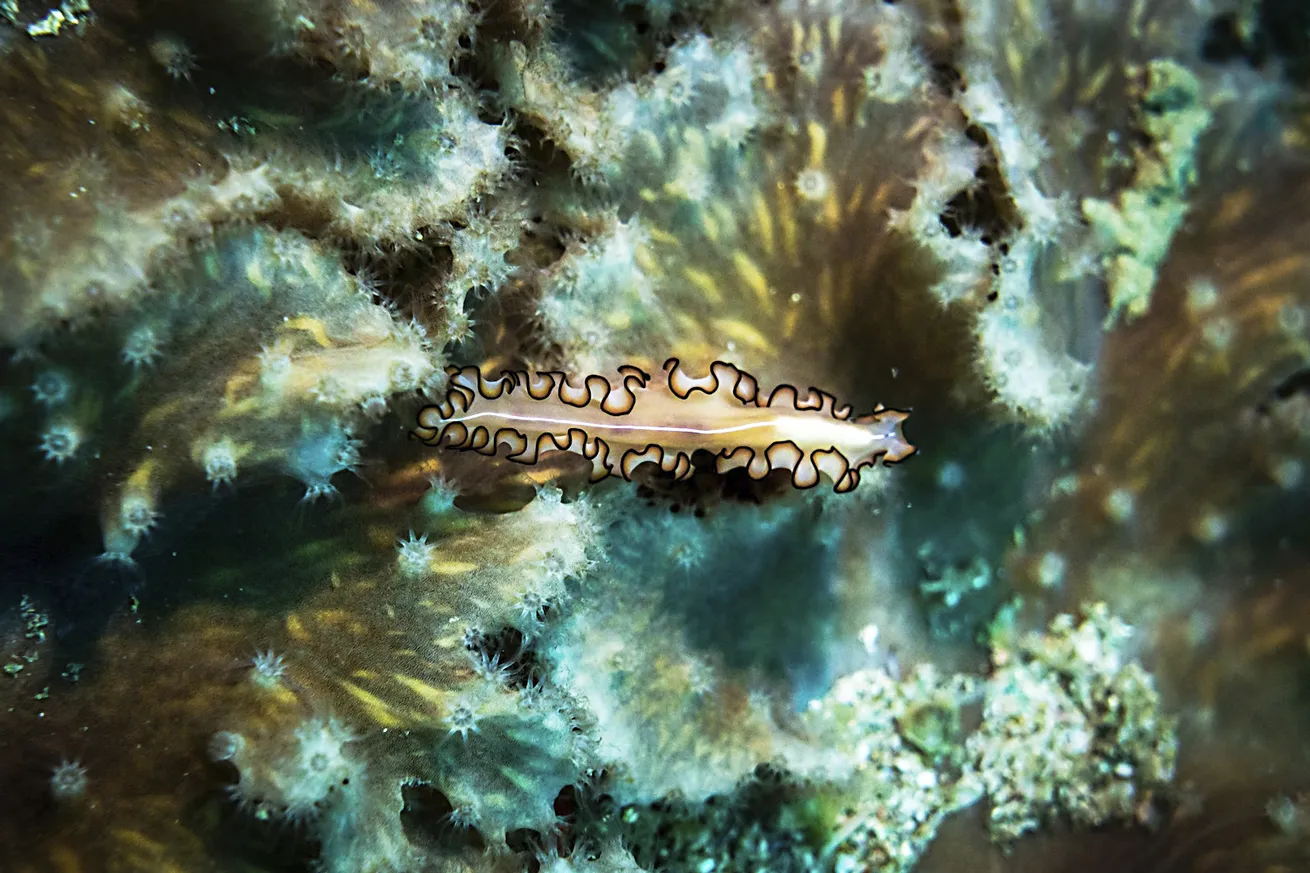
Courtesy Black Turtle DiveThe delicate ruffles of an Orsak’s flatworm.
Today, Koh Tao is a lively island with more than 80 dive operators, receiving a near-constant flow of boats heading to the reefs—as many as 3,000 tourists arriving daily during the high season. For dive professionals like Bolton and Thongnual, the challenge has been protecting the coral reefs and marine life that built the island’s reputation in the first place.
“Some days you go to bed thinking, Is there any hope? ” says Bolton. “And then the next morning, there are two whale sharks on the dive site.”
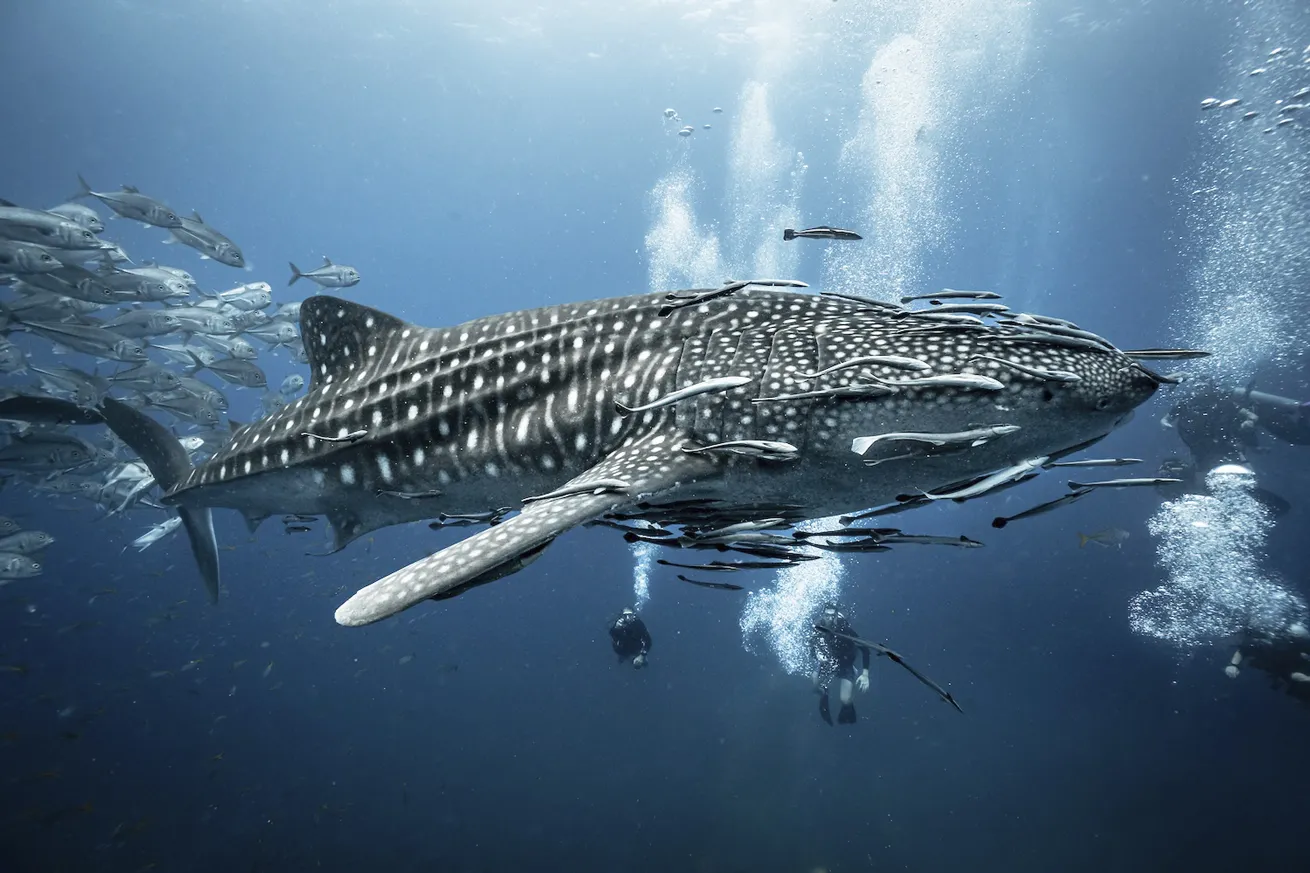
Courtesy Black Turtle DiveWhale sharks are year-round visitors in Koh Tao.
Must-See Marine Life Diving in Thailand
Whale sharks, once seasonal visitors, now appear sporadically throughout the year, often lingering for weeks at a time. Their presence can be so consistent that instructors sometimes joke they can’t finish a course. It’s hard to focus on skills training when a whale shark cruises past, leaving students mesmerized.
Related Reading: Close Encounter With a Whale Shark
Green and hawksbill turtles are frequent visitors, and blacktip reef sharks are regularly spotted. For an island with such high diver traffic, the persistence of large marine life speaks to the resilience of the ecosystem.
“Considering the number of tourists and boats here, the marine life still amazes me,” Bolton says. “There are days when I look at the reef, and it still glows.”
Thailand's Growing Marine Conservation Efforts
Today’s divers are becoming increasingly conscious of their environmental impact and are seeking dive operators that foster a sense of stewardship toward marine life. Dive centers, like Black Turtle Dive, have seen that promoting marine conservation pays off.
Coral Restoration
Black Turtle Dive’s coral restoration and reef development initiatives are the shining pearls of its conservation efforts.
“We’re transplanting different coral species and monitoring survival rates, disease and growth,” Bolton says. “This isn’t just planting coral and walking away.”
Working in collaboration with marine researchers and Thailand’s Department of Marine and Coastal Resources (DMCR), Black Turtle Dive has deployed MOSES (Modular Sealife System), an artificial reef structure designed by ReefSystems to house coral fragments and spur new reef growth. This system is made from hexagon-shaped interlocking blocks that are easily customized to each dive site, like a honeycomb. Their hollow centers provide shelter for small and juvenile marine life as soon as the blocks are placed on the seabed.
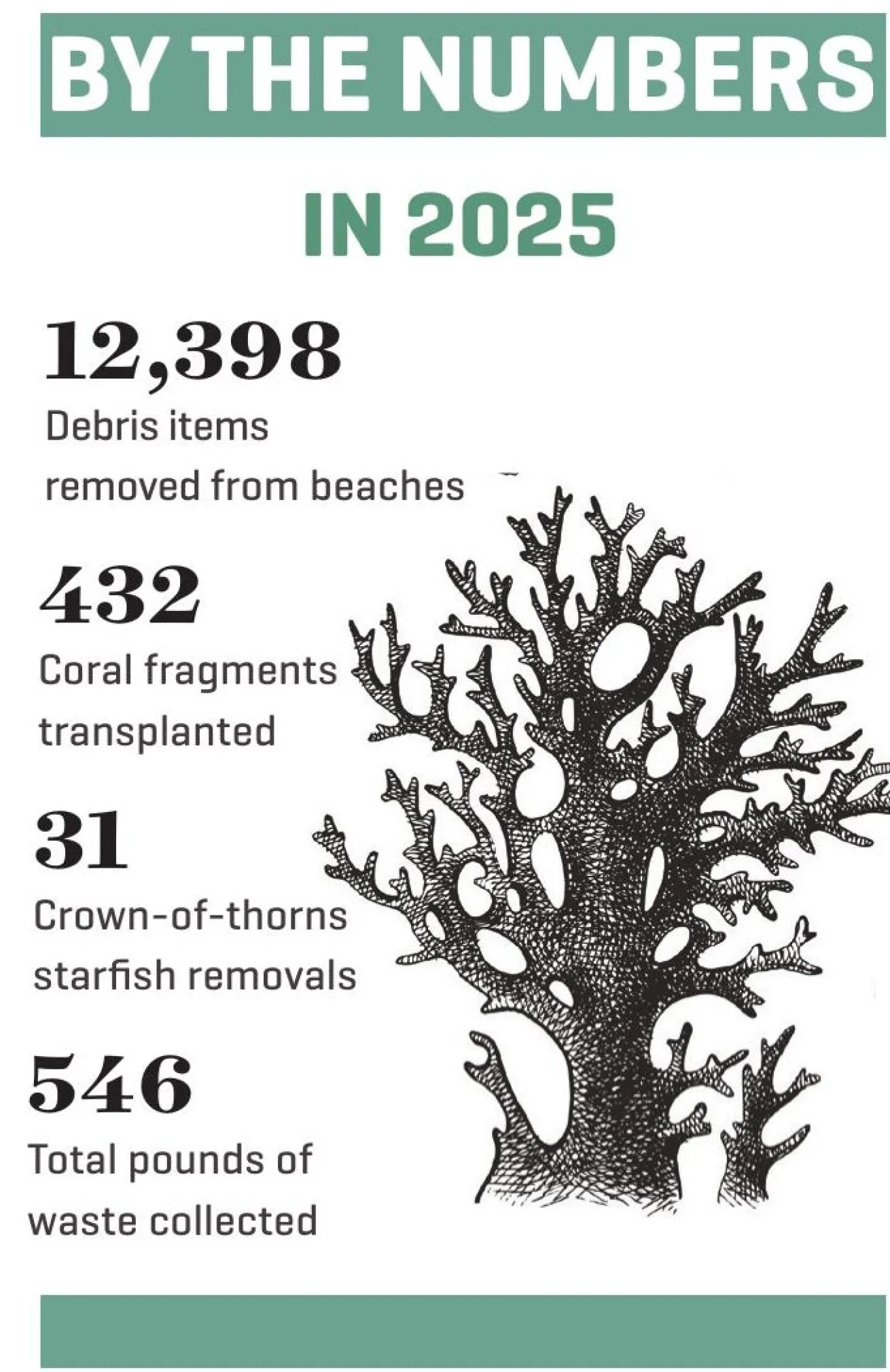
In 2025, 432 coral fragments were transplanted onto an artificial reef structure to be monitored. Long-term, Black Turtle Dive and ReefSystems hope to establish local production facilities for these blocks to expand sites.
These artificial reefs also divert scuba training activity away from natural reefs. Divers can practice and perfect their buoyancy without damaging decades of coral growth with a single fin kick. Ideally, today’s training grounds will become the next decade’s thriving coral gardens.
While coral restoration may be the flagship project, it’s only one piece of Black Turtle Dive’s broader conservation framework. Over the past four years, the operation has built a dedicated science department, now staffed by six researchers and field specialists.
“We’re trying to run education alongside conservation, alongside research—where all three have to exist together,” says Bolton.
Marine Life Monitoring
Black Turtle Dive’s conservation programs suit divers visiting for a few days or several months. From multidive PADI AWARE courses and marine-animal monitoring programs to an eight-week education track, the center works closely with marine scientists and Conservation Diver to deliver immersive, data-driven experiences. Divers interested in obtaining their PADI Divemaster certification can do so with a marine conservation specialty.
Divers with a keen eye for critter spotting can assist by surveying marine life of all sizes. In 2025, the Black Turtle Dive team documented 73 sea turtle sightings, 144 shark sightings and 1,355 nudibranch sightings, representing 38 species, along with many other marine organisms. This information feeds into larger databases used to track marine animal behavior and reef health. Some projects, like Black Turtle Dive’s shark surveys, compare sightings with diver versus nondiver presence by deploying cameras.
Crown-of-Thorns Removal
Koh Tao also suffers from an overabundance of crown-of-thorns starfish, a coral-eating species with few natural predators. In 2025, Black Turtle Dive recorded 144 crown-of-thorns starfish and removed 31 from priority reef sites under heightened environmental pressure.
Related Reading: The Black Sea Turtle's Great Comeback
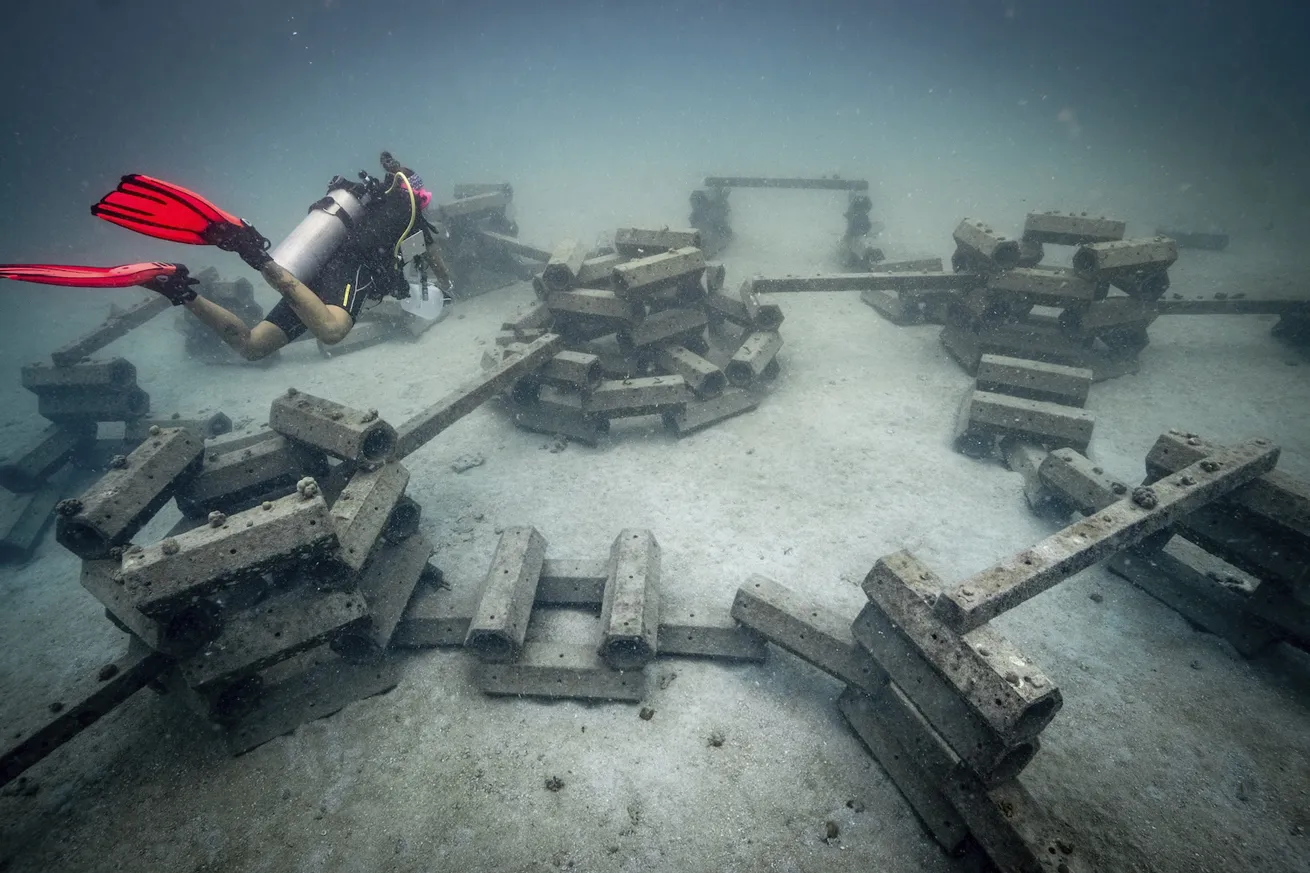
Courtesy Black Turtle Dive IllustrationThe honeycomb design of these artificial reef blocks creates safe havens for small critters.
Waste Management
Like many island destinations, Koh Tao faces growing waste-management challenges. Weekly beach cleanups with Black Turtle Dive in 2025 led to the removal of 547 pounds of waste, including 4,654 plastic items and nearly 2,784 pieces of polystyrene. The dive center also runs a Cigarette Butt Challenge, which prevented 3,582 discarded cigarette butts from entering the ocean last year.
In Black Turtle Dive’s 2025 documentary, Ocean Is Life, Thongnual says people don’t travel thousands of miles to Koh Tao just for the diving. “I want to show the world how beautiful and peaceful Koh Tao is. It’s not only about nature, but also about the people—who are very kind.”
Bolton says, “Koh Tao [still] has a little magic about it that it had 26 years ago. You can still feel like you’re at one with nature, even on such a small island with so many people and motorbikes during the high season. And there’s no better place in the world for food.”


