

Shutterstock/SCStock
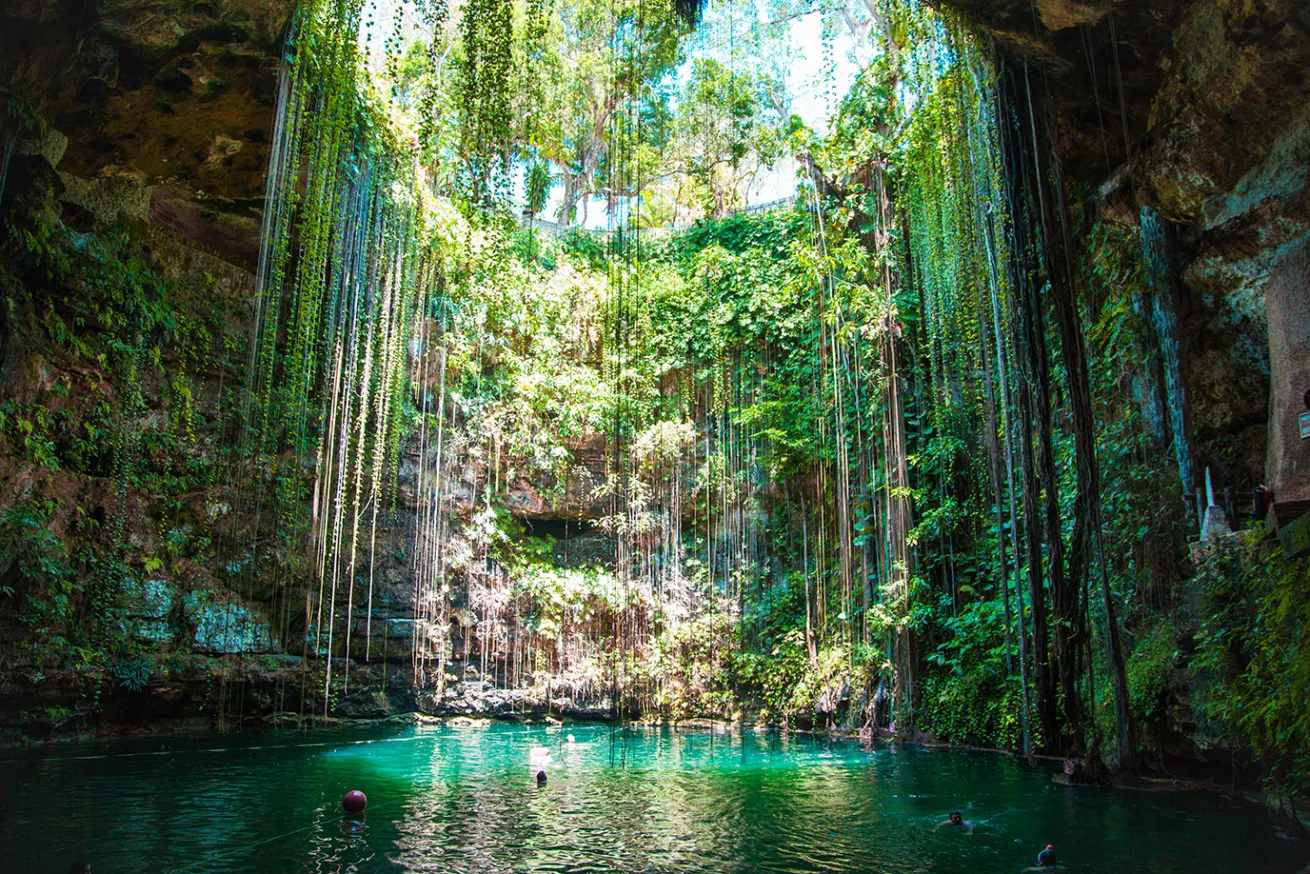
In Mexico’s Riviera Maya, the heart of ancient culture beats loudly in modern life. From the street art to the language to the preserved ruins, Maya influence is felt everywhere. For scuba divers, one of the best ways to connect with this world is diving the region’s cenotes—freshwater caverns that were sacred for the historic civilization, central to both agriculture and religious ritual.
I’ve been privileged to spend the last two winters diving here. After my first cenote, I was spellbound by the crystal-clear waters and sense of adventure, and I made it my mission to explore as many caverns as I could.
Beneath the Riviera Maya lies one of the largest underwater cave systems in the world. This guide highlights the cavern dives available at each site. The good news? Most cenotes are accessible to open water divers, though a few call for an advanced certification. In the caverns, you’ll always remain within sight of natural light and a clear exit, following simple safety rules that make these dives both accessible and unforgettable.
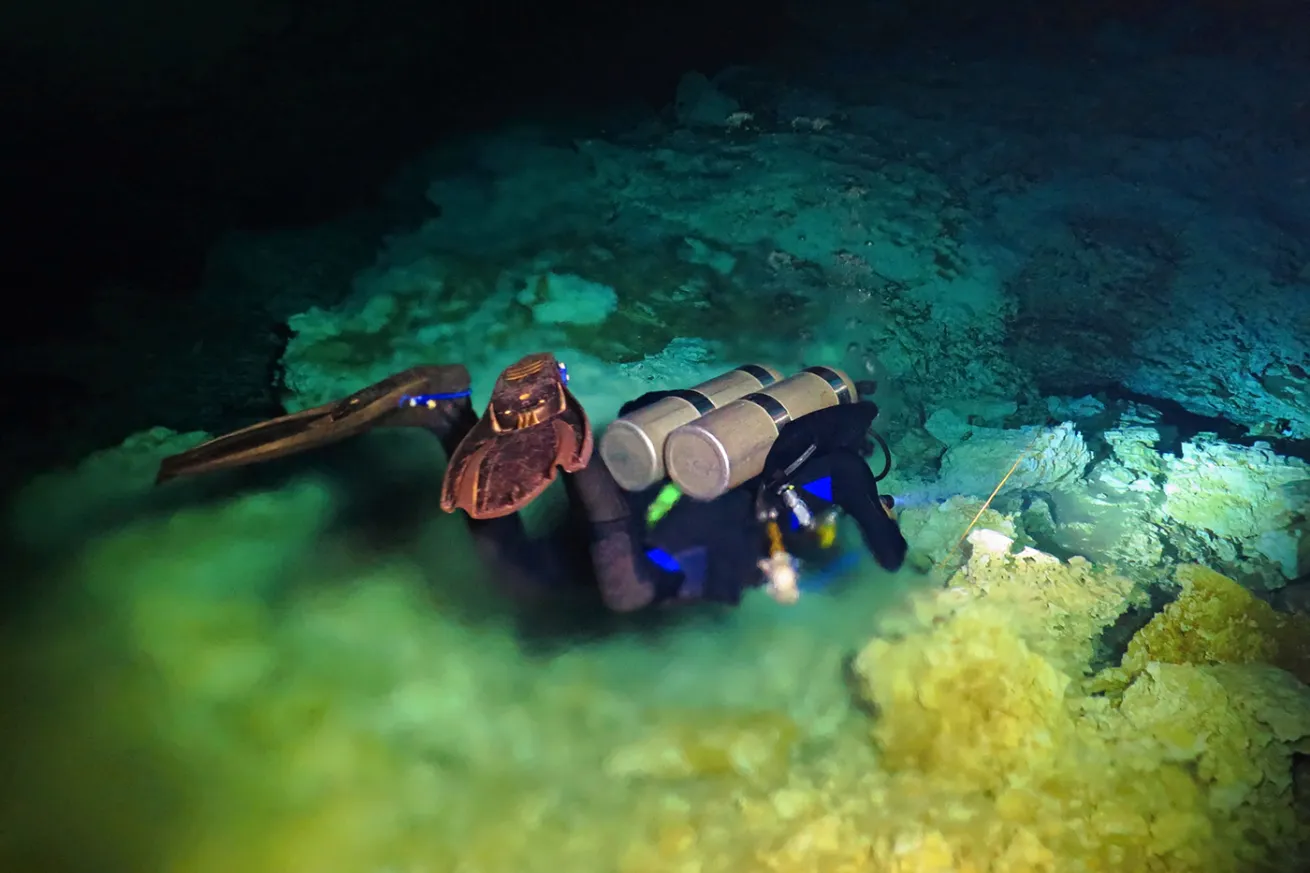
Shutterstock.com/blue-sea.czCave diver descending from clear freshwater into distorted-looking saltwater signifying halocline
A few quick terms to remember:
Cavern Diving: Diving in an overhead environment that lies within the zone of natural light from the opening
Cave Diving: Diving in an overhead environment outside of the natural light zone. Requires advanced, technical training and specialized equipment.
Halocline: Where fresh and salt water meet, creating a visually distorted, blurry layer.
Hydrogen sulfide/cloud: When organic matter falls into a cenote, it decays, producing white hydrogen sulfide. This collects as a cloud.
Decoration/structures: This refers to speleothems—stalagmites and stalactites formed over millennia.
Must-See Riviera Maya Cenotes
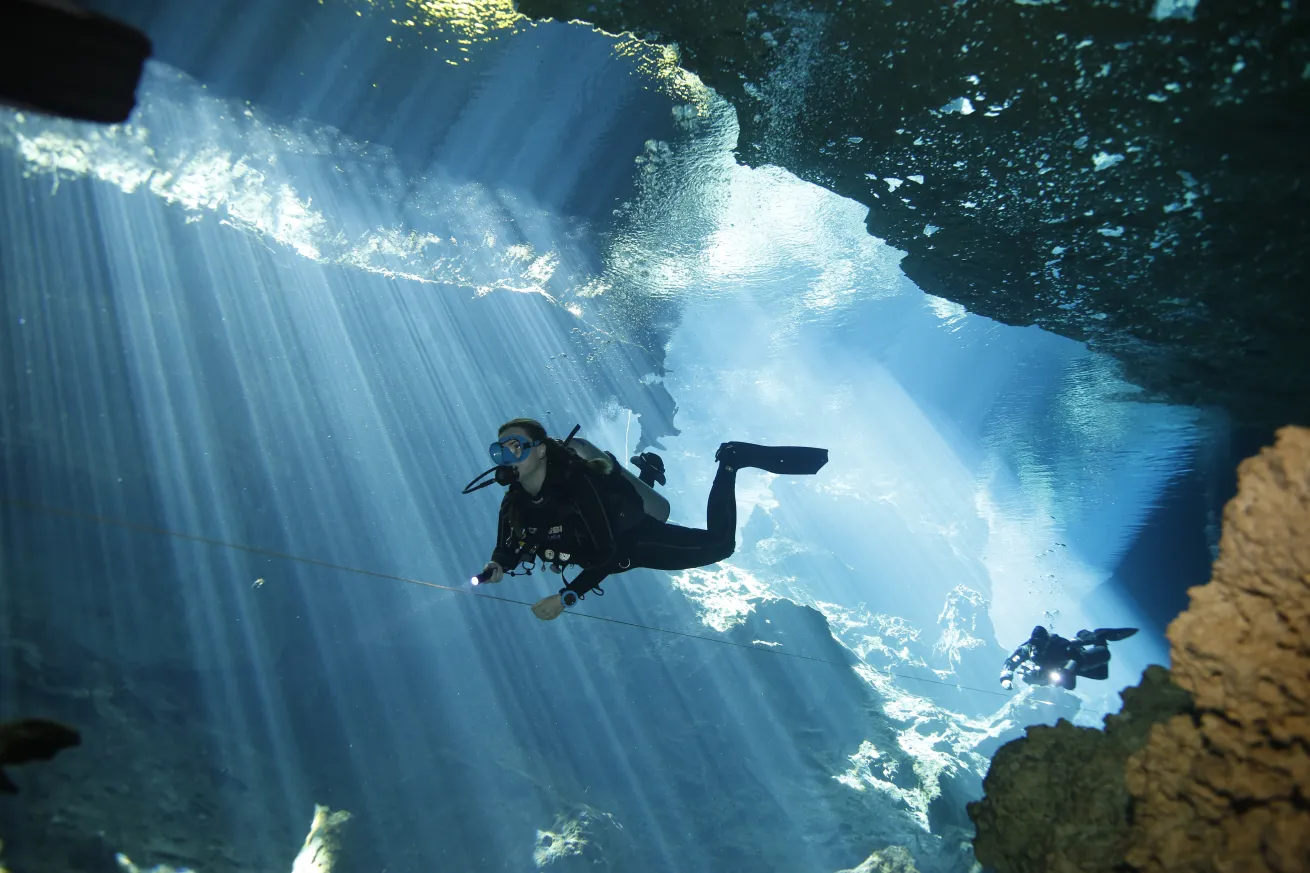
Courtesy Triton ProductionsDivers follow a guideline while exploring cenote Kukulkan.
If you only have one day to dive but want a taste of everything the cenotes have to offer, visit these. You’ll see vivid light beams, weave through shadowed cavern areas, and pass through halocline and hydrogen sulfide clouds. All of them thoroughly demonstrate exactly why the Maya considered cenotes mystical.
My top recommendations are Kukulkan and Little Brother at Chac Mool park. These are the cenotes that hooked me. They have the most immense light chasms and are all-round breathtaking introductions to the caverns.
Dos Ojos is also popular, offering two dives winding through decorated tunnels. You’ll see mesmerizing light through astonishingly clear water and even surface inside a batcave.
For something deeper, El Pit is an aptly named and enormous sinkhole carrying an ancient, grandfatherly energy. You’ll first explore the rocky lower level, then ascend in a spiral to appreciate the monumental beams, commanding stalactites and overall vastness of El Pit.
(Editor’s Note: El Pit is currently closed as of February 2026 due to deteriorating environmental conditions until the beginning of April when the site will be reassessed. Please reach out to a local dive center for more information.)
Related Reading: Best Destinations for Caves and Caverns
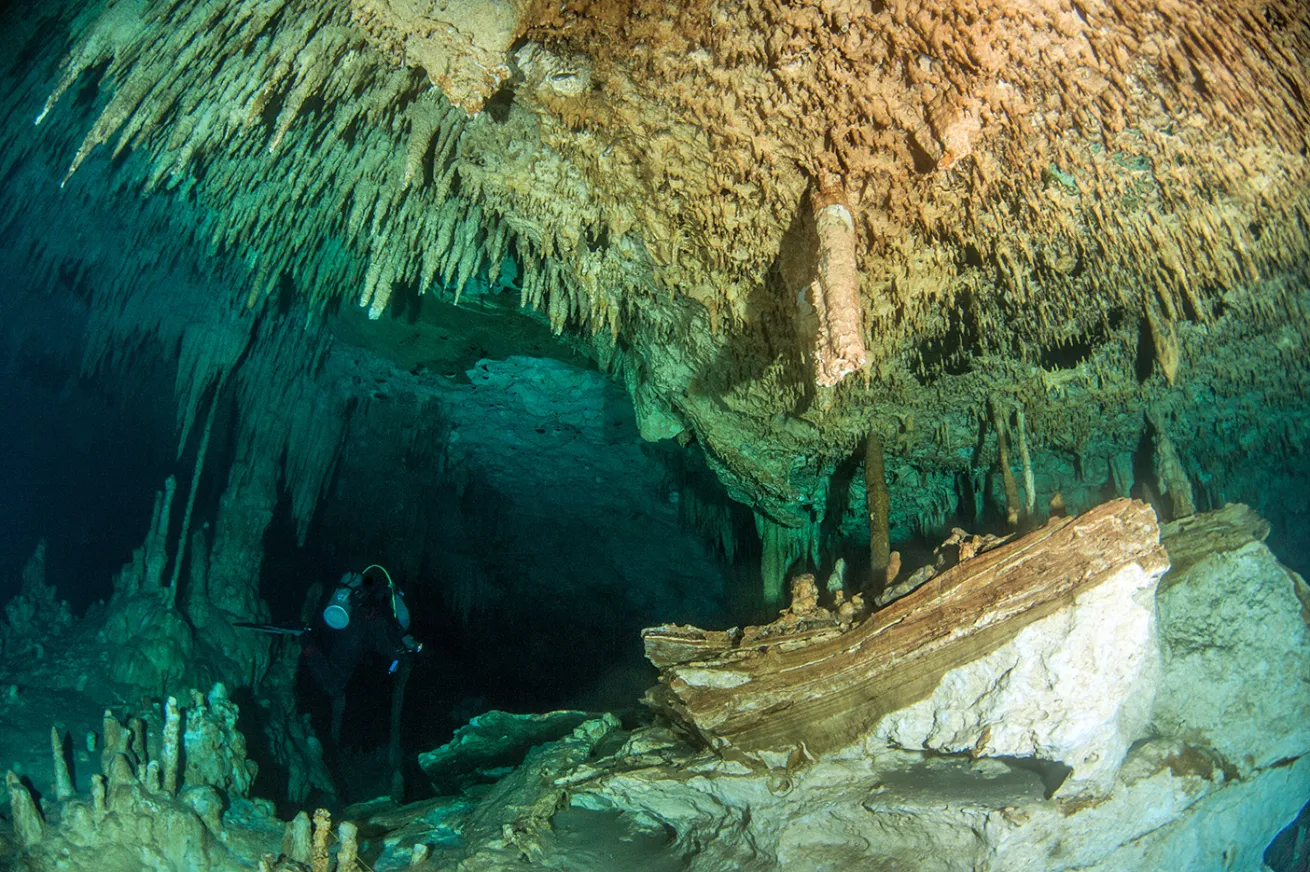
Shutterstock/Michael BognerDiving in the Cenote Dream Gate in Mexico.
Highly Decorated Caverns
The following cenotes take you through an intricate maze of alien decoration: a forest of spiderweb-like structures and imposing monoliths. Good buoyancy is essential for these dives due to the volume of speleothems, which can be easily damaged.
For sheer abundant decoration, Dreamgate is your cenote. It’s incredible and—in my opinion—unmissable. You can also journey through the thousands of bone-white pillars within Nohoch Nah Chich, part of the world’s second-largest underwater cave system.
The most gothic and mysterious of these cenotes is Tak Be Luum. It’s common to be led through this labyrinth by schools of shimmering, dreamlike silver fish.
Rather than ornate speleothems, you may choose to enter the grand chambers of Chikin Ha. You’ll cascade up and down huge stone structures and boulders, as if exploring a sunken temple.
Best Cenotes for Seeing Beautiful Light
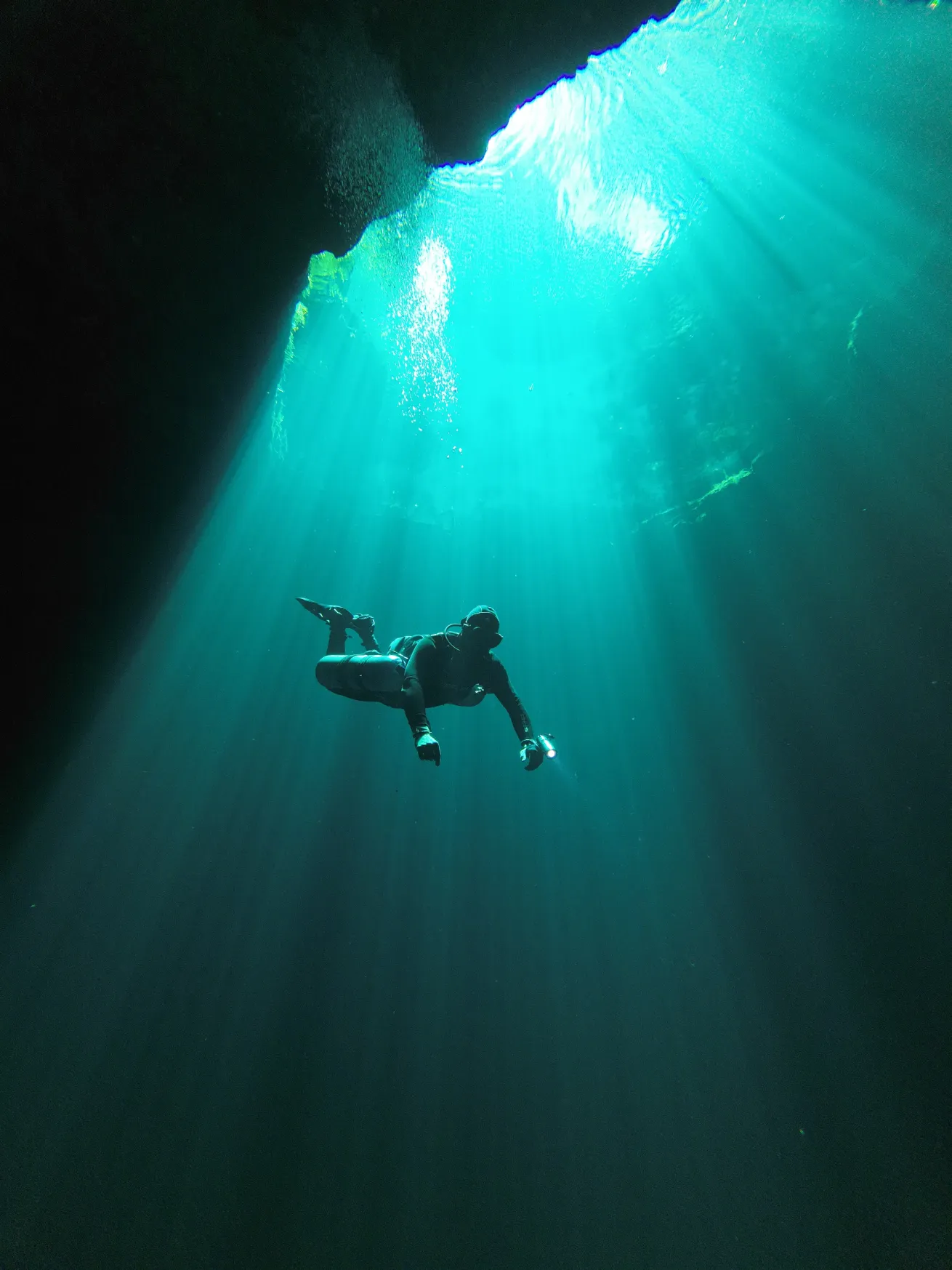
Amy HarrisonA diver descends into Maravilla.
The defining feature of these cenotes is their divine, blazing light. It’s simply impossible to overstate the spectacular visuals in these caverns, turning water into kaleidoscopic flame.
The most iconic is Maravilla, a deep dome with an incomparable, colossal skyscraper of light shooting down the center. For a slice of paradise straight out of Genesis, visit the blissful turquoise waters of Jardín del Edén cenote, full of magnificent sunrays diffracting into rainbows. A best-kept secret in the area is Azul-Ha—this truly beautiful dive boasts an almighty tower of light and some impressive stalactites.
Related Reading: Diving Florida's Ginnie Springs
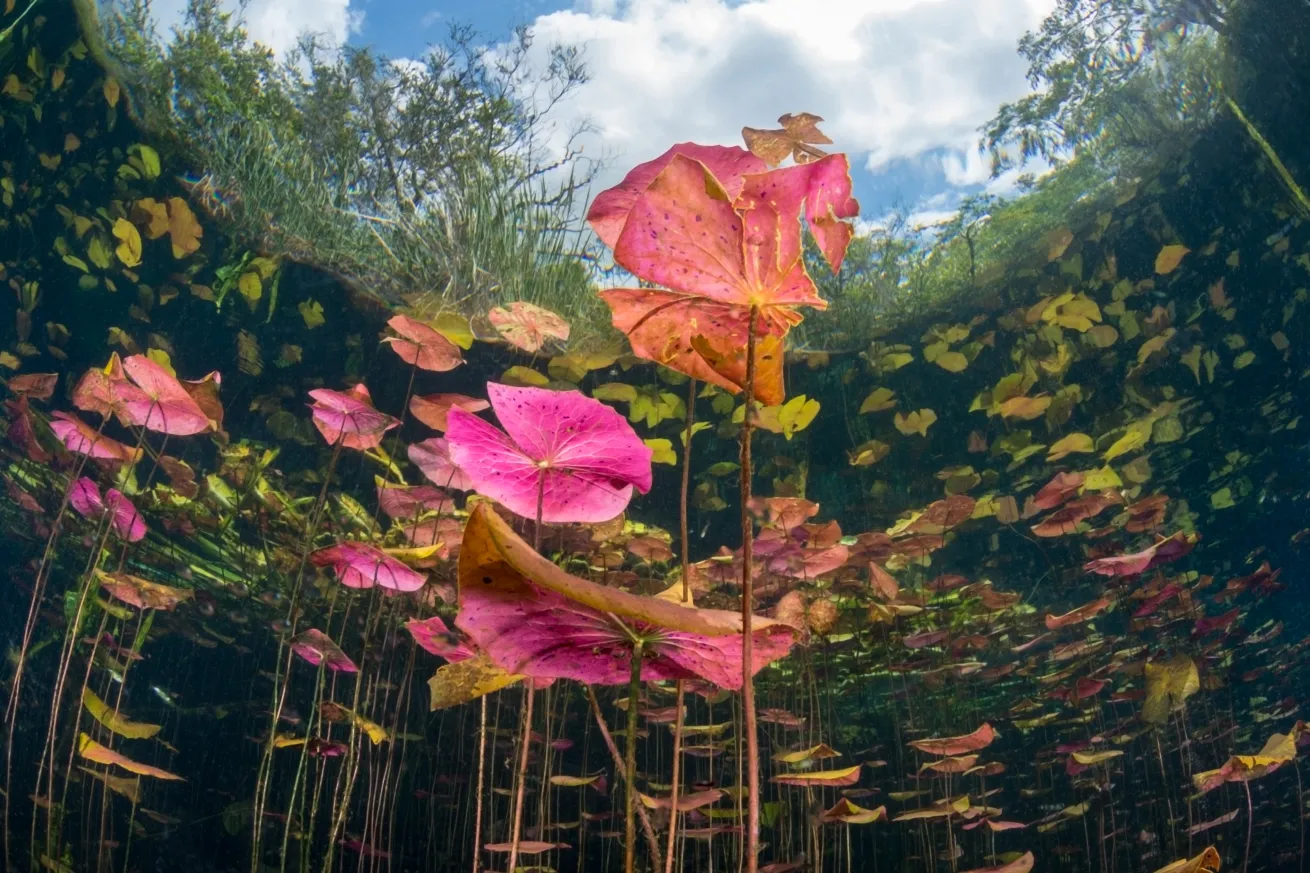
Shutterstock/Nick_PolanszkyColourful lilly pad gardens of Cenote Car Wash near Tulum, Mexico.
Mexican Cenotes That Are Full of Life
Long before they were dive sites, cenotes have nurtured the world around them, feeding jungle roots, providing the Maya with fresh water and developing their own ecosystems. Here, nature continues to flourish, with overhead cavern sections mixing vibrant open water areas and classic cenote exploration.
Between the mangrove roots, Casa cenote teems with life. A fusion of fresh and saltwater close to the ocean, this cenote acts as a nursery for all types of creatures, and it could easily fit into the “stunning light” category for its extraordinary dancing iridescence.
In the lush green waters of Carwash, also known as Aktun-Ha, you can find schools of fish and resident turtles making their idyllic home. To feel like you’re inside a Monet painting, visit the verdure garden of Nicte-Ha and loop around a central island thick with water lilies that look gorgeous as the sunlight hits.
Related Reading: What It’s Like to Be a Cavern Guide in Mexico
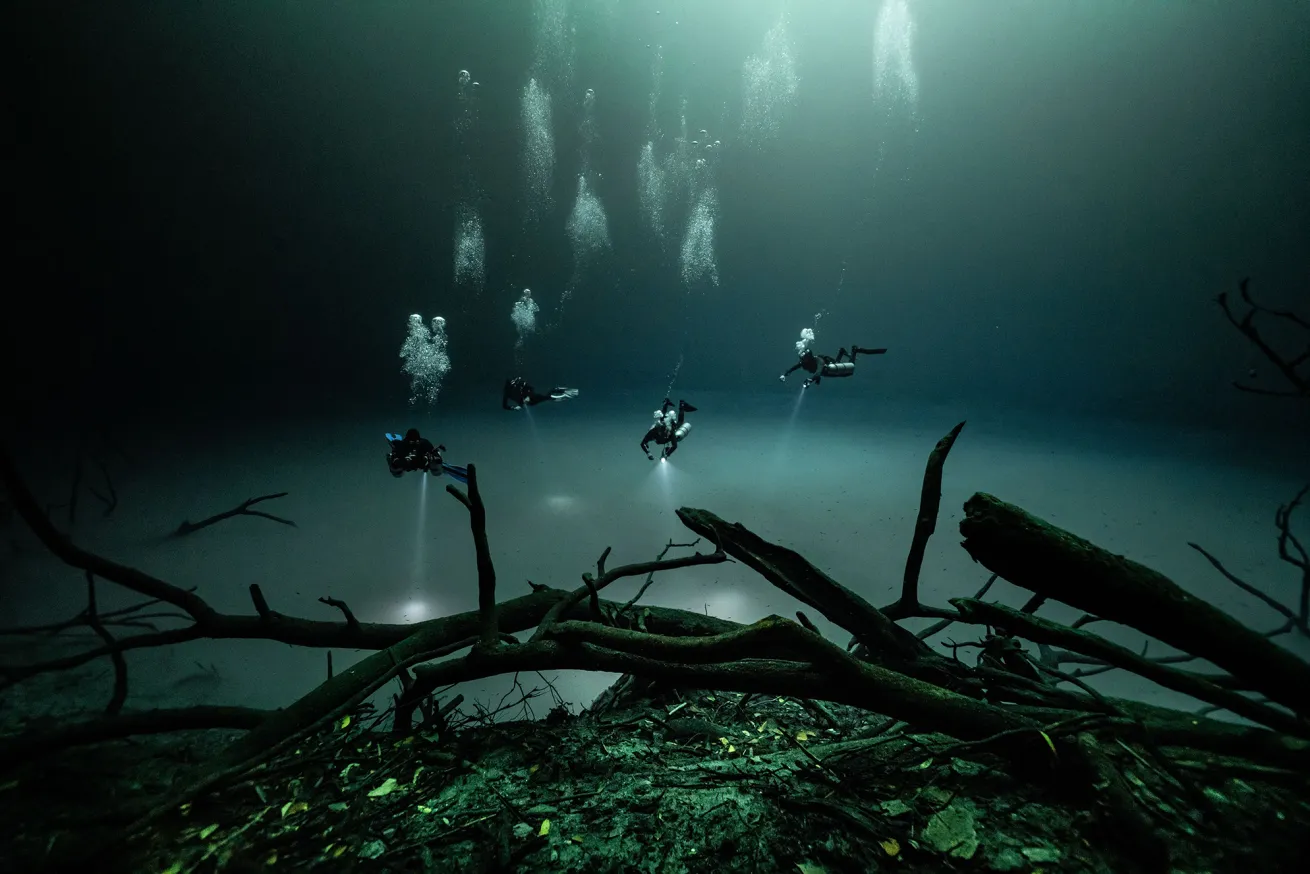
Shutterstock.com/Marianna TombiniCenote Angelita is famous for its haunting beauty, fallen trees suspended above a eerie sulfuric layer.
Something Different
Not all cenotes fit comfortably into a category—what the below cenotes offer is unforgettable and particularly unique to them.
Known as Hell’s Bells, the ominous funnel of Zapote swallows you into darkness, depositing you in a chamber brimming with mammoth, bell-shaped structures.
One for the spelunkers, Taak Bi Ha is the ultimate test of buoyancy; an underwater obstacle course inside a calcite cathedral, sometimes involving shimmying over rock less than three feet deep. It’s fantastic fun.
For a glimpse into the primeval, haunted underworld, Angelita awaits. Maya believed cenotes were portals to Xibalba, the realm of the dead, and no cenote makes you believe this like Angelita, with its eerie white cloud and grey-green cast.
Hidden Gems in the Riviera Maya
Off the beaten track of the more widely visited cenotes, a few pleasant surprises lie hidden in the jungle for divers who want an additional cavern fix.
A rare cenote where most of the dive takes place below the hydrogen sulfide cloud is Orquídea. This site gives you the opportunity to see a different type of sky and play in its misty swirls.
Siete Bocas is a sinkhole with seven small shafts of light flooding from seven entrances above, guiding your path through a cenote that feels outside of time and untouched by humans.
Kin-Ha boasts a broad and brooding cavern, with large structures that loom like petrified leviathans under torchlight.
Best of the Best
It’s unbelievably tricky to narrow the list down, but my top five recommendations for cenote diving in Mexico’s Riviera Maya are: Kukulkan, El Pit, Dreamgate, Maravilla and Zapote.
This list is not exhaustive. New cenotes are discovered, developed and opened regularly; even since writing this article, cenote La Gloria and cenote Medialuna have opened to divers.
More than just dive sites, the cenotes of the Riviera Maya are entrances into a primordial world—one that endures and inspires across the rise and fall of civilizations, no matter what changes on the surface. Each one offers something entirely individual, and woven together with the cultural legacy of the Maya, they create a diving experience unlike anything else on Earth.


