


Courtesy Tanner PedersenA freediver sports long blade fins, a specialty wetsuit, a rubber weight belt, and a low-volume, dual-lens mask—all of which are specifically recommended for the sport.
If you’ve got a newly minted PADI Freediver certification and are ready to buy your own gear, you may be wondering where to start. What’s worth the initial investment? And what does all this lingo—open-cell, blade stiffness, low-volume, dual lens—even mean?
Take a peak inhale and relax, we’re here to help! With some guidance and a bit of basic gear knowledge, you'll easily find the right kit to help fulfill all of your freediving pursuits.
Step One: Understanding Your Freediving Needs
Just like with any investment, it’s important to remember that as you grow in your freediving journey, your gear needs will change, too. As a new freediver, start with the essentials that meet your basic needs; later, you can upgrade to higher-end gear that aligns more with your dives as you learn what does and does not work for you.
Some of the first things you’ll want to consider are the environments you’ll be diving in most often, what parts of the experience are most important to you and whether you have any unique needs.
For example, will you be diving more often in warmer open ocean, cooler freshwater sites or training at your local lane pool? Do you want to prioritize visibility or blending in? Do you have wide feet? These are some important things to keep in mind as you’re shopping around and considering what to prioritize within your budget.
Related Reading: My Journey Into Freediving and Mental Health
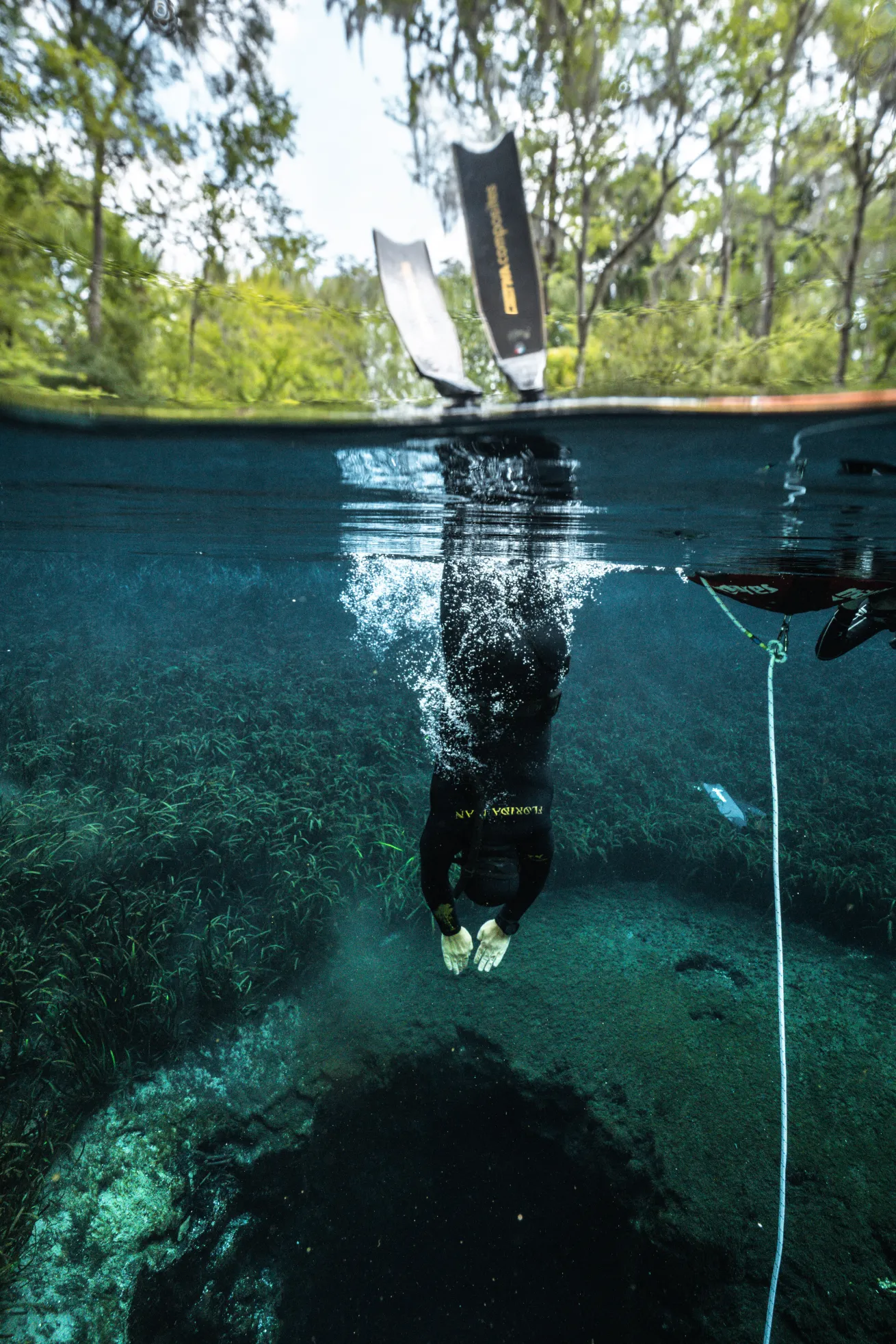
Courtesy Tanner PedersenLong blades help get you there with less effort.
Step Two: Building Your Basic Kit
Now that you know what basic needs you want to meet, let’s get into the different pieces of equipment and break down what to look for.
Types of Freediving Fins (Long Blades)
Freediving fins are essential for efficient, energy-saving dives. Their longer length provides smooth, powerful strokes, allowing you to both descend and ascend with minimal effort. When shopping, it’s important to keep in mind that blades and foot pockets are considered two different pieces of equipment, which can be sold separately or as a paired set.
There are three main things look for in a pair of freediving fins: material, blade stiffness and foot pocket sizing:
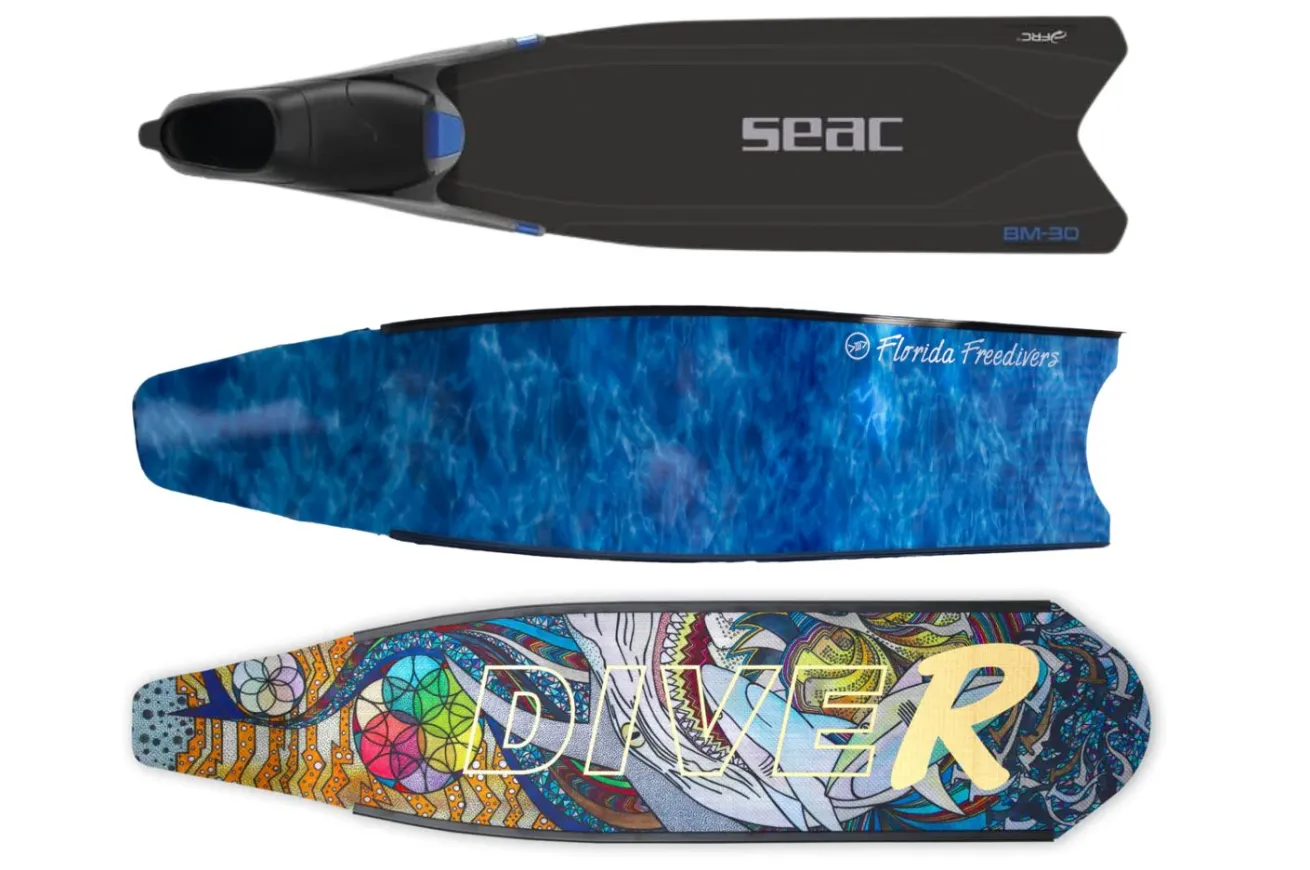
Freediving fins come in different materials depending on your needs and budget. From top: composite, fiberglass and carbon fiber blades.
Freediving Fin Materials
The first consideration is the type of material the fins are made with.
Plastic or Composite Fins
Don’t knock plastic fins. These entry-level options are affordable and, most importantly, durable. These two factors alone are crucial as new divers learn more about proper finning techniques and gear maintenance. Since plastic can be a stiffer material, these fins can require a little more effort than others. But thanks to the advanced technology on the market these days, in many cases, the difference is nominal when compared to other materials.
Fiberglass Fins
The next step up from plastic, this blade material offers a more responsive feel for a moderate cost. Fiberglass is great for intermediate divers and those who are looking for that perfect “bang for your buck” ratio. It is important to keep in mind that these are also a somewhat more fragile option than plastic fins, so awareness and maintenance become more important with fiberglass fins.
Carbon Fiber Fins
Lightweight, efficient and comfortable, these are the cherry-on-top options for freediving fins, but be aware that they also come with that high-end price tag. Carbon fiber fins are best for advanced freedivers, those training for and performing deep dives, or athletes in freediving competitions.
Freediving Fin Blade Stiffness
Blade stiffness relates to how “flexible” the blade is, and it directly correlates to potential leg fatigue. Fiberglass and carbon blade stiffness can range from extra-soft to soft, medium or (rarely) hard. Generally, most divers will appreciate a softer blade, which makes for more comfortable dives. However, if powerful propulsion is a bigger concern, then a medium to hard stiffness may be a better option.
Properly Sizing Your Freediving Foot Pockets
The fit of the foot pocket can make or break the value and capabilities of the blade attached. Think about if you wear the wrong size shoe—too small and you’ll be in pain; too big and it can slip off.
The same matters with the foot pocket of your fins. The better the fit, the more energy that can transfer cleanly to the blade.
It is essential that divers research how foot pockets fit and how they’re sized (as most are listed in standard EU sizing). It is strongly encouraged to try fins on at a shop before ordering if you can.
Divers can also use neoprene socks if foot pockets are slightly loose, as these won’t compromise technique or efficiency.
Freediving Wetsuits
Anyone who has tried on a freediving-specific wetsuit can tell you that this piece of equipment can only be defined as a game changer, creating the ultimate comfortable experience in any underwater environment.
First, let’s explore the difference between open-cell neoprene and closed-cell neoprene, and why a two-piece hooded suit is usually considered the gold standard.
Open-Cell vs. Closed-Cell Neoprene
“Open-cell” and “closed-cell” neoprene refer to the inner lining of the wetsuit.
- Open-cell: The inner surface of the wetsuit feels like sticky, raw rubber—because it is! Open-cell neoprene offers superior flexibility, heat retention and comfort by forming a near-perfect seal against the skin, which allows for better insulation and greater mobility. The catch? This is a little more fragile than closed-cell neoprene. You’ll need to use a lubricant of some sort before putting on the suit, which is important to help avoid tearing the neoprene. These suits cannot be put on dry. Open-cell wetsuits also require more care; rinse gently in fresh water after every dive, drying inside out, then outside in, and avoid storage in direct sun and high heat.
- Closed-cell: The inner surface feels more like a soft, fabric-like texture. This lining is both easier to don and more durable. However, it allows more water exchange inside the wetsuit, which reduces heat retention, may feel less snug and generally has reduced mobility. Closed-cell wetsuits are better for casual or warmer-water freediving.
Two-Piece Hooded Suits
A hooded two-piece setup helps to trap a thin layer of water over most of your body, which acts as insulation. As that water warms from your body heat, it forms a protective thermal barrier, which is ideal for longer dive sessions in cooler water.
This is especially important around critical points like the head, neck and torso. Your head has a large surface area, a lot of blood flow and generally less lipids than other parts of the body. By covering and insulating this area, you will improve your heat retention and, thus, stay warmer much longer.
Why Staying Warm Is Critical in Freediving
Freedivers rely on the oxygen we take in just before a dive and do not have the opportunity for gas exchanges once below the surface. Our limited oxygen availability has the capability to impact many physical factors during our dives.
The colder the diver, the greater the risk of an onset of muscle fatigue, hypoxia, cold-shock responses or hypothermia. Staying warm preserves comfort, performance and general safety when below the surface.
Related Reading: Why You Should Never Skip Freediving Safety Protocols
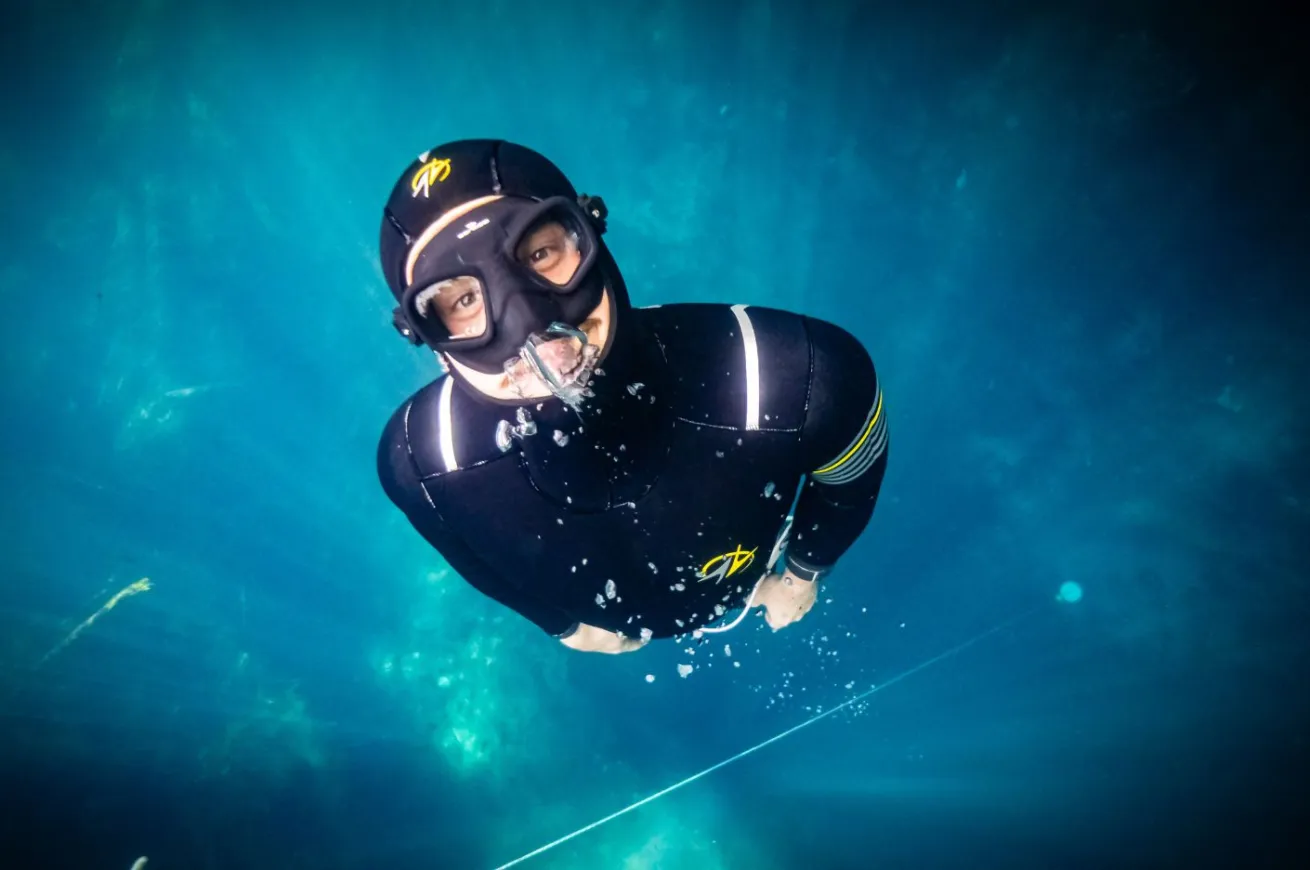
Courtesy Julien BordeThe right freediving mask can change everything.
When choosing a freediving mask, here are some critical characteristics to look for:
Low-Volume Masks
Low-volume masks sit closer to the face, requiring minimal air to equalize or clear. This also reduces risk of “mask squeeze,” or facial barotrauma, as there is less air to compress between the mask and your face. Plus, by having an overall smaller profile, they reduce drag underwater, making movement more streamlined.
Related Reading: The Best New Dual-Lens Scuba Masks Reviewed
Dual Glass Lenses—Not Single-Lens, Not Plastic
The best masks for freediving are dual-lens masks with glass lenses. Contrary to what you may think, plastic lenses are actually significantly more fragile than glass lenses, meaning they scratch, crack and break much more easily. Plastic is also more difficult to keep from fogging and generally does not provide as clear of visibility. Additionally, dual lenses directly correlate to sleeker profile design, so you’re guaranteed a lower-volume mask than single-lens options.
Safety Tip: Avoid Highly Reflective Lenses
While mirrored glass may look cool, it prevents your safeties and fellow divers from being able to see your eyes. This is considered a bad idea because it does not allow others the opportunity to recognize if you are showing some signs of hypoxia—like glassy eyes, defocused gaze or color changes)—which can be lifesaving to identify early.

Tanner PedersenA good two piece suit will keep you comfortable no matter the environment.
Shopping Tip: Try Before You Buy
Because of the low volume and low profile, freediving masks sit closer to the face, which means the right fit can be harder to find. This is the one piece of gear we always strongly suggest going to a shop and trying on several before you settle for one.
When trying them on, check that there are no pressure points on your eyebrows, nose bridge or tops of your cheeks. Also, confirm you are able to easily pinch your nose for equalization. Lastly, you’ll want to make sure the rubber skirt of the mask lays flat and flush at all points; any lift or wrinkles will not only risk causing constant fog, but could also lead to flooding of your mask.
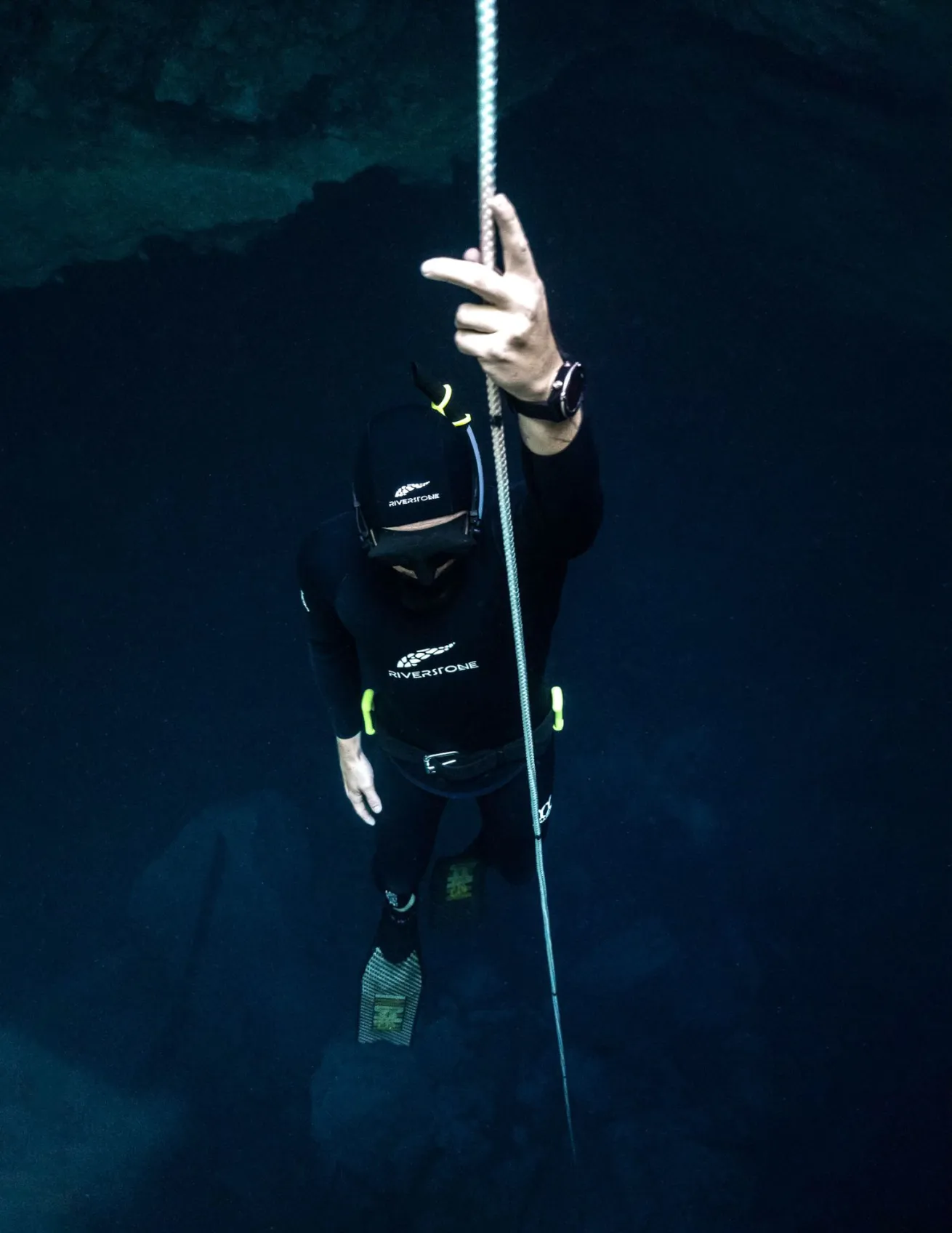
Tanner PedersenIt's not about fancy gear, it's about what works for you.
Weight Belts & Weights for Freediving
Freediving weight belts counteract the positive buoyancy of wetsuits. When purchasing one, aim for a streamlined, low-profile fit to minimize drag and entanglement risks.
Most freediving weight belts are created equal. Typically, they share these characteristics:
- Rubber material: Rubber creates a stretchy, low-drag band that conforms to your body and reduces slack. A bonus is that they come in many fun colors—some even glow in the dark. Be sure to avoid any fabric and/or pocket-style belts.
- Quick-release buckles: This weight belt feature is crucial for safety, allowing for easy, rapid shedding of weights if needed.
Freediving-specific weight belts are designed to work with lead or coated lead weights. You’ll specifically want the coated style to help reduce friction against your suit, preventing rubbing or tearing of the outer lining. Make sure to distribute the weights evenly around your waist to maintain a slimmer profile (i.e., to improve your hydrodynamics, because no, we’re sorry to say that weight belts don’t actually make you look skinnier).
When it comes to the number of weights you should attach to your belt, it’s better to have a balance of smaller increments placed evenly around the belt than a few heavier weights just on your back or placed sporadically around your waist.
Safety Tip: Never Dive Overweighted
To be considered properly weighted, it is ideal to be neutrally buoyant at 10 meters (33 feet). You should be able to stop finning and exhale half your air at the surface without sinking below your nose. If your nose goes under the surface, you need to reduce your added weight.
Related Reading: The Danger of Freediving in Inclement Weather
Final Thoughts
Here are some key takeaways to remember:
- Start with plastic or fiberglass fins and save carbons for down the road. Make sure the foot pockets fit snug but comfortably.
- Treat yourself to an open-cell, two-piece hooded freediving suit. You’ll thank us later.
- Choose a low-volume mask with dual glass lenses, and try these on before buying.
- Get a weight belt that has a quick-release buckle and invest in several 1-pound coated weights.
- If possible, rent from an instructor and/or try gear on in a shop before you buy.
Like its scuba counterpart, freediving gear best begins with essentials: long blade fins, a snug mask, a thermally smart wetsuit and a reliable weight system. Prioritize fit, functionality and safety, then upgrade as your freediving journey deepens. And, as always, make sure to enjoy every dive!


