

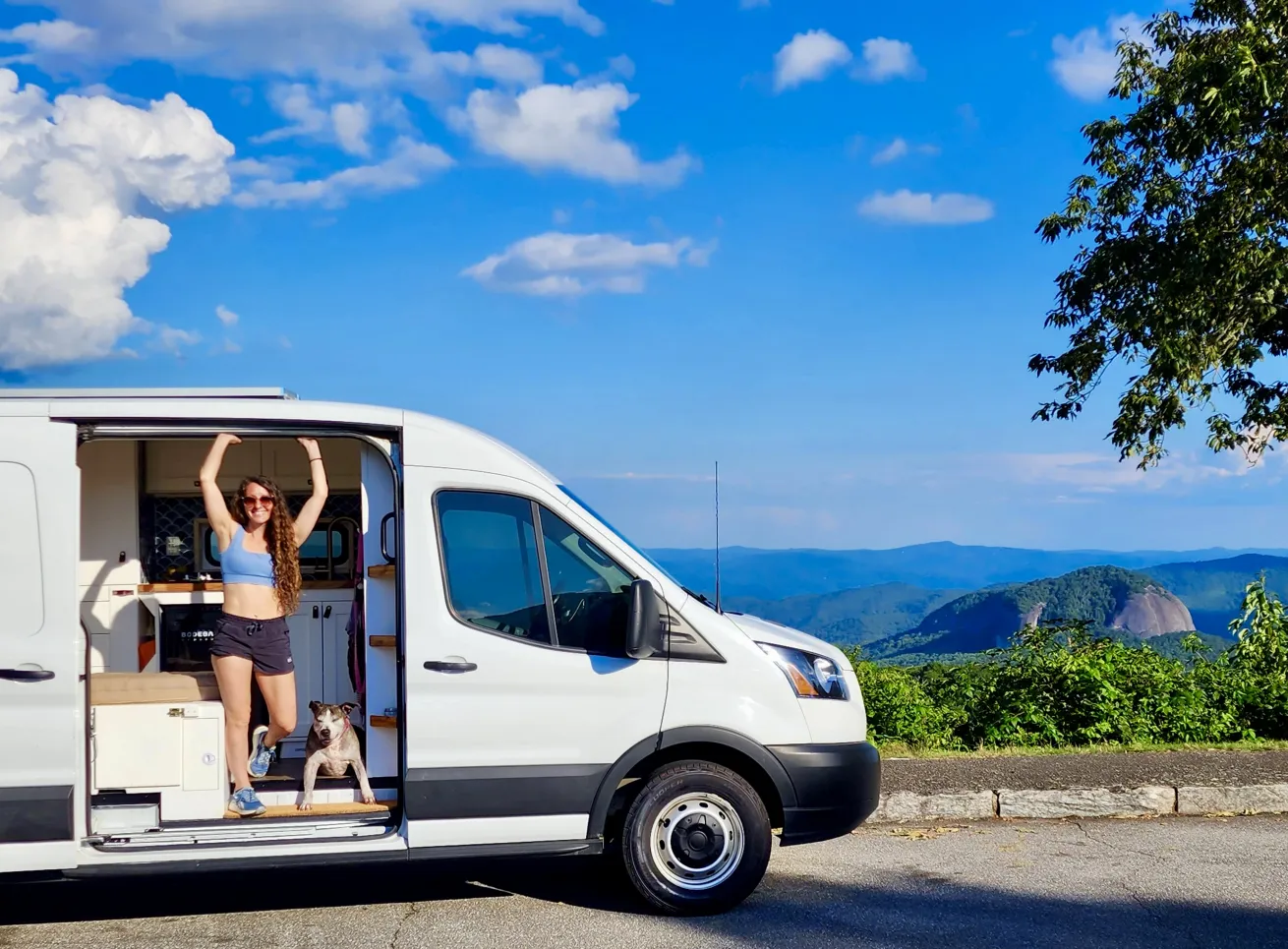
Courtesy Foster GriffithThe author and her camper van in the Blue Ridge Mountains.
Three years ago, I sold everything I owned and moved into a custom-built camper van.
Though I no longer live in my van full-time, it’s still my gateway to North America’s hidden gems—from hiking 14ers and paddling alpine lakes to scuba diving in coastal parks, freshwater springs and quarries. Along the way, I’ve learned that diving from a camper van is equal parts liberating and, let’s just say, a lesson in planning and creative storage solutions.
Here are some of the biggest tips I’ve learned while chasing bubbles on four wheels.
Hitting the Road With Your Dive Gear
One of the joys of diving from a camper van is that there’s no airline telling you your fins are “oversized luggage.” The less joyful part? Figuring out how to store everything without feeling like you live in a mobile gear locker. You don’t want to be constantly tripping over gear while you’re trying to cook or get ready for bed.
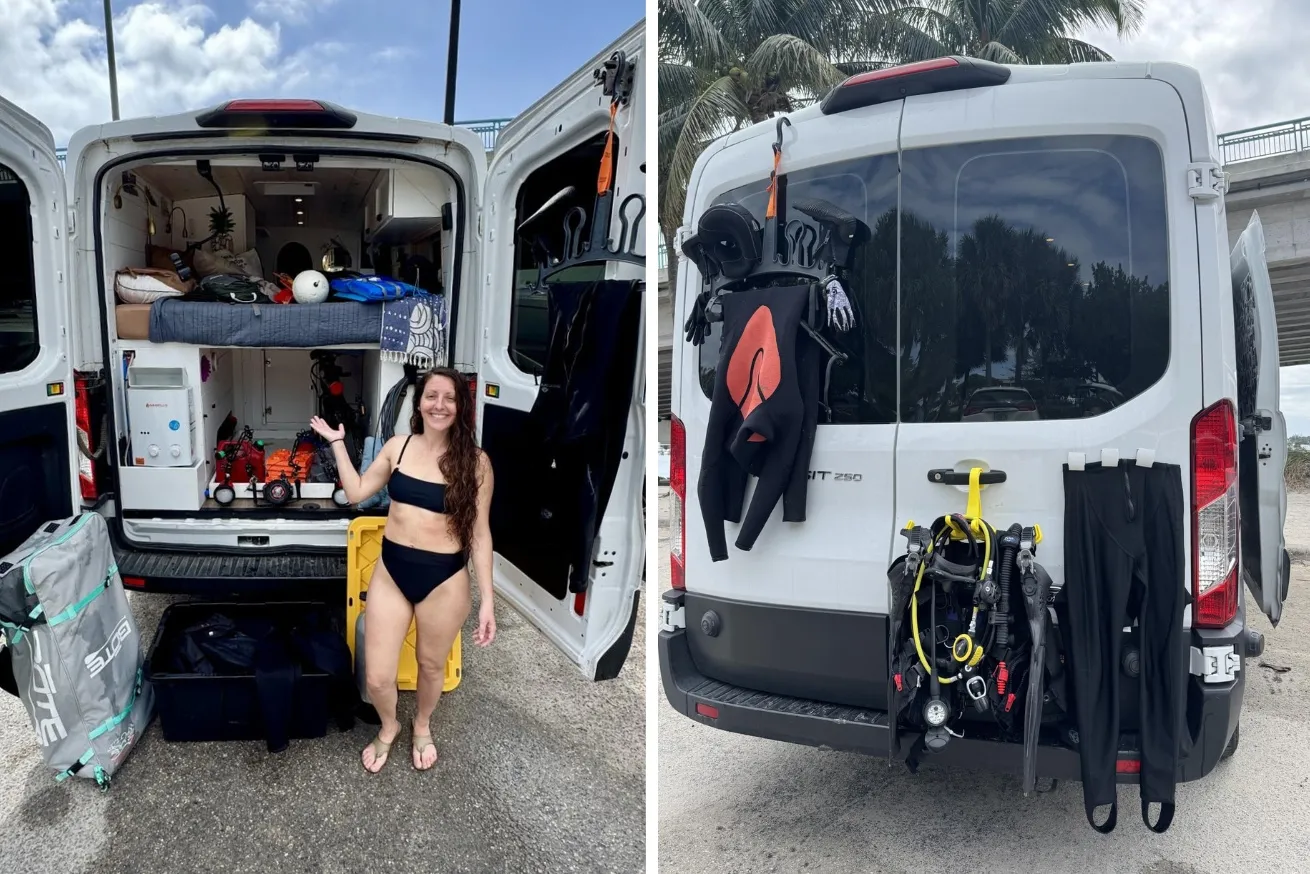
Courtesy Rachel PlunkettIt's necessary to have a gear-cleaning process and a place to hang everything around your camper after a dive. The C-Monsta hanger, travel BCD hanger and heavy-duty magnet clips are great solutions for drying gear outside a camper.
Pack Smart, Store Smarter
The key is to keep things flexible. Gear needs to be secure while you’re driving but easily accessible when you pull up to the dive site. I think of it like scuba Tetris, only the stakes are a bit higher because you can’t just reset the game when you get it wrong.
I swear by heavy-duty plastic bins for keeping my BCD, regulator, fins, dive flag and other gear organized in the “garage” of my van (aka the storage compartment under my platform bed). A big waterproof tub is also a must-have for post-dive days when everything is dripping and smells vaguely of low tide. I designed my van to have a tall closet, so that’s where I keep my wetsuits once they are dry—hanging, never folded. I also have a special location where I let my camera dry inside the van before I stow it away in its travel bag.
Related Reading: How to Pack Your Underwater Camera Gear
I opted to rent tanks while on the road in order to save space in the garage. If you’re bringing tanks with you, you’ll want to make sure they are secure so they can’t roll while driving. It may be worth investing in a tank rack.
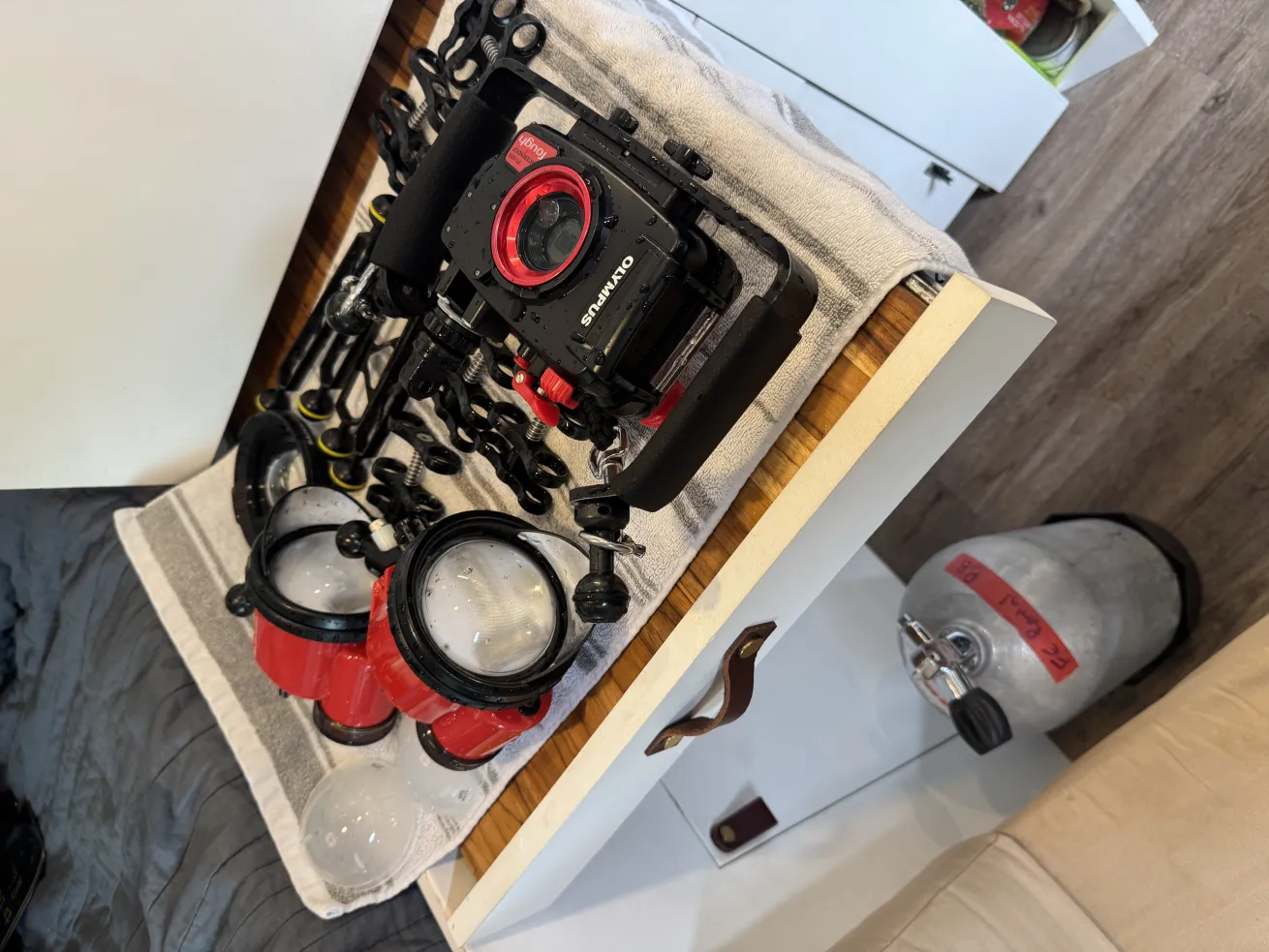
Courtesy Rachel PlunkettYou can thoroughly rinse your camera gear in the sink and use countertop or desktop space for drying.
Pro Tips: Don’t Forget These Van Dive Essentials
Waterproof storage bins: Your best friend for transporting soggy gear back to the camper from the dive site—and for stowing away your dry scuba gear while on the road. Trust me, these will protect your van from smelling like a fish market.
Freshwater rinse: My van has a built-in Camplux outdoor shower and 25-gallon water tank, so I have the ability to rinse my gear and take a shower after a dive. If you don’t have a water tank and shower feature, then you may want to have at least a few jugs of fresh water handy.
Heavy-duty magnet clips: Perfect for sticking towels and wetsuits to the side of your van. Who needs a clothesline when you have magnets?
Travel hangers: The C-Monsta hanger is an adjustable drying rack for wetsuits, gloves, hoods and boots that saves space and looks like a gadget Batman would own. I also use a foldable BCD and regulator hanger I found on Amazon that stores away easily.
Camera bag: For my fellow underwater photographers: You’ll want to invest in a good travel storage bag for all of your photo equipment that will keep your camera and lenses safe from dings and scratches while on the road.
12-volt fan or dehumidifier: Having a fan or dehumidifier keeps air circulating and helps gear dry faster in humid or rainy conditions.
Finding the Perfect Overnight Spot
Not all dive sites are equally camper-friendly. You don’t want to roll in at midnight only to be greeted by a “No Overnight Parking” sign. I like to mix things up by staying a few nights at paid campgrounds, a week or so at boondocking spots on free public land and, when it’s permissible, it’s nice to sleep right next to your dive site for a night or two. Regardless of where you camp, please always practice “leave no trace” camping ethics.
Stay Close to the Action
Some of my favorite dive trips have been at places with on-site campgrounds. Some quarries, beaches and national parks, like Acadia National Park, offer camping very close to the dive site. It’s the ultimate convenience: wake up, make coffee, walk 50 steps and start your dive. Other places, like Gray Quarry in Tennessee, Lake Powell between Utah and Arizona and Monterey Bay in California have campgrounds or boondocking options close by.
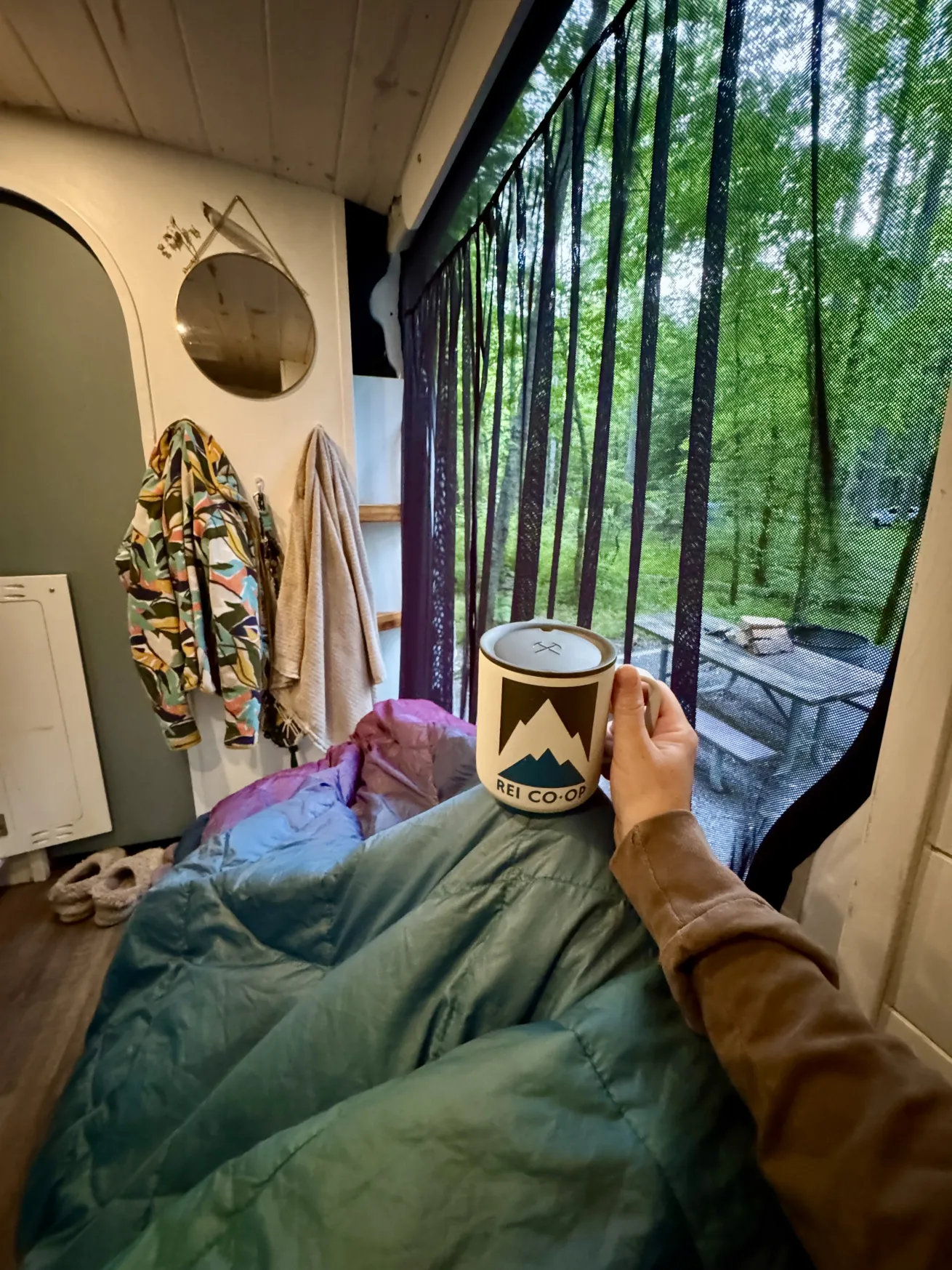
Courtesy Rachel PlunkettMorning coffee at Blackwoods Campground before diving in Acadia National Park.
Florida’s freshwater springs also deserve an honorable mention here. Sites like Ginnie Springs, Ichetucknee Springs State Park and Blue Grotto Dive Resort offer crystal-clear dives with a plethora of campground options onsite or nearby. Who needs a hotel when you can rinse your gear at your campsite and stargaze or roast marshmallows while your booties dry?
Related Reading: Best Springs for Diving in Central Florida
And here’s a little insider hack: If you’re booked on a charter or guided shore dive, sometimes dive shop owners will let you park overnight in their lot. I’ve done this a couple of times and it’s the ultimate snooze button—no chance of oversleeping and missing the boat.
Dive Shop Etiquette: If you’re planning to camp in their parking lot, always ask first—and maybe buy an extra air fill or mask strap as a thank-you.
Boondocking and Beachfront Dreams
If you’re shore diving and flexible, check for dispersed camping sites on national forest and Bureau of Land Management lands. Dispersed camping is almost always free, which means you can spend your budget on tank fills instead of lodging. Not to mention the incredible views and starry night skies. Just remember the golden rule: know before you go. Do your research on road access, flash flood warnings, bear safety and more before you head to a spot.
As for beachfront parking, some areas allow overnight street parking and others do not. “No sleeping in vehicle” ordinances are typically taken seriously by local authorities, and violations will result in a parking ticket or getting towed. Do yourself a favor and check the signage before you drift off to sleep. There are lots of apps, like iOverlander, that can help you find legal “stealth camping” spots verified by other app users.
If you’re like me and think about safety while traveling—especially keeping valuable dive gear secure—a few simple upgrades go a long way. One of the easiest and most effective is investing in high-quality window covers. Police departments consistently note that vehicles are far less likely to be targeted when valuables aren’t visible, so blocking the view inside your camper helps deter opportunistic break-ins. Pair that with common-sense habits like parking in well-lit areas and keeping gear stowed, and you’ll dramatically reduce your risk.
Surface Intervals on the Road
Here’s where van life really shines. After a dive, instead of racing off in my car to find food and then driving home to clean my gear, I can just open the back doors of my cozy van and whip up a post-dive snack. There’s something extra satisfying about cooking a steak dinner while your wetsuit drips outside against the backdrop of the sun setting over the ocean.
With a camper van as your dive base, you can roll right up to the water’s edge, keep gear organized and enjoy the perks of bringing your home with you—wherever your dive flag flies.
Rest, Refuel, Repeat
Some of my favorite surface intervals have involved napping. Not in a hammock or on a picnic table bench—an actual nap in my actual bed, right there at the dive site. It’s one of the greatest luxuries of camper diving. Of course, I only do this in safe locations where I don’t have to worry about my gear walking away while I snooze.
Other times, I’ll start editing photos right away. Nothing beats posting your perfect octopus shot to Instagram before your hair even dries.
Room for Playtime
A camper also lets you bring along all the outdoor “toys” that don’t fit in a carry-on. My inflatable paddleboard and foldable e-bike have earned their keep many times over. There’s nothing like an afternoon dive or snorkel followed by dinner and a sunset paddle—it feels like squeezing two vacations into one.
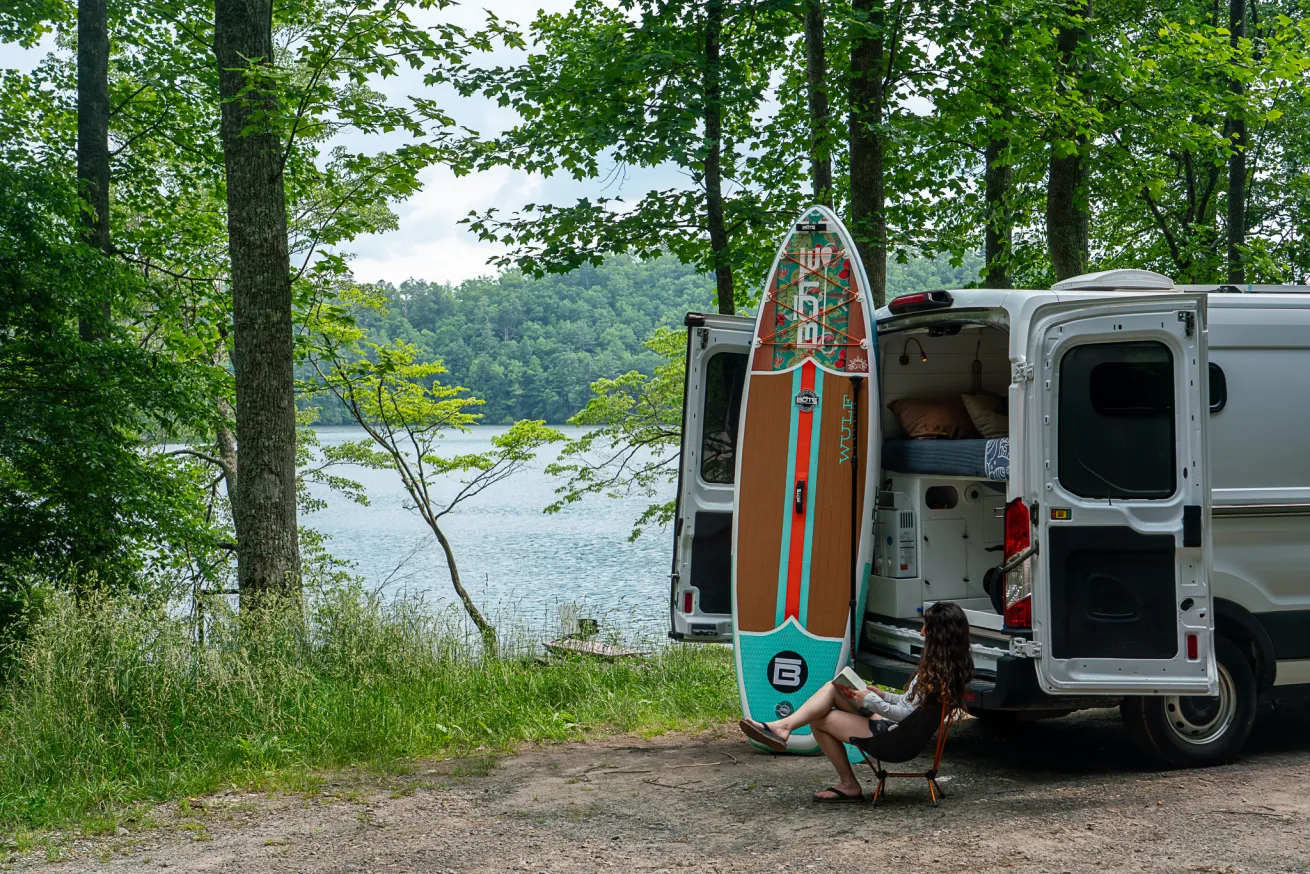
Courtesy J Smilanic/WNC Photo ToursDiving from a camper van means you’ll have more time before and after your dives to relax and enjoy other leisure and recreational activities, like reading and paddling.
RV-Friendly Dive Spots in North America
Here are some of the best van-accessible dive destinations:
Florida Springs: Crystal-clear freshwater, manatees and plenty of campgrounds to choose from.
Baja California, Mexico: Whale sharks, hammerheads and beach camping galore. While there’s not a lot of shore diving in Baja, there are several dive centers close to the beach. Locations like La Paz and Loreto have RV parks with full hookups and amenities.
Vancouver, British Columbia, Canada: Cold-water walls, giant Pacific octopus and RV parks close to shore. Porteau Cove Provincial Park offers both camping and shore diving opportunities with an artificial reef and sunken shipwrecks. A ferry ride to Vancouver Island offers a dive adventure full of sea stars, anemones, fish and kelp forests. Quatse Regional Campground and Port Hardy RV Resort are both under 10 minutes from dive operators and boat launches.
Gray’s Reef National Marine Sanctuary, Georgia: The crown-jewel of Georgia diving—a live-bottom reef 19 miles off the coast with spectacular sponges, groupers, snappers and sea turtles. RVers can camp at nearby state parks, like Sapelo Island, or in the Savannah area, making it a perfect launchpad for offshore dive adventures. There are many excellent dive sites outside of the marine park off the coast of Georgia as well.
Gray Quarry, Tennessee: This underwater playground of a quarry offers sunken boats, buses and more, with camping options very close by. If you’re looking to do some dive training while in the area, Mountains to Seas Adventures and Smoky Mountain Divers are great options for all of your PADI training needs.
Great Lakes, Northern USA/Canada: Some of the world’s best-preserved shipwrecks, with dozens of scenic campsites to choose from.
Monterey Bay National Marine Sanctuary, California: Legendary kelp forests teeming with biodiversity. There are a few RV parks just down the road, such as Veterans Memorial Park and Monterey County Fairgrounds RV Park.
Related Reading: Splashing Around With Harbor Seals in Monterey
The Road Ahead
Van diving keeps my bucket list growing. I’d love to camp on the beaches of Baja California, Mexico, escaping winter for a month while photographing Pacific pelagics. I also hope to do more shore dives along California’s rugged coastline on the way to Oregon and Washington, such as La Jolla Shores, Shaws Cove and Point Reyes National Seashore. I’ll likely work a few more national park sites into the mix, like Lake Powell, Lake Mead and Channel Islands—because nothing beats combining trails and tanks.
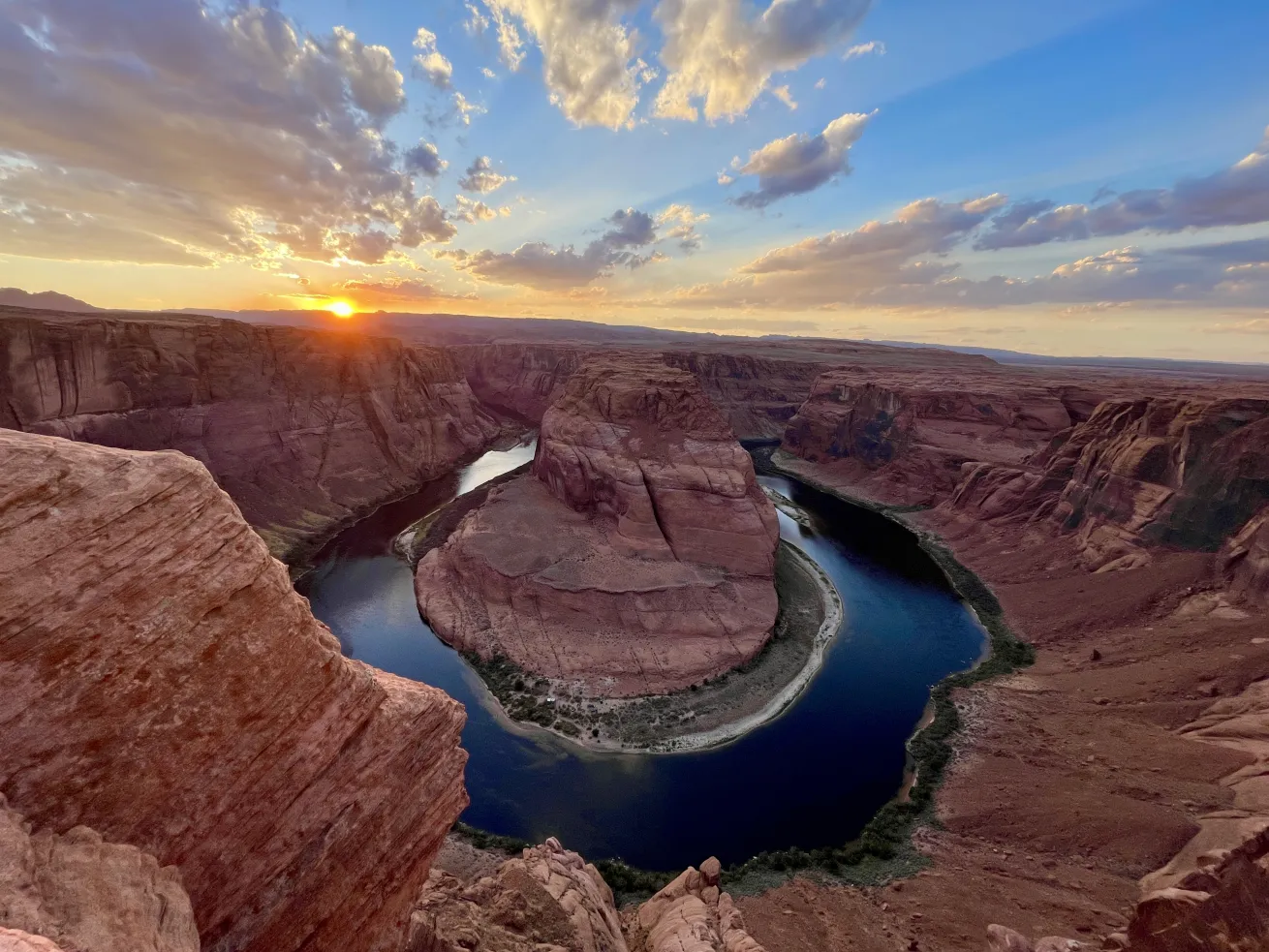
Courtesy Rachel PlunkettWhen diving in Lake Powell, don't forget to take in the views at nearby Horseshoe Bend in Page, Arizona.
Planning your diving adventures from a camper van isn’t just about convenience—it’s a lifestyle. It means waking up next to the water, taking naps between dives, cooking dinner and watching movies while your gear dries, and ending an incredible dive day with an epic hike.
For me, it’s not just about the dives themselves. It’s about the freedom to make the entire trip part of the adventure. Even when the tanks are empty, the memories keep filling up!


