

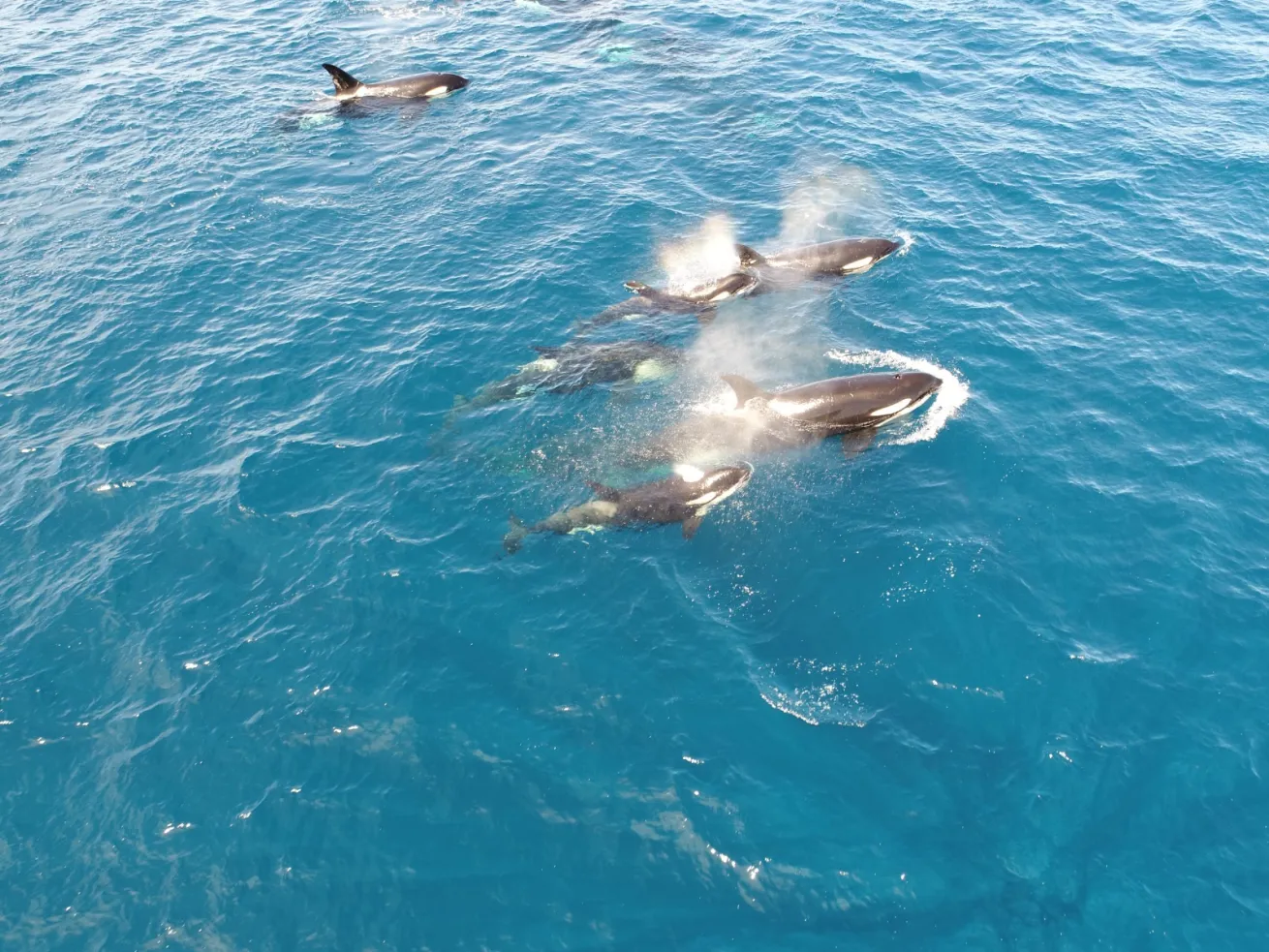
Courtesy Hiram Rosales Nanduca MMAPE/UABCSAs wild orca swim expeditions grow in popularity, Mexico is working to define what ethical encounters actually look like.
At first light in Baja California Sur, the Sea of Cortez lies flat and mirror-like, broken only by the sudden, unmistakable rise of a black dorsal fin. Several more, moving with quiet purpose just beneath the surface, follow behind. Orcas—apex predators and among the most intelligent animals on the planet—have arrived.
Within minutes, boats converge around the pod with spotter planes overhead, as a group of snorkelers pull masks, zip up wetsuits, and ready their cameras. What was once a rare and spontaneous wildlife encounter has, in just a few years, become one of the most coveted marine experiences in the world—as well as one of the most hotly debated. Now, Mexico must confront a difficult question: Can humans ethically swim with orcas, and if so, under what conditions?
The Birth of a New Marine Safari
For decades, lucky divers swapped stories about fleeting orca sightings in the Sea of Cortez during liveaboard trips, but no specialized tours existed. That began to change after 2007, when Mexico prohibited the fishing of all manta ray species. “After the ban, mobula rays went from reasonably large schools to massive aggregations of 10,000,” says Luke Inman, founder of The Dive Gurus in La Paz. “Around the same time, we started seeing more orcas showing up to feed on them.”
Related Reading: Study Reveals Jellyfish and Anemones Nap Just Like Humans

Kristin PaterakisNew regulations governing orca encounters require swimmers to remain passive, allowing orcas to initiate and control any interaction.
COVID marked another inflection point. While much of the world shut down in 2020, Mexico remained open, and Baja California Sur’s coastal communities—particularly those outside formal marine protected areas—became magnets for adventure tourism. Divers and underwater photographers gravitated to La Ventana, a fishing village south of La Paz that has rapidly emerged as a marine safari hub. People originally came for the schools of mobulas and sightings of giant mantas, says marine biologist Georgina Saad. “But once they realized they could swim with orcas, tourism increased exponentially.”
What had once been occasional, low-impact encounters quickly intensified into something far more crowded due to social media. Influencers and expedition guides—accustomed to chasing megafauna from Tonga to nearby Magdalena Bay—helped advertise the experience by posting viral images and videos of their encounters across TikTok and Instagram.
Unlike whale sharks or humpback whales, which can be found in multiple destinations, orcas remain elusive. Until recently, organized swimming with these apex predators was largely limited to Norway. In Baja California Sur, calm warm seas, clear water and predictable seasonal sightings suddenly made the extraordinary feel attainable to a broader audience.
Why Swimming with Orcas Is Controversial
As interest in swimming with orcas has surged, so has concern from marine biologists like Saad and longtime operators across Baja California Sur. Orcas rely on echolocation to hunt and communicate, making them particularly sensitive to noise pollution. The cumulative pressure of engines, boats and swimmers can disrupt feeding, resting and even mating behaviors. Which is especially concerning, considering many sightings involve females with calves.
In the absence of clear federal or state regulations, activity escalated quickly. During peak months from May through July, dozens of boats could converge on a single pod, jockeying for position. While some operators acted cautiously, swimmers often entered the water repeatedly or for extended periods, at times surrounding animals or attempting to follow them underwater. Any single encounter might appear harmless, but the collective impact has become increasingly difficult to ignore.
“There’s a fever about it,” says Inman, who warns that social media doesn’t manage expectations like how close you can get for photos or how many animals you might see. Before entering the water to dive or snorkel with any animal, people should consider the privilege of being there.”

A New Rulebook for Orca Encounters
For decades, Mexico has taken a firm stance on cetacean protection. Under federal law, all baleen and sperm whales are fully protected, and swimming with them has long been illegal. Orcas, however, occupied a regulatory gray area. That ambiguity ended in August 2025, when Baja California Sur regulated swimming with orcas under a tightly controlled framework.
Working alongside federal environmental authorities, the state introduced a one-year model management plan designed to bring order to the unregulated activity. The new rules require operators to obtain special permits and adhere to strict guidelines governing minimum approach distances, daily participation limits, and safety protocols.
Another goal, says Saad, is to teach captains and guides how to read the orcas’ behavior to ensure safer interactions.
Responsibility, regulators emphasize, is now shared. Permit holders, captains, and even tourists must formally acknowledge the rules, with the understanding that violations could jeopardize the activity for everyone. “This is a one-time opportunity,” says Saad, who helped shape the plan. “If it’s blown, it’s blown for the entire industry. There won’t be a second chance.”
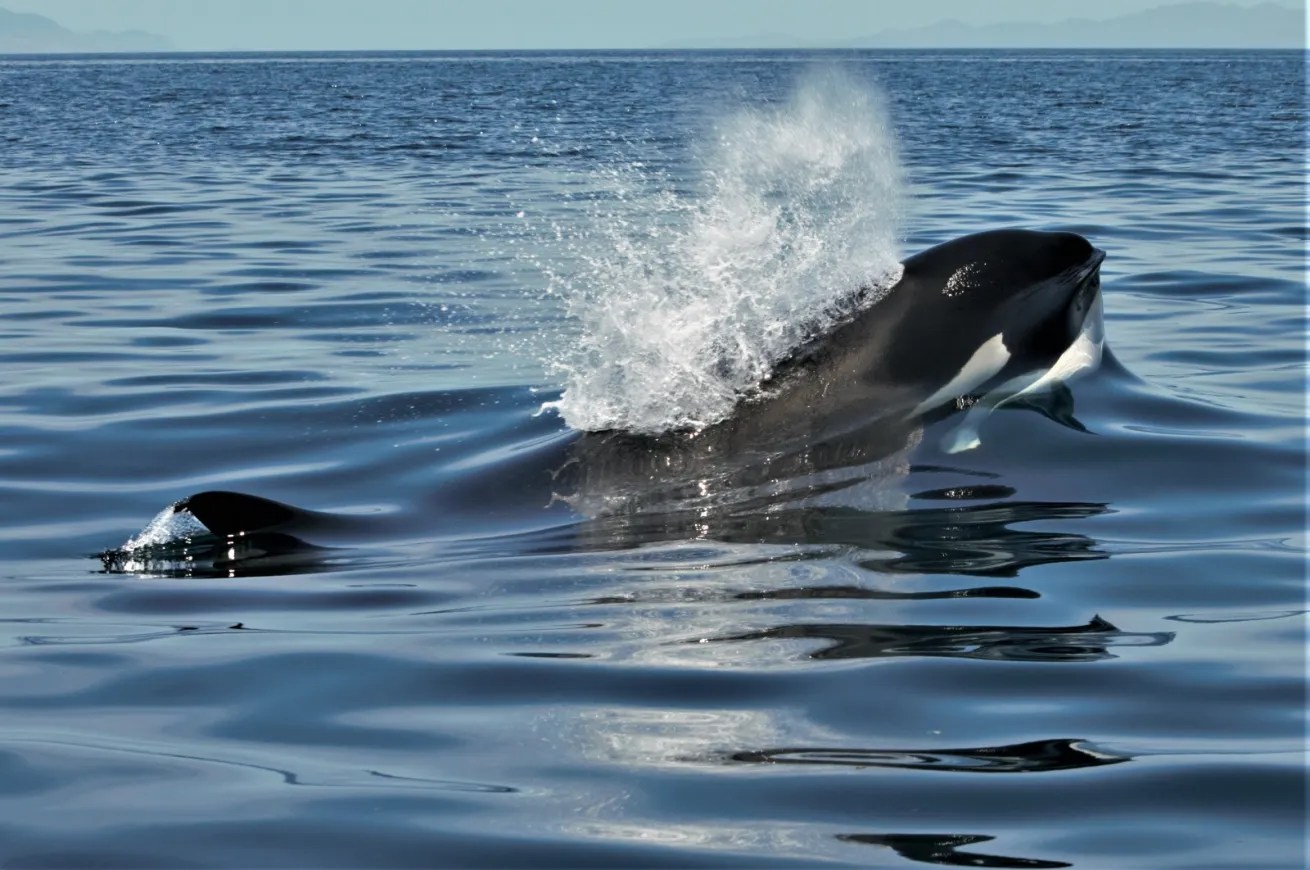
Courtesy Hiram Rosales Nanduca MMAPE/UABCSMexico's orca swim regulations represent one of the most comprehensive frameworks yet for managing human interactions with wild cetaceans.
What Ethical Orca Encounters Really Look Like
For people eager to share the water with orcas, responsible encounters begin long before putting on a wetsuit. Choosing a permitted operator with conservation-first practices is essential. Ideally, they should also be local so your visit supports the local community. Guides should have vessels clearly marked with a SEMARNAT permit flag and prioritize animal behavior over client expectations, which may include calling off swims when conditions aren’t right.
“You have to understand when booking that there is no guarantee you will swim with the orcas,” says Hiram Rosales Nanduca, a biologist and professor-researcher at the Autonomous University of Baja California Sur. “This is nature. Even if the orcas come close, you might not be able to enter the water.”
Saad agrees, adding that you should never ask your guide or captain to break the rules to get the perfect photo. “If there is an opportunity to see or swim with orcas, you are lucky,” she says. “But don’t go with expectations. That pressure falls on the community.”
Related Reading: A Diver's Guide to the Cenotes of the Riviera Maya
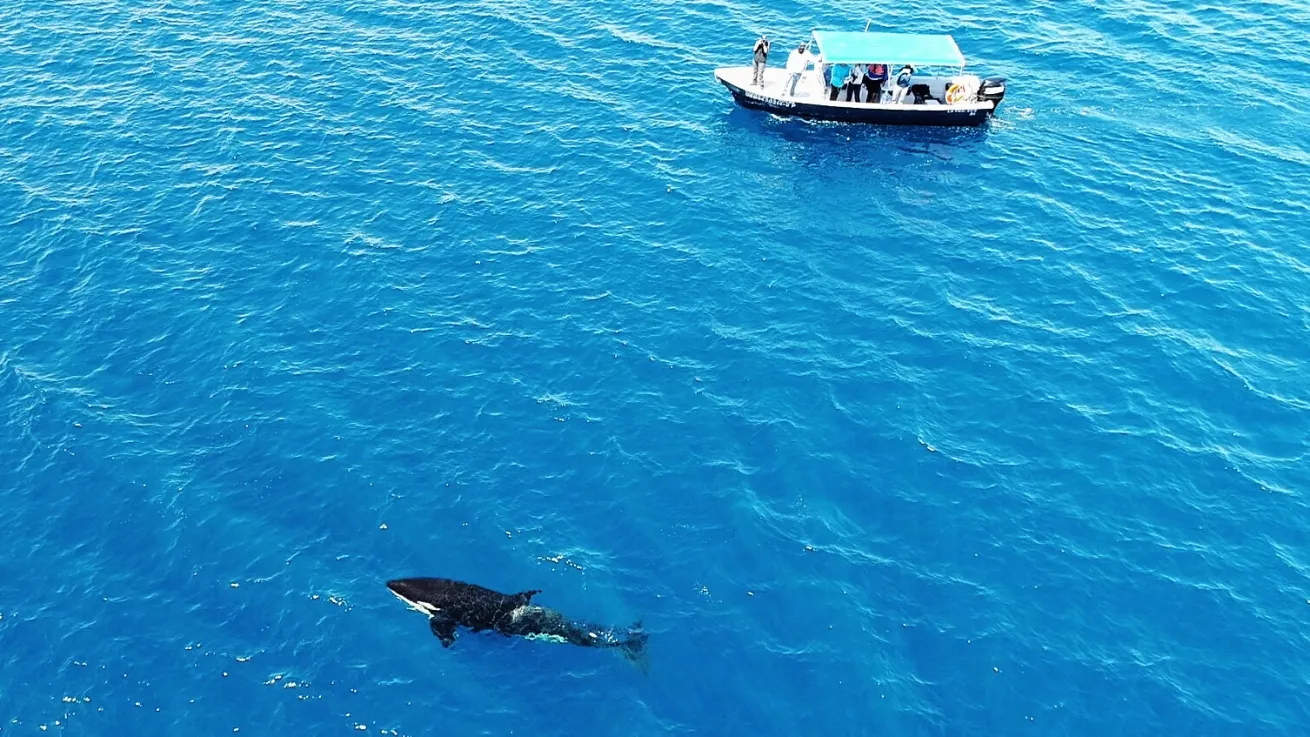
Courtesy Hiram Rosales Nanduca MMAPE/UABCSVessels must stay at least 20 meters from traveling or socializing orcas, and 100 meters from those that are resting or hunting.
Regulations now prohibit physical contact, feeding, drones, flash photography, sunscreen and chemical contaminants, all with the goal of minimizing sensory disturbance and allowing the orcas to dictate the terms of any interaction. Boats must maintain at least 20 meters from orcas that are traveling, socializing or feeding, and 100 meters from orcas that are resting or actively hunting. Swimmers must always maintain a distance of 20 meters.
In the water, restraint is everything. Ethical swimming means entering quietly, staying compact as a group, and remaining passive. Chasing, diving toward, or attempting to “keep up” with a pod can quickly turn a neutral encounter into a stressful one. “Let the orca set the terms,” says Inman. “There is more wonder in being invited than in taking.” Any sign of discomfort—sudden changes in direction, prolonged dives, or evasive behavior—requires the interaction, which is capped at 30 minutes, to stop immediately.
These new regulations offer a chance to reset the relationship between tourism and one of the ocean’s most formidable predators—but only if swimmers, operators and officials treat access as a privilege rather than a right. In the Sea of Cortez, the future of swimming with orcas may depend less on how close humans get, and more on how much space they are willing to give.


