

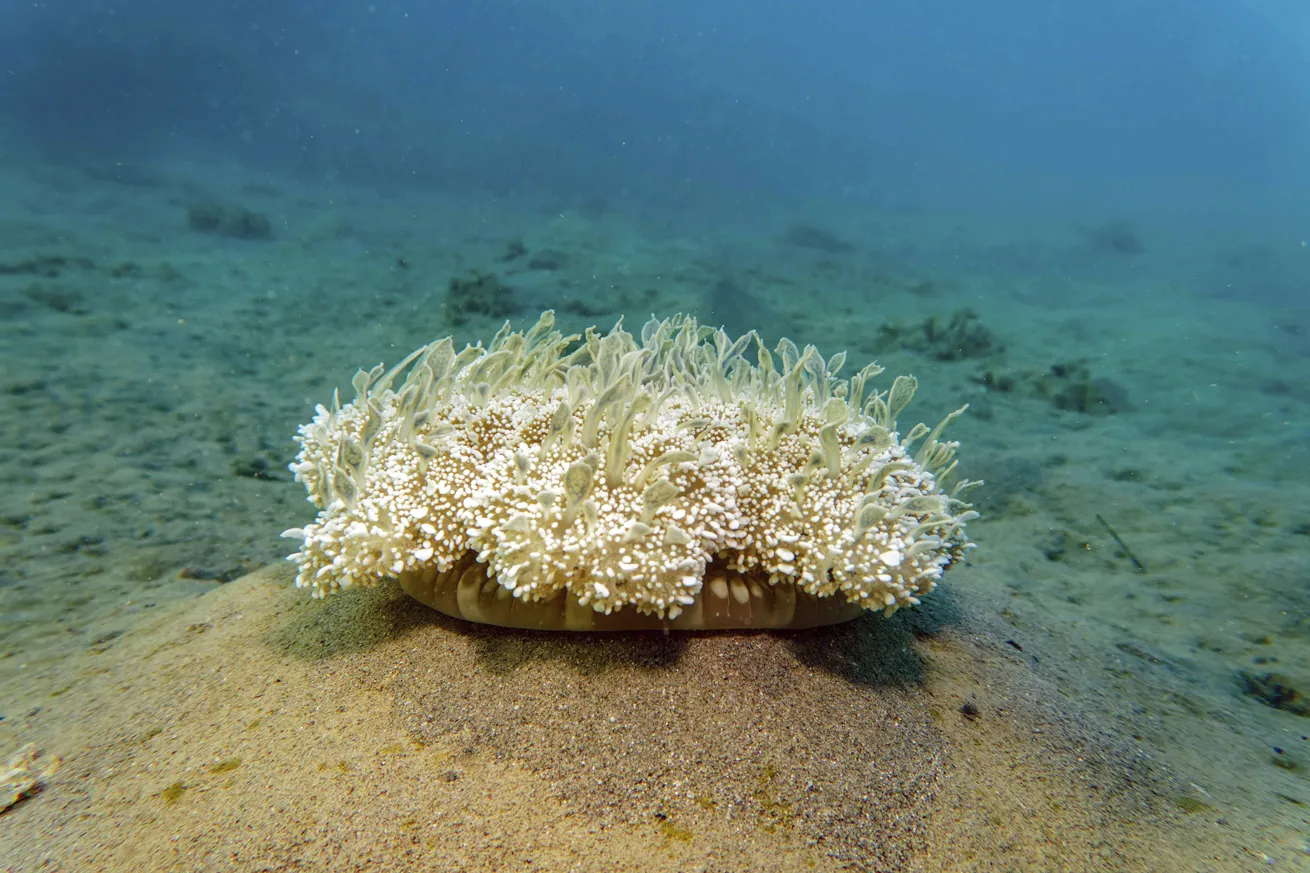
Gil KoplovitchScientists recently learned that upside-down jellyfish and starlet sea anemones sleep similarly to humans—and even take naps.
A new study reveals that sleep in jellyfish and anemones is surprisingly similar to that of humans.
Researchers observed starlet sea anemones (Nematostella vectensis) in the laboratory and upside-down jellyfish (Cassiopea andromeda) both in the lab and the wild to study their sleep patterns.
“It was surprising that both the crepuscular Nematostella (which sleep mostly during the day) and the diurnal Cassiopea (which sleep mostly during the night) sleep a total of eight hours over a 24-hour period, irrespective of their daily timing,” says study author Lior Appelbaum, a professor at Bar-Ilan University in Israel. “This is similar to the average sleep duration observed in humans.”
Related Reading: A Local's Guide to Diving in Ireland
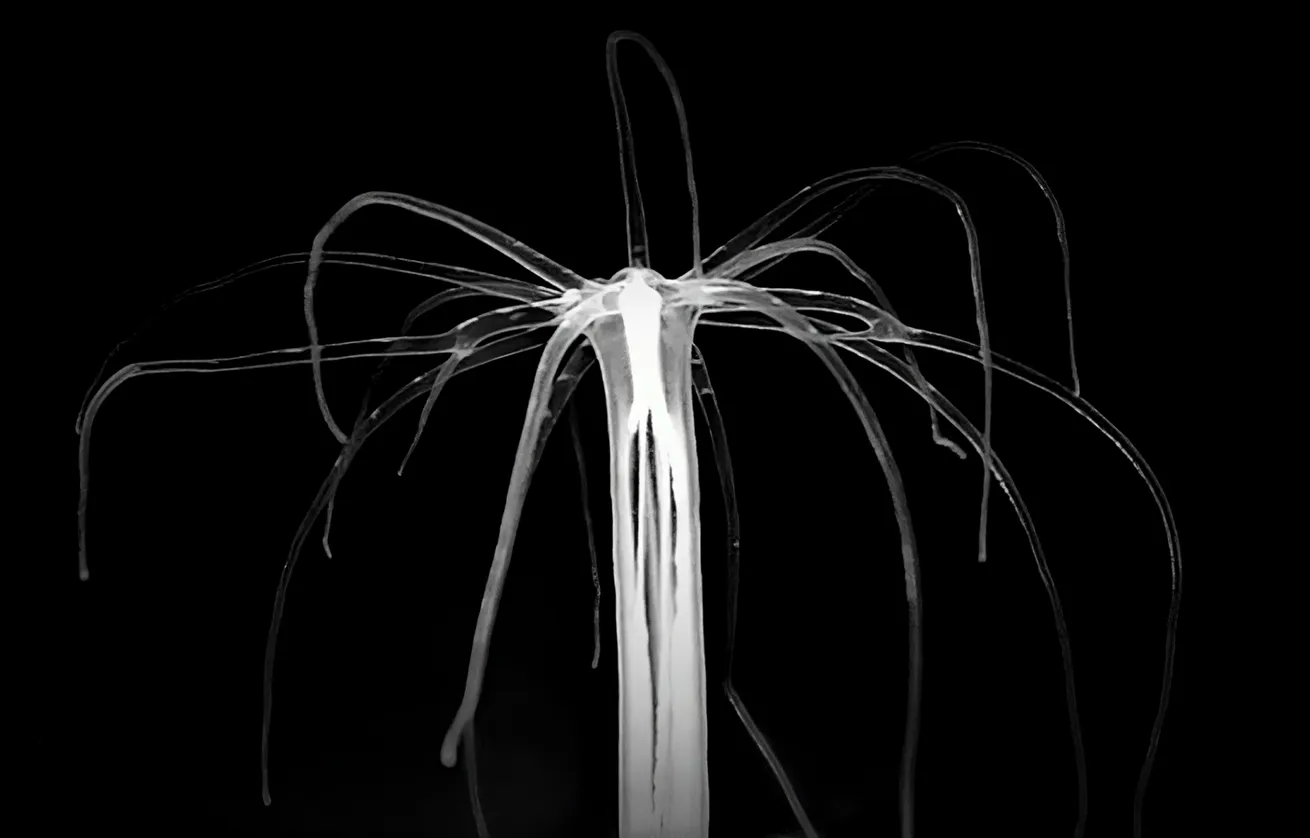
Raphael AguillonA starlet sea anemone.
They also noticed something endearing about the jellies: “The diurnal jellyfish take short naps at midday, similar to the behavior observed in fruit flies,” he says.
Jellyfish and sea anemones are some of the earliest creatures to evolve nervous systems, so studying how they catch their z’s helps experts understand the purpose of sleep. During the experiments, when the researchers caused DNA damage, both species slept more to recover. This supports the idea that sleep protects organisms from the stress placed on their bodies during waking hours.
Related Reading: 10 Reasons to Book a Family Dive Trip to Fiji
“Our results suggest that sleep evolved long before the brain,” says Appelbaum, “possibly to facilitate cellular maintenance.”
The findings were published in the journal Nature Communications.


