

Whether you’re looking to escape cold weather, beat the winter blues or just get away for a long weekend, February is a great time to dive. But with so many options, it can be difficult to narrow down where to go. We’re here to help. Below are our picks for the five best destinations for scuba diving in February.
Looking for other months? See our full 2026 Scuba Travel Calendar.
Yap, Micronesia: Manta Mating Display
Dive Highlights: Big Animals, Aggregations, Photo Opps, Boat Dives
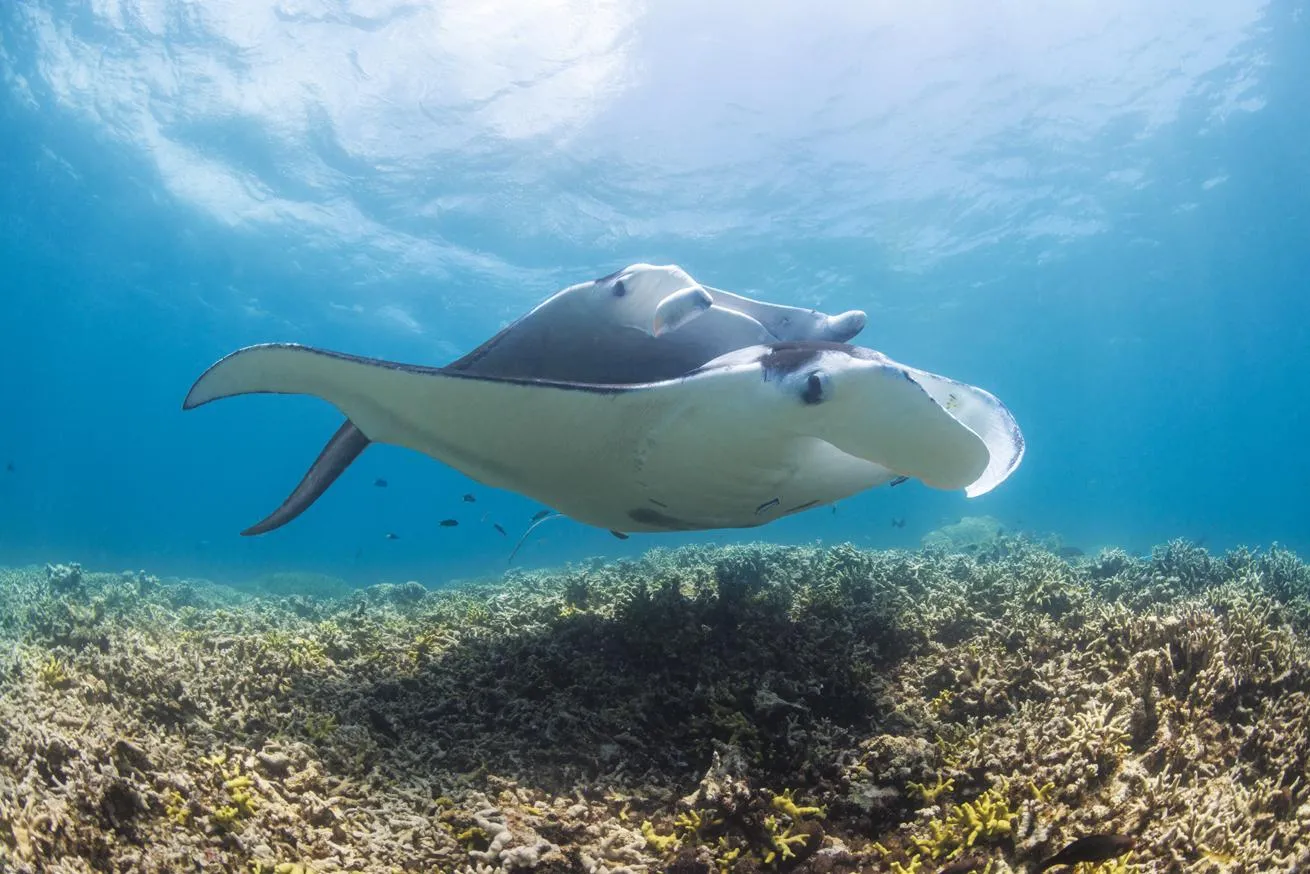
David FleethamReef manta rays, Mobula alfredi, attempting to mate in Yap, Micronesia.
There’s something in the water every February in Yap, a Micronesian island in the western Pacific Ocean. You can’t see it, but the female of the manta species starts emitting pheromones, chemically signaling to males that mating season has begun.
During this frisky time of year, divers might witness manta trains—with sometimes as many as 30 mantas falling in line. That parade is composed entirely of males, all trying to outdo each other with displays of strength and agility. The females set the challenge course, flying loops and tight turns, sometimes even leaping from the water. The exact moment of copulation, lasting just 30 seconds, typically happens away from view, but the rest of the behavior can often be seen at cleaning stations.
Yap is home to 30 such sites, so many that the joke is that the entire island is one big cleaning station. They range in depth, with some, such as the famous Stammtisch, just 15 feet deep.
Mantas aside, Yap’s reefs, home to mandarinfish, green humphead parrotfish and ghost pipefish, are worth the flights—taking 20-some hours from Los Angeles, with direct routes nonexistent. That hurdle means that fewer than 1,000 divers visit Yap every year, putting far less pressure on reefs and making them some of the most resplendent among this corner of the Pacific. —Brooke Morton
Operator: Manta Ray Bay Resort; Yap Divers
Related Reading: 10 Amazing Facts About Manta Rays
French Polynesia: Giant Hammerhead Show
Dive Highlights: Big Animals, Aggregations, Photo Opps, Boat Dives
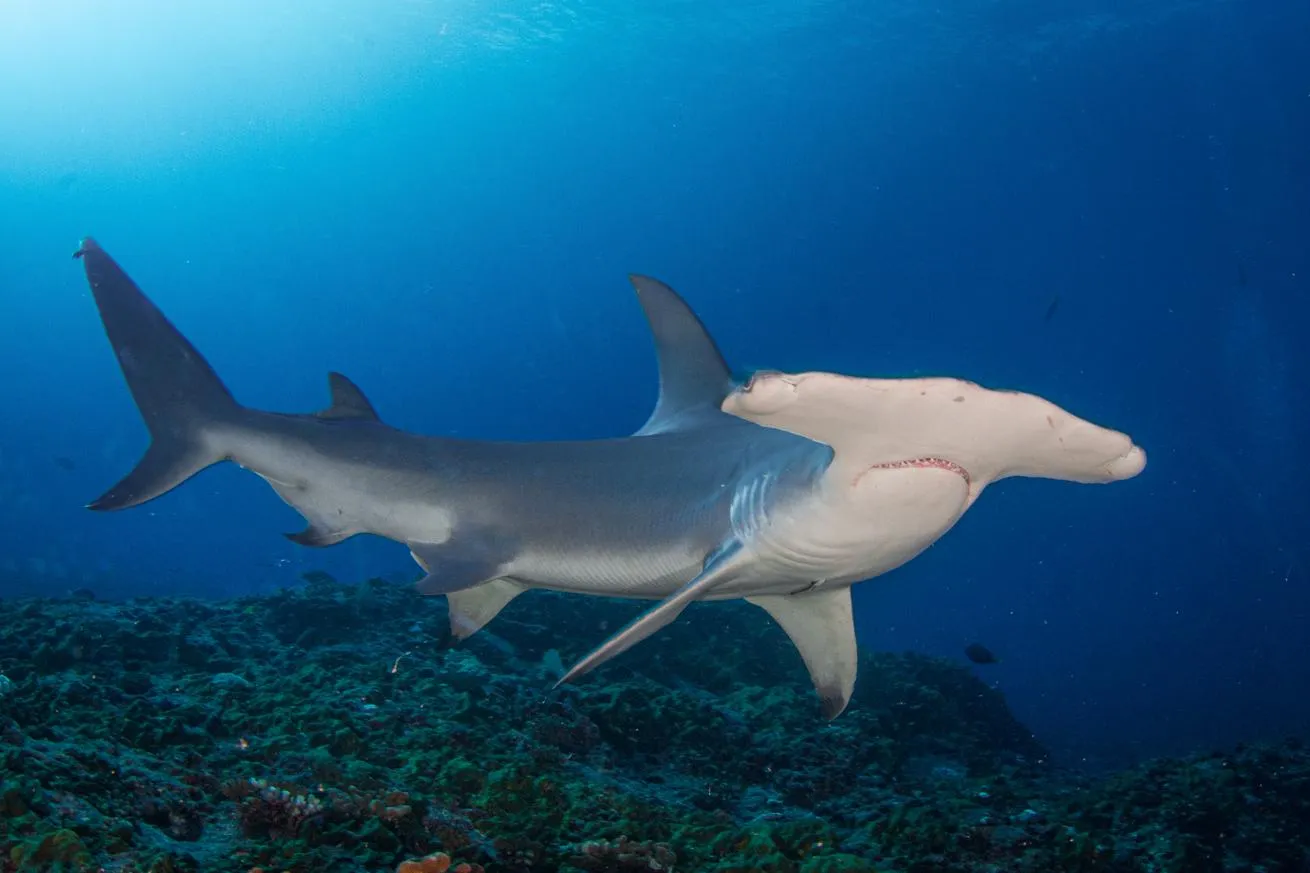
Kristina Vackova/ShutterstockA great hammerhead shark on a dive in Rangiroa, French Polynesia.
The sight of a giant hammerhead hunting an eagle ray is no subtle moment. After homing in on the winged creature with its electroreceptors, the shark uses its elongated head to pin the ray down, immobilizing it with sharp bites to the wings before shaking it to death. It’s the ultimate underwater predator-and-prey scenario—and just one of the wonders to witness at Rangiroa’s Tiputa Pass when giant hammerhead season rolls in during January and February.
Divers descend just outside the pass on the ocean side and incoming tide, where the legendary wall of gray sharks extending through the water column can be scores (and sometimes, hundreds) of sharks deep. The drift dive flows on through the channel into the calm lagoon, with Napoleon wrasse sightings possible along the way. —Terry Ward
Operator: The 6 Passengers
Related Reading: Best Islands to Dive in French Polynesia
Dominica: Champagne and Cetaceans
Dive Highlights: Big Animals, Photo Opps, Boat Dives
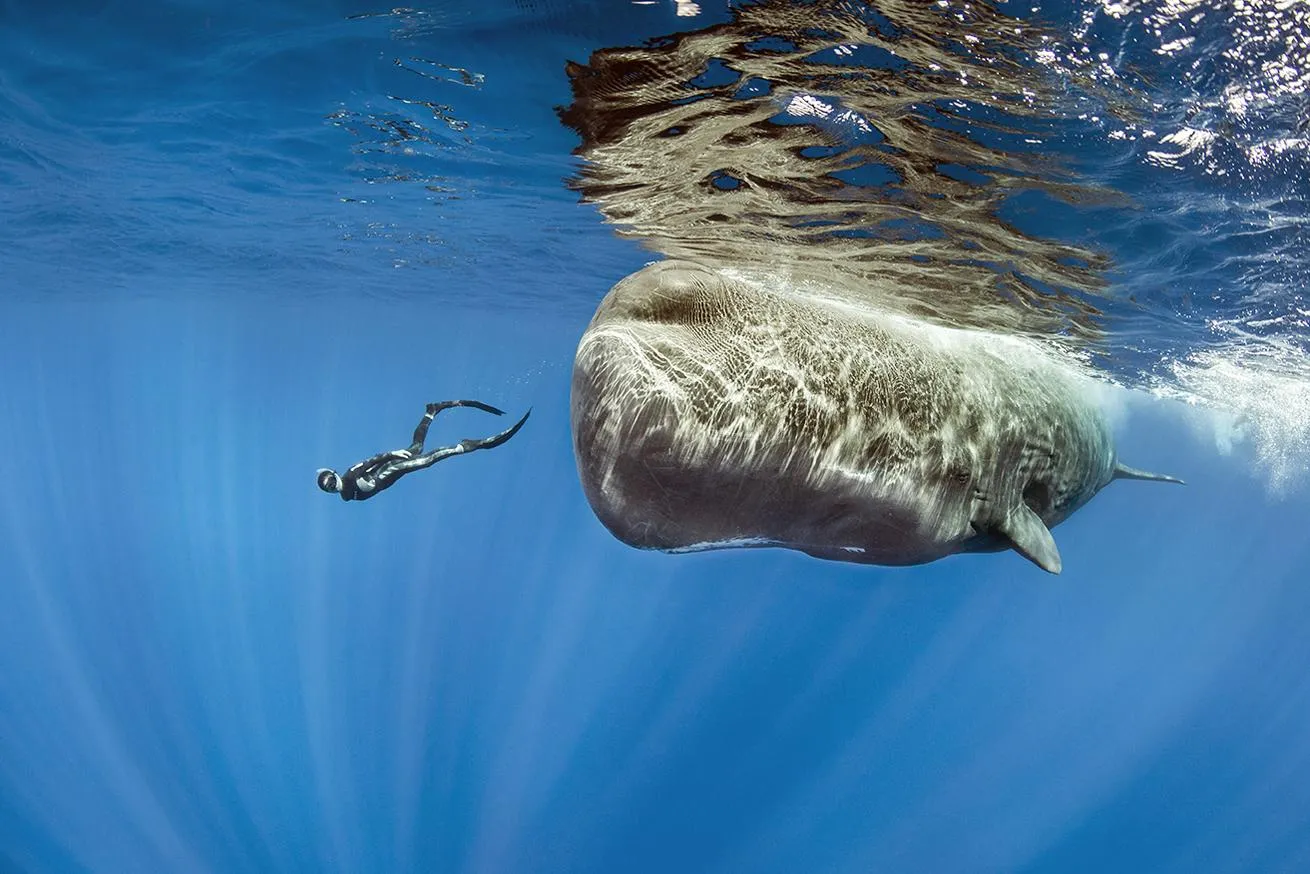
Franco BanfiA freediver swims with a female sperm whale (Physeter macrocephalus) in Dominica.
Whales, whales and more whales! That’s what divers flock to Dominica for.
Tucked between Guadeloupe and Martinique, this volcanic Caribbean island is home to a year-round community of more than 200 sperm whales that love its sheltered bays and deep, squid-rich waters. Dominica is also one of the rare places where swimmers are permitted in the water with these intelligent cetaceans, and strict regulations ensure that everyone—including the whales—has a good time.
Seasonally, divers may encounter humpbacks, pilot whales and dolphins as well. But even if you just came for the whales, Dominica’s sought-after diving doesn’t end there. The volcanic activity beneath the island heats the seafloor, and in some places sends up streams of tiny bubbles. At Champagne Reef, you can swim through countless fizzy vents for an especially eye-popping and ethereal effect. —Ariella Simke
Operator: Fort Young Hotel
Related Reading: Dominica Dive Travel Guide
Baja California Sur, Mexico: Nursery of the World’s Largest Mammal
Dive Highlights: Big Animals, Photo Opps, Boat Dives
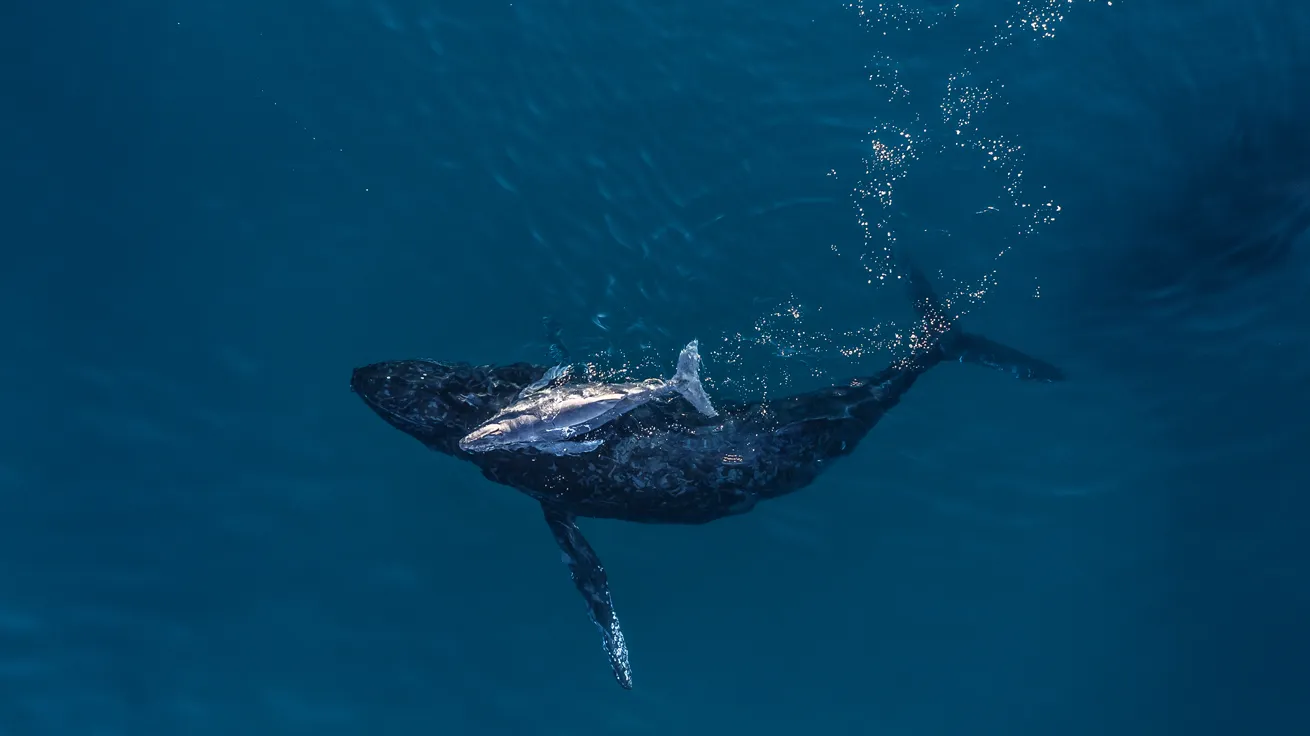
Alects/ShutterstockA humpback whale swims with a newborn calf in Los Cabos, Baja California Sur, Mexico.
The waters Jacques Cousteau once called the aquarium of the world shine a window on something new and spectacular beneath the surface in every season.
Between January and March, blue whales arrive in the Sea of Cortez from winter breeding grounds and summer feeding grounds to nurse their calves in deep blue seas surrounded by striking desert islands. It’s possible to catch sight of them during whale-watching tours that depart from the atmospheric seaside village of Loreto.
Dive sites within Loreto Bay National Marine Park and around the islands of Coronado, Carmen and Danzante see divers frolicking among cheeky sea lion colonies and finning through fish soup at walls and seamounts. —Terry Ward
Operator: Blue Nation Baja
Related Reading: This Little Town Might Be Baja's Best-Kept Secret
Utah: Ski, Snowboard, Scuba
Dive Highlights: Altitude Diving, Shore Diving, Snorkeling
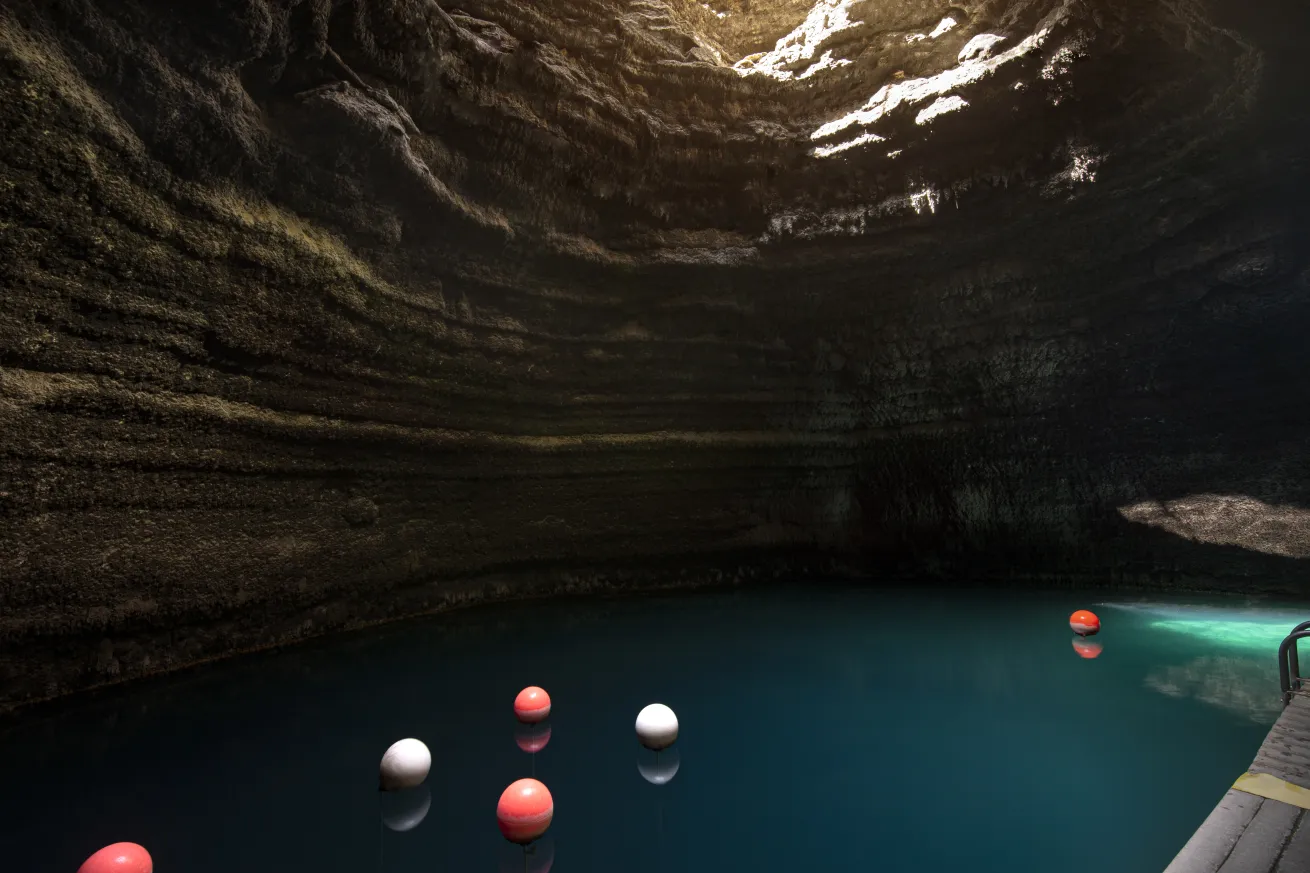
Courtesy Homestead Midway UtahThe Crater at Homestead offers a warm reprieve from its surrounding snowy mountains.
Many adventure-seekers flock to the mountains of Utah to hit the slopes in February, but only the smart ones make it a scuba trip, too. (And, no, you don’t have to pack your drysuit.)
The thick of winter is an ideal time to visit The Crater at Homestead, located in Midway, Utah, just 10 minutes from renowned ski areas such as Deer Valley Resort. While snow piles on the mountains, the water in the domed crater remains 90 to 96 degrees F year-round, offering a blissful escape from the cold.
Measuring more than 400 feet across and about 65 feet deep, the crater is the largest of the area’s geothermal hot springs. It sits at about 5,000 feet above sea level, so be sure to adjust your dive plan and your computer for altitude diving.
Traveling with non-diver companions? They can tag along. Snorkeling and swimming is allowed in the crater as well. —Melissa Smith
Operator: Utah Crater
Related Reading: Hot Spring Diving at Utah’s Homestead Crater
Where to Dive Next Month
Yap, French Polynesia, Dominica, Baja California Sur and Utah are our top recommendations for scuba diving in February. Looking for other months? Dive in here:


