

There’s no better way to fill summer’s long days than by taking a dive trip. Not sure where to start planning? Here are five of the best destinations for a July scuba diving trip, as selected by Scuba Diving magazine editors.
Looking for other months? See our full 2026 Scuba Travel Calendar.
South Africa: Feeding Frenzy
Dive Highlights: Boat Dives, Aggregations, Big Animals, Photo Opps

Florian AllgaeuerA dolphin hunts a baitball during the Sardine Run.
Four miles—that’s how long one mega-shoal of pilchard sardines stretches every summer when the phenomenon hits the eastern coast of South Africa. A seasonal upwelling of cold water triggers the mass event. This patch of the Indian Ocean becomes turbid with action, signaling the fight below.
Common and bottlenose dolphins, sometimes as many as 50 to 60 at a time, showcase their keen abilities to strategize and hunt cooperatively as they herd the sardines into balls 60 feet wide. Over the course of the season, 18,000 dolphins will thin the herds—but the real draw for most divers is the sharks.
The dolphins shoulder the lion’s share of work, but it’s the bronze whalers, blacktips and dusky sharks that reap the greatest rewards, sweeping through the neatly compacted buffet, devouring what they can and making a mess of the baitball. Cue the dolphins again. And so it goes—with Bryde’s whales running sweep—until the party ends. —Brooke Morton
Operators: Aliwal Dive Centre; Blue Ocean Dive Resort
Related Reading: Sardine Run Fever on South Africa's Wild Coast
Bahamas: Nonstop Thrills in Nassau
Dive Highlights: Wrecks, Big Animals
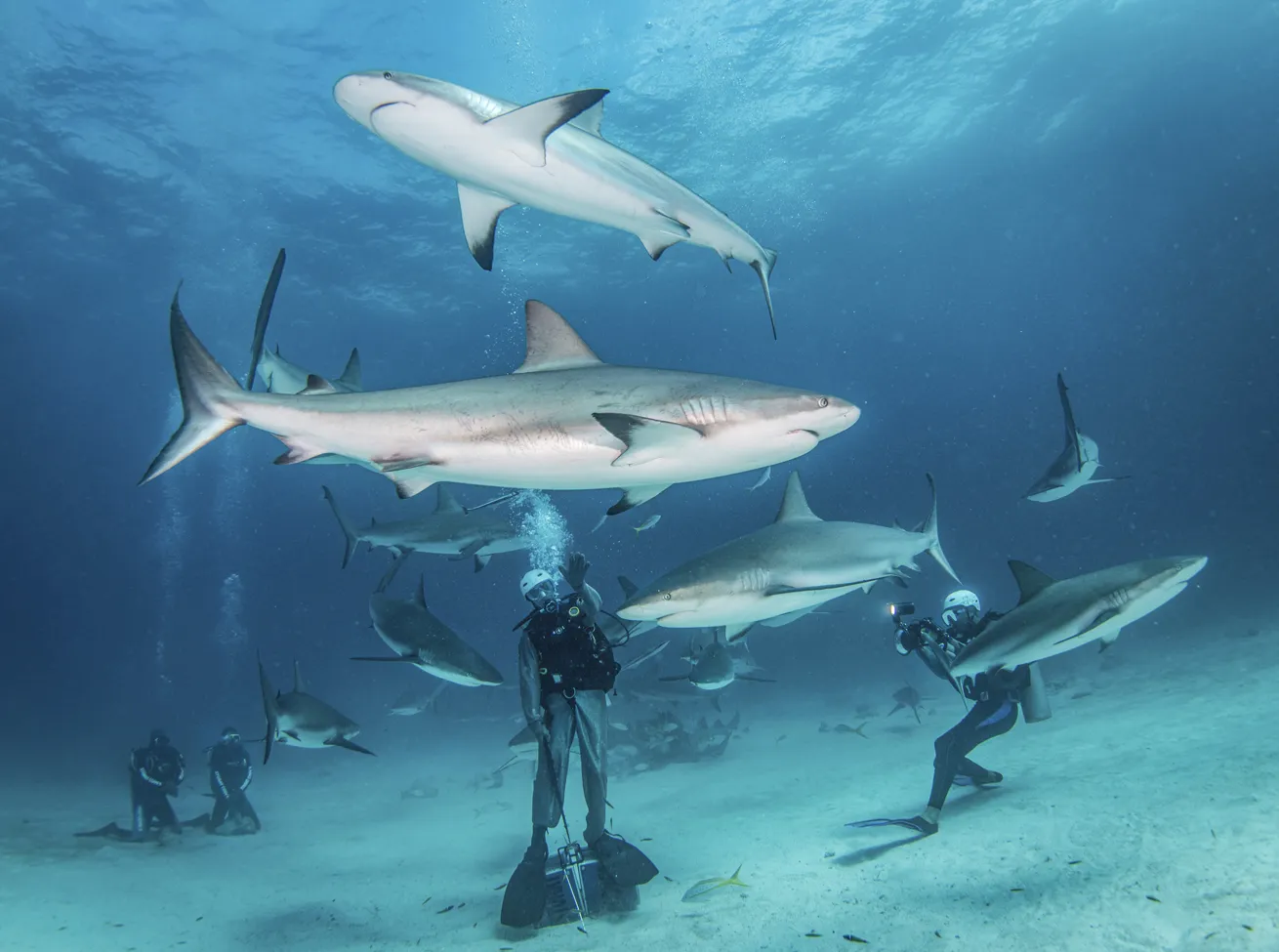
Brandi MuellerCaribbean reef sharks abound in the Bahamas and congregate on Stuart Cove’s “Shark Arena” dives.
Blooms of juvenile silver shad, aka threadfin herring, appear on Nassau reefs May through August. These baitballs attract the attention of Caribbean reef sharks, which are present year-round off the island and serve as the island’s largest claim to scuba fame. The addition of schools of herring adds one more element to a dive site that is easily a trifecta—sharks, wrecks and a wall, all enjoyed on one tank.
The Ray of Hope, a 200-foot Haitian freighter purpose-sunk in 2003 by Stuart Cove’s Dive Bahamas, sits at the edge of a wall. Sharks circle the bow and cruise the topdeck. Add in beams of sunlight and explosions of silvery fish and it’s no wonder that this destination is a favorite among shooters—not just Discovery Channel videographers but also commercial photographers eager to shoot watch campaigns with a dramatic, glittering and drama-packed backdrop. —Brooke Morton
Operators: Stuart Cove’s Dive Bahamas
Related Reading: Unexpected Adventure in the Bahamas
Indonesia: Mantas in the Current
Dive Highlights: Boat Dives and Liveaboard Options, Advanced Diving, Big Animals
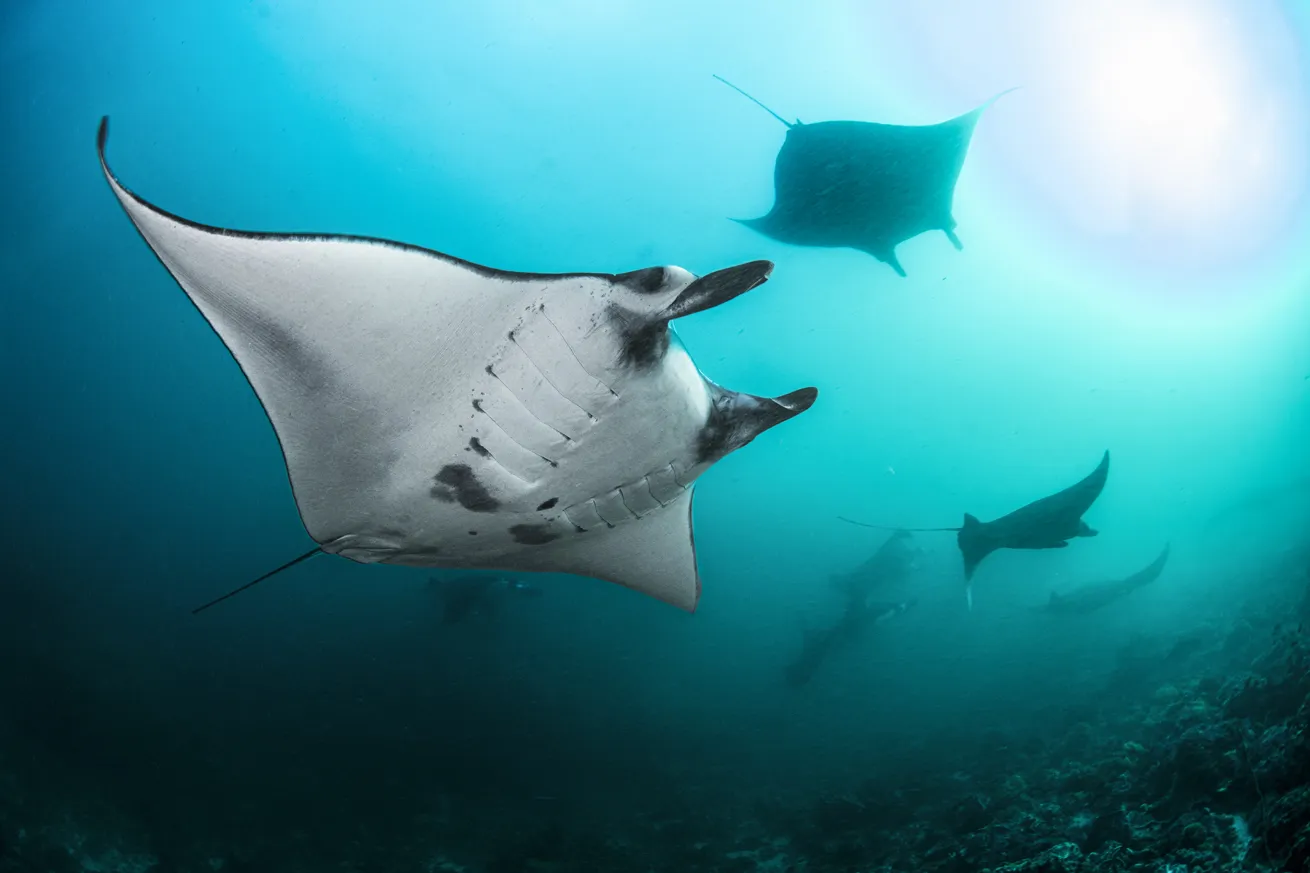
Alex MustardA group of reef mantas swim in the channel between two coral reefs in Komodo National Park.
Komodo National Park sits at the convergence of the Pacific and Indian oceans in the Coral Triangle. This turbulent mixing zone is dynamic as it is beautiful, with strong currents and endless nutrients for marine life, like mantas, to enjoy.
With several regions for diving, Komodo is best discovered via liveaboard. If you like to ride the currents, you’ll be whisked away to sites like the Cauldron (or “Shotgun”), a roller-coaster ride of a channel dive that’s sure to get your heart racing, and the stunning deep pinnacle Batu Bolong, a rich site full of strong currents, tiny wonders like pygmy seahorses, and surprise pelagic encounters. When the adrenaline tapers, make sure to slow it down enough to observe the graceful displays of mantas dancing at Makassar Reef (Manta Point) or Manta Alley in the south.
Komodo is spectacular year-round, but in July, the waters are warm and visibility peaks, meaning fewer chilly dives and more opportunity to spot young mantas in the north. —Ariella Simke
Operators: Dive Gaia; Dragon Dive Komodo; All Star Liveaboards
Related Reading: One Week in Komodo Reminded Me Why I Dive
Roatan: Shimmering Schools and Soaring Eagles
Dive Highlights: Boat Dives and Liveaboard Options, Shore Diving, Big Animals, Photo Opps
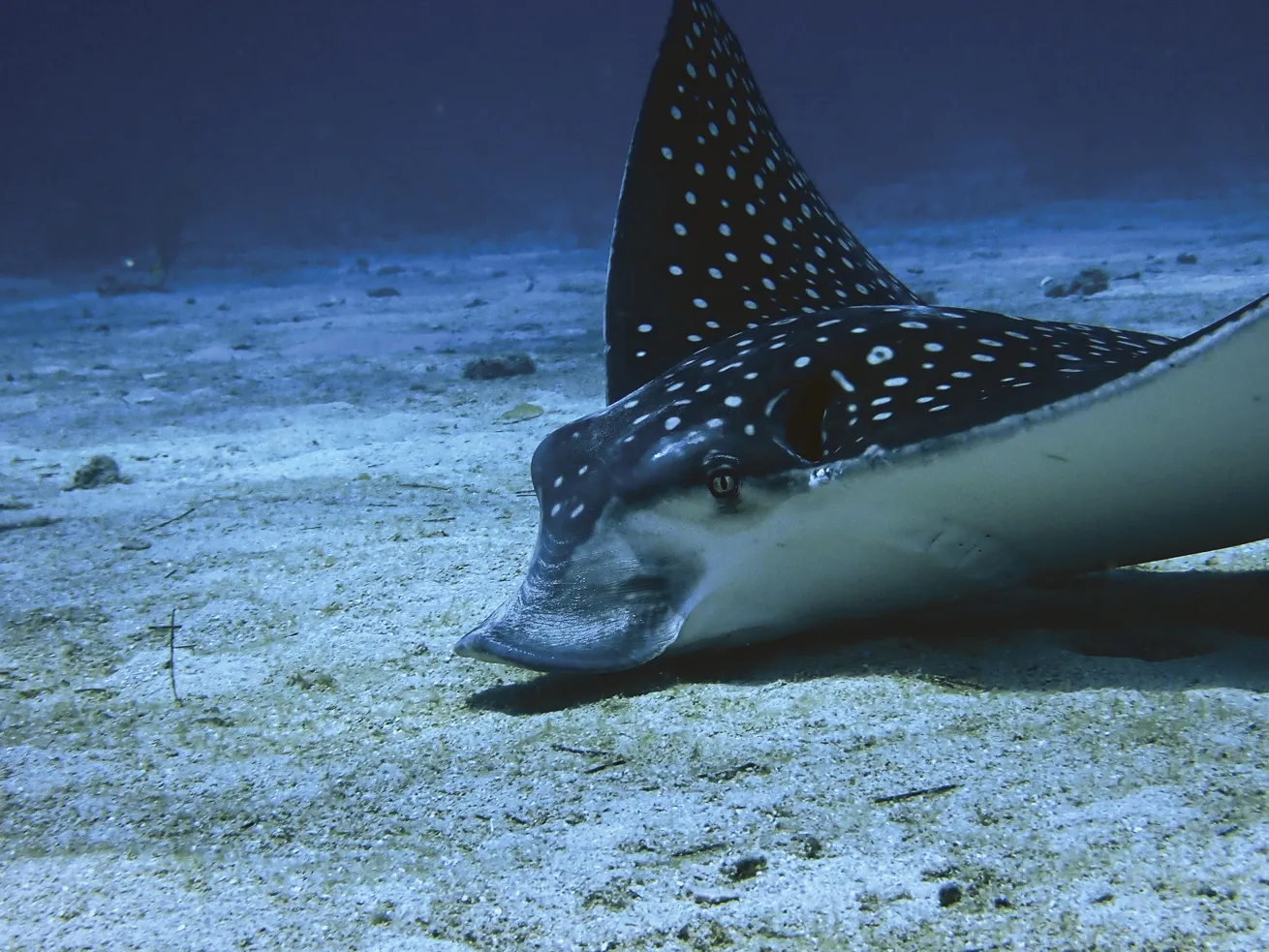
Quentin CaussinSpotted eagle rays can often be spotted in July.
The summer months in Roatan, the largest of Honduras’ Bay Islands, see blooms of several species of silversides on the reefs, wrecks and along the edges of the walls. These schools of Atlantic silversides, hardyhead silversides and ballyhoo are found year-round in smaller numbers, but summer’s explosion stirs up more action than usual on the reef, with these glittering balls of life piquing the attention of predators.
July is also prime season for eagle ray activity. Sometimes solo, but usually in pairs or in a fever of three to six, they congregate at sites such as the El Aguila, a 230-foot freighter sunk off Roatan, where they shovel the surrounding sand for mollusks, crustaceans and the like. The sand chutes of the Blue Channel dive site also lure in this animal. This site sees a good mix of traffic, including Caribbean reef sharks, schooling dogtooth snapper and green turtles. West End Wall, found on the western tip of the island, is another choice spot, closer to open ocean, where ray encounters are common.
Part of the fun—and value—of Roatan is that you don’t need a boat to drop in on wrecks, walls, reefs and seagrass beds, surprisingly delightful hotbeds of macro life. Accessible shore diving widens the window of availability, bringing night dives within reach. And summer water temperatures ranging from 82 to 86 degrees make a night swim much more appealing. Then factor in that squid are much more active March through July, flashing their iridescent color displays—which makes for show-stopping scenery indeed. —Brooke Morton
Operators: Anthony’s Key; Barefoot Cay; CoCo View; Mayan Princess
Related Reading: Divers Guide to the Bay Islands
Scotland: Meet the Second-Largest Fish in the Sea
Dive Highlights: Snorkeling, Cold Water, Big Animals, Photo Opps
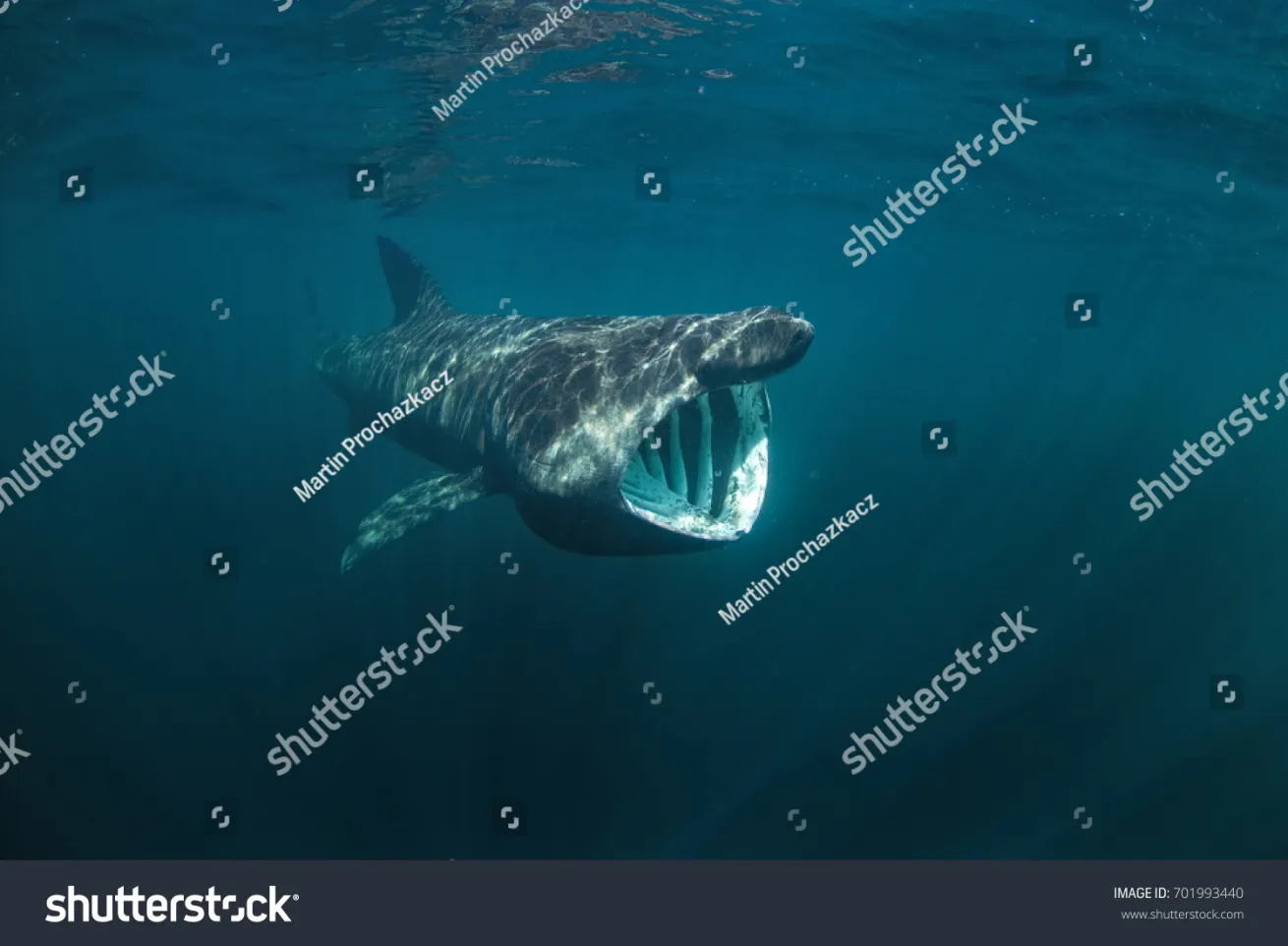
Martin Prochazkacz/ShutterstockA basking shark (Cetorhinus maximus) swims off Coll island, Scotland.
There are dozens of areas around the world where you can see whale sharks, the largest fish in the ocean. The second-largest fish, the basking shark, is much more elusive. However, there is one spot (and time of year) you can bet on a sighting: off the coast of Scotland from July to September.
These giant filter feeders can reach up to 40 feet in length and weigh over 5 tons. They get their name from a distinct behavior—they bask in the sun near the water’s surface, feeding on the zooplankton that become abundant in the summer. For this reason, basking shark excursions are all snorkel-based. There’s simply no reason to go deeper.
Plan for multiple days in the water, snorkeling from a zodiac and remember that encounters aren’t guaranteed. But there’s plenty else to see while snorkeling—common dolphins, gray and common seals, healthy kelp forests and more. Be sure to choose a guide who prioritizes environmental concerns and respects the animals.
Back on dry land, schedule in some time to visit iconic areas like Edinburgh, Glasgow and the Highlands. July brings some of Scotland’s warmest and driest weather of the year, and the long summer days—we’re talking 18 to 19 hours of sunlight in the country’s far north—provide plenty of time for outdoor activities like hiking, castle touring and nature photography. —Melissa Smith
Operators: Basking Shark Scotland
Related Reading: Why Scotland Is a Snorkeling Paradise
Where to Dive Next Month
South Africa, the Bahamas, Indonesia, Roatan and Scotland are five of the best scuba diving destinations in July. Curious about our recommendations for other times of the year? Click below to see more.


