

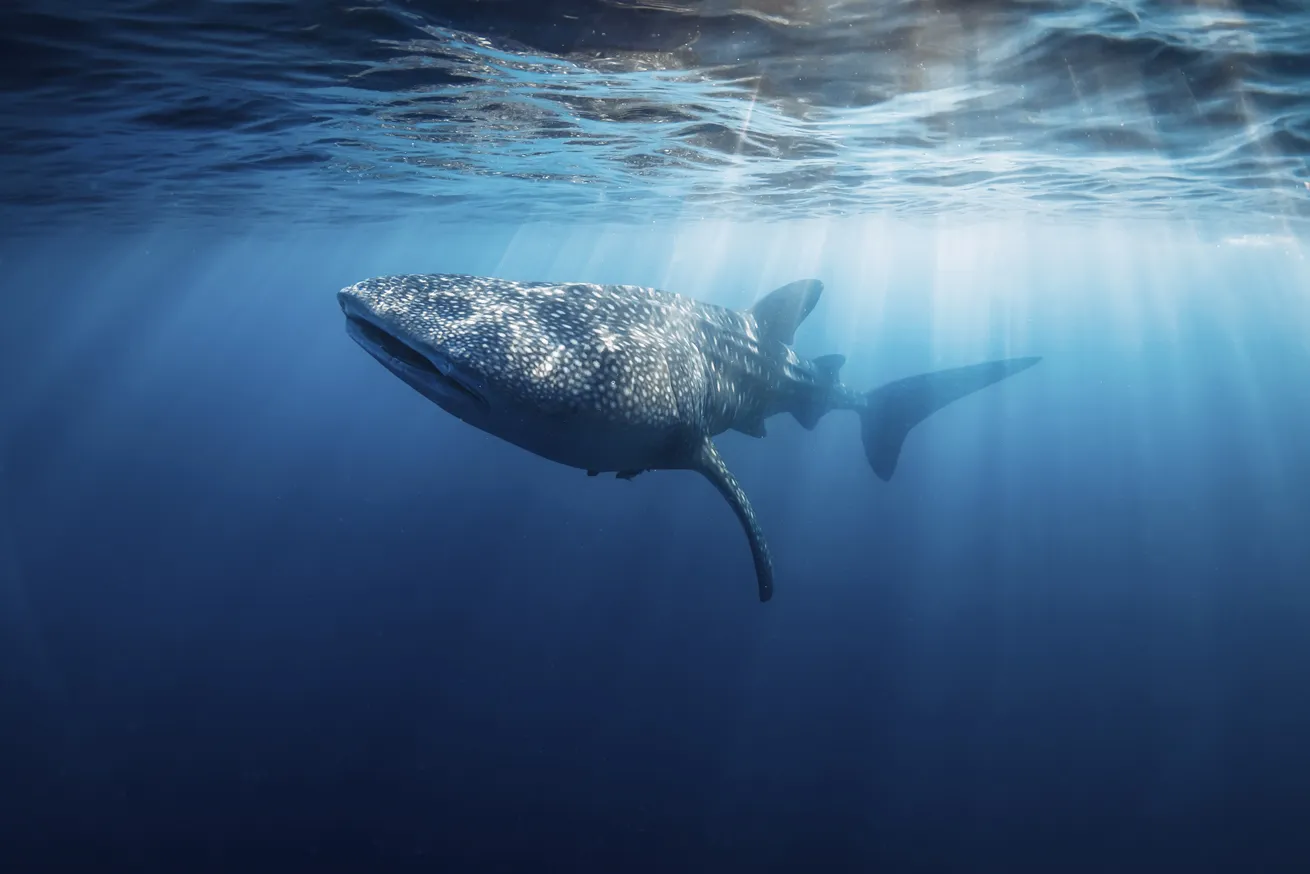
Shutterstock/Wonderful Nature
Formally called the Agreement on Marine Biological Diversity of Areas Beyond National Jurisdiction (BBNJ), the High Seas Treaty took effect in January 2026, creating the first legally binding global framework to halt biodiversity loss and ocean degradation in international waters. It’s a big deal.
The High Seas Are Vital
Life in the open ocean underpins global fisheries, food security, and emerging medicines and biotechnology. Yet despite its importance, only 1 percent of the high seas is fully protected.
“The high seas account for almost two-thirds of the ocean,” says Ian Campbell, associate director for policy and campaigns at PADI AWARE. Without protection, these areas will remain vulnerable to unsustainable fishing, seabed mining and pollution, Campbell adds.
Until now, governance relied on fragmented fishing agreements and shipping rules that left major gaps and led to overuse, abuse and exploitation.
“The high seas belong to everyone. This treaty gives us a chance to fill some big holes in how we care for the ocean,” says Monica Medina, Arnhold Distinguished Fellow at the nonprofit Conservation International.
Related Reading: Why Endangered Marine Species Are Worth More Alive
Core Pillars
1. Biodiversity Protection Through MPAs
“From a diving perspective, the potential to establish large-scale marine protected areas might be the most tangible benefit,” Campbell says. “Almost every migratory animal divers see spends a large part of its life in the high seas.”
The treaty creates a process to establish MPAs and protected migratory corridors to conserve ecosystem integrity.
2. Equitable Access to Marine Genetic Resources and Capacity Building
Marine organisms are increasingly used in medicines and biotechnology. The treaty establishes rules for sharing benefits from these discoveries and supports technology sharing so developing nations can participate in conservation, research and governance.
These measures aim to ensure ocean resources aren’t exploited by only a few.
3. Standards for Environmental Impact Assessments
Countries and companies must now evaluate environmental harm before proceeding with new industrial activities such as fishing, shipping and exploration. This introduces global accountability for industries like deep-sea mining.
“It requires balancing,” Medina says. “Areas that need protection can be protected, and commercial activities can take place responsibly.”
4. Global Coordination for Ocean Protection
The treaty creates coordination across countries and other UN treaties, allowing for more effective participation and enforcement. “This is a huge step forward,” Medina says. “It recognizes that we have to take care of the ocean together.”
What Happens Next
As of February 2026, 85 countries have ratified the treaty (a complete list can be found on the UN’s website). Others, including the United States, have signed but not ratified, meaning they support its goals but are not fully legally bound.
Now, nations must turn words into action. “We have balance in the language, but now we have to make systems that make it real,” Medina says. “There’s no set-it-and-forget-it formula here.”
Divers will play a role too. “They’re a really valuable voice,” Medina says. “Divers connect people to parts of the ocean they may never see—and that connection can help drive protection.”
“They contribute a very large component to the economies of countries around the world,” Campbell adds. “PADI AWARE will be establishing opportunities to get involved now that the treaty has been implemented,” he says.


