

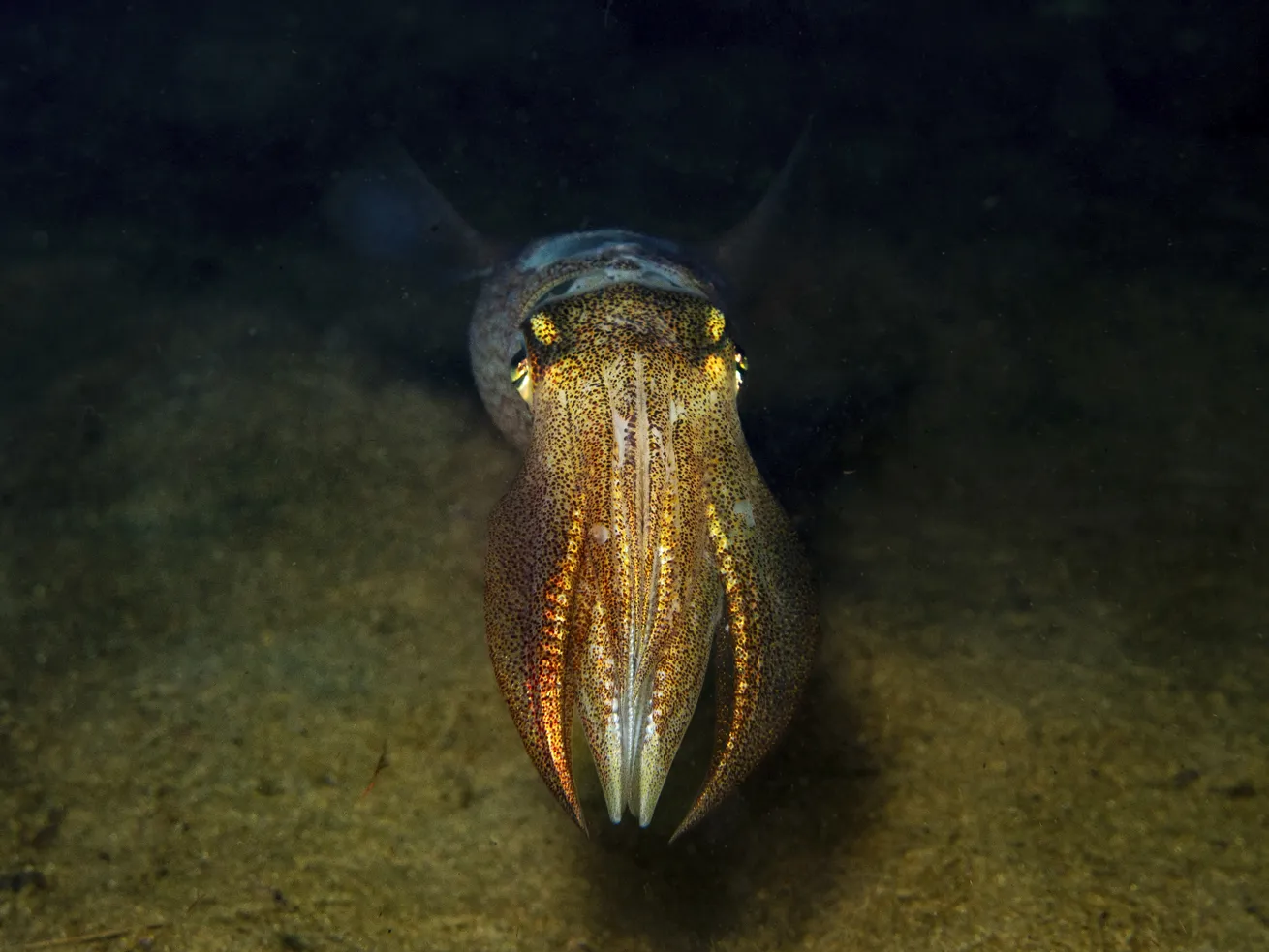
Courtesy Elizabeth RobertsA longfin squid makes eye contact.
It’s this sense of variety and surprise that makes diving here so special—and just as exciting as diving in the warm waters of the Caribbean.”
Whitney Boyle, owner of Undersea Divers Inc. in Danvers, Massachusetts, started working with her father to run his dive shop just after she graduated from business school in 2010.
“Initially, I joined the business while searching for a job, but I quickly fell in love with the work and decided to stay full-time. My father sadly passed in 2015, and that is when I took over ownership. It’s been a privilege to carry on his legacy, and I’m incredibly proud to serve the diving community that he helped build.”
Boyle’s shop frequently dives along the North Shore, including Back Beach Landing, which can be reached in half an hour from the shop. The dive site sits just off the rocky coast of Cape Ann along Sandy Bay and is one of Boyle’s favorite training sites. With accessible metered parking in the residential area and an experienced dive community surrounding it, Back Beach welcomes all levels of divers and offers exciting day and night dives—including glimpses of fish and small invertebrates.
“I've had so many fantastic dives at Back Beach, from early spring nudibranch safaris to summer night dives with squid,” says Liz Roberts, a PADI divemaster and underwater photographer whose first-ever ocean dives took place at Back Beach.
Related Reading: Strange Encounters of an Alaskan Night Dive
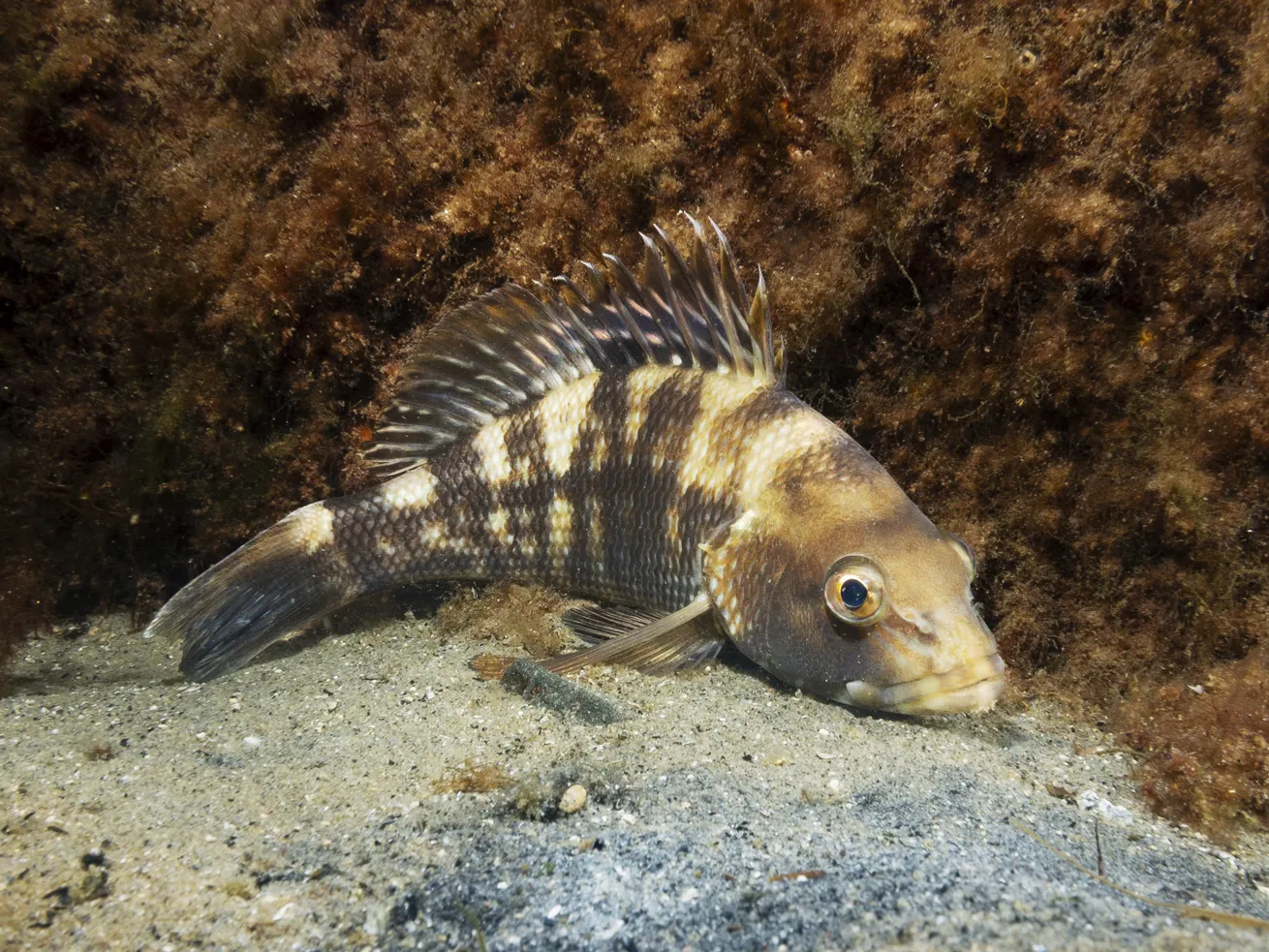
Courtesy Elizabeth RobertsBlack sea bass are in abundance here.
“The entry that divers most often use is on the left side of the beach. Once you are in the water, there is a rock wall to your left that you can follow as it curves around the beach. You're almost guaranteed to see crabs: rock crabs and longwrist hermits are almost always out. In the winter and spring, keep an eye out for various flabellina and dorid nudibranchs. Sometimes plumose anemones show up. Summer divers will probably encounter a few curious striped bass, lots of lobsters, flounder, small sculpins (grubbies) and, if you're lucky, a sea raven (my favorite sculpin!).”
“While many people associate New England’s waters with dull or colorless environments, nothing could be further from the truth,” Boyle explains.
“As my father always said, while the Caribbean offers colorful marine life, typically you see the same thing over and over again. No two dives in New England are ever the same.”
“I think you have to be passionate to dive regularly in an area where ‘favorable conditions’ are 65-degree water and 25 feet viz,” says Roberts.
“I am part of the Undersea Divers Photo Society, and it's been a great way to learn more about underwater photography and meet other people locally who like to hang out underwater with a camera.
Related Reading: A Snapshot of SeaLife's Photographic Legacy
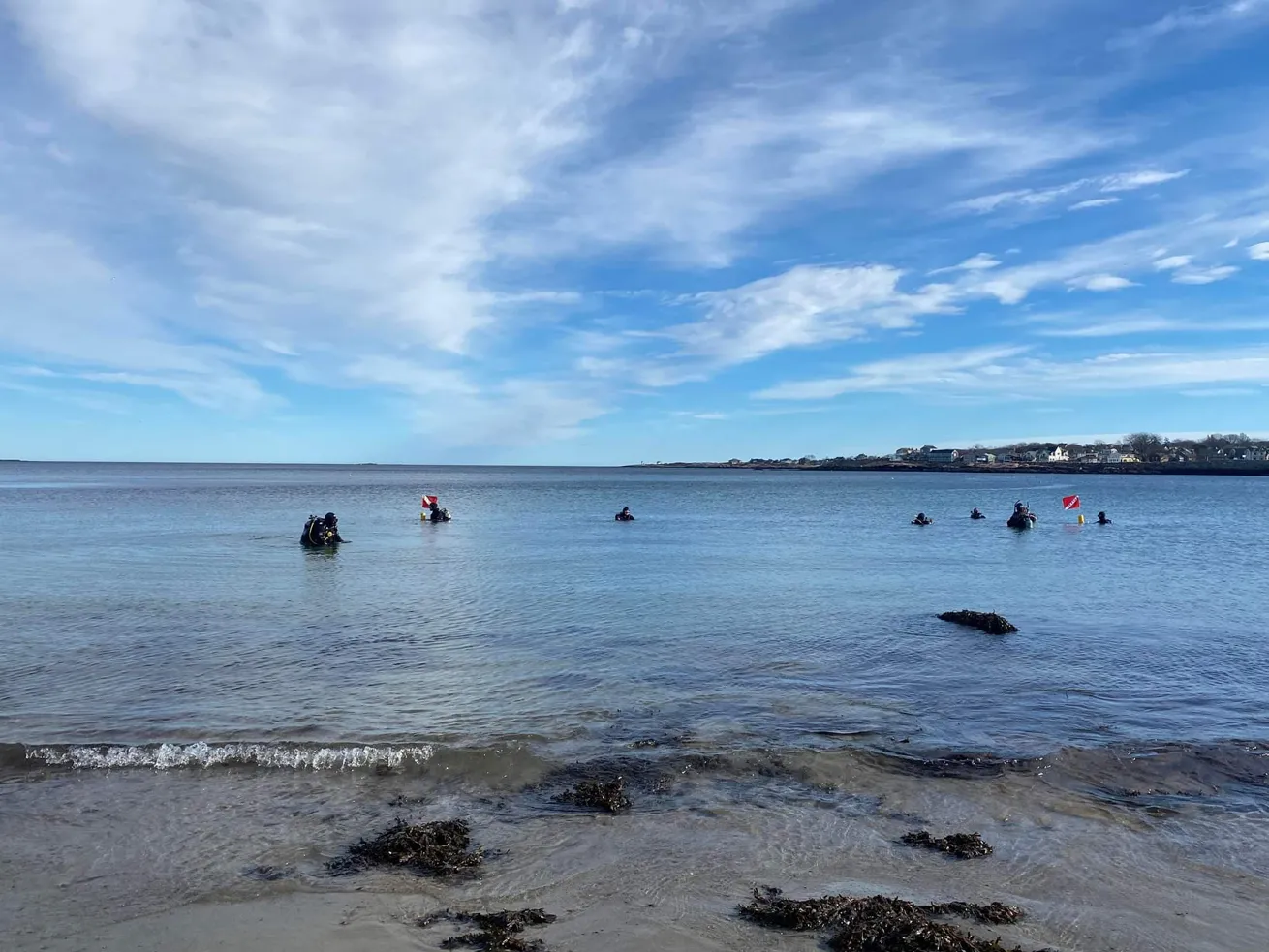
Courtesy Luis FernandezBack Bay is a Massachusetts shore dive site just off of Cape Ann.
“I’ve had so many fantastic dives at Back Beach, from early spring nudibranch safaris to summer night dives with squid.”
"My parents are landscape photographers, and I liked taking pictures before, but I don't think I even knew what an F-stop was when I first bought a TG-6 so I could take pictures on a seal dive. I've learned a lot about technique, composition, gear and resources to check out from attending Photo Society meetings. And I've gotten to see great photos from interesting locations around the world!”
“The Photo Society was founded by my father and his friend, Andrew Martinez, both of whom were professional photographers,” Boyle adds. “The group hosts monthly meetings where members share their photos from recent trips or local dives, along with valuable tips on editing and camera equipment.
"Andrew Martinez continues to cohost the meetings with me, and we are proud to offer this event for free to all interested participants. The meetings are accessible to anyone, as they are held via Zoom, and past sessions are available on our YouTube channel.
“This has been an incredible way for me to honor my father’s legacy, while continuing to support a group that held great meaning for him.”
Related Reading: How to Master Underwater Fluoro Photography
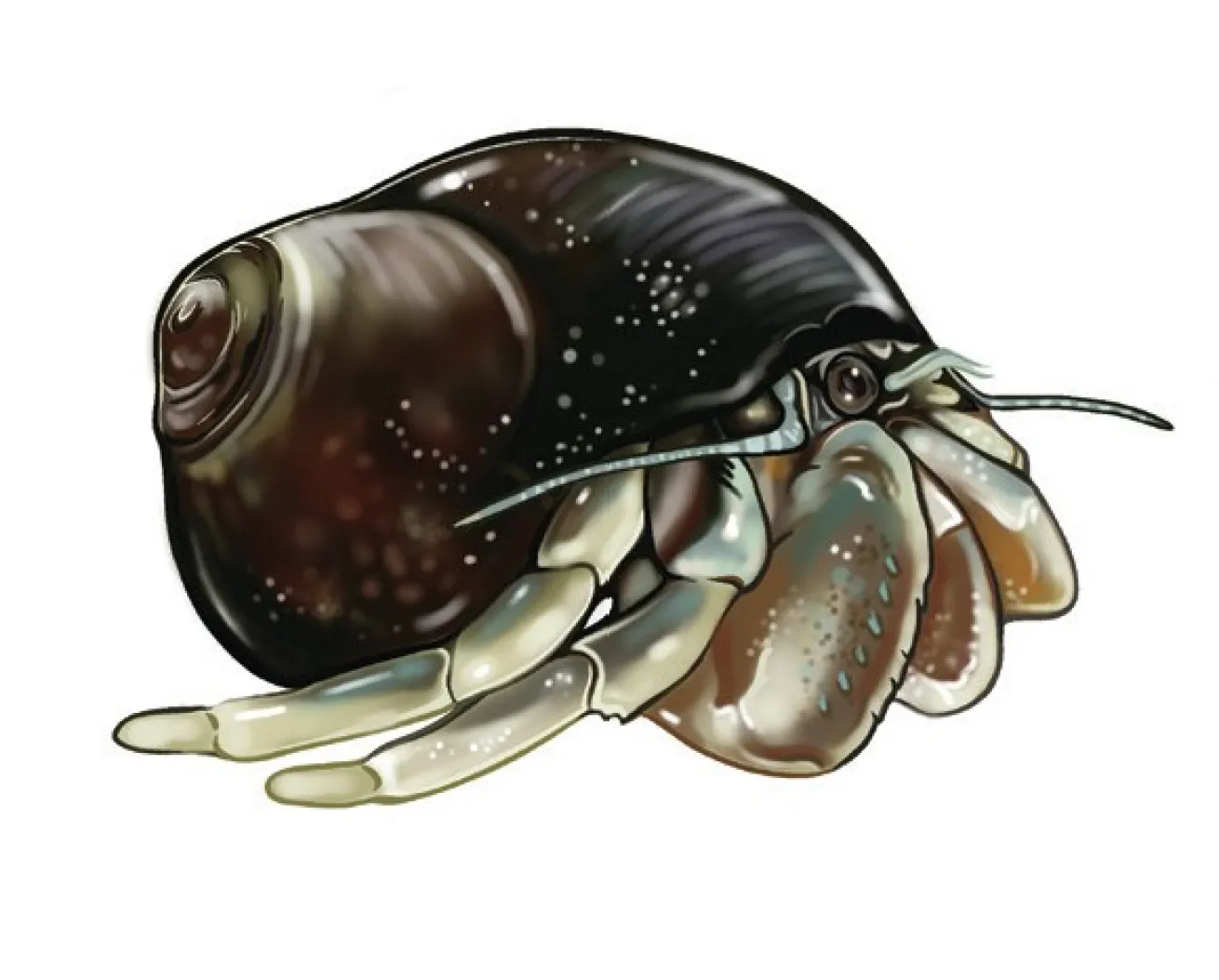
Site Spotlight: Longwrist Hermit Crabs
Longwrist hermit crabs (Pagurus longicarpus), also known as long-armed hermit crabs, are invertebrates found from the Gulf of Mexico shores to the cold waters of the Atlantic.
Their right claws are larger than their left claws, and like all hermit crabs, they find homes in shells previously inhabited by other creatures.
In the expanse of the ocean, their worlds are small: They grow to be under 1 inch long and depend heavily on their shells to protect them from bigger animals—birds, octopuses and even other crabs—and weather conditions in tidal pools.
These tiny crustaceans typically rummage through waste, scavenging for microcrustaceans and algae to feed on.
Need to Know Shore Diving in Massachusetts
Conditions
Shallow shore dive accessible during low and high tides; max depth 30 feet at high tide.
Certification
Acquire a new skill through the PADI Digital Underwater Photographer course.
Before Diving
Check the forecast for strong winds before diving. Prepare for busy summer weekends or head out on weekdays to avoid crowds.
What to Bring
7 mm wetsuit in the summer, drysuit for colder months (or year-round)
Local Resources
Undersea Divers underseadivers.com.


