

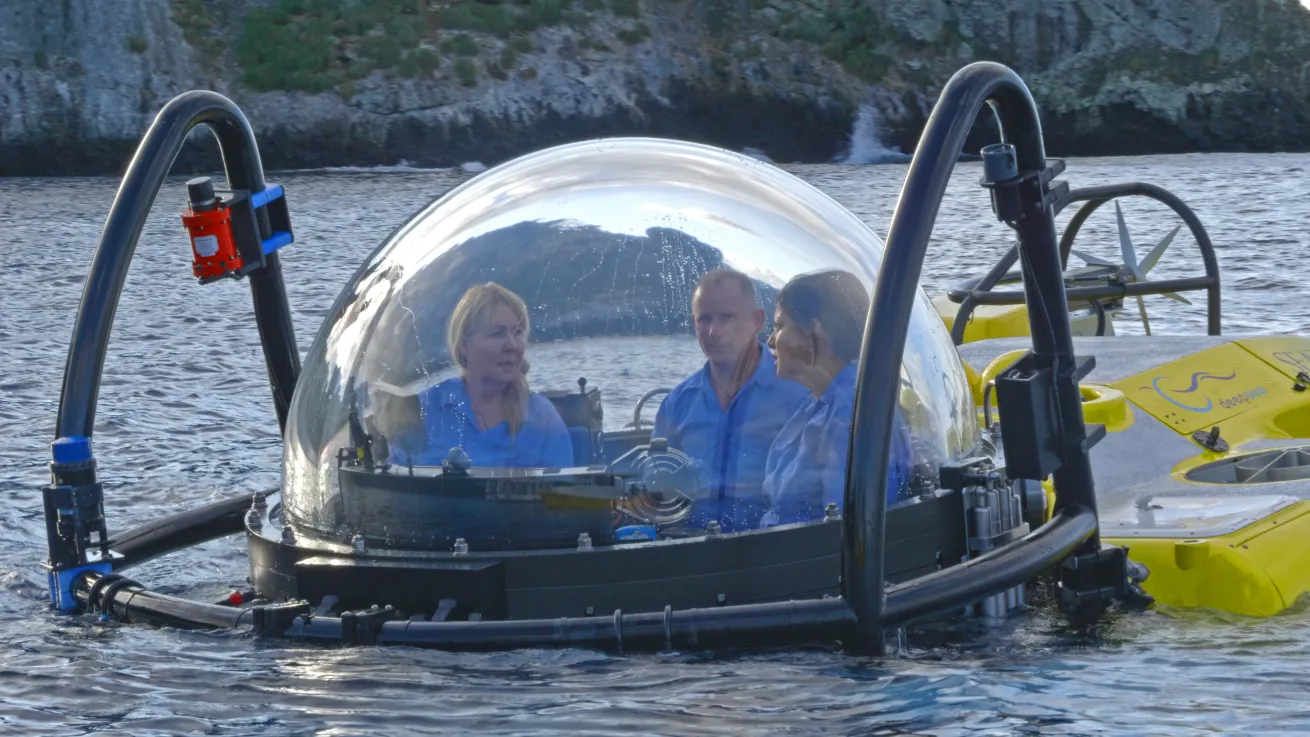
Bradley Ireland ProductionsGeorgienne Bradley during a submersible dive at Cocos Islands.
Scuba Diving Sea Hero Georgienne Bradley is a diver, photographer, the director of Sea Save Foundation—a nonprofit that encourages divers and others to make a difference in marine conservation—and even the recipient of a NOGI award for her work protecting the underwater world.
From Medicine to the Ocean
However, none of this would have happened if she had stuck to her plan to become a doctor.
“While almost completing my medical school education, I got a call from a friend who was a logistics coordinator at the Cousteau Society,” she says, recalling the moment that changed her trajectory. “‘We need someone to serve as the Latin American representative, someone who's a scientist and who can speak Spanish.’ My full intent was to go and do this year's experience, and then return and finish med school.”
Perhaps it wasn’t surprising that Bradley felt called to explore the natural world. As she recalls, her love of the ocean started young. She grew up on the marina where her parents’ business was located, and spent her time curiously dissecting dead animals and drawing. Playing house with other girls wasn’t an option—her Easy Bake Oven was repurposed as an insect terrarium.
Related Reading: Honoring Hyperbaric Medicine Pioneer Dick Rutkowski at 95
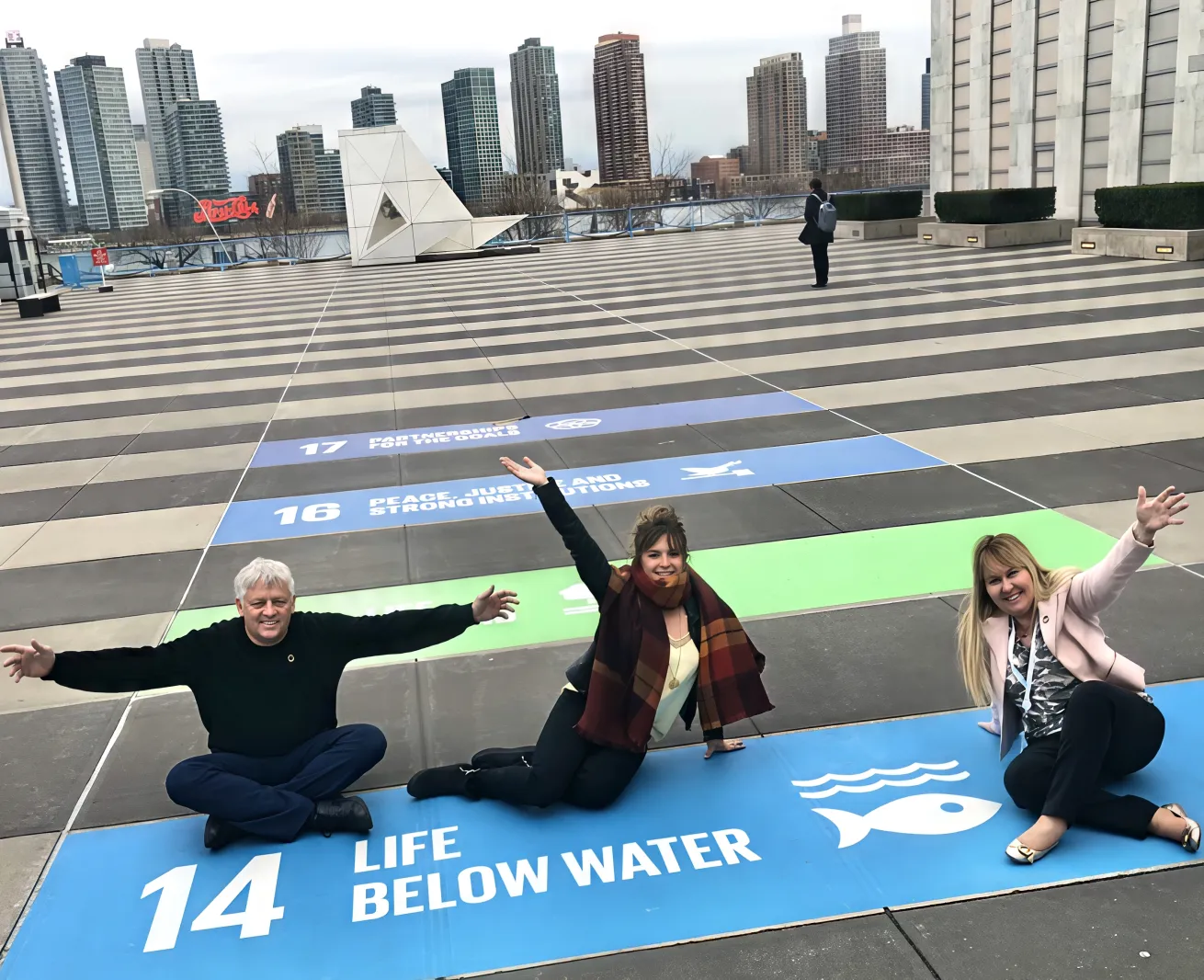
Bradley Ireland ProductionsBradley (right) outside the United Nations, representing Sustainable Development Goal 14, Life Below Water
It Takes a Village
A theme reemerges in each of Bradley’s stories—she’s always worked with trusted collaborators. From bringing awareness to shark finning on Cocos Island, Costa Rica through documentation with fellow Jay Ireland, in the 1990s, to her tight-knit relationship with Sea Save Director of Education Melissa Martinez (“she is the closest thing I've ever had to a daughter!”), Bradley is quick to praise her cohorts as an important part of her work.
These early successes—including a landmark campaign that helped establish Cocos Island as a UNESCO World Heritage Site—laid the groundwork for Sea Save as a permanent platform. In 2003, Bradley formalized this collaborative spirit by establishing the foundation, a science-based nonprofit dedicated to ocean conservation through education and advocacy.
Sea Save is another way to bring more collaborators into the fold. You can’t protect what you don’t understand, and it’s Bradley’s hope that through clear communication and direct calls to action, more people will be inspired to join the fight to save the ocean.
“What we're trying to do at Sea Save is we're trying to make a very unsexy topic interesting enough to be absorbed,” she explains. “So even righteous people don't accidentally buy something made of an exotic animal, for example…People love to do beach cleanups. And I sometimes worry that people are led to believe, ‘Oh my gosh, I did a beach cleanup and I recycle, I'm doing my part, everything's going to be okay.’ We are so far from okay. What we need to do is stop the hemorrhaging of plastics.”
Related Reading: Dive Industry Innovator: Karolin Troubetzkoy
Navigating Politics for Change
Bradley emphasizes there have been wins, particularly on the legislative front—where she often shifts her messaging away from the emotional side of ocean conservation to potential financial gains. “I do not talk about the pain the shark feels,” she says of addressing those governing bodies. “What they do care about is money. So, I started refocusing my attention on approaching countries with an economic argument.”
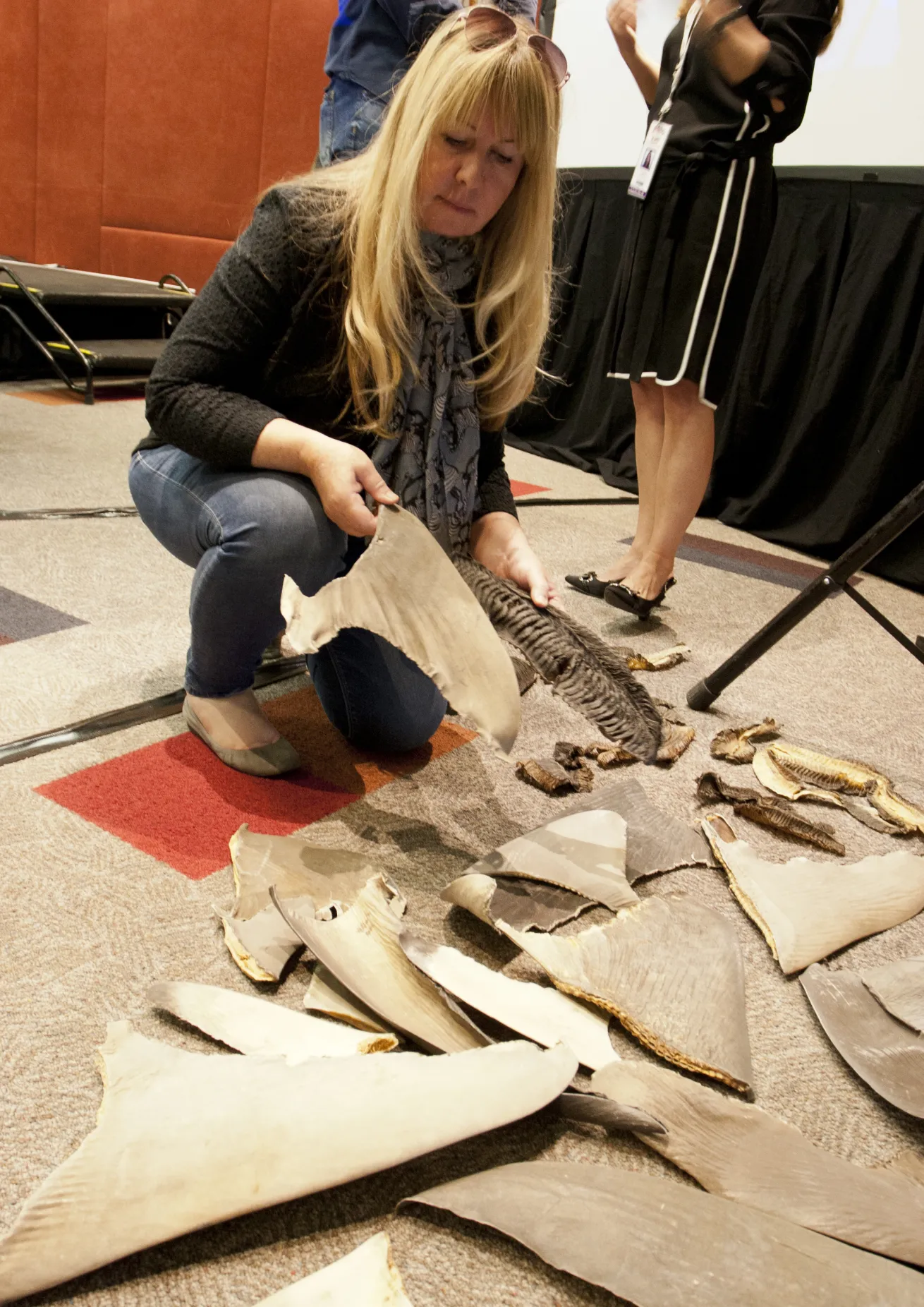
Bradley Ireland ProductionsBradley examines shark fins seized at Madrid–Barajas Airport during inspection. This trade is not CITES-compliant and is illegal. While the damage has already been done, seizures like this send a clear signal that illegal shark trade will not go unchecked.
Most recently, at the twentieth Conference of the Parties (CoP20) to CITES in November 2025, Save Sea was part of the movement to add manta rays, devil rays and whale sharks to Appendix 1—granting them the highest level of international protection and effectively banning all international commercial trade.
“CITIES severs the legal trade of any of these animals to other countries. Any carrier along the way, be it FedEx or UPS, that transports animals that are on the appendix is liable and can be fined significantly. So, there are ramifications for this. Does poaching still happen? Yes, of course it does. Animals are being killed, but not as much because people are getting caught.”
Related Reading: Close Encounter With a Whale Shark
How to Get Involved
For those who want to get involved, Bradley suggests starting with education. Every week, Sea Save sends out Ocean Week in Review, a newsletter featuring up to 20 stories about the ocean, sourced from around the world. As she reveals, even just skimming the titles can be eye-opening.
“A lot of people say, ‘I never, I don't have time to even read your summaries, but I always read the titles so I can keep aware of what's going on,” says Bradley.
And for those looking for a dive trip, Sea Save’s annual auction. It’s Sea Save’s largest fundraising effort of the year—and as with everything she does, Bradley expresses nothing but gratitude for her collaborators, many who donate trips year after year.
“I always look at the dive industry as where I started,” she says. “It's my family. When one of my donors comes back and renews again for another year, it makes me just want to hug them and cry and say, like Sally Field, ‘You like me. You believe in me!’”
While Bradley’s gratitude is deeply personal, her reliance on the dive industry is also highly practical. She views each pair of fins in the water as much more than just enthusiasts. Divers, both hobbyists and professionals alike, are the primary defenders of the ecosystems they explore.
“People blame divers a lot, but what divers bring to the table far outweighs the damage that is incurred,” she explains. “They are ambassadors, they're watchdogs, and when they disappear from an area, then that's when all hell breaks loose. There's no one there to stand witness to what's going on. So, I think of divers as our first line of defense.”


