

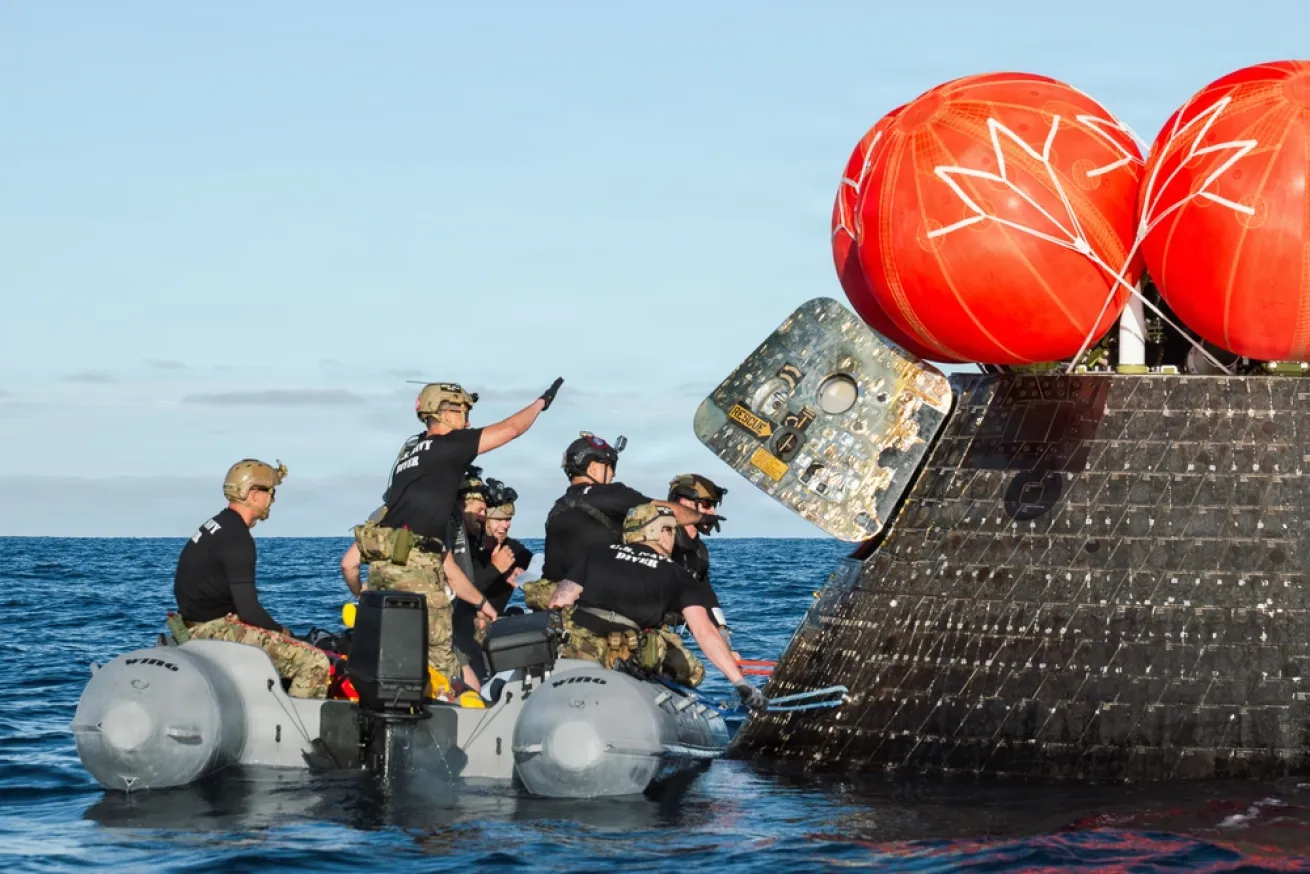
U.S. Navy photo by Mass Communication Specialist 2nd Class David RoweU.S. Navy divers approach the Artemis II crew module to retrieve the crew and spacecraft following their return to Earth and splashdown in the Pacific Ocean.
At 8:07 p.m. EDT on April 10, 2026, the Artemis II crew concluded their 10-day mission to deep space as the Orion capsule splashed into the Pacific Ocean off the coast of San Diego. But the four astronauts didn’t get to just open the hatch and hop onto a waiting boat. Before anyone could emerge, a carefully coordinated recovery operation had to unfold.
A small team of U.S. Navy divers approached the capsule first, securing and inspecting the spacecraft while it bobbed on the surface. Then the dive team performed hazardous-material checks and conducted initial medical evaluations of the astronauts before assisting them safely out of the Orion.
“I remember sitting on the boat, waiting for the capsule to reenter the atmosphere, and the energy was electric,” says Ryan Crider, a Master Chief Navy Diver from Mililani, Hawaii. “When you’ve put that much time and effort into preparing your team, you can’t help but feel the excitement on game day. We had trained through every possible scenario—best case, worst case and everything in between—so there were no surprises. That preparation gives you confidence.”
For Crider, who has 19 years of distinguished military service, preparation for the role of lead recovery Master Diver for Artemis II started in 2021, when he began working with NASA on the first Artemis mission.
“Honestly, it was just a lucky assignment that I had no idea would ultimately change my life,” Crider says.
Once the Artemis II crew was announced, recovery teams immediately began training alongside the astronauts in preparation for the flight. “I’ve been a part of the team ever since,” he says.
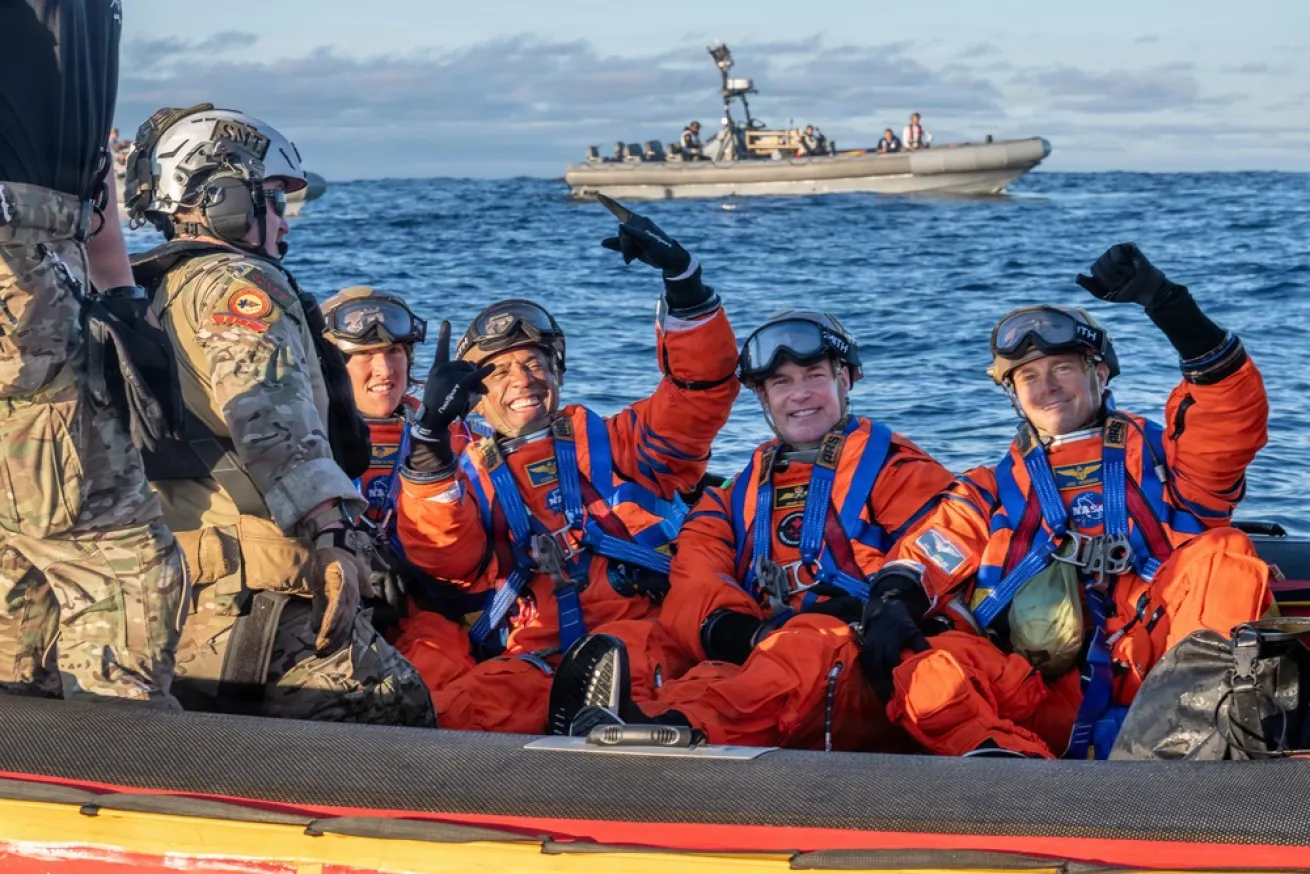
U.S. Navy photo by Mass Communication Specialist David RoweFrom left to right, NASA astronauts Christina Koch and Victor Glover, Canadian Space Agency astronaut Jeremy Hansen, and NASA astronaut Reid Wiseman pose for a photo on the “front porch” before transiting to an amphibious transport dock ship.
Becoming a U.S. Navy Diver
Becoming a U.S. Navy diver begins with a preparatory course in Illinois and ends with Navy Diver “A” School in Panama City, Florida. The entire process takes about nine months before divers report to their first command, explains Crider.
Training varies day to day and covers everything from rigging, salvage procedures and ship husbandry to dive medicine and emergency response. But according to Crider, one of the most important lessons Navy divers learn is how to remain calm under extreme pressure.
Related Reading: What It's Like to Be a Public Safety Diver
“We are trained to be calm, cool and collected under the most stressful and chaotic situations imaginable,” he says. “Time and again during training, we’re put in scenarios where things are going wrong, and we have to think clearly to protect our dive buddy and ourselves. Those lessons are some of the most valuable we ever learn.”
And that mindset was absolutely critical for the space recovery process, he says. “Once that capsule splashes down, you truly never know exactly what situation you're walking into. You have to be prepared for anything and everything, which is exactly what makes Navy divers the right people for a mission like this.”

Preparing for Splashdown
Preparation for Artemis recovery operations begins at NASA’s Neutral Buoyancy Laboratory in Houston, Texas, where Navy divers train alongside NASA divers and helicopter crews in a highly controlled environment. There, teams learn how to install the stability collar—an inflatable ring that stabilizes the capsule in the water—and the “front porch,” which is the platform used to safely remove astronauts from the spacecraft. Recovery personnel also practice mock helicopter hoists with search-and-rescue teams to simulate lifting crew members from the capsule after splashdown.
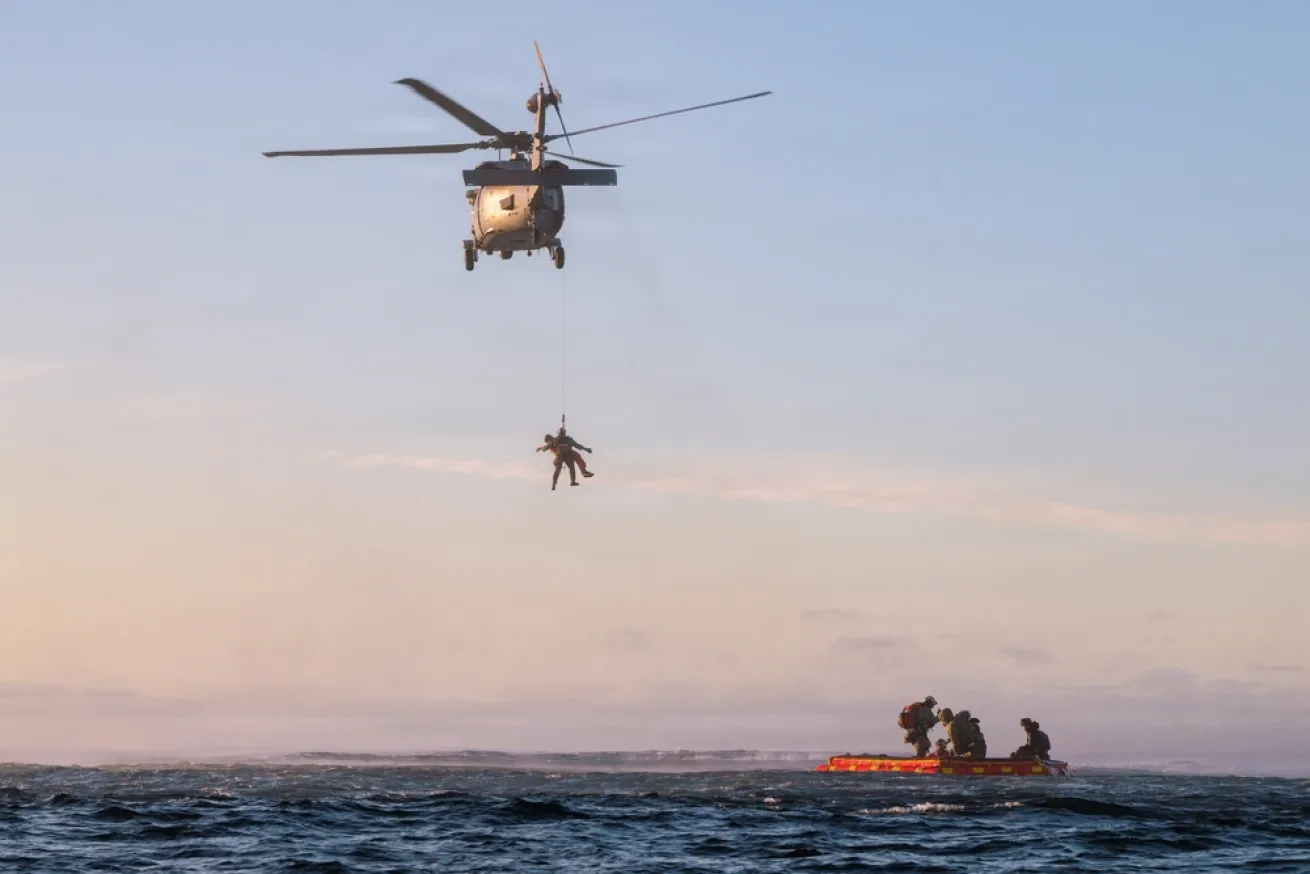
U.S. Navy photo by Mass Communication Specialist 2nd Class David RoweA U.S. Navy aircrewman hoists an astronaut to a helicopter after their return from the Artemis II lunar mission.
Once that phase is complete, training moves into the open ocean during an Underway Recovery Test (URT). During these exercises, teams deploy a training capsule from the recovery ship and rehearse the entire operation from start to finish. The drills include hazard analysis, capsule stabilization, installation of recovery equipment, astronaut extraction procedures, helicopter coordination and, ultimately, lifting the capsule back aboard a naval ship.
The exercises typically last about a week, with crews training on the water every day, says Crider. The open-ocean rehearsals are among the most valuable parts of the preparation process because they help identify weaknesses long before an actual mission recovery, he says.
Depending on the launch timeline, teams generally complete Neutral Buoyancy Lab training and large-scale URTs once or twice a year, with additional exercises added as needed. The goal, Crider says, is for every step of the recovery operation to feel “second nature” by the time the real mission arrives.
Related Reading: The High Seas Treaty Is in Force: What It Means for Divers
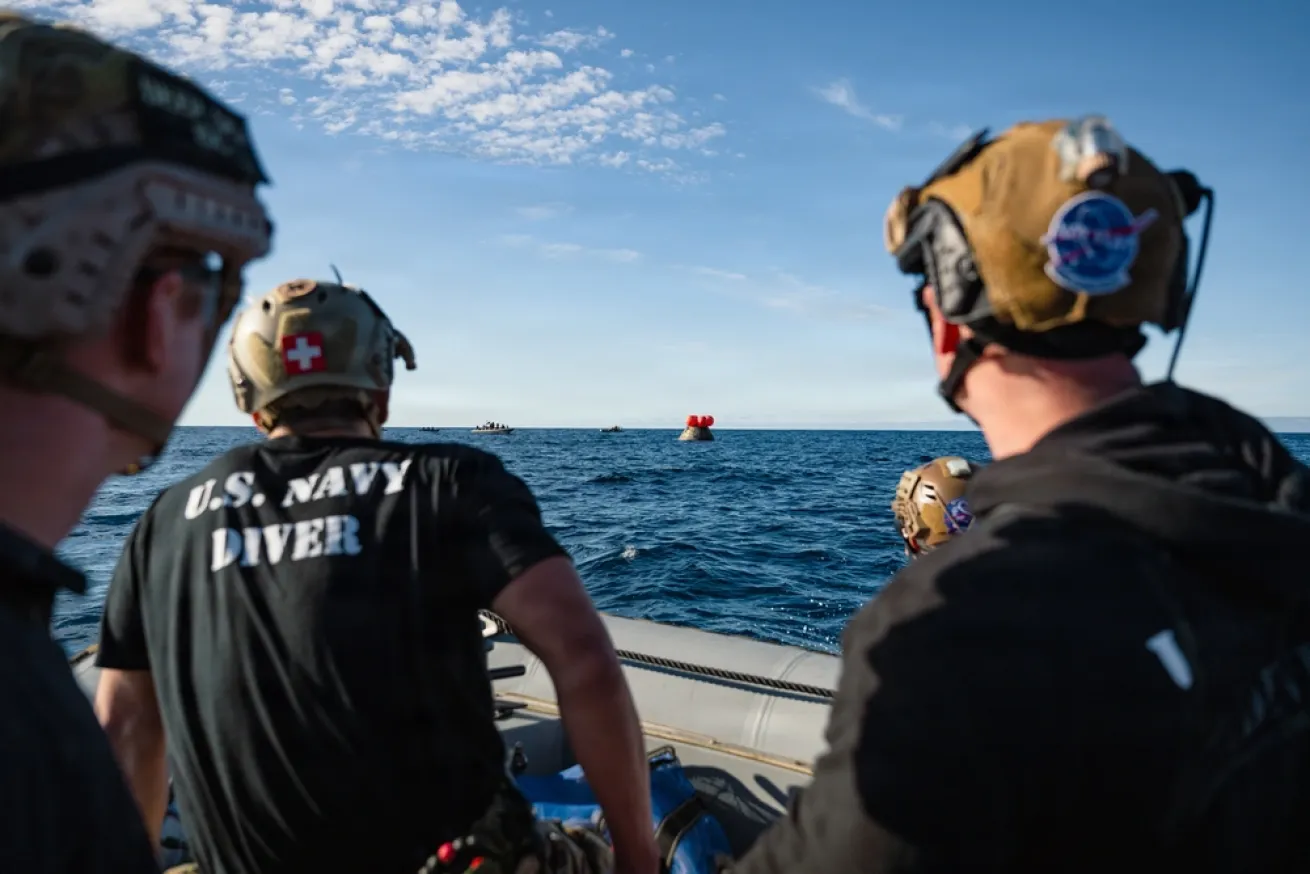
U.S. Navy photo by Mass Communication Specialist 2nd Class David RoweU.S. Navy divers prepare to conduct a hazardous material detection sweep of the Orion space capsule.
The Recovery
When recovery teams first approach the spacecraft in the water, safety is the top priority, Crider says. Before the hatch can be opened, divers must complete a detailed checklist and hazard analysis to ensure conditions are safe for both the astronauts inside the capsule and the recovery personnel outside.
According to Crider, preventing injuries is critical. “Everything else comes after that box is checked,” he says.
Communication is another essential part of the operation. Open-ocean recoveries involve multiple moving parts, including Navy divers, NASA personnel, helicopter crews and ship operators, all working simultaneously in challenging conditions. Crider says NASA carefully establishes primary, secondary and backup communication methods well before splashdown so teams can maintain near-real-time coordination throughout the recovery.
For Crider and the recovery team, being among the first people to reach the astronauts was deeply personal.
“After years of training alongside the Artemis II crew, the moment felt less like a formal mission operation and more like welcoming close friends home after a long journey,” Crider says. “Opening that hatch was nothing but warmth and mutual appreciation. You kind of forget about the live stream and the cameras. In that moment, it's just you and the crew. I think they found real comfort in seeing a familiar face the second that hatch swung open, and honestly, so did we.”
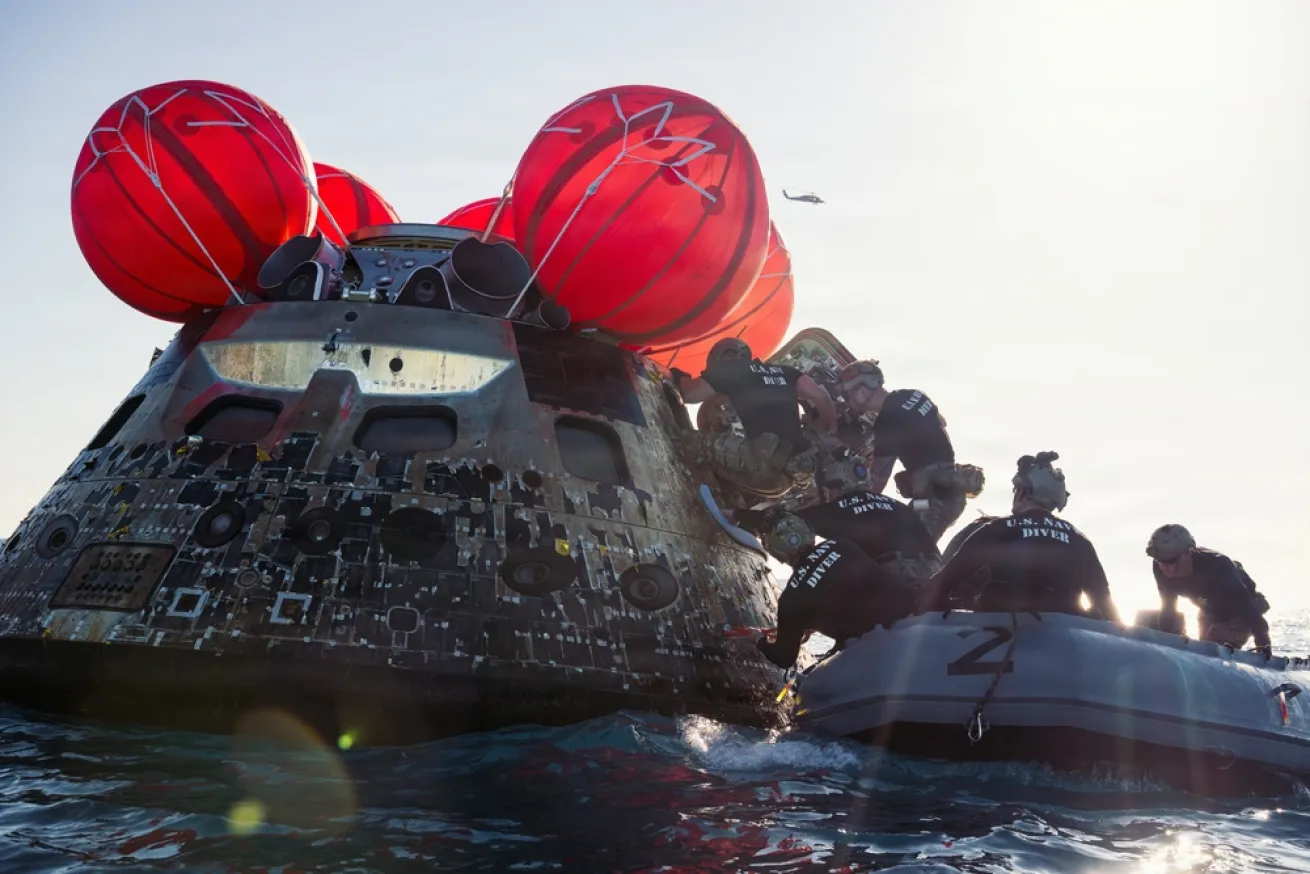
U.S. Navy photo by Mass Communication Specialist 2nd Class David RoweU.S. Navy divers enter the Artemis II crew module to recover the crew after returning from their lunar mission.
Crider says the mission's greatest challenge was mental rather than physical. Recovery teams spend years preparing for every possible scenario that could unfold after splashdown, training to respond immediately under pressure.
“Add to that the pressure of balancing your personal and professional life while preparing for a high-visibility, high-stakes mission like this. It's something that takes years to develop the resilience for,” he says. “But this is what we do. It's what we've been training for from the moment we walked out of dive school.”
Related Reading: What It's Like to Be a Commercial Urchin Diver
For Crider, the moment that has stayed with him most came when the hatch finally opened. “You heard the crew, the laughter, the cheers, the relief,” he says. “That moment meant everything.”
To the recovery team, the successful splashdown was about far more than completing a mission. It meant the astronauts had made it home safely after traveling deep into space.
“These aren’t just national assets or mission objectives,” Crider says. “They’re human beings with families, with friends and probably a dog at home that’s been anxiously waiting by the door.”
That, he says, is what drives every hour of training, every drill and every moment spent preparing for recovery operations in the open ocean: “getting them home.”


