

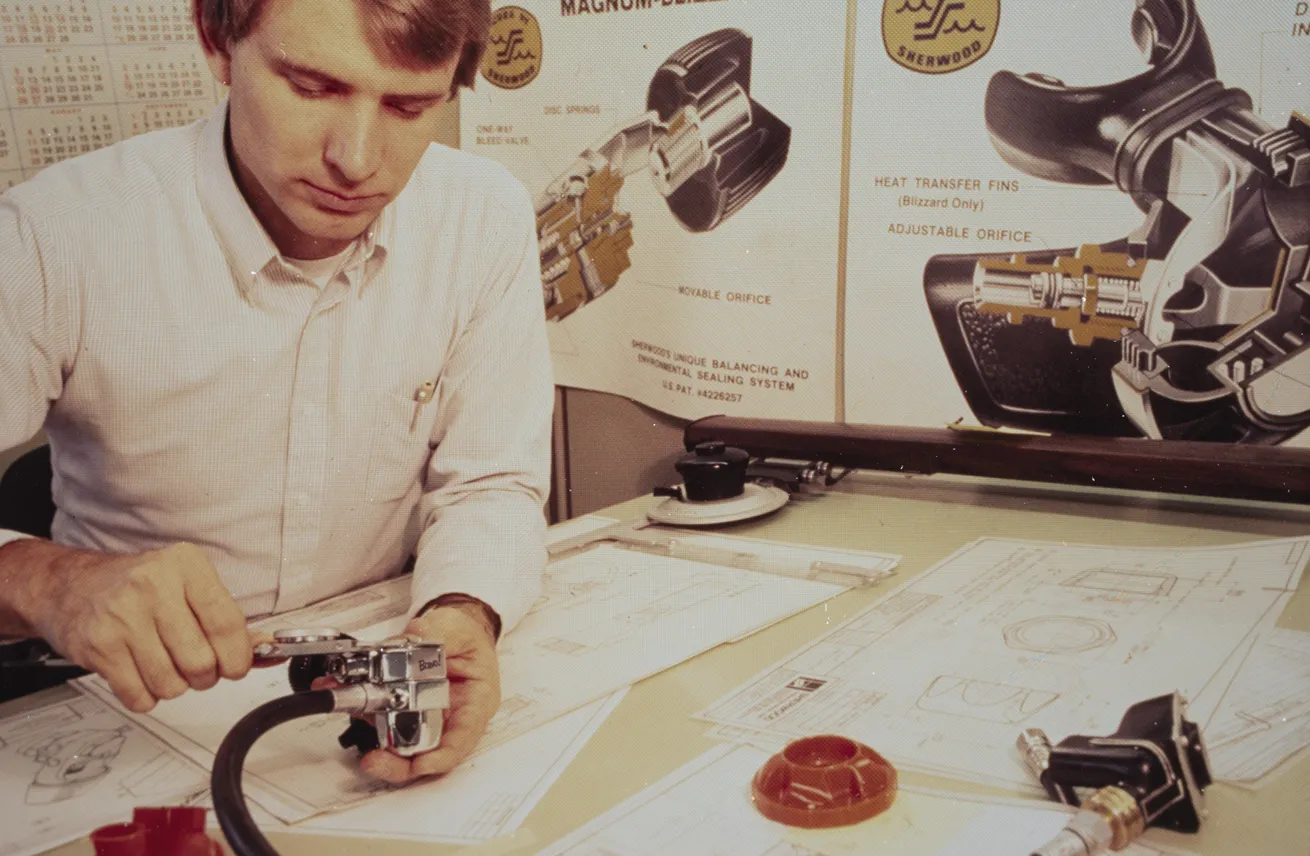
Courtesy SherwoodA Sherwood engineer reviews a design in the late 1970s.
In 1955, a mere five years after the first scuba regulator was introduced to the United States, a small precision machine shop was approached to start making post valves for scuba cylinders. This fitting, where the first stage regulator attaches, is the most likely to be banged around or suffer the impact of a drop. And with 3,000 psi of potential energy behind each valve, they understandably had to be reliable and as rugged as a studded tire. In 1959, Sherwood produced a first-stage regulator.
This year, Sherwood is celebrating its 70th anniversary, and the principles of reliability and ruggedness are still designed into every one of its products. Its real story, however, is one of fighting behind the scenes to keep our hobby alive.
Diving should be exciting, but life support equipment is serious business and needs to be dependable above all else. Sherwood’s brand is built on an image of understated dependability. The company’s president, Charlie Bush, sees Sherwood products more like a Toyota than a Ferrari—“built to go 200,000 miles without a transmission problem.” Playing the role of a rock, steadily putting out dependable gear built to take a beating, is a business model, but what drives Sherwood is something more: a duty to serve divers and the small businesses that keep the dive community going.
Related Reading: Best Gifts of the Year for Scuba Divers
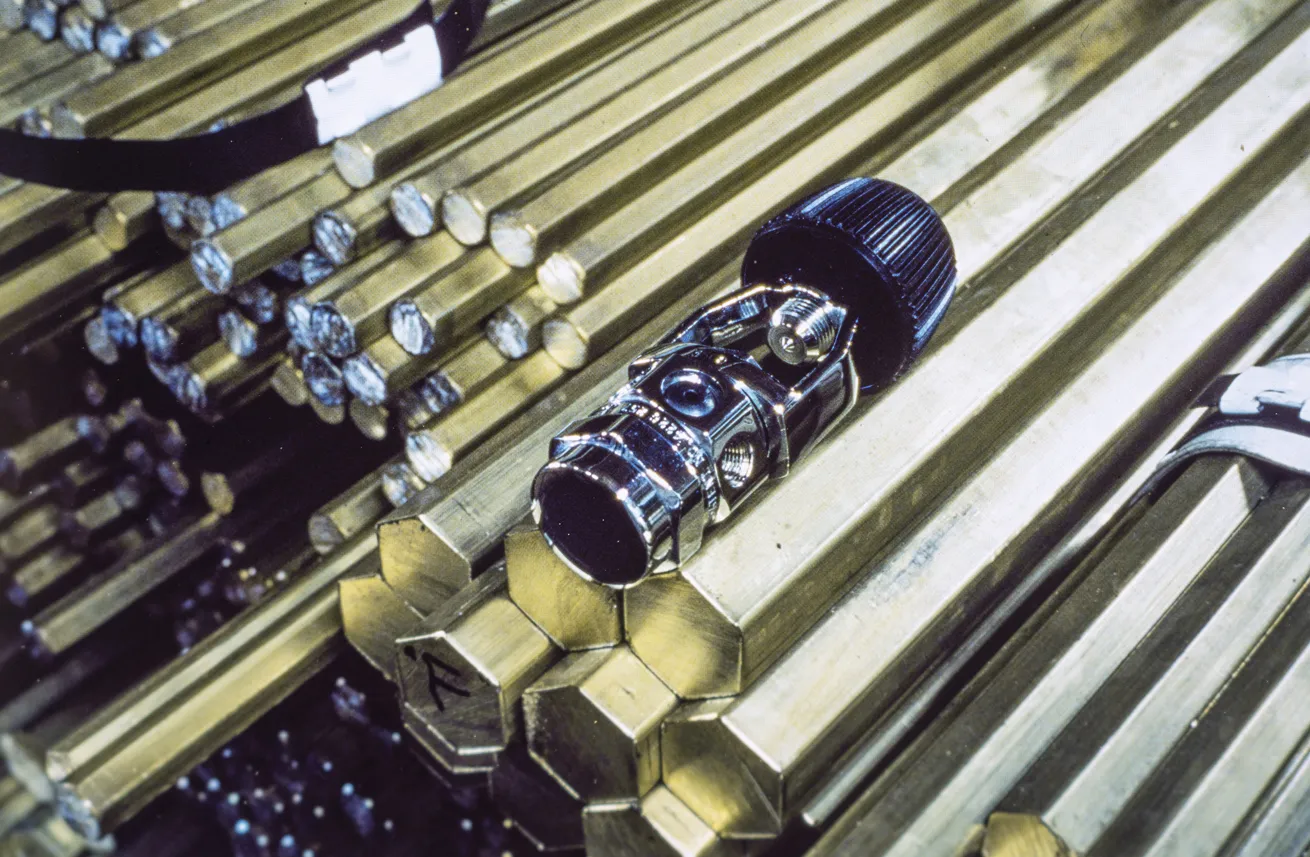
Courtesy SherwoodA regulator first stage produced in the early ’80s. The brass rods beneath are the raw material used for production.
I recently visited Connecticut, my former home, where I was first certified. The dive shop that taught me had closed its doors. The faded sign was still there, but the building was empty and the parking lot full of last year’s leaves. The disappointment and nostalgia I felt upon realizing this is a symptom of a bigger problem: In the technology age of online titans of business, the victim has been the small-town stores, and our local dive shops have been hit particularly hard. According to Scubanomics industry data, there were an estimated 1,500 dive shops operating in 2019. In 2023, the research firm Cline Group found that number to be somewhere around 851.
Local dive shops have traditionally been a welcoming entry point for the hobby by offering a lot more than just retail sales of dive gear. Their friendly and knowledgeable staff teach people how to dive, organize dive travel trips and help customers pick out gear.
Today, scuba travel is morphing with adventure and wellness packages, and online sales dominate gear retail. The scuba industry is evolving, and each incremental change threatens to spell the closure of another local dive shop. We are losing the soul of our industry, and we should all be helping to keep it alive. Sherwood is on the front lines with two strategies: the Brick and Mortar (BAM) program, and a push toward rental gear.
The BAM program is simple. It is a lineup of gear that can only be bought in a physical store. That means if a diver wants the new environmentally sealed Maximus Pro regulator, they’re going to have to walk into a store and talk to a real person. The idea is to use a killer set of gear to incentivize divers to get off of their computers and back into small businesses for their equipment needs.
Related Reading: Best New Dive Gear December 2025
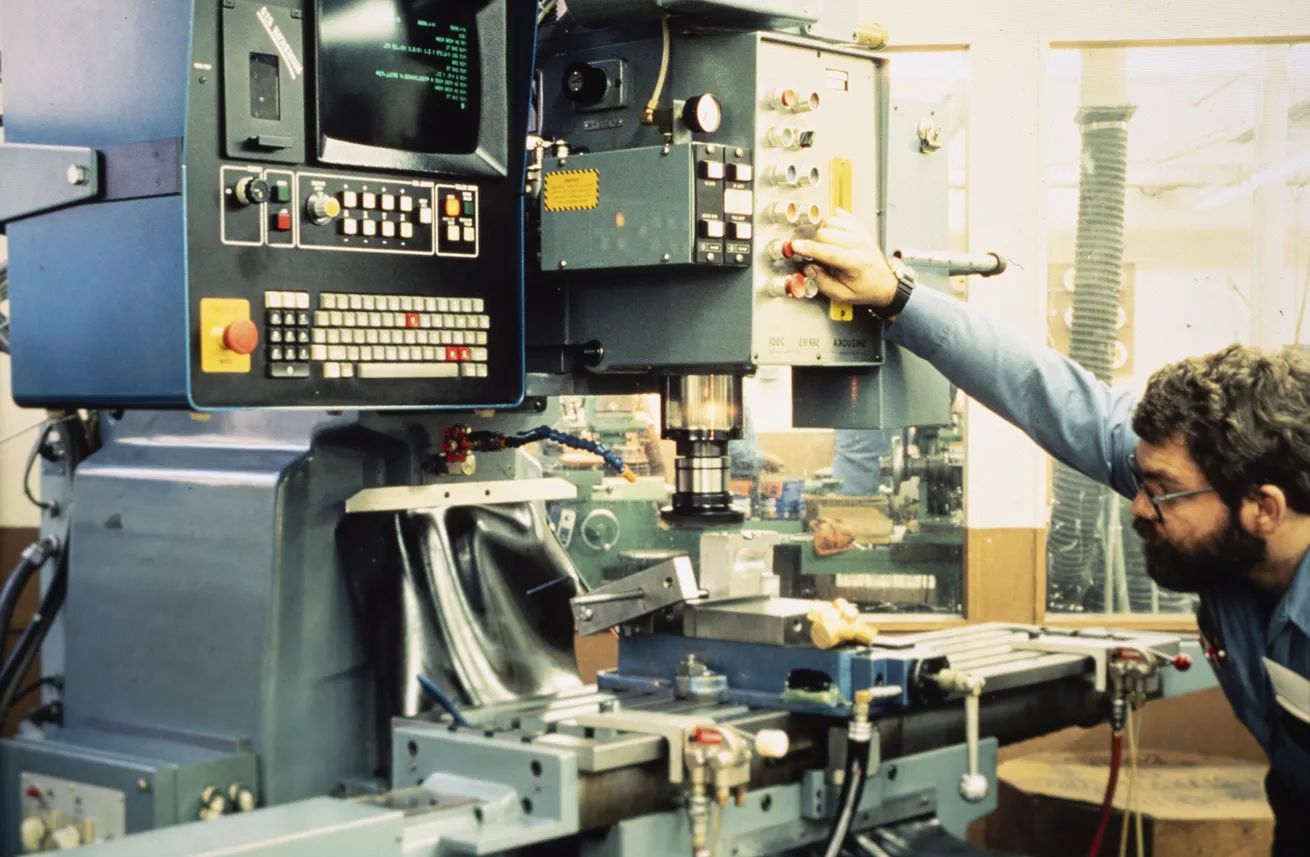
Courtesy SherwoodA machinist works on manufacturing Sherwood valves in the early 1980s.
While Sherwood’s BAM program serves experienced divers who want to add to their functionality and go places, there is a broader way that Sherwood is supporting dive shops as well.
According to the Business of Diving Institute, gear sales have declined by an annual average of 4.6 percent over the past five years, which reflects a decrease in consistent divers who tend to own their gear versus an influx of casual divers who don’t.
Another industry trend is the shift of dive-specific travel giving way to adventure travel, where scuba diving is just a part of a bigger expedition. With less of a focus on diving, otherwise experienced divers are opting to leave their gear at home and rent on location.
The rental market has traditionally been the first touchpoint to help curb sticker shock and introduce new divers to specialized dive equipment. But today, an increasing number of divers of all experience levels are choosing to rent gear. And where do divers rent their gear? The answer is local dive shops, of course.
This presents an opportunity for local dive shops as well as the makers of dependable dive gear that can be put through the rigors of a lifetime in the rental fleet.
The Sherwood rental lineup uses tried-and-true operations that any diver can recognize, because familiarity makes a safer, more confident diver.
Related Reading: The Best Single-Lens Scuba Masks Reviewed
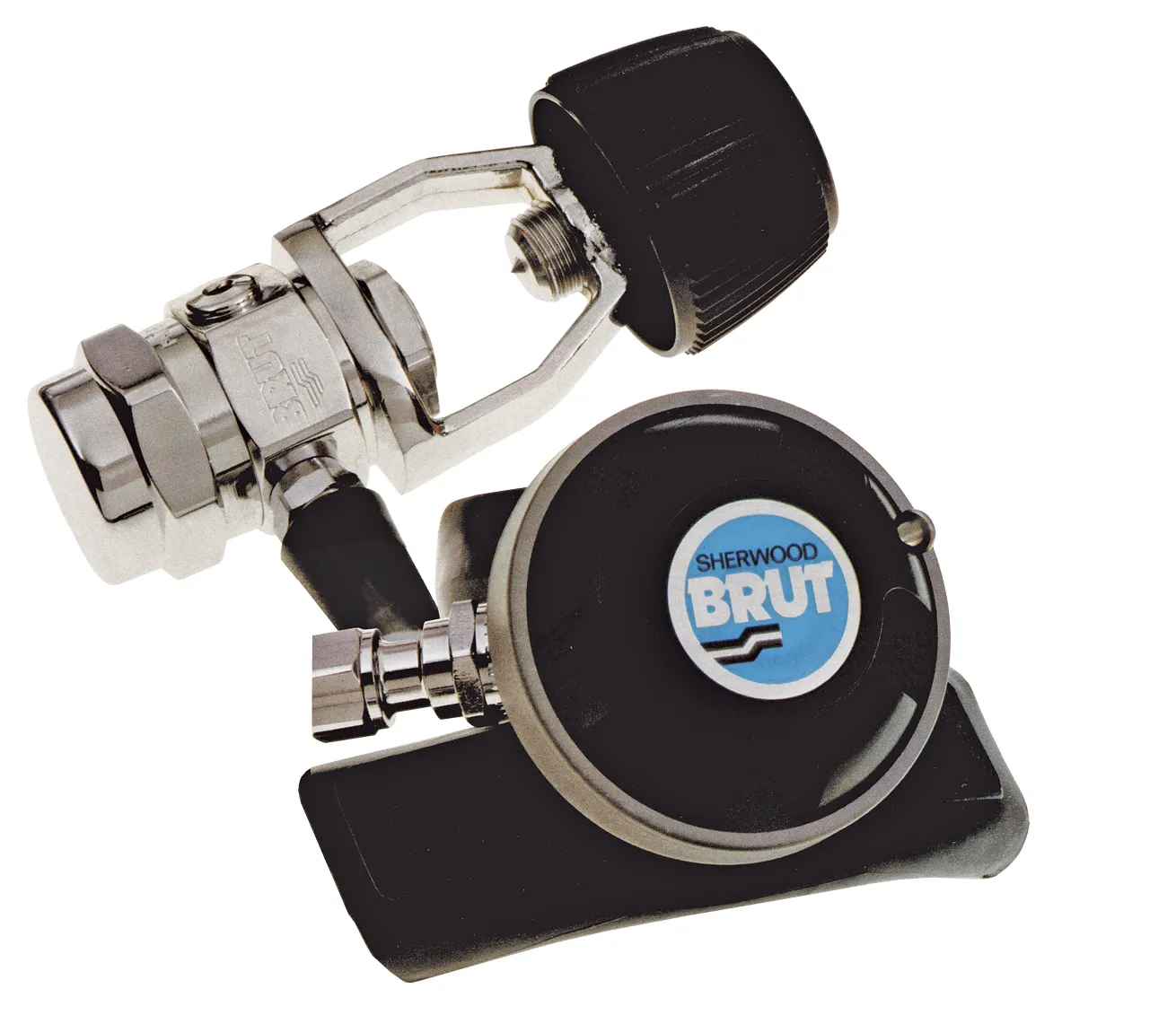
Courtesy SherwoodThe Brut regulator, introduced in 1984, quickly became a stalwart in rental gear fleets and beyond.
In 1984, Sherwood introduced the Brut regulator, which quickly rose to become a top industry choice for rental regulators. The company recently doubled down on hired gear as part of its strategy. In the past two years, it has introduced the Tropic regulator and Logic dive computer, as well as redesigns of the popular Zodiac and Sentinel BCs.
These are all dependable, easy-to-use equipment without the confusing bells and whistles to distract from their main purpose. These product lines have traded sexy for simple and cutting-edge for reliability. They all stick to Sherwood’s legacy: Keep it simple, bombproof and comfortable.
This year, Sherwood is celebrating being one of the first scuba manufacturers in the world. The dive industry has changed dramatically over Sherwood’s 70-year tenure. In a time when it is easier than ever to buy gear online, Sherwood swims against the current by using its legacy of producing rugged equipment to inspire divers to buy locally.
Its products are more than a design; they are distributed in ways that encourage a flourishing community. Through its BAM program and a lineup of purpose-built rental gear, Sherwood is actively shaping the future of our industry.
Most modern scuba gear is going to reliably bring you back from the dive, but Sherwood has been working to make sure your local dive shops survive as well.


