

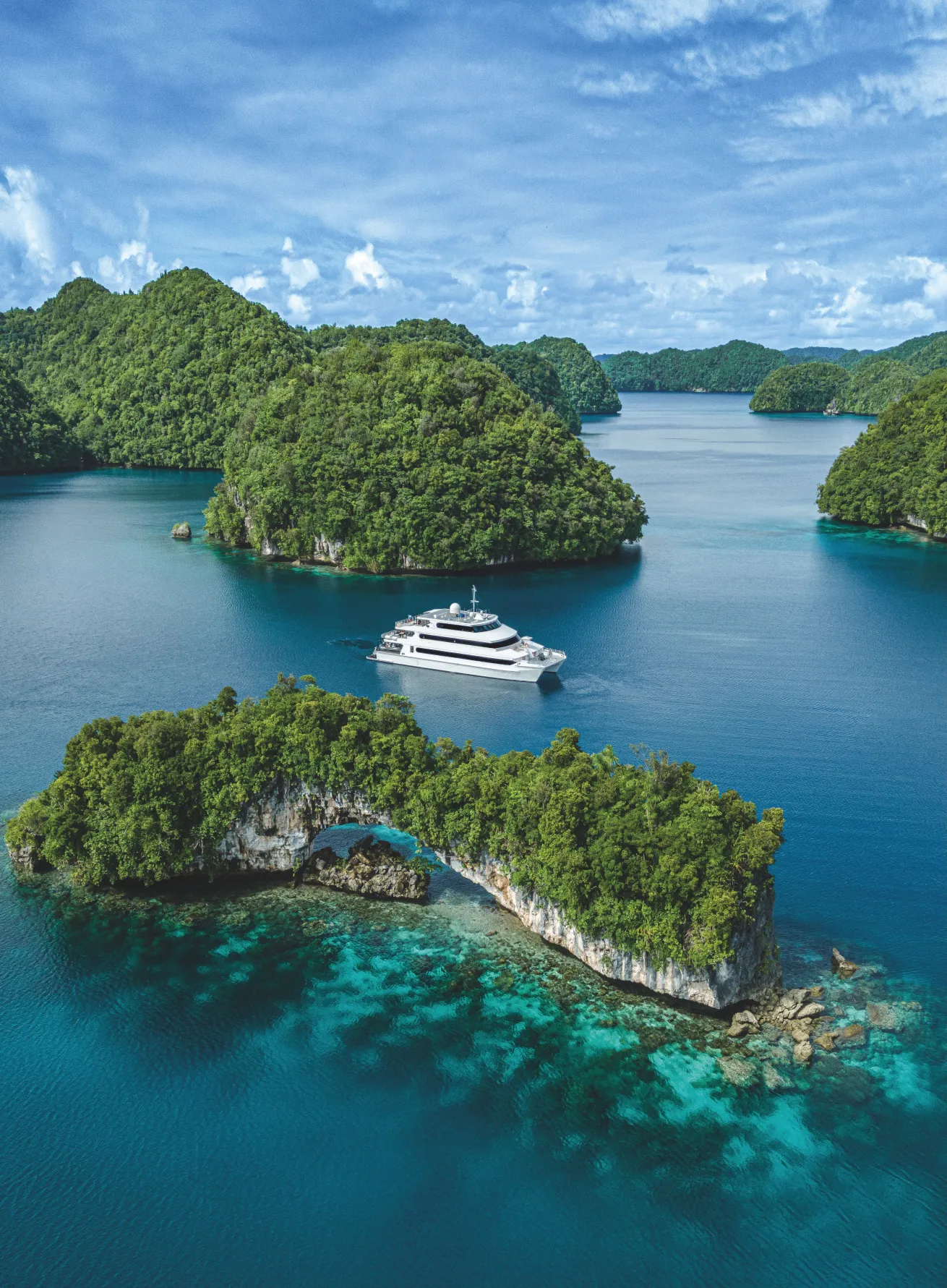
Courtesy Four Seasons ExplorerA dive boat turned luxury hotel, Four Seasons Explorer whisks divers to Palau’s best sites in style.
The Rock Islands appear in the morning mist, their mushroom-cap shapes backlit by the sun. Barefoot with coffee in hand, you take it in while the catamaran approaches a stunning location. This is how wilderness diving should feel. No crowds, no resort schedules, no compromise.
A catamaran with shallow draft, Four Seasons Explorer can easily tuck into the Rock Islands’ channels and lagoons instead of anchoring offshore like bigger boats. Your cabin may have climate control, a mini bar and blackout shades, but the real amenity is waking up somewhere new in Palau each morning.
Related Reading: Slowing Down at Matamanoa Island Resort
The Destination
Palau is remote enough that less than 100,000 visitors arrive annually. The archipelago is made up of 340 islands, nine inhabited, protecting one of Earth’s least compromised marine environments. Every visitor signs the Palau Pledge, stamped into passports at immigration: “I vow to tread lightly, act kindly and explore mindfully.”
There’s a reason for that: 500-plus coral species, 1,400 documented fish species, visibility routinely exceeding 100 feet. To help maintain its healthy reefs, the Palau National Marine Sanctuary prohibits commercial fishing across 80 percent of its waters.
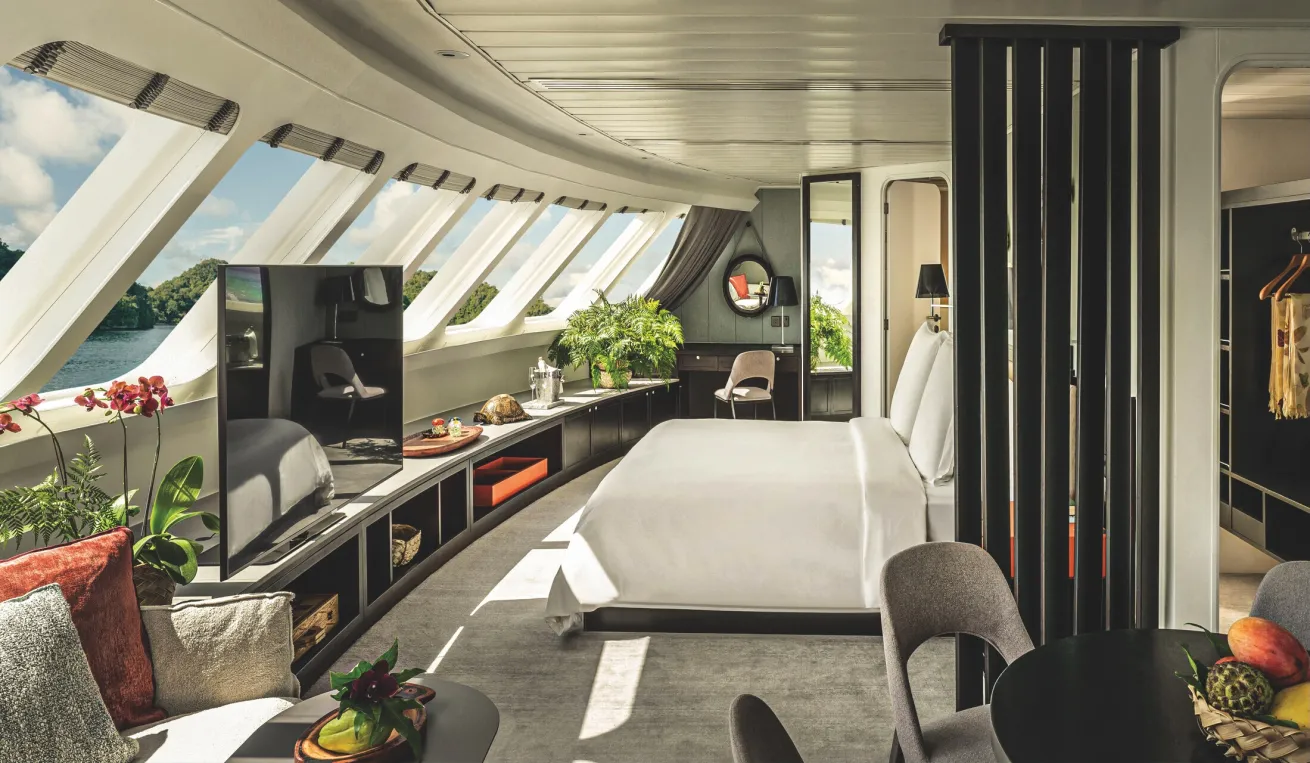
Courtesy Four Seasons ExplorerThe Explorer Suite is an amenity-packed space perfect for unwinding at the end of a long dive day.
The Diving
At Blue Corner, the current pushes you along a vertical wall where gray reef sharks cruise in loose packs, eagle rays soar past at odd angles and jacks dart around in thick swarms. Down in the channel, mantas glide by—some with wingspans stretching 15 feet—with an otherworldly grace, despite their massive size. Peleliu Wall plunges 1,000 feet into the Mindanao Trench; here, you’ll find sharks, rays and huge schools of fish swirling in a riot of color.
Then there are the wreck dives. Japanese vessels from World War II lay dormant in 70 to 100 feet of water, encrusted with corals. Equally impressive is the Zero fighter plane that sits upright on sand with its cockpit intact and propeller blades bent. And then there’s Chandelier Cave, a limestone cavern system with five internal air chambers, stalactites overhead and the disorienting sensation of surfacing underground. It requires buoyancy precision and comfort in overhead environments, but rewards with geology you don’t encounter on open reefs.
Four Seasons Explorer is supported by a dedicated tender so the mothership maintains its position. Post-dive, there’s always hot tea, fresh fruit, perfumed towelettes and juice shots—each a small gesture that adds up to genuine hospitality rather than scripted service.
Related Reading: How to Dive Palau's Blue Corner
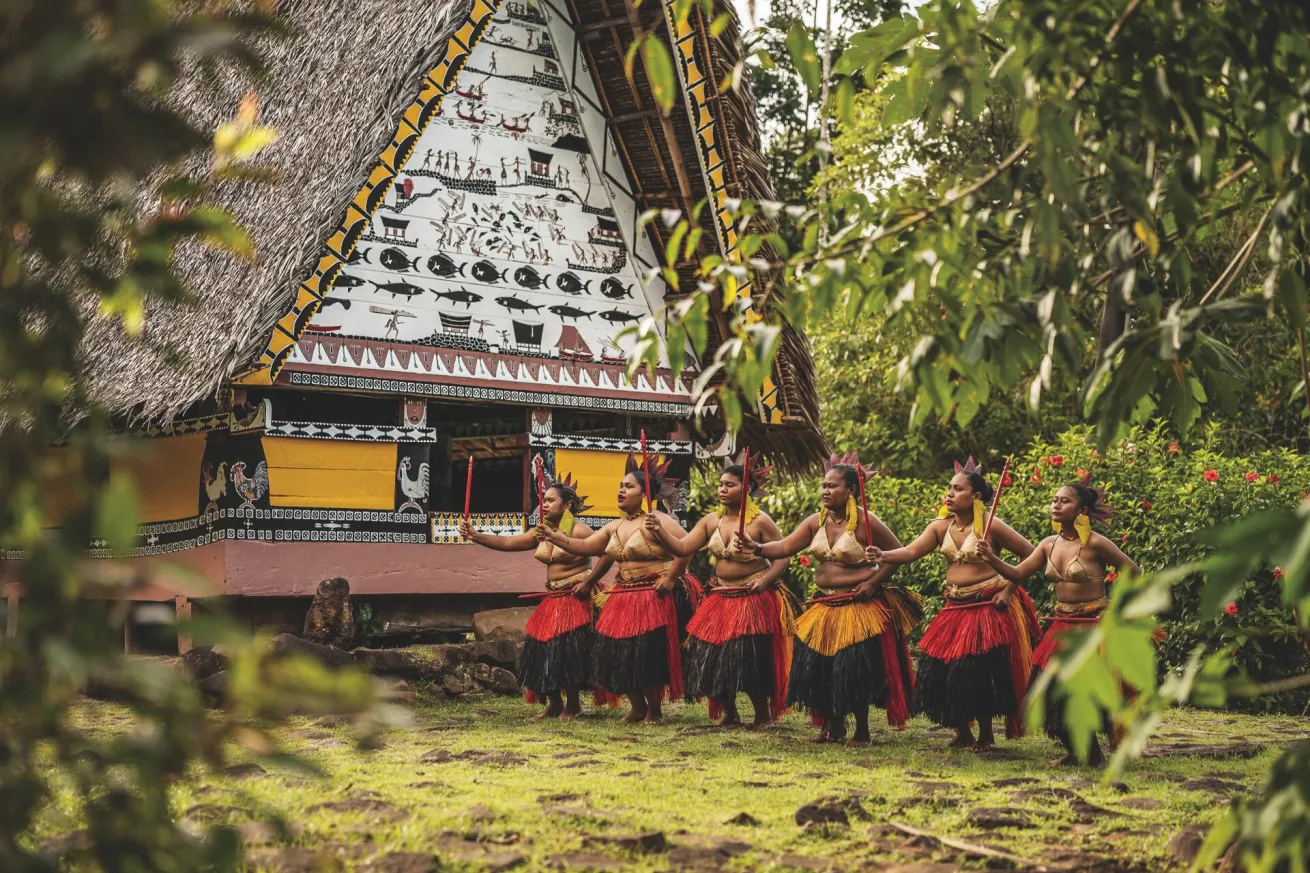
Courtesy Four Seasons ExplorerWhen not busy exploring underwater, land excursions to local villages give guests a taste of island life.
Beyond the Tanks
Not every day needs to be a three-dive day. The crew sets you up with kayaks, paddleboards and snorkeling if you want a break. Village visits give you the chance to meet locals and see how life works in an island nation of 18,000 people.
Then there’s Jellyfish Lake. After a short but steep hike through a junglelike forest, you jump in the lake to swim with thousands of golden jellyfish that evolved without stingers, pulsing through tannic water like something from a faraway planet. The jellyfish prefer to hide in the deep where it’s not as hot, but the rain cools things down and brings them up where you can actually swim with them—meaning cloudy days are your friend here, and the experience is best when it’s raining.
Related Reading: Adventure Diving in Washington's San Juan Islands
The food is legitimately good, not just “good for a liveaboard.” The menu changes daily and features fresh local catch and interpretations on dishes from the Pacific Islands, Asia and the Americas. Every evening, there’s happy hour, with wine or crafted cocktails paired with tasty hors d’oeuvres. The concierge team ask about dietary restrictions and preferences in advance, so the kitchen already knows you’re vegetarian or allergic to shellfish and that you prefer green tea over coffee before you step on board.
Evenings settle into a rhythm: Dinner on the deck while one of the staff moonlights as DJ, spinning an unlikely mix that somehow works well against the sunset. Then everyone drifts to the lounge where the divemaster cues up that day’s video. A videographer goes on every dive, so you get proper footage of the sharks at Blue Corner, the mantas at German Channel and the moment your eyes went wide when that barracuda school appeared out of nowhere. When you leave, you’re given a thumb drive with all of it, edited and ready to go. (Your Instagram followers will be delighted!)
Four Seasons Explorer works because it is fundamentally a dive boat with exceptional accommodations, not a luxury hotel trying to appease divers. Every day you’re somewhere new, with dive sites a short boat ride away. The Rock Islands drifting past each morning confirm you’ve chosen correctly.
Visiting Palau requires commitment—multiple flights, significant investment, advanced skills. The question isn’t whether it’s worth the effort. The question is whether you’re ready to see what real diving looks like.
Need to Know
Accommodations
The catamaran accommodates two guests max in each of 10 staterooms and one Explorer Suite.
Booking Note
The daily embarkation schedule is unusual for live aboards—most lock you into weeklong commitments—which could matter if you’re weaving Palau into a longer Pacific trip.
When to Visit
Palau offers year-round diving. November through April brings the calmest seas and best visibility, though May through October delivers stronger currents and manta ray encounters.
Getting There
Fly into Palau International Airport (ROR), where staff greets and delivers you via private car to Koror for boarding.
Contact


