

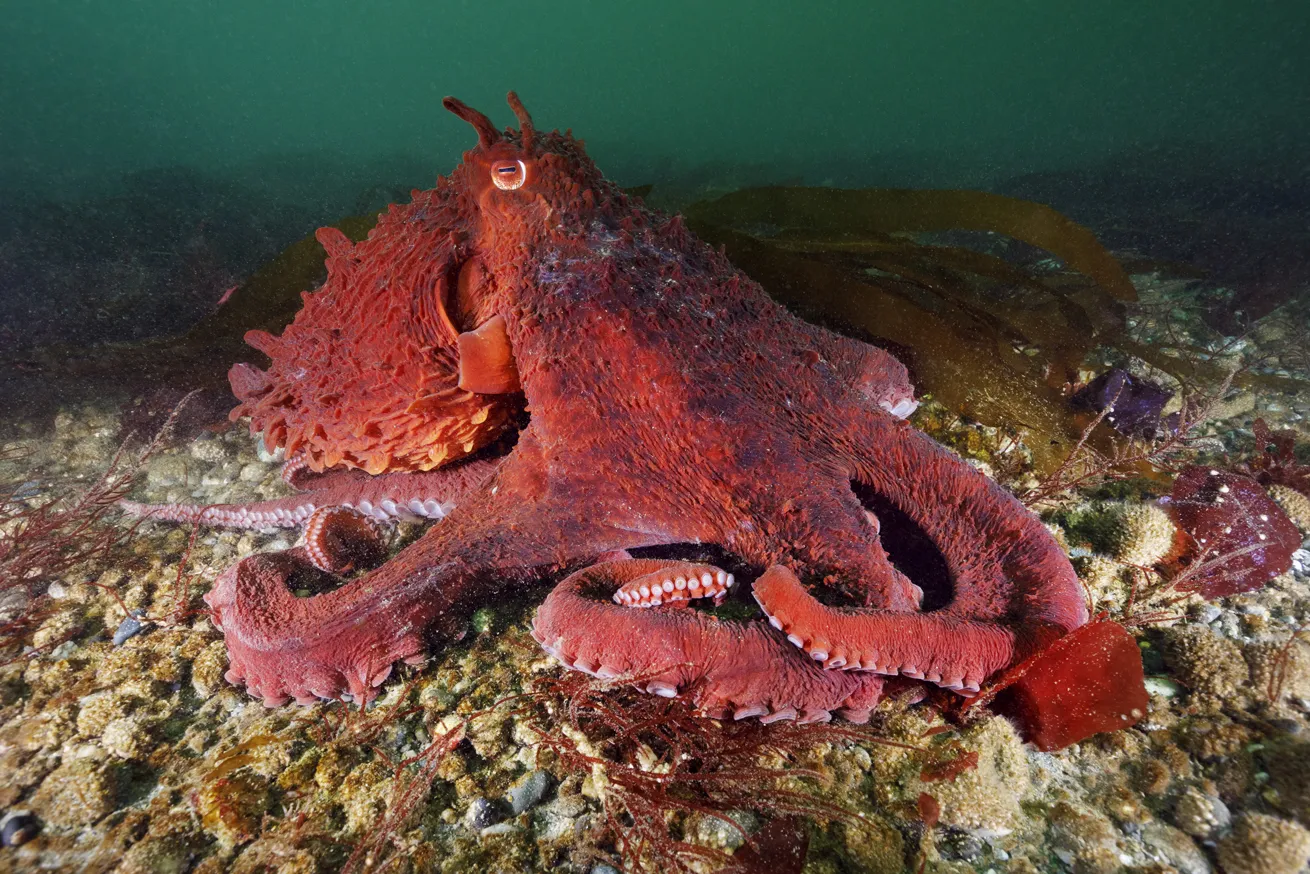
Brandon ColeThe giant Pacific octopus is one of British Columbia's most iconic species.
Most divers geek out when seeing acres of thriving hard and soft corals, kelp forests and other underwater habitats. Healthy ecosystems fuel extraordinary diving, boosting the odds of encounters with everything from blennies and seahorses to sharks and mantas.
Every year, Scuba Diving magazine polls its readers to uncover their top picks for healthiest marine lifedestinations. Places where the marine parks and protected areas are alive with proof of concept.
This year’s winners span the globe, and include a Caribbean hotspot known for reef and muck diving, a western Pacific locale where every month sees multiple fish spawning events and a Pacific cold-water favorite known for walls of invertebrate life and charismatic animals that readily interact with divers.
Read on to see which destinations won top honors in this category.
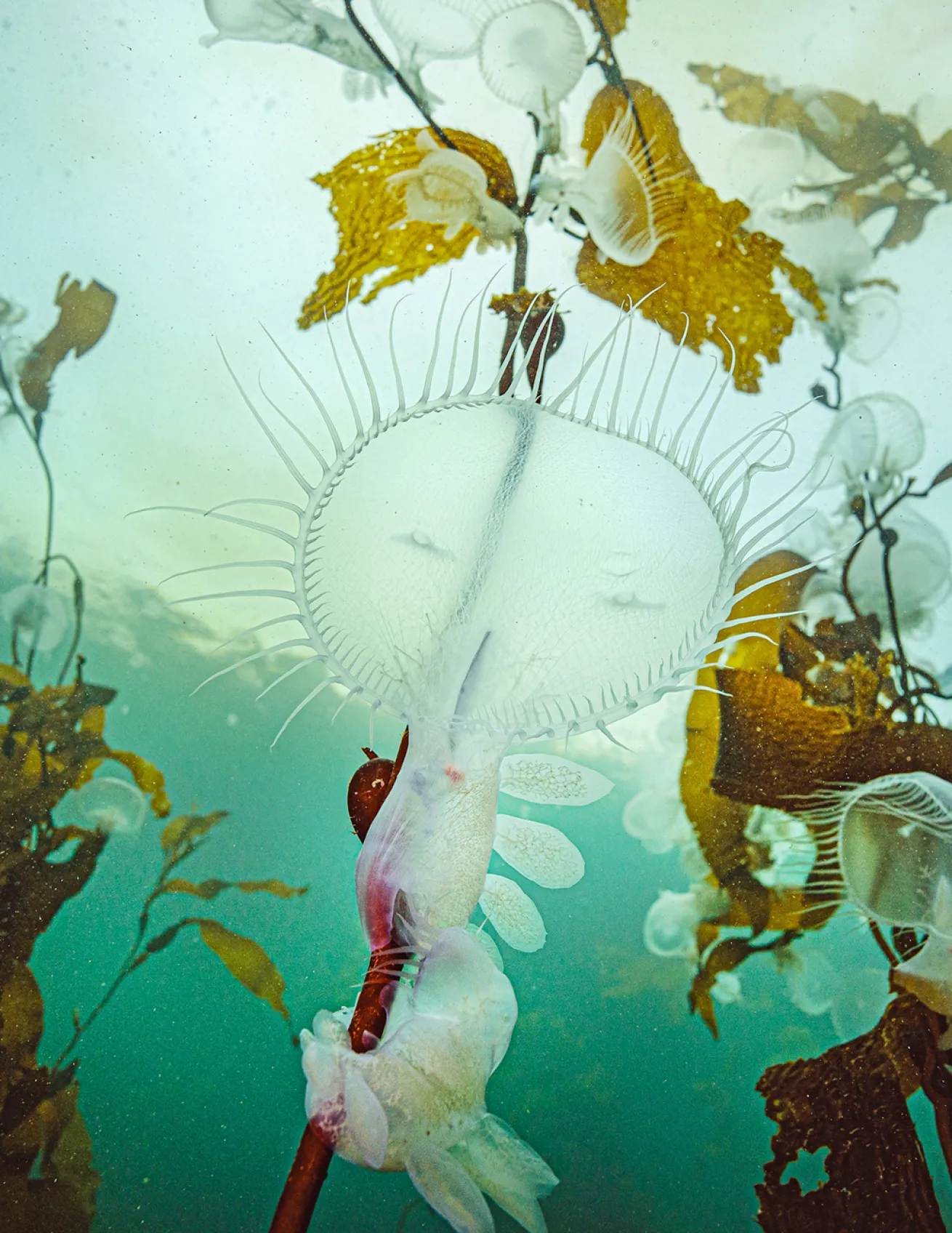
Kolin HansenThe hooded nudibranch is one of many unique sea slugs found in the cold, nutrient-rich waters of British Columbia.
British Columbia, Canada
The cold-water wonderland that is British Columbia, Canada rewards divers with vibrant colors and marine life that swells to immense sizes. The plumose anemones bloom in white, orange and pink, creating vertical fields of color on many wall dives, including Browning Wall in Port Hardy and God’s Pocket in God’s Pocket Marine Provincial Park.
The scale also boggles the mind. This anemone can stretch 3 feet tall. But it’s not just the sponges and anemones that thrive in the cold, nutrient-rich conditions. The giant Pacific octopus can span up to 16 feet arm to arm—more than five times the size of the Caribbean reef octopus—and it’s just one of the big, charismatic species that call this destination home.
Related Reading: Best Destinations for Underwater Photography
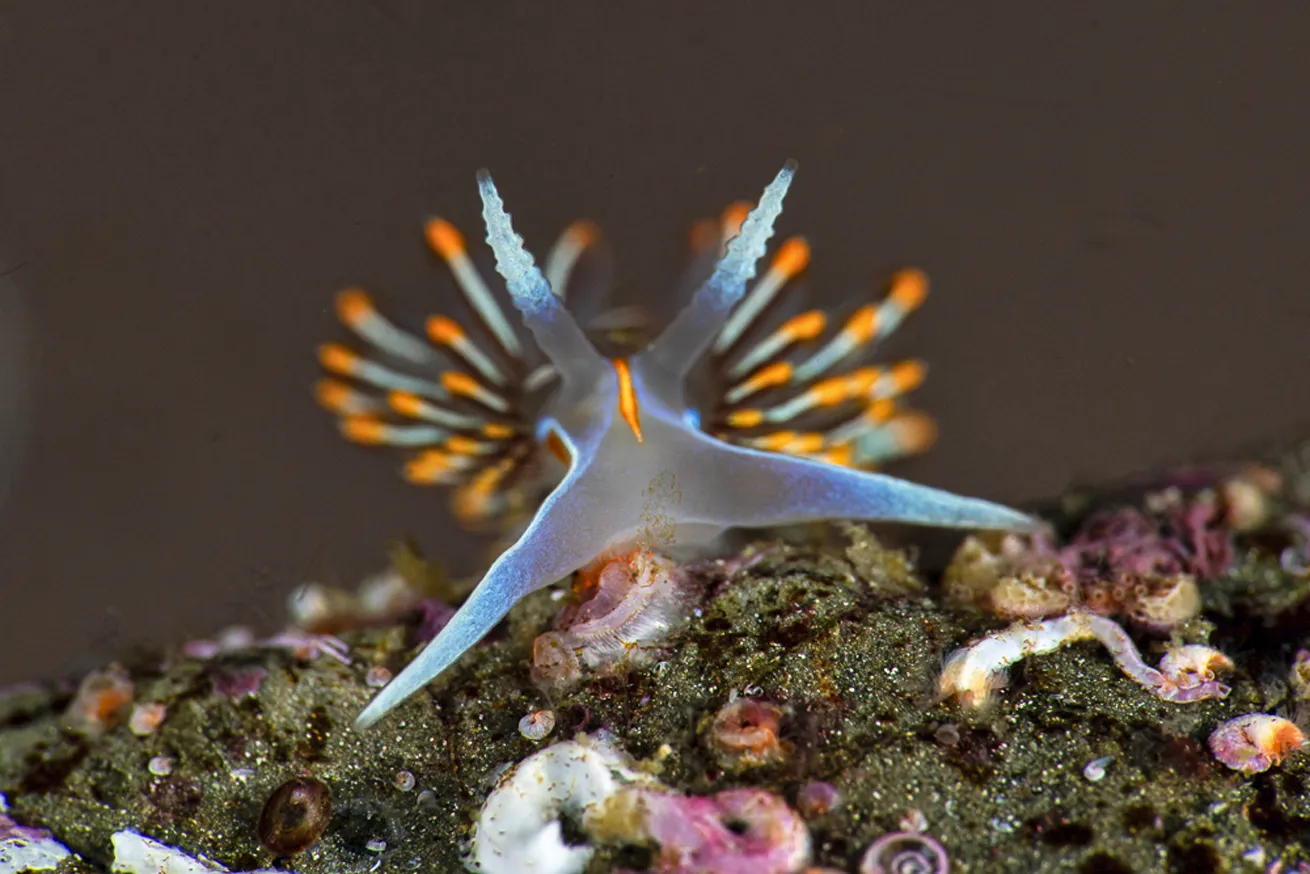
Brook PetersonAn opalescent nudibranch’s vibrant rhinophores and cerata.
Neet to Know Diving British Columbia
WHEN TO GO October through April has colder water temperatures (44 to 50 degrees), but better visibility. During this season, giant Pacific octopuses nest and mate—with the males being more active.
DON’T MISS Browning Wall is the most famous dive site in Port Hardy, home to GPOs and wolf eels. Another must-see is Seven Tree Island, known for pinnacles, abundant fish life and sponge gardens in a rainbow of colors.
CREATURE SPOTLIGHT The giant Pacific octopus is incredibly curious, often initiating interactions with divers, extending a tentacle to explore an arm or camera system. A considerable portion of their neurons is located in the arms, which sense and taste whatever they touch.
GEAR If traveling in the colder months, you’ll dive in a dry-suit and will want the right garments underneath. Merino wool, fleece and drysuit-specific garments don’t just keep you warm, they also wick away sweat so skin stays dry and warm.
CERTIFICATION/REQUIREMENTS Boost your kelp forest–diving confidence. Take the PADI Kelp Diver Specialty course, which teaches techniques to stay safe and avoid entanglement.
INSIDER TIP If traveling May to October, add a few nights at Great Bear Lodge, a floating eco-resort offering a safe, easy vantage point from which to watch grizzly bears feed on salmon.
HOW TO BOOK For a more remote experience, book with God’s Pocket Resort, which offers diving, lodging and dining.
CONTACT godspocket.com
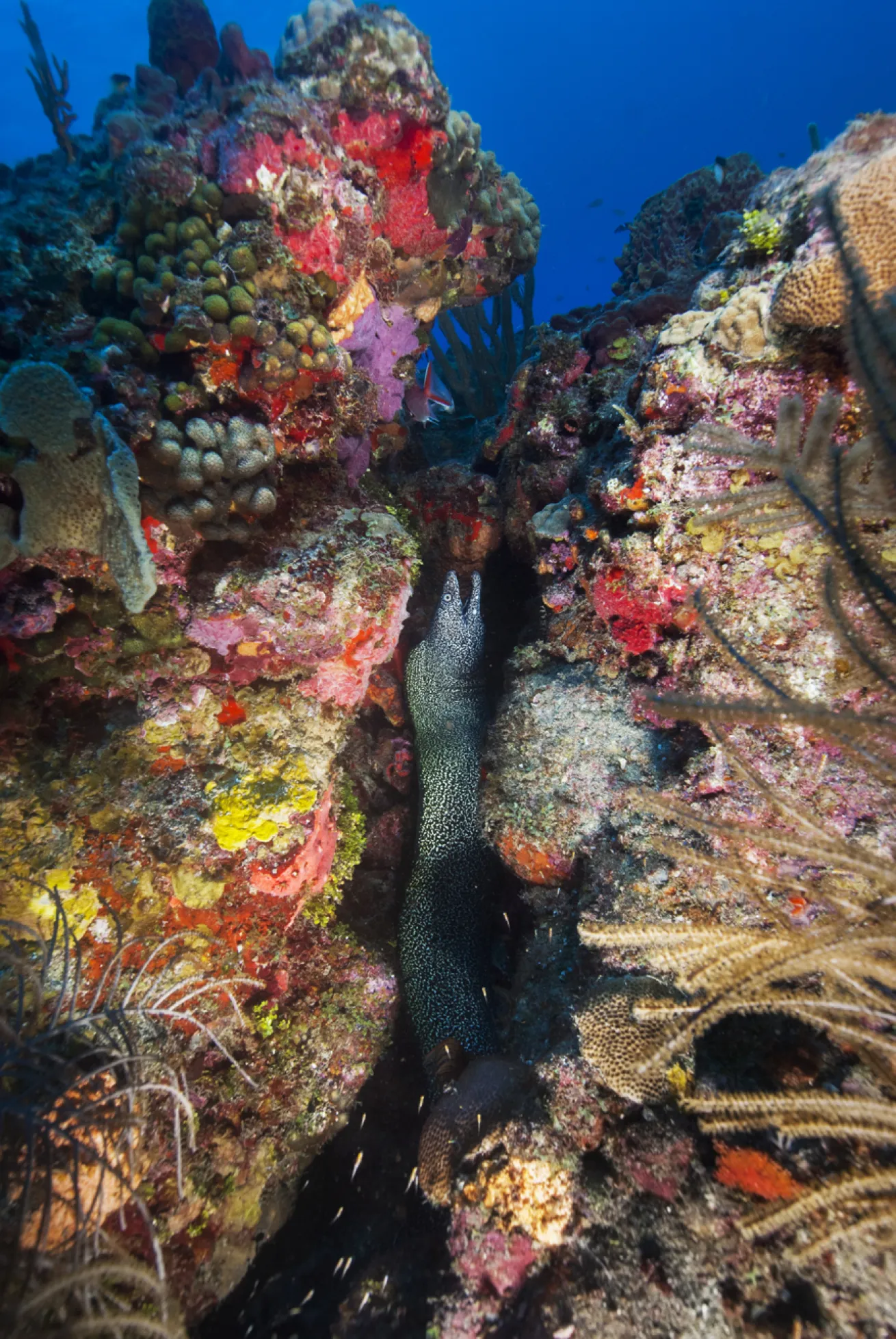
Mike HarterinkA spotted moray eel tucks itself within a narrow crevice among vibrant corals.
Statia
Statia, an 8-square-mile island 40 miles south of St. Maarten, is one of the Caribbean’s most biodiverse underwater locales—thanks to its 10-square-mile marine park, nutrient-rich volcanic substrate and light tourism footprint.
Formed in 1996, the marine park protects more than 30 named dive sites, including Blue Bead Hole, a hotspot for macro life including seahorses, sailfin blennies and flying gurnards. Credit past eruptions by the Quill volcano for the huge underwater boulders and ledges. This topography contains countless pockets and crevices where banded coral shrimp, squirrelfish, scorpionfish and the occasional frogfish tuck in. Lastly, the island is still sleepy, welcoming fewer than 6,000 tourists a year.
There are no major hotels, no high-rises and no golf courses. This all means very little stress on the reefs, allowing them and the marine life they support to flourish naturally.
Related Reading: The Organization Helping to Protect Seahorses, Sea Dragons and Pipefish
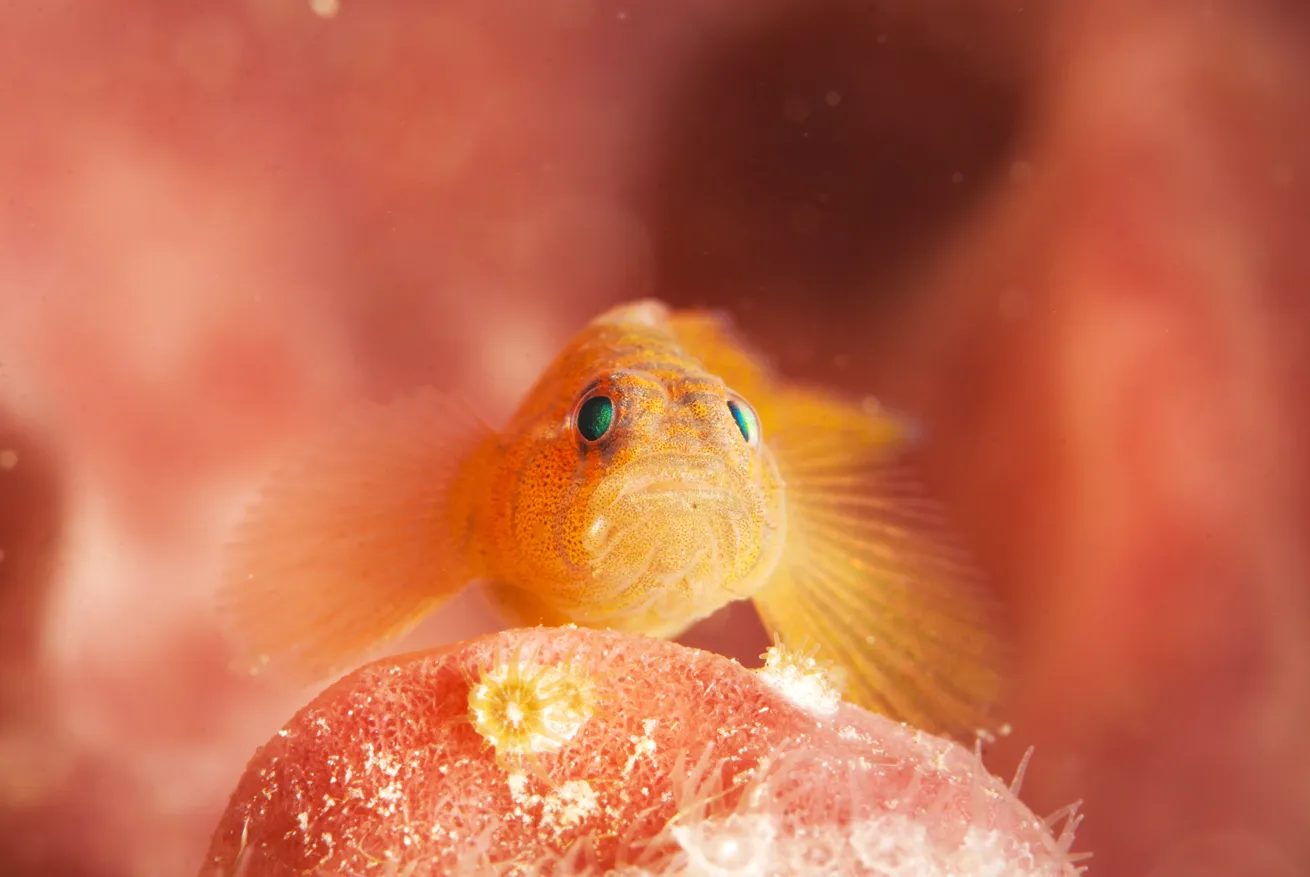
Mike HarterinkA rusty goby poses for the camera
Need to Know Diving Statia
WHEN TO GO Divers see the greatest number of macro critters February to May. Less rainfall means less runoff and algae, making it easier to spot the small stuff.
DON’T MISS Barracuda Reef is a haven for fish life, namely great barracuda and schooling wrasse.
CREATURE SPOTLIGHT Statia’s dense sponge gardens create the ideal habitat for frogfish. Look for the black-bead eye and that signature downturned mouth.
GEAR Pack a dive light to help locate critters among the sponges and crevices. It also lets you better appreciate the detail of the seahorses, nudibranchs, shrimp and frogfish you encounter.
CERTIFICATION/REQUIREMENTS Consider taking the PADI Night Diver course. Statia’s night diving is not to miss, especially the Chien Tong wreck, where almost a dozen hawksbill turtles typically bed down for the night.
INSIDER TIP Statia is home to more than 120 species of birds. Head to Boven National Park cliffs to lay eyes on red-billed tropicbirds, primarily along the cliffs. Hike the Quill, the island’s dormant volcano, early in the morning to see hummingbirds, bullfinches and more.
HOW TO BOOK Scubaqua, Statia Divers and Golden Rock Dive Center all offer guided boat dives.
CONTACT statia-tourism.com
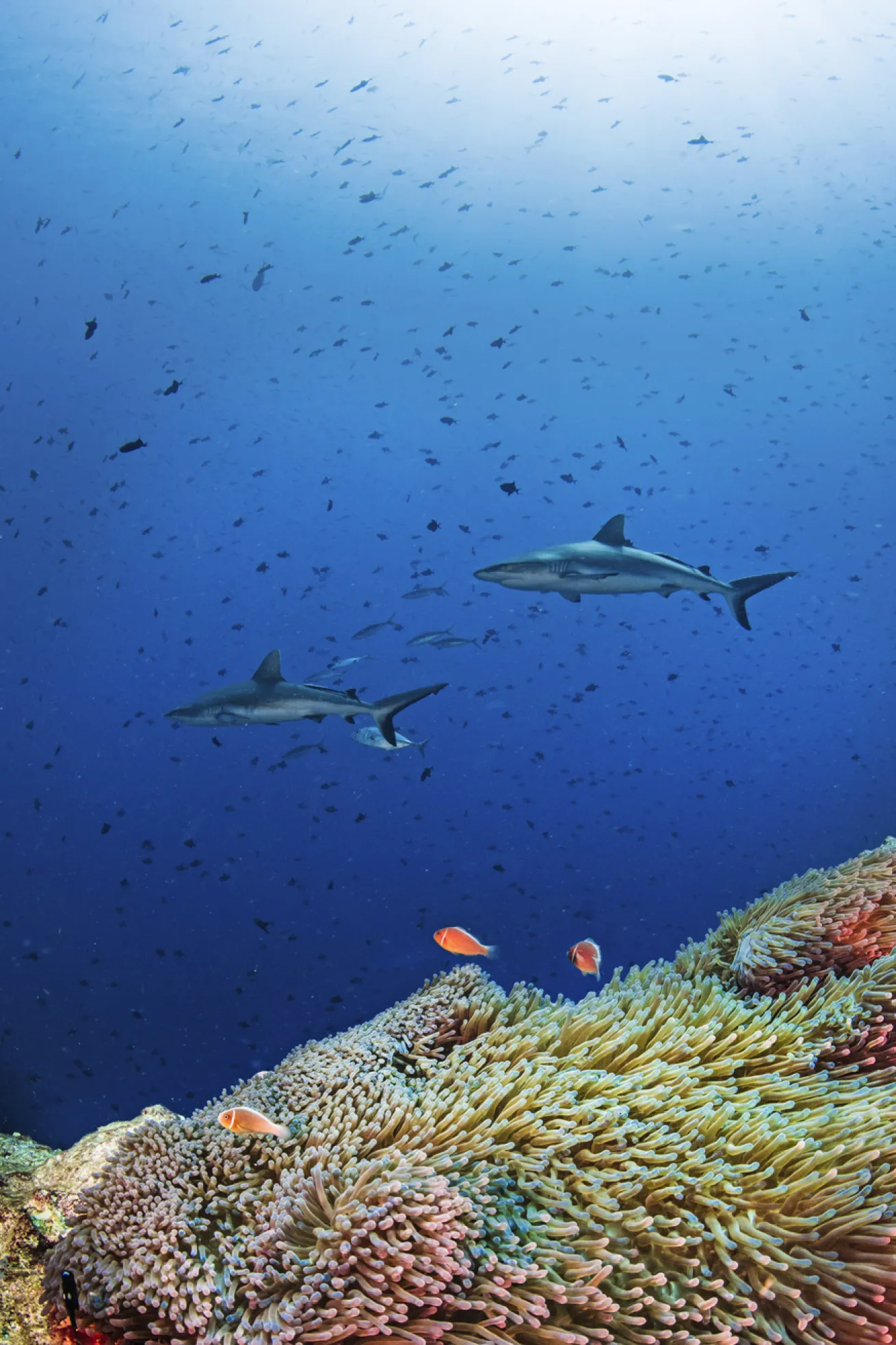
Simon LorenzA duo of gray reef sharks patrols the area.
Palau
To be enveloped by hundreds of spawning fish is typically a once-in-a-lifetime experience, but in Palau, it can happen at almost any time. This remote Pacific island nation, some 500 miles east of the Philippines, is a haven for divers thanks to its thriving reefs, flowing currents and abundant fish populations—with 80 percent of its waters protected by the Palau National Marine Sanctuary.
The gray reef sharks cruising sites such as Blue Corner speak to the health of the destination, but it’s the spawning events that truly showcase the wild abundance found here.
Bumphead parrotfish spawn monthly around the new moon year-round; coral and camouflage grouper take their turn during the same moon cycle in June and August only. It feels like pure magic to be among the action, but it’s just science: The spawnings have been pinpointed to the day, allowing divers to drop in with precision. Here, more than most other destinations, timing matters if you want to see the most marine life possible.
Related Reading:Islands Born of Fire: One Week Diving Aboard Palau’s Black Pearl Liveaboard
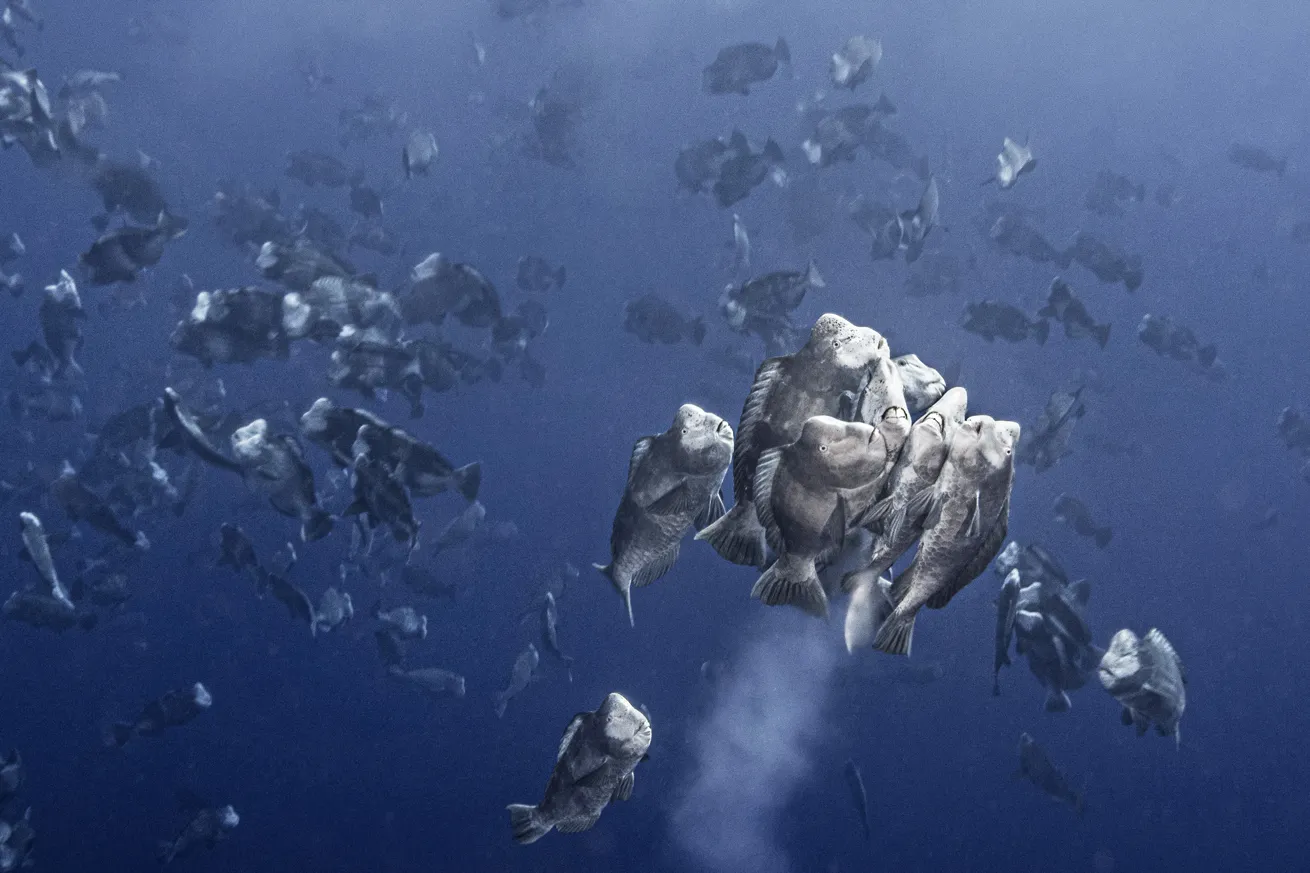
Simon LorenzBumphead parrotfish aggregations are a must-see monthly event in Palau.
Need to Know Diving Palau
WHEN TO GO February through April see the calmest conditions, making it more likely that liveaboards can make the trek to the more remote sites, such as Peleliu Corner.
DON’T MISS Palau is practically synonymous with Blue Corner. Start at the wall’s edge, watching as gray reef sharks ride the current to hunt. Look up and behind you, as manta rays often pass through. Then, ease down a long sand chute with mountains of endless lettuce corals, giant clams and parades of fish.
CREATURE SPOTLIGHT Mandarinfish rank as one of nature’s gaudiest fish, with their cobalt-blue and turquoise stripes, and orange bodies. Find them at the entrance of Chandelier Cave just before sunset.
GEAR A metal reef hook secures you in place amid stronger currents.
CERTIFICATION/REQUIREMENTS Take the PADI Advanced Open Water Diver course before your trip. Palau has deep dives and night dives, so having navigational skills is a plus. The PADI Drift Diver course teaches the skills needed to manage this destination’s strong currents.
INSIDER TIP Palau’s Rock Islands are a unique sight, best appreciated with a scenic flight, such as the 40-minute tour offered by Smile Air.
HOW TO BOOK Choose from a live-aboard experience, such as those offered by Aggressor Adventures. Or, book a land-based stay and dive with Sam’s Tours.
CONTACT aggressor.com; samstours.com
Readers Choice Awards 2026
This year we surveyed 8,729 readers on their favorite destinations, resorts, operators and liveaboards, awarding their top picks across a variety of categories. Our Readers Choice travel feature highlights the first-place destinations in each global region and offers a taste of what makes each a reader favorite.
➜ Click here to see all Readers Choice award-winning resorts, operators and liveaboards.


