


Lorenzo MittigaA squid extends its tentacles to hunt an unsuspecting juvenile squirrelfish.
Night diving always reveals a different ocean, but in Bonaire, a particular approach has quietly evolved into one of the most effective ways to document the hidden life of the open sea: bonfire dive photography. This technique allows divers and photographers to encounter larval and post-larval stages of reef organisms—and even pelagic species typically seen far offshore—while remaining in shallow, sheltered coastal waters.
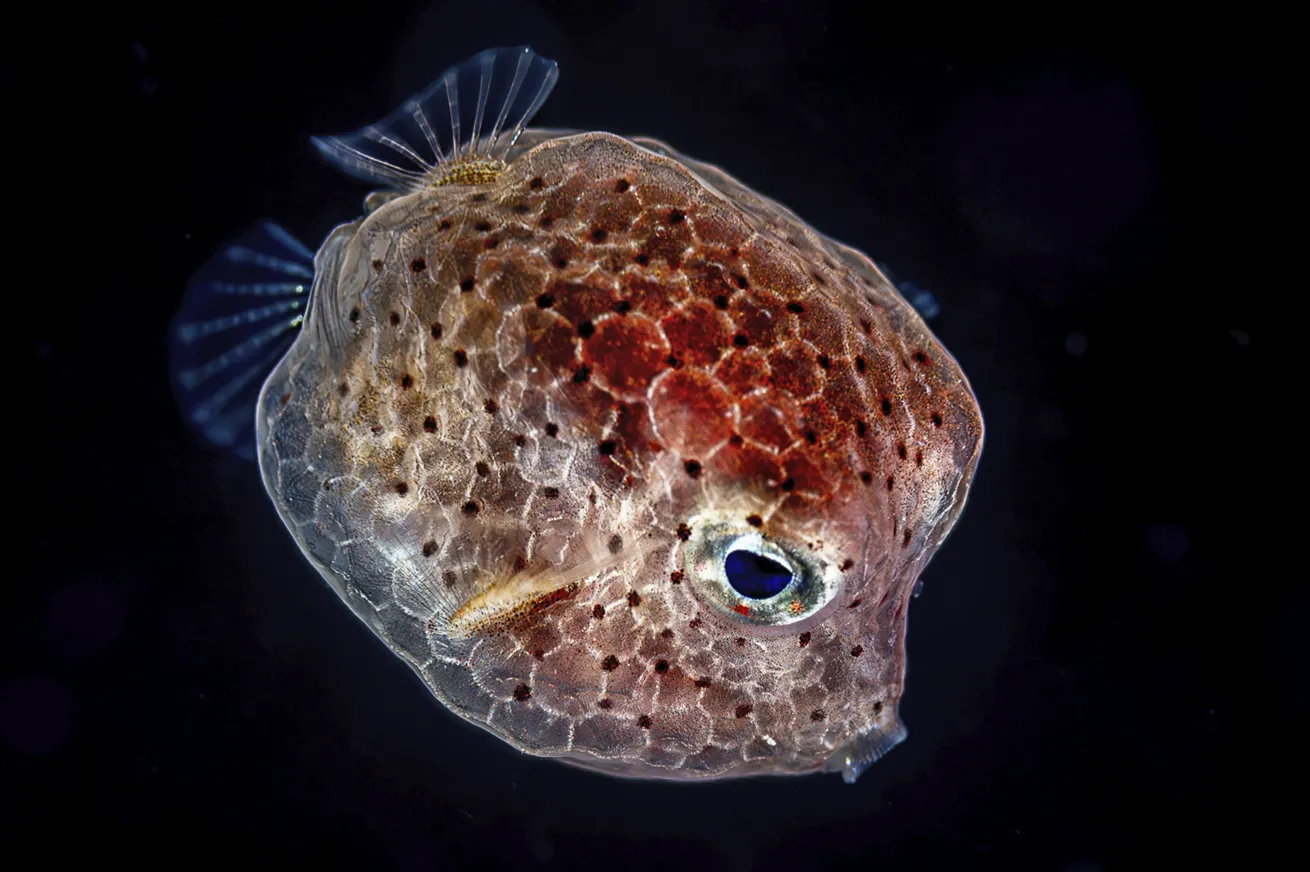
Lorenzo MittigaA juvenile trunkfish not much more than a centimeter long.
What is Bonfire Diving?
Bonfire diving is often compared to blackwater diving, yet the two are operationally distinct. Blackwater dives are conducted offshore over very deep water, with divers drifting in open ocean conditions, guided by down lines and lights. While extraordinarily productive from a biological perspective, blackwater diving requires calm seas, complex logistics and a high tolerance for exposure. In Bonaire, persistent trade winds and surface chop make these conditions feasible only intermittently.
Bonfire diving takes the same ecological principle—attracting planktonic organisms to a light source—and applies it in a more predictable environment.
Powerful continuous dive lights are placed on a weighted line or directly on the seafloor, usually at depths between 30 and 60 feet, close to coastal drop-offs where deep water lies nearby. Over the course of the dive, these lights act as a visual magnet, drawing in a remarkable assemblage of larval and post-larval marine life from the surrounding water column as countless pelagic organisms undertake their nightly vertical migration from the depths.
Related Reading: The Night Diving Event Connecting Divers Around the World

Lorenzo MittigaAn adult spiny lobster, photographed in shallow water at the end of a bonfire dive, emerges to forage after dark. The transition zone between reef and shoreline can yield compelling biodiversity.
Benefits of Bonfire vs. Blackwater Diving
From a photographic perspective, the advantages are substantial. The presence of the seabed provides a constant visual reference, reducing disorientation and allowing precise buoyancy control.
The fixed light source also creates predictable conditions for photographers: Subjects often emerge slowly from the darkness, pause briefly in the illuminated cone, and then disappear again into black water. This rhythm allows time to adjust exposure, refine composition and work at high magnifications without the pressure of drifting currents.
Within the illuminated area, another layer of life becomes visible. From the sandy bottom itself, organisms at early larval and post-larval stages rise into the water column after dark, having remained buried or hidden during daylight hours.
This nocturnal emergence is well-documented in marine ecology literature and is thought to reduce predation risk from visually oriented predators. During bonfire dives in Bonaire, photographers regularly observe flounder larvae emerging from the sand, ribbon-like leptocephalus larvae of moray eels, tiny octopuses, and other delicate organisms confronting the open water for the first time.
Related Reading: How to Take Blackwater Photos
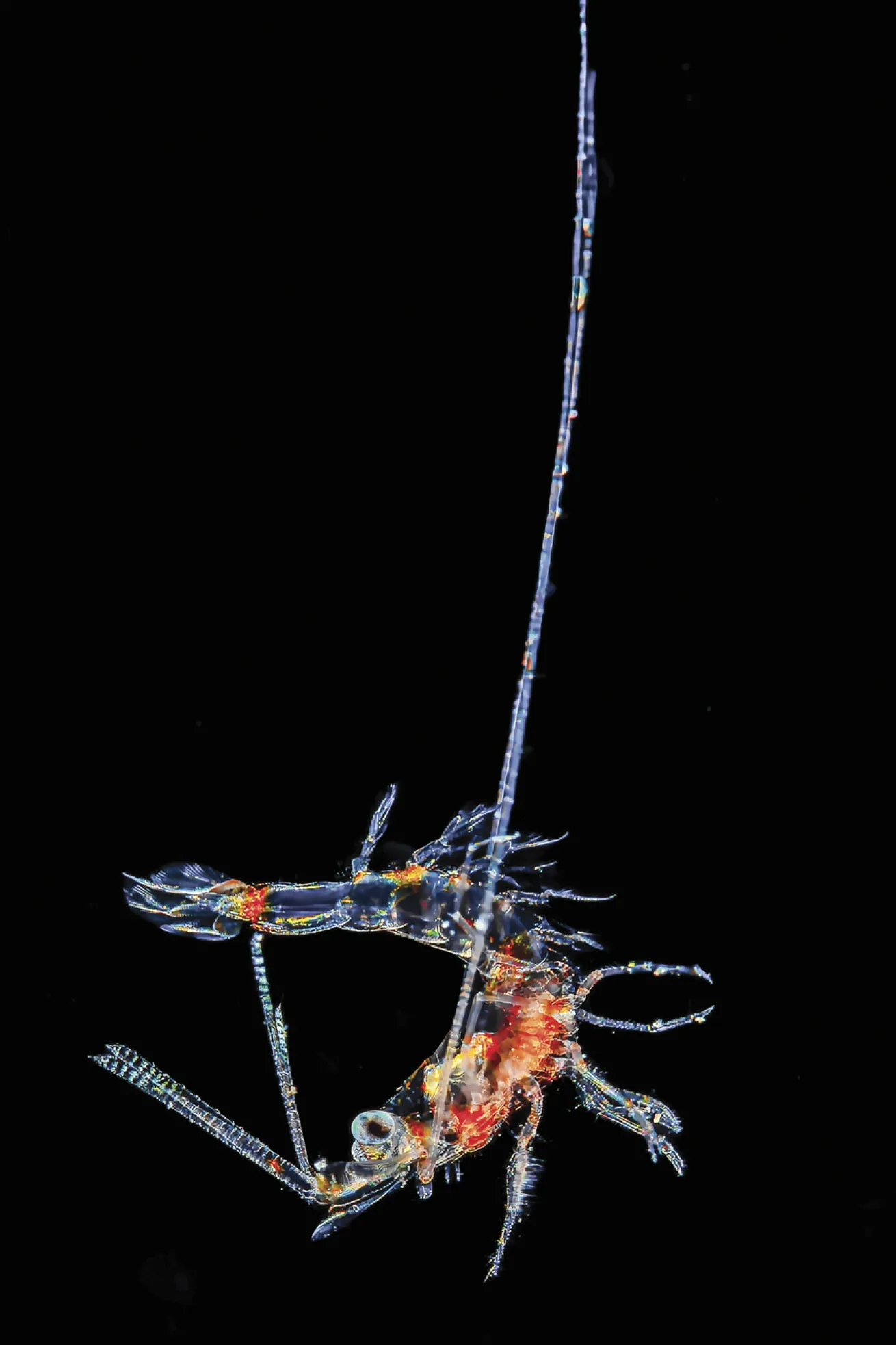
Lorenzo MittigaA transparent larval spiny lobster is suspended among plankton in the black water.
Why You'll Love Bonfire Diving
The diversity of subjects is striking. Reef fish larvae—tarpons, snappers, filefish and lizardfish—appear alongside transparent squids, pelagic snails, post-larval crustaceans and gelatinous zooplankton that rarely feature in conventional reef photography.
Many of these organisms represent critical transitional life stages, drifting in pelagic waters before eventually settling onto the reef. Photographing them offers a rare glimpse into processes that underpin reef replenishment and connectivity.
Many divers describe bonfire diving as addictive, largely because of the unpredictable nature of what you may see on a given dive. The light draws in a constantly changing cast of organisms, and no two nights are the same. Each descent carries the anticipation of discovery, whether familiar species appearing in unfamiliar forms or entirely new subjects drifting into view.
Conservation Connection
Beyond the imagery itself, bonfire dive photography tells a broader conservation story. These fragile, often overlooked life stages represent the future of coral reef ecosystems. By documenting them in situ, photographers can visually connect divers to processes that usually remain abstract, such as recruitment, larval dispersal and the dependence of reef health on open-ocean dynamics.
Visual storytelling has repeatedly been shown to be an effective tool for raising awareness and fostering stewardship in marine conservation.
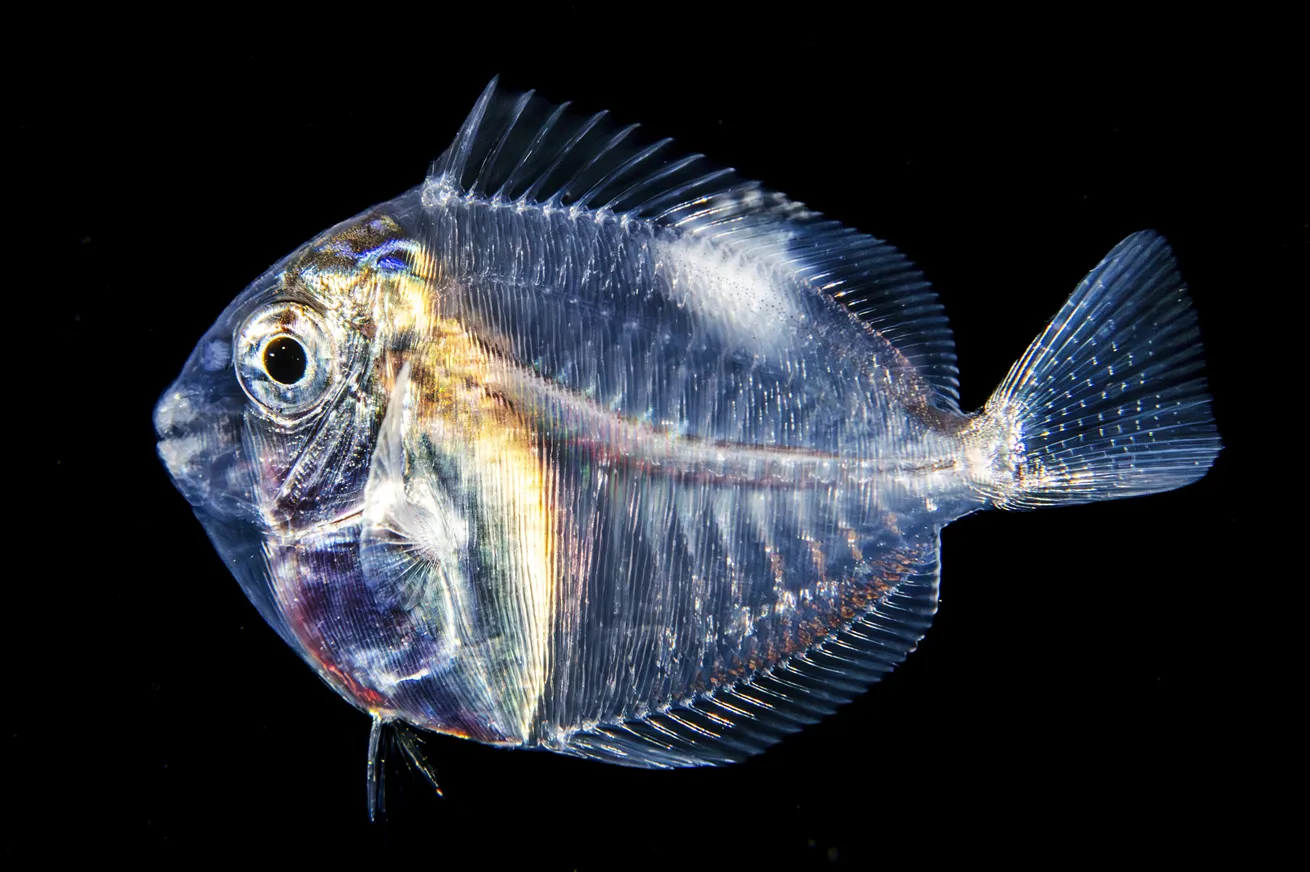
Lorenzo MittigaThis iridescent speck, barely 15 millimeters long, is a larval-stage blue tang, which spends the first 45 to 70 days of its life drifting in the open ocean before returning to the reef.
In Bonaire, where marine protection and sustainable dive practices are central to the island’s identity, bonfire diving fits naturally into the local philosophy. It requires minimal infrastructure, can be conducted within established dive sites, and prioritizes diver safety while delivering unique encounters. For underwater photographers seeking something genuinely different without leaving sight of the reef, bonfire dive photography offers a compelling blend of science, artistry and exploration.
On the island, bonfire diving has been refined into a consistent practice by Twilight Diving Bonaire. The operator’s approach emphasizes controlled shallow-water setups, fixed lighting systems, and slow, methodical dives designed for close observation and photography. This specialization allows divers to return repeatedly to the same sites under comparable conditions, making it possible to observe patterns in larval appearance and behavior over time.
Related Reading: 4 Mellow Dive Destinations Everyone Will Love

Lorenzo MittigaA juvenile bobtail squid hovers in the darkness above the sand, already displaying adaptations that will help it disguise itself in the moonlight.
What You'll Need for Photographing a Bonfire Dive
From a photographic standpoint, bonfire diving requires a precise and disciplined setup. A mirrorless or DSLR camera with fast, accurate autofocus paired with a macro lens, most commonly a 60mm, offers the optimal balance between magnification and working distance.
Lighting is intentionally restrained: A single strobe or low-power twin strobes are preferred to avoid over-illuminating transparent larvae and gelatinous organisms, while a small, controlled focus light is essential for subject acquisition. This approach follows established low-impact macro photography principles: precise light control, stable buoyancy and minimal disturbance to delicate subjects.

Lorenzo MittigaA diver hovers beside a line of glowing lights set up specifically for use in bonfire diving.
Bonfire photography entered my professional life surprisingly late in my career. After decades dedicated to diving, underwater filming and photography, I approached this discipline less than a year ago. My first bonfire dive was a simple shore dive, and while my initial photographic results were poor and frustrating, the potential was immediately clear. The challenge was technical, not conceptual.
By studying blackwater photography techniques and adapting them to the bonfire environment, refining lighting strategies, focus methods, lens choice and exposure control, I began to understand this demanding discipline. The learning curve was steep but deeply rewarding.
Related Reading: Introduction to Blackwater Diving
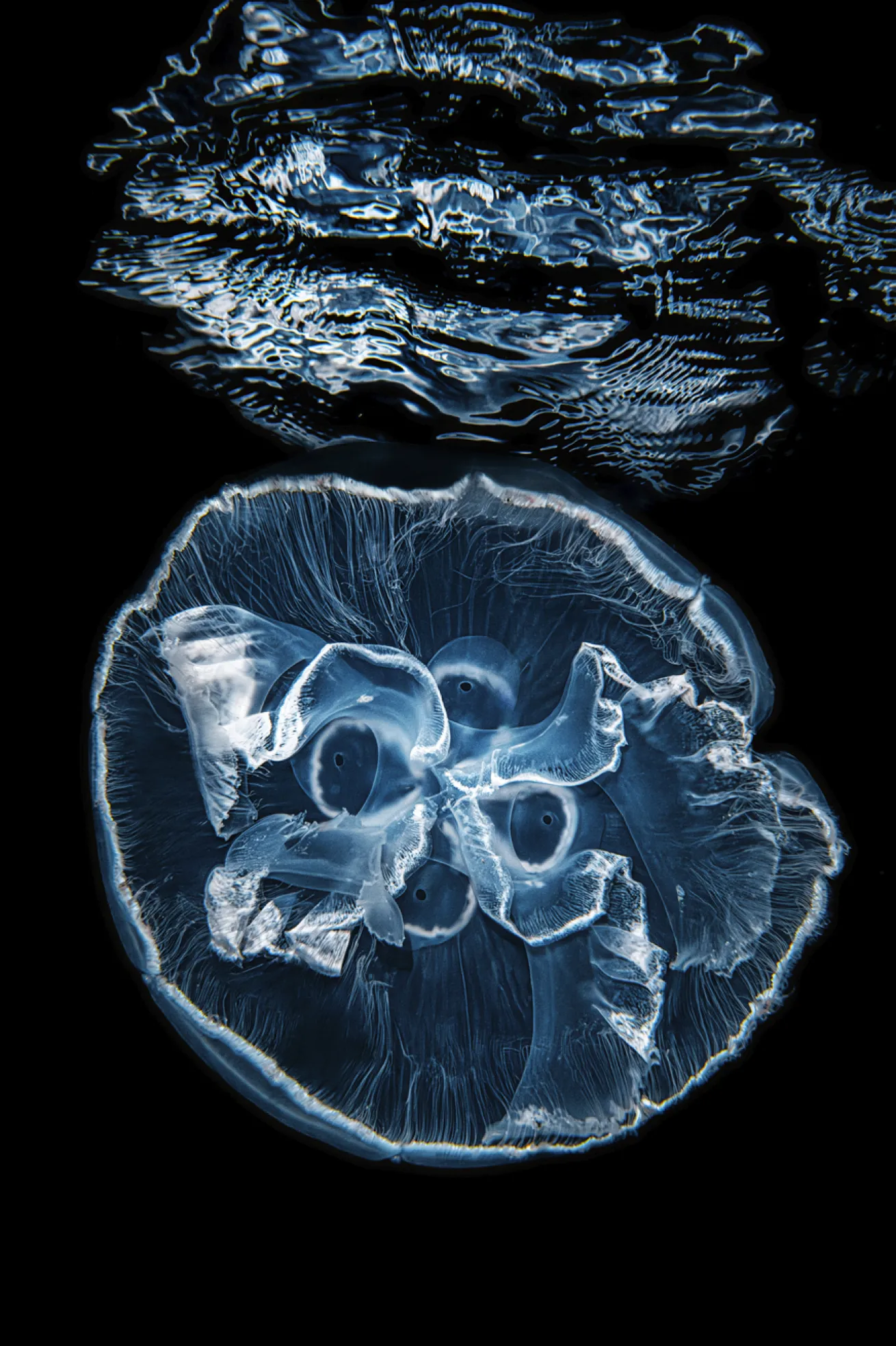
Lorenzo MittigaA moon jellyfish drifts just beneath the surface in the darkness.
Today, bonfire diving has become genuinely addictive: a nightly pursuit where curiosity, technical precision and discovery converge, and a technique that I am now committed to sharing with other photographers.
As night falls and the lights come on, the ocean reveals a fleeting world that few ever see. In those illuminated cones above the sand, Bonaire becomes a window into the pelagic night, one frame at a time.
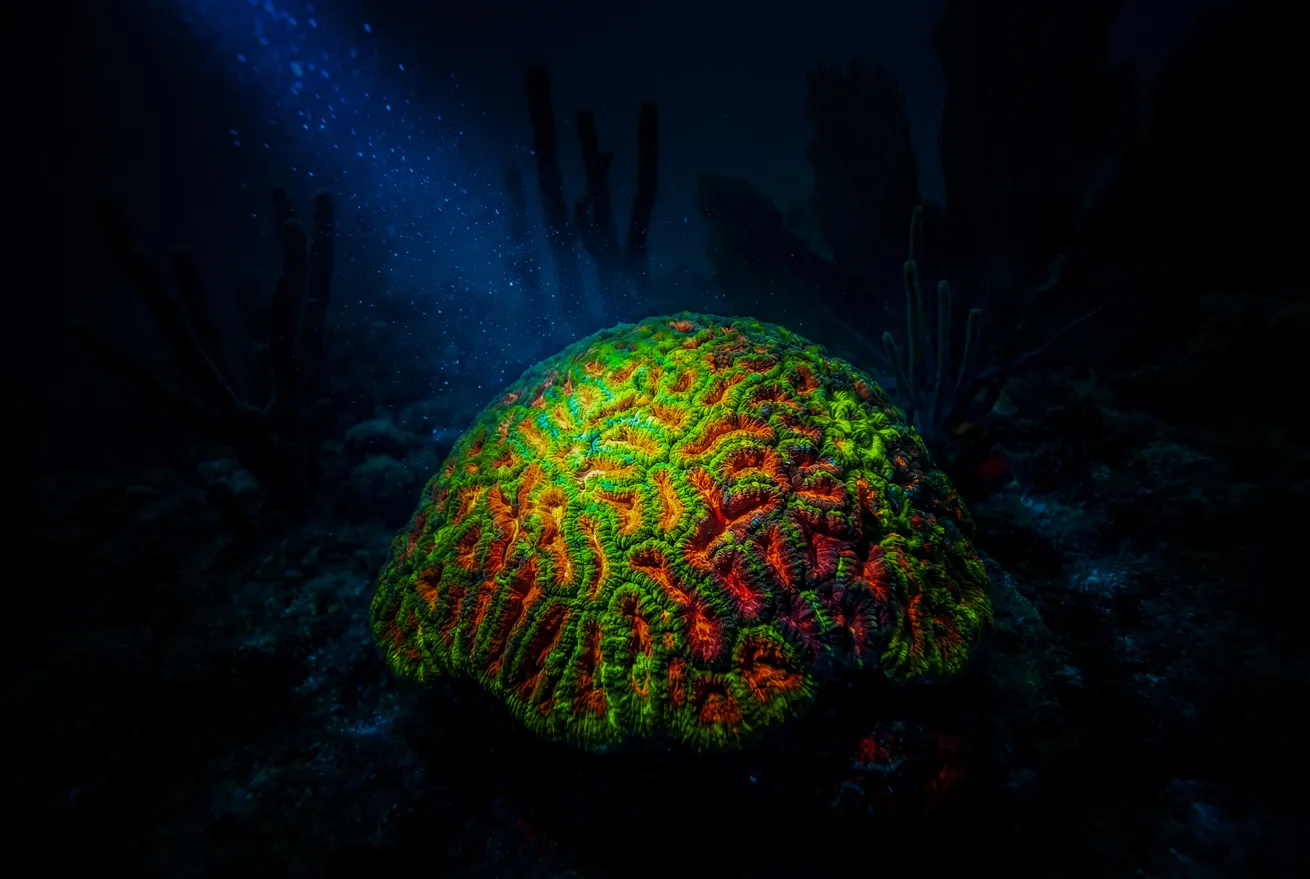
Lorenzo MittigaA brain coral during an ultraviolet light dive.
There’s More to See in The Dark
Bonfire diving isn’t anywhere near the only way visitors to Bonaire can photograph and explore the storied waters of this Caribbean dive haven. In fact, it’s not even the only way to dive at night. Dive shops all over the island offer night diving experiences, including:
Bioluminescence
Something special happens off Bonaire’s shores once a month, a few days after the full moon, when countless tiny crustaceans called ostracods put on a spectacular light show in the shallow water. This bioluminescent display is part of a mating event and is often likened by divers (who keep their own lights off during the dive) to finning among the stars in the black of night.
Traditional Night Dives
Bonaire’s famous shore dives become a completely new experience as nocturnal animals unseen during daytime dives come out of hiding to hunt and feed. Consider it a two-for-one at your favorite site on the island.
UV Night Dives
Divers looking to get weird with it can participate in guided dives equipped with special ultraviolet lights that cause certain critters and corals to glow with psychedelic fluorescent colors. Far out!
Operators
Buddy Dive Bonaire (buddydive.com)
Dive Friends Bonaire (divefriendsbonaire.com)
Divi Dive Bonaire (diviresorts.com)
Plaza Beach & Dive Resort (plazaresortbonaire.com)
VIP Diving (vipdiving.com)


