


Courtesy Nova Maldives/PADIDivers gather for a Women’s Dive Day event at Nova Maldives.
It’s a hot morning in July at Nova Maldives, and dozens of women are lined up along the deck, waiting to try diving for the first time during PADI’s annual Women’s Dive Day event.
The crowd listens to opening remarks from PADI AmbassaDiver India Black, a special guest at the resort who spent a week guiding guests through various ecological topics. And then, with excitement and a few nervous laughs, all the women present experience their first breaths underwater. Later, they’ll finish the day by helping harvest coral fragments and sipping a few specialty cocktails—but for now, the joy of discovery takes focus.
“Community… is such a precious thing,” Black says. “I have found very close friends through the women that I have met through diving. I think there's a camaraderie and immediate affinity that girls do have in the dive sector. You get brought together to do something that you really love and enjoy and care about, and so it's infectious in that regard, and that infectious energy that you get spills into that kind of community feeling.”
Related Reading: Where to Dive for PADI Women's Dive Day
About Women’s Dive Day
Launched in 2015, the annual Women’s Dive Day brings about hundreds of events across dozens of countries, each an opportunity for experienced divers to connect on all-female dive boats and for first-timers to experience the sport in a low-pressure, supportive, women-only environment.
Related Reading: Celebrating Women’s Dive Day With Legend Sally Wahrmann
The day is a cornerstone of PADI’s Women in Diving initiative, which is working to help change the story of women in the sport. When the initiative began 11 years ago, women made up 35 percent of recreational divers and fewer than 18 percent of PADI dive professionals. Today, those metrics have jumped to 40 percent and 20 percent, respectively.
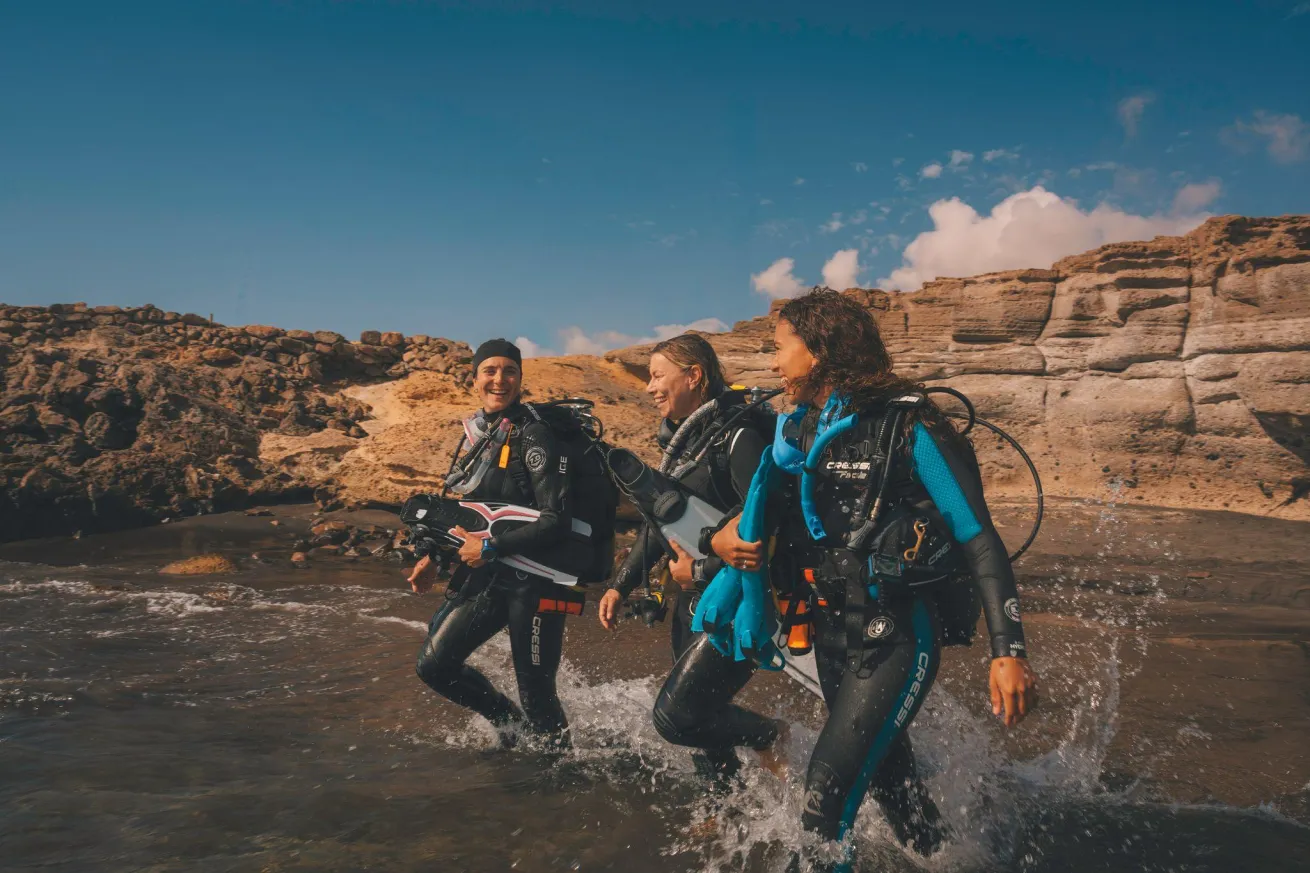
Courtesy PADIWomen’s Dive Day started in 2015 and prompts hundreds of events globally each year.
Importance of Women’s Representation in Diving
Closing the gender gap in diving is an ongoing process. Since the invention of commercially successful open-circuit scuba by Jacques-Yves Cousteau in 1943, the dive industry has been slow to bring women into the fold. Heavy equipment was built almost exclusively for the male frame. The first BCD designed for the female body didn’t hit the market until 1988. Medical myths—like the belief that sharks were attracted to menstrual blood—persisted. And the same boy’s club that permeated the workplace appeared in dive shops, leaving women interested in the dive world feeling like outsiders.
Every female-identifying diver can probably name men who have been excellent teachers, divemasters and dive buddies. But allieship is only one part of continuing to evolve scuba diving and inviting more women into the sport.
“I started noticing a divide within the first couple of months of my training,” says Emily Williams, a PADI IDC Staff Instructor and social media manager in Utila, Honduras. “I personally felt like I had to fight to prove myself to the men around me, but no matter what I did, I was considered weak, whether it was performing skills, carrying tanks or in any other normal aspect of diving. The ‘professional’ men around me were very commonly inappropriate with jokes, actions and comments, behavior that was celebrated as funny, and any woman that stood their ground or called it out was then labeled ‘difficult to work with.’”
Creating Dive Role Models
In addition to founding Spacefish Army, a sustainable swimwear company known for playful designs, Morgan Oughton has worked in a variety of divemaster and instructor positions. But representation matters—as she recalls, it took her almost 20 dives before she met her first female dive pro and realized her future career was even an option.
The gender gap in new PADI professionals has decreased by nearly 13 percent in the last decade, with women accounting for 30.6 percent of all PADI Divemaster certifications in 2024. However, as all the women interviewed for this story note, those numbers can still be improved.
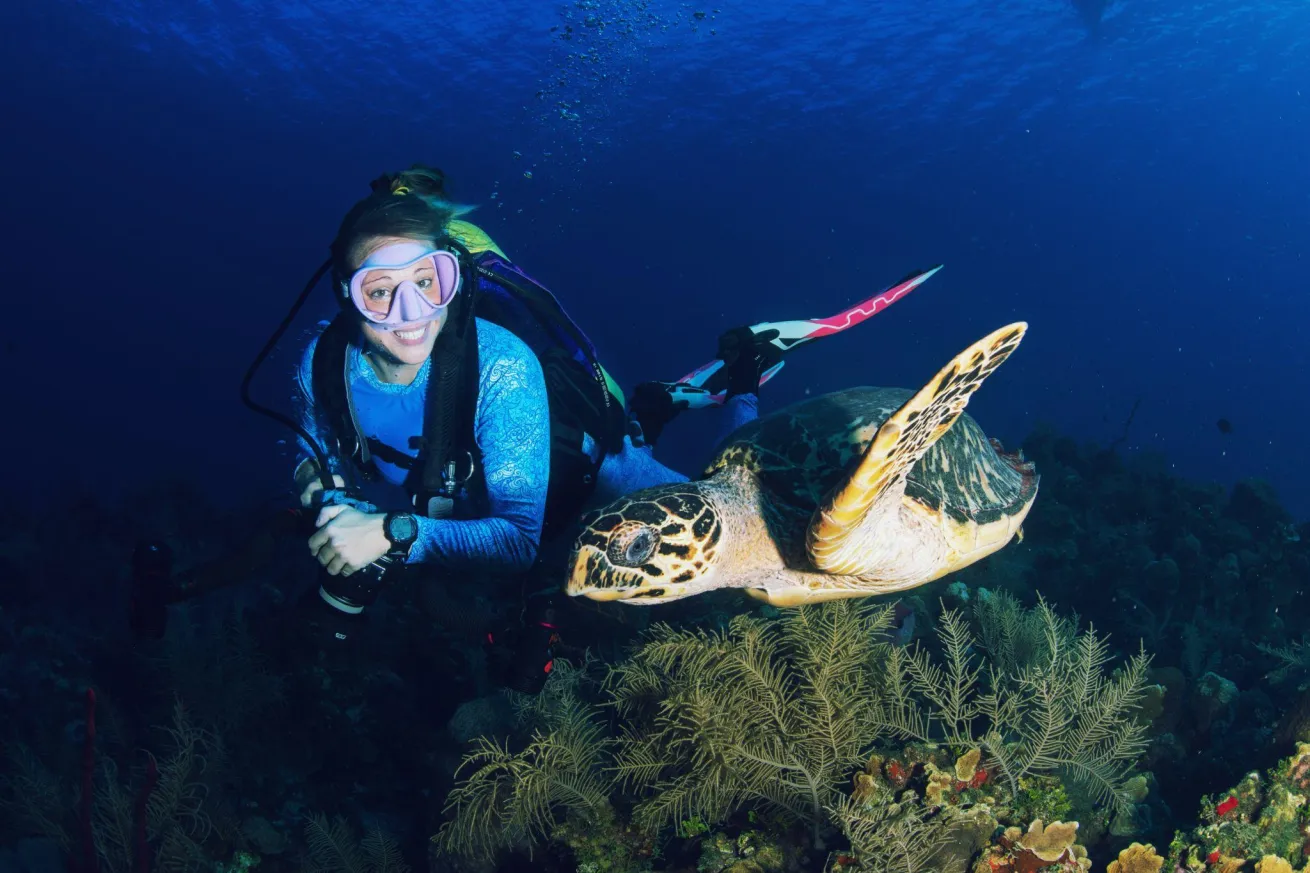
Courtesy Spacefish ArmyA diver kitted in Spacefish Army gear dives with a turtle.
“I think I kind of insulted her by accident, because I didn't realize women could do this job—and I didn't even mean it as an insult!” says Oughton of her first conversation with a female divemaster. “I became obsessed with diving. And I was like, ‘I think I really want to do this as a career.’ And then it was really like, ‘wow, I don't see any women doing this.’ So, when I asked her, I was generally curious—I didn't realize we could do that.”
Related Reading: The Importance of Women in Diving and Conservation
Oughton’s story is common, even among seasoned dive professionals and even as more women enter dive spaces. But representation starts with a welcoming environment. And whether your goal is to simply become a recreational diver or to go pro, it helps to know that you’re not alone in your passion for the ocean.
Fostering Connection and Support
AmbasssaDiver Nouf Alosaimi, an instructor living in Taif, Saudi Arabia, had already created the women’s dive community Pink Bubbles Divers when she organized the first regional Women’s Dive Day in 2017. After seeing how rare it was for women to show up regularly in the dive space, she was taken with the event’s sense of unity.
“It was such a powerful moment. Seeing so many female instructors and divers gathered in one place, all sharing the same space and passion, was incredibly inspiring,” she recalls. “There was something truly special about witnessing that level of presence and unity for the first time. Since then, I’ve continued organizing Women’s Dive Day every year, because I’ve seen the real impact it has on the female diving community. One of my favorite things is watching friendships from seeing women who meet on that day, then become dive buddies, travel together and continue diving side by side.”
Recently, Williams posted a reel detailing all the unfounded comments she gets from men in the dive industry. She’s learned to laugh at the naysayers—thanks in large part to the community she’s cultivated.
“I’m in awe of the women I get to work with,” she says. “In technical and recreational diving, the most experienced, safest, knowledgeable, coolest divers I know are women. The majority of divemasters I teach are women. It makes me so proud to see them become diving professionals. Being a woman in the dive industry is a beautiful thing."

Courtesy PADIFind your community of women divers by participating in a Women’s Dive Day activity this July 18.
Likewise, Alosaimi has made it a mission to help women find each other and create the support they need to succeed in the dive world.
“I believe the dive community needs to focus more on building inclusive environments that truly support women—not just at the beginner level, but throughout their entire journey,” she says. “Through my work with Red Sea Citizen, I’ve seen how transformative it is when women are given a space where they feel safe, supported and encouraged to grow. Seeing people reconnect with themselves, form new friendships, and leave feeling lighter and more present is, to me, more special than any single moment underwater.”
Related Reading: Powerful Water Women You Should Know
Diving will show you another world. It will bring you closer to nature. It will test your skills and expand your limitations. But as events like Women’s Dive Day actively demonstrate, getting in the water will also bring you closer to your community—maybe one you didn’t even know you had.
“It’s given me so much,” Black says of her dive journey. “It’s given me empowerment. It’s given me grounding. It’s given me a new perspective on our planet. I found some of the strongest, most beautiful women that I know from it. It attracts a variety of women, but it is particularly drawing to those who do have that sense of adventure, who have a capacity to care and want to do better and want to protect our planet. And it’s something that I really value in people.”
Get involved. This year’s Women’s Dive Day is on July 18.


