

Lauren Rebbeck
Dear Annie,
I’ve been an avid diver for years and have always wanted my brother to get certified. We’ve discussed it multiple times—I say he would love it, and he says he’s too claustrophobic. How can I convince him to try it? Or should I just accept that it’s not for him?
—Family Matters
Dear Family Matters,
You may not believe this, but the same thing happened in my family—just not with my brother. It was my mother.
Growing up, we were always around water. Before I could walk, I was swimming. Jumping from rope swings, inner-tubing, swim team, sprinklers in the yard—you name it, water was part of our everyday life. So when I learned to dive and eventually became a scuba instructor, of course I wanted to share this incredible sense of freedom with my mom. I truly believed I was about to give her the greatest gift on the planet.
I had her meet me in Florida while the liveaboard I was working on at the time was in dry dock. I rented gear for her, brought her to a pool and gently introduced her to scuba for the first time. In my mind, this was going to be a magical experience that bonded us forever.
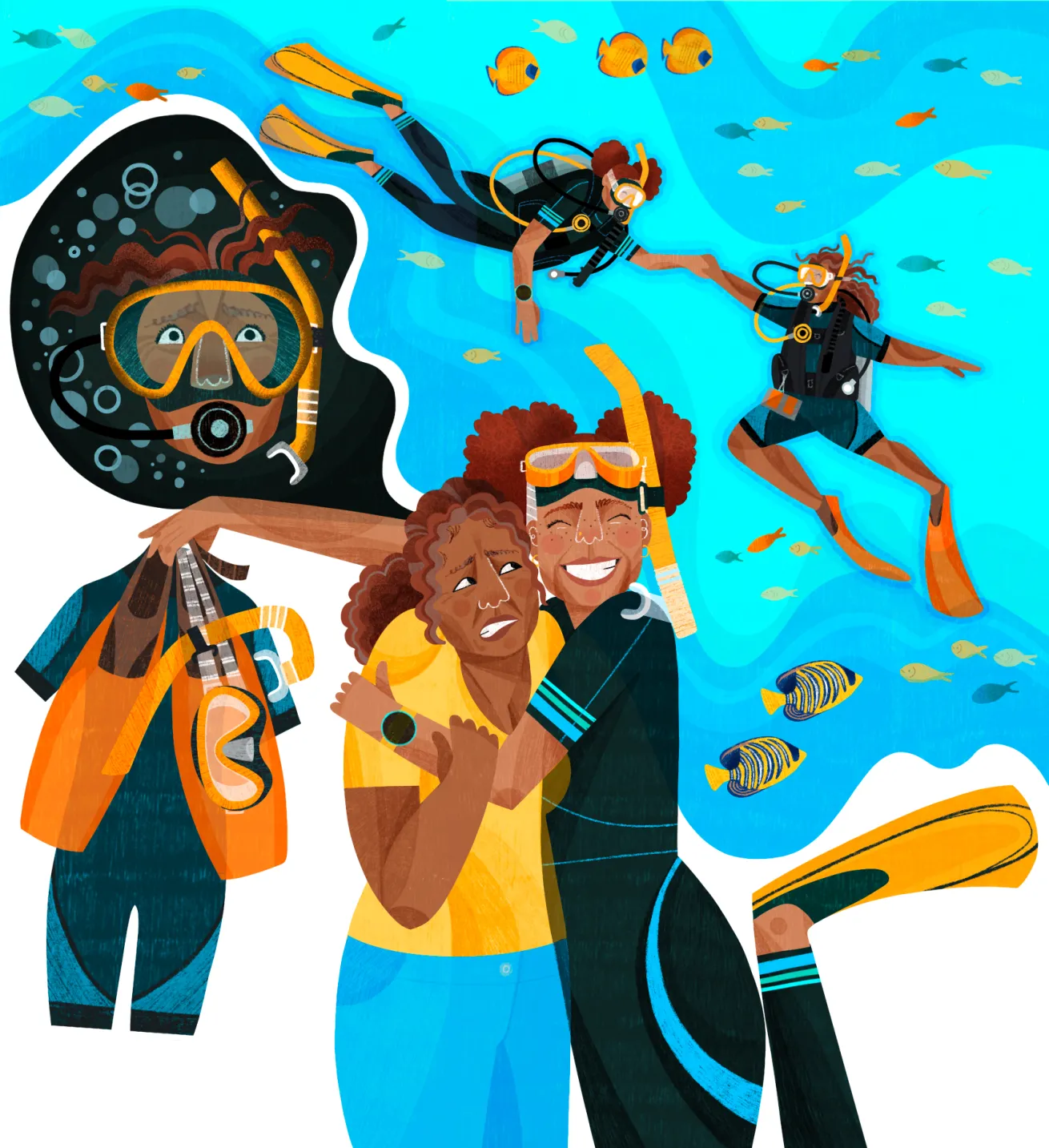
Instead, I saw tears well up in my mother’s eyes.
Related Reading: Largest-Ever Coral Colony Recorded on Great Barrier Reef
As we talked, she shared something I had never known. When she was 10 years old, she had her tonsils removed. The anesthesia they used at the time came down over her face, and it terrified her so deeply that she has never been able to cover her face with anything since. In that moment, I held my mom as she cried. I realized I was asking her to walk straight back into a fear she had carried silently for decades.
That day taught me something essential: Claustrophobia isn’t just about enclosed spaces. It’s about the feeling of being unable to escape or the fear of losing control. And for many people, it’s rooted in real experiences—often childhood trauma.
Together, my mom and I realized scuba diving wasn’t right for her. And that was OK.
But that doesn’t mean everyone who experiences claustrophobia won’t be able to dive. What matters is that they feel supported in their choices.
Where to Start
If your brother is curious—but hesitant—you can help set him up for success only if he wants to explore diving. The relaxation and breathing techniques that scuba offers can be incredibly beneficial for some people who struggle with claustrophobia, but only when they are fully in control of the process.
I’d start by removing pressure entirely. No talk of “let’s get you certified.” No expectations.
Related Reading: How Can I Improve My Air Consumption?
One gentle path forward could be a complete discovery process. Encourage him to begin with the PADI Open Water Diver eLearning, where he can learn about the equipment and what happens physiologically to the body while diving—on his own time, in his own space.
If he wants to go further, find an instructor who understands claustrophobia and offers a one-on-one PADI Discover Scuba Diving experience, with emotional and psychological support as a priority—not an afterthought.
Visit a local dive shop together, and let him try on masks without rushing. A properly fitted, clear-skirted mask with a wide viewing window can make a huge difference in how open and comfortable the experience feels when he goes underwater.
For training, choose a warm-water, well-lit pool (ideally outdoors on a sunny day), and talk through triggers in advance. Explain and have him practice the slow, steady mouth breathing we do as divers—and remind him that, at every moment, he is in control.
Scuba diving is a learning process that requires openness, trust and self-awareness. You can lead with compassion and share what breathing underwater has given you—but you can’t convince anyone to learn to scuba dive. The desire to dive has to come from your brother.
And here’s the deeper truth: Diving is as much a psychological sport as it is a physical one.
Sometimes loving scuba diving means inviting someone in gently. And sometimes it means honoring their choice to stay on shore. Both can be acts of deep respect.
Related Reading: Is Scuba Diving Safe for Kids?

Ask Annie
PADI Master Scuba Diver Trainer Annie Crawley answers your most pressing questions about dive etiquette, training qualms and gear analysis with zero judgment and a whole lot of lived experience.
Have a question for Annie? Send to [email protected] with the subject "Ask Annie".


