

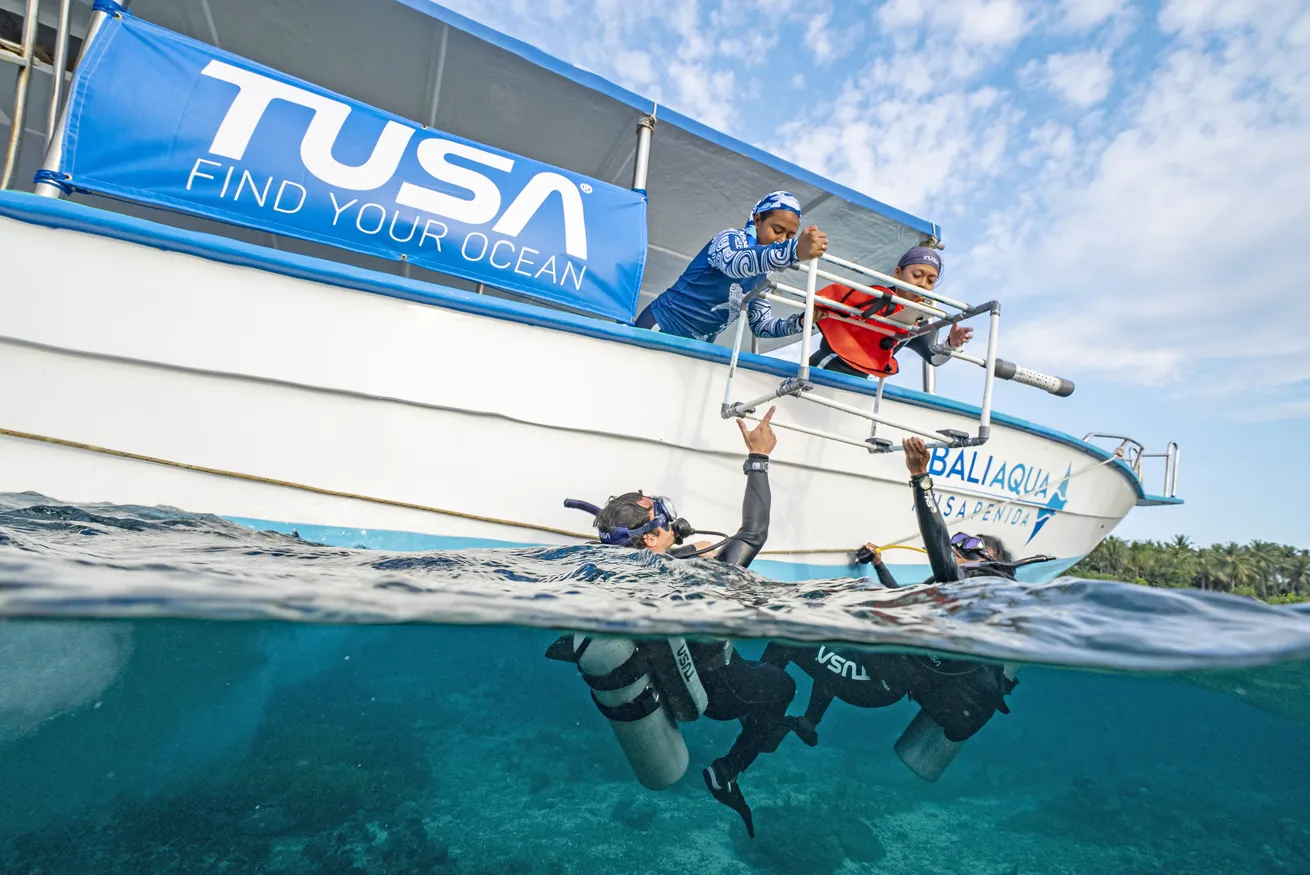
Courtesy TusaTusa’s conservation work goes hand in hand with its commitment to innovation.
At most dive expos, manufacturers bring product displays and sales pitches. For two years, Tusa’s engineers showed up with a 3D scanner.
They asked divers from Tokyo to Miami if they’d stand still for a moment so the team could capture their facial geometry. “We have this special camera to make people’s shape into data,” Tusa CEO Takahiro Yamaguchi tells me from the company’s Long Beach, California, office. Upward of 1,000 faces were scanned, gathering data from an astonishing sweep of cheekbones, brow lines, noses and jaws. Every data point brought the team closer to solving one of diving’s most fundamental problems: finding the perfect mask fit.
Redefining Scuba Mask Designs
That search for comfort is part of Tusa’s DNA. The company began in 1952 in founder Kazuo Tabata’s garage in Tokyo, where he experimented with rubber masks inspired by the discomfort he saw among Japan’s ama divers—women who freedive in minimal gear for shellfish in coastal waters. Those early attempts at relieving facial pressure became the foundation of a brand philosophy: Discomfort is a design problem, not a given.
Through the decades, Tusa grew on the strength of small but meaningful innovations—switching to crystal silicone skirts, breaking from monochromatic black gear with bright colors, and insisting on designing and manufacturing its equipment in-house. Its ISO-certified facilities in Japan and Taiwan and its Tokyo-based R&D team gave the company something critical: control. Control to prototype relentlessly, to mold its own silicone, to test what needs to be tested and to let ideas take years, not seasons.
That slow, deliberate approach is what ultimately led to Tusa’s newest mask technology, the result of the global scanning project. All of those facial models revealed how differently faces are shaped around the world and how rigid, uniformly thick mask skirts often collapse or pinch in all the wrong places. Tusa responded by rebuilding the skirt from the inside out. The result is 3D Synq, a design built around a flexible ring of variable thickness, molded into the silicone. “This fitting ring… allows this mask to fit most face shapes in a comfortable way,” Yamaguchi says.
Related Reading: Parts of a Rebreather and How They Work
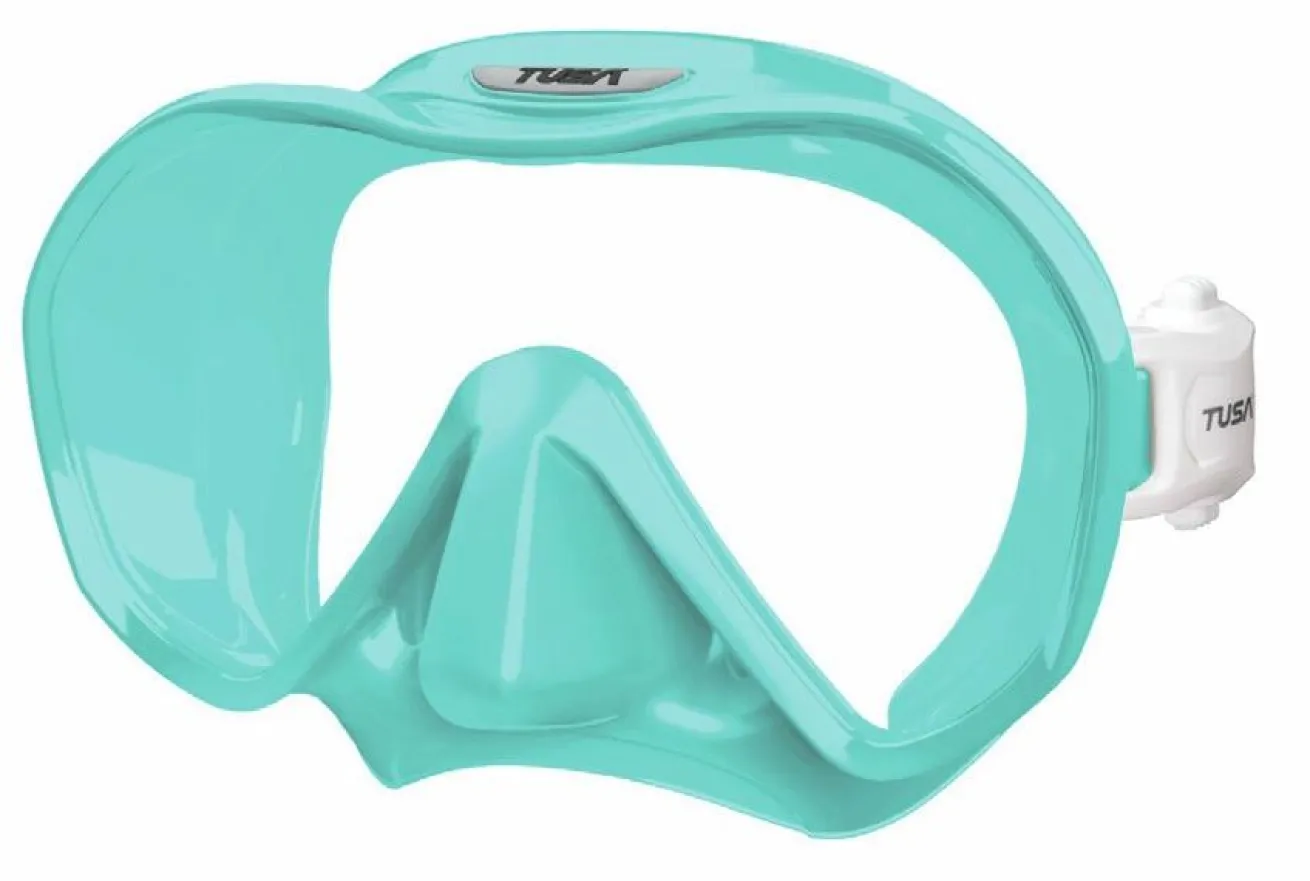
The silicone itself isn’t standard either. Tusa worked with a major supplier to find the right blend—soft enough to flex where it should, structured enough to hold a seal. “We chose one of the best materials for this molding,” Yamaguchi says. Then came the testing: “Nearly three years of trial and error.” Only after repeated rounds of building, diving, refining and rebuilding did the team feel it had removed the pressure points that divers often accept as unavoidable.
Finding the Perfect BCD
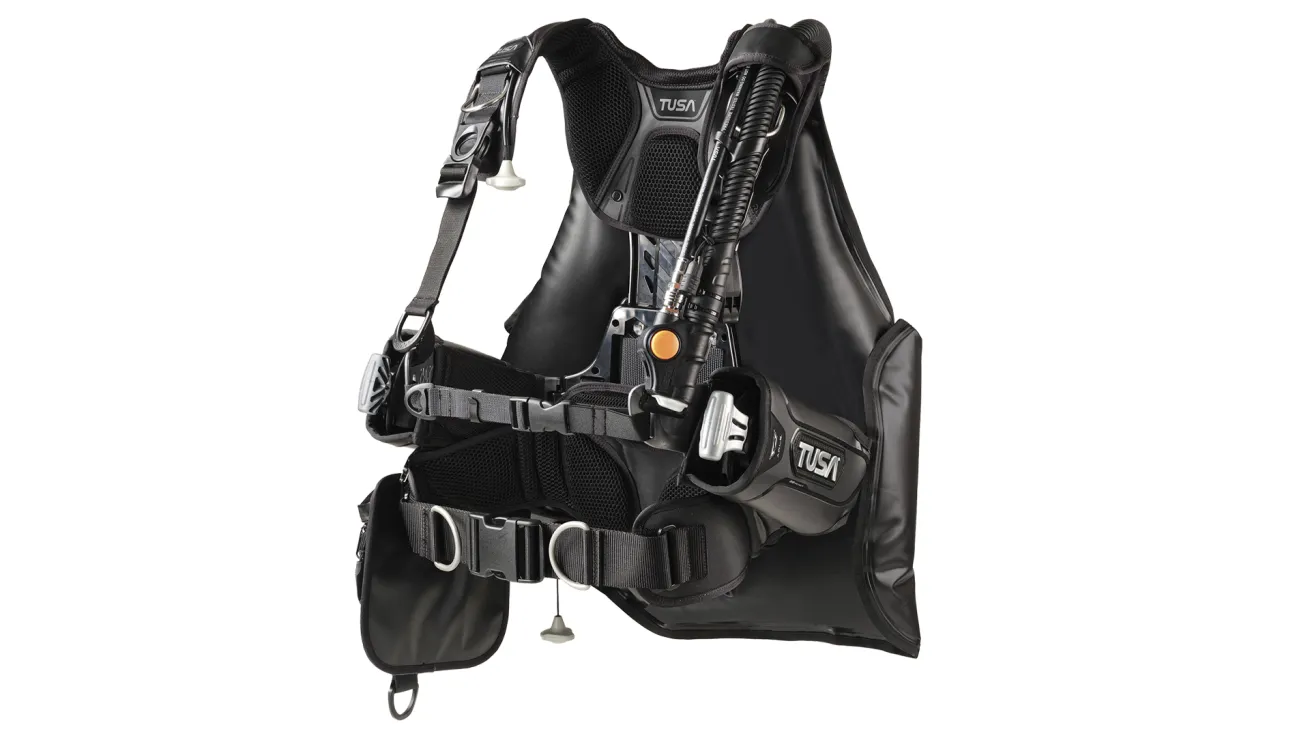
And although Tusa is known for masks, its innovation doesn’t stop there. Another complaint echoed across divers of all levels: awkward trim and nagging strain in the lower back sometimes caused by weight placement in traditional BCs. The R&D team went back to a concept it had experimented with two decades earlier—the independent harness—and rebuilt it for a new generation. Its insight was deceptively simple: Divers control buoyancy with their lungs, so why not move the weight closer to that pivot point?
Tusa’s React system positions weight higher on the body, closer to the diver’s natural center of buoyancy. The sliding waist panel shifts with the diver’s movement, while the independent harness isolates the tank from the air cell to prevent rolling and pinching. “If you have the weight positioning close to your lung, it is much, much easier and more comfortable to make it your trim system,” Yamaguchi explains. Prototypes were tested by ambassadors in Tokyo, Okinawa and beyond, refined through the same iterative process that shaped the mask—because comfort underwater isn’t created in a conference room.
Beyond gear, Tusa has spent recent years turning its attention to the ecosystem divers depend on. Through its Find Your Ocean initiative, the company supports hands-on conservation work. One of the partnerships Yamaguchi’s team is particularly proud of is with Gili Shark Conservation in Indonesia, where researchers track shark populations, restore reefs and work to improve local ocean literacy. Tusa provides gear for long research dives—practical support for practical work. The company has also partnered with the Reef Restoration Foundation, whose coral nurseries on the Great Barrier Reef help repair habitats damaged by bleaching and storms. The company’s design philosophy—continuous improvement, thoughtful iteration—translates well to the slow, patient labor of restoring underwater ecosystems.
Related Reading: Parts of a Rebreather and How They Work
Taken together, these efforts reveal a company still guided by the instinct of its founder: Identify points of discomfort, and remove them with care. A mask that doesn’t pinch is a small victory. A BC that shifts weight where your body wants it is a quiet relief. A conservation partner with the right tools to survey a reef is another step toward a future worth diving in. None of these changes shout. They don’t need to. They add up in the way good engineering always does—incrementally, invisibly, until the diver notices only the calm of the dive itself.
“We are not the biggest one… but the most reliable business partner in the scuba diving industry,” Yamaguchi says. It’s not a boast. It sounds more like the natural outcome of a company that still begins its innovations the way it began in a Tokyo garage: by paying attention to where things hurt, and then quietly working the pain out of them.


