

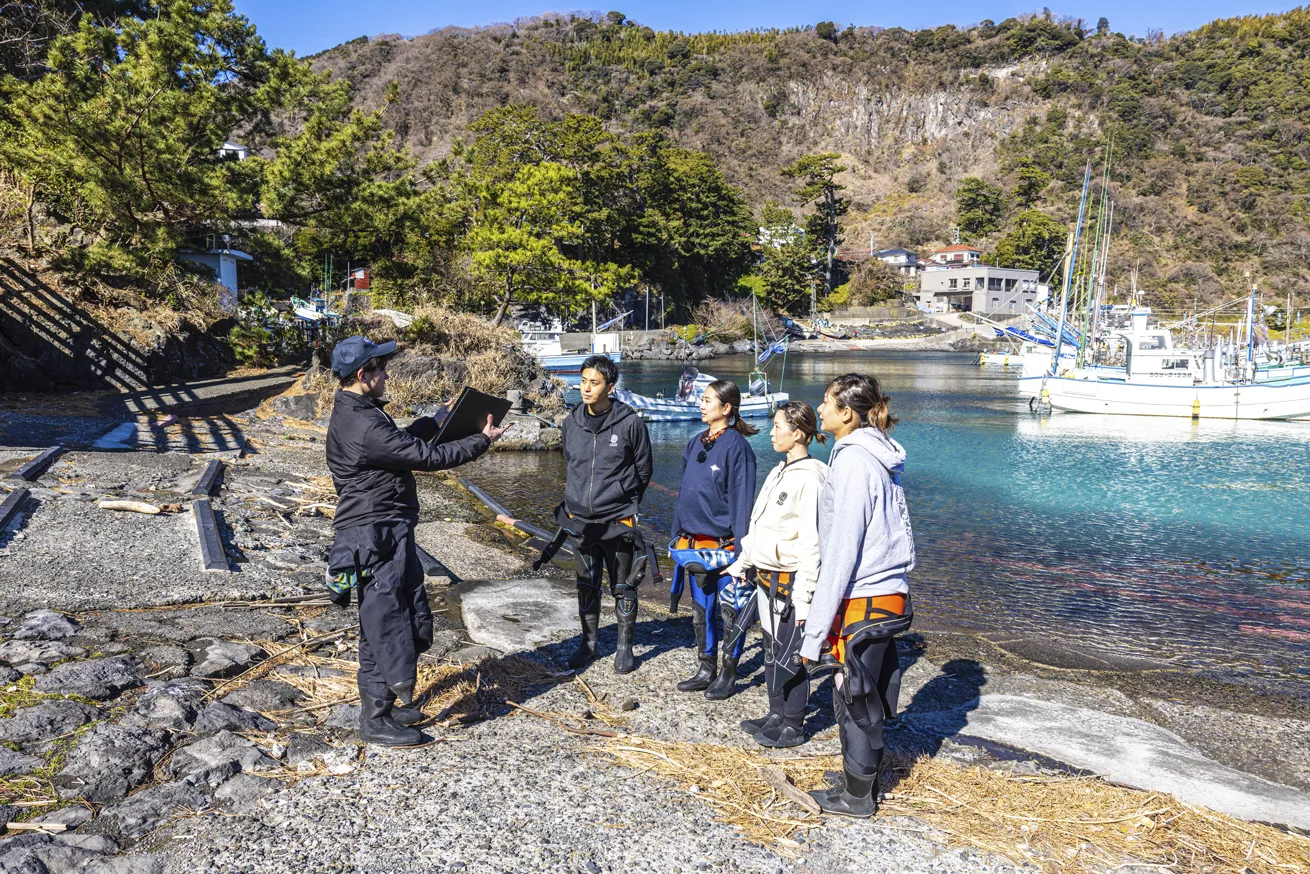
Shutterstock/creative NinaA guide in Futo, Japan, delivers a safety briefing to a group of divers.
Whether you’re newly certified or have logged hundreds of dives, choosing an operator is an important decision. Even in destinations with pristine reefs and calm seas, the quality and preparedness of an operator can significantly influence both safety and your overall experience. A well-run outfit doesn’t just rent gear and put you on a boat; it actively manages risk, maintains equipment, trains staff rigorously and communicates clearly. When assessing preparedness, consider these factors:
1. Safety Protocols and Emergency Preparedness
The key to staying safe is being prepared. Before booking, ask about the operator’s standard emergency protocols. Reputable shops will have:
» First aid and emergency oxygen. All dive boats should be equipped with first-aid kits and sufficient oxygen to last until definitive treatment.
» Vessel communication and navigation tools. Radios, GPS and signaling devices should be readily identified and in working order.
» Clear emergency action plans. Operators need a set protocol for lost divers, suspected decompression sickness, equipment failure and poor sea conditions.
» Trained staff. Staff should be knowledgeable about each of the above aspects. If an operator hesitates when asked about emergency procedures, it’s a major red flag!
Related Reading: Guide to Scuba Diving With Diabetes
2. Condition and Maintenance of Equipment
Well-maintained equipment is central to diver safety. Before committing to a dive, inspect rental gear and ask detailed questions about its maintenance schedule. Regulators, BCDs, tanks and computers should be serviced at manufacturer-recommended intervals. Look for:
» Regulators (including octos) with smooth inhalation and no persistent bubbling or visible damage
» Tanks with recent hydrostatic/visual inspection dates and gas analyzers for use
» Spare masks, O-rings and backup regulators available on the boat
» Areas for cleaning and rinsing equipment after each dive
Poor gear maintenance increases risks of dangerous failures and is a telltale sign that corners may be cut elsewhere.
3. Staff Experience, Attitude and Professionalism
A well-prepared operator employs dive professionals who are competent, experienced and approachable. Evaluate:
» Valid diving/boating credentials. Crew should be certified through recognized diving and governmental agencies as appropriate and required for the area. Current insurance coverage is also a good sign, as insurance providers hesitate to insure pros with poor track records.
» Experience with local conditions. Even excellent divers need local knowledge about currents, thermo-clines, potential hazards and marine life behavior that can be gleaned from experienced dive guides and captains.
» Briefing quality. A comprehensive predive briefing should include info about site layouts, maximum depth, expected conditions, emergency procedures and buddy teams, as well as environmental guidelines.
» Culture of safety. Staff should never pressure divers to exceed comfort or training limits.
Professionalism can often be observed from the moment you walk into the shop—organized operations, clear communication and staff who genuinely enjoy their work are all positive signs.
4. Boat Readiness and Operational Logistics
A dive operator’s boat is essentially its mobile dive center. A prepared operator ensures the following:
» Adequate space and gear storage for each passenger
» Working ladders, shade areas and rinse buckets
» Dry areas to keep personal items and electronics
» Proper tank racks with tie-downs to prevent cylinder movement
» A clear diver roll-call system that’s used before getting underway and after every dive
The captain should be familiar with local waters, weather patterns and emergency routes. A well-run boat feels orderly, never chaotic.
Related Reading: Safety Tips for Fill Stations and Compressor Rooms
5. Reviews, Reputation and Transparency
While online reviews aren’t perfect, consistent comments about safety, professionalism or disorganization are telling. If you know someone who has dived with an outfit, ask about their experience and observations. Reputable operators are transparent about procedures, certification requirements, itineraries and cancellation policies.
Assessing the preparedness of a dive operator goes beyond shiny gear or a pretty website. It involves evaluating safety protocols, equipment maintenance, staff professionalism, operational logistics and transparency. A prepared operator doesn’t just deliver a dive—it delivers a safe and enriching experience for all.


