

Lauren Rebbeck
Dear Annie,
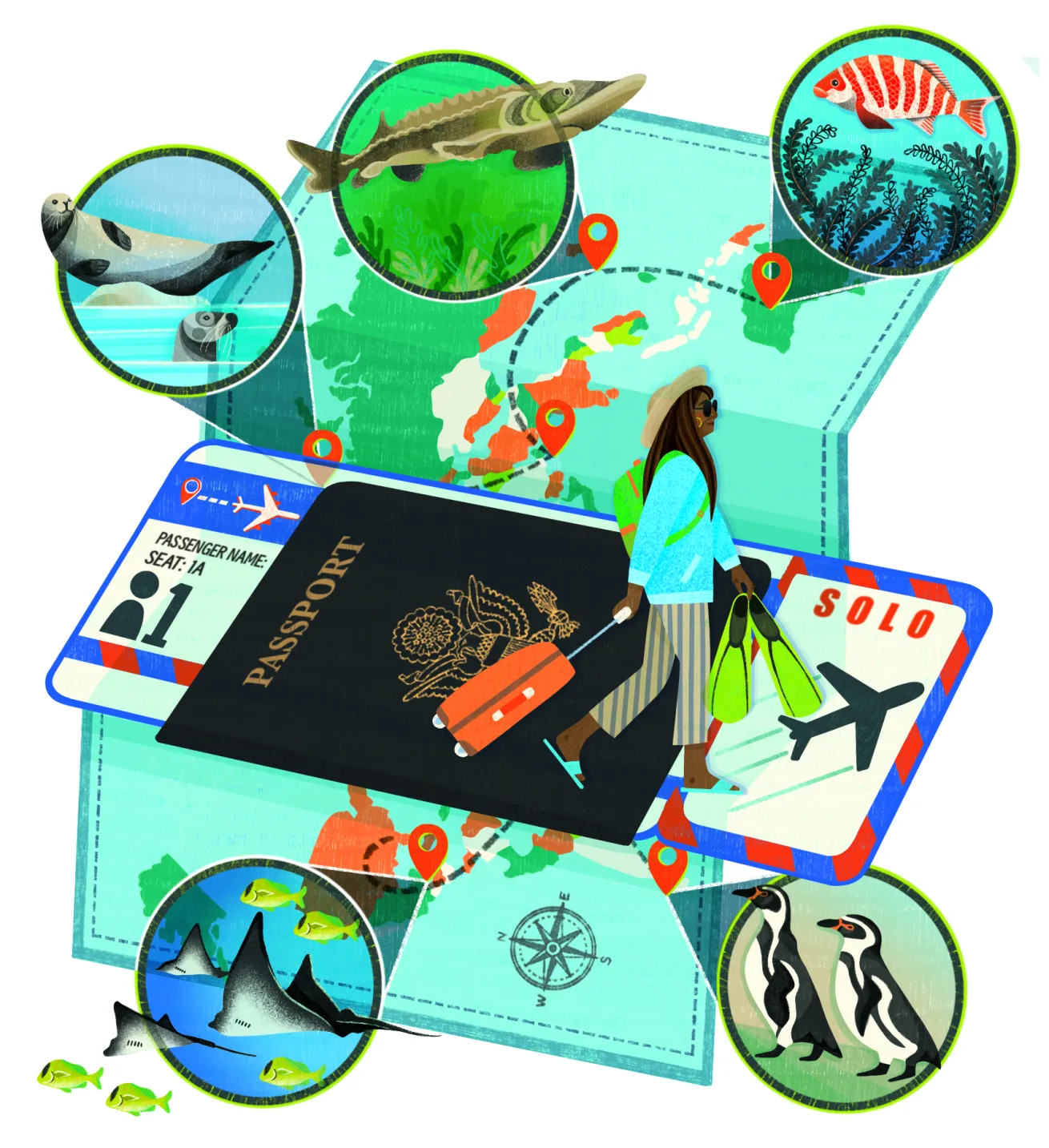
I got my C-card, and all I want to do is travel and dive. But I don’t have many diver friends. Do you have any tips for solo travel—or at least being a solo diver—for someone a bit apprehensive to go on their own?
—Lone Adventurer
Dear Lone Adventurer,
There’s something beautiful about the solo travel diving life. I embraced it from my first days underwater. I was backpacking across Australia when I passed a sign: “Learn to Scuba Dive Today.” I never looked back.
Traveling alone gave me the freedom to explore the ocean on my own terms. Within that first year, I earned my Open Water Diver certification, sailed Australia’s Whitsunday Islands and kept training until I completed my Divemaster on the Great Barrier Reef. My simple plan: Feed my growing obsession with scuba diving and develop an explorer’s mindset.
Benefits of Solo Travel As a Scuba Diver
Traveling solo builds confidence and teaches calculated risk-taking. As a solo dive traveler, you decide where to go, how long to stay, and what kind of diving fits your experience and comfort. No compromising on someone else’s schedule or preferences. It’s liberating, just like diving itself. And the best part? Even when you travel by yourself, you are rarely alone. Our global dive community welcomes everyone. You can walk onto a boat without knowing a soul, and by sunset you’re comparing dives, swapping stories and laughing with salt-kissed skin.
How to Plan Your Solo Dive Trip
If you’re a newer diver, choose destinations that will grow your skills. Be honest about your experience level, whether you’re planning months in advance or booking something spontaneous. Research the region: water temperatures, weather patterns, seasonal marine life, safety considerations and logistics. Read recent reviews and search social media to get a feel for local operators and their reputations. Solo dive travel is about adventure, but it’s also about awareness, preparation and safety.
Pack smart and pack light. Some divers travel with a full kit; others rent most gear. There’s no wrong approach, but I recommend always bringing at least your own mask and snorkel, dive computer, exposure suit, and reef-safe sunscreen. Pack comfortable clothes for before and after diving, and remember that multiple days of diving—even in the tropics—can leave you chilled. A hat, warm layers, a rain jacket that can double as a windbreaker, and a dry bag are items that make a big difference. A small first-aid kit, medications and cloud-stored copies of your certifications and dive logs make life easier on the road.
If you’re flexible, watch for last-minute deals. Many dive resorts or liveaboards have single-share rooms, and you may find yourself paired with another solo traveler. If you feel nervous about being buddied with someone you don’t know, consider enrolling in a continuing education course on your trip. You’ll dive with a professional, learn new skills and meet other divers instantly.
Related Reading: Best Destinations for Healthy Marine Life
Attitude matters as much as aptitude. Stay social, say hello, smile and let the dive operator know you’re traveling alone. They can help introduce you to others before you even arrive. Divers are some of the friendliest, most generous people in the world. Solo doesn’t mean solitary—unless you want it to.
Most importantly, trust your instincts. If something doesn’t feel right—on the boat, with the buddy pairing or underwater—listen to that inner voice. Look for operations that offer clear safety briefings, environmental leadership and professionalism. Make sure dive conditions match your training and comfort. You can always cancel a dive for whatever reason.
Making the Most of Your Solo Dive Trip
Take time to journal or reflect during your trip. When you travel with others, you naturally share the experience. When you travel solo, you absorb it. Notice the color of the sunset, the sound of ocean at dawn, the feeling of belonging and try to put it to words in the moment. I love leading group travel, but solo diving trips are a different kind of freedom. It’s just you and the sea—no compromises, no expectations, no schedules except the tides.
Where do you hear the ocean whispering your name? The world is filled with divers waiting to meet you, reefs waiting to amaze you and destinations that feel like home the moment you arrive. Just go dive. Let the ocean be your road and scuba be your vehicle. I look forward to hearing more about where you choose as your next solo dive travel experience.
Related Reading: 10 Tips for Traveling Solo on a Scuba Diving Vacation

Ask Annie
PADI Master Scuba Diver Trainer Annie Crawley answers your most pressing questions about dive etiquette, training qualms and gear analysis with zero judgment and a whole lot of lived experience.
Have a question for Annie? Send to [email protected] with the subject, "Ask Annie".


