

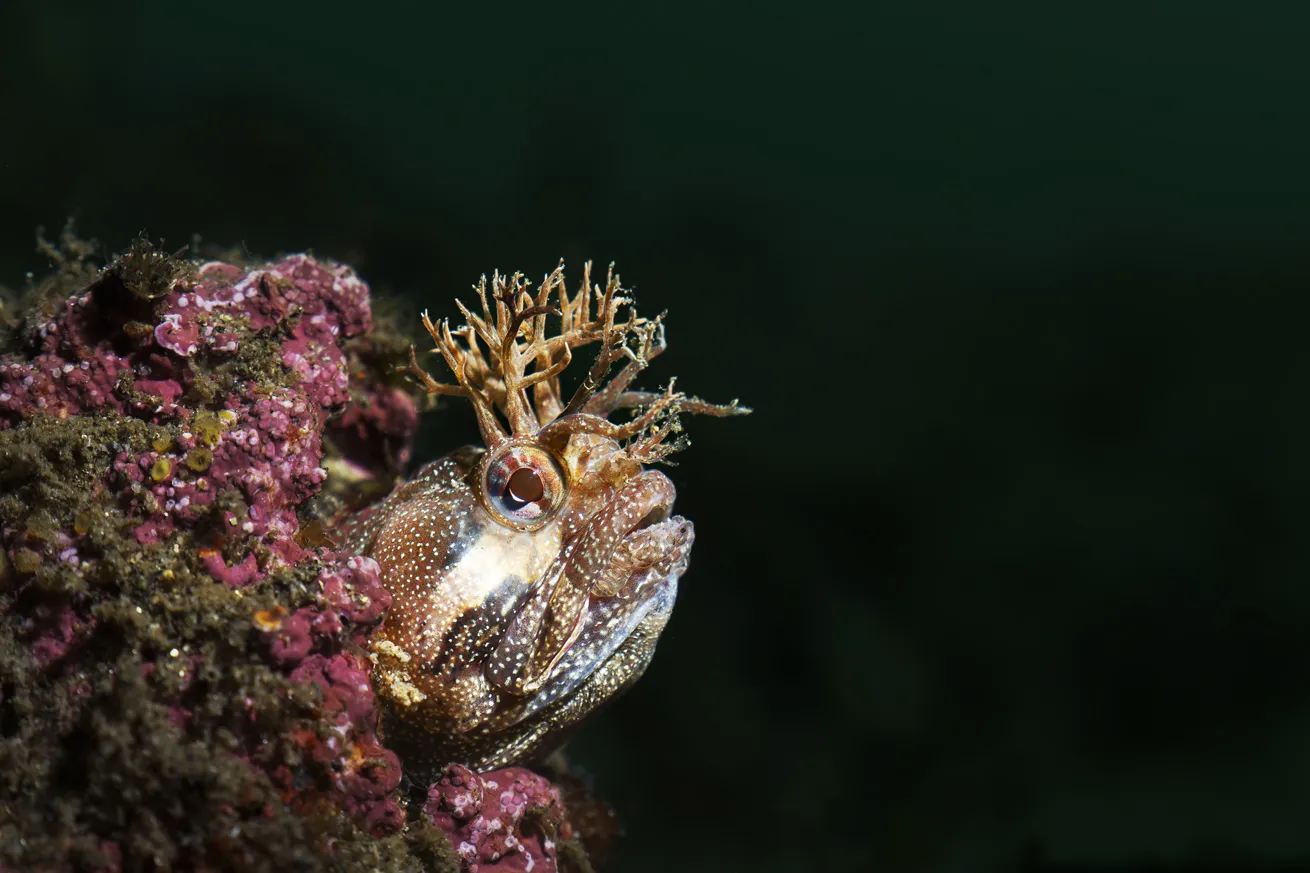
Thomas AndersonDespite their rather dazzling appearance, fringeheads can easily blend into their camouflage backgrounds, and it’s easy to miss them completely on a dive.
Camouflaged animals are some of the most fascinating subjects to encounter. While it is easy to admire their intricate patterns and perfect adaptations, photographing them can be challenging, as they naturally blend into their environments.
By looking beyond a simple snapshot, we can create striking, artistic images that allow these subjects to take center stage instead of disappearing into their surroundings. Let’s explore how to bring camouflaged critters out of the background and set yourself up for critter-hunting success.
Related Reading: How to Use Snoots to Light Your Macro Photography
Gear Recommendations for Photographing Camouflaged Animals
When properly shooting a hidden subject, any camera that can trigger a flash will do. Fully manual cameras are great, as they offer the most control over your image-making. Even some nonmanual cameras, such as the legendary Olympus (now OM System) Tough TG series, will reliably nail these kinds of shots.
Because most camo subjects are small, you’ll want a good macro lens—usually 90mm, 100mm or 105mm—for most full-frame sensor cameras.
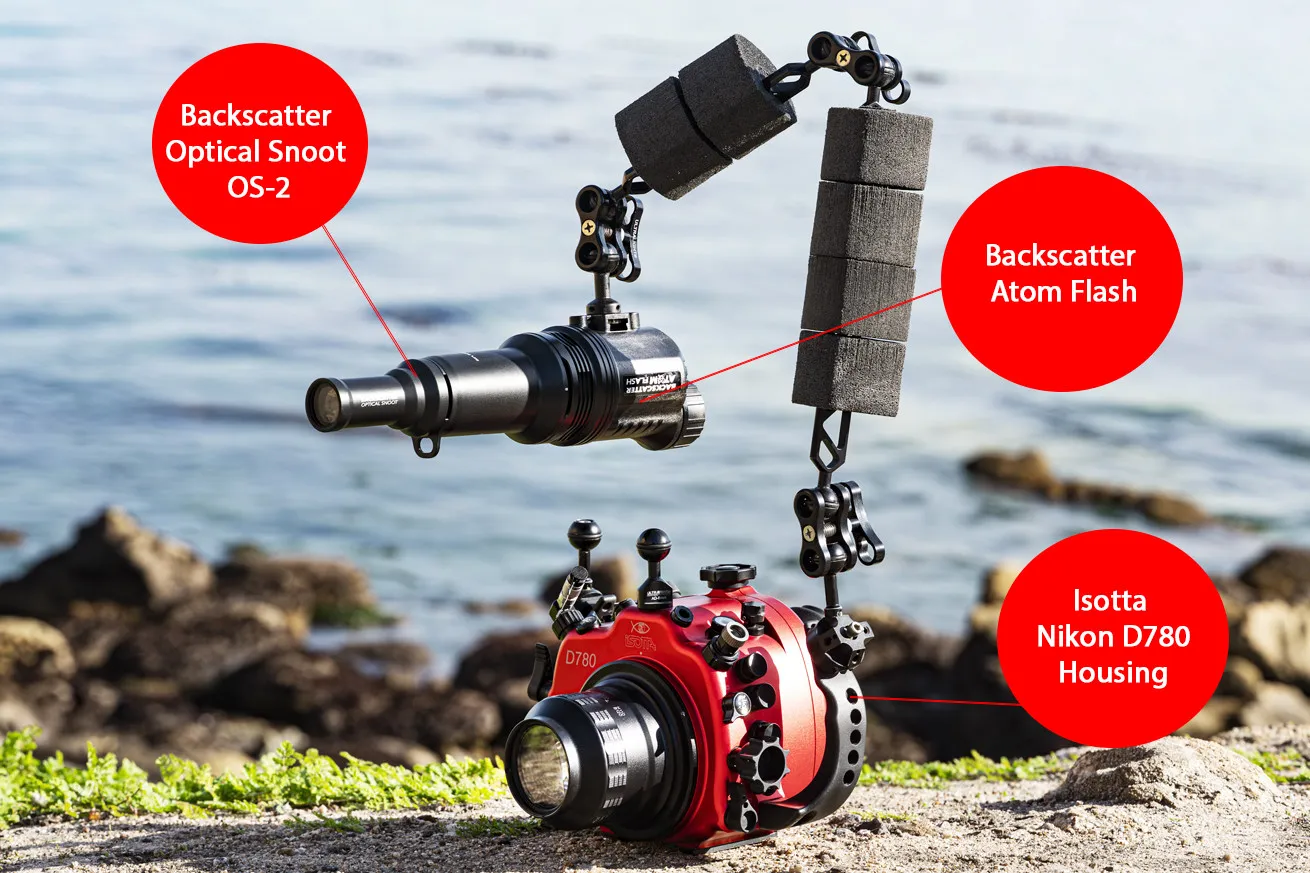
Lighting, as always, is crucial. The goal is to selectively light the subject to highlight it in the frame, so don’t use a super wide flash beam. It’s best to use either a dedicated macro flash, a snoot or a beam restrictor. Any tool that produces a narrow, controlled beam will work.
When mounting lights, I opt for trusty aluminum double ball arms and clamps. I like using 12-inch and 8-inch arm segments, which provide plenty of reach and space for adding floats. Double ball arms and clamps allow for the greatest range of motion while keeping your lighting secure. This makes all types of photography easier, including carefully lighting camouflage subjects.
The Settings
Camera settings are essential for making camo critters pop. The first approach is a classic: using a black background to separate the subject from its environment. To achieve the look, use a fast shutter speed (1/200 to 1/250 works best). This keeps ambient light low, darkening the background.
Shooting macro, you’ll want a generous depth of field to keep the subject sharp, typically between f/16 and f/22. Keep ISO low, starting at 64 to 200. Using these settings, your lighting will expose the hidden critter.
Another fun technique is to play with a shallow depth of field by opening your aperture to f/8 through f/2.8. This creates a soft bokeh effect. However, this approach has its downsides. First, it limits your depth of field, making critical focus more difficult. Second, an open aperture allows more light to reach the sensor, so the background will be brighter. In some cases, a bright background can enhance an image. However, a dark background creates stronger separation between a camo subject and its environment.
Another tool that can help is high-speed sync, or HSS. HSS is not about firing fast. It allows the camera to exceed its native flash sync speed limit. Using HSS, you can shoot at very fast shutter speeds and achieve black backgrounds even with a wide open aperture.
Related Reading: 3 Underwater Photo Skills You Should Master
Thomas Anderson
- Backscatter Optical Snoot OS-2
- Backscatter Atom Flash
- Isotta Nikon D780 Housing
The Technique
With gear and settings dialed in, you’ll just need a good subject. There are tons of fascinating critters, but it’s important to know what you can realistically photograph. If a subject is too obscured, admire it and move on to a more exposed one.
Once you find a creature, carefully aim your snoot so the light hits only the subject. The goal is to light as little of the background as possible. This takes time and patience, so practice on dives where you and your buddy can take things slow.
Next, experiment with different strobe angles. Even a small adjustment can create shadows and bring out rich textures, giving subjects more depth. After capturing a black-background shot with the subject lifted to the foreground, try shooting with a shallow depth of field, and play with HSS if your system supports it.
Once you nail the basics, you can move on to advanced techniques, positioning a strobe behind or to the side of a subject and using a remote flash system for easy operation. You can also use color filters on your backlighting strobe or colorful backlights to make the subject pop.
I hope you’re inspired to reveal some amazing camouflaged critters. Have fun and enjoy the process. Take more shots than you think you need, and give yourself plenty of time. See what creative results you can achieve with different lighting and settings combinations. With patience and experimentation, you can make even the most hidden animals pop in your photos.
Related Reading: 23 Underwater Cameras, Lights and Accessories for Divers


