

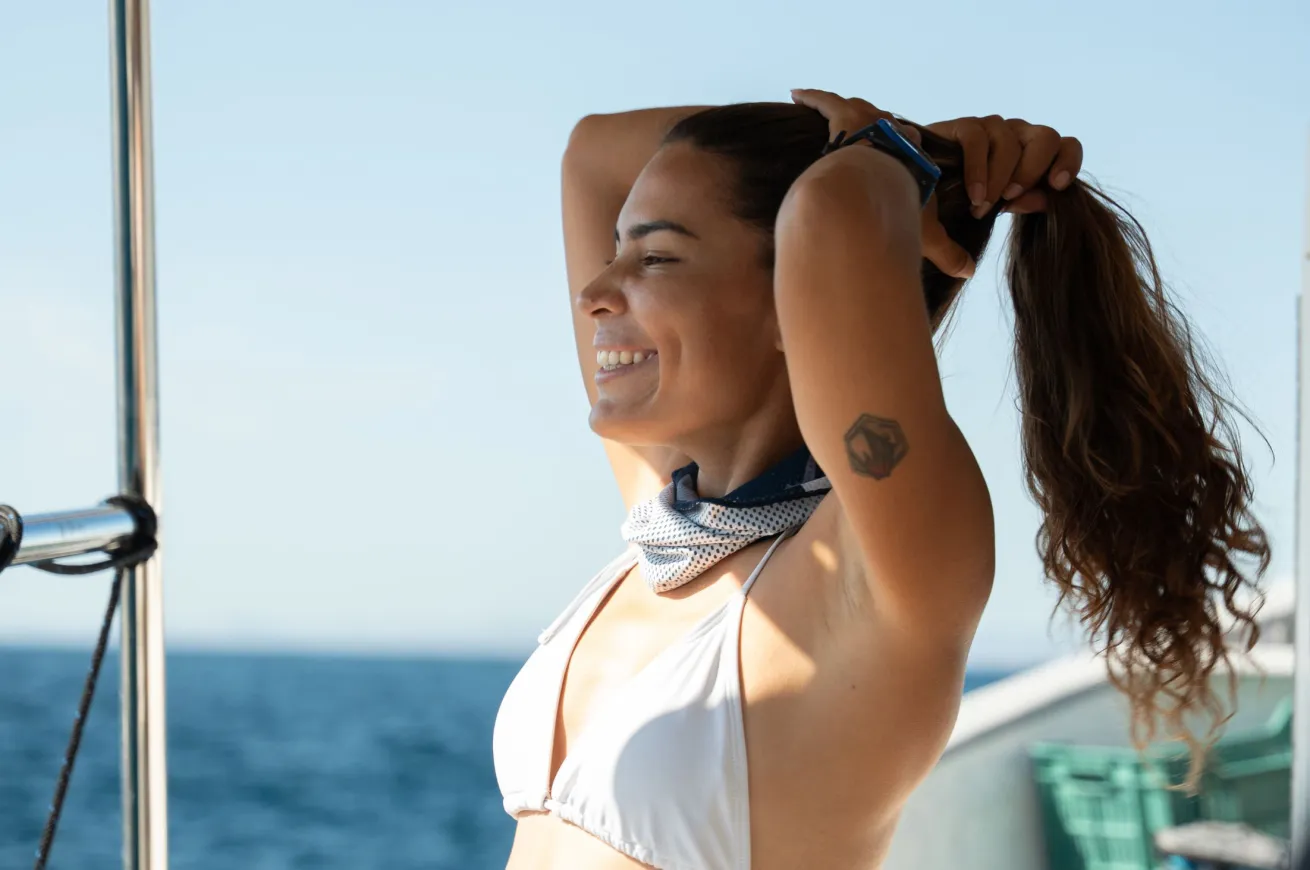
Kristin PaterakisPADI Ambassadiver Karol Yela preps her hair before a dive.
Saltwater may nourish your soul, but it’s brutal on your hair. While most of us wouldn't go so far as to quit diving, it’s a question many of us are forever asking: How do we have the adventures we want in the water, while still maintaining the hair we want on land?
While no product or technique can eliminate all damage, healthy hair and happy dives aren’t mutually exclusive—it just takes some planning. Here’s how to protect your hair before, during and after your dive.
Step 1: Plan Ahead (For All Hair Types)
Here are a few preventative measures to take when planning a dive:
Hold off on coloring or chemical treatments until after your trip: Freshly processed hair is more fragile and prone to breakage in salt water. Besides, the best photos from your dive trip will happen underwater anyway.
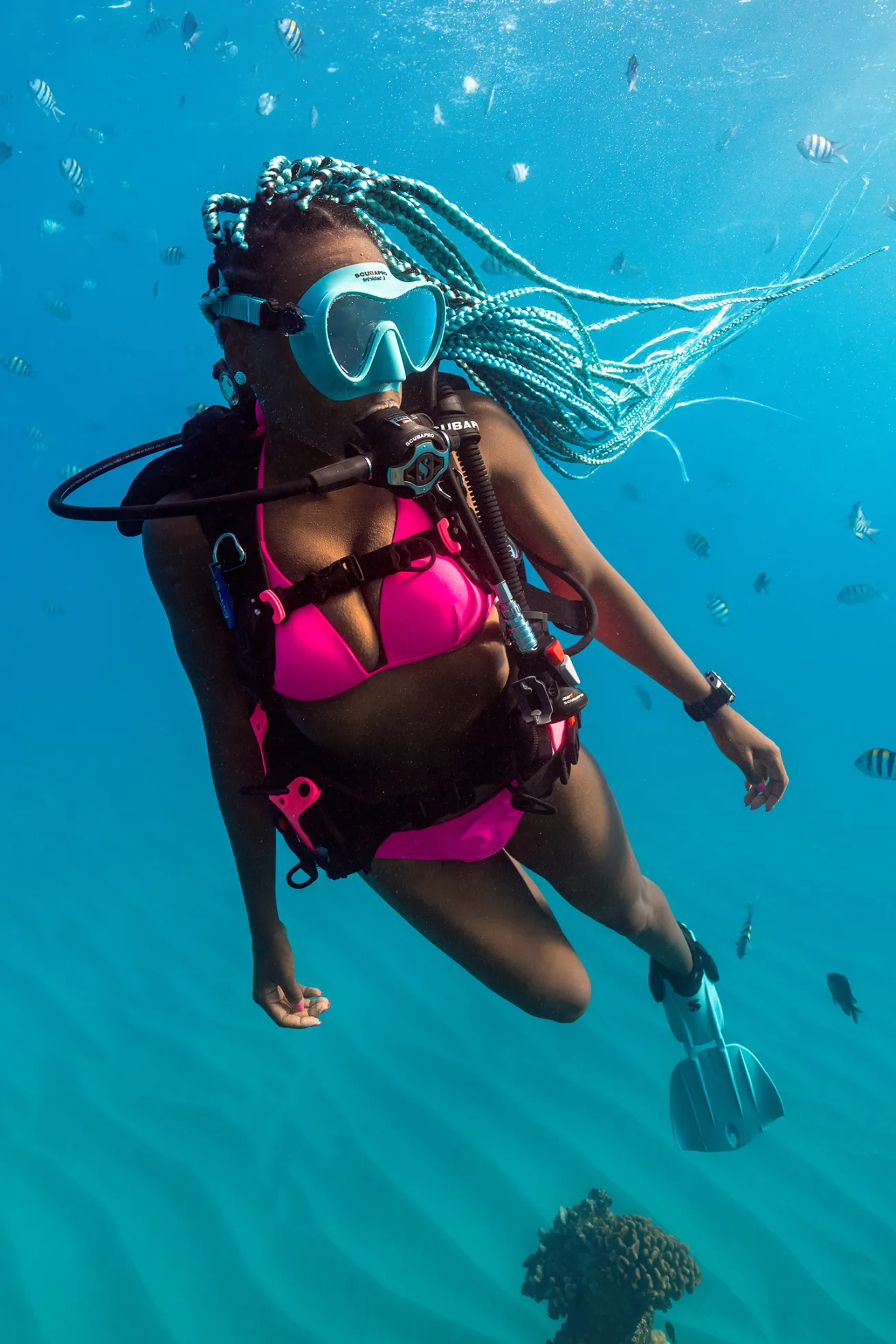
Courtesy Kal IG Coconut_SaltDiver Gabby Shepard says braids are the best way to keep her hair healthy underwater.
Choose hair-friendly gear: Opt for mask straps—they’re gentler on strands than rubber or silicone. When it comes to hoods, look for styles with no internal seams and an elongated shape to minimize snagging.
Pick the right hair ties: Avoid anything with exposed metal or seams, which can cause breakage when removing them from your hair after a dive.
Consider a protective style: Gabby Shepard, influencer and dive trip leader behind Black Girl Blue World, looks striking in her signature teal braids, which helped save her hair as her scuba obsession grew. “Before the braids, I wore my hair out curly and natural while diving or doing ocean activities,” she says. “I noticed more breakage and drying out more easily when I wore it curly, so keeping it in braids was a protective style that keeps it healthier for a longer time. It grows very fast and thick now that it’s in braids.”
Step 2: Start Styling
When gearing up for a dive, follow these steps to minimize damage:
Get soaked: Wet down your hair with fresh water. Think of your hair like a sponge—the more each shaft is saturated, the less room it has to absorb salt water. This is an especially important step if your hair trends dry. Bring a small bottle of fresh water to re-wet between dives and prevent salt build-up.
Add a protective barrier: Coat your hair with a reef-safe oil or leave-in conditioner—just be sure to avoid products containing oxybenzone and octinoxate. So, stick with a classic, like diver-favorite Stream2Sea leave-in conditioner or Coconut Smuggler Feeling Nauti Salt Shield (which has a main ingredient of—as the name would suggest—coconut oil).
Related Reading: An Unforgettable Dive: From Chemical Streaks to Clean Oceans
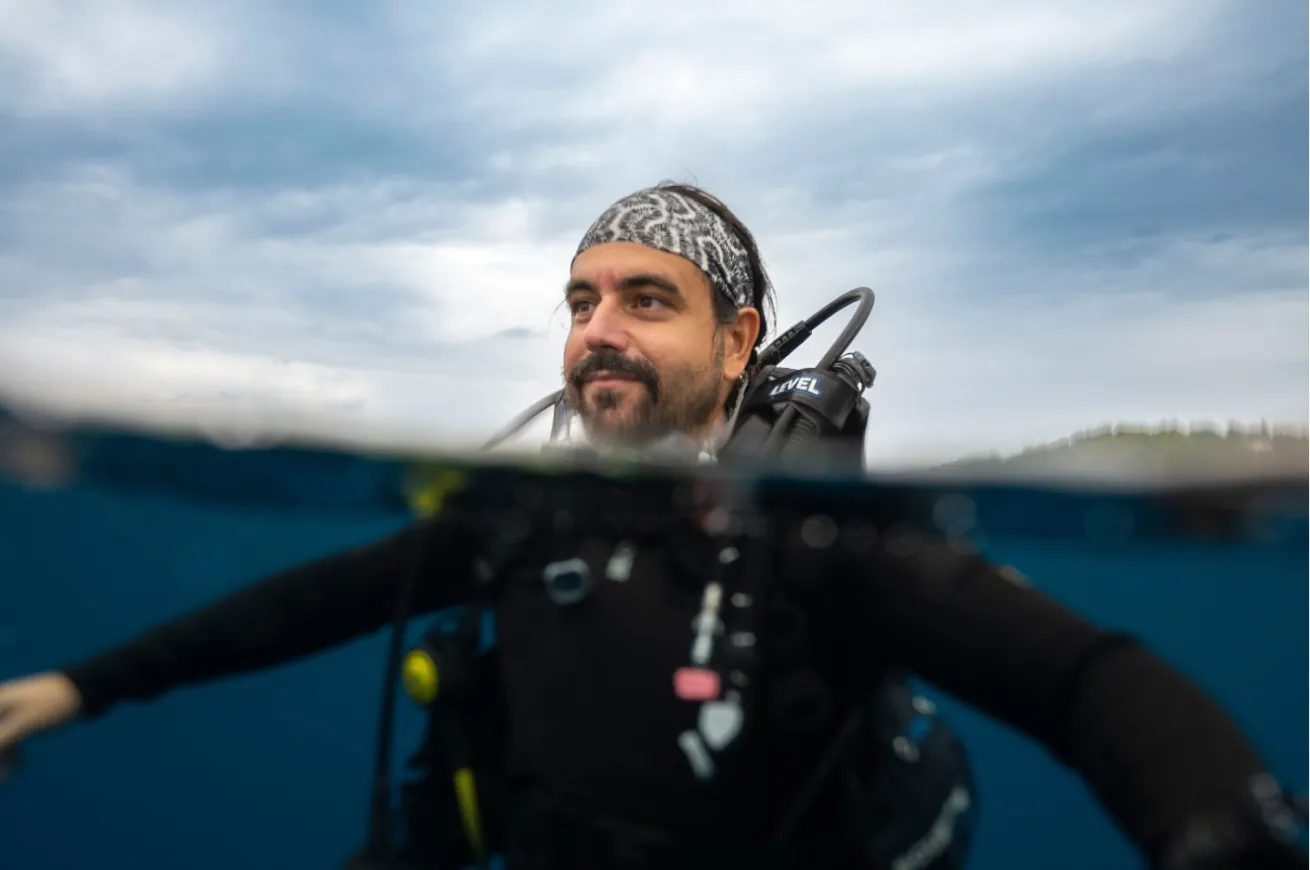
Courtesy Brandee Anthony MediaThick headbands and hoods help keep hair in place and free of tangles.
Step 3: Lock it Down
Hair movement leads to tangles. So, lock it down to avoid shifting and bunching in the water. Try one of these secure options:
Braids—the classic, cost-free option: Asprofessional marketer and avid diver Chelsea Capwell notes, it’s important to capture all your hair in the braid. Her hair is color-treated, and she has spent time making sure her dive hair routine is as nourishing as possible. “We're not trying to impress anybody with our skill here,” she laughs. “I have a side part and lots of layers. So I start doing small braids with all my shorter pieces in the front, [then I] make two little braids on either side, and create a pseudo-French braid down my head to where it meets my neck.” If creating a double French braid sounds difficult, you can also stick with a more straightforward braid style.
Rip Tie Hair Wrap: This stretchy, double-tie ponytail wrap is beloved by divers with thick or textured hair. Those with finer hair may experience slippage, so be sure to read all the guidelines before using.
ScubaDoRag: Think of it as a lightweight alternative for neoprene hood haters. In addition to protecting your hair in the water, it offers a layer of sun protection for your scalp. There is a learning curve to wearing it at first, but they offer online tutorials that will help you get the perfect fit.
A wide headband: Keep front flyaways from turning into post-dive knots. Waterlust offers durable, dive-ready headbands made from recycled materials. For PADI AmbassaDiver James Barrett, adding a headband to his dive gear was the fix he didn’t even know he needed. “Having long hair doesn’t always go with scuba diving,” he says. “Using the headband kept my hair in place underwater and didn’t let my mask pull at my hair. It also looks great in photos!”
Related Reading: Five Female-Founded Dive Businesses Focused on Sustainability
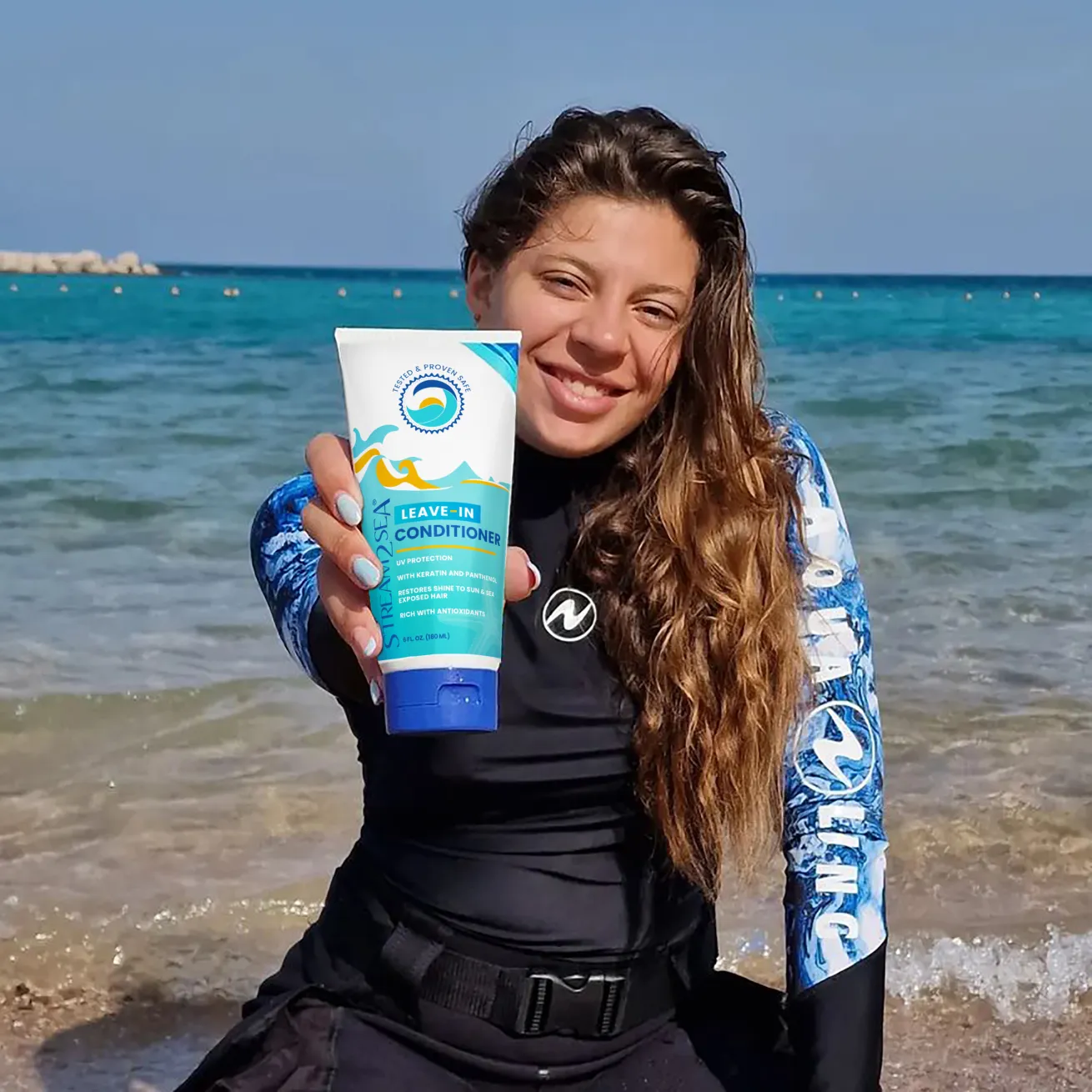
Courtesy Stream2SeaStream2Sea leave-in conditioner is a favorite among many divers.
Step 4: Finish Strong After the Dive
A good post-dive routine makes all the difference. Here’s what we recommend after a dive:
Carefully remove hair ties: Be gentle. If any hair ties snag, add more leave-in conditioner to help them slide out.
Detangle before showering: The secret to detangling? Yes, more leave-in conditioner. (Lush’s Super Milk can be a great asset, as are generous dollops of Stream2Sea leave-in conditioner.) As tempting as it is to just jump under the spray and let Jesus take the wheel, skipping this step or scrubbing aggressively will worsen tangles. “Before I even take the braids out, I will run leave-in conditioner down both braids, just to give it a little bit of protection,” says Capwell. “Then I will finger-comb the braids out, and then spray detangler all over it.”
Cleanse and rehydrate: Wash as normal with your favorite shampoo and conditioner. If you feel like your hair needs more hydration to regain its texture, consider Lush’s Banana Shampoo and Banana Conditioner. While a bit pricey ($27 for 10.2 ounces), the natural ingredients significantly help with post-dive hydration—particularly on color-treated hair.
Keep it simple: Learn what works for your hair and create steps that are easy to follow. Shepard has one piece of advice for divers, namely—don’t overdo it!
“Find a simple routine that works, and let your hair find its natural rhythm,” she says. “Sometimes I add jojoba oil to the rinse for moisture. Then I condition it every few dives. I don’t use too many products because they wear on the braids and they get frizzy faster when I do too much.”
Capwell also sings the praises of a personalized system: “I was on a dive trip with several couples, and we went to dinner after, and one of the women asked, ‘Chelsea, how does your hair look so good right now?’ Because I have this whole routine down pat, and I'm keeping it as healthy as possible.”


